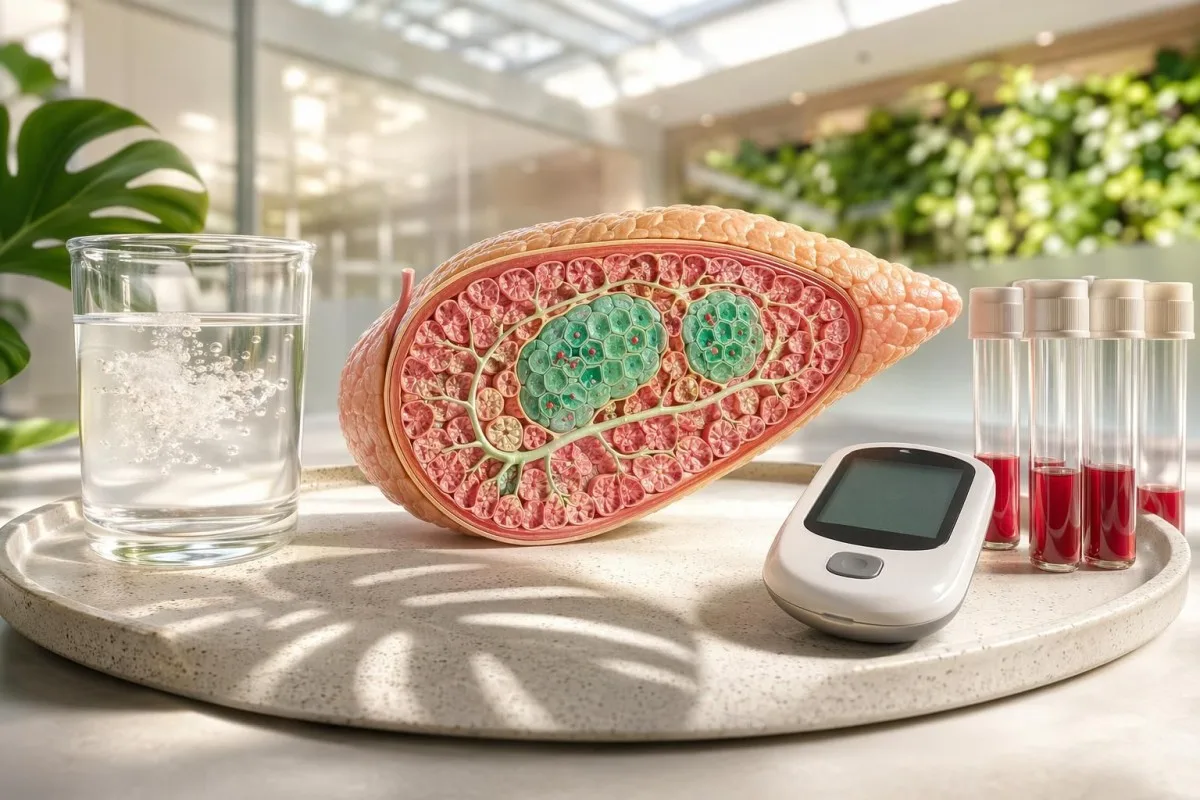
A practical postpartum screening guide for anyone told their pregnancy sugars were normal again, but still wants to know what comes next.
本指南在以下人员的领导下撰写: 托马斯·克莱因医学博士 与……合作 Kantesti AI 医疗顾问委员会, 其中包括 Hans Weber 教授博士的贡献以及 Sarah Mitchell 医学博士、哲学博士的医学审查。.
托马斯·克莱因,医学博士
Kantesti AI首席医疗官
Thomas Klein博士是获得董事会认证的临床血液科医生兼内科医生,拥有超过15年的实验室医学与AI辅助临床分析经验。作为Kantesti AI的首席医疗官,他负责临床验证流程,并监督我们2.78万亿参数神经网络的医学准确性。Klein博士已在同行评议的医学期刊中广泛发表关于生物标志物解读与实验室诊断的研究。.
Sarah Mitchell,医学博士,哲学博士
首席医学顾问 - 临床病理学和内科
Sarah Mitchell博士是获得董事会认证的临床病理科医生,拥有超过18年的实验室医学与诊断分析经验。她在临床化学方面拥有专业认证,并在临床实践中就生物标志物面板与实验室分析发表了大量研究成果。.
汉斯·韦伯教授,博士
实验室医学与临床生物化学教授
Hans Weber教授博士在临床生物化学、实验室医学和生物标志物研究方面拥有30年以上的专业经验。曾任德国临床化学学会主席,他专注于诊断面板分析、生物标志物标准化以及AI辅助的实验室医学。.
- 75 g OGTT at 4-12 weeks postpartum is the preferred test after gestational diabetes because it detects 2-hour glucose problems that fasting glucose can miss.
- 糖尿病阈值 are fasting plasma glucose ≥126 mg/dL, 2-hour OGTT glucose ≥200 mg/dL, HbA1c ≥6.5%, or random glucose ≥200 mg/dL with symptoms.
- 糖尿病前期的分界值 are fasting glucose 100-125 mg/dL, 2-hour OGTT glucose 140-199 mg/dL, or HbA1c 5.7-6.4%.
- HbA1c early postpartum can be falsely low after delivery blood loss or high red-cell turnover, so it should not replace the OGTT at 4-12 weeks.
- Normal pregnancy glucose after delivery does not erase future risk; gestational diabetes is often a beta-cell stress test that reveals vulnerability years before type 2 diabetes.
- Retesting interval is every 1-3 years for life if the postpartum screen is normal, and usually yearly if any result is in the prediabetes range.
- Before another pregnancy ask for glucose testing before conception or early in the first trimester, especially if prior GDM required insulin or medication.
- Risk markers such as fasting insulin, triglycerides, HDL, ALT and urine albumin-creatinine ratio do not diagnose diabetes, but they help estimate cardiometabolic risk.
The blood tests that diagnose diabetes after gestational diabetes
The blood tests that detect diabetes after gestational diabetes are the 75 g 2-hour oral glucose tolerance test, 空腹血浆葡萄糖, 糖化血红蛋白, 和 random plasma glucose when classic symptoms are present. The OGTT is usually the best postpartum diabetes screening test at 4-12 weeks because it finds impaired 2-hour glucose handling before fasting glucose or HbA1c turns abnormal.
As Thomas Klein, MD, I tell patients that the question is not only whether the number is high today; it is whether the pancreas still has enough reserve after pregnancy. A fasting glucose of 94 mg/dL can look reassuring, while a 2-hour OGTT value of 168 mg/dL quietly says the first-phase insulin response is lagging.
A diagnosis of diabetes outside pregnancy is made by fasting plasma glucose ≥126 mg/dL, ,2小时OGTT葡萄糖 ≥200 mg/dL, ,HbA1c ≥6.5%, or random plasma glucose ≥200 mg/dL with symptoms such as thirst, frequent urination or unexplained weight loss. For a plain-language comparison of diagnostic and monitoring tests, our diabetes test cutoffs 指南是一个很有用的配套读物。.
Kantesti is an AI blood test analyzer that reads postpartum glucose, HbA1c, lipids and kidney markers in the same clinical context rather than as isolated flags. In our analysis of 2M+ uploaded lab reports, one pattern keeps appearing: people remember the pregnancy diagnosis, but their 4-12 week OGTT result often never makes it into the long-term health record.
Why normal pregnancy glucose does not reset future risk
Normal glucose after delivery does not reset future diabetes risk because gestational diabetes usually reflects limited beta-cell reserve under pregnancy stress. Delivery removes placental hormones, but it does not necessarily repair insulin resistance, genetic risk, fatty liver tendency, or pancreatic beta-cell vulnerability.
The placenta produces hormones that push insulin resistance up, often most noticeably after 24-28 weeks. When glucose normalizes after birth, that means the stressor has gone; it does not prove the insulin-producing cells have unlimited reserve.
Bellamy et al. reported in The Lancet that women with previous gestational diabetes had about a 7-fold higher risk of later type 2 diabetes compared with those without GDM (Bellamy et al., 2009). In day-to-day practice, I see the risk cluster with waist gain, triglycerides above 150 mg/dL, low HDL, family history, PCOS and sleep disruption during the first two postpartum years.
A normal HbA1c of 5.3% six months after delivery can still coexist with early insulin resistance. If you want the deeper metabolic view, our guide to 胰岛素抵抗检测 explains why fasting insulin and glucose can drift before A1c crosses the prediabetes line.
When postpartum diabetes screening should happen
Postpartum diabetes screening should happen 4-12 weeks after delivery, preferably with a 75 g 2-hour OGTT. If that window was missed, the best time to test is now; I would not wait for the next annual physical if the pregnancy was 6 months or 6 years ago.
The American Diabetes Association recommends a 75 g OGTT at 4-12 weeks postpartum and lifelong screening every 1-3年 after gestational diabetes (American Diabetes Association Professional Practice Committee, 2024). ACOG also supports postpartum screening in this early window, and many obstetric clinics now try to order it before the 6-week visit so it is not forgotten (ACOG, 2018).
Breastfeeding, sleep fragmentation and postpartum weight shifts can all change glucose day to day, but they are not reasons to skip testing. Most patients can do the OGTT while breastfeeding; the practical issue is often childcare during the 2-hour lab wait, not the biology.
If you also need checks for anemia, thyroid function, liver enzymes or kidney markers after delivery, our postpartum lab checklist lays out which tests are commonly paired with glucose screening. A single appointment can often cover more than one postpartum problem.
How the 75 g oral glucose tolerance test is interpreted
这 oral glucose tolerance test after pregnancy measures fasting glucose and 2-hour glucose after a 75 g glucose drink. A 2-hour value ≥200 mg/dL diagnoses diabetes, while 140-199 mg/dL diagnoses impaired glucose tolerance, even when fasting glucose is normal.
The test works because it challenges the insulin system rather than observing it at rest. In my experience, people with prior GDM often pass the fasting part but fail the 2-hour part; that pattern points to delayed insulin secretion after meals.
Prepare with usual eating for at least 期间不饮酒;, ideally including at least 150 g carbohydrate per day unless your clinician has told you otherwise. Going very low-carb before an OGTT can exaggerate the glucose rise and make interpretation messy; our 禁食规则 guide covers water, coffee and timing details.
Do not exercise hard during the 2-hour wait, and tell the lab if you vomit or cannot finish the drink. A result should be repeated or replaced with another diagnostic test if the procedure was not completed properly.
What fasting glucose can and cannot detect
Fasting plasma glucose detects diabetes when the fasting value is ≥126 mg/dL, but it can miss isolated post-meal glucose intolerance after gestational diabetes. It is useful, cheap and repeatable; it is simply too blunt to replace the postpartum OGTT.
空腹血糖为 100-125 mg/dL is prediabetes by ADA criteria, while <100 mg/dL is generally considered normal in the United States. Some international systems use 110 mg/dL as the lower impaired-fasting threshold, which is one reason patients get confused when moving between countries.
The clinical trap is a fasting glucose of 88-96 mg/dL with a 2-hour OGTT of 155-185 mg/dL. That person may be told everything is fine if only fasting glucose was ordered, yet their meal-time glucose biology is already abnormal.
Morning glucose is affected by sleep debt, late-night eating, corticosteroids, infection and the dawn phenomenon. Our 空腹血糖指南 explains why a single morning result should be interpreted with the previous evening and sleep quality in mind.
Why HbA1c is convenient but imperfect after delivery
HbA1c detects diabetes at ≥6.5%, but it is less reliable in the first 4-12 postpartum weeks because delivery blood loss and red-cell turnover can distort the result. HbA1c is useful later, especially for long-term follow-up, but it should not replace the first postpartum OGTT.
HbA1c estimates average glucose over roughly 复查。, weighted toward the most recent month. After childbirth, anemia, transfusion, iron deficiency or rapid red-cell replacement can push the value away from the true glucose story.
Iron deficiency can falsely raise HbA1c in some patients, while recent blood loss can falsely lower it. This is one of those areas where context matters more than the number; a postpartum HbA1c of 5.6% may not be as reassuring if ferritin is 8 ng/mL and the OGTT was never done.
If your A1c does not match fingerstick readings or symptoms, read our guide on A1c accuracy before accepting the value at face value. I usually pair HbA1c with fasting glucose, CBC and ferritin when the postpartum story feels inconsistent.
When random glucose or symptoms need fast action
Random plasma glucose detects diabetes when it is ≥200 mg/dL and symptoms are present. After gestational diabetes, urgent review is needed for high glucose with vomiting, dehydration, rapid weight loss, ketones, blurred vision or unusual exhaustion.
Most diabetes after GDM is type 2, but postpartum autoimmune diabetes can occasionally appear, particularly if weight loss is rapid and ketones are present. I have seen patients dismissed as merely tired new parents when their glucose was 280 mg/dL and they were already ketotic.
A random glucose of 140-199 mg/dL is not diagnostic by itself, but it should prompt fasting glucose, HbA1c or OGTT depending on timing and symptoms. A random value over 300 mg/dL, especially with abdominal pain or labored breathing, should be treated as same-day medical care.
One isolated high value can happen after illness, steroids or a very high-carbohydrate meal, but the pattern matters. Our guide to unexpected high glucose explains how clinicians separate stress hyperglycemia from early diabetes.
Blood markers that show risk before diabetes appears
Fasting insulin, C-peptide, triglycerides, HDL, ALT and urine albumin-creatinine ratio do not diagnose diabetes, but they help show metabolic risk after gestational diabetes. These markers can reveal insulin resistance, fatty liver tendency or early kidney stress while glucose is still technically normal.
A fasting insulin above roughly 15-20 µIU/mL can suggest insulin resistance, although lab methods differ and there is no universal diagnostic cutoff. HOMA-IR uses fasting insulin and fasting glucose; values above 2.0-2.5 often raise suspicion in adults, but ethnicity, BMI and assay choice change the interpretation.
甘油三酯高于 150 mg/dL and HDL below 50 mg/dL in women often travel with insulin resistance. ALT above about 25-30 IU/L in a woman with prior GDM can be an early fatty-liver clue even when the lab flag still says normal.
Kantesti is an AI biomarker interpretation platform that treats a normal A1c after gestational diabetes as a risk marker question, not a green light forever. If you want to calculate insulin resistance from your numbers, the HOMA-IR 计算 guide shows the formula and its limitations.
How often to retest if the postpartum screen is normal
If postpartum screening is normal after gestational diabetes, retest every 1-3 years for life. Retest sooner, often yearly, if weight increases, prediabetes appears, another pregnancy is planned, or medications such as steroids or antipsychotics raise glucose risk.
The ADA recommendation for lifelong screening every 1-3 years exists because diabetes risk rises over time, not only in the first postpartum year. In my clinic, I usually choose the 1-year interval for anyone with prediabetes, insulin-treated GDM, BMI above 30, strong family history or PCOS.
A normal test in 2026 is still useful because it becomes your baseline. A fasting glucose drifting from 82 to 96 mg/dL over 3 years may be more meaningful than one flagged result, especially if triglycerides and waist circumference rise at the same time.
Kantesti AI can chart glucose, HbA1c, triglycerides and ALT over time so small shifts are visible before they become dramatic. Our trend analysis article explains why slope and clustering often matter more than a single lab flag.
What to ask your clinician to order
Ask for a 75 g 2-hour OGTT at 4-12 weeks postpartum, or fasting plasma glucose plus HbA1c if an OGTT is not feasible. For long-term risk, ask whether lipids, ALT, creatinine, eGFR and urine albumin-creatinine ratio should be checked with your glucose markers.
A sensible first postpartum order often reads: fasting glucose, 75 g 2-hour glucose, HbA1c, CBC if there was heavy delivery blood loss, ferritin if anemia is suspected, lipid panel and CMP if cardiometabolic risk is high. Not every patient needs every test, but the order should match the pregnancy story.
If you had fasting hyperglycemia during pregnancy or needed insulin, I would be more aggressive with early follow-up. If your GDM was mild and diet-controlled, the OGTT still matters, but the long-term cadence may be closer to every 2-3年 when all results are normal.
For readers who want to understand what each marker actually measures, our 生物标志物指南 covers thousands of lab markers and common unit differences. This is especially helpful when one lab reports glucose in mg/dL and another reports mmol/L.
What doctors do with borderline or conflicting results
Borderline or conflicting diabetes results should usually be repeated or confirmed with a different diagnostic test. A fasting glucose of 124 mg/dL, ,HbA1c 为 6.4%, or 2-hour OGTT of 198 mg/dL is not a shrug; it is a near-threshold result that deserves a plan.
Without classic symptoms, most clinicians confirm diabetes with a repeat abnormal result. If two different tests disagree, the test above the diagnostic threshold is typically repeated, and the patient context decides how quickly that happens.
Thomas Klein, MD, practical rule: do not let the word borderline make the result feel harmless. A 2-hour OGTT of 196 mg/dL after prior GDM often carries more future risk than a fasting glucose of 101 mg/dL, even though both may be filed under prediabetes.
我们的指南: prediabetes thresholds explains how fasting glucose, A1c and OGTT define different biological problems. I often frame prediabetes after GDM as a treatment window rather than a waiting room.
Special situations: breastfeeding, anemia, PCOS and medications
Breastfeeding, anemia, PCOS, GLP-1 medicines, steroids and thyroid disease can change how postpartum diabetes labs should be interpreted. The glucose cutoffs stay the same, but the confidence you place in HbA1c, fasting glucose or insulin levels may change substantially.
Breastfeeding often improves glucose metabolism and may lower future type 2 diabetes risk, but it does not eliminate the need for screening. If you are taking insulin or sulfonylureas postpartum, ask your clinician about hypoglycemia risk during longer feeds or missed meals.
PCOS adds a separate insulin-resistance pathway, and prior GDM plus PCOS is one of the combinations I treat with extra respect. Our PCOS lab patterns guide explains why fasting insulin, lipids and androgens can matter even when glucose is not yet diagnostic.
Steroid injections, high-dose prednisone, some antipsychotics and severe sleep deprivation can push glucose up temporarily. The evidence around exact postpartum sleep thresholds is honestly mixed, but I see worse fasting values when sleep is fragmented below 5-6 hours for weeks.
How Kantesti reads postpartum diabetes labs safely
Kantesti reads postpartum diabetes labs by combining glucose thresholds with timing, pregnancy history, anemia clues, lipid patterns and kidney markers. The aim is not to replace your clinician; it is to make the risk pattern clearer before your appointment.
Kantesti is an AI-powered blood test analysis tool used by 2M+ people across 127 countries, with blood test PDF or photo interpretation in about 60 秒. For postpartum diabetes screening, our neural network separates diagnostic glucose criteria from risk-context markers such as triglycerides, HDL, ALT and urine ACR.
A typical upload might show HbA1c 5.5%, ,空腹血糖 92 mg/dL, ,铁蛋白 10 ng/mL and no OGTT. Kantesti AI would not diagnose diabetes from those numbers, but it should flag that early postpartum A1c may be unreliable and that the recommended OGTT is missing.
Our methods are aligned with published clinical standards and internal physician review; readers can see our 临床验证标准 and the pre-registered AI基准. If you are uploading a scan rather than typing values, the PDF上传工作流程 explains how reports are read and checked.
A practical retesting plan for 2026 and beyond
As of May 26, 2026, the safest plan after gestational diabetes is OGTT at 4-12 weeks, repeat screening every 1-3 years, and earlier testing before another pregnancy. If any result is in the prediabetes range, treat it as an active prevention window, not a mild lab curiosity.
My usual script is simple: get the first postpartum OGTT, save the result, then put the next glucose check on the calendar before life gets busy. If your 2-hour OGTT is 140-199 mg/dL, ask for a clear follow-up interval, nutrition plan and exercise target rather than a vague reminder to be careful.
If your diabetes screen is normal, still tell every future clinician that you had GDM. That one line changes how I read a fasting glucose of 103 mg/dL, a triglyceride level of 180 mg/dL, or an HbA1c that creeps from 5.2% to 5.6% over several years.
Kantesti Ltd is a UK health technology company, and our physicians review medical content through our 医学咨询委员会 and clinical governance process described on 关于我们. Bottom line: the right tests are not complicated, but the timing and interpretation matter more than most people are told.
Related Kantesti research publications
Postpartum diabetes screening often sits inside a broader lab review that includes CBC, iron status and kidney markers. The Kantesti DOI publications listed below support adjacent blood-test interpretation methods, including red-cell indices and kidney function ratios that can affect HbA1c confidence or long-term metabolic risk assessment.
常见问题
哪些血液检查可以在妊娠期糖尿病后检测糖尿病?
产后用于检测糖尿病的血液检查包括:75 g 2小时口服葡萄糖耐量试验、空腹血浆葡萄糖、HbA1c以及在有症状时的随机血浆葡萄糖。糖尿病的诊断标准为:空腹血糖 ≥126 mg/dL、2小时 OGTT 血糖 ≥200 mg/dL、HbA1c ≥6.5%,或在出现典型症状时随机血糖 ≥200 mg/dL。由于即使空腹血糖正常,OGTT 也能检测到2小时血糖处理受损,因此产后4-12周内优先选择OGTT。.
妊娠后口服葡萄糖耐量试验是否比 HbA1c 更好?
是的,产后口服葡萄糖耐量试验在首次产后筛查(4-12周)时通常比HbA1c更好。HbA1c可能会因分娩失血、贫血、输血或红细胞快速周转而被扭曲,而OGTT会在75 g葡萄糖负荷后直接测量葡萄糖处理情况。HbA1c在后续用于长期筛查和趋势监测时会更有用。.
妊娠期糖尿病(GDM)产后应在何时进行糖尿病筛查?
妊娠期糖尿病产后筛查应在分娩后4-12周进行,理想情况下采用75 g 2小时OGTT(口服葡萄糖耐量试验)。如果错过该时间窗,应尽快进行检测,而不是等待出现症状。若产后结果正常,则终身每1-3年重复进行一次糖尿病筛查。.
HbA1c 正常但在妊娠期糖尿病后 OGTT 异常可能吗?
是的,妊娠期糖尿病后,OGTT异常时HbA1c仍可能正常。一个人可能HbA1c为5.3%、空腹血糖为92 mg/dL,但2小时OGTT值为160 mg/dL,这属于糖耐量受损。之所以会这样,是因为HbA1c反映的是平均血糖水平,而OGTT会在给予葡萄糖负荷后考验胰岛素反应。.
妊娠期糖尿病后出现糖尿病前期的结果意味着什么?
妊娠期糖尿病后出现的糖尿病前期定义为:空腹血浆葡萄糖 100-125 mg/dL,2 小时 OGTT(口服葡萄糖耐量试验)葡萄糖 140-199 mg/dL,或 HbA1c 5.7-6.4%。2 小时 OGTT 的异常在 GDM(妊娠期糖尿病)后尤其常见,如果仅开立空腹血糖检查,可能会被漏诊。糖尿病前期通常应触发每年随访以及结构化的预防计划。.
如果我的产后筛查结果正常,我应该多久复查一次?
如果产后糖尿病筛查在妊娠期糖尿病后结果正常,则终身每1-3年复查一次。若你曾接受胰岛素治疗的GDM、患有糖尿病前期、PCOS、BMI超过30、家族史强烈,或甘油三酯水平升高,许多临床医生会选择每年检测。若计划再次妊娠,或在妊娠早期(第一孕期早段)也应重复检测。.
哺乳会改变糖尿病血液检查结果吗?
母乳喂养可以改善葡萄糖代谢,并可能降低未来2型糖尿病的风险,但它并不能消除产后进行糖尿病筛查的必要性。空腹血糖、OGTT和HbA1c的诊断阈值不会因为正在哺乳而改变。如果产后使用糖尿病药物,临床医生可能会调整用药时间或剂量,以降低在长时间喂养或漏餐期间发生低血糖的风险。.
立即获取AI驱动的血液检测分析
加入全球超过2,000,000名用户,他们信任Kantesti进行即时、准确的检验分析。上传你的血液检查结果,并在几秒内获得对15,000+生物标志物的全面解读。.
📚 参考研究论文
Klein, T., Mitchell, S., & Weber, H. (2026). RDW血液检查:RDW-CV、MCV和MCHC完整指南. Kantesti AI医学研究。.
Klein, T., Mitchell, S., & Weber, H. (2026). 尿素氮/肌酐比值详解:肾功能检查指南. Kantesti AI医学研究。.
📖 外部医学参考资料
美国糖尿病协会专业实践委员会(2024)。. 2. 糖尿病的诊断与分型:糖尿病护理标准——2024.。 Diabetes Care.
📖 继续阅读
从 坎特什蒂 医疗团队探索更多经过专家审核的医学指南:

血液检测趋势分析:缓慢变化却至关重要
趋势分析实验室解读 2026 更新:面向患者的说明。即使结果正常,也可能朝着错误的方向发展。…….
阅读文章 →
女性心脏病血液检测:错过的指标
女性心脏健康化验解读 2026 更新:患者友好型标准——标准胆固醇有用,但在某些情况下可能会让人看起来很安心…….
阅读文章 →
类风湿因子阴性:仍然可以诊断类风湿关节炎吗?
风湿病学实验室解读 2026 更新 患者友好型 阴性的类风湿因子可能让人感到安心,但它只是其中一项…….
阅读文章 →
妊娠或术后 D-二聚体升高:含义
凝血标志物:妊娠化验与术后安全性(2026 更新)D-二聚体是凝块分解信号,而不是凝块诊断。该…….
阅读文章 →
高白细胞计数:压力、激素还是感染?
CBC解读 实验室解读 2026更新 面向患者的解读 高WBC结果很常见,通常是暂时的,并不一定…….
阅读文章 →
睾酮水平在TRT后的变化:时间安排与安全化验
TRT监测化验解读 2026更新 患者友好的TRT化验结果可能看起来非常好、偏低或危险地偏高,取决于…….
阅读文章 →发现我们所有的健康指南以及 基于AI的血液检查分析工具 在 kantesti.net
⚕️ 医疗免责声明
本文仅用于教育目的,不构成医疗建议。诊断和治疗决策请始终咨询合格的医疗专业人员。.
E-E-A-T信任信号
经验
由医生主导的临床审阅:实验室解读工作流程。.
专业知识
实验室医学重点:生物标志物在临床情境中的表现。.
权威
由 Thomas Klein 博士撰写,并由 Sarah Mitchell 博士与 Hans Weber 教授审阅。.
可信度
基于循证的解读,并提供清晰的后续路径以减少警报。.
