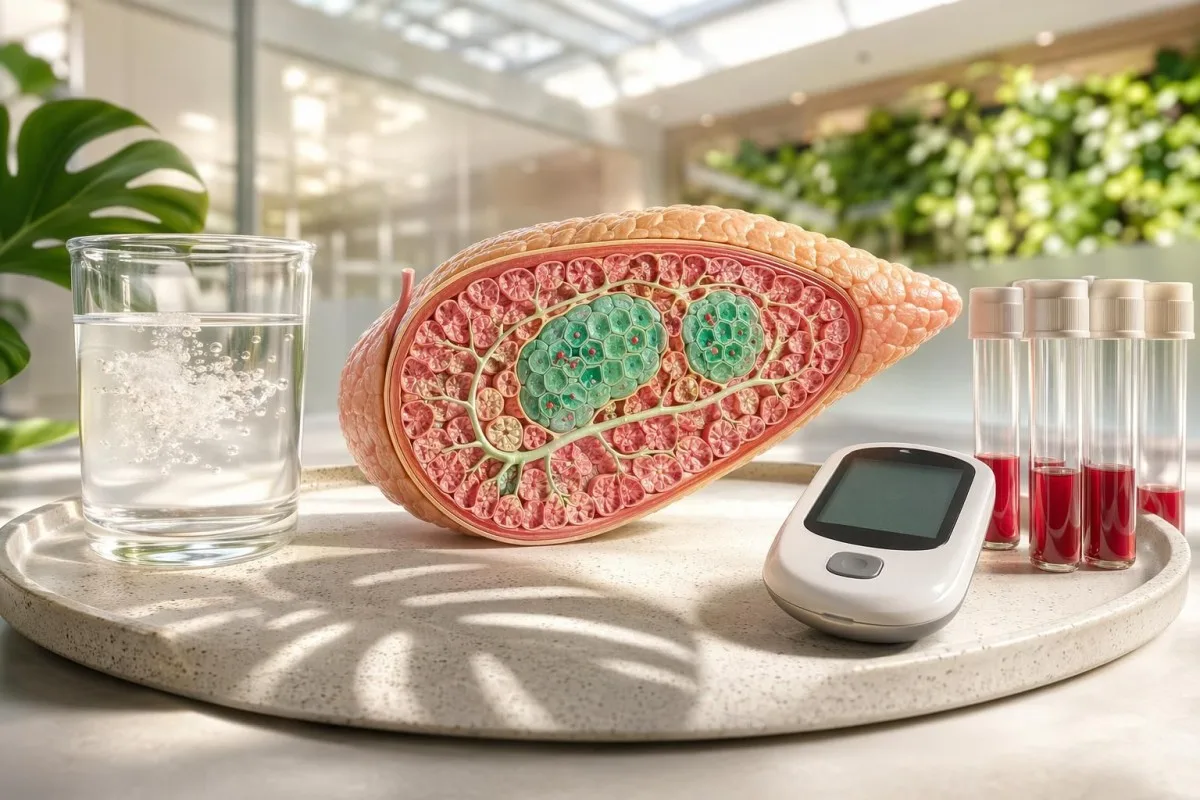
Një udhëzues praktik për shqyrtimin pas lindjes për këdo që u tha se sheqernat e shtatzënisë janë normalizuar, por ende dëshiron të dijë çfarë vjen më pas.


- 75 g OGTT në 4-12 javë pas lindjes është testi i preferuar pas diabetit gestacional sepse zbulon probleme të glukozës në 2 orë që glukoza agjëruese mund t’i humbasë.
- Kufijtë për diabetin janë glukoza plazmatike agjëruese ≥126 mg/dL, glukoza në OGTT 2-orëshe ≥200 mg/dL, HbA1c ≥6.5%, ose glukoza rastësore ≥200 mg/dL me simptoma.
- Kufijtë për prediabetin janë glukoza agjëruese 100-125 mg/dL, glukoza në OGTT 2-orëshe 140-199 mg/dL, ose HbA1c 5.7-6.4%.
- HbA1c herët pas lindjes mund të dalë gabimisht e ulët pas humbjes së gjakut gjatë lindjes ose qarkullimit të lartë të qelizave të kuqe të gjakut, ndaj nuk duhet të zëvendësojë OGTT-në në 4-12 javë.
- Glukoza normale gjatë shtatzënisë pas lindjes nuk e fshin rrezikun e ardhshëm; diabeti gestacional shpesh është një test stresi i qelizave beta që zbulon cenueshmëri vite përpara diabetit të tipit 2.
- Intervali i rivlerësimit është çdo 1-3 vjet për gjithë jetën nëse testi pas lindjes është normal, dhe zakonisht çdo vit nëse ndonjë rezultat bie në intervalin e prediabetit.
- Përpara një shtatzënie tjetër kërkoni testim për glukozën para konceptimit ose herët në tremujorin e parë, veçanërisht nëse GDM e mëparshme kërkonte insulinë ose mjekim.
- Markerët e rrezikut si insulina agjëruese, trigliceridet, HDL, ALT dhe raporti albuminë-kreatininë në urinë nuk diagnostikojnë diabetin, por ndihmojnë për të vlerësuar rrezikun kardiometabolik.
Analizat e gjakut që diagnostikojnë diabetin pas diabetit gestacional
Analizat e gjakut që zbulojnë diabetin pas diabetit gestacional janë: testi oral i tolerancës së glukozës 75 g, 2-orësh, glukoza plazmatike agjëruese, HbA1c, dhe glukoza plazmatike e rastësishme kur janë të pranishme simptomat klasike. OGTT-ja zakonisht është testi më i mirë për depistimin e diabetit pas lindjes në 4-12 javë, sepse zbulon menaxhimin e dëmtuar të glukozës 2-orëshe përpara se glukoza agjëruese ose HbA1c të bëhen jonormale.
Siç u them pacientëve, Thomas Klein, MD: pyetja nuk është vetëm nëse numri është i lartë sot; pyetja është nëse pankreasi ka ende rezervë të mjaftueshme pas shtatzënisë. Një glukozë agjëruese prej 94 mg/dL mund të duket qetësuese, ndërsa një vlerë OGTT 2-orëshe prej 168 mg/dL thotë në heshtje se përgjigja e parë e insulinës po vonohet.
Një diagnozë e diabetit jashtë shtatzënisë vendoset me glukozën plazmatike agjëruese ≥126 mg/dL, glukoza 2-orëshe OGTT ≥200 mg/dL, HbA1c ≥6.5%, ose glukozën plazmatike të rastësishme ≥200 mg/dL me simptoma si etja, urinimi i shpeshtë ose humbja e pashpjeguar e peshës. Për një krahasim në gjuhë të thjeshtë të testeve diagnostikuese dhe të monitorimit, tonat kufijtë e testit për diabetin është një shoqërues i dobishëm.
Kantesti është një analizues i analizave të gjakut me AI që lexon glukozën pas lindjes, HbA1c, lipidet dhe markerët e veshkave në të njëjtin kontekst klinik, jo si sinjale të izoluara. Në analizën tonë të raporteve laboratorike të ngarkuara 2M+, shfaqet vazhdimisht një model: njerëzit e mbajnë mend diagnozën e shtatzënisë, por rezultati i tyre i OGTT-së në 4-12 javë shpesh nuk futet kurrë në regjistrin afatgjatë të shëndetit.
Pse glukoza normale gjatë shtatzënisë nuk e “reseton” rrezikun e ardhshëm
Glukoza normale pas lindjes nuk e rivendos rrezikun e ardhshëm për diabet, sepse diabeti gestacional zakonisht pasqyron një rezervë të kufizuar të qelizave beta nën stresin e shtatzënisë. Lindja largon hormonet placentare, por nuk do të thotë domosdoshmërisht se riparon rezistencën ndaj insulinës, rrezikun gjenetik, prirjen për mëlçi të yndyrshme ose cenueshmërinë e qelizave beta pankreatike.
Placenta prodhon hormone që e rrisin rezistencën ndaj insulinës, shpesh më dukshëm pas javës 24-28. Kur glukoza normalizohet pas lindjes, kjo do të thotë se faktori stresues ka kaluar; nuk provon se qelizat që prodhojnë insulinë kanë rezervë të pakufizuar.
Bellamy et al. raportuan në The Lancet se gratë me diabet gestacional të mëparshëm kishin rreth një rrezik 7-fish më të lartë për diabet të mëvonshëm të tipit 2 krahasuar me ato pa GDM (Bellamy et al., 2009). Në praktikën e përditshme, unë e shoh grupimin e rrezikut me shtim të perimetrit të belit, trigliceride mbi 150 mg/dL, HDL të ulët, histori familjare, PCOS dhe çrregullim të gjumit gjatë dy viteve të para pas lindjes.
Një HbA1c normale prej 5.3% gjashtë muaj pas lindjes ende mund të bashkëjetojë me rezistencë të hershme ndaj insulinës. Nëse dëshironi pamjen më të thellë metabolike, udhëzuesi ynë për testimi i rezistencës ndaj insulinës shpjegon pse insulina agjëruese dhe glukoza mund të luhaten përpara se A1C të kalojë kufirin e prediabetit.
Kur duhet të bëhet shqyrtimi për diabetin pas lindjes
Kontrolli për diabetin pas lindjes duhet të bëhet 4-12 javë pas lindjes, mundësisht me një OGTT 75 g 2-orëshe. Nëse ky afat u humb, koha më e mirë për ta bërë testin është tani; nuk do të prisja për kontrollin e ardhshëm vjetor nëse shtatzënia ishte 6 muaj ose 6 vjet më parë.
Shoqata Amerikane e Diabetit rekomandon një OGTT 75 g në 4-12 javë pas lindjes dhe kontrollim gjatë gjithë jetës çdo 1-3 vjet pas diabetit gestacional (American Diabetes Association Professional Practice Committee, 2024). ACOG mbështet gjithashtu kontrollin pas lindjes në këtë dritare të hershme, dhe shumë klinika obstetrike tani përpiqen ta porosisin përpara vizitës 6-javëshe që të mos harrohet (ACOG, 2018).
Ushqyerja me gji, fragmentimi i gjumit dhe ndryshimet pas lindjes në peshë mund të ndryshojnë të gjitha glukozën nga dita në ditë, por nuk janë arsye për të anashkaluar testimin. Shumica e pacienteve mund ta bëjnë OGTT-në gjatë ushqyerjes me gji; çështja praktike është shpesh kujdesi për fëmijën gjatë pritjes 2-orëshe në laborator, jo biologjia.
Nëse ju duhen edhe kontrolle për anemi, funksionin e tiroides, enzimat e mëlçisë ose shënuesit e veshkave pas lindjes, udhëzuesi ynë lista kontrolluese e analizave pas lindjes tregon cilat teste zakonisht kombinohen me kontrollin e glukozës. Një takim i vetëm shpesh mund të mbulojë më shumë se një problem pas lindjes.
Si interpretohet testi oral i tolerancës së glukozës 75 g
I/E/Të/Të testi oral i tolerancës ndaj glukozës pas shtatzënisë mat glukozën agjëruese dhe glukozën 2-orëshe pas një pije me glukozë 75 g. Një vlerë 2-orëshe ≥200 mg/dL diagnostikon diabetin, ndërsa 140-199 mg/dL diagnostikon tolerancë të dëmtuar të glukozës, edhe kur glukoza agjëruese është normale.
Testi funksionon sepse e sfidon sistemin e insulinës, jo sepse e vëzhgon atë në qetësi. Sipas përvojës sime, njerëzit me GDM të mëparshëm shpesh e kalojnë pjesën e agjërimit, por dështojnë në pjesën 2-orëshe; ky model tregon sekretim të vonuar të insulinës pas vakteve.
Përgatituni me ushqimin tuaj të zakonshëm për të paktën 3 ditë, idealisht duke përfshirë të paktën 150 g karbohidrate në ditë përveç nëse mjeku juaj ju ka thënë ndryshe. Të shkoni shumë me pak karbohidrate përpara një OGTT-je mund ta ekzagjerojë rritjen e glukozës dhe ta bëjë interpretimin të vështirë; udhëzuesi ynë rregullat e agjërimit mbulon detaje për ujin, kafenë dhe oraret.
Mos bëni ushtrime të forta gjatë pritjes 2-orëshe dhe njoftoni laboratorin nëse vjellni ose nuk e përfundoni dot pijen. Rezultati duhet të përsëritet ose të zëvendësohet me një test tjetër diagnostik nëse procedura nuk u krye siç duhet.
Çfarë mund dhe çfarë nuk mund të zbulojë glukoza agjëruese
Glukoza plazmatike agjëruese zbulon diabetin kur vlera agjëruese është ≥126 mg/dL, por mund të humbasë intolerancën e izoluar të glukozës pas vakteve pas diabetit gestacional. Është e dobishme, e lirë dhe e riprodhueshme; thjesht është shumë e ashpër për të zëvendësuar OGTT-në postpartum.
Një glukozë agjërimi prej 100-125 mg/dL është prediabet sipas kritereve të ADA-së, ndërsa <100 mg/dL përgjithësisht konsiderohet normale në Shtetet e Bashkuara. Disa sisteme ndërkombëtare përdorin 110 mg/dL si pragun më të ulët të dëmtimit të agjërimit, gjë që është një arsye pse pacientët ngatërrohen kur lëvizin mes vendeve.
Kurthi klinik është një glukozë agjëruese prej 88-96 mg/dL me një OGTT 2-orëshe prej 155-185 mg/dL. Atij personi mund t’i thuhet se gjithçka është në rregull nëse është urdhëruar vetëm glukoza agjëruese, megjithëse biologjia e glukozës gjatë vakteve të tij/saj është ende e anormalizuar.
Glukoza e mëngjesit ndikohet nga borxhi i gjumit, ngrënia vonë gjatë natës, kortikosteroidet, infeksioni dhe fenomeni i agimit. Yni sheqerin agjërues shpjegon pse një rezultat i vetëm në mëngjes duhet të interpretohet duke pasur parasysh mbrëmjen e mëparshme dhe cilësinë e gjumit.
Pse HbA1c është i përshtatshëm, por jo i përsosur pas lindjes
HbA1c zbulon diabetin në ≥6.5%, por është më pak e besueshme në 4-12 javët e para postpartum, sepse humbja e gjakut gjatë lindjes dhe qarkullimi i qelizave të kuqe të gjakut mund ta shtrembërojnë rezultatin. HbA1c është e dobishme më vonë, sidomos për ndjekje afatgjatë, por nuk duhet të zëvendësojë OGTT-në e parë postpartum.
HbA1c vlerëson glukozën mesatare gjatë afërsisht 8-12 javë, e prirur drejt muajit më të fundit. Pas lindjes, anemia, transfuzioni, mungesa e hekurit ose zëvendësimi i shpejtë i qelizave të kuqe mund ta zhvendosin vlerën larg historisë së vërtetë të glukozës.
Mungesa e hekurit mund ta rrisë në mënyrë të rreme HbA1c te disa pacientë, ndërsa gjakderdhja e fundit mund ta ulë atë në mënyrë të rreme. Është një nga ato fusha ku konteksti ka më shumë rëndësi se numri; një HbA1c postpartum prej 5.6% mund të mos jetë aq qetësuese nëse ferritina është 8 ng/mL dhe OGTT nuk është bërë kurrë.
Nëse A1c-ja juaj nuk përputhet me leximet e matjes me gisht ose me simptomat, lexoni udhëzuesin tonë për saktësinë e A1c përpara se ta pranoni vlerën si të mirëqenë. Zakonisht e kombinoj HbA1c me glukozën e agjërimit, CBC dhe ferritinën kur historia postpartum duket jokonsistente.
Kur glukoza rastësore ose simptomat kërkojnë veprim të shpejtë
Glukoza e rastësishme plazmatike zbulon diabetin kur është ≥200 mg/dL dhe simptomat janë të pranishme. Pas diabetit gestacional, kërkohet rishikim urgjent për glukozë të lartë me të vjella, dehidrim, humbje të shpejtë në peshë, ketone, shikim të turbullt ose lodhje të pazakontë.
Pjesa më e madhe e diabetit pas GDM është tipi 2, por diabeti autoimun postpartum mund të shfaqet ndonjëherë, veçanërisht nëse humbja e peshës është e shpejtë dhe prania e ketoneve është e pranishme. Kam parë pacientë që u hodhën poshtë si thjesht prindër të lodhur të rinj kur glukoza e tyre ishte 280 mg/dL dhe ata ishin të ketotizuar.
Një glukozë e rastësishme prej 140-199 mg/dL nuk është diagnostike më vete, por duhet të nxisë glukozën e agjërimit, HbA1c ose OGTT në varësi të kohës dhe simptomave. Një vlerë e rastësishme mbi 300 mg/dL, veçanërisht me dhimbje abdominale ose frymëmarrje të vështirë, duhet trajtuar si kujdes mjekësor të së njëjtës ditë.
Një vlerë e vetme e lartë mund të ndodhë pas një sëmundjeje, steroideve ose një vakti shumë të pasur me karbohidrate, por modeli ka rëndësi. Udhëzuesi ynë për glukozë të lartë të papritur shpjegon si mjekët e ndajnë hipergliceminë nga stresi nga diabeti i hershëm.
Markerë në gjak që tregojnë rrezik përpara se të shfaqet diabeti
Insulina e agjërimit, C-peptidi, trigliceridet, HDL, ALT dhe raporti albuminë-kreatininë në urinë nuk diagnostikojnë diabet, por ndihmojnë të tregojnë rrezikun metabolik pas diabetit gestacional. Këta tregues mund të zbulojnë rezistencën ndaj insulinës, prirjen për mëlçi të yndyrshme ose stres të hershëm të veshkave ndërkohë që glukoza është ende teknikisht normale.
Insulina e agjërimit mbi afërsisht 15-20 µIU/mL mund të sugjerojë rezistencë ndaj insulinës, megjithëse metodat laboratorike ndryshojnë dhe nuk ka një prag universal diagnostikues. HOMA-IR përdor insulinën agjëruese dhe glukozën agjëruese; vlerat mbi 2.0-2.5 shpesh rrisin dyshimin te të rriturit, por përkatësia etnike, BMI dhe zgjedhja e analizës e ndryshojnë interpretimin.
Trigliceridet mbi 150 mg/dL dhe HDL nën 50 mg/dL te gratë shpesh shoqërohen me rezistencë ndaj insulinës. ALT mbi rreth 25-30 IU/L te një grua me GDM të mëparshme mund të jetë një shenjë e hershme e mëlçisë së yndyrshme, edhe kur “etiketa” e laboratorit ende thotë normale.
Kantesti është një platformë për interpretimin e biomarkerëve me AI që e trajton një A1C normale pas diabetit gestacional si një pyetje për shënues rreziku, jo si “dritë jeshile” përgjithmonë. Nëse dëshironi të llogaritni rezistencën ndaj insulinës nga shifrat tuaja, udhëzuesi tregon formulën dhe kufizimet e saj. llogaritje të HOMA-IR udhëzuesi tregon formulën dhe kufizimet e saj.
Sa shpesh duhet të bëhet rivlerësimi nëse shqyrtimi pas lindjes është normal
Nëse depistimi pas lindjes është normal pas diabetit gestacional, ripërsërit çdo 1-3 vjet për gjithë jetën. Ripërsërite më herët, shpesh çdo vit, nëse rritet pesha, shfaqet prediabeti, planifikohet një shtatzëni tjetër, ose medikamente si steroidet ose antipsikotikët rrisin rrezikun për glukozë.
Rekomandimi i ADA për depistim gjatë gjithë jetës çdo 1-3 vjet ekziston sepse rreziku për diabet rritet me kalimin e kohës, jo vetëm në vitin e parë pas lindjes. Në klinikën time, zakonisht zgjedh intervalin 1-vjeçar për këdo me prediabet, GDM të trajtuar me insulinë, BMI mbi 30, histori të fortë familjare ose PCOS.
Një test normal në 2026 është ende i dobishëm sepse bëhet baza juaj. Glukoza agjëruese që “drifton” nga 82 në 96 mg/dL gjatë 3 viteve mund të jetë më domethënëse se një rezultat i shënuar, sidomos nëse trigliceridet dhe perimetri i belit rriten në të njëjtën kohë.
Kantesti AI mund të hartojë glukozën, HbA1c, trigliceridet dhe ALT me kalimin e kohës, që ndryshimet e vogla të duken përpara se të bëhen dramatike. Artikulli ynë analiza e trendit shpjegon pse pjerrësia dhe grupimi shpesh kanë më shumë rëndësi sesa një flamur i vetëm laboratorik.
Çfarë të kërkoni nga klinicisti juaj të porosisë
Kërkoni një OGTT 75 g 2-orëshe në 4-12 javë pas lindjes, ose glukozë plazmatike agjërimi plus HbA1c nëse OGTT nuk është i realizueshëm. Për rrezikun afatgjatë, pyesni nëse lipidet, ALT, kreatinina, eGFR dhe raporti albuminë-kreatininë në urinë duhet të kontrollohen bashkë me markerët tuaj të glukozës.
Një urdhër i arsyeshëm i parë pas lindjes shpesh lexon: glukozë agjërimi, glukozë 75 g 2-orëshe, HbA1c, CBC nëse ka pasur humbje të madhe gjaku gjatë lindjes, ferritinë nëse dyshohet anemi, panel lipidesh dhe CMP nëse rreziku kardiometabolik është i lartë. Jo çdo pacient ka nevojë për çdo test, por urdhri duhet të përputhet me historinë e shtatzënisë.
Nëse keni pasur hiperglicemi agjërimi gjatë shtatzënisë ose keni pasur nevojë për insulinë, do të isha më agresiv me ndjekjen e hershme. Nëse GDM-ja juaj ishte e lehtë dhe e kontrolluar me dietë, OGTT-ja ende ka rëndësi, por ritmi afatgjatë mund të jetë më afër çdo 2-3 vjet kur të gjitha rezultatet janë normale.
Për lexuesit që duan të kuptojnë çfarë mat realisht secili marker, artikulli ynë për biomarkerët mbulon mijëra markerë laboratorikë dhe diferencat e zakonshme të njësive. Kjo është veçanërisht e dobishme kur një laborator raporton glukozën në mg/dL dhe një tjetër në mmol/L.
Çfarë bëjnë mjekët me rezultatet kufitare ose kontradiktore
Rezultatet kufitare ose kontradiktore për diabetin zakonisht duhet të përsëriten ose të konfirmohen me një test tjetër diagnostik. Një glukozë agjërimi prej 124 mg/dL, HbA1c prej 6.4%, ose një OGTT 2-orëshe prej 198 mg/dL nuk është thjesht një “s’ka gjë”; është një rezultat afër pragut që meriton një plan.
Pa simptoma klasike, shumica e klinicistëve e konfirmojnë diabetin me një rezultat jonormal të përsëritur. Nëse dy teste të ndryshme nuk bien dakord, testi mbi pragun diagnostik zakonisht përsëritet, dhe konteksti i pacientit vendos sa shpejt ndodh kjo.
Thomas Klein, MD, rregull praktik: mos e lini fjalën “kufitar” ta bëjë rezultatin të duket i padëmshëm. Një OGTT 2-orëshe prej 196 mg/dL pas GDM-së së mëparshme shpesh sjell më shumë rrezik të ardhshëm sesa një glukozë agjërimi prej 101 mg/dL, edhe pse të dyja mund të futen nën prediabet.
Udhëzuesi ynë për pragjet e prediabetit shpjegon se si glukoza agjëruese, A1c dhe OGTT përcaktojnë probleme biologjike të ndryshme. Unë shpesh e paraqes prediabetin pas GDM-së si një dritare trajtimi, jo si një sallë pritjeje.
Situata të veçanta: ushqyerja me gji, anemia, PCOS dhe medikamentet
Ushqyerja me gji, anemia, PCOS, medikamentet GLP-1, steroidet dhe sëmundja e tiroides mund të ndryshojnë mënyrën si duhet të interpretohen analizat e diabetit pas lindjes. Kufijtë e glukozës mbeten të njëjtë, por besimi që vendosni te HbA1c, glukoza agjëruese ose nivelet e insulinës mund të ndryshojë ndjeshëm.
Ushqyerja me gji shpesh përmirëson metabolizmin e glukozës dhe mund të ulë rrezikun e ardhshëm për diabet tip 2, por nuk e eliminon nevojën për shqyrtim. Nëse po merrni insulinë ose sulfonilure gjatë periudhës pas lindjes, pyesni mjekun tuaj për rrezikun e hipoglikemisë gjatë ushqyerjeve më të gjata ose kur mungojnë vaktet.
PCOS shton një rrugë të veçantë të rezistencës ndaj insulinës dhe GDM e mëparshme plus PCOS është një nga kombinimet që i trajtoj me më shumë kujdes. Ne Modelet laboratorike të PCOS shpjegon pse insulina agjëruese, lipidet dhe androgenet mund të kenë rëndësi edhe kur glukoza ende nuk është diagnostike.
Injektimet me steroid, prednisone me dozë të lartë, disa antipsikotikë dhe privimi i rëndë i gjumit mund ta rrisin glukozën përkohësisht. Dëshmia rreth kufijve të saktë të gjumit pas lindjes është sinqerisht e përzier, por unë shoh vlera më të këqija të agjërimit kur gjumi fragmentohet nën 5-6 orë për javë.
Si Kantesti lexon në mënyrë të sigurt analizat për diabetin pas lindjes
Kantesti lexon analizat e diabetit pas lindjes duke kombinuar pragjet e glukozës me kohëzimin, historinë e shtatzënisë, shenjat e anemisë, modelet e lipideve dhe markerët e veshkave. Qëllimi nuk është të zëvendësojë mjekun tuaj; është të bëjë më të qartë modelin e rrezikut përpara takimit tuaj.
Kantesti është një mjet për analizën e testeve të gjakut i fuqizuar nga AI, i përdorur nga 2M+ persona në 127 vende, me interpretim të PDF-së ose fotos së analizës së gjakut në rreth 60 sekonda. Për shqyrtimin e diabetit pas lindjes, rrjeti ynë nervor ndan kriteret diagnostike të glukozës nga markerët e kontekstit të rrezikut si trigliceridet, HDL, ALT dhe ACR në urinë.
Një ngarkim tipik mund të tregojë HbA1c 5.5%, glukoza agjëruese 92 mg/dL, ferritinën 10 ng/mL dhe pa OGTT. Kantesti AI nuk do ta diagnostikonte diabetin nga këto shifra, por duhet të sinjalizojë se A1c e hershme pas lindjes mund të jetë e pasigurt dhe se OGTT e rekomanduar mungon.
Metodat tona janë në përputhje me standardet e publikuara klinike dhe rishikimin e brendshëm nga mjekët; lexuesit mund të shohin validimit klinik dhe Benchmark-un e AI. Nëse po ngarkoni një skanim në vend që të shkruani vlerat, për ngarkimin e PDF-ve shpjegon se si raportet lexohen dhe kontrollohen.
Një plan praktik për rivlerësim për vitin 2026 dhe më tej
Që nga 26 maj 2026, plani më i sigurt pas diabetit gestacional është OGTT në 4-12 javë, përsëritja e shqyrtimit çdo 1-3 vjet dhe testimi më herët përpara një shtatzënie tjetër. Nëse ndonjë rezultat bie në intervalin e prediabetit, trajtojeni si një dritare aktive parandalimi, jo si një kuriozitet i lehtë laboratorik.
Skema ime e zakonshme është e thjeshtë: bëni OGTT-në e parë pas lindjes, ruani rezultatin, pastaj vendosni kontrollin tjetër të glukozës në kalendar përpara se jeta të bëhet e ngarkuar. Nëse OGTT-ja juaj 2-orëshe është 140-199 mg/dL, kërkoni një interval të qartë pasues, plan ushqyerjeje dhe objektiv për ushtrime, në vend të një kujtese të paqartë për të pasur kujdes.
Nëse shqyrtimi juaj për diabetin është normal, prapë tregojini çdo mjeku të ardhshëm që keni pasur GDM. Kjo një rresht ndryshon mënyrën se si unë lexoj një glukozë agjëruese prej 103 mg/dL, një nivel trigliceridesh prej 42 mg/dL, ose një HbA1c që rritet nga 5.2% deri në 5.6% gjatë disa viteve.
Kantesti Ltd është një kompani e teknologjisë shëndetësore në Mbretërinë e Bashkuar dhe mjekët tanë rishikojnë përmbajtjen mjekësore përmes bordi këshillimor mjekësor dhe procesit të qeverisjes klinike të përshkruar në Rreth Nesh. Në thelb: analizat e duhura nuk janë të ndërlikuara, por koha dhe interpretimi kanë më shumë rëndësi sesa u thuhet shumicës së njerëzve.
Publikime kërkimore të lidhura me Kantesti
Kontrolli i diabetit pas lindjes shpesh përfshihet brenda një rishikimi më të gjerë laboratorik që përfshin CBC, statusin e hekurit dhe shënuesit e veshkave. Publikimet e DOI të Kantesti të listuara më poshtë mbështesin metoda të afërta të interpretimit të analizave të gjakut, duke përfshirë indekset e qelizave të kuqe dhe raportet e funksionit të veshkave, të cilat mund të ndikojnë në besueshmërinë e HbA1c ose në vlerësimin e rrezikut afatgjatë metabolik.
Pyetje të Shpeshta
Çfarë analizash gjaku zbulojnë diabetin pas diabetit gestacional?
Testet e gjakut që zbulojnë diabetin pas diabetit gestacional janë testi oral i tolerancës së glukozës 75 g 2-orësh, glukoza plazmatike e agjërimit, HbA1c dhe glukoza plazmatike rastësore kur janë të pranishme simptoma. Diabeti diagnostikohet nga glukoza e agjërimit ≥126 mg/dL, glukoza e OGTT 2-orëshe ≥200 mg/dL, HbA1c ≥6.5%, ose glukoza rastësore ≥200 mg/dL me simptoma klasike. OGTT preferohet në 4-12 javë pas lindjes sepse mund të zbulojë çrregullimin e menaxhimit të glukozës 2-orëshe edhe kur glukoza e agjërimit është normale.
A është testi oral i tolerancës ndaj glukozës pas shtatzënisë më i mirë se HbA1c?
Po, testi oral i tolerancës ndaj glukozës pas shtatzënisë zakonisht është më i mirë se HbA1c për shqyrtimin e parë pas lindjes në 4–12 javë. HbA1c mund të shtrembërohet nga humbja e gjakut gjatë lindjes, anemia, transfuzioni ose qarkullimi i shpejtë i eritrociteve, ndërsa OGTT mat drejtpërdrejt trajtimin e glukozës pas një ngarkese me 75 g glukozë. HbA1c bëhet më i dobishëm më vonë për shqyrtim afatgjatë dhe monitorim të trendit.
Kur duhet të kryhet depistimi për diabetin pas lindjes pas GDM?
Kontrolli i diabetit pas lindjes pas diabetit gestacional duhet të bëhet 4–12 javë pas lindjes, idealisht me një OGTT 75 g 2-orëshe. Nëse ky afat është humbur, testimi duhet të kryhet sa më shpejt që të jetë e mundur, në vend që të pritet për shfaqjen e simptomave. Nëse rezultati pas lindjes është normal, përsëritja e kontrollit të diabetit çdo 1–3 vjet gjatë gjithë jetës.
A mund të jetë HbA1c normale, por OGTT të jetë jonormale pas diabetit gestacional?
Po, HbA1c mund të jetë normale ndërsa OGTT është jonormale pas diabetit gestacional. Një person mund të ketë HbA1c 5.3% dhe glukozë agjërimi 92 mg/dL, por një vlerë e OGTT 2-orëshe prej 160 mg/dL, që është tolerancë e dëmtuar e glukozës. Kjo ndodh sepse HbA1c pasqyron glukozën mesatare, ndërsa OGTT e vë në provë përgjigjen e insulinës pas një ngarkese me glukozë.
Çfarë nënkuptojnë rezultatet e prediabetit pas diabetit gestacional?
Predijabeti pas diabetit gestacional përcaktohet nga glukoza plazmatike e agjërimit 100–125 mg/dL, glukoza e OGTT 2-orëshe 140–199 mg/dL, ose HbA1c 5.7–6.4%. Një anomali në OGTT 2-orëshe është veçanërisht e zakonshme pas DZGJ (GDM) dhe mund të mos vërehet nëse urdhërohet vetëm glukoza e agjërimit. Predijabeti zakonisht duhet të nxisë ndjekje vjetore dhe një plan të strukturuar parandalimi.
Sa shpesh duhet të ripërsëris testin nëse testi im pas lindjes është normal?
Nëse testi i diabetit pas lindjes është normal pas diabetit gestacional, ripërsëriteni çdo 1-3 vjet gjatë gjithë jetës. Shumë klinicistë zgjedhin testim vjetor nëse keni pasur diabet gestacional të trajtuar me insulinë, prediabet, PCOS, BMI mbi 30, histori të fortë familjare ose trigliceride në rritje. Testimi duhet të përsëritet gjithashtu para një shtatzënie tjetër ose herët në tremujorin e parë.
A ndryshon ushqyerja me gji rezultatet e analizave të gjakut për diabetin?
Ushqyerja me gji mund të përmirësojë metabolizmin e glukozës dhe mund të ulë rrezikun e ardhshëm për diabetin e tipit 2, por nuk e eliminon nevojën për shqyrtimin (skriningun) e diabetit pas lindjes. Kufijtë diagnostikues për glukozën agjëruese, OGTT dhe HbA1c nuk ndryshojnë sepse dikush po ushqen me gji. Nëse përdoren barna për diabetin pas lindjes, klinicistët mund të rregullojnë kohën ose dozën për të ulur rrezikun e hipoglikemisë gjatë ushqyerjeve të gjata ose vakteve të humbura.
A mund të përdor një monitor të vazhdueshëm të glukozës në vend të testit të tolerancës së glukozës pas lindjes?
Jo. Një monitor i vazhdueshëm i glukozës mund të tregojë modele të dobishme ditore të glukozës, por nuk zëvendëson glukozën agjëruese në laborator, HbA1c, ose një OGTT 75 g për diagnostikimin e diabetit pas diabetit gestacional. Mjeku juaj mund ta përdorë atë më vonë për të mbështetur vendimet e stilit të jetesës ose trajtimit.
A ka nevojë fëmija im për testim për diabet sepse unë pata diabet gestacional?
Glukoza e të porsalindurit mund të kontrollohet në spital, sidomos nëse keni përdorur insulinë ose ilaçe gjatë shtatzënisë, por shumica e fëmijëve nuk kanë nevojë për teste të vazhdueshme të gjakut për diabet vetëm për shkak të diabetit gestacional të nënës. Mbani vizita të rregullta te pediatri dhe mbështetni zakonet familjare rreth vakteve të balancuara, aktivitetit dhe gjumit.
Po nëse nuk e toleroj dot pijen e glukozës për OGTT-në pas lindjes?
Tregojini mjekut tuaj përpara testit. Ata mund ta riplanifikojnë me strategji kundër të përzierave, të kontrollojnë glukozën e agjërimit dhe HbA1c, ose të përdorin përkohësisht të dhëna nga glukoza në shtëpi ose nga monitorimi i vazhdueshëm, por këto alternativa mund të mos e zëvendësojnë plotësisht OGTT-në diagnostike.
Merrni sot analizë të analizave të gjakut me AI
Bashkohuni me mbi 2 milionë përdorues në mbarë botën që i besojnë Kantesti për analizë të menjëhershme dhe të saktë të analizave laboratorike. Ngarkoni rezultatet e analizave të gjakut dhe merrni interpretim gjithëpërfshirës të biomarkerëve të 15,000+ brenda sekondash.
📚 Publikime kërkimore të cituara
Klein, T., Mitchell, S., & Weber, H. (2026). Analiza e gjakut për RDW: Udhëzues i plotë për RDW-CV, MCV & MCHC. Kantesti Kërkim Mjekësor me AI.
Klein, T., Mitchell, S., & Weber, H. (2026). Raporti BUN/Kreatininë i Shpjeguar: Udhëzues për Testin e Funksionit të Veshkave. Kantesti Kërkim Mjekësor me AI.
📖 Referenca të jashtme mjekësore
Komiteti i Praktikës Profesionale i Shoqatës Amerikane të Diabetit (2024). 2. Diagnoza dhe Klasifikimi i Diabetit: Standardet e Kujdesit në Diabet—2024. Diabetes Care.
⚕️ Mohim përgjegjësie mjekësore
Ky artikull është vetëm për qëllime edukative dhe nuk përbën këshilla mjekësore. Gjithmonë konsultohuni me një ofrues të kualifikuar të kujdesit shëndetësor për vendimet e diagnozës dhe trajtimit.
Sinjalet e Besimit E-E-A-T
Përvoja
Rishikim klinik i udhëhequr nga mjeku i flukseve të punës për interpretimin e analizave.
Ekspertizë
Fokus i mjekësisë laboratorike mbi mënyrën se si sillen biomarkerët në kontekstin klinik.
Autoritariteti
Shkruar nga Dr. Thomas Klein me rishikim nga Dr. Sarah Mitchell dhe Prof. Dr. Hans Weber.
Besueshmëria
Interpretim i bazuar në prova, me rrugë të qarta për ndjekje për të reduktuar alarmin.