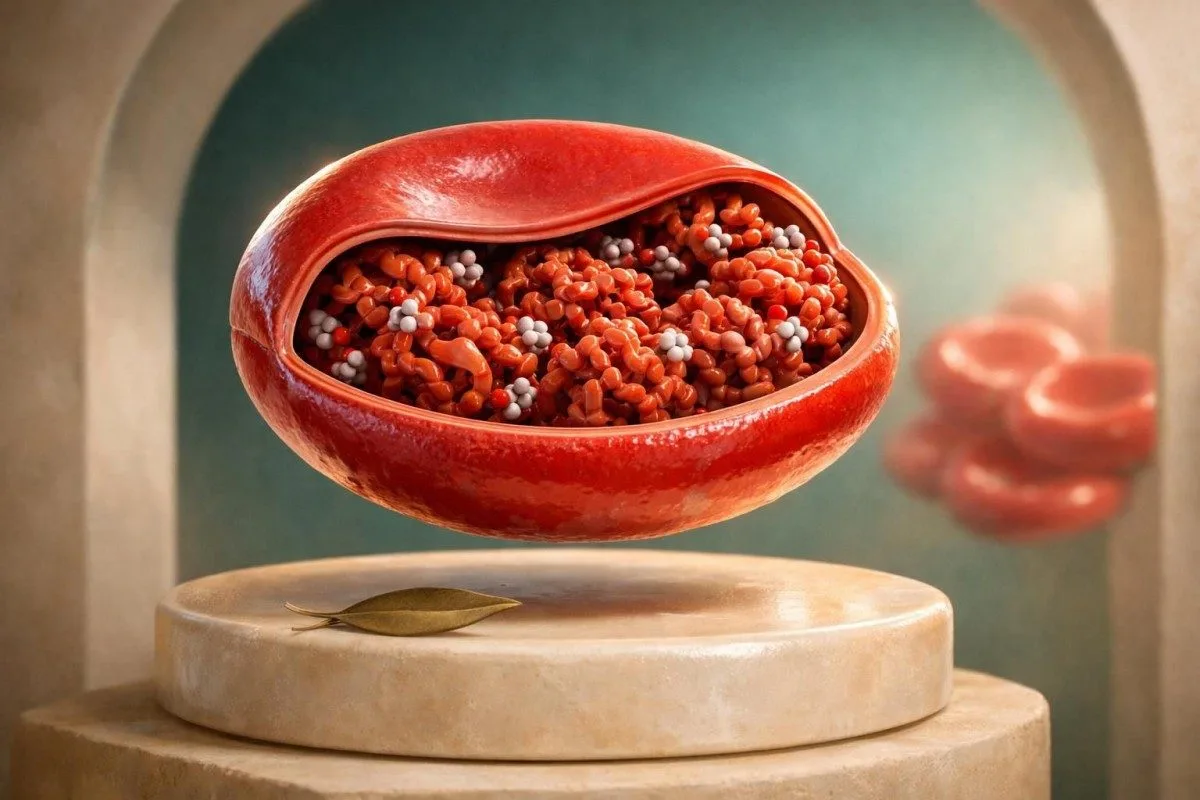
A hemoglobin A1c value can look reassuring or alarming for the wrong reason. Here is how we spot discordant results, why they happen, and which glucose tests tell the truth.


- HbA1c cutoff Normal is <5.7%; 5.7%-6.4% suggests prediabetes; ≥6.5% on repeat testing supports diabetes.
- IFCC conversion HbA1c of 5.7% equals 39 mmol/mol, 6.5% equals 48 mmol/mol, and 7.0% equals 53 mmol/mol.
- Iron deficiency Ferritin under 15 ng/mL can push HbA1c up by roughly 0.3-1.0 percentage points without a real glucose rise.
- Hemolysis Shortened red-cell survival usually lowers hemoglobin A1c falsely, especially when reticulocytes rise above 2%.
- Pregnancy HbA1c often runs lower in the 2nd and 3rd trimester; glucose-based testing is preferred for gestational diabetes.
- Kidney disease eGFR below about 30 mL/min/1.73 m², erythropoietin use, or dialysis can make HbA1c less reliable.
- Blood loss or transfusion Major bleeding or transfusion can distort HbA1c for about 8-12 weeks.
- Alternative markers Fructosamine and glycated albumin reflect the prior 2-3 weeks rather than 2-3 months.
- Mismatch clue If CGM-derived GMI differs from HbA1c by >0.5-0.8 percentage points, look for anemia, CKD, or assay interference.
When the HbA1c test does not match your glucose readings
HbA1c can be misleading whenever red blood cell lifespan or hemoglobin chemistry is abnormal. Iron deficiency may push the result up, hemolysis or recent blood loss often pull it down, pregnancy and advanced kidney disease distort it in both directions, and transfusion can make it uninterpretable for weeks. If your HbA1c test does not match finger-stick, CGM, or lab glucose values, confirm with fasting plasma glucose, a 2-hour OGTT, fructosamine, glycated albumin, or continuous monitoring. On Kantesti AI, we see this mismatch often; it is the same logic behind why normal ranges mislead.
A discordant pattern has a recognizable feel. A patient shows hemoglobin A1c of 6.8%—an estimated average glucose near 148 mg/dL—yet home fasting values sit at 88-97 mg/dL and post-meal checks rarely exceed 135 mg/dL. When I see that gap, I stop thinking only about diabetes and start asking about ferritin, reticulocytes, creatinine, pregnancy, and recent transfusion.
The math helps. The standard estimated-average-glucose formula is 28.7 × A1c - 46.7, so 6.5% maps to about 140 mg/dL and 8.0% to about 183 mg/dL; if the lived glucose pattern is nowhere near that, the biology may be wrong rather than the patient being 'noncompliant.' Kantesti’s interpretation engine flags these mismatches against CBC indices and kidney markers using the framework described in our clinical validation.
As of April 21, 2026, the commonest false-high pattern in our review is mild iron deficiency with HbA1c 5.9%-6.4% and fasting glucose under 100 mg/dL. Thomas Klein, MD, sees the mirror image too: a patient on dialysis with HbA1c 5.7% and CGM averages clearly in the diabetic range. The practical takeaway is simple—if the number does not fit the story, do not anchor on it.
What hemoglobin A1c actually measures—and the HbA1c normal range
Hemoglobin A1c reflects glucose attached non-enzymatically to hemoglobin over roughly 8 to 12 weeks, with the most recent 30 days contributing the most. The usual HbA1c normal range is below 5.7% (under 39 mmol/mol); 5.7%-6.4% is prediabetes, and 6.5% or 48 mmol/mol and higher on repeat testing supports diabetes. Our HbA1c normal range page covers the diagnostic cutoffs, but accuracy depends on normal red-cell biology.
Recent weeks count more than most patients realize. Roughly half of the HbA1c signal comes from the last month, which is why a sudden improvement in glucose today will not fully normalize the number for 8 to 12 weeks; for the diagnostic threshold itself, see our A1c 6.5% explainer.
HbA1c is blind to swings. A person can have fasting values near 90 mg/dL, sharp post-meal spikes to 220 mg/dL, and still land on an A1c that looks merely borderline, which is one reason some patients with early dysglycemia first show up on a different blood sugar test.
Labs may report % or IFCC mmol/mol, and both are valid. HbA1c of 5.7% equals 39 mmol/mol, 6.5% equals 48 mmol/mol, and 7.0% equals 53 mmol/mol; some European labs display only IFCC units, which can confuse people uploading international reports to Kantesti.
Why the last month matters more
HbA1c is weighted toward recent glycemia because older red cells are progressively replaced. In practical terms, the final 30 days contribute more to the result than the first 30 days of the prior 3-month window.
Anemia, iron deficiency, hemolysis, and other red-cell problems
Anemia affects HbA1c because red-cell lifespan is the substrate of the test. Iron deficiency and B12 or folate deficiency often make cells circulate longer and can push HbA1c upward, while hemolysis or brisk marrow recovery shorten survival and usually lower it. That is why discordant results should be read beside the CBC and iron studies, not in isolation; our iron deficiency anemia labs guide shows which values change first.
Iron deficiency is the false-high scenario I see most often. When ferritin is under 15 ng/mL—and sometimes even under 30 ng/mL with symptoms—HbA1c can run about 0.3 to 1.0 percentage points higher than the true glucose picture, especially if MCV is below 80 fL; that pattern is common in early iron loss.
Hemolysis usually does the opposite. A reticulocyte count above 2% or a rising absolute reticulocyte count after treatment means younger cells are dominating, and younger cells have had less time to glycate, so the reported A1c may look falsely reassuring; our reticulocyte count guide is helpful when that story is unfolding.
Macrocytosis matters too. MCV above 100 fL, RDW above 14.5%, glossitis, or numb feet can point toward B12 or folate deficiency, and in that setting an HbA1c of 6.1% may tell you more about cell turnover than glucose exposure.
Kantesti AI cross-checks hemoglobin, MCV, RDW, ferritin, and reticulocytes before it comments on glucose control. In our dataset, one reproducible mismatch cluster is HbA1c 6.2%, ferritin 8 ng/mL, MCV 74 fL, fasting glucose 92 mg/dL—a pattern that deserves iron workup first, not immediate diabetes labeling.
Why pregnancy can make hemoglobin A1c look better than it is
Pregnancy often lowers HbA1c relative to true glucose, especially after the first trimester, because red cells turn over faster and plasma volume expands. HbA1c can help identify preexisting diabetes early in pregnancy, but it is not the preferred stand-alone test for gestational diabetes; the usual pathway still relies on glucose testing, which is why the prenatal lab schedule matters.
According to the American Diabetes Association Professional Practice Committee, gestational diabetes is generally screened at 24 to 28 weeks with glucose-based testing rather than HbA1c alone (American Diabetes Association Professional Practice Committee, 2025). In day-to-day care, I use first-trimester HbA1c mainly to look for preexisting overt diabetes—an HbA1c of 6.5% or higher raises that concern—but a normal value does not rule out later gestational dysglycemia.
Pregnancy adds a twist many summaries skip: iron deficiency can develop at the same time that physiologic red-cell turnover is shortening. One process can tug A1c upward while the other pulls it downward, so a value like 5.5% in the second trimester may be falsely normal, falsely high, or roughly right. This is one of those areas where context matters more than the number.
Post-meal spikes are also more clinically relevant in pregnancy than a 3-month average. A patient may have fasting glucose of 88 mg/dL, one-hour post-meal values over 140 mg/dL, and an A1c that still sits at 5.3%, which is why I tend to trust logs or CGM more than the average.
Kidney disease, dialysis, and erythropoietin: a classic HbA1c trap
Advanced kidney disease is a classic reason for a misleading HbA1c. Anemia, erythropoietin therapy, iron infusions, shortened red-cell survival, and dialysis-related shifts can all make the value look lower than the actual glucose burden, particularly in later CKD stages. That is why we pair A1c with kidney markers in our early kidney blood test changes review.
KDIGO 2022 states that HbA1c remains useful in chronic kidney disease but becomes less precise in advanced CKD, especially in G4 to G5 disease and dialysis (KDIGO, 2022). In my experience, once eGFR falls below about 30 mL/min/1.73 m², I trust a discordant A1c less and start asking for CGM, glucose logs, or glycated albumin; our GFR vs eGFR guide explains why staging matters.
Erythropoiesis-stimulating agents are the hidden culprit patients often forget to mention. When epoetin or darbepoetin accelerates new red-cell production, the average cell age falls and HbA1c can drop by about 0.5 percentage points or more without any meaningful improvement in glucose control. I have seen HbA1c fall from 7.4% to 6.6% over six weeks while CGM barely moved.
Older assays had extra trouble with carbamylated hemoglobin in severe uremia, and newer methods have reduced—but not eliminated—that analytical interference. The bigger issue now is usually biology, not machinery: if albumin is low, hemoglobin is 9.8 g/dL, and the patient is on dialysis, both HbA1c and fructosamine need cautious interpretation.
Recent blood loss, transfusion, and surgery can reset the clock
Recent blood loss or transfusion can make HbA1c uninterpretable for weeks because the test assumes a stable red-cell population. After major surgery, postpartum loss, gastrointestinal bleeding, or transfusion, the reported value may fall, rise, or simply stop reflecting your own average glucose. I usually ask about events from the prior 8 to 12 weeks before I trust the number, especially when reviewing pre-op blood tests.
Acute blood loss lowers the average age of circulating cells as the marrow sends out younger replacements. Younger cells have had less time to glycate, so HbA1c often reads lower than the true 2- to 8-week glucose exposure; a reticulocyte rise is the laboratory breadcrumb that makes the story fit.
Transfusion is even messier because donor cells carry someone else’s glycation history. After 2 or more units, I tell patients the next HbA1c may be misleading for up to 3 months, and if I need an answer sooner I switch to fasting glucose, CGM, or occasionally fructosamine.
This is one of the few times repeating the same test is often the wrong reflex. Better to choose a different metric now and return to HbA1c later, once the red-cell pool has stabilized.
Hemoglobin variants and lab methods: when the assay itself is the problem
Hemoglobin variants can distort an HbA1c test because some assays misread altered hemoglobin, and some variants change red-cell survival at the same time. Sickle trait, HbC trait, HbE trait, and rarer variants are the best-known examples, and the lab method matters more than most patients realize. If you want the machinery side explained, our piece on how lab analyzers differ is a useful companion.
Here is the practical question many clinicians forget to ask: what assay did the lab use? HPLC, immunoassay, enzymatic assays, and boronate affinity methods do not fail in identical ways, so the same patient can get slightly different answers from different labs even when the glucose biology has not changed.
The evidence is not theoretical. In JAMA, Lacy et al. found that African American adults with sickle cell trait had lower HbA1c values than adults without the trait at similar glucose levels, enough to risk underdiagnosis in some cases (Lacy et al., 2017). In plain language, a 'normal' A1c can still miss meaningful hyperglycemia.
I become suspicious when HbA1c repeatedly looks too low for the fasting glucose, particularly if the CBC is otherwise quiet and the family history includes a hemoglobin trait. In that setting, fasting plasma glucose, OGTT, or CGM is often more trustworthy than sending the same HbA1c back to the same analyzer.
Ask the laboratory what method was used
A lab comment about a variant window or interference flag is not a technical footnote. It can be the central reason the result and the patient’s glucose profile do not match.
Which blood sugar test confirms the diagnosis when HbA1c is unreliable?
When HbA1c is unreliable, the best confirmatory test is usually fasting plasma glucose or a 2-hour oral glucose tolerance test. Fasting glucose of 126 mg/dL or higher on repeat testing supports diabetes, 100 to 125 mg/dL suggests impaired fasting glucose, and a 2-hour OGTT value of 200 mg/dL or higher confirms diabetes. We cover the insulin-resistance side separately in our HOMA-IR guide, but diagnosis still rests on direct glucose data when A1c is suspect.
Fructosamine and glycated albumin are useful because they reflect the prior 2 to 3 weeks rather than the prior 2 to 3 months. Many labs use fructosamine ranges around 200 to 285 µmol/L and glycated albumin around 11% to 16%, although the exact cutoffs vary; clinicians disagree a bit on the best glycated albumin threshold for diagnosis, so I treat it as a strong clue rather than a universal standalone rule.
Continuous glucose monitoring adds what the lab cannot: pattern recognition. A 14-day CGM dataset with at least 70% wear time is usually enough to estimate a glucose management indicator, and when GMI differs from HbA1c by more than about 0.5 to 0.8 percentage points, I actively look for anemia, CKD, or assay interference.
Random plasma glucose still counts when symptoms are classic. Polyuria, polydipsia, weight loss, and a random glucose of 200 mg/dL or higher can diagnose diabetes without waiting for HbA1c to settle, which is reassuringly old-school medicine in an era of over-attachment to single markers.
When fructosamine or glycated albumin is better
Short-term glycation markers are often better than HbA1c after transfusion, during rapid anemia recovery, or in advanced CKD. They are less dependent on red-cell age, though low albumin, nephrotic-range protein loss, and major thyroid disease can still distort them.
How we interpret a discordant HbA1c test at Kantesti
At Kantesti, we interpret a discordant HbA1c test by checking the biology around it, not by treating the number as sacred. Our AI blood test platform compares A1c with CBC indices, ferritin, eGFR, albumin, pregnancy context, and glucose data, and our physicians on the medical advisory board review the clinical logic behind those patterns.
In our analysis of more than 2 million uploaded reports across 127+ countries, one repeat pattern is HbA1c 6.3% to 6.8% with fasting glucose under 100 mg/dL, ferritin under 15 ng/mL, MCV under 80 fL, and RDW above 14.5%. That combination is not a diagnosis by itself, but it is a strong reason to pause before labeling someone diabetic.
The reverse cluster is equally important. We see HbA1c 5.6% to 6.0% with CGM averages above 160 mg/dL, eGFR under 30 mL/min/1.73 m², hemoglobin under 10 g/dL, or recent erythropoietin use—and those patients are often more hyperglycemic than the A1c suggests. Thomas Klein, MD, has learned to trust the pattern over the headline number.
Kantesti AI can translate those mixed signals in about 60 seconds from a PDF or photo upload across 75+ languages. Our role is interpretation, not replacement of a clinician; when confidence is limited, the report says so plainly and recommends fasting glucose, OGTT, or CGM instead of pretending certainty exists.
What to do next if your hemoglobin A1c result seems wrong
If your hemoglobin A1c seems wrong, the next step is not panic—it is verification. Ask whether you have had anemia, pregnancy, kidney disease, erythropoietin therapy, blood loss, transfusion, or a known hemoglobin variant in the last 3 months, then choose the best follow-up test. If you want a structured review before your appointment, try our free demo.
The practical checklist is short. Request a CBC, reticulocyte count, ferritin, creatinine with eGFR, and sometimes albumin alongside the repeat glucose workup; if you are unsure what physicians commonly order together, our comprehensive blood panel article lays out the usual combinations.
Timing matters. If you are well and the issue is simply a confusing result, fasting glucose or OGTT within 1 to 2 weeks is reasonable; if you have weight loss, dehydration, vomiting, marked thirst, or capillary glucose persistently above 250 mg/dL, you need urgent medical assessment rather than another routine HbA1c.
As Dr. Thomas Klein, I tell patients that a confusing A1c is usually solvable once we look at red-cell biology. Most patients find the anxiety drops quickly once there is a mechanism that explains the mismatch.
Research and method notes that help explain a misleading HbA1c
The lab clues that explain a misleading HbA1c often sit outside the glucose section of the report. RDW, MCV, reticulocytes, creatinine, and the BUN/creatinine ratio frequently tell you why A1c and glucose disagree; for deeper hematology detail, see our RDW method paper.
Kidney context matters just as much. Our BUN/creatinine paper explains why apparently small renal shifts can matter even before creatinine looks dramatic, and that is often the missing chapter in a 'normal' A1c with abnormal daily glucose.
If you read labs regularly, the best long-term skill is pattern recognition rather than memorizing isolated cutoffs. We keep updating the blog because lab interpretation is full of edge cases, and edge cases are where patients get mislabeled.
Kantesti’s clinicians built the broader reference library for exactly this reason: biomarkers talk to each other. The more complete map lives in our biomarkers guide, and that is often where a confusing HbA1c becomes understandable.
Frequently Asked Questions
Can anemia make HbA1c falsely high?
Yes. Iron deficiency anemia can falsely raise HbA1c because older red cells remain in circulation longer and accumulate more glycation, even when fasting glucose is normal. In practice, ferritin under 15 ng/mL—and sometimes under 30 ng/mL with symptoms—can be enough to create a mismatch, especially if MCV is below 80 fL. B12 or folate deficiency can also push HbA1c upward for similar red-cell lifespan reasons. When anemia is present, confirm with fasting plasma glucose, OGTT, or sometimes fructosamine rather than relying on HbA1c alone.
Is HbA1c reliable during pregnancy?
HbA1c is less reliable during pregnancy, especially after the first trimester. Pregnancy shortens red-cell lifespan and expands plasma volume, which often lowers HbA1c relative to actual glucose exposure; at the same time, developing iron deficiency can push it the other way. That is why gestational diabetes is usually screened with glucose-based testing at 24 to 28 weeks rather than with HbA1c alone. A normal HbA1c in pregnancy does not rule out clinically important post-meal glucose spikes.
Can kidney disease make HbA1c look lower than true glucose?
Yes, particularly in advanced chronic kidney disease. When eGFR falls below about 30 mL/min/1.73 m², anemia, shortened red-cell survival, dialysis, iron treatment, and erythropoietin therapy can all make HbA1c look lower than the true glucose burden. This is common in stage 4 to 5 CKD and in dialysis patients. In that setting, CGM, glucose logs, glycated albumin, or fructosamine often give a more honest picture.
How long after a transfusion or major blood loss should I wait before repeating HbA1c?
A good rule is to wait about 8 to 12 weeks, and often close to 3 months, before trusting HbA1c again after major blood loss or transfusion. Transfusion mixes your red cells with donor cells that carry someone else’s glycation history, while blood loss shifts the circulation toward younger cells that have had less time to glycate. During that interval, fasting plasma glucose, OGTT, or CGM is usually a better choice. If the clinical question is urgent, fructosamine can help because it reflects only the prior 2 to 3 weeks.
What test should replace HbA1c when the number does not fit?
The best replacement depends on the clinical question, but fasting plasma glucose and the 2-hour OGTT are the most reliable diagnostic substitutes when HbA1c is misleading. Fasting glucose of 126 mg/dL or higher on repeat testing supports diabetes, and a 2-hour OGTT value of 200 mg/dL or higher confirms it. Fructosamine and glycated albumin are useful for the prior 2 to 3 weeks, while CGM is excellent for showing patterns and mismatch over at least 14 days. If symptoms are classic, a random plasma glucose of 200 mg/dL or higher can diagnose diabetes even without HbA1c.
Do sickle cell trait or other hemoglobin variants affect HbA1c results?
Yes. Sickle cell trait, HbC trait, HbE trait, and other variants can affect HbA1c because some assays measure altered hemoglobin imperfectly, and some variants also change red-cell lifespan. The result can be falsely low, falsely high, or simply inconsistent across different laboratories. This is why asking the lab which method was used—such as HPLC, immunoassay, enzymatic assay, or boronate affinity—can matter clinically. When variant interference is suspected, direct glucose testing or CGM is usually safer than repeating the same HbA1c.
Can any medications make my HbA1c falsely low?
Yes. Medicines that shorten red-blood-cell survival, including dapsone or ribavirin, can lower HbA1c without lowering your actual glucose. Tell your clinician and laboratory about every prescription so they can use glucose-based testing when needed.
Should I stop diabetes medicine if my HbA1c suddenly looks normal?
No—do not stop or reduce medication based on one unexpected HbA1c. Review finger-stick or CGM readings, recent illness, anemia, kidney changes, or transfusion history with your clinician before changing treatment.
Can big blood sugar swings still give a normal HbA1c?
Yes. HbA1c is an average, so frequent highs can be balanced by lows and look deceptively normal. If symptoms or meter readings vary widely, a CGM report or structured finger-stick log can show the pattern more clearly.
Get AI-Powered Blood Test Analysis Today
Join over 2 million users worldwide who trust Kantesti for instant, accurate lab test analysis. Upload your blood test results and receive comprehensive interpretation of 15,000+ biomarkers in seconds.
📚 Referenced Research Publications
Klein, T., Mitchell, S., & Weber, H. (2026). RDW Blood Test: Complete Guide to RDW-CV, MCV & MCHC. Kantesti AI Medical Research.
Klein, T., Mitchell, S., & Weber, H. (2026). BUN/Creatinine Ratio Explained: Kidney Function Test Guide. Kantesti AI Medical Research.
📖 External Medical References
American Diabetes Association Professional Practice Committee (2025). 2. Diagnosis and Classification of Diabetes: Standards of Care in Diabetes—2025. Diabetes Care.
KDIGO (2022). KDIGO 2022 Clinical Practice Guideline for Diabetes Management in Chronic Kidney Disease. Kidney International.
⚕️ Medical Disclaimer
This article is for educational purposes only and does not constitute medical advice. Always consult a qualified healthcare provider for diagnosis and treatment decisions.
E-E-A-T Trust Signals
Experience
Physician-led clinical review of lab interpretation workflows.
Expertise
Laboratory medicine focus on how biomarkers behave in clinical context.
Authoritativeness
Written by Dr. Thomas Klein with review by Dr. Sarah Mitchell and Prof. Dr. Hans Weber.
Trustworthiness
Evidence-based interpretation with clear follow-up pathways to reduce alarm.