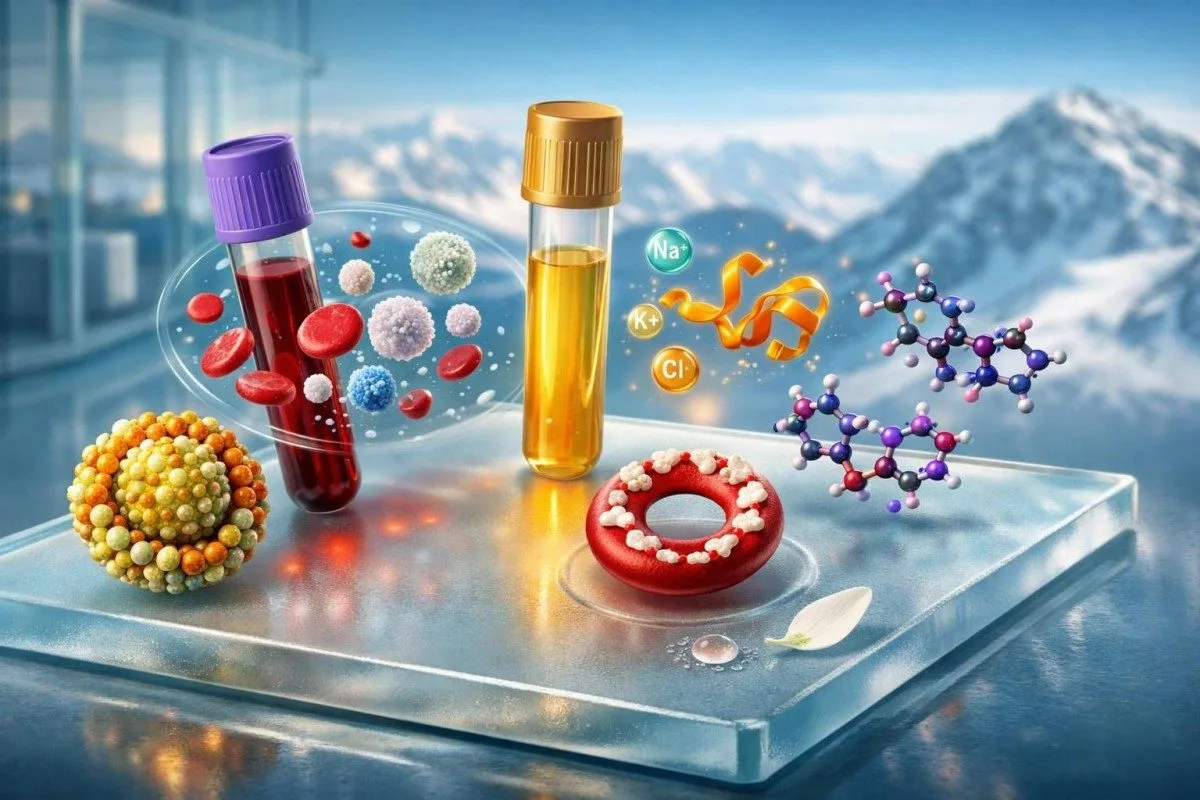
A comprehensive blood panel is not one universal lab panel. In most clinics it means a bundle—usually CBC plus CMP, sometimes lipids, HbA1c, and TSH—but ferritin, vitamin D, ApoB, free T4, or cystatin C are often missing.


- Nonstandard term means there is no single required analyte list; one panel may have 25 reportable items while another claims 70 by counting calculated values.
- CMP usually contains 14 chemistry analytes, including glucose, creatinine, sodium, potassium, ALT, AST, albumin, bilirubin, and calcium.
- CBC reports cell counts such as WBC, RBC, hemoglobin, hematocrit, and platelets; a differential is often separate and adds 5 white cell subtypes.
- HbA1c of 5.7-6.4% suggests prediabetes, and 6.5% or higher supports diabetes when confirmed or matched with diagnostic glucose criteria.
- TSH alone is a screening test, not a full thyroid workup; many symptomatic patients also need free T4, and sometimes antibodies or free T3.
- Ferritin below about 30 ng/mL often suggests depleted iron stores even when hemoglobin is still normal.
- ApoB becomes especially useful when triglycerides are above 200 mg/dL or LDL-C does not match overall risk, as reflected in Grundy et al., 2019.
- Potassium of 6.0 mmol/L or higher usually needs same-day clinical review, especially if kidney function is reduced or symptoms are present.
What a comprehensive blood panel usually means in real practice
A comprehensive blood panel is not a regulated panel name. Most labs use it to mean CBC + CMP, sometimes with lipids or TSH, but the only safe way to compare offers is to read the analyte list or run the report through Kantesti AI beside a true standard blood test checklist.
As of April 21, 2026, there is still no single international definition for this package. In our review of more than 2 million uploaded reports, panels with the same label have ranged from roughly 22 reportable items to over 70, often because one lab counts calculated values such as eGFR or non-HDL cholesterol as separate markers and another does not.
I see this confusion weekly. A 38-year-old teacher recently bought a so-called full blood panel expecting iron, diabetes, cholesterol, and thyroid screening; what she actually received was a CBC, CMP, and vitamin D, with no ferritin, no HbA1c, and only a basic TSH. Her fatigue workup had to be repeated, which meant another sample collection fee.
As Thomas Klein, MD, I usually tell patients to ignore the package title and ask three blunt questions: which analytes are truly measured, which results are calculated, and which require a separate tube or a separate visit. That short conversation saves money, but more importantly it prevents false reassurance when a broad-sounding panel turns out to be fairly thin.
How a full blood panel differs from CBC and CMP packages
A CBC measures cellular elements and a CMP measures 14 chemistry analytes. Put together, they still do not include lipids, iron stores, most hormones, or many inflammation markers.
A CBC usually reports WBC, RBC, hemoglobin, hematocrit, platelets, MCV, MCH, MCHC, and RDW; a 5-part differential adds neutrophils, lymphocytes, monocytes, eosinophils, and basophils. Typical adult WBC reference ranges are about 4.0-11.0 ×10^9/L, but you need the CBC differential guide to know whether a high count is neutrophilic stress, allergy, or something that needs a smear.
A CMP includes 14 analytes: glucose, calcium, sodium, potassium, chloride, CO2, BUN, creatinine, albumin, total protein, ALP, ALT, AST, and bilirubin. Patients often confuse it with a BMP, which covers only 8 core chemistries; our CMP vs BMP breakdown shows exactly what drops out.
Here is the catch: a vendor can bundle CBC + CMP and market the set as a full blood panel, even though it still misses LDL-C, HDL-C, triglycerides, TSH, ferritin, vitamin B12, and 25-OH vitamin D. Most patients hear comprehensive and assume whole-body screening; in real practice it usually means cell counts plus basic chemistry.
Which common blood tests are most often bundled
Most upgraded bundles add a lipid panel, HbA1c, and sometimes TSH. Vitamin D, B12, ferritin, and more specialized markers are still commonly sold as extras.
A standard lipid panel usually reports total cholesterol, HDL-C, triglycerides, and calculated or direct LDL-C. When triglycerides exceed 400 mg/dL, calculated LDL becomes less reliable, which is why our lipid panel guide spends so much time on context rather than just green and red flags.
An HbA1c of 5.7-6.4% fits prediabetes, and 6.5% or higher supports diabetes when confirmed or paired with diagnostic glucose criteria, according to the ADA Professional Practice Committee, 2024. That is why many bundles add A1c even when fasting glucose is already on the CMP; our review of the A1c 6.5% cutoff shows where that overlap helps and where it simply pads the package.
TSH is commonly added because a single assay can catch a fair amount of overt thyroid disease, and many labs use a reference interval around 0.4-4.5 mIU/L. But a lone TSH is a blunt tool; biotin, pituitary disease, pregnancy, and early autoimmune thyroiditis can all make that number look calmer than the patient feels. Kantesti AI regularly flags those context gaps when we compare broad bundles from different labs.
What a comprehensive blood panel often leaves out
The tests most often omitted are the ones that change management early: ferritin, iron saturation, free T4, ApoB, GGT, magnesium, hs-CRP, and cystatin C. That is why a normal-looking broad panel can still miss the real reason a patient feels unwell.
A normal CBC does not rule out iron depletion, and a seemingly normal TSH does not close the book on thyroid symptoms. When the bundle includes only one hormone, we usually send readers to the thyroid panel guide because free T4 often changes the interpretation more than patients expect.
Many labs flag ferritin below 15 ng/mL as low, yet in day-to-day practice ferritin under about 30 ng/mL often matches depleted iron stores—sometimes months before hemoglobin falls. And ApoB becomes clinically useful when triglycerides are above 200 mg/dL or when LDL-C and non-HDL-C do not match the patient’s overall risk picture, which is exactly the use case emphasized in the 2018 AHA/ACC cholesterol guideline (Grundy et al., 2019). Some European labs still place GGT inside routine chemistry panels, whereas many consumer bundles leave it out unless you buy a liver add-on.
I also wish more panels included cystatin C. Creatinine-based eGFR can look deceptively reassuring in smaller older adults and deceptively low in very muscular people, whereas combined creatinine-cystatin C equations improve CKD classification in many borderline cases (Inker et al., 2021); our kidney blood test article explains why that matters when eGFR hovers near 60 mL/min/1.73 m².
How to avoid paying twice for the same standard blood test
The easiest way to overpay is to buy overlapping panels. A CMP already includes ALT, AST, ALP, bilirubin, albumin, calcium, glucose, sodium, potassium, chloride, CO2, BUN, creatinine, and total protein.
The most obvious redundancy is a CMP sold alongside a separate liver or electrolyte add-on. A CMP already covers ALT, AST, ALP, bilirubin, albumin, sodium, potassium, chloride, CO2, glucose, calcium, BUN, creatinine, and total protein, so before you add anything else, compare it with our blood chemistry panel explainer and highlight the overlap.
A second trap is the kidney package layered onto the same order. A renal panel may add phosphorus and sometimes albumin, but the core kidney numbers still overlap heavily with a CMP, which is why the renal panel vs CMP comparison saves people from paying twice for creatinine, BUN, sodium, potassium, and CO2.
Some vendors also inflate marker counts by listing eGFR, BUN/creatinine ratio, globulin, or A/G ratio as if they were separately measured tests. They can be useful, yes, but they are often derived values. When a package advertises 65 biomarkers, ask how many are unique assays performed in the lab and how many are calculations generated afterward.
A simple checklist to compare comprehensive blood panel offers
Compare panel offers by exact analytes, preparation rules, specimen types, repeat timing, and hidden fees. If you only compare package names, you will miss the real differences.
Compare by analyte list, not by adjectives like premium, advanced, or executive. If the vendor will not show the actual line items—CBC with differential, CMP, TSH, HbA1c, ferritin, and so on—walk away; our blood test abbreviations guide helps translate the shorthand.
Then check preparation. A lipid panel can often be interpreted nonfasting, but triglycerides and glucose are cleaner when the patient has fasted 8-12 hours, and fasting rules change what a standard blood test really costs in time; see our fasting before blood test guide if the offer is vague.
Finally, count tube types and revisit windows. A CBC needs an EDTA tube, most chemistries use serum or plasma, and add-ons such as cortisol, testosterone, or timed reproductive hormones may require morning collection or cycle-specific timing. Kantesti AI can interpret the finished report quickly, but it cannot rescue a poorly designed order.
Three questions before checkout
Ask which results are directly measured, which are calculated, and whether any advertised marker requires a second appointment. That one habit catches most expensive duplicates before payment.
When a basic CBC-CMP package is enough — and when it is not
A basic CBC-CMP-lipid package is enough for some well adults doing routine screening, but symptoms and risk factors should change the menu. The better question is not how large the panel is; it is whether the panel answers your actual clinical problem.
If the complaint is fatigue, shortness of breath, hair shedding, heavy periods, or restless legs, I would rather add ferritin, B12, and thyroid studies than buy a bigger-looking bundle. Our fatigue testing guide explains why a normal hemoglobin of 12.4 g/dL does not rule out iron depletion if ferritin is 9 ng/mL.
Context matters even more at the edges. A 52-year-old marathon runner with AST 89 U/L and normal bilirubin may simply have muscle spillover after a long race, while a sedentary patient with AST 89, ALT 96, and triglycerides 260 mg/dL raises a very different concern; that is where a personalized blood test baseline beats a generic bundle.
Menopause, vegan diets, metformin use, proton pump inhibitors, chronic kidney disease, and pregnancy all shift what enough looks like. Most telehealth packages do not adapt well to those nuances. In my experience, targeted add-ons outperform oversized panels more often than patients expect.
High-yield add-ons by symptom
Fatigue often pushes ferritin, B12, TSH, and sometimes vitamin D to the top of the list. Weight change, palpitations, or constipation make thyroid markers more useful than another repeated chemistry panel.
What to do after your full blood panel comes back
First verify units, fasting status, and your previous baseline before reacting. A mildly abnormal result without context is usually less informative than a stable trend over months.
Start by checking whether the units match your previous reports. Creatinine 1.1 mg/dL and 97 µmol/L are roughly the same value, and plenty of patients think kidney function has worsened when only the unit system changed; our blood test comparison guide shows how to avoid that mistake.
Trend beats snapshot. Albumin, hemoglobin, hematocrit, and even calcium can look falsely high after dehydration or a hard training block, so the number that matters most is often the change from your baseline over 3-12 months; our AI blood test platform is built around that kind of longitudinal reading.
Kantesti’s neural network parses PDF and photo uploads in about 60 seconds and flags overlaps, omissions, and context issues that patients often miss—like a comprehensive blood panel missing ferritin or duplicating liver chemistries. I still tell people not to self-diagnose from one mildly abnormal result; the safe sequence is verify, compare, then decide whether the pattern needs a clinician, a repeat test, or no action at all.
Which results from a comprehensive blood panel should prompt faster follow-up
Some results deserve quicker follow-up. Potassium 6.0 mmol/L or higher, sodium under 125 mmol/L, glucose 200 mg/dL or higher with symptoms, or hemoglobin under 8 g/dL should not sit in an inbox for two weeks.
A few results deserve prompt review even in routine screening. Potassium ≥6.0 mmol/L, sodium <125 mmol/L, glucose ≥200 mg/dL with symptoms, hemoglobin <8 g/dL, platelets <50 ×10^9/L, or bilirubin >3.0 mg/dL are the kinds of thresholds I treat seriously, and our critical values guide lays out the usual escalation steps.
Patterns matter more than isolated alarms. AST 89 U/L after a marathon and CK 1,200 U/L points me toward muscle, while AST 89, ALP 180, and bilirubin 2.4 mg/dL pushes me to think hepatobiliary disease. A potassium 5.7 in a hemolyzed sample may be artifact; a potassium 5.7 with creatinine 2.1 mg/dL and weakness is not.
I do not say this to scare people. Most borderline abnormalities are not emergencies. But if a panel company delivers a result late Friday and offers no context, do not wait for the next wellness cycle—same-day primary care, urgent care, or emergency review may be appropriate depending on symptoms.
Research, tools, and how Kantesti reviews panel reports
Kantesti helps most after the lab order is placed: it shows what your comprehensive blood panel included, what it skipped, and which values overlap. If you want a fast second pass on a report, try the free demo; it reads uploaded results in about 60 seconds and is often enough to spot duplicate chemistry tests or missing iron studies.
We built Kantesti for this exact problem. Our team has reviewed patterns across more than 2 million reports from 127+ countries, and the organization behind it is outlined on our About Us page while the clinical methodology sits in our medical validation notes.
Thomas Klein, MD, still believes software should stay humble: a panel interpreter can organize, compare, and surface risk, but it does not replace a clinician examining the patient in front of them. That is why our physician governance is public through the Medical Advisory Board, and why urgent abnormalities are always routed back to real-world care.
Our platform can interpret reports spanning 15,000+ biomarkers, yet the practical advice remains refreshingly low-tech: buy the smallest panel that answers the real question, then add only the tests that change management. For readers who want broader symptom context, the formal publications listed below cover hormone-related symptom patterns and gastrointestinal symptom timing in a citable format.
Frequently Asked Questions
Is a comprehensive blood panel the same as a CBC and CMP?
No. A comprehensive blood panel is a marketing term, while CBC and CMP are standardized lab panels with defined contents. A CMP usually contains 14 chemistry analytes, and a CBC covers cell counts plus red cell indices; some sellers bundle those together and call it a full blood panel, but ferritin, lipids, HbA1c, TSH, vitamin D, or ApoB may still be missing. The practical move is to compare the actual analyte list, not the package name.
Does a full blood panel include thyroid tests?
Sometimes, but often only TSH. Many broad screening bundles add TSH because it is inexpensive and clinically useful, and many labs use a reference interval around 0.4-4.5 mIU/L. A true thyroid workup may also need free T4, and sometimes free T3 or antibodies depending on symptoms, pregnancy status, medication use, and prior history. A normal TSH alone does not rule out every thyroid problem.
How many tests are usually in a comprehensive blood panel?
There is no universal number. A CBC plus CMP gives you about 24 directly measured analytes before you count calculations such as eGFR, globulin, or A/G ratio, while marketed bundles may advertise 40-70 biomarkers by listing those derived values separately. In my experience, once a vendor starts leading with the number of markers instead of the analyte names, redundancy becomes more likely. Ask how many assays are directly measured in the lab.
Do I need to fast for a comprehensive blood panel?
Not always. CBC, TSH, and vitamin B12 usually do not require fasting, while glucose and triglycerides are cleaner after an 8-12 hour fast if the goal is diagnostic accuracy. HbA1c does not require fasting at all, which is one reason it is often bundled into screening packages. If the order includes cortisol, testosterone, or timed reproductive hormones, morning timing may matter more than fasting.
Can I avoid duplicate labs if I already had a CMP or CBC recently?
Often, yes. If you had a CMP or CBC within the last few days or weeks and your symptoms, medications, and hydration status are unchanged, repeating the exact same panel may add little value. The smarter approach is to compare the new offer against the old analyte list and add only what is missing, such as lipids, ferritin, HbA1c, or thyroid markers. This matters most when vendors charge separately for sample collection and physician review.
Which blood panel results need faster medical follow-up?
Common results that usually merit prompt review include potassium 6.0 mmol/L or higher, sodium under 125 mmol/L, glucose 200 mg/dL or higher with symptoms, hemoglobin under 8 g/dL, platelets under 50 ×10^9/L, and bilirubin above 3.0 mg/dL. A result can be urgent even before it reaches those cutoffs if it is rapidly changing or paired with chest pain, weakness, confusion, jaundice, or shortness of breath. A hemolyzed sample can falsely raise potassium, so repeat confirmation may matter, but that decision should be fast rather than casual.
Should I avoid exercise before having a comprehensive blood panel?
Avoid unusually strenuous exercise for about 24 hours before routine testing unless your clinician advises otherwise. Hard workouts, dehydration, and muscle injury can temporarily affect creatinine, potassium, AST, and other results, making interpretation less straightforward.
Can supplements or medications change my comprehensive blood panel results?
Yes. Biotin supplements can interfere with some thyroid and hormone immunoassays, and medicines such as diuretics, statins, or steroids can shift electrolytes, liver enzymes, glucose, or lipids. Bring a current medication and supplement list, and do not stop prescriptions unless your clinician tells you.
Can a comprehensive blood panel detect cancer or autoimmune disease?
Usually no. Standard panels can show clues such as anemia, high inflammation if included, or abnormal liver tests, but they do not screen reliably for most cancers or autoimmune diseases; persistent symptoms need targeted testing chosen by a clinician.
Get AI-Powered Blood Test Analysis Today
Join over 2 million users worldwide who trust Kantesti for instant, accurate lab test analysis. Upload your blood test results and receive comprehensive interpretation of 15,000+ biomarkers in seconds.
📚 Referenced Research Publications
Klein, T., Mitchell, S., & Weber, H. (2026). Diarrhea After Fasting, Black Specks in Stool & GI Guide 2026. Kantesti AI Medical Research.
Klein, T., Mitchell, S., & Weber, H. (2026). Women's Health Guide: Ovulation, Menopause & Hormonal Symptoms. Kantesti AI Medical Research.
📖 External Medical References
American Diabetes Association Professional Practice Committee (2024). Diagnosis and Classification of Diabetes: Standards of Care in Diabetes—2024. Diabetes Care.
⚕️ Medical Disclaimer
This article is for educational purposes only and does not constitute medical advice. Always consult a qualified healthcare provider for diagnosis and treatment decisions.
E-E-A-T Trust Signals
Experience
Physician-led clinical review of lab interpretation workflows.
Expertise
Laboratory medicine focus on how biomarkers behave in clinical context.
Authoritativeness
Written by Dr. Thomas Klein with review by Dr. Sarah Mitchell and Prof. Dr. Hans Weber.
Trustworthiness
Evidence-based interpretation with clear follow-up pathways to reduce alarm.