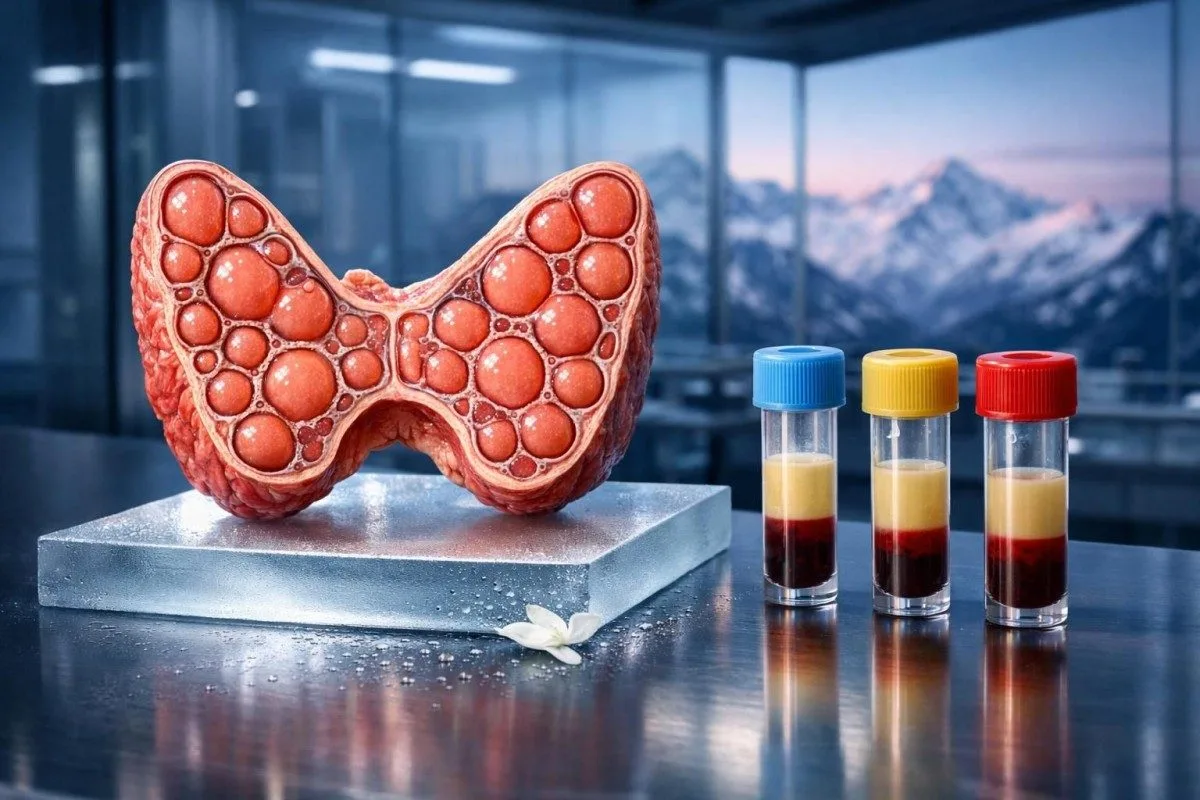
A full thyroid panel adds value when TSH levels are borderline, suppressed, or mildly high; when symptoms and the number disagree; and when pregnancy, infertility, thyroid medication, or pituitary disease is in the picture. As of April 19, 2026, the extra tests that most often change interpretation are free T4, free or total T3, and thyroid antibodies.


- TSH normal range is usually 0.4-4.0 mIU/L in adults, but some labs use 0.27-4.2 and older adults may run slightly higher.
- Suppressed TSH below 0.1 mIU/L should trigger free T4 and T3, because overt hyperthyroidism or T3 thyrotoxicosis can hide there.
- Free T4 usually ranges from 0.8-1.8 ng/dL or 10-23 pmol/L; low free T4 with a non-high TSH raises pituitary disease or severe illness.
- Free or total T3 adds the most value when TSH is low and free T4 is normal; in practice, total T3 is often analytically steadier than free T3.
- TPO antibodies above about 35 IU/mL support autoimmune thyroiditis and make borderline hypothyroidism more likely to progress over time.
- TRAb above roughly 1.75 IU/L supports Graves disease and matters in pregnancy after prior Graves treatment.
- Biotin at 5-10 mg/day can falsely lower TSH and falsely raise free T4 or T3; stopping for 48-72 hours is usually enough for standard supplement doses.
- Retesting timing matters: recheck 6-8 weeks after a levothyroxine dose change and draw before the morning pill when possible.
- Kantesti AI interprets thyroid panel results by checking units, assay ranges, medication flags, and trend direction from the full report, not one isolated number.
When a thyroid panel adds value over TSH alone
A thyroid panel adds value when TSH levels are borderline, suppressed, or mildly high; when symptoms and the number disagree; and when pregnancy, infertility, thyroid medication, or pituitary disease is in the picture. On Kantesti AI blood test analyzer, we see the biggest jump in useful interpretation when TSH is paired with free T4, free or total T3, and thyroid antibodies after borderline lab results.
For simple screening in a well adult, TSH alone is often enough. An adult TSH normal range is commonly 0.4-4.0 mIU/L, and a normal result makes major primary thyroid failure or major hyperthyroidism less likely.
The thing is, TSH is a pituitary signal, not the hormone doing the day-to-day work in tissues. Because the TSH-free T4 relationship is log-linear, a small drop in free T4 can produce a much larger rise in TSH, so a TSH of 6.2 mIU/L means something very different when free T4 is 1.1 ng/dL versus 0.6 ng/dL.
A 34-year-old patient trying to conceive came through our review queue with fatigue, cold intolerance, a TSH of 3.8 mIU/L, free T4 of 0.9 ng/dL, and TPOAb of 240 IU/mL. TSH alone looked almost acceptable; the full panel showed early autoimmune thyroid disease and changed follow-up timing completely.
In clinic, I—Thomas Klein, MD—still start with TSH because it is efficient, cheap, and usually the right first move. But I do not stop there when the story is messy, and that is the same reasoning we use with the endocrinologists on our medical advisory board; the AACE/ATA guideline still recommends adding free T4 when TSH is abnormal and thinking about pituitary disease when free T4 is low without an appropriate TSH rise (Garber et al., 2012).
How to read TSH levels without overcalling disease
TSH levels are usually interpreted as normal at 0.4-4.0 mIU/L in adults, but age, pregnancy, time of day, and assay method shift that range. A TSH below 0.1 mIU/L or above 10 mIU/L almost always deserves a full thyroid blood test, not a repeat TSH alone.
Most labs report a TSH normal range somewhere between 0.27-4.2 or 0.4-4.5 mIU/L. Some European labs use slightly lower upper limits in younger adults, while adults over 80 can sit near 5-6 mIU/L without clear thyroid symptoms in day-to-day practice.
And time matters more than most patients are told. TSH has a circadian swing of roughly 30-50%, tends to run highest overnight, and can be modestly higher in an early morning sample than in an afternoon redraw with no true gland change at all.
Numbers near the edges are where people get misled. If your TSH is 7.8 mIU/L, start with the pattern framework in our high TSH guide. If your TSH is 0.06 mIU/L, the faster route is the algorithm in our low TSH patterns.
Rarely, the TSH number itself is the problem rather than the thyroid gland. If TSH stays oddly high while free T4 and T3 remain steady for years and the patient feels well, I start thinking about assay interference or the uncommon entity called macro-TSH instead of assuming lifelong disease.
What free T4 tells you that TSH cannot
Free T4 matters because it measures circulating unbound hormone rather than the pituitary's reaction to it. A free T4 below 0.8 ng/dL with a high TSH usually confirms primary hypothyroidism, while a low free T4 with a normal or low TSH raises central hypothyroidism, acute illness, or assay trouble.
A typical adult free T4 reference range is 0.8-1.8 ng/dL or 10-23 pmol/L, although your lab may vary slightly. High free T4 with low TSH fits overt hyperthyroidism, and low free T4 with high TSH fits overt primary hypothyroidism—those are the easy cases.
What trips patients up is protein binding. Roughly 99.97% of T4 is protein-bound, so pregnancy, estrogen therapy, liver disease, and nephrotic states can make total T4 look misleadingly high or low while the free fraction tells the truer story.
I see this pattern more often than general websites admit: a patient with fatigue, sodium of 129 mmol/L, low libido, TSH of 1.6 mIU/L, and free T4 of 0.6 ng/dL. That is not reassuring thyroid function; until proven otherwise, it is pituitary territory and often belongs alongside other pituitary hormones.
One practical pearl most patients love because it stops repeated confusion: if you are already taking levothyroxine, free T4 can rise within a few hours after the morning tablet. For clean trend data, I usually ask people to draw the lab before the dose or at least at the same interval every time; if you want the broader background, our free T4 guide lays this out in more detail.
When T3 earns its place in a thyroid blood test
T3 is not a routine add-on for everyone, but it matters when TSH is low, free T4 is normal, or symptoms strongly suggest an overactive thyroid despite a borderline result. A free T3 normal range is often 2.3-4.2 pg/mL, and total T3 usually runs about 80-200 ng/dL.
The classic reason to order T3 is T3 thyrotoxicosis. In that pattern, TSH is usually below 0.1 mIU/L, free T4 is still normal, and T3 is high—often the first clear biochemical clue in younger patients with tremor, palpitations, heat intolerance, or unexplained weight loss.
Low T3 by itself is a different beast. Hospitalization, under-eating, systemic inflammation, and recovery from heavy training can push T3 down even when the thyroid gland is normal, which is why our article on low T3 patterns spends more time on context than on the number itself.
One lab nuance that rarely shows up on consumer sites: in suspected hyperthyroidism, total T3 is often more analytically reliable than free T3 because free T3 immunoassays can be noisy at low and mid ranges. If the clinical story is strong and free T3 is borderline, I often trust a well-run total T3 more than patients expect.
A 42-year-old endurance cyclist recently uploaded a panel showing TSH 2.1 mIU/L, free T4 1.0 ng/dL, and free T3 2.1 pg/mL after a hard training block and a large calorie deficit. The low T3 looked endocrine at first glance, but the bigger picture matched the recovery patterns we discuss in athlete lab testing.
Which thyroid antibodies matter—and which often do not
Thyroid antibodies change interpretation by telling you whether the pattern is autoimmune. TPO antibodies are the most useful first antibody in suspected Hashimoto's, TRAb is the key antibody in Graves disease, and thyroglobulin antibodies are usually secondary unless there is a very specific question.
Many labs call TPOAb positive above 34-35 IU/mL, though the exact cutoff varies by assay. A positive TPOAb with a TSH of 5.6 mIU/L and normal free T4 makes future hypothyroidism more likely than the same TSH in an antibody-negative patient; our autoimmune blood test overview helps patients see where thyroid antibodies fit into the wider immune picture.
Positive antibodies do not automatically mean you need treatment today. In my experience, a euthyroid patient with TPOAb of 120 IU/mL often needs monitoring every 6-12 months rather than a same-day prescription, because antibody titer does not map neatly to symptom intensity.
TRAb above roughly 1.75 IU/L is positive on many modern assays and strongly supports Graves disease when TSH is suppressed and hormones are high. TRAb is also the antibody I care about most in pregnancy after prior Graves treatment because these antibodies can cross the placenta and alter fetal thyroid status (Ross et al., 2016).
TgAb is the least helpful routine add-on in a first-pass thyroid panel. I order it when I want more autoimmune context or when thyroid cancer follow-up is part of the story, but for everyday interpretation, TPOAb does far more clinical work.
Borderline or conflicting results: patterns that change next steps
Borderline or conflicting thyroid results are exactly where a full thyroid panel earns its keep. High TSH with normal free T4 usually means subclinical hypothyroidism; low TSH with normal free T4 and T3 suggests subclinical hyperthyroidism or medication effect; normal TSH with low free T4 is a pituitary warning sign.
Normal TSH does not erase symptoms. Fatigue deserves a wider lens, which is why we often pair thyroid review with our fatigue lab list. Hair shedding needs a slightly different workup, and we outline that in our hair loss lab workup.
Then there is the discordant quartet that residents remember well: low TSH, low-normal free T4, low T3, and a patient who is acutely unwell. Thomas Klein, MD, teaches this as the ICU mirage, because non-thyroidal illness can imitate endocrine disease surprisingly well and usually settles as the patient recovers.
The reverse pattern matters too. If TSH is 7.2 mIU/L, free T4 is 1.1 ng/dL, antibodies are negative, and the patient feels entirely well, many clinicians repeat testing in 6-12 weeks before treating; if TSH is 12 mIU/L, the balance tilts much more toward true hypothyroidism and action.
Kantesti AI is especially useful in this gray zone because it looks for biologic plausibility rather than only red arrows. When I review a discordant report, I want the whole PDF, the reference interval, the medication list, and the trend—not a single cropped number from a phone screenshot.
Normal TSH with low free T4
A normal TSH with low free T4 is not typical primary thyroid disease. It points toward central hypothyroidism, severe illness, or assay interference, and it deserves pituitary context rather than an automatic levothyroxine refill.
Low TSH with normal hormones
A TSH between 0.1 and 0.39 mIU/L with normal free T4 and T3 is often transient, medication-related, or early hyperthyroidism. Age matters here; persistent suppression in adults over 65 carries more atrial fibrillation risk than the same pattern does in a healthy 25-year-old.
Why thyroid blood tests can look wrong: biotin, illness, pregnancy, and medicines
Thyroid tests can look wrong because of supplements, medicines, acute illness, pregnancy, and assay design. The single most common trap I see in otherwise healthy adults is biotin from hair or nail supplements causing a falsely low TSH and falsely high free T4 or T3.
Biotin at 5-10 mg/day can distort streptavidin-biotin immunoassays. Most patients can stop it for 48-72 hours before a thyroid blood test, while pharmacologic doses around 100 mg/day may need 7 days or longer; our biotin interference guide covers the practical details.
Medications matter more than people think. A single 200 mg amiodarone tablet contains about 75 mg of iodine, lithium can push TSH upward, glucocorticoids and dopamine can suppress TSH, and heparin may artifactually raise free T4 after the sample sits for a while.
Pregnancy changes the math. First-trimester TSH often runs lower than nonpregnant ranges, and some direct free T4 assays behave poorly because thyroid-binding globulin rises sharply; Alexander et al. (2017) recommend trimester-specific ranges when local data exist and note that total T4 interpretation may need adjustment during pregnancy.
Postpartum thyroiditis is especially sneaky because it often flips phases. I have seen patients go from TSH 0.03 mIU/L with palpitations at 8 weeks postpartum to TSH 9.4 mIU/L with fatigue a few months later, which is why pregnancy context belongs on every lab history; our prenatal test timeline helps put that in context.
Who should not rely on TSH alone
Some groups should not rely on TSH alone: people who are pregnant or trying to conceive, anyone with pituitary risk, patients already on thyroid medication, and selected older adults where overtreatment can do real harm. In these groups, free T4 and sometimes antibodies change decisions more than a single TSH does.
Fertility clinics often act on smaller abnormalities than general medicine does. A TSH of 3.2 mIU/L may be shrugged off in one setting, yet the same value in a person trying to conceive—especially with positive TPOAb—usually triggers a more careful conversation, and our women's hormone guide explains why the broader endocrine picture matters.
Pituitary disease is the opposite scenario because TSH can look deceptively normal. Prior pituitary surgery, unexplained low sodium, low libido, amenorrhea, visual symptoms, or multiple hormone abnormalities should push you toward free T4 and often other pituitary labs such as prolactin testing.
Older adults need restraint as much as extra testing. In my experience, a TSH of 4.8 mIU/L with a normal free T4 in an 82-year-old is often a watch-and-wait conversation, whereas pushing that same patient into a suppressed TSH can raise atrial fibrillation and fracture risk.
Children are their own universe. A TSH of 5.0 mIU/L can mean something very different at age 6 than at age 66, so families should use pediatric TSH ranges instead of adult cutoffs.
How to repeat a thyroid panel so the second result is actually useful
Repeat thyroid testing is most useful when timing is standardized. After starting or changing levothyroxine, most adults should recheck TSH levels and often free T4 in about 6 weeks; after pregnancy, acute illness, or major medication changes, I usually think in 6-8 weeks unless symptoms are urgent.
Draw labs before the morning levothyroxine dose or at least keep the interval consistent. Free T4 can rise for several hours after a tablet, while TSH barely moves that day, and that mismatch is one of the quiet reasons patients get told conflicting stories.
Use the same laboratory if you can. Kantesti AI compares unit systems and reference intervals before judging a trend, and the same principle is what we teach in our trend comparison article. Your personal baseline often tells a truer story than one lab flag.
For a borderline TSH between 4.5 and 10 mIU/L with normal free T4, repeating in 6-12 weeks plus TPOAb is reasonable in many nonpregnant adults. For a suppressed TSH below 0.1 mIU/L, especially with palpitations or weight loss, I usually move faster and add free T4 plus T3 right away.
Patients remember patterns better than isolated numbers. A TSH drifting from 2.1 to 3.8 to 5.9 over 18 months tells a very different story from a one-off 5.9 after a viral illness, which is why our year-over-year lab history guide matters so much. If you are new to the mechanics, our primer on how to read lab results is the right starting point.
Practical bottom line: what to do with a thyroid panel result
Bottom line: TSH is the best starting test, but a full thyroid panel changes care when the number is borderline, symptoms and labs disagree, pregnancy or infertility is involved, or pituitary disease is on the table. The extra tests that most often change interpretation are free T4, T3, TPOAb, and TRAb in selected low-TSH cases.
As of April 19, 2026, our experience at Kantesti is simple: the best interpretation comes from patterns, not isolated flags. Our AI blood test platform checks reference intervals, units, medication clues, trend direction, and whether TSH and free hormones move in a biologically plausible way.
Kantesti AI can read a PDF or photo of your thyroid blood test in about 60 seconds. We publish the framework behind that logic in our clinical standards page. If you want to know who is behind the medical review, start with About Us.
If you want a second pass on a borderline result, try the free thyroid upload. If you prefer real-world examples first, browse our case studies.
We built Kantesti for exactly this moment—when a TSH value alone leaves more questions than answers. And if the panel still does not fit your symptoms, keep the differential wide; thyroid disease is common, but it is not the only reason for fatigue, palpitations, hair change, or brain fog.
Frequently Asked Questions
Is a thyroid panel better than TSH alone?
A full thyroid panel is better than TSH alone when TSH is abnormal, borderline, suppressed, or when symptoms do not match the number. In practical terms, that means a TSH around 4.5-10 mIU/L, a TSH below 0.1 mIU/L, pregnancy, infertility, thyroid medication use, or possible pituitary disease usually justify adding free T4 and often T3 or antibodies. TSH alone is still a good screening test for many healthy adults. The extra tests that most often change care are free T4, T3 when TSH is low, and TPOAb or TRAb when autoimmunity is the question.
What is the normal TSH range for adults?
The usual adult TSH normal range is about 0.4-4.0 mIU/L, although many labs use 0.27-4.2 or 0.4-4.5 mIU/L. A TSH below 0.1 mIU/L is considered suppressed and usually needs free T4 and T3. A TSH above 10 mIU/L makes true hypothyroidism more likely, especially if free T4 is low. Age, pregnancy, and time of day can all shift the number, so one cutoff does not fit every patient.
Can thyroid problems exist with normal TSH levels?
Yes, thyroid-related problems can exist with a normal TSH, although they are less common than primary thyroid disease. The most important example is central hypothyroidism, where free T4 is low but TSH is normal, low, or only mildly high because the pituitary signal is abnormal. Early autoimmune thyroid disease can also show positive TPO antibodies before TSH clearly rises. That is why a normal TSH does not fully rule out thyroid trouble when symptoms are strong or pituitary disease is possible.
Do I need T3 and T4 if my TSH is normal?
Most adults with a normal TSH do not need T3 and T4 measured routinely. Free T4 becomes useful when symptoms are strong, pituitary disease is possible, or the patient is pregnant or already taking thyroid medication. T3 is usually most useful when TSH is low and free T4 is normal, because that is where T3 thyrotoxicosis can appear. Reverse T3 is not recommended as a routine test by major thyroid guidelines and rarely changes day-to-day care.
Which thyroid antibody test is most useful?
TPO antibody is the most useful first antibody test when Hashimoto's or autoimmune hypothyroidism is suspected. Many laboratories consider TPOAb positive above about 35 IU/mL, although the exact cutoff varies. TRAb is the key antibody when Graves disease is suspected or when a patient has a history of Graves during pregnancy. Thyroglobulin antibodies can add context, but they are usually not the first antibody that changes management in a standard thyroid workup.
Can biotin change thyroid blood test results?
Yes, biotin can change thyroid test results on certain immunoassays and create a falsely low TSH with falsely high free T4 or free T3. Standard hair and nail supplements often contain 5-10 mg per day, which is enough to cause confusion in some labs. Stopping biotin for 48-72 hours is usually adequate for standard supplement doses, while very high pharmacologic doses may require 7 days or longer. Patients should tell the laboratory and clinician about biotin before testing rather than after an unexpected result.
When should I repeat thyroid labs after starting levothyroxine?
Most adults should repeat TSH, and often free T4, about 6 weeks after starting levothyroxine or after a dose change. That time frame matters because TSH lags behind the blood level change and needs several weeks to equilibrate. Drawing the sample before the morning tablet gives the most consistent free T4 trend, because free T4 can rise for a few hours after the dose. If symptoms are severe, pregnancy is involved, or TSH is very abnormal, a clinician may choose a shorter interval.
Can iodine-containing contrast from a CT scan affect thyroid blood tests?
Iodinated contrast used for CT scans or angiography can temporarily disrupt thyroid function, especially in people with thyroid nodules, Graves disease, or limited thyroid reserve. Tell your clinician about contrast exposure within the previous 2 to 3 months if a new abnormal result or symptoms develop.
Should I stop my thyroid medication before a thyroid panel?
Do not stop prescribed thyroid medicine unless your clinician tells you to. If you take levothyroxine, many clinicians prefer the blood draw before your morning dose, then you can take it afterward with water.
Why are my thyroid results different when I use a different lab?
Small differences can happen because labs use different assays, units, and reference ranges. For borderline results, try to repeat testing at the same lab, at a similar time of day, and review trends rather than one isolated number.
Get AI-Powered Blood Test Analysis Today
Join over 2 million users worldwide who trust Kantesti for instant, accurate lab test analysis. Upload your blood test results and receive comprehensive interpretation of 15,000+ biomarkers in seconds.
📚 Referenced Research Publications
Klein, T., Mitchell, S., & Weber, H. (2026). Iron Studies Guide: TIBC, Iron Saturation & Binding Capacity. Kantesti AI Medical Research.
Klein, T., Mitchell, S., & Weber, H. (2026). aPTT Normal Range: D-Dimer, Protein C Blood Clotting Guide. Kantesti AI Medical Research.
📖 External Medical References
⚕️ Medical Disclaimer
This article is for educational purposes only and does not constitute medical advice. Always consult a qualified healthcare provider for diagnosis and treatment decisions.
E-E-A-T Trust Signals
Experience
Physician-led clinical review of lab interpretation workflows.
Expertise
Laboratory medicine focus on how biomarkers behave in clinical context.
Authoritativeness
Written by Dr. Thomas Klein with review by Dr. Sarah Mitchell and Prof. Dr. Hans Weber.
Trustworthiness
Evidence-based interpretation with clear follow-up pathways to reduce alarm.