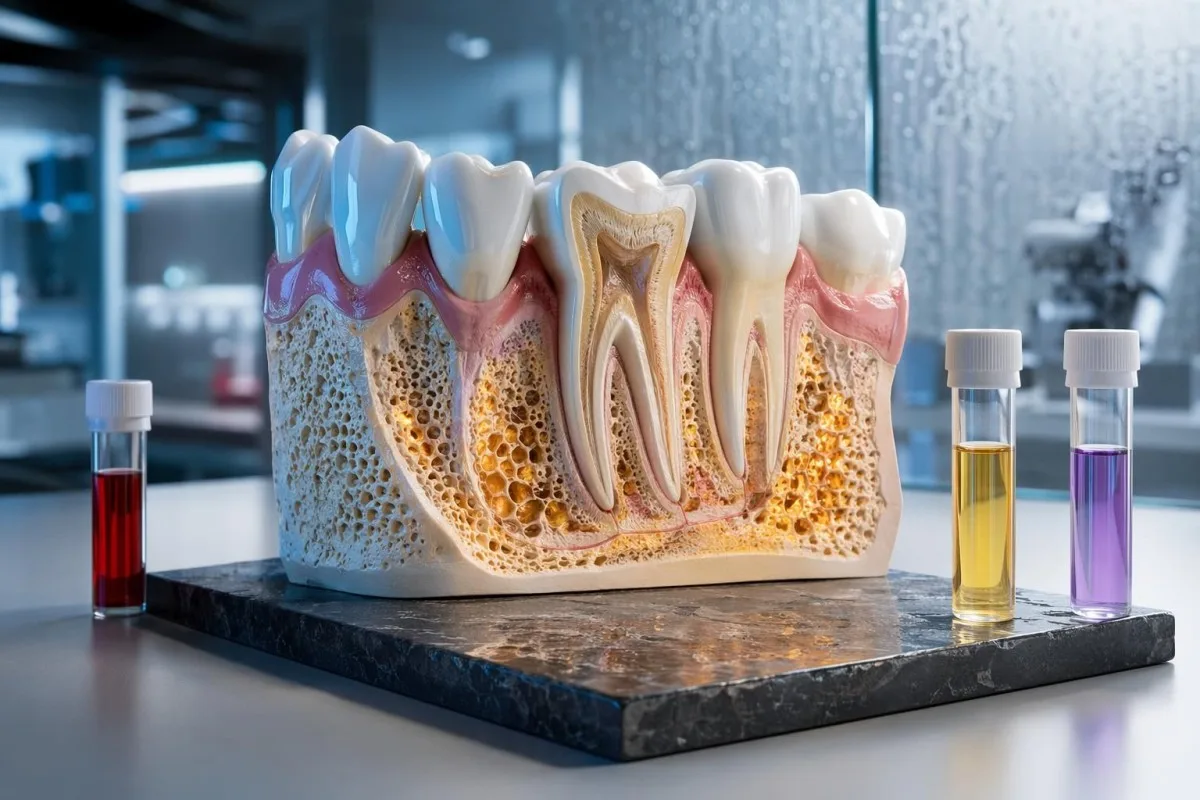
Recurring dental issues can be local, systemic, or both. The right lab pattern may explain why gums bleed, abscesses return, enamel changes, or oral healing stays slow.


- Blood test for tooth problems cannot diagnose cavities, but it can reveal diabetes, inflammation, mineral imbalance, anemia, kidney disease, or clotting issues that affect oral healing.
- HbA1c below 5.7% is normal, 5.7-6.4% suggests prediabetes, and 6.5% or higher supports diabetes diagnosis when confirmed.
- Fasting glucose below 100 mg/dL is usually normal; 100-125 mg/dL suggests prediabetes and 126 mg/dL or higher suggests diabetes when repeated.
- Total calcium is commonly 8.6-10.2 mg/dL in adults, but ionized calcium and PTH explain mineral patterns better when albumin is abnormal.
- 25-OH vitamin D below 20 ng/mL is deficiency by many clinical guidelines, and low levels can impair bone remodeling around teeth.
- WBC count is commonly 4.0-11.0 x10^9/L in adults; high neutrophils with dental swelling can support bacterial infection but cannot replace a dental exam.
- Platelets normally run about 150-450 x10^9/L; low platelets, high INR, or liver disease can make gum bleeding worse.
- Albumin below 3.5 g/dL may signal poor protein status, kidney loss, liver disease, or inflammation, all of which can slow oral healing.
Can a blood test explain recurring tooth problems?
A blood test for tooth problems can reveal systemic causes that make dental disease recur, but it cannot diagnose a cavity, cracked root, failed filling, or hidden periodontal pocket. As of June 2, 2026, the most useful blood patterns are glucose control, CBC infection clues, calcium-PTH-vitamin D balance, anemia markers, protein status, and clotting tests. For marker-by-marker context, our biomarker guide is a practical starting point.
The distinction matters. A dentist needs an exam and imaging to find decay, bone loss, root infection, or a bite problem; a lab panel helps explain why the same oral problem keeps returning after good local treatment.
In my clinical reviews, Thomas Klein, MD, has seen a common pattern: a patient treats three gum abscesses in 18 months, then discovers an HbA1c of 8.2% and fasting glucose of 154 mg/dL. The tooth problem was real, but the blood sugar pattern helped explain the poor healing.
Kantesti is an AI blood test interpretation platform that reads oral-health-related findings as clusters rather than isolated flags. Our AI can connect glucose, WBC, CRP, calcium, albumin, and anemia markers in about 60 seconds, then suggest which results deserve a clinician conversation.
How blood sugar connects to gum bleeding, loose teeth and abscesses
Blood sugar and dental problems are strongly linked because chronic hyperglycemia impairs immune function, collagen repair, and small-vessel circulation in the gums. The American Diabetes Association states that HbA1c of 6.5% or higher, fasting plasma glucose of 126 mg/dL or higher, or random glucose of 200 mg/dL or higher with symptoms can support diabetes diagnosis when confirmed (ADA Professional Practice Committee, 2024).
HbA1c below 5.7% is usually normal, 5.7-6.4% is prediabetes, and 6.5% or higher meets the diabetes threshold when confirmed by repeat testing or another diagnostic test. In dental practice, patients near 7.5-9.0% often report slower healing after scaling, extraction, or implant placement.
The evidence is not just theoretical. A 2022 Cochrane review by Simpson et al. found that periodontal treatment in people with diabetes modestly improved glycaemic control, with HbA1c reductions around 0.4% at 3-4 months in pooled analyses (Simpson et al., 2022). That is not a cure, but it is clinically meaningful.
When reviewing diabetes blood test results, look beyond a single fasting value. A fasting glucose of 96 mg/dL with HbA1c of 6.1% may reflect post-meal spikes, anemia-related A1c distortion, or early insulin resistance that a morning glucose alone misses.
Which blood tests for gum disease are actually useful?
Blood tests for gum disease are useful when bleeding, swelling, bad breath, or tooth mobility seems out of proportion to plaque and tartar findings. CBC, CRP, ESR, glucose, HbA1c, ferritin, B12, albumin, and coagulation markers can reveal why gums remain inflamed or fragile after routine dental care.
CRP below 3 mg/L is often considered low-grade or normal in cardiovascular-style risk interpretation, while CRP above 10 mg/L usually suggests recent infection, injury, or active inflammatory disease. In gum disease, a mild CRP of 4-8 mg/L is nonspecific but can reinforce the need to look for systemic inflammation.
ESR is slower and less specific than CRP. A common adult ESR reference is roughly 0-20 mm/hr for men and 0-30 mm/hr for women, though age and lab method change the range; a rising ESR with gum symptoms may point toward autoimmune, chronic infection, or anemia patterns.
For a deeper comparison of CRP, ESR, ferritin, and CBC signals, see our guide to inflammation labs. The practical tip is simple: if your dentist says plaque control looks good but gums still bleed at 3 or more visits, ask whether systemic labs should be reviewed.
Calcium, vitamin D and PTH clues behind loose teeth or enamel changes
A calcium blood test teeth question usually needs more than total calcium. Total calcium, albumin, ionized calcium, phosphorus, magnesium, 25-OH vitamin D, PTH, kidney function, and alkaline phosphatase together explain bone and mineral patterns better than calcium alone.
Total calcium is commonly 8.6-10.2 mg/dL in adults, but about 40% of circulating calcium is albumin-bound. If albumin is low, total calcium can look falsely low even when ionized calcium, often about 1.12-1.32 mmol/L, is normal.
25-OH vitamin D below 20 ng/mL is deficiency in the Endocrine Society 2011 guideline, while 30 ng/mL or higher has often been used as a sufficiency target for bone-related interpretation (Holick et al., 2011). Some newer groups accept 20 ng/mL for many adults, so context matters more than one cutoff.
If calcium is high or low, PTH explains direction. A PTH of 15-65 pg/mL is a common adult reference range, and high PTH with normal calcium can suggest secondary hyperparathyroidism from vitamin D deficiency, kidney disease, or low calcium intake. Compare your result with our calcium range and vitamin D test guides before assuming weak teeth are simply from low calcium.
CBC clues when dental abscesses or oral infections return
A CBC can support the suspicion of a spreading dental infection, especially when WBC and neutrophils are high, but a normal CBC does not rule out a localized tooth abscess. The usual adult WBC range is about 4.0-11.0 x10^9/L, and dental source control still comes from drainage, root treatment, extraction, or periodontal care.
Neutrophils are the key differential count for most bacterial dental infections. An absolute neutrophil count above 7.5 x10^9/L often supports bacterial inflammation, while an ANC below 1.0 x10^9/L raises concern for impaired infection defense and should be reviewed quickly.
CRP and procalcitonin are different tools. CRP can rise above 50-100 mg/L with significant bacterial infection, while procalcitonin is usually more useful when clinicians worry about systemic bacterial illness rather than a small localized abscess. Our infection blood test guide explains why doctors rarely interpret these markers alone.
A high WBC after steroids, intense exercise, smoking, or stress can mislead patients. If WBC is 13.5 x10^9/L but dental pain is improving and CRP is 2 mg/L, the pattern is different from WBC 16.0 x10^9/L with fever, facial swelling, and CRP 85 mg/L. For lab artifact and repeat-test clues, review high WBC patterns.
Iron, B12 and folate patterns in ulcers and slow oral healing
Iron, B12 and folate abnormalities can cause mouth ulcers, burning tongue, pale gums, cracks at the mouth corners, and slow mucosal repair. A CBC with MCV, ferritin, transferrin saturation, B12, methylmalonic acid, folate, and homocysteine often explains symptoms that look purely dental at first.
Ferritin below 30 ng/mL often suggests depleted iron stores in symptomatic adults, even when hemoglobin remains normal. In menstruating patients, runners, and people using acid-suppressing medication, low ferritin can appear before anemia and before the dentist sees obvious tissue changes.
Vitamin B12 deficiency can exist with a normal hemoglobin. A B12 below 200 pg/mL is commonly low, 200-300 pg/mL is borderline in many labs, and methylmalonic acid above the lab range supports cellular B12 deficiency. See our B12 deficiency guide if mouth symptoms come with numbness, balance changes, or brain fog.
I see this pattern at Kantesti often: RDW rises to 15.8%, MCV sits near 82 fL, ferritin is 18 ng/mL, and the patient reports recurring ulcers plus fatigue. No single value screams emergency, but the cluster tells a different story.
Albumin, kidney function and protein status when oral wounds heal slowly
Slow oral healing after extraction, implant work, or gum treatment can reflect low protein status, kidney disease, uncontrolled diabetes, smoking, medication effects, or immune suppression. Albumin, total protein, eGFR, creatinine, urine albumin-creatinine ratio, glucose, and CBC help separate nutrition from kidney or inflammatory causes.
Albumin normally runs about 3.5-5.0 g/dL in many adult labs. Albumin below 3.5 g/dL can reflect poor intake, inflammation, kidney loss, liver disease, or dilution from excess fluid; the reason matters more than the number.
Kidney patterns matter because chronic kidney disease changes vitamin D activation, phosphate balance, anemia risk, and immune response. An eGFR below 60 mL/min/1.73 m2 for 3 months or more supports chronic kidney disease, while urine ACR above 30 mg/g can reveal early kidney damage before creatinine looks alarming.
If albumin is 3.2 g/dL, hemoglobin is 10.8 g/dL, and eGFR is 48, a delayed socket healing problem is not just a dental inconvenience. Our albumin clues article explains how swelling, kidney protein loss, and inflammation can overlap.
When gum bleeding points to platelets, INR or vitamin K
Gum bleeding is usually local periodontal disease, brushing trauma, or gingivitis, but persistent or easy bleeding deserves platelet and coagulation review. Platelets, PT/INR, aPTT, fibrinogen, liver enzymes, vitamin K status, and medication history are the blood clues clinicians check first.
Platelets are commonly 150-450 x10^9/L in adults. Counts below 100 x10^9/L can increase bleeding risk during dental procedures, and counts below 50 x10^9/L require careful medical planning before invasive dental work.
INR is usually about 0.8-1.1 in people not taking anticoagulants, while many warfarin targets are 2.0-3.0. A high INR can reflect medication, liver disease, vitamin K deficiency, antibiotics, or diet changes; never stop an anticoagulant for dental care without the prescribing clinician.
The reason we worry about gum bleeding plus nosebleeds, bruises, or heavy periods is pattern density. One symptom may be local; three bleeding sites with platelets of 72 x10^9/L is a medical signal. Our coagulation guide walks through PT, INR, aPTT, fibrinogen, and D-dimer interpretation.
Thyroid and parathyroid patterns that change bone around teeth
Thyroid and parathyroid disorders can influence jawbone remodeling, tooth support, and healing speed, although they rarely explain dental disease alone. TSH, free T4, calcium, phosphorus, PTH, vitamin D, ALP, and kidney function are the core labs when loose teeth or bone loss seems unusually rapid.
Hyperthyroidism can accelerate bone turnover, and over-replacement with levothyroxine may suppress TSH below 0.1 mIU/L. That pattern is more concerning for bone loss than a mildly low TSH with normal free T4 and no symptoms.
Parathyroid hormone is a stronger mineral clue than calcium alone. High PTH with high calcium suggests primary hyperparathyroidism; high PTH with normal or low calcium more often points toward vitamin D deficiency, kidney disease, or malabsorption.
ALP adds another clue, especially when separated into liver and bone context. A high ALP with normal GGT can point toward bone turnover rather than bile duct disease, while a high ALP with high GGT often redirects the work-up toward liver or biliary causes. For calcium-PTH pattern logic, read our PTH test guide.
Children, pregnancy and older adults need different lab context
Dental symptoms in children, pregnancy and older adults need age-specific interpretation because normal lab ranges and oral risks change. A child with gum swelling, a pregnant patient with bleeding gums, and an 82-year-old with loose teeth should not be interpreted with the same reference assumptions.
Children normally have different WBC, alkaline phosphatase, creatinine, and iron ranges than adults. ALP can be much higher during growth, so an elevated ALP in a 10-year-old is not interpreted the same way as an elevated ALP in a 55-year-old.
Pregnancy changes gums and labs at the same time. Plasma volume expansion can lower hemoglobin, albumin, and creatinine, while gingival inflammation can worsen even without a dramatic change in plaque. Our pediatric ranges guide helps parents avoid adult-range panic.
Older adults often have mixed reasons for oral problems: diabetes, dry mouth medications, low vitamin D, frailty, kidney disease, and anticoagulants. If a pregnant patient is planning dental work, our pregnancy labs checklist explains which baseline results often matter before symptoms start.
What labs to ask for when dental problems keep returning
The best lab list depends on the symptom pattern, but recurrent abscesses, gum bleeding, loose teeth, enamel change, or slow healing usually justify a focused panel. Ask your clinician about CBC with differential, CMP, fasting glucose, HbA1c, CRP, ESR, ferritin, B12, folate, vitamin D, PTH, phosphorus, magnesium, TSH, PT/INR, and aPTT when symptoms fit.
Do not order everything at once without a reason. A person with three dental abscesses and thirst needs glucose, HbA1c, CBC, and CRP sooner than advanced hormone testing; a person with gum bleeding and bruises needs platelets and coagulation markers first.
Bring exact dental details to the medical appointment: number of abscesses, antibiotic courses, extraction dates, implant failures, gum pocket measurements, smoking status, and whether healing took more than 2 weeks. Those facts make the blood results easier to interpret.
For patients seeing a new clinician, our new doctor labs guide gives a practical way to ask for targeted tests without sounding like you are self-diagnosing. A concise request usually works better than a 40-marker wish list.
Read oral symptoms as lab clusters, not one abnormal number
A single abnormal lab rarely explains dental problems by itself; clusters are far more useful. Kantesti is an AI-powered blood test analysis tool used by 2M+ people across 127 countries to compare glucose, inflammation, mineral, kidney, nutrition, and CBC patterns together instead of treating each flag as separate.
The pattern of HbA1c 6.3%, ferritin 16 ng/mL, vitamin D 18 ng/mL, and CRP 7 mg/L tells a different story from any one of those results alone. It suggests metabolic risk, iron depletion, low vitamin D, and low-grade inflammation, which may all affect oral healing.
Kantesti's neural network compares current values with prior results when available, because change matters. A WBC of 10.8 x10^9/L may be normal for one person during stress, but a rise from 5.2 to 10.8 with new dental swelling deserves attention.
Our trend analysis article explains why slope, timing, and repeat testing can be more useful than a red flag. For how our AI reads lab PDFs and photos safely, the technology guide describes the workflow without replacing medical judgment.
When tooth symptoms need urgent dental or medical care
Urgent care is needed when dental symptoms come with fever, facial swelling, trouble swallowing, trouble breathing, confusion, very high glucose, severe dehydration, or immune suppression. Blood tests can support triage, but airway symptoms, spreading swelling, and sepsis signs are clinical emergencies.
A random glucose above 300 mg/dL with vomiting, dehydration, confusion, or rapid breathing needs urgent medical evaluation, especially in diabetes. Dental infection can trigger dangerous hyperglycemia, and hyperglycemia can make infection harder to control.
Fever above 38.0°C, heart rate above 100 beats per minute, low blood pressure, or rapidly spreading facial swelling changes the risk level. CRP above 100 mg/L or WBC above 15 x10^9/L can support concern, but normal labs do not make airway symptoms safe.
Use labs to inform action, not delay it. Our critical values guide explains which results usually require same-day contact, but severe dental swelling or breathing difficulty should bypass routine result review.
Research, medical review and safe AI use for dental-related labs
AI interpretation is safest when it is clinically validated, medically reviewed, and honest about uncertainty. Kantesti is an AI biomarker interpretation platform that supports lab pattern recognition, while dentists and physicians still diagnose disease, prescribe treatment, and manage emergencies.
At Kantesti, our doctors review medical logic through formal governance, including input from our medical advisory board. Thomas Klein, MD, reviews articles like this with a practical rule: if a lab pattern could change urgency, the article must say so clearly.
Our clinical standards, safety checks, and benchmark approach are described in medical validation. The goal is not to turn a dental complaint into a diagnosis from a spreadsheet; it is to identify patterns worth discussing before another abscess, implant failure, or delayed-healing episode repeats.
Selected Kantesti research publications include: Kantesti Research Group. (2026). C3 C4 Complement Blood Test & ANA Titer Guide. Zenodo. https://doi.org/10.5281/zenodo.18353989. ResearchGate: https://www.researchgate.net/. Academia.edu: https://www.academia.edu/. The related complement guide explains immune-marker interpretation for autoimmune patterns, which occasionally overlap with oral dryness, ulcers, and systemic inflammation.
Frequently Asked Questions
Can a blood test detect a tooth infection?
A blood test can support the suspicion of a spreading tooth infection, but it cannot prove which tooth is infected. WBC above 11.0 x10^9/L, neutrophilia above about 7.5 x10^9/L, and CRP above 10 mg/L can fit infection when symptoms match. A localized abscess can still have normal blood tests, so dental examination and imaging remain necessary. Fever, facial swelling, or trouble swallowing needs urgent care even before lab results return.
What blood sugar level causes dental problems?
There is no single glucose number that causes dental problems, but risk rises as glucose control worsens. HbA1c of 5.7-6.4% indicates prediabetes, and 6.5% or higher supports diabetes diagnosis when confirmed. Fasting glucose of 126 mg/dL or higher, or random glucose of 200 mg/dL or higher with symptoms, is a diabetes-range result. People with HbA1c above 7.0-8.0% often heal more slowly after periodontal or oral surgical procedures.
Does low calcium show up as bad teeth?
Low calcium alone rarely explains adult tooth problems, because teeth are already mineralized and serum calcium is tightly controlled. Total calcium is commonly 8.6-10.2 mg/dL, but albumin, ionized calcium, vitamin D, PTH, magnesium, phosphorus, and kidney function determine what the calcium result means. Low vitamin D below 20 ng/mL or high PTH can affect jawbone remodeling and tooth support. A dentist should still check for periodontal disease, bite trauma, decay, or root problems.
What blood tests for gum disease should I ask for?
Useful blood tests for gum disease depend on the pattern, but common starting labs include CBC with differential, HbA1c, fasting glucose, CRP, ESR, ferritin, B12, folate, vitamin D, albumin, and CMP. If gums bleed easily or bruising occurs, platelets, PT/INR, aPTT, and liver enzymes may be added. CRP above 10 mg/L or WBC above 11.0 x10^9/L can suggest active inflammation or infection when symptoms fit. Dental pocket measurements and X-rays are still the main tests for diagnosing periodontal disease.
Can vitamin D deficiency cause loose teeth?
Vitamin D deficiency can contribute to poor bone remodeling around teeth, but it is rarely the only cause of loose teeth. A 25-OH vitamin D below 20 ng/mL is commonly considered deficient, and levels around 20-30 ng/mL are often interpreted as insufficient depending on the guideline and patient risk. Loose teeth more often reflect periodontal bone loss, bite trauma, smoking, diabetes, or local infection. Vitamin D, calcium, PTH, and dental imaging should be interpreted together.
When should dental symptoms and abnormal labs be treated as urgent?
Dental symptoms become urgent when they include fever above 38.0°C, rapidly spreading facial swelling, difficulty breathing, difficulty swallowing, confusion, or severe dehydration. Random glucose above 300 mg/dL with vomiting, rapid breathing, or confusion needs urgent medical evaluation. WBC above 15 x10^9/L or CRP above 100 mg/L can support concern for significant infection, but normal labs do not make airway symptoms safe. Seek same-day emergency care if swelling spreads toward the neck, eye, or airway.
Does a replacement heart valve change what I need before a dental cleaning?
If you have a replacement heart valve, you generally need a preventive antibiotic before dental procedures that manipulate the gums, including many cleanings. Tell your dentist and cardiology team before the appointment so they can confirm the right prescription.
Can dry mouth cause recurring cavities even if my blood tests are normal?
Yes. Low saliva allows plaque and acids to remain on teeth longer, and blood tests may be normal; medicines, mouth breathing, dehydration, and some medical conditions can contribute. Discuss persistent dry mouth with your dentist or clinician.
Can my medicines make dental infections or gum bleeding worse even when my labs look normal?
Yes. Blood thinners can increase bleeding, some medicines cause dry mouth, and steroids or immune-suppressing drugs can slow healing. Do not stop prescribed treatment on your own; ask your dentist and prescriber to coordinate around procedures.
Get AI-Powered Blood Test Analysis Today
Join over 2 million users worldwide who trust Kantesti for instant, accurate lab test analysis. Upload your blood test results and receive comprehensive interpretation of 15,000+ biomarkers in seconds.
📚 Referenced Research Publications
Klein, T., Mitchell, S., & Weber, H. (2026). C3 C4 Complement Blood Test & ANA Titer Guide. Kantesti AI Medical Research.
Klein, T., Mitchell, S., & Weber, H. (2026). Nipah Virus Blood Test: Early Detection & Diagnosis Guide 2026. Kantesti AI Medical Research.
📖 External Medical References
American Diabetes Association Professional Practice Committee (2024). 2. Diagnosis and Classification of Diabetes: Standards of Care in Diabetes—2024. Diabetes Care.
⚕️ Medical Disclaimer
This article is for educational purposes only and does not constitute medical advice. Always consult a qualified healthcare provider for diagnosis and treatment decisions.
E-E-A-T Trust Signals
Experience
Physician-led clinical review of lab interpretation workflows.
Expertise
Laboratory medicine focus on how biomarkers behave in clinical context.
Authoritativeness
Written by Dr. Thomas Klein with review by Dr. Sarah Mitchell and Prof. Dr. Hans Weber.
Trustworthiness
Evidence-based interpretation with clear follow-up pathways to reduce alarm.