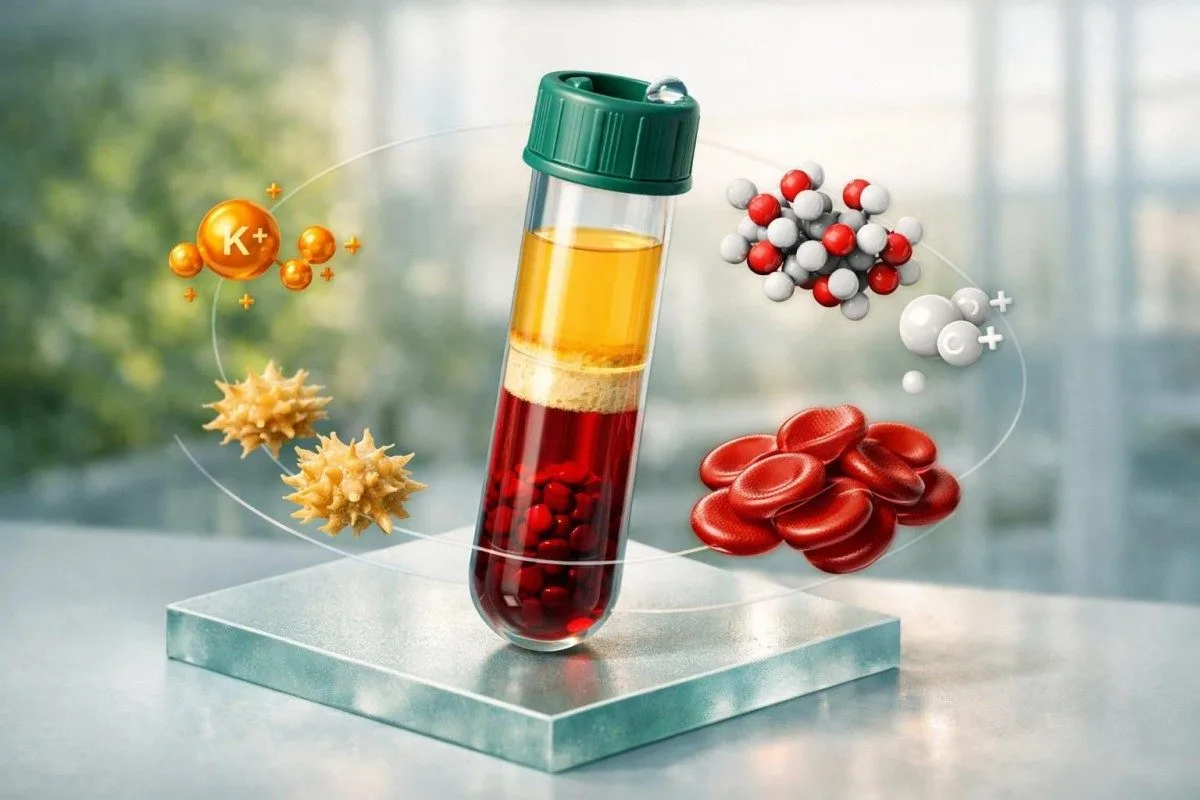
A red flag on a lab report can mean anything from a trivial sample issue to a same-day emergency. Here is how clinicians decide which numbers trigger a phone call, which ones can wait, and what patients should ask next.


- Critical value means the lab believes a delay in review could be unsafe; it is not the same as a routine high or low flag.
- Potassium is commonly called critical at ≥6.0 mmol/L or ≤2.5 mmol/L, especially with kidney disease or ECG symptoms.
- Sodium below 120 mmol/L or above 160 mmol/L can cause brain swelling or shrinkage, and the speed of change matters as much as the number.
- Glucose below 50 mg/dL or above 400-500 mg/dL often triggers a same-day callback, but sample handling can falsely lower glucose.
- Hemoglobin under 7 g/dL is a common urgent threshold, yet bleeding symptoms and rate of drop matter more than the red font.
- Platelets below 20 ×10^9/L raise spontaneous bleeding risk, but EDTA-related clumping can falsely report a dangerous count.
- Creatinine trend matters more than a single value; a rise of 0.3 mg/dL in 48 hours meets AKI criteria even if the result still looks near normal.
- False alarms happen with hemolysis, EDTA contamination, fist clenching, delayed processing, and dehydration.
- Next step is simple: answer the call, write down the exact test and units, ask whether the sample was repeated, and follow same-day instructions.
What a critical lab value actually means
Critical values are blood test results so high or so low that the laboratory urgently contacts a clinician because waiting could be unsafe, and on Kantesti AI we usually explain them as numbers that may need action within minutes to hours. They are not the same as ordinary H or L flags; typical adult examples are potassium ≥6.0 mmol/L or ≤2.5 mmol/L, sodium ≤120 mmol/L, glucose <50 mg/dL, and hemoglobin <7 g/dL, while many smaller abnormalities belong in a calmer discussion about borderline results.
A reference range is statistical; a critical limit is operational. A 52-year-old marathon runner with AST 89 IU/L after a race is abnormal, but most labs will not phone that result; a nursing-home resident with glucose 38 mg/dL usually triggers an immediate call. If you are learning how to read blood test results, that distinction saves a lot of unnecessary fear.
Labs are not trying to diagnose from one number; they are trying to prevent a dangerous delay. Many analyzers automatically rerun values outside analytic plausibility limits, and our team at Medical Validation pays close attention to that pre-release verification step because a true panic value should be both accurate and actionable.
I am Thomas Klein, MD, and the calls I remember most are the ones where the number looked terrifying but the physiology was not. Most flagged results are not emergencies; the ones that matter are the outliers that fit the patient, the timing, and the symptoms.
Why labs phone immediately and why one cutoff differs from another
Labs call immediately because some results can change treatment within minutes to hours, not days. The adult outpatient critical potassium cutoff is often 6.0 mmol/L, but some UK and European laboratories use 6.2 mmol/L, and pediatric, oncology, and ICU thresholds may differ because the risk profile is different.
The thing is, laboratories do not all serve the same patients. A stable dialysis patient with potassium 6.1 mmol/L at 7 a.m. may be handled very differently from a previously healthy person with the same value, which is why our clinicians on the Medical Advisory Board look at diagnosis, medications, and trend rather than the number in isolation.
Most accredited labs use a read-back protocol: the caller states the result, the recipient repeats it back, and the time is documented. Some also use delta checks, meaning they compare the current result with recent values; a rise in creatinine from 0.9 to 1.5 mg/dL overnight may be more alarming than a stable 2.4 mg/dL in known chronic kidney disease.
Kantesti's clinical workflow is built around that same context-first logic, and we outline it in our AI lab interpretation workflow guide. Spotting a red number is easy. Deciding which red number cannot wait until tomorrow is the real work.
Electrolytes that most often trigger panic values
Potassium, sodium, and calcium are the electrolyte results most likely to trigger urgent callbacks. Many adult labs define critical potassium as ≥6.0 mmol/L or ≤2.5 mmol/L, critical sodium as ≤120 or ≥160 mmol/L, and critical total calcium as ≥13.0 or ≤6.5 mg/dL, although local policies vary.
When I review a panel with potassium 6.3 mmol/L and a normal clinical story, I immediately look for hemolysis, thrombocytosis, and leukocytosis. Pseudohyperkalemia is common enough that a repeat plasma specimen can spare an unnecessary emergency visit; if this is your pattern, read our high potassium warning guide.
A sodium below 120 mmol/L becomes more dangerous when it falls quickly; seizures are much more likely in acute hyponatremia than in a chronic stable value of 118 mmol/L. The expert panel led by Verbalis notes that symptoms and tempo matter as much as the number itself, and severe hypernatremia above 160 mmol/L can be just as ominous because brain cells shrink rapidly (Verbalis et al., 2013); our sodium range guide goes deeper.
Total calcium can mislead when albumin is low, which is why an ionized calcium below about 0.90 mmol/L often carries more weight than a mildly low total value. One lab pattern I never ignore is high potassium + low calcium + low alkaline phosphatase in the same draw; it often means EDTA contamination, not three simultaneous diseases, and our calcium interpretation article explains why.
Magnesium is the quiet troublemaker
A magnesium below 1.2 mg/dL can sustain arrhythmias and make hypokalemia harder to correct, even if magnesium is not the first result the lab calls. In patients with potassium under 3.0 mmol/L, I often check magnesium before I assume poor diet alone; symptoms and replacement strategy are different in our low potassium explainer.
Glucose, bicarbonate, and anion gap when sugar becomes an emergency
Critical glucose is often <50 mg/dL or >400 to 500 mg/dL in adults, and a bicarbonate below 15 mmol/L or anion gap above 20 pushes the result from concerning to potentially emergent. What matters clinically is the combination: sugar, ketones, bicarbonate, mental status, and hydration.
A venous glucose of 42 mg/dL deserves immediate attention, but I still ask how the sample was handled. Unprocessed blood keeps consuming glucose after the draw; in warm conditions the value can fall by roughly 5% to 7% per hour, so a delayed specimen sometimes explains a low number in someone with zero symptoms.
In DKA, glucose is usually >250 mg/dL and serum bicarbonate <18 mEq/L; in HHS, glucose is often >600 mg/dL with marked dehydration and osmolality above 320 mOsm/kg. That framework still comes straight from the classic Diabetes Care review by Kitabchi and colleagues (Kitabchi et al., 2009), and our anion gap guide helps patients see why one isolated glucose number can miss the larger emergency.
HbA1c almost never generates a same-day callback because it reflects the last 8 to 12 weeks, not the last 8 hours. If your report shows a surprise elevation, start with our high glucose overview. Then use our A1c cutoff explainer to understand why 11.2% is serious but not managed the same way as a symptomatic glucose of 486 mg/dL.
CBC results that can be genuinely dangerous
Hemoglobin, platelets, and absolute neutrophil count are the CBC numbers most labs treat as potentially dangerous. Common adult outpatient thresholds are hemoglobin <7 g/dL, platelets <20 ×10^9/L, and ANC <0.5 ×10^9/L, while the total white count alone is often less useful.
A hemoglobin of 6.8 g/dL in a patient with weeks of iron-deficiency fatigue is not the same emergency as 6.8 g/dL with black stools, chest pain, or shortness of breath. I have admitted patients with hemoglobin above 8 g/dL because they were actively bleeding, and I have safely arranged next-day transfusion discussions for chronically stable patients below 7 g/dL.
A platelet count under 10 ×10^9/L raises spontaneous bleeding risk, especially if there is fever, sepsis, or new bruising. But EDTA-dependent platelet clumping can falsely report platelets at 18 ×10^9/L or lower; a repeat in a citrate tube often corrects it, which is why our low platelet guide always pairs the count with a smear review.
Neutropenia with fever is one of the few CBC patterns that changes my tone immediately: ANC <0.5 ×10^9/L plus temperature ≥38.0°C needs same-day oncology or emergency assessment. Compare our high WBC pattern guide with this article on CBC clues that raise leukemia concern because a moderate count with blasts can be far more serious than a steroid-related WBC spike.
Why the differential matters more than the total
An absolute neutrophil count is calculated from the total WBC and the neutrophil percentage. A patient with WBC 1.2 ×10^9/L and 20% neutrophils has an ANC of 0.24 ×10^9/L, which is much riskier than the WBC alone suggests.
Kidney, liver, and clotting results which numbers matter most
Creatinine, INR, and bilirubin can be urgent, but the dangerous part is often the pattern rather than a single universal number. Acute kidney injury is defined by a creatinine rise of 0.3 mg/dL in 48 hours or 1.5 times baseline within 7 days, and many labs treat INR >5.0 as a critical value.
According to the KDIGO guideline, a jump from 0.8 to 1.2 mg/dL can signal early AKI even though 1.2 mg/dL still looks near normal on many printouts (KDIGO AKI Work Group, 2012). That is why our kidney blood test guide teaches trend interpretation before patients get falsely reassured by a single reference range.
With warfarin, an INR between 5 and 9 without bleeding is often handled by holding doses and close follow-up rather than immediate ambulance care, but the plan depends on age, fall risk, and why the patient is anticoagulated. An INR above 5 in someone not taking anticoagulants is far more unsettling because it points to liver failure, vitamin K deficiency, or a sample problem; our PT/INR guide covers the nuance.
Huge AST or ALT values, sometimes >1000 IU/L, look frightening, yet outpatient callback rules for transaminases are surprisingly inconsistent. The cluster that worries me more is rising bilirubin + rising INR + confusion or low glucose because that suggests impaired liver synthetic function, not just irritated liver cells.
Results that look scary online but are not always a lab callback
Troponin, D-dimer, ferritin, CRP, and A1c can be markedly abnormal without triggering the lab's panic system. These tests are often interpreted with symptoms, timing, and pretest probability rather than one absolute threshold.
A troponin above the 99th percentile is abnormal, but the change over 1 to 3 hours is often more informative than the first number alone. I see anxious patients with tiny stable elevations from chronic kidney disease or heart failure who are less urgent than someone with a smaller value that is clearly rising; our troponin trends article walks through that logic.
A D-dimer of 1.2 mg/L FEU is common after surgery, pregnancy, infection, or simply with age. Most labs do not treat D-dimer as a critical value because it is a rule-out tool, not a diagnosis, and its false-positive rate is high outside the right clinical setting.
Ferritin above 1000 ng/mL or CRP above 100 mg/L can reflect major inflammation, liver injury, or malignancy, but they rarely trigger the same immediate lab-to-clinician workflow as potassium 6.7 mmol/L. This is one of those areas where context matters more than the number.
False alarms from hemolysis, contamination, dehydration, and lab quirks
Hemolysis, contamination, dehydration, and delayed processing are the commonest reasons a dangerous-looking result turns out not to reflect the patient's true physiology. In our review of uploaded reports on Kantesti, the recurring clue is not one odd number but a pattern of numbers that clash with one another.
A partially hemolyzed specimen can falsely raise potassium, LDH, and sometimes AST, while dehydration can concentrate hemoglobin, albumin, and sodium enough to look worse than the patient really is. If several values are only mildly high after vomiting, diarrhea, or hard exercise, compare them with our article on dehydration-related false highs.
I still see pseudo-hyperkalemia from fist clenching during sample collection, prolonged tourniquet time, and transport vibration in pneumatic systems. Another classic is platelet clumping that produces a falsely low count while the patient has no bruising at all.
Here is a practical pattern clue: high potassium + very low calcium + unexpectedly low alkaline phosphatase points toward EDTA contamination more often than it points toward three new diagnoses. When the story and the chemistry disagree, ask for a repeat before you catastrophize.
Method differences matter
Some sodium assays use indirect ion-selective electrodes, which can underestimate sodium in severe hypertriglyceridemia or paraproteinemia. A direct ISE or blood-gas sodium may correct a seemingly critical value that does not fit the bedside picture.
What patients should do after an urgent lab callback
If a lab or clinic calls about a critical result, answer, write down the exact test, value, and units, and follow the same-day instructions. Go to the emergency department now for chest pain, severe shortness of breath, fainting, confusion, seizures, profound weakness, or active bleeding, regardless of what the portal says.
Ask six questions: What is the value, what are the units, was the sample repeated, what was my last value, which symptoms change the plan, and which medicines should I stop until I speak to the clinician? Patients who manage their labs through portals do better when they can verify the report against the original PDF, which is why I often send them to our online results safety guide.
As Thomas Klein, MD, I am surprisingly strict about this: do not try to fix a critical result on your own with internet remedies. Drinking large amounts of water for sodium 126 mmol/L can worsen hyponatremia, and taking extra potassium for cramps when your lab is actually 6.1 mmol/L can be dangerous.
If the situation is not emergent and you want the report organized quickly, upload the PDF or a clear photo to our free blood test interpretation demo. Then review the workflow in our PDF upload guide so Kantesti AI can sort markers, identify paired abnormalities, and show you what deserves a same-day call versus a planned follow-up.
How Kantesti AI helps you read blood test results safely
Kantesti AI helps by reading the whole panel, not just the red boxes, and by comparing the result with prior baselines. A potassium of 5.7 mmol/L with stable kidney function is different from 5.7 mmol/L with bicarbonate 16 mmol/L, rising creatinine, and an ACE inhibitor on board; our AI-powered blood test interpretation engine is built for that pattern recognition.
As of April 21, 2026, Kantesti AI has analyzed 2M+ blood test reports across 127+ countries and 75+ languages, so our platform sees a great deal of real-world formatting noise before it ever comments on a value. Our AI maps uploaded PDFs and photos to a biomarker library of more than 15,000 markers and then checks the result against reference interval, age, sex, method, and trend.
Most patients find the trend view more useful than the one-time interpretation. A hemoglobin drop from 13.4 to 10.2 g/dL over 6 weeks, or a creatinine rise from 1.0 to 1.4 mg/dL, often matters more than whether either value has crossed the lab's red threshold.
When I review escalated reports, I am rarely hunting for one magic number. I am looking for combinations such as high potassium with low bicarbonate, falling hemoglobin with high BUN, or low platelets with abnormal PT/INR, and that is where our platform helps readers decide whether the next step is repeat testing, a same-day call, or the emergency department.
Research notes and publications relevant to urgent lab interpretation
Research matters because critical-value interpretation is really a systems problem: laboratory medicine, clinical context, and communication all have to line up. That is why we publish practical guides alongside product work, and why readers who want provenance can explore the publications listed below.
Two examples sit below: the Zenodo paper on Nipah virus blood testing and the Figshare guide on B negative blood type, LDH, and reticulocyte count. They are not emergency-medicine manuals, but they show the cross-disciplinary detail we care about when a strange value lands in front of a patient after hours.
Readers who want the broader clinical mission can see About Us. The point is not to bury patients in papers; it is to show the chain of reasoning behind why some results trigger immediate escalation and others deserve measured repeat testing.
Bottom line: if a lab calls, assume the number deserves attention, not panic. The safest response is quick confirmation, symptom review, and the right level of follow-up.
Frequently Asked Questions
What is a critical value on a blood test?
A critical value is a lab result so far outside the expected range that the laboratory urgently notifies a clinician because delaying review could be unsafe. Common adult examples include potassium at or above 6.0 mmol/L, sodium at or below 120 mmol/L, glucose below 50 mg/dL, and hemoglobin below 7 g/dL, although thresholds differ by lab and patient group. A critical value is not the same as a routine high or low flag in a portal. The number still has to be interpreted with symptoms, trend, and sample quality.
Which blood test results usually trigger urgent lab calls?
The most common adult callback results are severe abnormalities in potassium, sodium, glucose, calcium, hemoglobin, platelets, absolute neutrophil count, and INR. Many laboratories call clinicians for potassium at or above 6.0 mmol/L, sodium at or below 120 mmol/L, glucose below 50 mg/dL or above 400 to 500 mg/dL, platelets below 20 ×10^9/L, and INR above 5.0. Creatinine can also be urgent, but the rise over time often matters more than a single high number. Exact thresholds vary by hospital, country, age, and clinical setting.
Does a flagged high or low result mean I should go to the ER?
No, a flagged result does not automatically mean an emergency because most portal flags are based on reference ranges, not panic limits. A mildly high ALT, ferritin of 600 ng/mL, or A1c of 8.2% is abnormal but usually not a same-hour emergency. The emergency department is appropriate when the value is truly critical or when you also have chest pain, confusion, severe weakness, fainting, seizures, shortness of breath, or active bleeding. Symptoms always outrank the portal color.
Can a bad sample cause a panic result?
Yes, sample problems are a very real cause of dangerous-looking results. Hemolysis can falsely raise potassium and LDH, EDTA contamination can raise potassium while lowering calcium, delayed processing can lower glucose by about 5% to 7% per hour, and platelet clumping can produce a falsely low platelet count. This is why clinicians often repeat an unexpected critical value before acting when the patient looks well. A result that does not fit the story deserves a second look.
Should I repeat the test before panicking?
A repeat test is often the right next step when the number is unexpected, the patient has no symptoms, or the sample may have been compromised. This is common with pseudo-hyperkalemia, platelet clumping, and sodium artifacts caused by severe lipemia or paraproteinemia. But if the clinician tells you to go directly for treatment, or if you have dangerous symptoms, do not delay emergency care for a repeat draw. The decision depends on both the number and the clinical context.
What should I ask if the lab or clinic calls me about urgent results?
Ask for the exact test, the value, the units, and whether the laboratory already repeated the sample. Then ask what your last result was, which symptoms would change the plan, and whether you should hold any medications such as potassium supplements, insulin, diuretics, or warfarin. If the answer includes chest pain, confusion, fainting, or active bleeding, go for emergency care now. Writing these details down prevents a surprising number of misunderstandings.
Can Kantesti AI help me understand critical lab results?
Yes, Kantesti AI can organize a report, compare current values with prior trends, and explain why certain combinations such as high potassium with low bicarbonate or falling hemoglobin with rising BUN are more urgent than they first appear. The tool is useful for uploaded PDFs and photos because it structures the information in plain language within about 60 seconds. But it should not delay emergency care when a lab or clinician tells you the result needs same-day action. AI is best used to clarify, not to override urgent medical advice.
What symptoms mean I should call emergency services rather than wait for my clinician to call back?
Call emergency services now for chest pain, severe shortness of breath, fainting, seizures, new confusion, severe weakness, or uncontrolled bleeding. These symptoms can signal a dangerous effect of abnormal potassium, sodium, glucose, blood counts, or clotting tests and need assessment immediately.
Can I eat or take my usual medicines while waiting for instructions about a critical lab result?
Take your usual prescribed medicines unless a clinician tells you otherwise, but avoid extra doses or self-correcting the number. Ask specifically about insulin, diabetes tablets, blood thinners, potassium pills, or diuretics, because these often affect urgent lab decisions.
Can I drive myself after an urgent lab callback?
If you feel faint, confused, very weak, short of breath, have chest pain, severe bleeding, or symptoms of very low glucose, do not drive yourself. Call emergency services or have someone take you safely.
Get AI-Powered Blood Test Analysis Today
Join over 2 million users worldwide who trust Kantesti for instant, accurate lab test analysis. Upload your blood test results and receive comprehensive interpretation of 15,000+ biomarkers in seconds.
📚 Referenced Research Publications
Klein, T., Mitchell, S., & Weber, H. (2026). Nipah Virus Blood Test: Early Detection & Diagnosis Guide 2026. Kantesti AI Medical Research.
Klein, T., Mitchell, S., & Weber, H. (2026). B Negative Blood Type, LDH Blood Test & Reticulocyte Count Guide. Kantesti AI Medical Research.
📖 External Medical References
KDIGO Acute Kidney Injury Work Group (2012). KDIGO clinical practice guideline for acute kidney injury. Kidney International Supplements.
⚕️ Medical Disclaimer
This article is for educational purposes only and does not constitute medical advice. Always consult a qualified healthcare provider for diagnosis and treatment decisions.
E-E-A-T Trust Signals
Experience
Physician-led clinical review of lab interpretation workflows.
Expertise
Laboratory medicine focus on how biomarkers behave in clinical context.
Authoritativeness
Written by Dr. Thomas Klein with review by Dr. Sarah Mitchell and Prof. Dr. Hans Weber.
Trustworthiness
Evidence-based interpretation with clear follow-up pathways to reduce alarm.