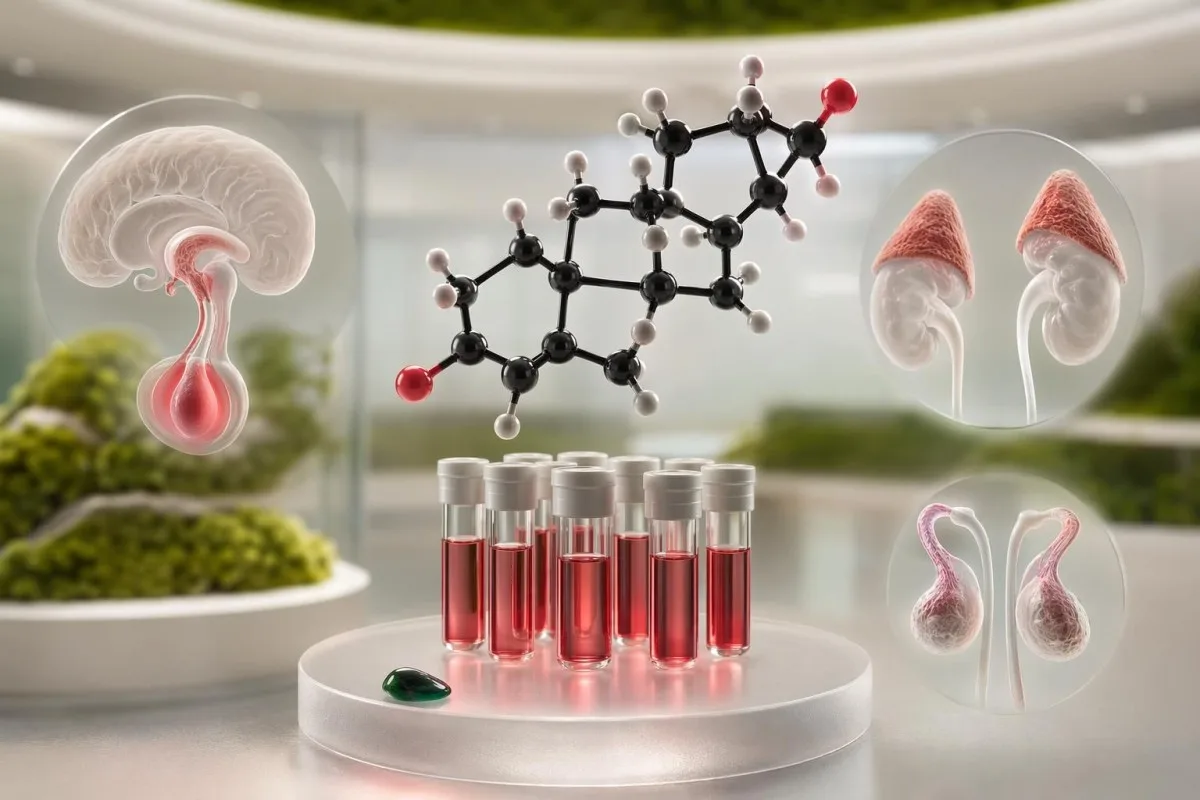
A high result is not always a “more masculine” result. The useful question is whether the number reflects biology, timing, assay interference, medication exposure, or a real endocrine source.


- High testosterone levels above about 1,000 ng/dL, or 34.7 nmol/L, should usually be repeated before anyone assumes disease.
- Testosterone normal range varies by lab, but a harmonized adult male reference interval is roughly 264–916 ng/dL for healthy young non-obese men.
- Morning timing matters: most clinicians prefer a fasting 7–10 AM testosterone blood test, especially when the first result is unexpected.
- Biotin and supplements can distort some hormone immunoassays; 5–10 mg/day biotin may be enough to create misleading competitive assay results.
- TRT timing changes interpretation: injectable testosterone often peaks 24–72 hours after dosing and troughs just before the next dose.
- LH and FSH help separate causes: high testosterone with suppressed LH/FSH points toward exogenous androgen, hCG exposure, or autonomous production.
- DHEA-S above 700–800 µg/dL in an adult man raises suspicion for an adrenal source, especially if androstenedione is also high.
- Hematocrit at or above 54% during androgen therapy is a safety trigger for dose reduction, pausing treatment, or urgent clinician review.
- Free testosterone should be interpreted with SHBG and albumin because high SHBG can make total testosterone look high while free testosterone is normal.
What a high testosterone result usually means
Unexpectedly high testosterone levels in men most often come from test timing, testosterone therapy, anabolic-androgenic drugs, hCG or fertility medicines, supplements, or a lab-method problem; less commonly, they reflect adrenal or testicular hormone production. As of June 4, 2026, I would not diagnose a serious cause from one high testosterone blood test unless the value is extreme or symptoms are concerning.
I’m Thomas Klein, MD, and in my clinical reviews the most common mistake is treating one flagged testosterone value as a diagnosis. A total testosterone of 1,080 ng/dL after a late-night workout, a gel application, or a supplement stack means something very different from 1,850 ng/dL on a clean morning repeat.
Kantesti is an AI blood test analyzer that treats high testosterone as a pattern involving timing, units, SHBG, LH, FSH, hematocrit, liver enzymes, and medication clues. That pattern-based approach is why we often direct readers to understand borderline lab values before overreacting to one red flag.
A persistently high testosterone result above 1,500 ng/dL, or 52 nmol/L, deserves prompt clinician review, especially if LH and FSH are low. A man with acne, new breast tenderness, smaller testes, infertility, high hematocrit, or unexplained mood changes needs a different workup than a symptom-free athlete with a single mildly high morning result.
Testosterone normal range and when high is really high
The usual adult male testosterone normal range is roughly 300–1,000 ng/dL, but the best published harmonized range for healthy young non-obese men is about 264–916 ng/dL. A result above the lab’s upper limit is not automatically dangerous, but a confirmed value above 1,200–1,500 ng/dL should be explained.
Travison et al. published a harmonized LC-MS/MS reference range of 264–916 ng/dL for non-obese men aged 19–39 years in the Journal of Clinical Endocrinology & Metabolism. Older men often run lower, and some European labs use narrower ranges, which is why our testosterone ranges by age guide separates age, timing, and method.
A total testosterone of 950 ng/dL may be normal for a healthy 24-year-old tested at 8 AM, but it is more surprising in a 67-year-old tested at 3 PM. The number becomes more useful when paired with SHBG, albumin, calculated free testosterone, LH, FSH, estradiol, and the reason the test was ordered.
For context, 1 ng/dL of testosterone equals about 0.0347 nmol/L, so 1,000 ng/dL is about 34.7 nmol/L. Kantesti’s biomarker guide flags unit mismatches because I still see men panic after comparing nmol/L from one lab with ng/dL from another.
Most endocrine guidelines diagnose low testosterone only after repeat morning testing, and that same discipline helps with high results. A repeat value that falls from 1,130 ng/dL to 720 ng/dL usually argues against a tumor and toward timing, assay, or exposure.
How timing, sleep, exercise, and fasting distort results
A testosterone blood test is most interpretable when drawn between 7 AM and 10 AM after a typical night of sleep and without unusual exercise beforehand. Testosterone can vary by 20–30% across the day in younger men, which is enough to move a borderline result across a lab cutoff.
The Endocrine Society guideline by Bhasin et al. recommends fasting morning testosterone measurement with a reliable assay when evaluating male hypogonadism, and the same timing logic helps confirm high values. Our practical testosterone test preparation article gives the checklist I use when a result does not fit the story.
Hard resistance training can transiently raise testosterone in some men, but the effect is inconsistent and usually modest. In a 31-year-old powerlifter I reviewed, total testosterone fell from 1,090 ng/dL to 810 ng/dL when he repeated the test after 48 hours without heavy lifting and stopped a pre-workout blend.
Poor sleep usually lowers testosterone rather than raises it, but irregular sleep can scramble the morning peak. Night-shift workers may need a clinician-defined “biological morning” draw after their main sleep period, because a 9 AM sample after a 12-hour shift is not a true morning sample.
Food has less effect than time of day, but fasting avoids insulin, triglyceride, and lab-processing noise on combined panels. If the testosterone result is being interpreted with glucose, lipids, liver enzymes, or SHBG, one clean fasting draw is usually worth the inconvenience.
Assay interference, biotin, and unit mistakes
False high testosterone can occur when the assay is affected by interference, the wrong unit is compared, or a low-accuracy immunoassay is used in the wrong context. LC-MS/MS is generally preferred for resolving unexpected testosterone results, particularly when the clinical picture and the number disagree.
Biotin at 5–10 mg/day, which many hair and nail supplements contain, can interfere with some streptavidin-biotin immunoassays. In competitive hormone assays, biotin may falsely increase the reported hormone value, although the direction depends on the platform and assay design.
At Kantesti, we compare testosterone results against assay type, unit, reference range, and related markers, then flag when a repeat by LC-MS/MS is more sensible than ordering imaging. Our medical validation standards describe why method-aware interpretation matters for endocrine panels.
Unit conversion mistakes are surprisingly common: 30 nmol/L is about 865 ng/dL, not 30 ng/dL. If two reports look incompatible, check the measurement unit before assuming a biological swing; our guide to unit conversion traps covers this exact headache.
The practical move is simple. Stop non-urgent biotin for 48–72 hours, confirm with the ordering clinician, repeat a morning sample, and ask whether the lab can use LC-MS/MS if the result would change management.
TRT peaks, gels, pellets, and medication exposure
Medication-related high testosterone in men is common, especially with injections, gels, pellets, or accidental skin contamination from topical products. A high value after prescribed TRT is interpreted by dose timing, not by the lab flag alone.
Injectable testosterone cypionate or enanthate often peaks about 24–72 hours after dosing and reaches its trough just before the next injection. A level of 1,350 ng/dL two days after an injection may reflect peak timing, while the same level at trough suggests overtreatment.
Topical testosterone gel creates a different trap: sample contamination. I have seen extreme results when gel was applied to the same arm used for collection, or when a partner handled the gel and later had a hormone panel.
The American Urological Association guideline by Mulhall et al. recommends follow-up testosterone testing after treatment starts and ongoing safety monitoring. Our TRT timing guide explains peak, mid-interval, and trough sampling in plain language.
Medication lists should include testosterone, hCG, clomiphene, enclomiphene, aromatase inhibitors, DHEA, pregnenolone, and “performance” products. I ask patients to photograph every bottle because the ingredient list often reveals the answer faster than another hormone panel.
Why total testosterone can look high when free testosterone is not
High total testosterone does not always mean high active testosterone because SHBG binds testosterone and changes how much remains bioavailable. A man with high SHBG may have a high total testosterone level but normal or even low calculated free testosterone.
SHBG is often higher with hyperthyroidism, some liver conditions, certain anticonvulsants, aging, HIV therapy, and estrogen exposure. A total testosterone of 1,050 ng/dL with high SHBG and normal calculated free testosterone may not represent androgen excess.
Kantesti is an AI lab test interpretation service that reads total testosterone alongside SHBG, albumin, free testosterone, TSH, free T4, liver enzymes, and medication history. If the binding-protein pattern is unclear, our SHBG patterns guide is a useful companion.
Calculated free testosterone is only as good as the total testosterone, SHBG, and albumin values entered. Equilibrium dialysis is more technically demanding but can be helpful when symptoms and calculated results do not match.
The clinical question is not “Is total testosterone high?” but “Is androgen exposure high at the tissue level?” Our explanation of free versus total testosterone shows why obesity, thyroid disease, and liver markers can reframe the same number.
LH and FSH patterns that separate benign from concerning causes
LH and FSH are the fastest way to sort high testosterone into likely categories. High testosterone with low LH and FSH suggests exogenous androgen exposure, hCG stimulation, or autonomous hormone production, while high testosterone with normal or high LH points toward medicines such as clomiphene, assay error, or rare androgen resistance.
LH tells the Leydig cells to make testosterone, while FSH reflects Sertoli-cell signaling and sperm-production support. When testosterone is high, the pituitary usually lowers LH and FSH through negative feedback.
Clomiphene and enclomiphene can raise LH and FSH while raising testosterone, so that pattern is not automatically dangerous. Aromatase inhibitors can also raise testosterone by reducing conversion to estradiol, often with low or low-normal estradiol.
A suppressed LH below about 1 IU/L with a total testosterone above 1,200 ng/dL is a pattern I take seriously. It does not prove a tumor, but it does justify a careful exposure history, medication review, and repeat testing.
For readers trying to decode the pituitary signal, our LH result patterns article explains why LH, FSH, testosterone, and estradiol should be ordered together rather than one at a time.
Adrenal causes and the labs that point toward them
An adrenal source is more likely when high testosterone appears with high DHEA-S, high androstenedione, or abnormal 17-hydroxyprogesterone. DHEA-S above 700–800 µg/dL in an adult man is a common trigger for adrenal-focused review, though age and lab method matter.
DHEA-S is useful because it is produced mostly by the adrenal glands and changes slowly through the day. Testosterone that is high with normal DHEA-S is less suggestive of an adrenal source than testosterone that is high with DHEA-S and androstenedione both elevated.
Nonclassic congenital adrenal hyperplasia is screened with an early morning 17-hydroxyprogesterone. A baseline 17-OHP above about 200 ng/dL often leads to ACTH stimulation testing, and stimulated values above 1,000 ng/dL support 21-hydroxylase deficiency in the right clinical context.
Adrenal tumors that secrete androgens are uncommon, but they can produce rapid body-hair changes, acne, weight change, hypertension, or cortisol abnormalities. In my experience, the red flag is speed: symptoms that change over 2–6 months deserve more urgency than a stable lifelong high-normal result.
Our DHEA-S guide covers age-specific interpretation because a DHEA-S of 520 µg/dL is less surprising in a young adult than in a man in his 70s.
Testicular, hCG-related, and fertility-clinic causes
Testicular or hCG-related causes are considered when testosterone is persistently high with suppressed LH/FSH and normal adrenal markers. hCG can stimulate testosterone production directly, so prescribed or unreported hCG is one of the first things I ask about.
hCG acts like LH at the receptor level, so a man using hCG may show high testosterone with low measured LH. This can occur in fertility treatment, post-TRT recovery protocols, bodybuilding cycles, or non-prescribed online products.
When the exposure history is unclear, clinicians may check serum hCG, estradiol, AFP, LDH, and sometimes perform a focused physical exam or ultrasound. A painless mass, new asymmetry, breast tenderness, or unexplained infertility changes the threshold for imaging.
Leydig-cell tumors are rare, and most high testosterone results are not cancer. Still, a confirmed total testosterone above 1,500 ng/dL with low LH/FSH and no medication explanation should not be waved away.
If fertility is part of the story, testosterone alone is a poor marker. Our hormone imbalance labs guide explains why LH, FSH, prolactin, estradiol, SHBG, semen analysis, and medication timing often matter more than the headline testosterone number.
Health risks when high testosterone is confirmed
Confirmed high androgen exposure can raise hematocrit, worsen acne, aggravate sleep apnea, reduce fertility, affect mood, alter lipids, and sometimes increase blood pressure. The risk is highest with supraphysiologic dosing or anabolic steroid patterns rather than a single high-normal natural result.
Hematocrit is one of the most actionable safety markers. The Endocrine Society testosterone guideline recommends avoiding or modifying therapy when hematocrit rises too high, and many clinicians use 54% as the threshold to stop, reduce, or reassess androgen treatment.
A hematocrit of 52% in a dehydrated cyclist is not the same as 56% in a man taking high-dose testosterone and snoring heavily. Our hematocrit guide explains how altitude, sleep apnea, smoking, dehydration, and androgens can overlap.
Iron markers add context because repeated phlebotomy for high hematocrit can gradually deplete ferritin. I often pair CBC follow-up with ferritin, transferrin saturation, and the broader iron studies guide when men are donating blood frequently to manage TRT-related erythrocytosis.
Fertility risk is often underestimated. Exogenous testosterone can suppress sperm production within about 10 weeks, and recovery may take 6–18 months after stopping, with some men needing specialist treatment.
Next tests after an unexpectedly high result
The best next step after an unexpected high testosterone result is usually a repeat 7–10 AM total testosterone by a reliable method, plus SHBG, albumin, calculated free testosterone, LH, FSH, estradiol, CBC, CMP, and lipid panel. Add DHEA-S, androstenedione, 17-OHP, prolactin, hCG, AFP, and LDH when the pattern suggests adrenal, pituitary, or testicular causes.
A clean repeat should happen after avoiding heavy exercise for 24–48 hours, holding non-urgent biotin for 48–72 hours with clinician approval, and documenting the exact time of any TRT dose. If the result normalizes, imaging is usually unnecessary.
The core follow-up panel I use includes total testosterone, SHBG, albumin, calculated free testosterone, LH, FSH, estradiol, prolactin, CBC, CMP, fasting lipid panel, TSH, and free T4. If adrenal markers are suspected, add DHEA-S, androstenedione, and early morning 17-OHP.
Kantesti can read an uploaded PDF or photo of the result and group the pattern in about 60 seconds, but abnormal hormone results still need a clinician when values are marked or symptoms are present. If you are comparing reports from different labs, the free blood test upload can help you organize the first pass before your appointment.
Repeat timing matters more than many people think. Our article on when to repeat labs explains why a 2-week retest is reasonable for many stable hormone surprises, while severe symptoms or extreme values should move faster.
When high testosterone needs urgent review
High testosterone needs urgent medical review when the result is very high, persistent, paired with low LH/FSH, or accompanied by dangerous symptoms. Chest pain, severe shortness of breath, neurologic symptoms, blood pressure above 180/120 mmHg, or hematocrit at or above 54% should not wait for a routine wellness appointment.
A confirmed total testosterone above 1,500–2,000 ng/dL without a known prescription cause is not a lifestyle finding. I would want LH, FSH, SHBG, free testosterone, DHEA-S, hCG, CBC, CMP, and blood pressure reviewed promptly.
Red flags include rapidly worsening acne, new breast tenderness, testicular mass or asymmetry, unexplained infertility, severe mood changes, jaundice, very high blood pressure, or symptoms of a clot. A hematocrit of 55–58% with headaches or breathlessness is a safety issue, not a vanity metric.
Thomas Klein, MD advice here is intentionally conservative: do not start, stop, or double hormone medication based only on an app or a single lab flag. Use the result to ask better questions and to decide whether endocrinology, urology, or urgent care is the right next door.
If a lab portal labels the value “critical” or your symptoms are acute, use formal care pathways. Our guide to critical lab flags explains which results usually need same-day action rather than watchful waiting.
How Kantesti reads high testosterone patterns
Kantesti reads high testosterone patterns by combining the hormone result with timing, units, reference range, SHBG, LH, FSH, estradiol, CBC, CMP, lipids, thyroid markers, and medication clues. The goal is not to replace an endocrinologist; it is to make the next clinical conversation sharper.
Kantesti is an AI biomarker interpretation platform used by more than 2M people across 127 countries, and hormone interpretation is one place where context beats a single green or red flag. A testosterone value of 1,080 ng/dL can be reassuring, suspicious, or expected depending on age, timing, SHBG, LH/FSH, and treatment history.
Our neural network checks for internal contradictions: high testosterone with high SHBG but normal free testosterone, high testosterone with suppressed LH/FSH, high testosterone with rising hematocrit, or a unit mismatch between ng/dL and nmol/L. The underlying approach is described in our technology guide.
Trend analysis is where many cases become clear. A man whose testosterone, hematocrit, and ALT drift upward after starting injections needs a different plan from a man whose total testosterone is high because SHBG rose with thyroid over-replacement; our trend analysis guide shows how slow changes can reveal the cause.
I, Thomas Klein, MD, prefer this kind of structured review because it reduces both panic and complacency. Kantesti’s clinical content is reviewed with medical governance, and readers can see the physicians behind that process through our medical advisory board.
Frequently Asked Questions
What testosterone level is considered too high in men?
A total testosterone level above the lab’s upper limit, often around 900–1,000 ng/dL, is considered high on many reports, but context matters. A confirmed morning result above 1,200 ng/dL deserves a medication, supplement, SHBG, LH, and FSH review. A persistent value above 1,500 ng/dL, especially with low LH and FSH, should be assessed promptly by a clinician.
Can a testosterone blood test be falsely high?
Yes, a testosterone blood test can be falsely high because of assay interference, biotin supplements, unit confusion, sample contamination from testosterone gel, or testing at a peak after injection. Biotin doses of 5–10 mg/day can affect some immunoassays, depending on the assay design. Repeating a 7–10 AM sample after holding non-urgent biotin for 48–72 hours and using LC-MS/MS can clarify many confusing results.
What labs should be checked after high testosterone in men?
Follow-up labs after high testosterone in men usually include repeat total testosterone, SHBG, albumin, calculated free testosterone, LH, FSH, estradiol, prolactin, CBC, CMP, fasting lipids, TSH, and free T4. If adrenal or testicular causes are possible, clinicians may add DHEA-S, androstenedione, 17-hydroxyprogesterone, hCG, AFP, and LDH. The pattern of LH and FSH often determines the next branch of the workup.
Does high testosterone always mean steroid use?
No, high testosterone does not always mean steroid use. Mildly high values can reflect morning timing, high SHBG, lab method, unit differences, hCG or fertility medicines, clomiphene, aromatase inhibitors, DHEA, or prescribed testosterone therapy. Steroid or anabolic exposure becomes more likely when testosterone is high with suppressed LH/FSH, low HDL, rising hematocrit, acne, infertility changes, or abnormal liver enzymes.
Can high SHBG make testosterone look high?
Yes, high SHBG can raise total testosterone while free testosterone remains normal or low. SHBG can rise with hyperthyroidism, some liver conditions, aging, certain anticonvulsants, and estrogen exposure. In that situation, calculated free testosterone or equilibrium dialysis is more informative than total testosterone alone.
When is high testosterone dangerous?
High testosterone is more concerning when it is persistent, above 1,500–2,000 ng/dL, paired with low LH/FSH, or associated with symptoms such as chest pain, breathlessness, severe mood changes, infertility, jaundice, or a hematocrit at or above 54%. Androgen-related erythrocytosis, sleep apnea worsening, low HDL cholesterol, liver enzyme elevation, and fertility suppression are the main safety issues. Extreme results or red-flag symptoms should be reviewed urgently rather than retested casually months later.
How long can fertility take to recover after stopping testosterone or anabolic steroids?
Sperm production may take several months to recover, sometimes a year or longer, after testosterone or anabolic steroids are stopped. If you are planning pregnancy, ask for a semen analysis and specialist guidance; a normal blood testosterone level does not confirm fertility.
Should I stop prescribed testosterone before repeating a high testosterone blood test?
Do not stop prescribed testosterone or fertility medication on your own. Tell your clinician exactly when you last used it; they can arrange testing at a consistent point in the dosing cycle and decide whether a supervised adjustment is needed.
Can fertility medicines raise testosterone and change LH or FSH results?
Yes. hCG can stimulate the testes to make more testosterone and may suppress LH, while medicines such as clomiphene usually raise LH and FSH. Tell the clinician before testing, because the pattern can look very different from standard TRT.
Get AI-Powered Blood Test Analysis Today
Join over 2 million users worldwide who trust Kantesti for instant, accurate lab test analysis. Upload your blood test results and receive comprehensive interpretation of 15,000+ biomarkers in seconds.
📚 Referenced Research Publications
Klein, T., Mitchell, S., & Weber, H. (2026). Urobilinogen in Urine Test: Complete Urinalysis Guide 2026. Kantesti AI Medical Research.
Klein, T., Mitchell, S., & Weber, H. (2026). Iron Studies Guide: TIBC, Iron Saturation & Binding Capacity. Kantesti AI Medical Research.
📖 External Medical References
⚕️ Medical Disclaimer
This article is for educational purposes only and does not constitute medical advice. Always consult a qualified healthcare provider for diagnosis and treatment decisions.
E-E-A-T Trust Signals
Experience
Physician-led clinical review of lab interpretation workflows.
Expertise
Laboratory medicine focus on how biomarkers behave in clinical context.
Authoritativeness
Written by Dr. Thomas Klein with review by Dr. Sarah Mitchell and Prof. Dr. Hans Weber.
Trustworthiness
Evidence-based interpretation with clear follow-up pathways to reduce alarm.