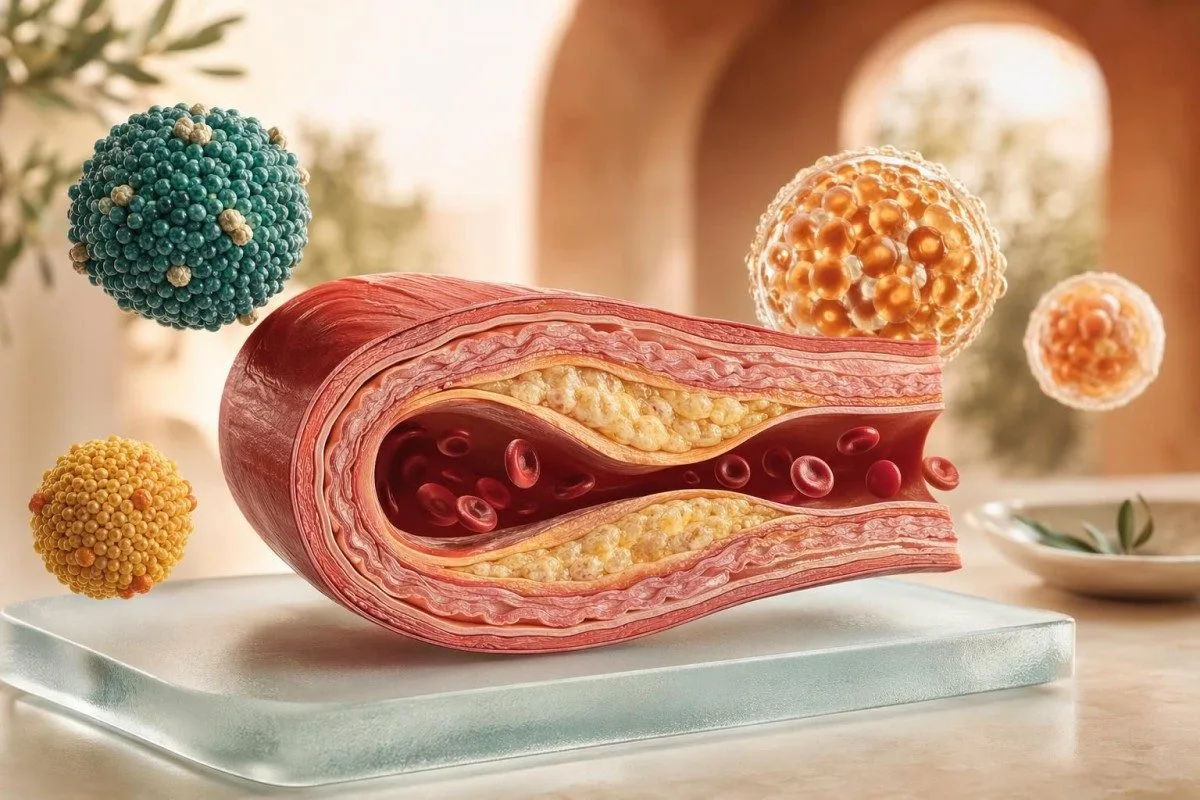
A low HDL flag can look alarming, but the next step is not simply to raise the number. The real question is whether it sits inside a higher-risk pattern: high triglycerides, insulin resistance, smoking, medication effects, or high ApoB.


- Low HDL cholesterol is usually defined as <40 mg/dL in men and <50 mg/dL in women; some labs use slightly different cutoffs.
- Triglycerides matter because low HDL plus triglycerides ≥150 mg/dL often points to insulin resistance or fatty liver risk.
- ApoB may matter more than HDL when deciding treatment because ApoB reflects the number of atherogenic particles.
- HDL-raising drugs have not reliably reduced heart attacks when LDL and ApoB are already treated; niacin is the classic example.
- Exercise usually raises HDL by only 2-5 mg/dL, but it can lower triglycerides, blood pressure and insulin resistance at the same time.
- Smoking cessation can raise HDL by about 2-4 mg/dL and improves cardiovascular risk far more than the HDL change suggests.
- Very low HDL below 20 mg/dL deserves a medication, genetic, liver and kidney review, especially if triglycerides are not high.
- Retesting is sensible after 4-12 weeks if the result followed illness, major weight loss, fasting changes, alcohol intake or medication changes.
- Kantesti AI reads HDL cholesterol in context with LDL, non-HDL, triglycerides, ApoB when available, glucose markers, liver enzymes and trends.
What to do first when HDL is flagged low
If HDL cholesterol is flagged low, do not try to force the HDL number up with pills; first check triglycerides, ApoB or non-HDL cholesterol, smoking, insulin resistance, medication effects and your overall cardiovascular risk. Low HDL cholesterol is usually <40 mg/dL in men or <50 mg/dL in women. The action is to fix the risk pattern, not chase a single isolated value.
When I review a lipid panel in clinic, I ask one quick question: is the HDL low by itself, or is it part of the insulin-resistance pattern? A 44-year-old with HDL 38 mg/dL, triglycerides 245 mg/dL and fasting glucose 108 mg/dL needs a very different conversation than a lean endurance cyclist with HDL 39 mg/dL and triglycerides 55 mg/dL.
Our Kantesti AI analysis reads HDL cholesterol alongside LDL-C, non-HDL-C, triglycerides, glucose, HbA1c, liver enzymes and kidney markers in about 60 seconds. For a plain-language walk-through of the whole panel, our guide to lipid panel results explains why the same HDL value can mean different things in two people.
Here is the practical first move: confirm the units, look at the triglyceride number, then calculate non-HDL cholesterol by subtracting HDL from total cholesterol. If your triglycerides are ≥400 mg/dL, calculated LDL-C can be unreliable, and a direct LDL-C or ApoB result often gives a cleaner risk picture.
As of May 11, 2026, no major guideline recommends treating low HDL cholesterol as a stand-alone drug target. The focus is LDL-C, non-HDL-C, ApoB where available, blood pressure, diabetes status, smoking, age, family history and inflammatory risk.
What counts as low HDL cholesterol on a lipid panel
Low HDL cholesterol is generally <40 mg/dL in adult men and <50 mg/dL in adult women, which equals roughly <1.0 mmol/L and <1.3 mmol/L. An HDL of 35 mg/dL is clearly low; an HDL of 47 mg/dL may be flagged in a woman but not in a man.
Some European laboratories use mmol/L, while many US reports use mg/dL; multiplying mmol/L by 38.67 converts HDL-C to mg/dL. A result of 0.9 mmol/L is about 35 mg/dL, so it is low in most adult reference systems.
The familiar HDL threshold of ≥60 mg/dL came from population studies where higher HDL tracked with lower average heart risk. That does not mean raising HDL from 38 to 60 mg/dL with a drug automatically lowers risk; the biology turned out to be messier than the old 'good cholesterol' label suggested.
A single HDL value should be compared with your own baseline. If your HDL has been 62 mg/dL for 10 years and drops to 39 mg/dL after starting a new medication or during rapid weight loss, that pattern deserves more attention than a stable lifelong HDL of 42 mg/dL.
For a reference-range-focused view, see our HDL range guide. If total cholesterol, LDL and HDL are all confusing on the same report, our cholesterol range overview keeps the cutoffs in one place.
The most common causes of low HDL cholesterol
The most common causes of low HDL cholesterol are insulin resistance, high triglycerides, abdominal weight gain, smoking, inactivity, poor sleep, certain medications and genetic baseline. In our analysis of 2M+ blood tests, low HDL rarely travels alone; it usually appears with at least one metabolic clue.
The classic pattern is HDL 32-42 mg/dL, triglycerides 180-350 mg/dL, fasting glucose above 100 mg/dL and ALT creeping above 30-40 IU/L. That combination points less toward an HDL problem and more toward insulin resistance, fatty liver physiology and excess VLDL production.
Weight distribution matters. I worry more about HDL 39 mg/dL with a waist-to-height ratio above 0.5 than the same HDL in a person with normal waist size, triglycerides 65 mg/dL and a strong exercise history.
Secondary causes can be surprisingly ordinary: 5-6 hours of sleep, heavy evening snacking, stopping regular exercise for 8 weeks, or switching from a physically active job to a desk job. Our article on desk-job blood markers shows how glucose, triglycerides and liver enzymes often shift before people feel unwell.
There is a small but real group with lifelong low HDL from genetics. Those cases often show HDL below 35 mg/dL from early adulthood, normal triglycerides and family members with similar lipid panels.
Why triglycerides change the meaning of low HDL
Triglycerides change the meaning of low HDL because high triglycerides usually signal more triglyceride-rich, ApoB-containing particles and insulin resistance. HDL 38 mg/dL with triglycerides 70 mg/dL is not the same risk story as HDL 38 mg/dL with triglycerides 280 mg/dL.
Fasting triglycerides should generally be <150 mg/dL, and many cardiometabolic specialists prefer <100 mg/dL in high-risk patients. Triglycerides ≥500 mg/dL raise pancreatitis concern, while 150-499 mg/dL usually means cardiovascular and metabolic risk assessment.
Low HDL with high triglycerides occurs because cholesterol and triglycerides are exchanged between lipoproteins; HDL particles become triglyceride-rich and are cleared faster. The number on the lipid panel then falls, but the deeper issue is often excess VLDL and remnant particles.
The triglyceride-to-HDL ratio is not a formal diagnosis, but it can be a useful clue. In mg/dL units, a ratio above 3 often tracks with insulin resistance, while a ratio above 4-5 is common in fatty liver, prediabetes and visceral adiposity.
For next steps when triglycerides are the bigger flag, read our guide to high triglycerides. If your report came from a fasting or non-fasting draw, our triglyceride range guide explains how meal timing changes interpretation.
Medication and hormone clues that lower HDL
Several medications and hormone exposures can lower HDL, especially anabolic-androgenic steroids, some progestins, isotretinoin, non-selective beta blockers, antiretroviral therapy and high-dose corticosteroids. A new low HDL result should always be compared with the medication timeline from the prior 3-6 months.
Anabolic steroid exposure is the one I ask about gently but directly, because HDL can drop by 20-70% depending on compound, dose and duration. I have seen HDL fall from 55 to 18 mg/dL over one cycle, with LDL rising at the same time.
Isotretinoin can raise triglycerides and sometimes lower HDL, which is why clinicians often check lipids at baseline and again during treatment. Oral retinoid-related triglyceride changes are usually reversible, but triglycerides above 500 mg/dL need prompt review.
Hormonal contraception, menopause transition and testosterone therapy can shift HDL in different directions depending on formulation and route. If the HDL change began after a prescription change, our medication monitoring guide can help you map expected lab timelines.
Liver markers add context because lipid processing runs through the liver. Before starting or changing lipid-active drugs, many clinicians check ALT, AST and sometimes GGT, which we cover in our guide to liver tests before new medicines.
Lifestyle patterns that quietly push HDL down
The lifestyle patterns most linked with low HDL are smoking, low aerobic fitness, excess refined carbohydrate, poor sleep, central weight gain and very low-fat crash dieting. Most patients can move HDL by a few mg/dL, but the larger win is usually lowering triglycerides and ApoB.
Smoking cessation typically raises HDL by about 2-4 mg/dL, but the cardiovascular benefit is much larger than that number suggests. HDL particles also appear to function better after quitting, even when the measured concentration changes only modestly.
Exercise has a dose effect, though it is not dramatic. Regular aerobic training for 12-16 weeks often raises HDL by 2-5 mg/dL and can reduce triglycerides by 10-25%, especially when paired with a 5-10% weight loss.
Diet is more about pattern than one magic food. Replacing refined starches and added sugar with unsaturated fats, legumes, vegetables, oats, nuts and fish often improves the low-HDL/high-triglyceride pattern; our guide to cholesterol-lowering foods gives practical lab recheck timelines.
Alcohol is awkward to discuss because light intake can raise HDL, yet alcohol can also raise triglycerides, blood pressure, atrial fibrillation risk and liver enzymes. I do not recommend starting alcohol to raise HDL.
When low HDL matters less than ApoB or non-HDL cholesterol
Low HDL matters less when ApoB, non-HDL cholesterol, LDL-C, blood pressure and glucose markers are all favorable. ApoB often matters more because it estimates the number of atherogenic particles that can enter the artery wall.
According to the 2018 AHA/ACC cholesterol guideline, ApoB ≥130 mg/dL is a risk-enhancing factor, particularly when triglycerides are ≥200 mg/dL (Grundy et al., 2019). In plain terms, if triglycerides are high, ApoB can reveal particle burden that LDL-C alone may understate.
Non-HDL cholesterol is total cholesterol minus HDL cholesterol, and it captures LDL, VLDL, IDL and remnant cholesterol. A useful rule is that non-HDL goals are often about 30 mg/dL higher than LDL-C goals because non-HDL includes triglyceride-rich particles.
The European ESC/EAS guideline also emphasizes LDL-C and ApoB/non-HDL-C in higher-risk groups, rather than treating HDL-C as a primary target (Mach et al., 2020). This is one reason I sometimes reassure patients with HDL 42 mg/dL when ApoB is 65 mg/dL, blood pressure is normal and HbA1c is 5.2%.
Kantesti AI can flag when HDL looks low but ApoB risk is actually the bigger missing test. For people without ApoB, non-HDL cholesterol is a free calculation from the standard lipid panel.
When very low HDL suggests a rare disorder
HDL below 20 mg/dL is unusual and should not be dismissed as routine lifestyle variation. Very low HDL can come from severe hypertriglyceridemia, anabolic steroid use, uncontrolled diabetes, liver disease, kidney protein loss or rare genetic disorders such as ABCA1, APOA1 or LCAT-related conditions.
The first step is to repeat the lipid panel and check triglycerides. HDL can look extremely low when triglycerides are very high, and the clinical priority may be lowering triglycerides quickly if they are ≥500 mg/dL.
Red flags for inherited HDL disorders include HDL persistently below 10-20 mg/dL, orange-tinged tonsils, corneal clouding, neuropathy, kidney disease or a family pattern of very low HDL. These are rare; I have seen far more medication-related and triglyceride-related cases than true monogenic HDL disease.
ApoA-I testing, ApoB, urine albumin-creatinine ratio, liver enzymes, thyroid tests and sometimes genetic referral may be appropriate when HDL is extremely low without an obvious cause. If LDL-C looks normal but particle burden is uncertain, LDL particle number can add another layer.
Do not panic over one result. Lab handling, acute illness and recent major diet changes can all distort a lipid panel, so I usually want a repeat value before labeling someone with a rare lipid disorder.
How to raise HDL in a way that actually lowers risk
The safest way to raise HDL is to improve the whole cardiometabolic pattern: exercise regularly, stop smoking, lose visceral fat if needed, reduce refined carbohydrates, treat diabetes and lower ApoB when indicated. A 3 mg/dL HDL increase is useful only if the surrounding risk markers improve too.
For exercise, I usually prescribe what people can actually repeat: 150-300 minutes per week of moderate aerobic activity plus 2 resistance sessions. In my experience, triglycerides often improve within 4-8 weeks, while HDL may take 8-16 weeks to budge.
Weight loss has a delayed HDL effect. During active weight loss, HDL can stay flat or even fall temporarily, then rise after weight stabilizes; our diet lab timeline explains why retesting too early can mislead.
The dietary pattern I trust most for low-HDL/high-triglyceride results is boring but effective: fewer sweet drinks and refined grains, more fiber, more unsaturated fat, adequate protein and less late-night grazing. If triglycerides are over 200 mg/dL, I also ask about fruit juice, smoothies, alcohol and weekend eating, because those details rarely appear in generic diet advice.
Kantesti's neural network can turn a lipid pattern into a nutrition plan, but I still tell patients the same thing in clinic: choose changes you can repeat for 90 days. Lipids reward consistency more than intensity.
Supplements, niacin and the myth of simply boosting HDL
Niacin can raise HDL by 15-35%, but raising HDL with niacin has not reliably reduced cardiovascular events when modern LDL-lowering therapy is already used. The AIM-HIGH trial stopped early because adding extended-release niacin to statin therapy did not reduce events despite HDL improvement (Boden et al., 2011).
This is one of those areas where the evidence is honestly mixed in the public mind but clearer in guideline practice. We no longer treat HDL as a cosmetic number to inflate; we treat LDL-C, ApoB, triglycerides, diabetes, blood pressure and smoking.
Omega-3 fatty acids can lower triglycerides, especially at prescription doses around 4 g/day EPA/DHA-equivalent products, but over-the-counter capsules vary widely. The omega-3 index test is different from a lipid panel and measures EPA/DHA in cell membranes rather than HDL.
Berberine, fiber, plant sterols and soluble fiber may modestly improve LDL or glucose patterns in selected patients, but supplements can interact with anticoagulants, diabetes drugs and liver-active medicines. I do not like supplement stacks when triglycerides are ≥500 mg/dL or liver enzymes are clearly abnormal.
If someone wants a supplement, I ask for a goal with a lab endpoint: lower triglycerides by 50 mg/dL, reduce ApoB below a target, or correct a deficiency. 'Raise HDL' by itself is too vague to guide safe treatment.
Fasting, retesting and lab variability with HDL
HDL cholesterol is usually less affected by meals than triglycerides, but the full lipid panel can still change with fasting status, illness, alcohol, exercise and lab method. If the result is unexpected, repeat the panel in 4-12 weeks under similar conditions.
Non-fasting lipid panels are acceptable for many screening situations, but triglycerides rise after meals and can make the whole pattern look more metabolic. If non-fasting triglycerides are high, clinicians often repeat a fasting panel before making decisions.
Acute infection, surgery, major inflammation and hospitalization can lower HDL and LDL temporarily. I generally avoid making long-term cholesterol decisions from a panel drawn during a bad viral illness or within a few weeks of a major inflammatory event.
Lab variation also exists. A 3-5 mg/dL HDL difference between two tests may be noise, while a fall from 58 to 33 mg/dL is unlikely to be random and deserves a cause search.
Our guide to fasting versus non-fasting tests explains which values shift most. If you are comparing old and new reports, the article on blood test variability helps separate real change from ordinary scatter.
What labs to ask for after a low HDL result
After a low HDL result, the most useful follow-up labs are ApoB or non-HDL calculation, fasting triglycerides, HbA1c, fasting glucose, ALT/AST, TSH and urine albumin-creatinine ratio in selected patients. The best test list depends on whether triglycerides, glucose or LDL are also abnormal.
If HDL is low and triglycerides are high, I often ask for HbA1c, fasting glucose and sometimes fasting insulin. A fasting insulin above about 10-15 µIU/mL can support insulin resistance, though cutoffs vary and the test is not standardized like HbA1c.
TSH matters because thyroid dysfunction can shift LDL and triglycerides. Hypothyroidism more often raises LDL-C than it lowers HDL, but a TSH above the lab range changes lipid interpretation and should be addressed before final cholesterol decisions.
ALT and GGT help when the low-HDL/high-triglyceride pattern suggests fatty liver or alcohol contribution. Urine albumin-creatinine ratio is worth considering in diabetes, hypertension, kidney risk or very abnormal lipids because kidney protein loss can alter lipid metabolism.
Our biomarker guide lists how these markers fit together, and our article on early insulin resistance explains why fasting glucose can look normal while the lipid pattern is already shifting.
When treatment is needed despite focusing less on HDL
Treatment is needed when overall cardiovascular risk is high, LDL-C or ApoB is above target, triglycerides are severely elevated, or diabetes, kidney disease, prior cardiovascular disease or strong family history changes the risk calculation. Low HDL can support the concern, but it rarely chooses the treatment by itself.
Statins do not raise HDL much, often only 5-10%, but they lower LDL-C and cardiovascular events. That is why a patient with HDL 36 mg/dL and LDL-C 170 mg/dL usually needs an LDL-focused discussion, not an HDL supplement plan.
Fibrates can lower triglycerides by 30-50% and may be considered when triglycerides are very high or in selected high-triglyceride patterns. Prescription omega-3 therapy is another option in specific patients, but the choice depends on triglyceride level, ASCVD history, diabetes status and drug interactions.
Before starting statins, clinicians often check baseline ALT and review pregnancy possibility, muscle symptoms, interacting drugs and thyroid status. Our guide to pre-statin blood tests lays out the practical checklist.
Kantesti's medical content is reviewed with physician oversight through our Medical Advisory Board. In clinic, Thomas Klein, MD, frames treatment around absolute risk: a 62-year-old smoker with HDL 39 mg/dL is not the same patient as a 28-year-old runner with the same HDL.
Why family history and trends matter more than one HDL flag
Family history and year-over-year trends can change the meaning of low HDL more than the reference flag itself. An HDL of 42 mg/dL for 15 years is a baseline; a sudden drop from 65 to 42 mg/dL is a clue.
Ask about early heart disease in first-degree relatives: men before 55 and women before 65 are the classic premature cardiovascular disease cutoffs. If that history is present, ApoB, Lp(a), LDL-C and blood pressure deserve more attention even when HDL is the only highlighted value.
Ethnicity, menopause timing, chronic inflammatory disease and kidney disease can all shift baseline risk calculators. A low HDL result in someone with rheumatoid arthritis or albuminuria is not interpreted in isolation.
Family lipid patterns are useful, especially when HDL is very low or LDL is very high. Our family blood test guide explains how to compare parents, siblings and adult children without overreacting to one abnormal marker.
Trend tracking is where patients often catch what a rushed visit misses. The blood test history tool approach is simple: compare the same marker, same units, similar fasting state and similar health status over time.
How Kantesti AI interprets HDL in context
Kantesti AI interprets HDL cholesterol by analyzing the whole report, not the HDL line alone. Our platform checks lipid ratios, triglyceride patterns, glucose markers, liver enzymes, kidney markers, medications when entered, family history inputs and prior trends when available.
A low HDL flag can be technically correct and clinically low priority at the same time. Our AI blood test platform is built to explain that distinction in patient language, then show which follow-up questions are worth taking to a clinician.
Kantesti's neural network has been clinically benchmarked across large anonymised datasets, and our methodology is described in medical validation. A population-scale benchmark of the Kantesti AI Engine is also available as a clinical validation preprint.
If you upload a PDF or photo, Kantesti AI can usually interpret the lipid panel in about 60 seconds and translate units across languages. You can try an HDL-focused interpretation with our free blood test analysis, then bring the result to your doctor rather than guessing from the red flag alone.
Thomas Klein, MD, reviews lipid content with the same clinical rule I use in practice: the safest plan is the one that lowers events, not the one that makes a single lab value look prettier. For low HDL, that usually means fixing triglycerides, ApoB, smoking, glucose and blood pressure first.
Bottom line for patients with low HDL cholesterol
The bottom line is simple: low HDL cholesterol is a risk clue, not a stand-alone diagnosis. The next step is to identify the pattern, especially triglycerides ≥150 mg/dL, ApoB elevation, insulin resistance, smoking, medication effects or strong family history.
If your HDL is mildly low but triglycerides, ApoB or non-HDL-C, blood pressure, HbA1c and smoking status are favorable, the result may need lifestyle maintenance rather than aggressive treatment. If HDL is low with triglycerides above 200 mg/dL, the pattern deserves a metabolic review.
Do the boring checks first: repeat the lipid panel if the result was unexpected, ask whether fasting matters in your case, review new medicines, and calculate non-HDL cholesterol. Then decide with your clinician whether ApoB, HbA1c, TSH, liver tests or kidney urine testing would change management.
Kantesti publishes biomarker interpretation work beyond cholesterol because patients rarely have one isolated marker. Recent Kantesti research publications include urinalysis and iron studies references that support the same pattern-based approach used in our AI-powered blood test interpretation work.
Formal Kantesti research citations: Kantesti AI. (2026). Urobilinogen in Urine Test: Complete Urinalysis Guide 2026. Zenodo. https://doi.org/10.5281/zenodo.18226379. Kantesti AI. (2026). Iron Studies Guide: TIBC, Iron Saturation & Binding Capacity. Zenodo. https://doi.org/10.5281/zenodo.18248745.
Frequently Asked Questions
What level of HDL cholesterol is considered low?
Low HDL cholesterol is generally <40 mg/dL in adult men and <50 mg/dL in adult women, which is about <1.0 mmol/L and <1.3 mmol/L. Some laboratories use slightly different reference intervals, so the flag on your lipid panel may vary. HDL ≥60 mg/dL has traditionally been associated with lower average risk, but treatment decisions now depend more on LDL-C, ApoB, non-HDL cholesterol, triglycerides and overall cardiovascular risk.
Is low HDL cholesterol dangerous if LDL is normal?
Low HDL cholesterol can still matter when LDL-C is normal, especially if triglycerides are ≥150 mg/dL, ApoB is high, blood pressure is elevated, or HbA1c is in the prediabetes range. If ApoB is low, triglycerides are low and there are no major risk factors, isolated low HDL is often less concerning. A normal LDL-C can miss high particle number in some people, which is why ApoB or non-HDL cholesterol can be useful.
How can I raise HDL cholesterol naturally?
The most evidence-based ways to raise HDL cholesterol naturally are stopping smoking, doing 150-300 minutes per week of aerobic activity, adding 2 weekly resistance sessions, improving sleep and losing visceral fat if needed. HDL often rises only 2-5 mg/dL with exercise, but triglycerides, blood pressure and insulin resistance can improve more substantially. A heart-risk-focused plan is better than trying to raise HDL as an isolated cosmetic target.
Why are my triglycerides high and HDL low?
High triglycerides with low HDL usually suggests insulin resistance, excess VLDL production, fatty liver physiology, alcohol effect, high refined-carbohydrate intake, uncontrolled diabetes or certain medications. Fasting triglycerides should generally be <150 mg/dL, and values ≥500 mg/dL raise pancreatitis concern. This pattern often improves with weight loss, reduced added sugar, less alcohol, regular exercise and treatment of diabetes or thyroid disease when present.
Should I take niacin for low HDL cholesterol?
Niacin can raise HDL cholesterol by about 15-35%, but major trials did not show clear cardiovascular benefit when niacin was added to statin-based therapy in patients already receiving modern lipid treatment. Niacin can also cause flushing, worsen glucose control, raise uric acid and affect liver enzymes. Most clinicians now target LDL-C, ApoB, non-HDL cholesterol and triglycerides rather than prescribing niacin simply to raise HDL.
Can low HDL cholesterol be genetic?
Yes, low HDL cholesterol can be genetic, especially when HDL has been low since early adulthood and triglycerides are normal. HDL below 20 mg/dL is unusual and should prompt review for severe triglyceride elevation, anabolic steroid exposure, liver disease, kidney protein loss and rare genetic conditions involving ABCA1, APOA1 or LCAT. Most low HDL results are not rare genetic disorders, but very low or lifelong patterns deserve a careful work-up.
When should I repeat a lipid panel after low HDL?
A lipid panel is commonly repeated in 4-12 weeks when HDL is unexpectedly low, triglycerides are high, fasting status was unclear, or the result followed illness, major diet change, alcohol intake or a new medication. HDL itself changes less after meals than triglycerides, but the overall pattern can still be distorted. Try to repeat under similar conditions, including fasting if your clinician wants a fasting comparison.
Should I drink alcohol to raise my HDL cholesterol?
No. Although alcohol may raise HDL modestly in some people, starting to drink or drinking more is not a heart-health treatment. Alcohol can raise triglycerides and blood pressure and carries other health risks; focus instead on activity, diet, and smoking cessation.
Can recent illness or inflammation make my HDL look lower than usual?
Yes. HDL can temporarily fall during infections, inflammatory flares, surgery recovery, or major physical stress, so one low result may not reflect your usual baseline. If you were unwell, your clinician may repeat the lipid panel once you have been stable for several weeks.
Get AI-Powered Blood Test Analysis Today
Join over 2 million users worldwide who trust Kantesti for instant, accurate lab test analysis. Upload your blood test results and receive comprehensive interpretation of 15,000+ biomarkers in seconds.
📚 Referenced Research Publications
Klein, T., Mitchell, S., & Weber, H. (2026). Urobilinogen in Urine Test: Complete Urinalysis Guide 2026. Kantesti AI Medical Research.
Klein, T., Mitchell, S., & Weber, H. (2026). Iron Studies Guide: TIBC, Iron Saturation & Binding Capacity. Kantesti AI Medical Research.
📖 External Medical References
⚕️ Medical Disclaimer
This article is for educational purposes only and does not constitute medical advice. Always consult a qualified healthcare provider for diagnosis and treatment decisions.
E-E-A-T Trust Signals
Experience
Physician-led clinical review of lab interpretation workflows.
Expertise
Laboratory medicine focus on how biomarkers behave in clinical context.
Authoritativeness
Written by Dr. Thomas Klein with review by Dr. Sarah Mitchell and Prof. Dr. Hans Weber.
Trustworthiness
Evidence-based interpretation with clear follow-up pathways to reduce alarm.