Most medication blood tests are not yearly guesswork: kidney and potassium drugs often need retesting in 1-2 weeks, statins in 4-12 weeks, thyroid tablets in 6-8 weeks, and diabetes control in about 3 months.



- Kidney and potassium medicines such as ACE inhibitors, ARBs, spironolactone, and diuretics usually need creatinine, eGFR, sodium, and potassium checked at baseline and again within 1-2 weeks.
- Statins usually need a lipid panel 4-12 weeks after starting or changing dose; ALT is checked at baseline and repeated mainly if symptoms or high-risk features appear.
- Levothyroxine dose changes should be followed by TSH and free T4 after 6-8 weeks because TSH lags behind the actual hormone change.
- Warfarin requires INR checks every few days when starting, then less often once stable; the usual INR target for atrial fibrillation or venous thrombosis is 2.0-3.0.
- Lithium should be measured as a 12-hour trough about 5-7 days after starting or changing dose; levels above 1.5 mmol/L can be toxic.
- Methotrexate and azathioprine require CBC, liver enzymes, and kidney function monitoring, often every 1-2 weeks early on and every 8-12 weeks once stable.
- Metformin needs eGFR monitoring at least yearly and vitamin B12 checks every 2-3 years, sooner if anemia, neuropathy, or vegan diet is present.
- Blood test difference between visits matters most when the change fits the drug, timing, dose, and symptoms; a single flagged number is often less useful than the trend.
Which medicines usually need repeat blood tests?
A monitoring blood test for medication is usually due at baseline, 1-2 weeks for kidney or potassium-risk drugs, 4-12 weeks for cholesterol drugs, 6-8 weeks for thyroid dose changes, and 3 months for HbA1c changes. Doctors monitor the organ the drug can stress, the level the drug is meant to improve, or the drug concentration itself. If you upload repeat results to monitoring blood test for medication, Kantesti AI can compare timing, dose context, and trend direction rather than reading one report in isolation.
The most common repeat markers are creatinine, eGFR, potassium, sodium, ALT, AST, CBC, INR, TSH, HbA1c, lipids, and therapeutic drug levels. A normal baseline does not always protect you after a dose change; spironolactone can move potassium within 3-7 days, while levothyroxine may not show its full TSH effect for 6-8 weeks.
I see a lot of anxious patients after a new flag appears on a portal. The first question I ask is not whether the result is red; it is whether the result changed after the medication should have changed it, and whether the size of change makes biological sense.
As of April 29, 2026, our clinical team at Kantesti as an organisation sees the safest medication follow-up plans built around three dates: the baseline date, the dose-change date, and the expected steady-state date. If the lab was drawn too early, the most honest answer may be that the test was premature, not reassuring or alarming.
Turnaround also matters. A potassium drawn in an emergency department may return in under 1 hour, while a send-out drug level can take several days; our guide to real lab timelines explains why timing and reporting speed are separate issues.
How much blood test difference between visits is real?
A blood test difference between visits is clinically meaningful when it exceeds expected lab variation and fits the drug timeline. A creatinine rise of 5 µmol/L may be noise, but a 30% creatinine rise 10 days after starting an ACE inhibitor is a signal worth acting on.
In our analysis of 2M+ uploaded blood tests, we consistently see that patients compare red flags rather than deltas. A potassium of 5.2 mmol/L from a lab whose upper limit is 5.1 can be less concerning than a move from 4.2 to 5.2 after adding trimethoprim to lisinopril.
Some European laboratories use slightly different potassium, ALT, and TSH reference ranges, which can make the same number look normal in one report and high in another. Kantesti's neural network maps units and reference ranges across reports using our 15,000+ biomarker guide before judging whether the change is probably real.
When I, Thomas Klein, MD, review serial results, I often calculate percentage change before I look at the flag. Creatinine rising from 80 to 104 µmol/L is a 30% rise; creatinine rising from 150 to 174 µmol/L is a 16% rise, even though both move by 24 µmol/L.
Hydration, fasting, exercise, menstrual timing, sample handling, and time of day can all shift results. Our deeper article on blood test variability is useful when the drug timeline and the lab change do not quite line up.
ACE inhibitors, ARBs, diuretics: kidney and potassium timeline
ACE inhibitors, ARBs, spironolactone, eplerenone, thiazides, and loop diuretics need creatinine or eGFR plus electrolytes checked at baseline and usually again within 1-2 weeks. Potassium above 5.5 mmol/L or creatinine rising more than about 30% after a renin-angiotensin drug deserves prompt review.
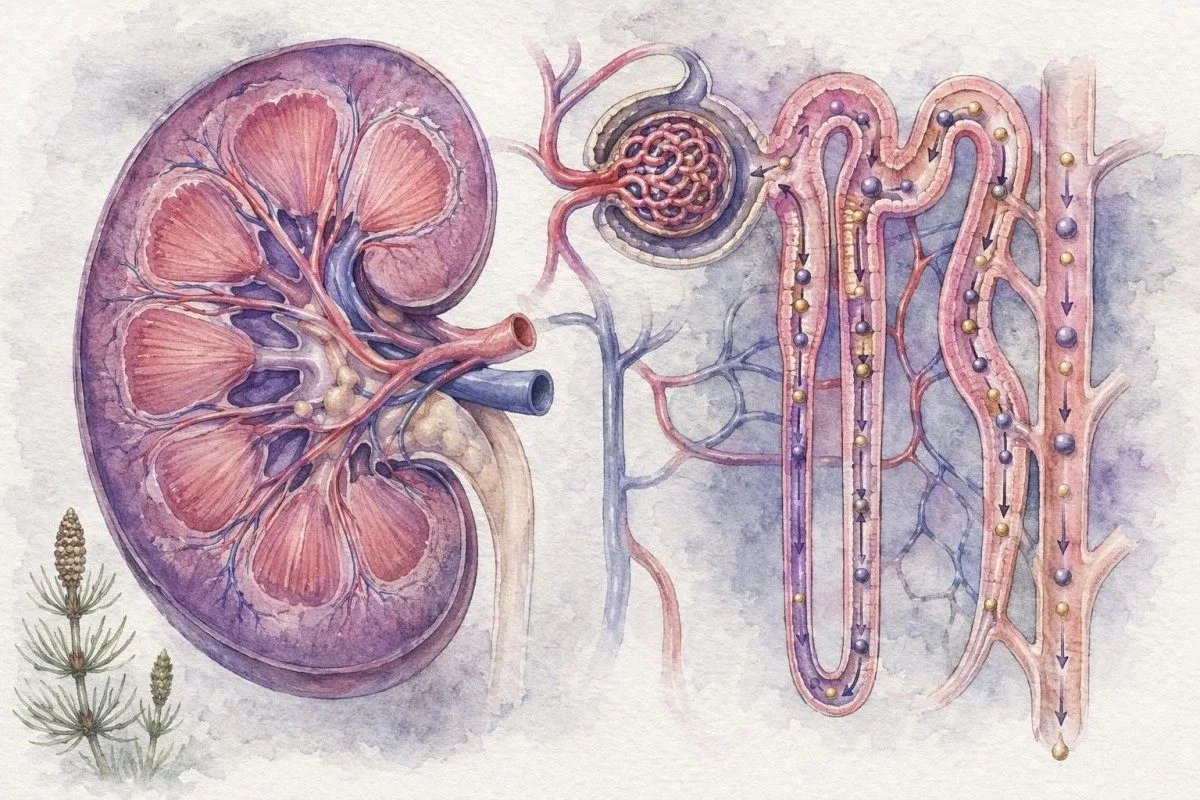
NICE NG203 advises checking eGFR and potassium before renin-angiotensin-system blockers and repeating after treatment changes in CKD; in day-to-day practice I use 7-14 days for most patients (NICE, 2021). A smaller creatinine rise is expected because these drugs reduce pressure inside the kidney filter, which is often protective long term.
A practical rule: an eGFR fall up to 25% or creatinine rise up to 30% can be acceptable if potassium is safe and blood pressure is improved. A potassium result above 6.0 mmol/L is urgent because arrhythmia risk rises, especially when kidney function is impaired.
Thiazide diuretics more often lower sodium and potassium, while spironolactone and eplerenone more often raise potassium. For patients already near the upper potassium limit, I prefer checking at day 3-7 after starting spironolactone, again at 1 month, and then every 3 months until the pattern behaves.
Do not interpret kidney medication labs without knowing the fluid story. Dehydration, vomiting, NSAID use, and low-carb crash dieting can move creatinine and BUN quickly; compare your result with our potassium range guide and the renal panel comparison if the panel names differ.
Statins and lipid drugs: when to repeat lipids, ALT, and CK
Statins need a lipid panel 4-12 weeks after starting or changing dose, then every 3-12 months once stable. ALT is usually checked before treatment; CK is not routinely monitored unless muscle symptoms, severe weakness, or a high-risk interaction appears.
The 2018 AHA/ACC cholesterol guideline recommends a fasting or nonfasting lipid panel 4-12 weeks after a statin start or dose adjustment, then every 3-12 months as needed (Grundy et al., 2019). LDL-C lowering of about 30-49% suggests moderate-intensity statin response; a reduction of 50% or more suggests high-intensity response.
ALT above 3 times the upper limit of normal on repeat testing is the usual threshold that makes clinicians pause, but mild ALT elevations are common in fatty liver and do not automatically mean statin injury. A 52-year-old marathon runner with AST 89 IU/L, ALT 42 IU/L, and CK 780 U/L after a race may have muscle leakage rather than liver damage.
Fibrates and high-dose omega-3 prescriptions are usually followed with triglycerides, ALT, and kidney function, especially when baseline triglycerides exceed 500 mg/dL. Triglycerides above 1000 mg/dL raise pancreatitis risk and make timing more urgent than routine cholesterol prevention.
If your cholesterol report was nonfasting, do not assume it is useless. Our lipid panel guide explains when nonfasting triglycerides are still actionable and when a fasting repeat gives a cleaner medication decision.
Thyroid medicines: why TSH timing is slower than patients expect
Levothyroxine dose changes should usually be checked with TSH and free T4 after 6-8 weeks, not after a few days. Antithyroid drugs such as methimazole or carbimazole often need free T4 and T3 every 2-6 weeks early because TSH can stay suppressed for months.

TSH is a pituitary response signal, and it moves slowly after levothyroxine changes. Checking TSH at 10 days can mislead both patient and clinician because the number has not reached a new steady state.
Pregnancy is different. Many endocrinologists recheck TSH about every 4 weeks in the first half of pregnancy because thyroid hormone requirements can rise quickly, and trimester-specific targets are narrower than general adult ranges.
Antithyroid drugs carry a rare but serious agranulocytosis risk, often quoted around 0.1-0.5%. I tell patients to stop the drug and seek urgent CBC testing if fever, mouth ulcers, or severe sore throat appears; routine CBCs do not reliably predict every sudden case.
Biotin can make thyroid blood tests look wrong, especially immunoassay-based TSH and free T4. For timelines and assay traps, compare our levothyroxine TSH timeline with the biotin thyroid warning.
Diabetes medicines: HbA1c, kidney function, and B12 checks
Diabetes medication changes are usually assessed with HbA1c after about 3 months because red cell lifespan makes earlier A1c changes incomplete. Metformin needs eGFR monitoring at least yearly and vitamin B12 testing every 2-3 years, sooner with anemia or neuropathy.
HbA1c reflects roughly 8-12 weeks of glucose exposure, with the most recent 4 weeks carrying extra weight. A medication started 14 days ago can improve finger-stick glucose while HbA1c still looks disappointing.
Metformin is generally avoided when eGFR is below 30 mL/min/1.73 m², and dose reduction is often considered below 45 mL/min/1.73 m². SGLT2 inhibitors can cause an early eGFR dip of about 3-5 mL/min/1.73 m²; the pattern is often hemodynamic rather than kidney damage if it stabilizes.
Sulfonylureas and insulin do not need drug levels, but they need glucose-pattern review because hypoglycemia can occur with normal HbA1c. GLP-1 receptor agonists are monitored more by symptoms, weight, kidney status during dehydration, and pancreatic symptoms than by one recurring blood marker.
If A1c and finger-stick results disagree, anemia, kidney disease, hemoglobin variants, and recent transfusion can distort interpretation. Start with our diabetes blood test guide and the article on HbA1c accuracy before changing a working treatment plan.
Anticoagulants: INR for warfarin, kidney checks for DOACs
Warfarin needs frequent INR checks when starting or changing dose, while DOACs need kidney function, liver function, and CBC monitoring rather than routine drug levels. A typical INR target for atrial fibrillation or venous thrombosis is 2.0-3.0, but mechanical valves may need higher targets.

When starting warfarin, INR may be checked every 2-3 days until it enters range, then weekly, then every 4-12 weeks if very stable. Antibiotics, alcohol changes, diarrhea, liver disease, and vitamin K intake can move INR faster than many patients expect.
DOACs such as apixaban, rivaroxaban, edoxaban, and dabigatran are different. I usually look for baseline CBC, creatinine clearance, liver function, and body weight; after that, renal monitoring ranges from yearly to every 3-6 months in frail patients or those with creatinine clearance below 60 mL/min.
A falling hemoglobin on an anticoagulant can be more revealing than the coagulation number itself. Hemoglobin below about 80 g/L, black stools, fainting, or rapid heart rate needs same-day clinical assessment even if the anticoagulant dose seems correct.
For patients trying to understand PT, INR, aPTT, fibrinogen, and D-dimer together, our PT INR range guide pairs well with the broader coagulation test overview.
Lithium and mood stabilisers: levels, kidneys, thyroid, and CBC
Lithium requires a 12-hour trough level about 5-7 days after starting or changing dose, then repeat testing until stable. Typical maintenance targets are about 0.6-0.8 mmol/L for many patients, while levels above 1.5 mmol/L raise toxicity concern.
NICE CG185 recommends checking lithium one week after starting and one week after each dose change, then weekly until stable, with ongoing monitoring every 3 months in the first year and often every 6 months later (NICE, 2023). In higher-risk patients, such as older adults or people taking ACE inhibitors, diuretics, or NSAIDs, I keep the interval shorter.
Lithium can affect kidneys, thyroid, and calcium regulation, so eGFR, TSH, and calcium are usually checked every 6 months. The classic trap is a level drawn 3 hours after a dose; it can look falsely high compared with the required 12-hour trough.
Valproate monitoring usually includes baseline CBC, platelets, ALT, AST, weight, and pregnancy-risk counselling where relevant. Carbamazepine needs CBC, liver enzymes, sodium, and interaction review; sodium below 130 mmol/L on carbamazepine is not a casual finding.
Kantesti's medical reviewers, listed through our Medical Advisory Board, often flag medication combinations before the single drug becomes the issue. Lithium plus dehydration plus ibuprofen is a different risk profile than lithium alone at the same measured level.
Methotrexate, azathioprine, and DMARDs: CBC and liver schedule
Methotrexate, azathioprine, leflunomide, and several immune medicines need CBC, liver enzymes, and kidney function monitoring soon after starting and repeatedly during dose escalation. Early monitoring is often every 1-2 weeks, then every 8-12 weeks once the dose and results are stable.
Methotrexate toxicity can show up as falling white cells, falling platelets, rising ALT, mouth ulcers, or unexplained breathlessness. Many shared-care protocols become cautious when WBC falls below 3.5 x 10⁹/L, neutrophils below 1.6 x 10⁹/L, or platelets below 140 x 10⁹/L, though local rules vary.
Azathioprine is one of the clearest examples of pre-treatment genetics changing lab safety. TPMT and, increasingly, NUDT15 testing help identify people at high risk of profound myelosuppression before the first tablet does harm.
A mild ALT rise after methotrexate is interpreted differently in a patient with obesity, diabetes, and fatty liver than in a lean patient with previously normal enzymes. Context matters more than the number alone, which is why I prefer seeing at least three data points before calling a stable low-grade pattern dangerous.
CBC differentials can reveal the pattern before the total WBC becomes alarming. If you are comparing neutrophils, lymphocytes, and platelets during DMARD treatment, use our CBC differential guide alongside the prescribing clinician's safety plan.
Anticonvulsants: when levels help and when CBC or sodium matters more
Phenytoin, carbamazepine, and valproate may need drug levels, but sodium, CBC, albumin, and liver enzymes often explain the real safety issue. Lamotrigine and levetiracetam usually do not need routine levels unless pregnancy, toxicity, adherence uncertainty, or unusual interactions are present.
Phenytoin has nonlinear kinetics, so a small dose increase can produce a large level jump. The usual total phenytoin range is often 10-20 µg/mL, but low albumin can make the free active level higher than the total number suggests.
Carbamazepine can lower sodium through SIADH-like physiology, especially in older adults or when combined with diuretics. Sodium below 130 mmol/L with confusion, falls, or seizures is a same-day problem, not a routine appointment issue.
Valproate levels are often interpreted around 50-100 µg/mL, but platelet count, ALT, weight, tremor, and ammonia-related symptoms can matter more than a neat therapeutic-range label. I have seen patients with acceptable levels feel clearly toxic, especially after interacting medicines were added.
Liver enzyme interpretation is especially tricky here because anticonvulsants can induce enzymes as well as injure tissue. Our liver function test guide helps separate hepatocellular, cholestatic, and enzyme-induction patterns.
Short-course drugs that still deserve blood test follow-up
Most short antibiotic courses do not need repeat blood tests, but trimethoprim, co-trimoxazole, oral terbinafine, TB therapy, some antivirals, and isotretinoin are common exceptions. The usual concern is potassium, creatinine, ALT, CBC, or triglycerides within days to weeks.

Trimethoprim can raise potassium within 3-7 days, particularly with ACE inhibitors, ARBs, spironolactone, CKD, or older age. A patient who tolerated lisinopril for years can develop dangerous hyperkalemia after a brief urinary antibiotic course.
Oral terbinafine for fungal nail disease is often paired with baseline liver enzymes and a repeat around 4-6 weeks in higher-risk patients or longer courses. ALT above 3 times the upper limit, jaundice, dark urine, or severe fatigue should stop the casual watch-and-wait approach.
Isotretinoin monitoring has become less excessive in many dermatology practices, but baseline ALT and triglycerides plus a repeat after 1-2 months or at peak dose is still common. Triglycerides above 500 mg/dL usually trigger action, and values near 1000 mg/dL raise pancreatitis concern.
If your ALT or AST rises after a new drug, look at the pattern rather than blaming the newest tablet automatically. Our article on elevated liver enzymes explains why ALT, AST, ALP, bilirubin, and GGT point to different mechanisms.
Hormone therapy and testosterone: CBC, lipids, liver, and PSA context
Testosterone therapy usually needs hematocrit at baseline, at 3-6 months, and then yearly if stable. Hematocrit above 54% is a common threshold for holding or reducing therapy because thicker circulating volume can increase clotting and cardiovascular strain.
Testosterone can raise hemoglobin and hematocrit within months, especially injectable regimens that create higher peaks. A hematocrit moving from 45% to 52% may matter even before it crosses a lab's red-flag threshold.
PSA monitoring depends on age, baseline risk, symptoms, and shared decision-making; it is not a simple testosterone-only checkbox. A rising PSA velocity can matter more than a single value, and urinary infection or recent procedures can distort interpretation.
Gender-affirming hormone therapy uses lab monitoring too, but the target ranges and safety markers should match the individual's treatment plan, not a generic male or female reference flag. This is one area where automated portal interpretation can be clumsy without clinical context.
For red cell changes during testosterone or other hormone therapy, our hematocrit guide gives the practical difference between hemoglobin, hematocrit, RBC count, and dehydration-related false highs.
Forgotten monitoring: NSAIDs, PPIs, allopurinol, and digoxin
Several everyday medicines need recurring blood test analysis even though patients rarely think of them as high-risk drugs. Long-term NSAIDs can affect creatinine and hemoglobin, PPIs can lower magnesium or B12, allopurinol is titrated by uric acid, and digoxin needs kidney-aware level monitoring.

NSAIDs can reduce kidney blood flow, especially during dehydration or when combined with ACE inhibitors or diuretics. I often recheck creatinine and potassium within 1-3 weeks after starting chronic NSAIDs in older adults, CKD, heart failure, or triple-therapy combinations.
PPIs do not require monthly labs, but long-term use can be associated with low magnesium, low B12, and iron absorption issues in selected patients. Magnesium below 0.65 mmol/L with cramps, arrhythmia, or seizures needs more than a supplement guess.
Allopurinol should be titrated to uric acid rather than left forever at the starting dose. The usual gout target is serum urate below 6 mg/dL, or below 5 mg/dL in many patients with tophi, with checks every 2-5 weeks during titration.
Digoxin is unforgiving when kidney function changes. Levels are usually checked at least 6-8 hours after a dose, often after 5-7 days at steady state, and many heart-failure clinicians aim around 0.5-0.9 ng/mL; compare kidney context with our high creatinine guide.
What changes after starting, stopping, or changing dose?
The blood test timeline changes most after starting a medicine, increasing dose, adding an interacting drug, stopping a protective drug, or becoming dehydrated. A stable annual lab plan may become a 3-day, 1-week, or 6-week plan depending on the drug's pharmacology.

Starting asks whether the body tolerates the medicine; changing dose asks whether the previous safety margin still holds. Stopping asks a different question: did the marker rebound, normalize, or reveal that the medication was masking a problem?
Some stopping timelines are fast. INR can fall within days after warfarin interruption, potassium may fall after stopping spironolactone, and glucose can rise within 24-72 hours after stopping insulin or steroids.
Other stopping timelines are slow. TSH may take 6-8 weeks to reflect a levothyroxine change, LDL-C can drift upward over weeks after statin discontinuation, and HbA1c may take about 3 months to show the full effect of a diabetes medication change.
Dr Thomas Klein's practical advice is to keep a one-line medication change log beside your lab history: date, drug, dose, reason, and symptoms. Kantesti AI can support blood test comparison and longer blood test history review when those dates are available.
How Kantesti reads medication-monitoring trends safely
Kantesti AI interprets medication-monitoring blood tests by comparing marker direction, timing since medication change, reference ranges, age, sex, unit conversions, and known drug-marker relationships. Our AI blood test platform is built to explain patterns, not replace the prescriber who knows why the medicine was started.

A recurring blood test analysis should answer four questions: what changed, how much changed, whether the timing fits the drug, and whether the change is dangerous today. Kantesti AI highlights those points in about 60 seconds after PDF or photo upload, but urgent symptoms still belong with emergency or same-day care.
If you have two or more medication-monitoring reports, upload them through Try Free AI Blood Test Analysis and include the medication start or dose-change date when prompted. A potassium of 5.4 mmol/L means something different on day 6 of spironolactone than it does 8 months into an unchanged plan.
Our clinical methodology and review standards are described in Medical Validation. The broader population benchmark for Kantesti's engine is also available as a pre-registered benchmark, which helps readers see how we test the system against tricky, hyperdiagnosis-prone cases.
So what should you do with a changed result? Do not stop high-risk medicines alone; message the prescriber with the result, dose, timing, symptoms, and any new over-the-counter drugs, because that is the combination that lets a clinician act quickly.
Kantesti research publications
Klein, T., and Kantesti Clinical Research Unit. (2026). C3 C4 Complement Blood Test and ANA Titer Guide. Zenodo. DOI: 10.5281/zenodo.18353989. ResearchGate: ResearchGate record. Academia.edu: Academia record.
Klein, T., and Kantesti Clinical Research Unit. (2026). Nipah Virus Blood Test: Early Detection and Diagnosis Guide 2026. Zenodo. DOI: 10.5281/zenodo.18487418. ResearchGate: ResearchGate record. Academia.edu: Academia record.
Frequently Asked Questions
Which medications need regular blood tests?
Regular blood tests are commonly needed for warfarin, lithium, digoxin, methotrexate, azathioprine, carbamazepine, valproate, ACE inhibitors, ARBs, spironolactone, diuretics, statins, metformin, testosterone, allopurinol, and some long-course antimicrobials. The monitored markers vary by drug: INR for warfarin, lithium trough for lithium, creatinine and potassium for kidney-active medicines, CBC and ALT for marrow or liver-risk medicines, and HbA1c or lipids for effectiveness. Many stable medicines need checks every 3-12 months, but high-risk starts or dose changes may need labs within 3-14 days.
How soon should I get blood tests after starting a new medication?
The safest timing depends on the medicine, not the calendar. Kidney and potassium-risk drugs are often retested after 1-2 weeks, lithium and digoxin levels after about 5-7 days at steady state, statin lipids after 4-12 weeks, levothyroxine TSH after 6-8 weeks, and HbA1c after about 3 months. If symptoms appear earlier, such as fainting, severe weakness, jaundice, black stools, fever on antithyroid medicine, or palpitations with high potassium risk, testing should be urgent rather than routine.
What blood test difference between visits should worry me?
A blood test difference between visits is more concerning when it is large, fast, drug-related, and paired with symptoms. Examples include creatinine rising more than about 30% after an ACE inhibitor or ARB, potassium above 6.0 mmol/L, ALT above 3 times the upper limit of normal on repeat testing, INR above 4.5 on warfarin, lithium above 1.5 mmol/L, or hematocrit above 54% on testosterone. Small changes inside the reference range may still matter if they form a consistent trend after a medication change.
Do I need blood tests after stopping a medication?
Blood tests after stopping medication are useful when the drug was controlling a measurable marker or preventing toxicity. INR can fall within days after stopping warfarin, potassium can change within days after stopping spironolactone or ACE inhibitors, LDL-C may rise over weeks after stopping statins, TSH usually needs 6-8 weeks after levothyroxine changes, and HbA1c needs about 3 months after diabetes medication changes. The question after stopping is whether the marker rebounds, normalizes, or reveals another condition.
Can one abnormal monitoring blood test be a lab error?
Yes, one abnormal monitoring blood test can reflect lab variation, sample handling, dehydration, recent exercise, fasting status, or timing rather than true medication toxicity. Potassium may be falsely high if cellular elements break during sample handling, creatinine can rise transiently with dehydration, and AST can rise after heavy exercise. A repeat test is often reasonable when the result is unexpected and the patient is well, but severe abnormalities such as potassium above 6.0 mmol/L, INR above 5, or lithium above 1.5 mmol/L should not be treated as harmless until confirmed clinically.
Can Kantesti compare recurring medication blood tests?
Kantesti AI can compare recurring medication blood tests by reading uploaded PDFs or photos, mapping units and reference ranges, and showing whether markers moved in a medication-relevant direction. The platform can highlight trends in creatinine, eGFR, potassium, ALT, AST, CBC, INR, TSH, HbA1c, lipids, uric acid, and many drug-related markers across visits. It does not replace urgent care or a prescriber, but it helps patients bring clearer questions and timelines to the clinician.
Get AI-Powered Blood Test Analysis Today
Join over 2 million users worldwide who trust Kantesti for instant, accurate lab test analysis. Upload your blood test results and receive comprehensive interpretation of 15,000+ biomarkers in seconds.
📚 Referenced Research Publications
Klein, T., Mitchell, S., & Weber, H. (2026). C3 C4 Complement Blood Test & ANA Titer Guide. Kantesti AI Medical Research.
Klein, T., Mitchell, S., & Weber, H. (2026). Nipah Virus Blood Test: Early Detection & Diagnosis Guide 2026. Kantesti AI Medical Research.
📖 External Medical References
National Institute for Health and Care Excellence (2021). Chronic kidney disease: assessment and management. NICE guideline NG203.
National Institute for Health and Care Excellence (2023). Bipolar disorder: assessment and management. NICE guideline CG185.





⚕️ Medical Disclaimer
This article is for educational purposes only and does not constitute medical advice. Always consult a qualified healthcare provider for diagnosis and treatment decisions.
E-E-A-T Trust Signals
Experience
Physician-led clinical review of lab interpretation workflows.
Expertise
Laboratory medicine focus on how biomarkers behave in clinical context.
Authoritativeness
Written by Dr. Thomas Klein with review by Dr. Sarah Mitchell and Prof. Dr. Hans Weber.
Trustworthiness
Evidence-based interpretation with clear follow-up pathways to reduce alarm.