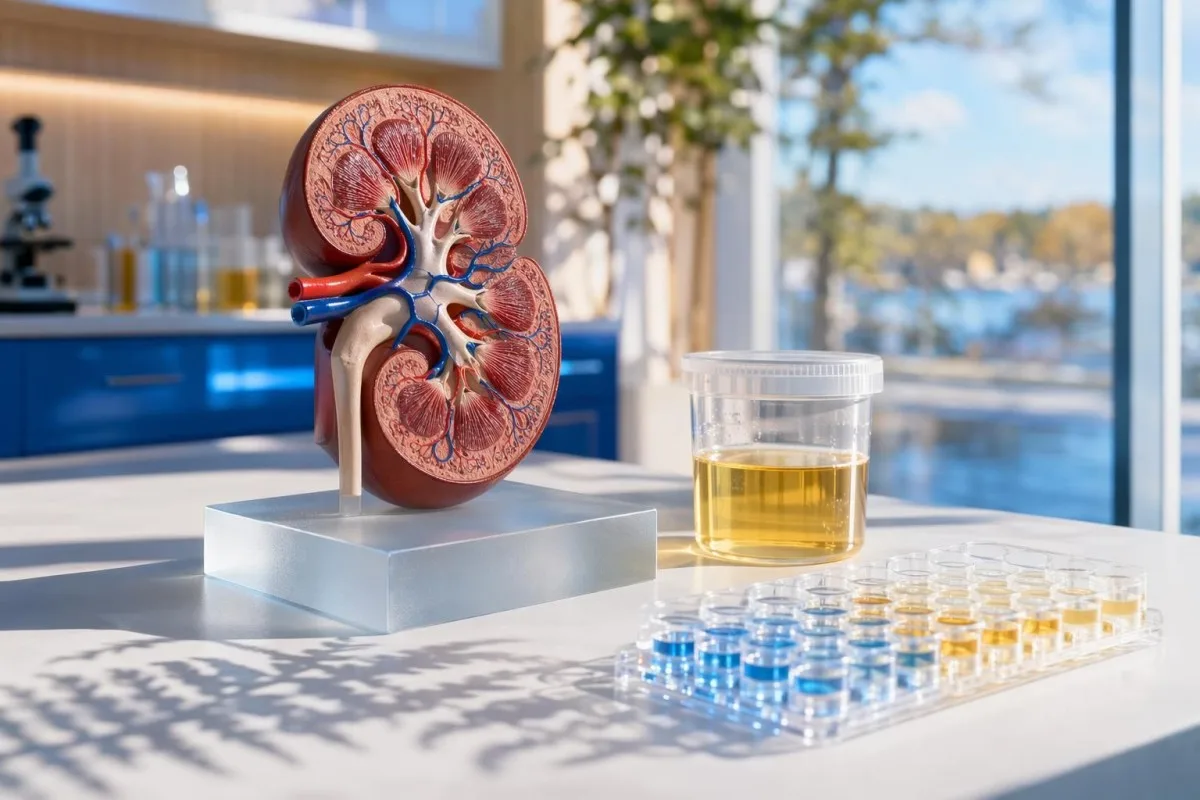
ESR and CRP can show body-wide inflammation, but possible vasculitis is judged by patterns: ANCA blood test results, MPO/PR3 antibodies, kidney urine findings, and symptoms that fit together.


- CRP and ESR are the routine answer to what blood tests show inflammation, but normal results do not rule out kidney-limited vasculitis.
- ANCA blood test results help evaluate small-vessel vasculitis, especially when symptoms involve kidneys, lungs, sinuses, skin, or nerves.
- MPO PR3 antibodies are more specific than a vague ANCA screen; PR3 often fits granulomatosis with polyangiitis, while MPO often fits microscopic polyangiitis.
- Urine microscopy showing red cell casts or persistent red cells above 3 per high-power field can be a stronger vasculitis clue than CRP alone.
- Urine ACR above 30 mg/g is abnormal, and values above 300 mg/g suggest clinically significant kidney leakage that needs prompt follow-up.
- Creatinine and eGFR may stay deceptively normal early; a creatinine rise of 0.3 mg/dL within 48 hours can signal acute kidney injury.
- False-positive ANCA can occur with infection, inflammatory bowel disease, autoimmune liver disease, hydralazine, propylthiouracil, and cocaine-adulterant exposure.
- Overdiagnosis risk is real: a positive ANCA without compatible symptoms, urine findings, or organ involvement should not by itself diagnose vasculitis.
Routine inflammation blood tests are smoke alarms, not a vasculitis diagnosis
CRP, ESR, fibrinogen, ferritin, white blood cells, platelets, and albumin are the common answer to what blood tests show inflammation. In suspected vasculitis, those markers are only the smoke alarm; doctors add ANCA, MPO/PR3 antibodies, creatinine, eGFR, urine microscopy, and urine ACR when inflammation comes with kidney, lung, sinus, nerve, skin, or eye clues.
A CRP below 3 mg/L is usually low-grade or normal in many laboratories, while CRP above 10 mg/L suggests active inflammation somewhere in the body. That “somewhere” is the problem; CRP cannot tell a clinician whether the driver is vasculitis, pneumonia, dental infection, inflammatory bowel disease, or a hard training week.
Kantesti is an AI blood test interpretation platform that reads these inflammation markers beside kidney, urine, and immune clues rather than treating a single red flag as a diagnosis. I’m Thomas Klein, MD, and in clinical review I get more worried by a CRP of 24 mg/L plus new red cells in urine than by a CRP of 80 mg/L after a clear chest infection.
ESR rises slowly and can stay high for weeks, while CRP often changes within 6–24 hours after an inflammatory trigger. For a deeper comparison of routine inflammatory markers, our guide to inflammation blood tests explains why ESR, CRP, ferritin, and CBC patterns answer different clinical questions.
ESR and CRP patterns that actually change vasculitis risk
ESR and CRP increase suspicion when they are high together with organ-specific symptoms, but neither test confirms vasculitis. ESR above 50 mm/hour or CRP above 30 mg/L deserves context; the same numbers mean very different things in a 72-year-old with jaw pain than in a 28-year-old with influenza.
Most adult labs quote ESR roughly below 15 mm/hour for younger men and below 20 mm/hour for younger women, but age, anemia, pregnancy, kidney disease, and immunoglobulin levels all distort it. A practical age-adjusted ceiling sometimes used is age divided by 2 for men and age plus 10 divided by 2 for women.
CRP is cleaner biologically, but it is not clean diagnostically. Standard CRP above 10 mg/L usually indicates meaningful inflammation, while high-sensitivity CRP is designed for cardiovascular risk and should not be used as a vasculitis severity meter; I see this mix-up weekly when patients compare CRP and hs-CRP as if they were the same assay.
In ANCA-associated vasculitis, ESR and CRP can be strikingly high, modestly abnormal, or occasionally underwhelming when disease is mostly renal. The reason we do not stop at ESR/CRP is simple: kidney inflammation can smolder inside glomeruli before the whole-body inflammation signal looks dramatic.
When an ANCA blood test belongs in the workup
An ANCA blood test belongs in a workup when inflammation is paired with a compatible organ pattern, not when someone simply feels unwell. The strongest triggers are blood or protein in urine, falling eGFR, coughing blood-stained sputum, chronic bloody nasal crusting, unexplained foot drop, purpura, or persistent inflammatory eye disease.
The revised 2017 international consensus recommends high-quality immunoassays for PR3-ANCA and MPO-ANCA when granulomatosis with polyangiitis or microscopic polyangiitis is suspected (Bossuyt et al., 2017). In plain English: order the test when the story fits, not as a fishing net for every ache.
The pre-test probability matters enormously. If 1 in 1,000 low-risk patients truly has ANCA-associated vasculitis, even a good test can create more false alarms than diagnoses; in a high-risk patient with red cell casts and rising creatinine, the same positive result is a very different signal.
Broad autoimmune panels can help, but they also create noise when ordered without a clinical target. Our guide to autoimmune panel blind spots is worth reading before assuming one antibody explains months of fatigue, rashes, and vague pain.
MPO PR3 antibodies: why the target matters more than the word positive
MPO PR3 antibodies identify the antigen target behind many ANCA results, and that target changes the likely diagnosis. PR3-ANCA is more often linked with granulomatosis with polyangiitis, while MPO-ANCA is more often linked with microscopic polyangiitis, renal-limited disease, and some drug-induced cases.
A report that says only “ANCA positive” is incomplete for modern clinical reasoning. Doctors want to know whether the assay detects PR3 antibodies, MPO antibodies, both, neither, and how strong the result is compared with the lab’s cutoff.
Kantesti AI interprets MPO PR3 antibodies by checking whether the immune marker sits beside kidney, CBC, inflammatory, and urine patterns rather than treating positivity as proof. Our biomarker guide covers more than 15,000 markers, but for vasculitis the shortlist is surprisingly tight: ANCA specificity, renal markers, urine sediment, CBC, and symptom timing.
The 2022 ACR/EULAR classification criteria use PR3-ANCA and MPO-ANCA as heavily weighted items, but those criteria were designed for classification after a diagnosis is being considered, not for self-diagnosis from a single laboratory flag (Robson et al., 2022). That distinction prevents a lot of harm.
Urine clues often beat blood inflammation markers for kidney vasculitis
Urine findings are central because small-vessel vasculitis can attack glomeruli before creatinine rises. Persistent red cells above 3 per high-power field, red cell casts, rising urine protein, or urine albumin-creatinine ratio above 30 mg/g can turn a vague inflammation workup into an urgent kidney assessment.
The clue I take most seriously is a combination of microscopic hematuria and proteinuria in a patient with systemic symptoms. A urine ACR of 30–300 mg/g is moderately increased, and an ACR above 300 mg/g is severely increased; either pattern matters more when new.
Red cell casts are not common in ordinary urinary tract infections. They suggest bleeding from the kidney filtering units themselves, which is why doctors often pair urine microscopy with urine ACR testing when vasculitis is on the list.
A dipstick that shows “blood” can also be positive from myoglobin after intense exercise, menstrual contamination, or concentrated urine. In my practice, I ask for a clean-catch repeat within 1–2 weeks if the patient is stable, but the same result with rising creatinine or breathlessness should not wait.
Kidney bloodwork can lag behind the urine signal
Creatinine, eGFR, BUN, potassium, bicarbonate, and albumin help judge kidney impact, but early vasculitis may show urine abnormalities first. A creatinine rise of 0.3 mg/dL within 48 hours or a 50% rise from baseline is a standard acute kidney injury signal and should be taken seriously.
Kantesti is an AI-powered blood test analysis tool that compares creatinine against prior baselines, not just the lab’s printed reference range. A creatinine of 1.1 mg/dL may be normal for one person and a 40% jump for another.
KDIGO’s 2024 ANCA-associated vasculitis guideline emphasizes rapid recognition of kidney involvement because treatment delay can leave permanent scarring (KDIGO, 2024). In ordinary language: kidney vasculitis is a clock problem, not just a number problem.
BUN and creatinine together can separate dehydration patterns from intrinsic kidney injury, although the ratio is not definitive. If you want the kidney chemistry mechanics, our kidney blood test guide and the research review on the BUN creatinine ratio explain why trend and context matter more than one isolated ratio.
Symptom patterns make vasculitis blood tests believable or misleading
Vasculitis becomes more plausible when laboratory inflammation matches a multi-organ pattern. The pattern that raises my eyebrows is kidney urine changes plus chronic sinus crusting, cough or breathlessness, palpable purpura, numbness, foot drop, eye inflammation, fevers, weight loss, or joint pain lasting more than 2–3 weeks.
A single symptom rarely carries the diagnosis. Nose crusting alone is usually local disease; nose crusting plus PR3-ANCA plus red cell casts is a different conversation.
Skin findings are useful because small-vessel vasculitis often leaves palpable purpura on dependent areas, especially legs. If joint pain is part of the picture, our joint pain lab guide explains why CBC, ESR, CRP, RF, anti-CCP, ANA, complements, and urinalysis are often considered together.
Nerve involvement is easy to miss. New asymmetric numbness, wrist drop, or foot drop can reflect mononeuritis multiplex, and I would rather over-refer one patient with that pattern than watch permanent nerve injury develop over 4–6 weeks.
False-positive ANCA results are common enough to respect
A positive ANCA blood test can be false-positive or clinically irrelevant, especially when the symptom pattern does not fit vasculitis. Low-positive ANCA may appear with chronic infection, inflammatory bowel disease, autoimmune liver disease, lupus-spectrum disease, thyroid autoimmunity, and medications such as hydralazine or propylthiouracil.
Drug-induced ANCA disease has a different feel in clinic. Hydralazine-associated cases may show MPO-ANCA, ANA positivity, anti-histone antibodies, low complement, and kidney involvement, which can look messy rather than textbook.
Cocaine contaminated with levamisole is another trap; patients may have skin necrosis-like purpura, neutropenia, and multiple antibody positives. I ask about this neutrally because shame blocks accurate histories, and inaccurate histories lead to the wrong immunosuppression.
This is where autoimmune testing needs restraint. A person can have symptoms with negative ANA, positive ANCA, or borderline antibodies that still do not equal a named disease; our guide on persistent symptoms after negative ANA shows why clinicians keep checking patterns instead of chasing every antibody.
Different vasculitis types leave different lab footprints
Not all vasculitis is ANCA-associated, so vasculitis blood tests depend on vessel size and organ pattern. Giant cell arteritis often shows ESR above 50 mm/hour and high CRP, IgA vasculitis may show urine blood or protein, and immune-complex vasculitis may show low C3 or C4 complement.
ANCA-associated vasculitis usually means granulomatosis with polyangiitis, microscopic polyangiitis, or eosinophilic granulomatosis with polyangiitis. EGPA is different because eosinophils, asthma, sinus disease, and nerve symptoms may dominate, and ANCA is positive in only a minority of cases.
Large-vessel vasculitis behaves differently. In a patient over 50 with new headache, scalp tenderness, jaw claudication, or visual symptoms, ESR and CRP can be urgent triage markers; our article on giant cell arteritis symptoms explains why same-day steroid decisions sometimes happen before every test is back.
Low complement levels point away from straightforward ANCA disease and toward immune-complex processes such as lupus nephritis, cryoglobulinemia, infection-related glomerulonephritis, or hypocomplementemic urticarial vasculitis. That single clue can save weeks of diagnostic wandering.
A careful stepwise workup prevents both delay and panic
Doctors usually start with CBC, CMP or renal panel, ESR, CRP, urinalysis, urine ACR, and symptom-directed tests before escalating to ANCA and specialist imaging. The point is to confirm inflammation, identify organ involvement, and rule out common mimics such as infection, stones, diabetes, medication reactions, and malignancy.
A sensible first pass includes hemoglobin, WBC differential, platelets, creatinine, eGFR, electrolytes, liver enzymes, albumin, ESR, CRP, urinalysis, urine microscopy, and urine ACR. If there is cough or breathlessness, chest imaging and oxygen saturation can matter more than another antibody panel.
My working rule as Thomas Klein, MD: if the urine is active or creatinine is moving, the case accelerates. If the labs are mildly abnormal but urine, kidney function, chest symptoms, neurological exam, and skin exam are quiet, repeating targeted tests in 2–4 weeks is often safer than diagnosing vasculitis on day one.
Routine panels miss important clues because they rarely include urine microscopy or antigen-specific ANCA by default. Our standard blood test guide explains why a “normal annual panel” can still leave kidney inflammation, autoimmune disease, or early organ involvement unanswered.
How to read a positive ANCA report without spiraling
A positive ANCA report should be read by method, antigen target, strength, and clinical fit. The useful details are whether testing used PR3/MPO immunoassay, indirect immunofluorescence, or both; whether the result is low, moderate, or strong; and whether urine or organ findings support the antibody signal.
Some reports show c-ANCA or p-ANCA patterns from immunofluorescence, while others show PR3 or MPO antibody units. The pattern names are less specific than antigen results; PR3 and MPO usually carry more diagnostic weight in modern workflows.
Units vary by manufacturer, so a result of 24 units in one lab may not equal 24 units in another. Before comparing results across countries or hospital systems, check the assay, cutoff, and unit format; our guide to lab value units shows why apparent changes can be measurement artifacts.
A low-positive ANCA with normal urine, stable creatinine, normal chest exam, and no compatible symptoms is often watched rather than treated. A moderate or strong MPO/PR3 result with red cell casts is a different pathway and typically needs urgent nephrology or rheumatology input.
Tracking trends is safer than reacting to one abnormal marker
Trend tracking helps distinguish active vasculitis, recovery, medication effects, and random laboratory variation. CRP can fall by 50% within days after infection control or steroid therapy, while creatinine, urine protein, hemoglobin, and albumin may take weeks to show whether kidney and systemic injury are improving.
Kantesti is an AI biomarker interpretation platform that compares serial ESR, CRP, creatinine, eGFR, urine protein, hemoglobin, neutrophils, and liver enzymes to the patient’s own baseline. This matters because immunosuppressive treatment can lower inflammation while simultaneously raising infection risk or altering CBC patterns.
ANCA levels can be followed in some patients, but they are not a perfect disease activity meter. Clinicians disagree on how much weight to give rising ANCA without symptoms; in my experience, urine and creatinine trends usually deserve more attention than antibody drift alone.
For patients and caregivers, graphing slope matters more than staring at red flags. Kantesti’s medical validation standards and our practical guide to blood test trend analysis explain why repeated small changes can carry more meaning than one dramatic-looking outlier.
How AI can help flag risk without diagnosing vasculitis for you
AI can help organize vasculitis blood tests by pattern, but it should not diagnose vasculitis from ANCA alone. A safe interpretation system should flag combinations such as high CRP plus hematuria plus rising creatinine, while also warning that isolated low-positive ANCA has a meaningful false-positive rate.
Kantesti AI is used by more than 2M people across 127+ countries, and our clinical logic deliberately separates “follow-up trigger” from “diagnosis.” That distinction sounds small, but it is the difference between arranging a urine repeat and frightening someone into believing they have a rare autoimmune disease.
Our neural network reads uploaded PDFs and photos in about 60 seconds, but the medical safety layer is slower by design: it checks units, reference ranges, age, sex, pregnancy status when available, medication clues, and incompatible patterns. The AI interpretation guide lays out blind spots plainly because no responsible system should pretend otherwise.
If you are curious about how our models handle pattern recognition, the technology guide explains the engine without asking you to treat software as a doctor. Kantesti AI can prepare better questions for your clinician; it cannot examine your lungs, look at a rash, or decide whether a kidney biopsy is needed.
Bottom line: combine inflammation, antibodies, urine, and the patient story
The safest vasculitis evaluation combines routine inflammation markers, ANCA specificity, kidney urine findings, kidney bloodwork, and symptoms over time. As of June 5, 2026, no single blood test confirms or excludes vasculitis in every patient, and overdiagnosis from isolated antibodies remains a real clinical problem.
If you remember one practical rule from Thomas Klein, MD, make it this: urine plus kidney trend changes the urgency. CRP of 40 mg/L with normal urine and a clear viral illness is not the same as CRP of 18 mg/L with red cell casts and a creatinine rise from 0.8 to 1.2 mg/dL.
Kantesti LTD is the UK company behind Kantesti, and our clinical content is reviewed with patient safety, uncertainty, and follow-up thresholds in mind. You can read more about Kantesti as an organization and the physicians on our medical advisory board if you want to know who shapes our medical standards.
Kantesti LTD. (2026). BUN/Creatinine Ratio Explained: Kidney Function Test Guide. Zenodo. https://doi.org/10.5281/zenodo.18207872. ResearchGate link: https://www.researchgate.net/search/publication?q=BUN%2FCreatinine%20Ratio%20Explained%20Kidney%20Function%20Test%20Guide. Academia.edu link: https://www.academia.edu/search?q=BUN%2FCreatinine%20Ratio%20Explained%20Kidney%20Function%20Test%20Guide.
Kantesti LTD. (2026). Urobilinogen in Urine Test: Complete Urinalysis Guide 2026. Zenodo. https://doi.org/10.5281/zenodo.18226379. ResearchGate link: https://www.researchgate.net/search/publication?q=Urobilinogen%20in%20Urine%20Test%20Complete%20Urinalysis%20Guide%202026. Academia.edu link: https://www.academia.edu/search?q=Urobilinogen%20in%20Urine%20Test%20Complete%20Urinalysis%20Guide%202026. For urine mechanics, see our urinalysis guide.
Frequently Asked Questions
What blood tests show inflammation when vasculitis is suspected?
The main blood tests that show inflammation are CRP, ESR, fibrinogen, ferritin, white blood cell count, platelet count, and albumin. In suspected vasculitis, doctors usually add ANCA, MPO/PR3 antibodies, creatinine, eGFR, and urine testing because routine inflammation markers cannot identify which organ is inflamed. CRP above 10 mg/L or ESR above 50 mm/hour may raise concern, but the result matters most when paired with kidney, lung, skin, nerve, sinus, or eye symptoms.
Can ESR and CRP be normal with vasculitis?
Yes, ESR and CRP can be normal or only mildly abnormal in some vasculitis cases, especially when disease is early or mainly kidney-limited. A normal CRP below 3 mg/L lowers the chance of major body-wide inflammation, but it does not safely exclude red cell casts, proteinuria, or falling eGFR. If urine microscopy shows persistent red cells above 3 per high-power field or the urine ACR is above 30 mg/g, clinicians usually keep investigating even when CRP is not dramatic.
What does a positive ANCA blood test mean?
A positive ANCA blood test means antibodies were detected against neutrophil-related targets, most often PR3 or MPO, but it does not automatically mean vasculitis. The result is more concerning when it is moderate or strong, when PR3 or MPO is clearly positive, and when symptoms or urine findings fit small-vessel disease. Low-positive ANCA can occur with infections, inflammatory bowel disease, autoimmune liver disease, hydralazine, propylthiouracil, and other non-vasculitis situations.
What is the difference between MPO and PR3 antibodies?
MPO and PR3 antibodies are antigen-specific ANCA results that help doctors interpret possible ANCA-associated vasculitis. PR3-ANCA is more often linked with granulomatosis with polyangiitis, while MPO-ANCA is more often linked with microscopic polyangiitis, renal-limited disease, and some drug-induced cases. The distinction is clinically useful, but neither antibody confirms vasculitis without matching symptoms, kidney findings, or tissue evidence when needed.
Why do doctors order urine tests for possible vasculitis?
Doctors order urine tests because kidney vasculitis often shows up first as microscopic hematuria, proteinuria, red cell casts, or rising urine albumin before creatinine becomes abnormal. A urine ACR below 30 mg/g is usually normal, 30–300 mg/g is moderately increased, and above 300 mg/g is severely increased. Red cell casts are particularly concerning because they suggest inflammation in the kidney filtering units rather than a simple bladder issue.
When should possible vasculitis symptoms be urgent?
Possible vasculitis symptoms need urgent medical review when abnormal urine is combined with rising creatinine, breathlessness, coughing blood-stained sputum, new foot drop or wrist drop, visual symptoms, severe headache after age 50, or rapidly spreading purpura. A creatinine rise of 0.3 mg/dL within 48 hours or a 50% rise from baseline is an acute kidney injury signal. Do not wait for repeat routine inflammation tests if kidney, lung, eye, or nerve symptoms are progressing.
Do I need to fast before blood tests for suspected vasculitis?
ESR, CRP, and ANCA tests usually do not require fasting, so you can generally eat and drink normally. Check your appointment instructions, since other tests drawn at the same visit may require fasting; plain water is usually allowed.
Why might my doctor recommend a kidney biopsy even if my ANCA test is positive?
A kidney biopsy can show whether inflammation is truly damaging the kidney filters, how active it is, and how much scarring is already present. This can confirm the cause of kidney injury and guide treatment, although urgent treatment may begin before biopsy when organ-threatening disease is strongly suspected.
Can a recent infection or vaccine make vasculitis blood tests look abnormal?
Yes, recent infections and vaccinations can temporarily raise inflammation markers such as CRP or ESR, and infections may sometimes complicate antibody interpretation. If symptoms are mild and improving, your clinician may repeat tests after recovery, but kidney, lung, nerve, or skin warning signs need faster assessment.
Get AI-Powered Blood Test Analysis Today
Join over 2 million users worldwide who trust Kantesti for instant, accurate lab test analysis. Upload your blood test results and receive comprehensive interpretation of 15,000+ biomarkers in seconds.
📚 Referenced Research Publications
Klein, T., Mitchell, S., & Weber, H. (2026). BUN/Creatinine Ratio Explained: Kidney Function Test Guide. Kantesti AI Medical Research.
Klein, T., Mitchell, S., & Weber, H. (2026). Urobilinogen in Urine Test: Complete Urinalysis Guide 2026. Kantesti AI Medical Research.
📖 External Medical References
Robson JC et al. (2022). 2022 American College of Rheumatology/European Alliance of Associations for Rheumatology classification criteria for granulomatosis with polyangiitis. Annals of the Rheumatic Diseases.
Kidney Disease: Improving Global Outcomes ANCA Vasculitis Work Group (2024). KDIGO 2024 Clinical Practice Guideline for the Management of ANCA-Associated Vasculitis. Kidney International.
⚕️ Medical Disclaimer
This article is for educational purposes only and does not constitute medical advice. Always consult a qualified healthcare provider for diagnosis and treatment decisions.
E-E-A-T Trust Signals
Experience
Physician-led clinical review of lab interpretation workflows.
Expertise
Laboratory medicine focus on how biomarkers behave in clinical context.
Authoritativeness
Written by Dr. Thomas Klein with review by Dr. Sarah Mitchell and Prof. Dr. Hans Weber.
Trustworthiness
Evidence-based interpretation with clear follow-up pathways to reduce alarm.