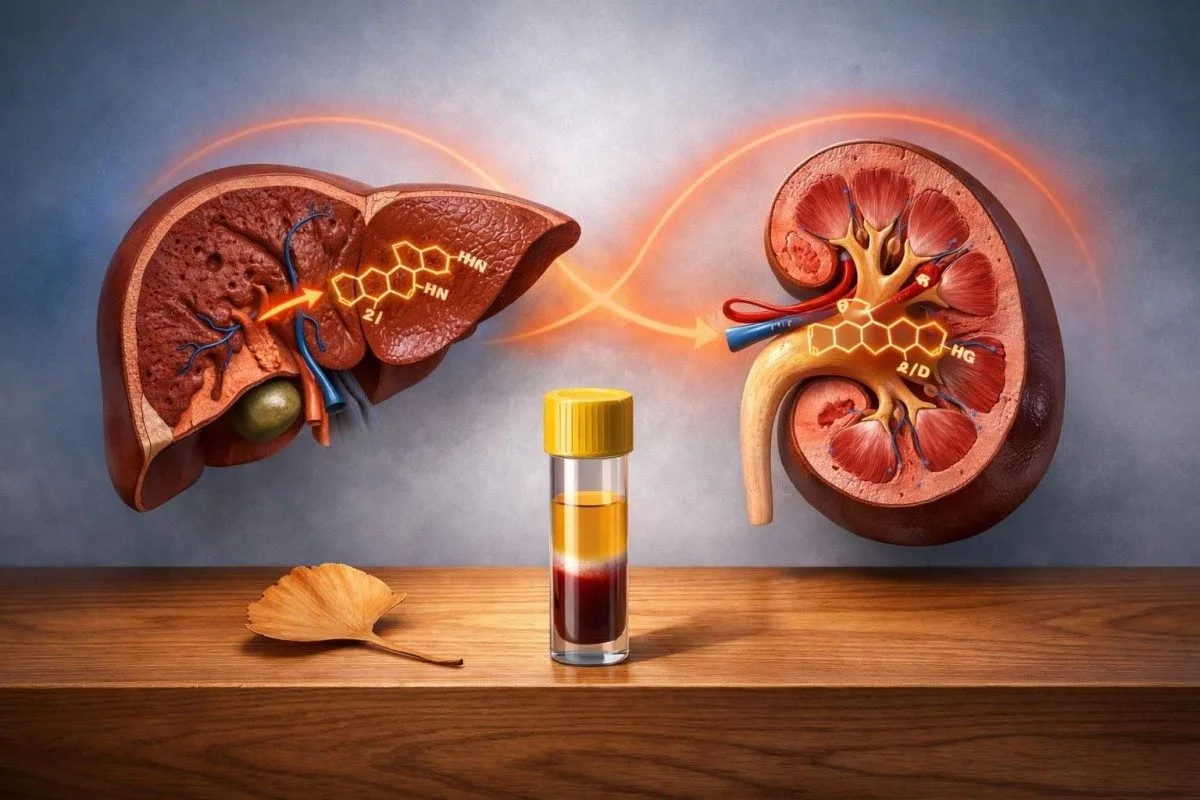
For a vitamin D blood test, the result that detects deficiency is almost always 25-OH vitamin D. The 1,25-dihydroxy or active form is a specialty test that can look normal or high even when stores are low, so I reserve it for kidney disease, high calcium, suspected granulomatous disease, or unusual parathyroid problems.


- 25-OH vitamin D is the correct deficiency test in routine care; levels below 20 ng/mL or 50 nmol/L usually indicate deficiency.
- 1,25-dihydroxy vitamin D is the active hormone test, not the storage test; it can be normal or high even when 25-OH vitamin D is low.
- Units convert as 1 ng/mL = 2.5 nmol/L, which is why a result of 20 ng/mL equals 50 nmol/L.
- Gray zone results of 20 to 29 ng/mL are where clinicians disagree; many bone-focused guidelines accept 20 ng/mL, while many endocrine clinicians aim for 30 to 50 ng/mL in higher-risk adults.
- Active D testing is usually reserved for advanced kidney disease, unexplained hypercalcemia, suspected sarcoidosis or other granulomatous disease, lymphoma, or rare phosphate disorders.
- Recheck timing after changing vitamin D therapy is usually 8 to 12 weeks because serum 25-OH moves over weeks, not days.
- Companion markers that change the story are calcium, phosphate, PTH, magnesium, alkaline phosphatase, creatinine, and eGFR.
- Toxicity concern rises when 25-OH vitamin D stays above 100 ng/mL, especially if calcium is also high.
- Assay method matters because some immunoassays under-recover vitamin D2, while LC-MS/MS usually separates D2 and D3 more accurately.
- Kantesti AI checks whether your uploaded result is 25-OH or 1,25-dihydroxy, converts units automatically, and flags misleading patterns before people draw the wrong conclusion.
Which vitamin D blood test actually finds deficiency?
25-OH vitamin D is the right vitamin D blood test for finding deficiency in almost every routine case. 1,25-dihydroxy vitamin D is the active hormone, but it can stay normal or rise when body stores are low, so I use it for selected endocrine or kidney questions, not for routine screening. If you want help sorting the two assays on a real lab report, Kantesti AI can interpret the panel in context. Our separate vitamin D levels guide is a useful next step once the result lands.
Serum 25-OH vitamin D has a half-life of roughly 2 to 3 weeks, so it reflects body stores reasonably well. Serum 1,25-dihydroxy vitamin D has a half-life of only 4 to 6 hours and is tightly regulated by PTH, calcium, phosphate, and kidney function, which makes it a poor screening marker for simple deficiency.
In our review of more than 2 million uploaded reports at Kantesti, one of the commonest vitamin D mistakes is ordering the active test after fatigue, diffuse aches, or hair loss. On our physician review calls, I, Thomas Klein, MD, keep seeing the same pattern: a patient with 25-OH 14 ng/mL and 1,25-dihydroxy 58 pg/mL gets told the vitamin D status is normal, when it clearly is not.
Not everyone needs routine screening. The USPSTF recommendation statement in JAMA said evidence was insufficient to screen all asymptomatic adults in primary care, but when clinicians do test because of osteoporosis, malabsorption, recurrent falls, darker skin with low sun exposure, anticonvulsant use, or chronic kidney disease, the intended assay is still 25-OH vitamin D rather than the active metabolite (Davidson et al., 2021).
How 25-OH vitamin D becomes 1,25-dihydroxy vitamin D
25-OH vitamin D is the storage form made after the liver hydroxylates vitamin D, while 1,25-dihydroxy vitamin D is the kidney-activated hormone that does the signaling. One answers whether you have enough vitamin D on board; the other answers how hard the body is working to activate it.
Vitamin D3 from skin or supplements and vitamin D2 from fortified foods first travel to the liver. Hepatic 25-hydroxylation, largely via CYP2R1, converts them to 25-OH vitamin D, which is why this analyte mirrors total supply better than the active hormone.
The kidney then uses 1-alpha-hydroxylase to convert 25-OH into 1,25-dihydroxy vitamin D. PTH stimulates that step, while FGF23 and high phosphate can suppress it; that is one reason kidney disease and parathyroid disorders distort the active result in ways that have very little to do with nutritional intake.
There is a second layer most articles skip. Macrophages and some placental tissues can make 1,25-dihydroxy vitamin D outside the kidney, which helps explain why sarcoidosis, some immune disorders, and pregnancy can push active D upward without reflecting normal stores. If you like looking at the whole chemistry map, our biomarker library is helpful. For the mineral side of the story, see our calcium interpretation article.
Vitamin D levels: cutoffs, units, and why labs disagree
As of April 17, 2026, most clinicians still use 25-OH vitamin D below 20 ng/mL or 50 nmol/L to define deficiency. The gray zone is 20 to 29 ng/mL, and this is where guidelines diverge. Our vitamin D chart by age helps with the unit conversion. And our piece on why normal ranges mislead explains why a lab flag is often too crude on its own.
A 25-OH vitamin D level of 12 ng/mL equals 30 nmol/L, and that is the range where osteomalacia risk starts to become more than a theoretical concern. 1 ng/mL equals 2.5 nmol/L, so a result of 20 ng/mL is the same as 50 nmol/L, which prevents a lot of needless panic when people compare US and European reports.
According to Holick et al., 2011, deficiency is below 20 ng/mL, insufficiency is 21 to 29 ng/mL, and 30 to 100 ng/mL is considered sufficient in endocrine practice. Other groups are more comfortable accepting 20 ng/mL as adequate for bone health in many adults, so two competent clinicians can look at 24 ng/mL and give slightly different advice without either one being reckless.
Methodology is part of the disagreement. Some automated immunoassays under-recover vitamin D2, while LC-MS/MS usually separates D2 and D3 more cleanly, and in real life I have seen lab-to-lab shifts of 10% to 20% that were assay related rather than biologic. Kantesti AI converts units automatically and keeps the original laboratory reference interval visible because a result of 28 ng/mL means something different if the lab method changed between tests.
Why active vitamin D can be normal or high in deficiency
A normal or high 1,25-dihydroxy vitamin D does not rule out vitamin D deficiency. In early deficiency, rising PTH can drive the kidney to convert more of the limited 25-OH substrate into active hormone, so the active number looks reassuring while body stores are still low.
I see this every winter. A patient comes in with fatigue, mild proximal muscle weakness, and a 25-OH level of 12 ng/mL, but the 1,25-dihydroxy level is 64 pg/mL and the family assumes nothing is wrong. The active number is elevated because the body has sensed shortage and is squeezing harder on the activation step.
This is classic secondary hyperparathyroidism from vitamin D deficiency. A PTH above 65 pg/mL with low 25-OH and calcium at 8.5 to 9.1 mg/dL is a very common pattern; our PTH guide explains why the calcium can remain in the normal range even when bone is paying the price.
The opposite pattern is the one I do not ignore. If 1,25-dihydroxy vitamin D is high, calcium is 10.8 or 11.2 mg/dL, and PTH is suppressed, I start thinking about sarcoidosis, other granulomatous disease, or lymphoma rather than ordinary deficiency. Many of these patients first complain of vague tiredness or brain fog, which is why our blood tests for fatigue article keeps vitamin D beside iron, thyroid, renal markers, and B12 instead of treating it as a solo answer.
When clinicians order the active 1,25-dihydroxy test
We order 1,25-dihydroxy vitamin D for a short list of problems: advanced kidney disease, unexplained high calcium, suspected sarcoidosis or other granulomatous disease, some lymphomas, and rare inherited phosphate disorders. We do not order it to screen for routine low vitamin D intake.
Advanced CKD changes the picture early. As eGFR falls below about 60 mL/min/1.73 m², renal activation becomes less efficient, and by stage 4 or 5 CKD the active hormone may be low even if 25-OH is only mildly reduced; that is why the KDIGO 2017 update treats calcitriol biology differently from simple nutritional deficiency (KDIGO, 2017). If the creatinine looks oddly reassuring despite symptoms, our article on low GFR with normal creatinine is worth reading.
Unexplained hypercalcemia is the other classic reason. A calcium of 10.5 mg/dL or higher with low PTH pushes me toward checking active D and looking for extrarenal calcitriol production; our high calcium guide walks through that broader differential.
Reference intervals for 1,25-dihydroxy vitamin D are usually around 18 to 72 pg/mL, though some labs use 20 to 79 pg/mL. A value outside that range is only interpretable if you know the kidney function, calcium, phosphate, and whether the person is taking prescription calcitriol or alfacalcidol.
Two situations where the active test adds value
The active test earns its keep when kidney activation is in doubt or when hypercalcemia needs an explanation that PTH is not giving you. In those settings, 1,25-dihydroxy vitamin D answers a different question from 25-OH: not storage, but activation and dysregulation.
The panel that makes a vitamin D result make sense
A vitamin D blood test makes most sense when you read it beside calcium, phosphate, PTH, magnesium, alkaline phosphatase, and kidney function. A lone number misses the pattern; the combination is what tells me whether I am looking at simple nutritional deficiency, CKD-related mineral bone disease, malabsorption, or an entirely different calcium disorder.
The common nutritional deficiency pattern is 25-OH below 20 ng/mL, PTH above 65 pg/mL, calcium low-normal around 8.5 to 9.1 mg/dL, and phosphate low or low-normal. When I see that cluster, I worry about bone turnover and muscle symptoms more than I worry about the active-D value.
Kidney disease rewrites the script. In CKD, phosphate often climbs, 1,25-dihydroxy vitamin D tends to fall, and PTH can rise even before calcium changes, so a normal 25-OH does not exclude CKD-related mineral bone disorder; if kidney numbers look odd, start with our GFR vs eGFR guide.
Magnesium quietly changes treatment response. A serum magnesium below about 1.8 mg/dL can make PTH secretion and vitamin D handling less effective, and patients sometimes appear to fail supplementation until magnesium is corrected; our magnesium range article goes into that trap.
At Kantesti, our physicians on the Medical Advisory Board review these discordant patterns because the same 25-OH of 22 ng/mL means one thing when calcium is 9.4 mg/dL and something very different when calcium is 10.9 mg/dL. This is one of those areas where context matters more than the isolated number.
The red-flag combination I call back quickly
High calcium, low PTH, and high or inappropriately normal 1,25-dihydroxy vitamin D deserve prompt clinician follow-up, especially if calcium is above 11.0 mg/dL or symptoms such as constipation, thirst, or confusion are present. That pattern is not the usual story of dietary deficiency.
Supplements, timing, and lab pitfalls that skew interpretation
You usually do not need to fast for a vitamin D blood test, and time of day matters far less than it does for cortisol or testosterone. The practical rules are simpler: know which supplement you are taking, wait 8 to 12 weeks after changing dose before rechecking, and tell your clinician if you are on ergocalciferol, calcifediol, or calcitriol.
Fasting is usually unnecessary, and morning versus afternoon changes little for 25-OH. What changes interpretation much more is the supplement form: cholecalciferol raises 25-OH steadily, ergocalciferol can read lower on some immunoassays, and calcifediol often raises 25-OH faster because it is already 25-hydroxylated.
I also ask about prescription calcitriol. Calcitriol affects calcium physiology directly and can increase calcium or suppress PTH without rebuilding vitamin D stores, so someone can feel they are already on vitamin D while the measured 25-OH stays low.
Assay method matters more than most patients realize. LC-MS/MS generally separates D2 and D3 better than many automated immunoassays, and I have seen lab-to-lab shifts of 10% to 20% that were method related rather than biologic change; that is why a hair-loss workup should not stop at one vitamin D result without ferritin and thyroid context, which we cover in our hair loss blood test article.
Dietary pattern still counts, just not in the simplistic way social media suggests. People avoiding dairy, oily fish, eggs, or fortified foods can drift low over months, but I see just as much deficiency in omnivores who live indoors, and our vegan yearly lab guide is really a guide to pattern recognition rather than label-based assumptions.
Pregnancy, obesity, older age, kidney disease, and other special cases
Certain groups need more context around vitamin D levels: people with obesity, older adults, pregnancy, chronic kidney disease, malabsorption, and those with very low sun exposure. The lab result is the same unit, but the physiology is not.
Obesity lowers circulating 25-OH vitamin D by volumetric dilution and sequestration in adipose tissue. In practice, many adults with a BMI above 30 kg/m² need 2 to 3 times the maintenance dose that a lean adult needs to reach the same target range, which is why a borderline number in one person is not always borderline in another.
Pregnancy is tricky because 1,25-dihydroxy vitamin D often rises 2-fold or even 3-fold as a normal physiologic adaptation. That makes the active test especially unhelpful for deficiency screening in pregnancy; I still center the interpretation on 25-OH, calcium, symptoms, and any coexisting iron or thyroid issues.
Older adults synthesize less vitamin D in skin, absorb less efficiently when gut issues coexist, and often have lower sun exposure. That is one reason our routine blood tests for seniors often place vitamin D beside calcium, B12, renal markers, and protein status.
Skin tone and geography matter, but they are not destiny. A dark-skinned adult who trains outdoors may have better levels than a light-skinned office worker who rarely sees daylight, so our personalized baseline guide is often more useful than race-based guessing. On the methodology side, our medical validation standards explain how Kantesti AI handles these contextual factors without pretending that one cutoff fits every body.
What to do after a low or borderline vitamin D blood test
If your 25-OH vitamin D is low, first confirm the units, then look for the cause, then recheck after treatment. Most adults with uncomplicated deficiency are rechecked in 8 to 12 weeks, not in 5 days, because the marker moves gradually.
Most adults with mild deficiency start with 800 to 2,000 IU/day of vitamin D3, while some clinicians use 50,000 IU weekly for 6 to 8 weeks when 25-OH is very low, often below 12 ng/mL. I individualize that choice around weight, malabsorption, kidney disease, and the calcium-PTH pattern rather than the vitamin D number alone.
Rechecking too early wastes money and creates noise. Because 25-OH changes over weeks, a repeat at 8 to 12 weeks gives a truer signal, and trend review is far more useful than one-off snapshots; our blood test comparison guide shows how to separate real biologic improvement from laboratory drift.
Toxicity is uncommon but very real when people pile multiple supplements together. Persistent 25-OH above 100 ng/mL raises concern, and symptoms usually track with hypercalcemia such as thirst, constipation, nausea, or confusion more than with the vitamin D level itself.
Home collection can be helpful for follow-up, but only if the lab method is reliable and the sample handling is solid. Our at-home testing article explains where home sampling works well and where it does not. If you are unsure whether your report shows 25-OH or active D, the Try Free AI Blood Test Analysis tool is a practical starting point.
How Kantesti AI interprets vitamin D patterns safely
Kantesti's neural network interprets a vitamin D blood test by first identifying whether the uploaded assay is 25-hydroxyvitamin D or 1,25-dihydroxyvitamin D, then converting ng/mL and nmol/L, and then matching the result against calcium, phosphate, creatinine, eGFR, magnesium, PTH, and alkaline phosphatase. That matters because a beautifully normal active-D result can hide a very ordinary deficiency if the wrong assay was ordered.
In our analysis of more than 2 million user reports across 127+ countries, the single most common vitamin D confusion is a normal active-D result being mistaken for normal stores. At our AI blood test platform, we flag that exact scenario and explain why a 25-OH of 16 ng/mL still counts as deficiency even if the active form looks fine.
Our system reads PDF reports or clear phone photos in about 60 seconds, and the workflow is described in our blood test PDF upload guide. The engineering side is covered separately in our technology guide. In practice, the useful part is not the speed; it is that the software preserves uncertainty and calls out when a clinician should look for CKD, hypercalcemia, malabsorption, or prescription calcitriol use.
Kantesti is used in 75+ languages, but the physiology does not change with translation. We still anchor the interpretation to the same hard facts: 25-OH below 20 ng/mL is usually deficient, 1,25-dihydroxy is usually a specialty test, and high calcium always reframes the conversation.
Thomas Klein, MD, reviews these edge cases with the broader medical team because overconfident lab commentary can do real harm. If you want to see who built and medically supervises this work, our About Us page lays it out plainly.
Frequently Asked Questions
Which vitamin D blood test shows deficiency?
The correct test for routine vitamin D deficiency is serum 25-hydroxyvitamin D, also written 25-OH vitamin D. Most guidelines call levels below 20 ng/mL or 50 nmol/L deficient, while 20 to 29 ng/mL is a gray zone and 30 to 50 ng/mL is a common clinical target in higher-risk adults. The 1,25-dihydroxy test measures the active hormone and can be normal or high even when stores are low. I usually reserve 1,25-dihydroxy vitamin D for kidney disease, unexplained high calcium, suspected granulomatous disease, lymphoma, or rare phosphate disorders.
What is a normal 25-OH vitamin D level?
A 25-OH vitamin D level of 30 to 50 ng/mL or 75 to 125 nmol/L is a common practical target in endocrine practice, although some groups accept 20 ng/mL or 50 nmol/L as adequate for bone health in many adults. Levels below 20 ng/mL usually indicate deficiency, and levels below 12 ng/mL suggest more severe depletion. The unit conversion matters: 1 ng/mL equals 2.5 nmol/L. In my experience, a result near 22 to 28 ng/mL needs context rather than reflex treatment or reflex reassurance.
Why can 1,25-dihydroxy vitamin D be normal when 25-OH is low?
A normal 1,25-dihydroxy vitamin D result can happen in deficiency because the body raises PTH and pushes the kidney to activate more of the limited 25-OH substrate. That means a patient can have 25-OH vitamin D of 14 ng/mL and 1,25-dihydroxy vitamin D of 55 pg/mL on the same day. The active number reflects regulation, not storage. This is exactly why 1,25-dihydroxy vitamin D is a poor screening test for routine deficiency.
When should a doctor order the active vitamin D test?
Doctors usually order 1,25-dihydroxy vitamin D when they suspect a problem with activation or dysregulated calcium metabolism rather than simple low intake. Common reasons include advanced chronic kidney disease, hypercalcemia with low PTH, suspected sarcoidosis or other granulomatous disease, some lymphomas, and rare inherited phosphate disorders. A typical laboratory reference range is about 18 to 72 pg/mL, but that number means little without calcium, phosphate, PTH, and kidney results. For ordinary deficiency screening, 25-OH vitamin D is still the correct test.
Do you need to fast before a vitamin D blood test?
Most people do not need to fast before a vitamin D blood test. Time of day also matters much less than it does for hormones such as cortisol or testosterone, so morning versus afternoon is usually fine for 25-OH vitamin D. The more useful preparation step is to bring an accurate medication and supplement list, especially if you take ergocalciferol, calcifediol, or calcitriol. I also prefer repeating the test at the same laboratory when tracking a borderline result because method changes can shift the number by 10% to 20%.
How long after starting vitamin D supplements should levels be rechecked?
A repeat 25-OH vitamin D level is usually checked after 8 to 12 weeks of consistent treatment. That timing fits the roughly 2- to 3-week half-life of 25-OH vitamin D and gives the body enough time to reach a new steady state. Rechecking in 1 or 2 weeks usually creates noise rather than insight. If the starting level is very low, below 12 ng/mL, or if malabsorption or obesity is present, follow-up may need to be more individualized.
Can vitamin D supplements make your level too high?
Yes, vitamin D supplementation can push levels too high, especially when people combine several products without realizing it. Persistent 25-OH vitamin D above 100 ng/mL raises concern for toxicity, and the real danger usually comes from hypercalcemia, not from the vitamin D number alone. Symptoms can include thirst, constipation, nausea, weakness, and confusion. In practice, I worry most when high vitamin D is paired with calcium above 10.5 mg/dL or when someone is also taking calcitriol.
Can I use an at-home finger-prick vitamin D test instead of a laboratory blood test?
At-home tests can provide a rough screening result, but methods and sample handling vary. Confirm an unexpected, very low, or high reading with a standard laboratory serum 25-OH vitamin D test before changing to high-dose supplementation.
Can sunscreen use make my 25-OH vitamin D test inaccurate?
No—sunscreen does not interfere with the blood test itself. It can reduce vitamin D production in the skin, so frequent sunscreen use may be one reason a level is low, especially with limited outdoor time.
Can low vitamin D be the reason I feel tired all the time?
Low vitamin D can contribute to muscle aches, weakness, and sometimes fatigue, but tiredness has many causes, including anemia, thyroid disease, sleep problems, and depression. Correcting deficiency is worthwhile, but persistent fatigue deserves a broader checkup.
Get AI-Powered Blood Test Analysis Today
Join over 2 million users worldwide who trust Kantesti for instant, accurate lab test analysis. Upload your blood test results and receive comprehensive interpretation of 15,000+ biomarkers in seconds.
📚 Referenced Research Publications
Klein, T., Mitchell, S., & Weber, H. (2026). Women's Health Guide: Ovulation, Menopause & Hormonal Symptoms. Kantesti AI Medical Research.
Klein, T., Mitchell, S., & Weber, H. (2026). Clinical Validation Framework v2.0 (Medical Validation Page). Kantesti AI Medical Research.
📖 External Medical References
Davidson KW et al. (2021). Screening for Vitamin D Deficiency in Adults: US Preventive Services Task Force Recommendation Statement. JAMA.
Kidney Disease: Improving Global Outcomes (KDIGO) CKD-MBD Update Work Group (2017). KDIGO 2017 Clinical Practice Guideline Update for the Diagnosis, Evaluation, Prevention, and Treatment of Chronic Kidney Disease-Mineral and Bone Disorder (CKD-MBD). Kidney International Supplements.
⚕️ Medical Disclaimer
This article is for educational purposes only and does not constitute medical advice. Always consult a qualified healthcare provider for diagnosis and treatment decisions.
E-E-A-T Trust Signals
Experience
Physician-led clinical review of lab interpretation workflows.
Expertise
Laboratory medicine focus on how biomarkers behave in clinical context.
Authoritativeness
Written by Dr. Thomas Klein with review by Dr. Sarah Mitchell and Prof. Dr. Hans Weber.
Trustworthiness
Evidence-based interpretation with clear follow-up pathways to reduce alarm.