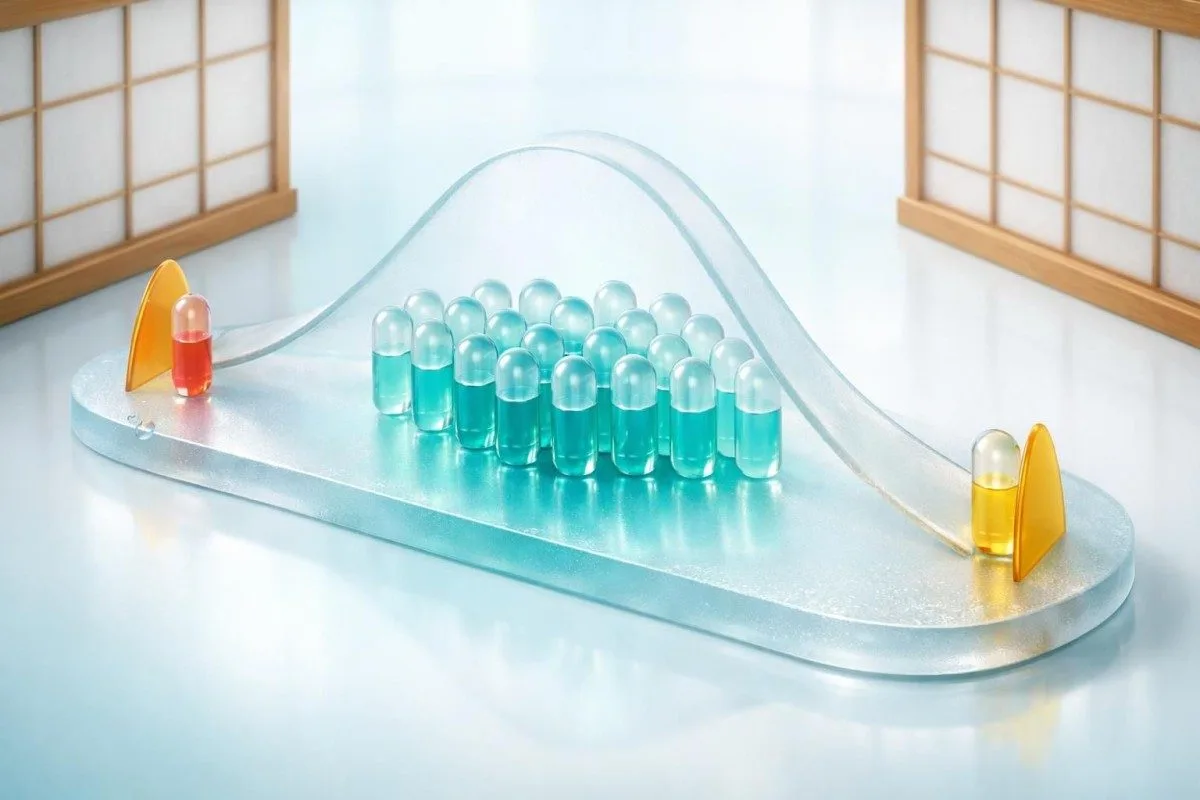
A blood test normal range is usually the middle 95% of values from selected healthy people, not a clean line between healthy and sick. That is why one slightly high or low result often reflects timing, biology, or lab method rather than disease.


- 95% rule Most reference intervals span the 2.5th-97.5th percentiles, so about 1 in 20 healthy results falls outside range.
- 20-test effect On a 20-analyte panel, the chance of at least 1 out-of-range result can approach 64% by statistics alone.
- CLSI standard Labs typically need at least 120 healthy reference people per subgroup to establish a nonparametric interval.
- Age shifts Alkaline phosphatase can be 2-3 times the adult upper limit in adolescents during bone growth and still be normal.
- Morning hormones Testosterone and cortisol are highest early; afternoon values can read 20-30% lower in the same person.
- Hydration bias Standing or dehydration can raise albumin, calcium, total protein, and hematocrit by roughly 5-10%.
- Method bias Creatinine measured by Jaffe versus enzymatic assay can differ by about 0.1-0.2 mg/dL in some samples.
- Urgent thresholds Potassium under 3.0 or over 6.0 mmol/L and sodium under 130 or over 150 mmol/L need same-day review.
Why a 'high' or 'low' flag is often not the full story
Blood test normal range usually means the middle 95% of values seen in a selected healthy group, not a hard line between wellness and disease. So a result flagged high or low can still be clinically unimportant—especially when it is only slightly outside range, you feel well, and the surrounding markers are stable.
In our review of more than 2 million uploaded reports, the most common panic pattern is a single borderline flag on an otherwise unremarkable panel. Our Kantesti AI blood test analyzer reads that number alongside units, draw context, age, sex, and neighboring biomarkers; if you want the fundamentals first, start with our guide on how to read blood test results.
A 34-year-old recreational runner I reviewed last month had AST 52 U/L with normal ALT, bilirubin, ALP, and CBC, and he had done hill sprints the night before. Two days later AST was 31 U/L, which is why I rarely let patients over-interpret one mildly abnormal result without a repeat under cleaner conditions.
Thomas Klein, MD here: a lab flag is a prompt to ask better questions, not a diagnosis in disguise. WBC 3.8 x10^9/L in a well person with stable neutrophils and no infections is a very different problem from WBC 3.8 plus fever, mouth ulcers, weight loss, or a falling absolute neutrophil count.
The practical question is not 'is it red?'; it is 'how far outside range, how reproducible, and what else moved with it?' Most patients do best when they slow down for five minutes and read the pattern before reading the color.
How labs actually set reference intervals
Most laboratories set a reference interval from the central 95% of results in a selected healthy population. That usually means the 2.5th to 97.5th percentile, and it explains why some healthy people still land just outside the printed range.
Under CLSI EP28 guidance, a lab usually needs at least 120 healthy reference individuals per partition—for example adult women, adult men, or children—to establish a nonparametric interval. That is one reason we publish our clinical validation standards openly when discussing how Kantesti interprets lab data.
Many labs do not build every interval from zero. They adopt a manufacturer's range and verify it locally with 20 reference samples; if no more than 2 of 20 fall outside the proposed limits, the interval can often be accepted, and that choice influences the marker-specific ranges listed in our 15,000+ biomarker guide.
A reference interval is not the same as a decision threshold. HbA1c 6.5% diagnoses diabetes by guideline convention, LDL under 70 mg/dL is a treatment target for very-high-risk patients, and troponin uses an assay-specific 99th percentile; none of those numbers come from the simple question 'what do healthy people look like?'
Some large labs now use indirect methods—modern descendants of Hoffmann and Bhattacharya—by mining thousands of outpatient results and trimming out obvious illness clusters. That can improve local relevance, but if the cleanup is sloppy it can quietly bake common community problems like obesity, fatty liver, or iron deficiency into the 'normal' range itself.
Reference interval vs. decision limit
This distinction matters because a person can sit inside the reference interval and still merit treatment. A patient with LDL 96 mg/dL after a heart attack is 'normal' on many lab portals but above the target most cardiologists would accept.
Why age, sex, and life stage change normal lab values
Normal lab values change with age, sex, muscle mass, hormones, pregnancy, and growth. The same number can be expected in one person and abnormal in another simply because physiology is different.
Hemoglobin is roughly 13.5-17.5 g/dL in adult men and 12.0-15.5 g/dL in adult women, while pregnancy often lowers the observed value through hemodilution and can push creatinine down to about 0.4-0.8 mg/dL in otherwise healthy patients. Our hemoglobin guide by age, sex, and pregnancy unpacks that in more detail.
Alkaline phosphatase can run 2 to 3 times the adult upper limit during adolescent bone growth and still be physiologic. At the other end of life, ESR tends to rise and TSH often drifts slightly upward in older adults, which is one reason I like age-aware review in routine blood tests for seniors.
Sex-based differences are not just hormone trivia; they change interpretation. Men often run higher creatinine, hemoglobin, and sometimes uric acid because muscle mass and androgen exposure are different, while premenopausal women more commonly show low-normal ferritin from menstrual iron loss.
There is another angle here, and it is poorly explained online. Some people with Duffy-null associated neutrophil counts live at an absolute neutrophil count around 1.0-1.5 x10^9/L without higher infection risk, so a low flag on paper is not automatically a disease label.
Timing, fasting, posture, exercise, and hydration can move the number
The same person can produce different results at 8 a.m. and 4 p.m. Timing, fasting, posture, hydration, and recent exercise can shift several analytes enough to create a false-looking high or low.
Timing changes lab meaning because biology is rhythmic. Cortisol and testosterone are highest in the early morning, while fasting glucose 70-99 mg/dL and fasting triglycerides under 150 mg/dL are interpreted differently from post-meal values; if the prep was messy, review our fasting instructions guide.
Cycle timing matters just as much for reproductive hormones. Estradiol can be under 50 pg/mL early in the follicular phase and climb above 200 pg/mL near ovulation, so I do not interpret it responsibly without cycle day, medication use, and a reason for testing; our estradiol range guide shows how wide the swing can be.
Posture and hydration are quieter confounders. Standing for 10-15 minutes or arriving mildly dehydrated can raise albumin, total calcium, total protein, and hematocrit by roughly 5-10%, and fist clenching during sample collection can falsely push potassium upward.
Exercise is the trap I see in healthy, worried adults. A hard session can transiently raise AST, CK, creatinine, lactate, and sometimes potassium for 24-72 hours, which is why a mildly high liver enzyme after a race weekend is often a repeat test, not a liver diagnosis.
Why one lab's normal range differs from another's
Different labs use different instruments, reagents, calibration systems, and sometimes different units. So the same sample can generate slightly different 'normal' limits even when both labs are doing good work.
Different labs report different ranges because the tests are not truly identical. Creatinine measured by the older Jaffe method can read about 0.1-0.2 mg/dL higher than an enzymatic assay in samples with ketones, bilirubin, or some medications, and vitamin D immunoassays can differ meaningfully from LC-MS/MS.
TSH is commonly reported with adult reference limits around 0.4-4.0 mIU/L, yet some labs use 0.27-4.2 or 0.3-4.5 depending on platform and population. Supplements matter too: biotin 5-10 mg/day can falsely lower TSH and falsely raise free T4 on some immunoassays, which is why we wrote a focused piece on biotin and thyroid interference.
Units create their own confusion. Cholesterol may appear in mg/dL or mmol/L, creatinine in mg/dL or µmol/L, and calcium in total or ionized form; when patients tell me a result 'doubled,' I first ask whether the lab changed units.
At About Us, we explain why Kantesti reads the actual report before judging the number. Prati and colleagues argued years ago for lower ALT upper limits in metabolically healthy adults than many labs still print, so a 'normal' 44 U/L is not interpreted the same way in every hepatology clinic.
The 95% rule, false flags, and why your baseline matters
Population ranges are broad, but your personal baseline is often much narrower. That is why a result can be inside range and still be meaningful—or slightly outside range and still be fine for you.
If a panel contains 20 statistically independent analytes, the chance of at least one result falling outside a 95% reference interval just by chance is about 64%. That single statistic explains a remarkable amount of unnecessary worry on routine health screens.
Biologic variation makes trend review more useful than most people realize. Fraser's work on reference change value and the index of individuality explains why a rise from creatinine 0.8 to 1.0 mg/dL can matter in one patient even though both values still print inside range; your personal baseline may be tighter than the lab's population band.
Thomas Klein, MD again: most patients are less average than the chart assumes. One person lives with bilirubin 1.3 mg/dL because of Gilbert syndrome, another sits at ALT 42 U/L for years because of metabolic liver disease, and both will be misread if nobody checks their prior reports against a personalized baseline.
That is why our AI-powered blood test interpretation compares prior uploads, units, and neighboring markers instead of reacting to one colored flag. In my experience, trend review prevents more false alarms than almost any other single step.
How to read borderline blood test results by pattern, not panic
Borderline results become more meaningful when related markers move together. A mild isolated abnormality is usually less concerning than two or three connected markers shifting in the same direction.
A mild isolated ALT 58 U/L with normal bilirubin, ALP, and albumin is usually a repeat-and-review problem, whereas ALT 58 plus rising GGT or an AST/ALT ratio above 2 shifts the conversation toward alcohol effect, cholestasis, or more advanced liver injury; see our AST/ALT ratio guide.
Iron studies are another classic trap. Ferritin below 30 ng/mL often suggests depleted iron stores in adults, but ferritin can be pushed upward by inflammation, so transferrin saturation below 20% or a rising RDW often tells me more than serum iron alone; our ferritin range explainer goes deeper.
Kidney interpretation is more nuanced than many reports make it look. eGFR below 60 mL/min/1.73 m² for more than 3 months supports chronic kidney disease, but a muscular younger adult can run creatinine 1.2-1.3 mg/dL with normal filtration, while an older smaller adult can have a deceptively 'normal' creatinine and still have reduced function; that pattern is covered in low GFR with normal creatinine.
Thyroid cutoffs are one of those areas where context matters more than the internet admits. TSH 4.6 mIU/L with normal free T4, no pregnancy, and no symptoms usually deserves a repeat in 6-12 weeks, not instant treatment, while TSH above 10 mIU/L or a low free T4 changes the threshold for action even if the person feels fine.
Markers that do not obey the 'borderline is usually okay' rule
This calmer framework does not apply to every analyte. Troponin, dangerous potassium shifts, markedly high bilirubin with jaundice, or rapidly falling blood counts can be clinically urgent even when the number is only modestly outside the printed interval.
When to repeat the test, when to call your doctor, and when not to wait
Repeat testing is reasonable for many mild isolated abnormalities, but some numbers need same-day review or urgent care. The difference usually comes down to the analyte, the degree of change, and the symptoms beside it.
I commonly recheck TSH, ALT, ferritin, prolactin, lipids, and testosterone after anywhere from 1 to 12 weeks, depending on time of day, fasting status, medication changes, and how far outside range the result sat. Mild isolated abnormalities are often more useful on the second sample than the first.
Some numbers deserve quicker action because the physiology gets dangerous fast. Sodium under 130 or over 150 mmol/L, potassium under 3.0 or over 6.0 mmol/L, and a rising metabolic acidosis pattern are same-day issues in most settings; our anion gap red-flag guide explains why.
Blood counts can also cross a line from interesting to urgent. Hemoglobin under 8 g/dL or platelets under 50 x10^9/L changes how I think about bleeding, oxygen delivery, and the speed of follow-up, which is why our low platelet guide focuses on context rather than the headline number.
Symptoms still outrank the color of the box. Chest pain with positive troponin, new confusion with sodium shifts, jaundice with dark urine, black stools with falling hemoglobin, or fever with a collapsing neutrophil count deserves same-day medical advice even if the lab portal makes the result look only mildly abnormal.
A six-point pre-panic checklist
Before worrying, confirm the unit, look at the lab's own range, note the draw time, list new medicines or supplements, compare any prior result, and scan the related markers around it. If the same mild abnormality repeats twice under the right conditions, I take it more seriously than one dramatic-looking outlier.
How Kantesti helps you read blood test results safely
Kantesti AI interprets blood test normal range issues by reading the actual report, the assay-specific interval, and the neighboring biomarkers before labeling anything significant. That is closer to how experienced clinicians think than simply highlighting red and blue boxes.
On our free blood test demo, most users receive a structured explanation in about 60 seconds after uploading a PDF or clear photo. The goal is not drama; it is to tell the difference between a harmless edge-case result and a pattern that deserves follow-up.
As of April 17, 2026, Kantesti serves users in 127+ countries and 75+ languages, and our platform reviews more than 15,000 biomarkers rather than relying on a short generic list. If you use our PDF upload workflow, Kantesti's neural network preserves the units and reference intervals printed by the lab, which is where many manual interpretations go wrong.
We built that workflow with physicians, and the logic is overseen by our Medical Advisory Board. In my experience, the safest use of AI is not to replace judgment but to shorten the distance between 'why is this red?' and a calm, clinically grounded next step.
Our family risk, nutrition, and trend features are most helpful when a result is borderline rather than dramatic, because that is exactly where pattern recognition beats guesswork. If you want a wider look at what our blood test normal range analysis can do, start there—but use urgent care, not software, for chest pain, severe shortness of breath, or dangerous electrolyte results.
Research and publication notes
The research that helps most here separates reference intervals from decision limits and reminds us that a biomarker never lives alone. That sounds academic, but it is exactly why patients get spooked by minor flags that experienced clinicians do not.
Kantesti Medical Team. (2026). aPTT normal range: D-dimer, Protein C blood clotting guide. Zenodo. https://doi.org/10.5281/zenodo.18262555. ResearchGate: search record. Academia.edu: search record. For the clinician-facing explainer we built from that work, see our coagulation guide.
Kantesti Medical Team. (2026). Serum proteins guide: Globulins, albumin & A/G ratio blood test. Zenodo. https://doi.org/10.5281/zenodo.18316300. ResearchGate: search record. Academia.edu: search record. The patient version lives in our serum proteins guide.
If you read research often, keep one distinction front of mind: reference interval asks what is common in a selected healthy group, while decision threshold asks when the balance of risk changes enough to act. That gap is exactly where most internet advice fails—and where careful interpretation still matters.
Frequently Asked Questions
Is one slightly high blood test result usually serious?
One slightly high result is usually not serious if it is isolated, less than about 10% above the lab limit, and you feel well. A standard reference interval captures 95% of healthy people, so 1 in 20 healthy results lands outside the range by chance. The odds of a harmless flag rise on large panels, especially if the other related markers are normal. I worry more when the same result repeats, climbs over time, or appears with symptoms or partner abnormalities.
Why do normal lab values differ between laboratories?
Normal lab values differ between laboratories because instruments, reagents, calibration, units, and reference populations differ. A TSH range might be 0.27-4.2 mIU/L in one lab and 0.4-4.0 mIU/L in another, and creatinine can vary by about 0.1-0.2 mg/dL between Jaffe and enzymatic methods. Some labs also adopt a manufacturer's interval and verify it locally with 20 reference samples rather than building a new interval from scratch. That is why comparing results from the same lab over time is often cleaner than comparing two different labs once.
Should I repeat a borderline abnormal blood test?
A borderline abnormal blood test often deserves a repeat rather than an immediate diagnosis, especially when the result is isolated and you had possible confounders such as exercise, dehydration, or a late-day hormone draw. Many clinicians repeat mild TSH, ALT, ferritin, testosterone, or lipid abnormalities after 1-12 weeks under better conditions. The result should be rechecked sooner or acted on urgently if it involves sodium under 130 mmol/L, potassium above 6.0 mmol/L, glucose above 300 mg/dL with symptoms, or a positive troponin with chest pain. The safest rule is simple: mild and isolated usually means recheck, dangerous or symptomatic means act.
Can dehydration or exercise make blood test results look abnormal?
Dehydration and hard exercise can absolutely make blood test results look abnormal. Mild dehydration or standing before the draw can raise albumin, total calcium, total protein, and hematocrit by about 5-10%, while intense exercise can push AST, CK, creatinine, lactate, and potassium upward for 24-72 hours. I see this often in runners who get labs the morning after a long race or heavy gym session. If the result is only borderline, repeating the test after rest and good hydration is often the cleanest next step.
How many blood test results can be outside normal just by chance?
About 5% of healthy results fall outside a standard reference interval because most labs define normal as the central 95% of a healthy group. On a panel with 20 statistically independent markers, the chance of at least one out-of-range value is roughly 64%. Real panels are not perfectly independent, so the exact percentage varies, but the principle holds: big panels generate false alarms. That is why one red box on a long report should trigger context review, not instant panic.
How can I read blood test results from a PDF or photo safely?
The safest way to read blood test results from a PDF or photo is to preserve the original units, the lab's own reference range, the date and time of collection, and any notes about fasting or medications. Kantesti AI can analyze a PDF or clear photo in about 60 seconds and compare more than 15,000 biomarkers against assay-specific ranges rather than generic internet charts. That is particularly helpful when a value is reported in µmol/L instead of mg/dL or when one lab uses a different interval than another. No upload tool should replace emergency care, so chest pain, severe shortness of breath, major bleeding, or dangerous electrolyte results still need immediate human evaluation.
Should I take my usual medication before a fasting blood test?
Usually, take prescribed medicines as directed unless the clinician or laboratory specifically tells you otherwise. Ask in advance about diabetes medicines, insulin, diuretics, thyroid tablets, and supplements, because fasting or the timing of a dose can affect safety or interpretation.
Why does my lab report use different units than an online normal range?
Labs may report the same marker in different units, such as mg/dL versus mmol/L, so the numbers cannot be compared directly. Use the reference range printed beside your own result, or ask your clinician or lab to convert it safely.
Can a cold, flu, or recent vaccine affect my blood test results?
Yes. Recent infections or vaccination can temporarily raise inflammatory markers and shift white blood cells, and some people see mild liver enzyme changes. If the test is routine and you feel well again, ask whether waiting 1-2 weeks makes the result easier to interpret.
Get AI-Powered Blood Test Analysis Today
Join over 2 million users worldwide who trust Kantesti for instant, accurate lab test analysis. Upload your blood test results and receive comprehensive interpretation of 15,000+ biomarkers in seconds.
📚 Referenced Research Publications
Klein, T., Mitchell, S., & Weber, H. (2026). aPTT Normal Range: D-Dimer, Protein C Blood Clotting Guide. Kantesti AI Medical Research.
Klein, T., Mitchell, S., & Weber, H. (2026). Serum Proteins Guide: Globulins, Albumin & A/G Ratio Blood Test. Kantesti AI Medical Research.
⚕️ Medical Disclaimer
This article is for educational purposes only and does not constitute medical advice. Always consult a qualified healthcare provider for diagnosis and treatment decisions.
E-E-A-T Trust Signals
Experience
Physician-led clinical review of lab interpretation workflows.
Expertise
Laboratory medicine focus on how biomarkers behave in clinical context.
Authoritativeness
Written by Dr. Thomas Klein with review by Dr. Sarah Mitchell and Prof. Dr. Hans Weber.
Trustworthiness
Evidence-based interpretation with clear follow-up pathways to reduce alarm.