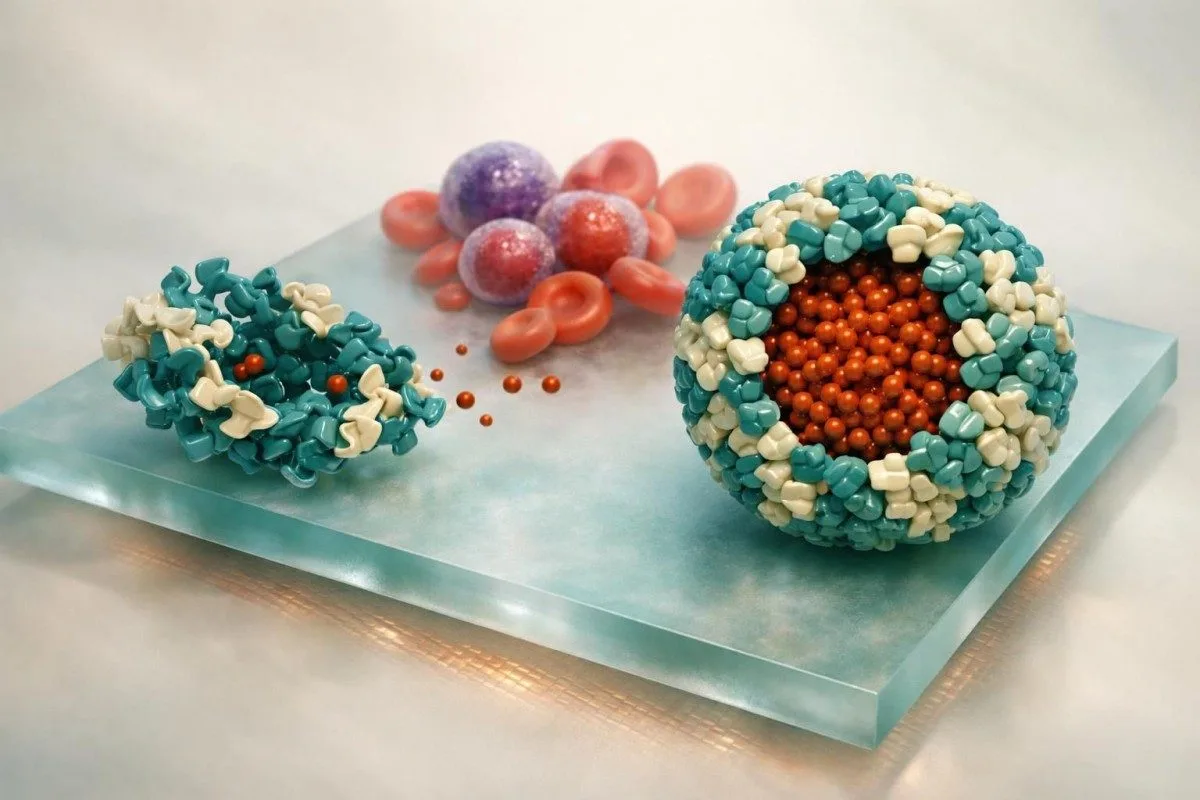
Low iron saturation with normal ferritin usually means early iron deficiency or inflammation masking ferritin. TIBC, CRP, CBC trends, and repeat morning testing tell the difference.


- TSAT cutoff: Iron saturation below 20% usually means circulating iron is too low for normal red cell production.
- Ferritin lag: Ferritin can stay 30-100 ng/mL early in deficiency, especially before hemoglobin falls.
- WHO threshold: Ferritin below 15 ng/mL in adults indicates iron deficiency at the population level; many clinicians investigate below 30 ng/mL.
- TIBC clue: TIBC above about 360-400 µg/dL with low iron saturation strongly points toward deficiency.
- Inflammation effect: CRP above 5 mg/L or an elevated ESR can keep ferritin looking normal while iron saturation drops.
- Ret-He clue: Reticulocyte hemoglobin below 28-29 pg suggests iron-restricted erythropoiesis right now.
- Oral iron dose: 40-65 mg elemental iron once daily or every other day is often better tolerated than older high-dose schedules.
- Recheck window: Repeat iron studies in 1-4 weeks if the first sample was poorly timed, or 4-8 weeks after treatment to confirm response.
What low iron saturation with normal ferritin usually means
Low iron saturation with normal ferritin most often means early iron deficiency or iron-restricted erythropoiesis, especially when transferrin saturation is below 20% and TIBC is high. Ferritin reflects stored iron, so it can sit inside the lab's ferritin normal range while the iron immediately available for hemoglobin production is already falling. Inflammation can also keep ferritin looking normal or even high. When I review this pattern, I usually look next at CBC trends, CRP or ESR, symptoms, menstrual or GI blood loss, and whether the sample was drawn fasting in the morning.
A transferrin saturation of 10% with ferritin 45 ng/mL is not a normal study dressed up in reassuring packaging. In our reviews on Kantesti AI, that combination often behaves like early deficiency: serum iron is low, TIBC rises as the liver makes more transferrin, and hemoglobin may stay normal for a while. That is why serum iron alone misleads; the pattern matters more than any single number.
Ferritin is a storage marker, not a live fuel gauge. As Dr. Thomas Klein, I see this most in younger women with heavy periods, frequent blood donors, and endurance athletes: ferritin 35 to 70 ng/mL, saturation 11% to 16%, fatigue, and completely normal-looking CBC indices at first.
Timing matters more than most patients are told. Serum iron can swing after breakfast, after a supplement, and across the day, so I usually prefer a morning draw, ideally fasting, with iron pills held for about 24 hours; our fasting before blood work guide explains why.
How to read iron saturation, serum iron, and TIBC together
Iron saturation is only useful when you read it beside serum iron and TIBC. A TSAT below 20% usually suggests inadequate circulating iron, while a higher TIBC strengthens the case for deficiency because the body is increasing iron-binding capacity.
Transferrin saturation is calculated as serum iron divided by TIBC, multiplied by 100. A value below 20% is the most widely used clinical cutoff, and below 15% is a stronger signal of deficiency, especially when TIBC is high; Camaschella (2015) described iron deficiency as a spectrum, not a simple yes-or-no state.
Serum iron in many adult labs roughly spans 60-170 µg/dL, but it is the least stable part of the panel. TIBC commonly sits around 250-450 µg/dL, and when it climbs toward 360 to 450 with low serum iron, the liver is essentially asking for more carrier protein; our biomarkers guide treats that as an active clue, not background noise.
The CBC often whispers before it shouts. RDW above about 14.5% can rise before MCV falls below 80 fL, and MCH may drift down while hemoglobin still looks acceptable; our guide to RDW changes in early anemia is helpful when the iron panel looks subtle.
Why ferritin may look normal even when iron is low
Ferritin may look normal because lab reference intervals are broad and ferritin rises during inflammation. A ferritin of 40 ng/mL can be adequate in one person and clearly insufficient in another if iron saturation is 12% and inflammatory markers are elevated.
The World Health Organization still uses ferritin below 15 µg/L in adults as a population cutoff for depleted iron stores, but in clinic many of us become suspicious below 30 ng/mL because sensitivity is better in symptomatic patients (World Health Organization, 2020). Our article on ferritin ranges explains why a broad ferritin normal range can be falsely reassuring.
Ferritin is also an acute-phase reactant. If CRP is above 5 mg/L or the ESR is elevated, ferritin can drift upward while hepcidin locks iron away and iron saturation falls; our inflammation lab guide covers that physiology, and Camaschella (2015) describes the same biology.
The practical trap is this: a ferritin of 80 ng/mL is reassuring in a well person with TSAT 32%, but far less reassuring in someone with CRP 18 mg/L and TSAT 13%. In chronic kidney disease and heart failure, clinicians often still consider iron deficiency when ferritin is below 100 ng/mL, or 100-299 ng/mL with TSAT below 20%.
Symptoms that can appear before anemia
Symptoms can start before anemia appears because tissues feel the drop in available iron before hemoglobin crosses below the lab range. Low iron saturation can cause fatigue, reduced exercise tolerance, headaches, palpitations, hair shedding, cold intolerance, and restless legs even when the CBC still looks almost normal.
A patient may tell me that the CBC was normal, so how can this be iron. The answer is that mitochondria, skeletal muscle, and neurotransmitter pathways notice low available iron earlier than the lab flags anemia; if fatigue is the main complaint, our blood tests for fatigue guide puts iron next to thyroid, B12, and vitamin D.
In a 29-year-old runner I saw last year, hemoglobin was 13.1 g/dL, ferritin 36 ng/mL, and iron saturation 11%, yet pace had dropped for months and recovery was awful. After we corrected iron loss and adjusted training, the performance gap closed; our article on athlete recovery labs explains why endurance training and foot-strike hemolysis can muddy the picture.
Hair and sleep are two clues patients often dismiss. Ferritin under about 40 to 50 ng/mL can coincide with shedding, and many sleep clinicians feel better when restless legs patients are above 50 to 75 ng/mL, although the evidence here is mixed; our hair loss lab guide goes deeper.
Common causes of low iron saturation with normal ferritin
The commonest causes are blood loss, reduced absorption, and increased demand. Heavy periods, pregnancy, blood donation, gastrointestinal loss, celiac disease, acid-suppressing medication, and endurance training account for most cases I see in practice.
Menstrual loss is still the big one in premenopausal adults. A monthly loss that seems normal to the patient can still be enough to keep iron saturation at 12% to 18% for months while ferritin hovers at 30 to 80 ng/mL, which is why symptom history often matters more than the lab flag.
In adult men and postmenopausal women, I am much less relaxed. Snook et al. (2021) recommend looking for gastrointestinal sources of iron deficiency because a ferritin that is technically normal does not rule out slow bleeding from ulcers, polyps, or cancer; if symptoms point that way, start with celiac blood testing and age-appropriate GI evaluation rather than guessing.
Absorption problems are common and under-discussed. Proton pump inhibitors, prior gastric bypass, inflammatory bowel disease, and poorly planned plant-based diets can all lower absorbed iron, and men with persistent fatigue should review wider risk markers too in our men over 50 blood test guide.
When repeat testing and add-on markers matter
Follow-up testing matters when the first panel was non-fasting, taken during illness, or sits in the gray zone. As of April 17, 2026, my usual rule is simple: if iron saturation is below 20% and the story fits, repeat the panel properly and add markers that answer the question ferritin cannot.
A clean repeat is often more useful than an immediate supplement bottle. I usually repeat serum iron, TIBC, ferritin, and CBC in 1 to 4 weeks if the first draw was messy, and I compare it against prior results because a drop from TSAT 28% to 14% matters even if both reports live inside broad lab bins; our lab trend guide is built for exactly this.
If inflammation or mixed anemia is possible, I add CRP, sometimes ESR, and when available reticulocyte hemoglobin content or Ret-He. A Ret-He below about 28 to 29 pg suggests iron-restricted red cell production right now, and soluble transferrin receptor is useful because it is less distorted by inflammation than ferritin; our reticulocyte count guide gives the marrow angle.
Kantesti AI interprets iron saturation by reading ferritin beside CBC indices, inflammatory markers, kidney function, and previous reports rather than in isolation. That multi-marker logic is part of our clinical validation standards, and it is why our AI often flags early iron deficiency before the CBC looks dramatic.
Practical repeat-test timing
Morning draw, no iron supplement for about 24 hours, and no hard workout just before testing is my usual recipe. I have seen TSAT jump from 13% to 24% simply because the repeat sample was collected under controlled conditions instead of after breakfast and a supplement.
Best add-on test when ferritin is confusing
If I can order only one add-on in an inflamed patient, I often pick soluble transferrin receptor or Ret-He rather than another ferritin. Neither is perfect, but in my experience they cut through the fog better than repeating the same storage marker again.
When low iron saturation is not classic iron deficiency
Low iron saturation with normal ferritin is not always classic iron deficiency. The main alternatives are anemia of inflammation, chronic kidney disease, liver disease, and mixed patterns where more than one process is happening at once.
In anemia of inflammation, serum iron is low, iron saturation is low, but TIBC is often low or normal rather than high. That distinction matters because hepcidin traps iron in storage sites, so the body has iron but will not move it where it is needed.
Kidney disease can create exactly this confusion because reduced erythropoietin and chronic inflammation travel together. If eGFR is slipping or creatinine trends are odd, read the iron panel alongside renal markers; our guide to low GFR with normal creatinine explains why a seemingly mild kidney issue can flatten TSAT.
Ferritin can also rise from liver cell stress, alcohol use, fatty liver disease, or autoimmune activity, which makes a normal ferritin less trustworthy as an iron store marker. When ALT, AST, or GGT are up, I widen the lens with our liver function pattern guide rather than assuming the problem is nutritional alone.
A last nuance: thalassemia trait and copper deficiency can give low MCV or fatigue without true iron deficiency. If MCV is disproportionately low and the RBC count is high-normal, do not keep taking iron forever without rechecking the diagnosis.
How treatment and monitoring usually work
Treatment depends on whether the pattern is confirmed iron deficiency, inflammation, or both. If low iron saturation truly reflects deficiency, most adults do well with oral iron providing 40 to 65 mg of elemental iron once daily or every other day, not the old high-dose three-times-daily approach.
I often start lower than patients expect because adherence beats bravado. Ferrous sulfate 325 mg contains about 65 mg elemental iron, but every-other-day dosing is often easier on the gut and may improve absorption by letting hepcidin settle; our AI blood test platform can help track whether the gentler plan is actually working.
Take iron away from calcium, tea, coffee, and fiber supplements when possible, and do not be alarmed by darker stools. If nausea or constipation is a problem, taking it with a small amount of food or switching formulation is reasonable, and our iron studies guide shows what response should look like on repeat testing.
Recheck in 4 to 8 weeks in most non-urgent cases. Hemoglobin, if low, should rise by roughly 1 g/dL within 2 to 4 weeks, while ferritin and iron saturation often normalize more slowly; if you want help translating supplements, food patterns, and retesting intervals, our AI supplement guidance is built around the full panel rather than one pill.
Oral iron is not always enough. If absorption is poor, blood loss is ongoing, pregnancy is involved, or CKD is part of the picture, intravenous iron may be more appropriate, and in those cases the ferritin target used by the treating team is often higher than the standard population cutoff.
When to worry and what to do next
Get medical help sooner if low iron saturation comes with chest pain, fainting, shortness of breath at rest, black stools, visible blood loss, pregnancy, or a rapidly falling hemoglobin. A TSAT under 10% is not automatically an emergency, but it deserves faster follow-up when symptoms are significant or the cause is unclear.
I worry most when the numbers and the history disagree. A ferritin of 70 ng/mL should not reassure us in a 62-year-old man with TSAT 9%, new microcytosis, and weight loss, and this is one reason our team at About Us keeps pushing readers to treat patterns, not isolated lab flags.
Across reports uploaded by more than 2 million users, Kantesti AI repeatedly sees early deficiency missed because the ferritin still looks acceptable. Our physicians on the Medical Advisory Board designed the interpretation logic to surface that mismatch, and as Dr. Thomas Klein I can tell you it is one of the commonest reasons a tired patient gets told everything is normal.
Bottom line: low iron saturation with normal ferritin usually means early deficiency, inflammation, or a mix, and the next step is context, not panic. If you have a PDF or phone photo of your labs, try our free blood test interpretation demo and let Kantesti map TSAT, ferritin, TIBC, CBC, and trend data together in about 60 seconds.
Frequently Asked Questions
Can iron saturation be low even if ferritin is normal?
Yes. Iron saturation below 20% can appear weeks or months before ferritin falls below the lab range because transferrin saturation reflects circulating iron, while ferritin reflects stored iron. This pattern is common in early iron deficiency, heavy menstrual loss, frequent blood donation, and states of inflammation. A high TIBC and symptoms such as fatigue or restless legs make the pattern more convincing.
What iron saturation percentage is considered low?
Most adult labs consider iron saturation below 20% low or borderline low, and values below 15% are a stronger clue to iron deficiency. A typical adult reference range is roughly 20% to 45%, although some laboratories use slightly different cutoffs. A single result should still be read beside serum iron, TIBC, ferritin, and CBC findings. Recent iron supplements or a non-fasting draw can distort the result.
Does a normal ferritin rule out iron deficiency?
No. A normal ferritin does not rule out iron deficiency because ferritin is both a storage marker and an acute-phase reactant. Ferritin can remain 30 to 100 ng/mL early in deficiency, and inflammation can push it even higher despite low iron availability. That is why clinicians often look harder when ferritin is under 30 ng/mL in symptomatic patients or when ferritin is under 100 ng/mL with TSAT below 20% in inflammatory states.
Should I take iron if ferritin is normal but iron saturation is low?
Not automatically, but do not ignore it either. If iron saturation is below 20%, TIBC is high, symptoms fit, and there is a plausible cause such as heavy periods or blood donation, many clinicians will treat or at least repeat the panel promptly. In adult men, postmenopausal women, or anyone with black stools or weight loss, the cause should be investigated before assuming diet is the whole story. In practice, a supervised plan is safer than self-treating for months.
How soon should iron studies be repeated?
If the first sample was non-fasting, taken during illness, or conflicts with the rest of the picture, repeating iron studies in 1 to 4 weeks is reasonable. If treatment has started, many clinicians recheck in 4 to 8 weeks to confirm that iron saturation, ferritin, and hemoglobin are moving in the right direction. Holding iron supplements for about 24 hours before the repeat test gives a cleaner result. Morning sampling is usually best.
When does low iron saturation mean I need a gastrointestinal workup?
Low iron saturation deserves a GI evaluation more quickly in adult men, postmenopausal women, and anyone with black stools, visible blood loss, unexplained weight loss, or progressive anemia. A ferritin that is still normal does not rule out chronic gastrointestinal bleeding. If TSAT is below 20% and the history is suspicious, clinicians often consider celiac testing, stool assessment, endoscopy, or colonoscopy depending on age and symptoms. Snook et al. (2021) make this point clearly in the British Society of Gastroenterology guideline.
Should I donate blood if my iron saturation is low but my hemoglobin is normal?
Consider postponing elective blood donation until the cause is assessed and your iron status is improving. A standard whole-blood donation removes roughly 200–250 mg of iron, which can worsen early deficiency even before anemia develops.
Can low iron saturation contribute to restless legs even without anemia?
Yes, low available iron can worsen restless legs in some people even when hemoglobin is normal. Ask your clinician whether your ferritin and transferrin saturation are high enough for symptom control before starting supplements.
Can pregnancy or recent delivery affect iron saturation results?
Yes. Pregnancy and the first months after delivery increase iron needs, and delivery blood loss can lower transferrin saturation before anemia is obvious. Ask your obstetric or primary care clinician which supplement dose is safe and when to recheck, often in 4–8 weeks.
Get AI-Powered Blood Test Analysis Today
Join over 2 million users worldwide who trust Kantesti for instant, accurate lab test analysis. Upload your blood test results and receive comprehensive interpretation of 15,000+ biomarkers in seconds.
📚 Referenced Research Publications
Klein, T., Mitchell, S., & Weber, H. (2026). B Negative Blood Type, LDH Blood Test & Reticulocyte Count Guide. Kantesti AI Medical Research.
Klein, T., Mitchell, S., & Weber, H. (2026). Diarrhea After Fasting, Black Specks in Stool & GI Guide 2026. Kantesti AI Medical Research.
📖 External Medical References
World Health Organization (2020). WHO guideline on use of ferritin concentrations to assess iron status in individuals and populations. World Health Organization Guideline.
⚕️ Medical Disclaimer
This article is for educational purposes only and does not constitute medical advice. Always consult a qualified healthcare provider for diagnosis and treatment decisions.
E-E-A-T Trust Signals
Experience
Physician-led clinical review of lab interpretation workflows.
Expertise
Laboratory medicine focus on how biomarkers behave in clinical context.
Authoritativeness
Written by Dr. Thomas Klein with review by Dr. Sarah Mitchell and Prof. Dr. Hans Weber.
Trustworthiness
Evidence-based interpretation with clear follow-up pathways to reduce alarm.