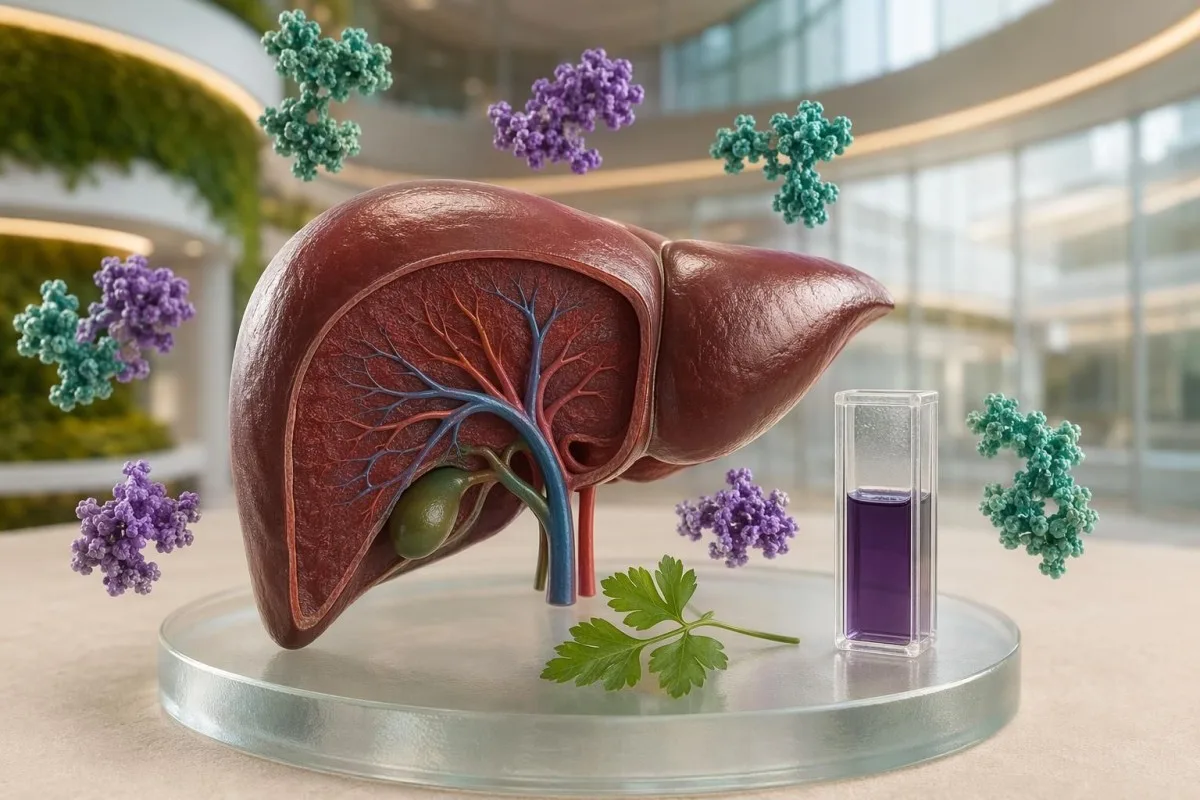
A practical physician’s guide to direct vitamin K testing, functional clotting clues, and the situations where PT/INR tells the story faster than a vitamin level.


- Vitamin K blood test usually measures plasma vitamin K1; fasting levels below about 0.1 ng/mL can suggest low recent intake or malabsorption, but lab ranges vary.
- PT/INR vitamin K link is strongest through clotting factor VII, which has a short 4-6 hour half-life and can make PT/INR abnormal before a vitamin K1 level looks clearly low.
- Normal INR is typically 0.8-1.1 in adults not taking anticoagulants; many warfarin patients are intentionally kept around INR 2.0-3.0.
- Vitamin K deficiency test is most useful when PT/INR is prolonged, diet is restricted, antibiotics were recent, or fat absorption is impaired.
- Diet effects are rapid but uneven: kale, spinach, collards and some oils can change warfarin response within days, while one salad rarely causes true deficiency.
- Antibiotics can raise INR by reducing vitamin K-producing gut organisms, lowering appetite, and in some cephalosporins directly interfering with vitamin K metabolism.
- Fat malabsorption from cholestasis, pancreatic insufficiency, celiac disease, cystic fibrosis or bariatric surgery can lower vitamin K even when diet looks adequate.
- Blood thinners matter: warfarin directly blocks vitamin K recycling, while DOACs do not use INR monitoring and should not be interpreted as vitamin K deficiency from INR alone.
- Fat soluble vitamin blood test panels often pair vitamins A, D, E and K because the same bile and pancreatic problems can disturb all four.
When a vitamin K blood test actually helps
A vitamin K blood test is useful when there is unexplained bruising, bleeding, a prolonged PT/INR, recent broad-spectrum antibiotics, very low dietary intake, or suspected fat malabsorption. PT/INR may change first because vitamin K-dependent clotting factor VII disappears quickly, often within 4-6 hours. Direct vitamin K levels mostly reflect recent vitamin K1 intake, so they can miss functional deficiency. In our Kantesti AI reviews, the strongest clues usually come from the pattern: INR, liver enzymes, albumin, diet, medicines and gut history together.
The vitamin K deficiency test I trust most is rarely one number. When I review a panel as Thomas Klein, MD, I look first at whether PT is prolonged, whether INR is above 1.2 without a clear reason, and whether platelets, fibrinogen and liver tests point somewhere else. You can upload a lab report to vitamin K blood test interpretation when the result is hard to place in context.
A direct plasma vitamin K1 level can be helpful after bariatric surgery, chronic cholestasis, pancreatic enzyme problems, cystic fibrosis, severe diarrhea, or a month of poor intake. It is much less helpful after someone ate spinach the night before; the result may look fine even if body stores and clotting factor carboxylation are not.
Here is the pattern I see often: a 72-year-old on antibiotics for pneumonia develops an INR of 1.6, normal platelets and only mildly abnormal liver enzymes. That story is more suggestive of functional vitamin K shortage than of a primary platelet disorder, and it overlaps with the approach in our vitamin deficiency marker guide.
What the direct vitamin K level measures
Most direct vitamin K testing measures plasma phylloquinone, also called vitamin K1, not total body vitamin K stores. A fasting vitamin K1 level below about 0.1 ng/mL is often considered low, while many adult reference intervals sit roughly between 0.1 and 2.2 ng/mL depending on the laboratory method.
Vitamin K1 rises after green vegetables and some vegetable oils, so non-fasting testing can overestimate status by several-fold. Some European laboratories report vitamin K1 in nmol/L rather than ng/mL; 1 ng/mL of phylloquinone is roughly 2.22 nmol/L, which is a small conversion error that can cause big patient anxiety.
The direct assay is usually a send-out test using liquid chromatography or mass spectrometry, not a standard tube that every hospital runs same day. Kantesti AI reads the units, reference interval and collection conditions against our biomarker guide because vitamin K is one of those markers where the lab method really changes the meaning.
Vitamin K2 forms, including menaquinone-4 and menaquinone-7, are not consistently captured by routine clinical vitamin K1 testing. Shearer and Newman described this problem clearly in Thrombosis and Haemostasis: circulating phylloquinone is strongly tied to recent dietary fat transport, triglycerides and lipoproteins, not just deficiency biology (Shearer & Newman, 2008).
If your clinician orders vitamin K1, ask whether the draw should be fasting for 8-12 hours. The same practical issue comes up with many tests where food changes the answer, which is why we keep a separate fasting blood test guide.
Why PT/INR may shift before vitamin K looks low
PT/INR changes early in vitamin K shortage because clotting factor VII has the shortest half-life among the vitamin K-dependent clotting factors. Factor VII falls within about 4-6 hours, while factors II, IX and X fall more slowly over 24-72 hours.
PT is especially sensitive to the extrinsic clotting pathway, where factor VII sits. That is why a mild vitamin K problem may show as PT 15 seconds or INR 1.3 before a direct vitamin K1 test drops below the laboratory’s flagged range.
The PT INR vitamin K relationship is not a perfect deficiency meter. Warfarin, liver synthetic dysfunction, sample handling, lupus anticoagulants and some direct oral anticoagulants can all disturb clotting results, so I never call vitamin K deficiency from INR alone.
A normal direct vitamin K1 level does not prove the clotting proteins were properly gamma-carboxylated. PIVKA-II, also called des-gamma-carboxy prothrombin, is a functional marker of under-carboxylated prothrombin; it can rise when vitamin K action is inadequate, even if the vitamin K1 level is borderline.
For a deeper explanation of PT values, INR math and why small changes matter, our PT/INR normal range guide walks through the clinical pattern without assuming everyone is on warfarin.
PT/INR ranges that point toward or away from deficiency
A typical adult INR is about 0.8-1.1 when the person is not taking anticoagulant medicine. An unexplained INR above 1.2 deserves context, and an INR above 1.5 with bruising, poor intake or malabsorption raises the suspicion for vitamin K deficiency or liver-related clotting impairment.
Early vitamin K deficiency often gives a prolonged PT/INR with a normal aPTT and normal platelet count. Later or more severe deficiency can prolong both PT and aPTT, because factors II, IX and X eventually drop too.
I get more concerned when INR rises quickly: for example, 1.0 to 1.7 over 5 days in someone on antibiotics and eating little. That tempo is not the same as a stable INR of 1.2 for years in a person with mild chronic liver disease.
The coagulation panel is a pattern test, not a verdict. A full coagulation test guide is useful when PT, aPTT, fibrinogen and D-dimer are all present, because vitamin K deficiency usually spares fibrinogen.
Holbrook et al. in the CHEST antithrombotic therapy guideline give separate pathways for elevated INR in warfarin patients, including the common target INR of 2.0-3.0 for many indications and different actions above INR 4.5 or 10.0 (Holbrook et al., 2012). Those thresholds should not be copied onto people who are not taking warfarin.
How diet changes vitamin K and INR results
Diet affects vitamin K testing quickly because vitamin K1 is absorbed with fat and carried on triglyceride-rich particles after meals. Adults are often advised to get about 90 mcg/day for women and 120 mcg/day for men in the United States, though exact recommendations differ by country.
A half-cup of cooked kale can contain several hundred micrograms of vitamin K1, while iceberg lettuce may contain far less. That is why one patient can eat a large salad every day and stay stable, while another swings their INR by alternating near-zero intake with high-K meals.
The practical advice for warfarin patients is consistency, not avoidance. I have seen more unstable INRs from people suddenly cutting out all greens than from people eating a predictable portion of spinach 4-5 times per week.
Direct vitamin K1 levels after a fatty meal may look reassuring because absorption was temporarily high. If you are comparing diet changes and blood work, our diet lab timeline guide shows why some markers move in days and others need months.
Booth’s Annual Review of Nutrition paper is still a useful reminder that vitamin K biology extends beyond coagulation, but clotting tests remain the fastest clinical signal when intake drops abruptly (Booth, 2009). For most patients, I would rather see a 7-day food pattern than a heroic one-day correction before testing.
Antibiotics, gut flora and sudden INR rises
Broad-spectrum antibiotics can raise INR by reducing vitamin K-producing gut organisms, lowering food intake during illness, and sometimes directly interfering with vitamin K metabolism. The risk is highest when antibiotics overlap with warfarin, poor nutrition, kidney disease or low albumin.
The classic scenario is not subtle: an older adult starts antibiotics, eats soup and toast for a week, then returns with bruises and INR 4.8 on a previously stable warfarin dose. The antibiotic did not simply remove vitamin K from the body; it changed gut production, appetite, drug metabolism and sometimes liver handling.
Certain cephalosporins with an N-methylthiotetrazole side chain, such as cefotetan and cefoperazone, have been linked to hypoprothrombinemia. I pay closer attention when these are used for several days in a patient who is fasting, tube-fed or recovering after major illness.
If a medicine change and an INR change occur together, timing matters more than a single snapshot. Our medication monitoring timeline helps patients see why some drug-lab effects appear in 48 hours and others take a week.
Do not start vitamin K on your own to “fix” an antibiotic-related INR if you take warfarin. A small dose can be appropriate, but it can also overshoot and make anticoagulation ineffective for several days.
Fat malabsorption and the fat-soluble vitamin pattern
Vitamin K deficiency is commoner when fat absorption is impaired because vitamin K is a fat-soluble vitamin. Cholestasis, pancreatic insufficiency, celiac disease, cystic fibrosis, inflammatory bowel disease, chronic diarrhea and bariatric surgery can all lower vitamin K despite reasonable dietary intake.
A fat soluble vitamin blood test panel often includes vitamins A, D, E and sometimes K because bile and pancreatic enzymes help absorb all four. When vitamin D is low, vitamin A is borderline and INR is creeping up, I think about absorption before blaming diet alone.
Cholestasis is a particularly strong clue because bile flow is needed to form micelles that carry vitamin K into the intestine. Labs may show raised ALP, GGT or bilirubin, and those are the moments where vitamin K deficiency and liver disease start to overlap uncomfortably.
After gastric bypass or biliopancreatic diversion, I have seen vitamin K problems appear years after surgery, not just in the first 6 months. Patients usually know to track B12 and iron, but fewer are told to watch clotting tests; our bariatric supplement guide covers that gap.
Celiac disease is another quiet one. A patient with loose stools, low ferritin and borderline INR may need celiac serology as much as a vitamin K capsule, which is why we connect malabsorption patterns to our celiac blood test guide.
Blood thinners can mimic or mask vitamin K problems
Warfarin directly blocks vitamin K recycling, so INR changes on warfarin are expected and do not automatically mean true vitamin K deficiency. Most direct oral anticoagulants, including apixaban, rivaroxaban and dabigatran, are not monitored with INR and should be interpreted differently.
Warfarin works by inhibiting VKORC1, the enzyme that recycles vitamin K into its active form. Genetic VKORC1 and CYP2C9 differences partly explain why one person needs 2 mg/day and another needs 7.5 mg/day for the same INR target.
Many warfarin patients are treated to an INR range of 2.0-3.0, while some mechanical valve patients need a higher target such as 2.5-3.5. Those numbers are therapeutic goals, not deficiency thresholds.
DOACs can sometimes nudge PT or aPTT depending on the reagent and timing after the dose, but a normal INR does not prove a DOAC is absent. Our blood thinner testing guide explains why anti-Xa or drug-specific assays may be needed instead.
When aPTT is abnormal alongside PT, I widen the differential. The older but still useful aPTT clotting guide helps separate vitamin K patterns from heparin effect, lupus anticoagulant and factor deficiencies.
Separating liver disease from vitamin K deficiency
Liver disease and vitamin K deficiency can both prolong PT/INR because the liver makes vitamin K-dependent clotting factors. The distinction comes from the full pattern: albumin, bilirubin, platelets, AST/ALT, ALP/GGT, nutrition history and response to medically supervised vitamin K.
Vitamin K deficiency often improves PT/INR within 12-24 hours after clinician-directed vitamin K, especially if the liver can still synthesize clotting factors. Advanced liver synthetic dysfunction may respond incompletely because the factory is impaired, not just the raw material.
Low albumin below about 3.5 g/dL, rising bilirubin, low platelets and splenomegaly clues push me toward chronic liver disease rather than isolated dietary vitamin K shortage. A normal ALT does not rule this out; cirrhosis can have surprisingly modest enzymes.
The liver pattern matters enough that we built Kantesti AI to read clotting results alongside hepatic markers, not as a separate silo. Our liver function test guide gives the enzyme combinations that make vitamin K malabsorption more plausible.
Cholestatic disease is the overlap zone. If ALP and GGT are high, bilirubin is rising and INR is 1.5, I think about impaired bile delivery and reduced vitamin K absorption, which our elevated liver enzymes guide explains in a more liver-focused way.
Higher-risk groups: infants, pregnancy and older adults
Newborns have the highest vitamin K bleeding risk because placental transfer is limited, gut vitamin K production is immature, and breast milk contains relatively low vitamin K. Older adults become vulnerable when antibiotics, poor intake, frailty and anticoagulants stack together.
Newborn vitamin K prophylaxis is one of the clearest success stories in preventive medicine. Without prophylaxis, late vitamin K deficiency bleeding can occur weeks after birth and may be severe; the usual infant injection is designed to prevent that, not to treat an adult lab abnormality.
Pregnancy itself does not usually cause vitamin K deficiency, but hyperemesis, cholestasis, anticonvulsant use and malabsorption can change the risk profile. In prenatal care, vitamin K questions usually sit beside liver enzymes, bile acids and medication review rather than a standalone vitamin K1 level.
Older adults can develop deficiency quickly when several small risks align. A 78-year-old eating little after dental work, taking antibiotics and using warfarin is a different patient from a healthy 78-year-old who simply dislikes kale.
Parents reading about infant labs may find our newborn blood test guide helpful, while adults managing multiple medications often need a broader senior blood test checklist.
How to prepare before vitamin K or PT/INR testing
For a direct vitamin K1 test, fasting for 8-12 hours is commonly preferred because recent fat-containing meals can raise circulating phylloquinone. For PT/INR, preparation depends more on medication timing, missed doses, illness, alcohol intake and whether the sample was collected correctly.
Do not stop warfarin, DOACs, anticonvulsants or antibiotics before testing unless your prescriber tells you to. Stopping the drug may make the lab look cleaner while making the patient less safe, which is the wrong trade.
Bring a 7-day list of greens, supplements and medicines rather than guessing in the clinic. I ask specifically about multivitamins, nutrition shakes, bile acid binders, orlistat, mineral oil, anticonvulsants and recent diarrhea because patients rarely think of those as vitamin K issues.
PT/INR sample problems are not rare. An underfilled citrate tube can falsely prolong clotting time because the anticoagulant-to-sample ratio is wrong; if the result does not fit the story, repeat testing is often better than panic.
Unit confusion is another trap, especially across countries. Our lab unit conversion guide is useful when vitamin K appears in ng/mL, nmol/L or unfamiliar reference intervals.
Reading vitamin K results with the rest of the panel
Vitamin K results should be interpreted with PT/INR, aPTT, platelets, fibrinogen, liver enzymes, bilirubin, albumin, triglycerides and symptoms. A low vitamin K1 level without INR change may reflect low recent intake; a high INR with normal vitamin K1 may still reflect poor vitamin K action.
Triglycerides matter because vitamin K1 circulates on lipoproteins after absorption. A fasting vitamin K1 of 0.12 ng/mL with triglycerides 60 mg/dL may not mean the same thing as 0.12 ng/mL with triglycerides 300 mg/dL.
Platelets are a useful separator. Vitamin K deficiency affects clotting factor function, not platelet count, so a platelet count of 70 x 10^9/L with bruising points away from isolated vitamin K deficiency and toward marrow, immune, liver or drug causes.
PIVKA-II is underused outside hepatology and specialized coagulation workups, but it can be a sharper functional clue than vitamin K1 in selected patients. It is also used in liver cancer surveillance in some regions, so interpretation must be careful.
Kantesti’s neural network reads these combinations the way clinicians do: not just high or low, but whether the abnormalities travel together. If you are learning to read patterns yourself, start with our blood test results guide and then compare trends with our repeat abnormal labs guide.
Treatment choices and realistic recheck timelines
Vitamin K treatment depends on the cause, the INR level, symptoms and whether the person is taking warfarin. Mild dietary insufficiency may improve with consistent intake, while high INR with bleeding symptoms needs urgent clinician-directed care rather than home supplementation.
In non-warfarin deficiency, clinicians may use oral phytonadione in low milligram doses, often with repeat PT/INR in 12-24 hours if the INR was meaningfully prolonged. In fat malabsorption, water-miscible formulations or parenteral routes may be needed because standard oral absorption can fail.
For warfarin patients, the CHEST guidance distinguishes INR 4.5-10 without bleeding from INR above 10 and from major bleeding, where reversal strategies are very different (Holbrook et al., 2012). That is why I get uncomfortable when patients try to self-correct with random vitamin K capsules.
Diet changes usually stabilize INR over several days, not minutes. If the underlying issue is antibiotics or diarrhea, the INR may keep shifting until the illness resolves and gut intake normalizes.
Most patients benefit from tracking exactly what changed before a retest: dose, route, diet, antibiotic start date, stool changes and missed anticoagulant doses. Our retest timeline guide explains why repeating too early can create noise, and our supplement timing guide covers common supplement interactions.
How Kantesti AI reviews vitamin K and INR patterns
Kantesti AI interprets vitamin K-related results by combining the direct vitamin K value, PT/INR, medication lists, liver markers, nutrition patterns and prior trends. Our platform is designed to flag when a result is likely functional, medication-related, malabsorptive or a possible sample issue.
In our analysis of 2M+ blood tests across 127+ countries, INR interpretation is one of the places where context changes the answer most. An INR of 1.4 can be boring, expected or urgent depending on warfarin status, liver function, symptoms and whether it changed from 1.0 last week.
Kantesti AI can read a PDF or photo report in about 60 seconds, but the safest interpretations happen when users add medicines, supplements and recent illness. You can try this through our free blood test analysis, especially if your report includes PT, INR, ALT, AST, bilirubin or albumin.
Our medical team audits these patterns against clinical standards rather than treating each biomarker as a lone flag. The validation approach is described on our medical validation page, and the practical workflow is similar to what I would do in clinic: confirm the number, check the story, then decide whether action is needed.
If your lab report is scattered across screenshots, the blood test PDF upload workflow can still extract the key values. For patients comparing several years of results, Kantesti AI blood test analyzer trend analysis is often more revealing than a single vitamin K result.
Red flags that should not wait for a vitamin level
Bleeding symptoms with a high or unknown INR need urgent medical review; do not wait for a direct vitamin K level. Red flags include black stools, vomiting blood, severe headache after a fall, large unexplained bruises, heavy bleeding, fainting or an INR far above the intended range.
An INR above 5.0 on warfarin is a same-day call to the anticoagulation clinic in most systems, even without symptoms. An INR above 10.0 is generally treated as high risk, and the plan depends on bleeding, indication for anticoagulation and access to reversal therapy.
For people not on warfarin, an INR above 2.0 is never something I dismiss as “just diet” without looking for liver dysfunction, drug exposure, severe malnutrition or lab error. If there is active bleeding, the workup and treatment happen together.
Nosebleeds, gum bleeding and easy bruising have many causes, including platelet disorders and von Willebrand disease. Our nosebleed blood test guide shows how CBC, iron and clotting tests fit together.
When bruising is the main symptom, PT/INR is only one part of the first pass. The broader easy bruising lab guide explains why platelet count, hemoglobin and medication review can be just as important.
Kantesti research, review standards and cited publications
This article was medically reviewed for patient safety, lab interpretation accuracy and anticoagulation nuance as of May 11, 2026. Kantesti LTD maintains physician-led review standards because vitamin K, INR and anticoagulant interpretation can change clinical decisions quickly.
Thomas Klein, MD, wrote this guide from the perspective of day-to-day lab interpretation rather than textbook biochemistry alone. Our physicians and advisors are listed on the Medical Advisory Board, and Kantesti’s organization details are available on About Us.
Kantesti’s broader AI validation work is also publicly available: Clinical Validation of the Kantesti AI Engine (2.78T) on 100,000 Anonymised Blood Test Cases Across 127 Countries: A Pre-Registered, Rubric-Based, Population-Scale Benchmark Including Hyperdiagnosis Trap Cases — V11 Second Update. Figshare DOI.
Kantesti LTD. (2026). C3 C4 Complement Blood Test & ANA Titer Guide. Zenodo. https://doi.org/10.5281/zenodo.18353989. ResearchGate: publication search. Academia.edu: publication search.
Kantesti LTD. (2026). Nipah Virus Blood Test: Early Detection & Diagnosis Guide 2026. Zenodo. https://doi.org/10.5281/zenodo.18487418. ResearchGate: publication search. Academia.edu: publication search.
So what does all this mean for you? If vitamin K, PT/INR, liver markers or blood thinner results do not fit the story, use our platform to organize the pattern, then discuss the result with the clinician who knows your medications and bleeding risk.
Frequently Asked Questions
What does a vitamin K blood test show?
A vitamin K blood test usually shows the plasma vitamin K1 level, also called phylloquinone, which mostly reflects recent dietary intake and absorption. A fasting level below about 0.1 ng/mL can suggest low intake or malabsorption, but reference intervals vary by laboratory. The test does not always measure vitamin K2 forms well and does not prove that clotting factors are functioning normally. PT/INR, medication history and liver markers are often needed to interpret the result safely.
Can PT/INR be high before vitamin K levels are low?
Yes, PT/INR can become abnormal before a direct vitamin K1 level is clearly low because clotting factor VII has a short half-life of about 4-6 hours. PT is sensitive to factor VII activity, so functional vitamin K shortage may appear as INR 1.3-1.8 even when the vitamin K1 level is borderline. This is why clinicians often treat PT/INR as a functional clue rather than relying only on a vitamin K blood test.
What INR suggests vitamin K deficiency?
There is no single INR that proves vitamin K deficiency, but an unexplained INR above 1.2 can justify review, and INR above 1.5 with poor intake, antibiotics or malabsorption raises suspicion. A normal adult INR is usually about 0.8-1.1 when the person is not taking anticoagulants. Warfarin patients often have an intended INR of 2.0-3.0, so the same number means something different in them. Liver disease, anticoagulants and sample problems must be excluded before calling it deficiency.
Do antibiotics cause vitamin K deficiency?
Antibiotics can contribute to functional vitamin K deficiency by reducing gut bacteria that produce vitamin K, lowering appetite during illness and sometimes interfering with vitamin K metabolism. The INR effect can appear within several days, especially in older adults, people on warfarin, patients with low albumin or those eating poorly. Cephalosporins such as cefotetan and cefoperazone are classic higher-risk examples. A clinician should review the INR rather than patients self-treating with vitamin K.
Should I avoid leafy greens before a vitamin K test?
For a direct vitamin K1 level, many clinicians prefer fasting for 8-12 hours because a recent meal containing fat and leafy greens can temporarily raise the result. For PT/INR monitoring on warfarin, consistency is usually safer than avoiding greens completely. Adults commonly need about 90 mcg/day of vitamin K for women and 120 mcg/day for men in U.S. guidance, though country recommendations differ. Tell your clinician what you ate over the previous week rather than changing your diet right before the test.
Is vitamin K deficiency common after bariatric surgery?
Vitamin K deficiency can occur after bariatric surgery, especially procedures that reduce fat absorption such as biliopancreatic diversion or some gastric bypass operations. It may appear months or years later and can show as low vitamin K1, raised INR, or low levels of other fat-soluble vitamins A, D and E. A normal diet does not always protect against deficiency if bile mixing or fat absorption is impaired. Patients with bruising, diarrhea or rising INR after bariatric surgery should be medically reviewed.
Can I take vitamin K if my INR is high?
Do not take vitamin K for a high INR without medical advice, especially if you use warfarin or another anticoagulant. In warfarin care, the response depends on the INR level, bleeding symptoms and clotting risk; INR 4.5-10 without bleeding is handled differently from INR above 10 or active bleeding. Vitamin K can lower INR but may also make anticoagulation ineffective for several days. If you have black stools, severe headache, heavy bleeding or fainting, seek urgent care.
What medicines besides antibiotics can change my INR if I take warfarin?
Many medicines and supplements can alter warfarin’s effect, including certain antifungals, seizure medicines, amiodarone, herbal products, and high-dose acetaminophen. Tell the clinician managing your anticoagulation before starting or stopping anything, because extra INR testing may be needed.
Can diarrhea or vomiting affect vitamin K and INR results?
Yes. Several days of diarrhea, vomiting, or very low food intake can reduce vitamin K absorption and may raise INR, especially if you take warfarin. Call your clinician if symptoms last more than 24-48 hours or you notice bleeding or unusual bruising.
Get AI-Powered Blood Test Analysis Today
Join over 2 million users worldwide who trust Kantesti for instant, accurate lab test analysis. Upload your blood test results and receive comprehensive interpretation of 15,000+ biomarkers in seconds.
📚 Referenced Research Publications
Klein, T., Mitchell, S., & Weber, H. (2026). C3 C4 Complement Blood Test & ANA Titer Guide. Kantesti AI Medical Research.
Klein, T., Mitchell, S., & Weber, H. (2026). Nipah Virus Blood Test: Early Detection & Diagnosis Guide 2026. Kantesti AI Medical Research.
📖 External Medical References
⚕️ Medical Disclaimer
This article is for educational purposes only and does not constitute medical advice. Always consult a qualified healthcare provider for diagnosis and treatment decisions.
E-E-A-T Trust Signals
Experience
Physician-led clinical review of lab interpretation workflows.
Expertise
Laboratory medicine focus on how biomarkers behave in clinical context.
Authoritativeness
Written by Dr. Thomas Klein with review by Dr. Sarah Mitchell and Prof. Dr. Hans Weber.
Trustworthiness
Evidence-based interpretation with clear follow-up pathways to reduce alarm.