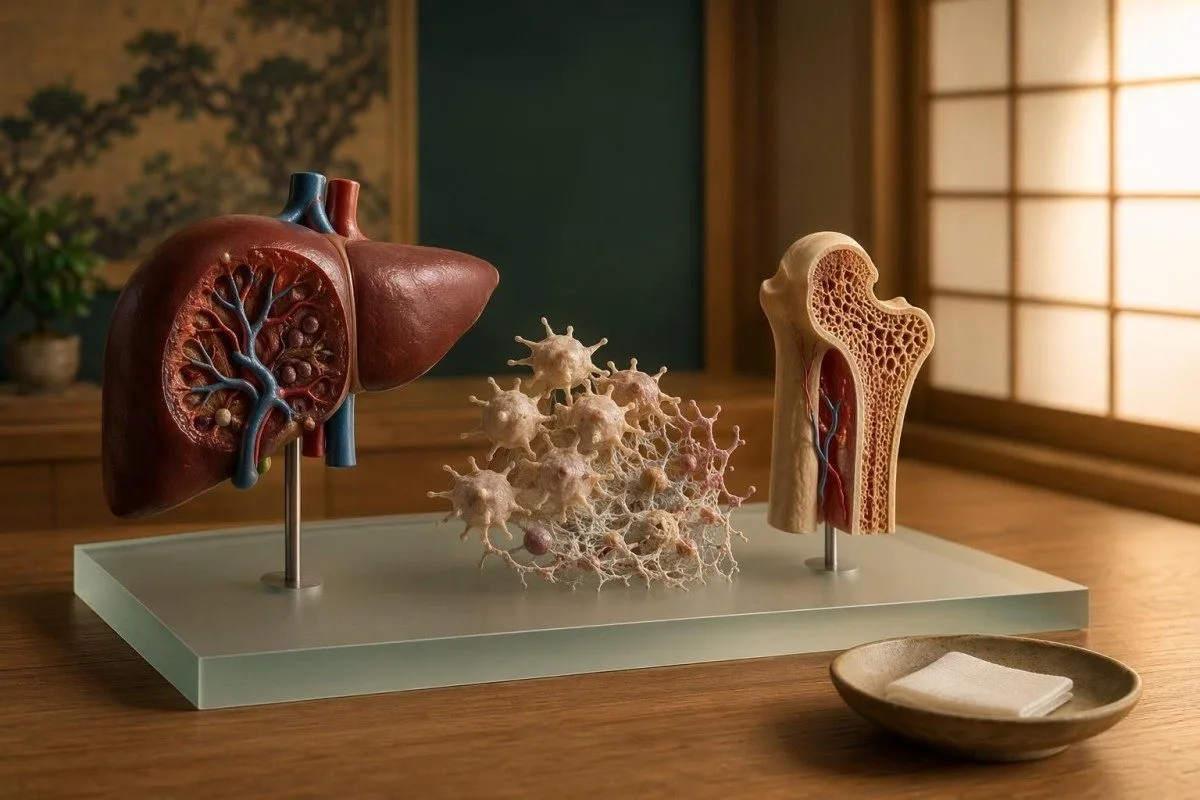
A symptom-first guide to the lab patterns doctors usually check when bruises, nosebleeds, heavy periods, or prolonged bleeding do not have an obvious explanation.

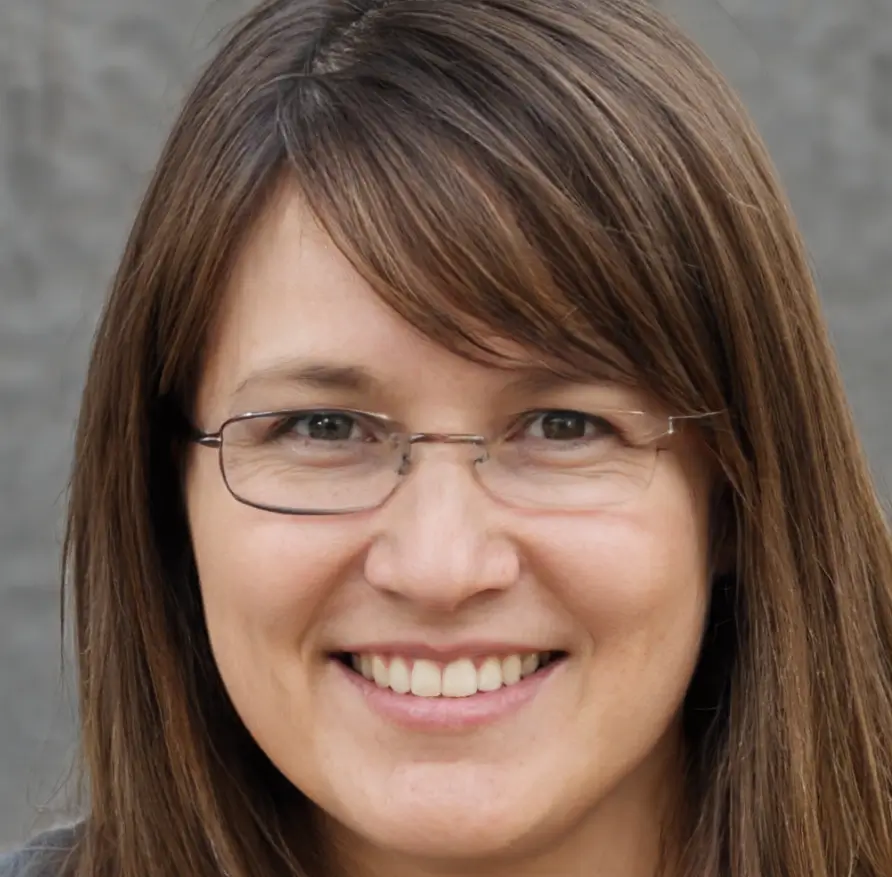

- CBC with platelets is usually the first test; adult platelet counts are commonly 150-450 x10^9/L, and lower counts can raise bleeding risk.
- PT/INR checks the extrinsic clotting pathway; a normal INR is usually about 0.8-1.1 in people not taking anticoagulants.
- aPTT checks the intrinsic clotting pathway; many labs use about 25-35 seconds as a typical adult reference interval.
- Liver markers matter because the liver makes most clotting factors; high INR plus low albumin can suggest impaired liver synthetic function.
- Iron studies help when bleeding has been slow or recurrent; ferritin below 30 ng/mL often supports depleted iron stores in symptomatic adults.
- Von Willebrand testing may be discussed when CBC, PT/INR, and aPTT are normal but mucosal bleeding, heavy periods, or family history persists.
- Medication history is part of the workup; aspirin, NSAIDs, SSRIs, steroids, anticoagulants, and some supplements can cause bruising with normal labs.
- Urgent symptoms include black stools, vomiting blood, severe headache after head injury, widespread purple spots, or bleeding that will not stop after 10-15 minutes of firm pressure.
The first blood tests doctors usually consider
If you bruise easily or bleed more than expected, the blood tests doctors most commonly consider are CBC with platelet count, PT/INR, aPTT, liver markers including ALT, AST, bilirubin and albumin, kidney function, and iron studies with ferritin and transferrin saturation. If nosebleeds, heavy periods, family history, or normal first-line tests persist, von Willebrand testing may be discussed.
I am Thomas Klein, MD, and when patients ask what blood tests should I get for bruising, I start with the pattern: skin bruises, gum bleeding, nosebleeds, heavy menstrual bleeding, prolonged bleeding after dental work, or large bruises after small knocks. That pattern decides whether the first stop is a platelet problem, clotting-factor problem, liver issue, medication effect, or slow blood loss.
A practical first request is: CBC with differential and platelets, PT/INR, aPTT, comprehensive metabolic panel or liver panel, ferritin, serum iron, TIBC, transferrin saturation, and sometimes CRP if inflammation may distort ferritin. Our Kantesti AI blood test analyzer can read those patterns together rather than treating each high or low flag as an isolated finding.
The phrase what blood tests to ask for can be misleading because bruising is not one diagnosis. A person with platelet count 82 x10^9/L needs a different conversation than someone with platelets 240 x10^9/L, INR 1.8, and albumin 2.9 g/dL; for clotting terminology, our coagulation test guide is a useful companion.
As of April 28, 2026, I still tell patients that labs do not replace the bleeding history. Rodeghiero et al. described a standardized ISTH bleeding assessment tool in 2010 because the number of nosebleeds, dental bleeding episodes, and heavy-period clues often predicts inherited bleeding disorders better than a single screening test.
When bruising or bleeding needs urgent care before labs
Easy bruising needs urgent assessment if bleeding is heavy, new, widespread, or linked to head injury, black stools, fainting, pregnancy, anticoagulant use, or tiny non-blanching purple spots. Do not wait for routine blood work if the symptom itself looks unsafe.
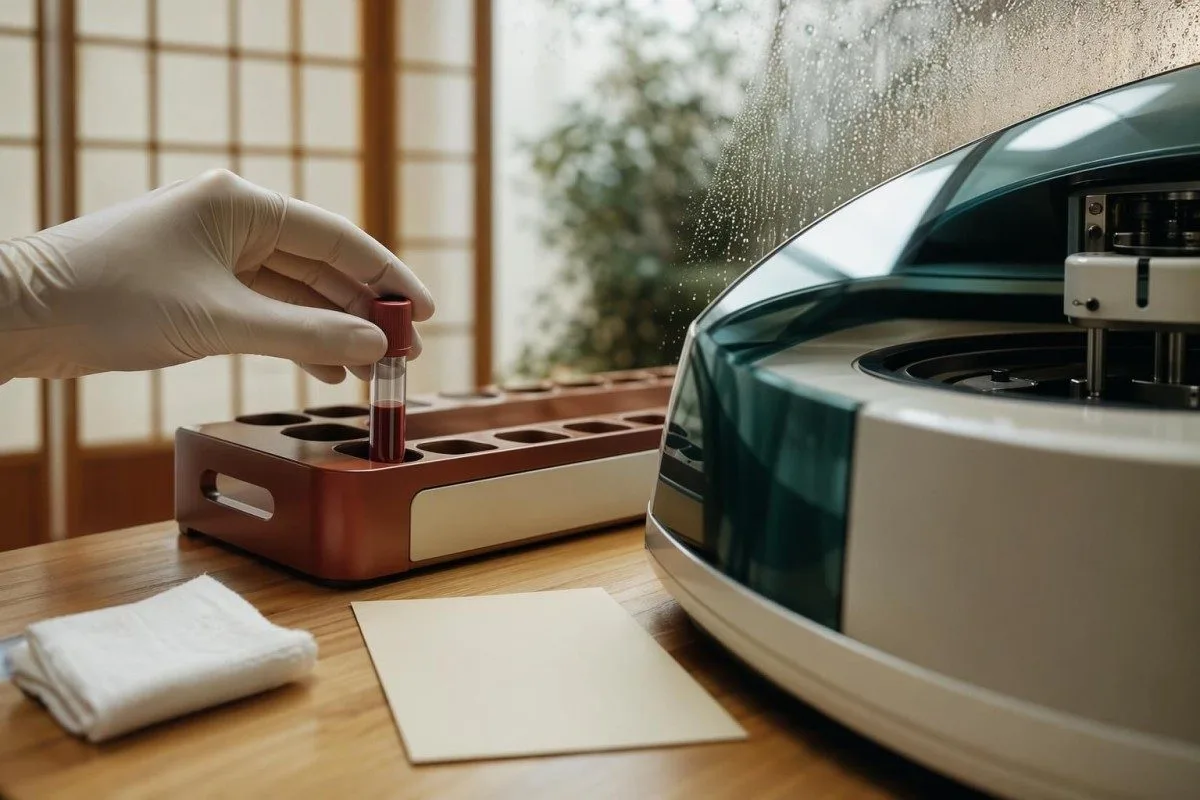
Firm pressure should slow most small cuts within 10-15 minutes. Bleeding that continues despite steady pressure, or a nosebleed lasting more than 20-30 minutes, deserves same-day medical advice because platelet or clotting-factor problems can look deceptively calm at first.
Petechiae are pinpoint red-purple spots that do not fade when pressed; in practice, I take new petechiae plus fever, confusion, severe headache, or platelet count below 20 x10^9/L very seriously. Our article on critical blood test values explains why some lab changes are not safe to monitor casually.
Black tar-like stool, red urine, coughing blood, vomiting material that looks like coffee grounds, or sudden large bruises without impact can signal internal bleeding. If you take warfarin, apixaban, rivaroxaban, dabigatran, aspirin plus clopidogrel, or high-dose NSAIDs, the threshold for urgent care is lower.
One patient I remember had only a few new leg bruises, but her platelet count came back at 9 x10^9/L after a viral illness. She felt well enough to go shopping; the lab result said otherwise.
CBC and platelet count: the usual starting point
A CBC with platelet count is usually the first lab for unexplained bruising because it checks platelet number, hemoglobin, white cells, and red-cell indices in one tube. Adult platelet counts are typically 150-450 x10^9/L, although reference intervals vary slightly by laboratory.
Platelets below 150 x10^9/L are called thrombocytopenia, but the clinical meaning depends on the depth and speed of the fall. Platelet counts below 100 x10^9/L can increase procedure-related bleeding, below 50 x10^9/L often changes activity and surgery planning, and below 10-20 x10^9/L can carry spontaneous bleeding risk.
A CBC also checks hemoglobin, which is often normal early in bruising but low after chronic bleeding. Typical adult hemoglobin ranges are about 12.0-15.5 g/dL for many women and 13.5-17.5 g/dL for many men, but pregnancy, altitude, and lab method shift the boundaries.
I rarely interpret platelets without looking at WBC and hemoglobin. Low platelets plus low white cells or anemia can point toward marrow suppression, medication effects, autoimmune disease, infection, or hematologic disease; our platelet count range guide walks through those branches in more detail.
A normal platelet count does not prove platelet function is normal. Aspirin can impair platelet function for the life of the platelet, roughly 7-10 days, while the platelet number on the CBC remains perfectly normal.
Blood smear, MPV, and platelet clues doctors may add
A peripheral smear and platelet indices can clarify whether a low platelet count is real, clumped, newly produced, or part of a wider cell-count problem. Mean platelet volume, or MPV, is often about 7.5-12 fL, but lab methods differ enough that trends matter more than one cutoff.
Platelet clumping can falsely lower the automated platelet count, especially in EDTA tubes. When I see platelets of 88 x10^9/L in a well patient with no petechiae, I want to know whether the smear shows clumps before anyone labels it true thrombocytopenia.
Large platelets with high MPV may suggest increased platelet turnover, which can happen when the marrow is responding to peripheral platelet destruction. Small platelets with other abnormal CBC findings can push the workup toward inherited syndromes or marrow production issues, although that is much less common.
The smear also checks whether red cells look fragmented, unusually small, or oddly shaped. Fragmented red cells plus low platelets can suggest microangiopathic processes, which is a very different urgency level from isolated mild thrombocytopenia; our manual versus automated differential article explains where machines can miss the nuance.
A smear is not always ordered automatically. If your platelet count is low, changing quickly, or inconsistent with your symptoms, asking whether a smear review is appropriate is reasonable.
PT/INR: clotting time, vitamin K, warfarin, and liver clues
PT/INR measures the extrinsic and common clotting pathways and is especially useful when doctors suspect vitamin K deficiency, warfarin effect, liver synthetic problems, or factor VII pathway issues. A typical INR is about 0.8-1.1 in adults not taking anticoagulants.
Prothrombin time is often around 11-13.5 seconds, but INR standardizes PT so results can be compared across laboratories. An INR above 1.5 in someone not taking warfarin often changes pre-procedure planning and should not be brushed aside if bruising is new.
The reason PT/INR matters in bruising is that factors II, VII, IX, and X depend on vitamin K, and most clotting factors are made in the liver. A patient with INR 1.7, bilirubin 2.4 mg/dL, and albumin 3.0 g/dL is telling a different story from someone with INR 1.7 after missed warfarin monitoring.
Antibiotics, poor intake, cholestasis, malabsorption, and certain supplements can alter vitamin K balance. For practical interpretation of high and low INR values, see our PT/INR range guide.
Chee et al. wrote in the British Journal of Haematology in 2008 that bleeding history often outperforms blanket clotting screens before procedures. I agree; PT/INR is powerful when the question fits, but it is not a universal bruising detector.
aPTT: intrinsic pathway clues when PT is normal
aPTT measures the intrinsic and common clotting pathways, so it can be abnormal when PT/INR is normal. Many adult labs use about 25-35 seconds as a typical aPTT range, but each laboratory sets its own interval.
A prolonged aPTT can reflect heparin exposure, factor VIII, IX, XI, or XII deficiency, lupus anticoagulant, or sample-handling issues. Factor XII deficiency can prolong aPTT without causing bleeding, which is one of those results that terrifies patients until the physiology is explained.
If aPTT is prolonged, clinicians may order a mixing study. Correction after mixing patient plasma with normal plasma suggests a factor deficiency; failure to correct suggests an inhibitor such as lupus anticoagulant or a specific factor inhibitor.
The ASH/ISTH/NHF/WFH 2021 von Willebrand disease diagnosis guideline notes that von Willebrand factor testing is needed when symptoms fit, because routine PT and aPTT may be normal in many patients with mild von Willebrand disease (James et al., 2021). Our aPTT coagulation guide explains this pitfall well.
Do not interpret aPTT without asking whether the sample was drawn from a heparinized line, whether the tube was underfilled, or whether the patient is taking anticoagulants. Pre-analytical errors are boring, but they save people from wrong diagnoses.
Fibrinogen and D-dimer: when doctors widen the panel
Fibrinogen and D-dimer are not always first-line tests for simple bruising, but doctors may add them when bleeding is widespread, clotting is abnormal, pregnancy complications are possible, or disseminated clotting activation is suspected. Fibrinogen is commonly about 200-400 mg/dL in adults.
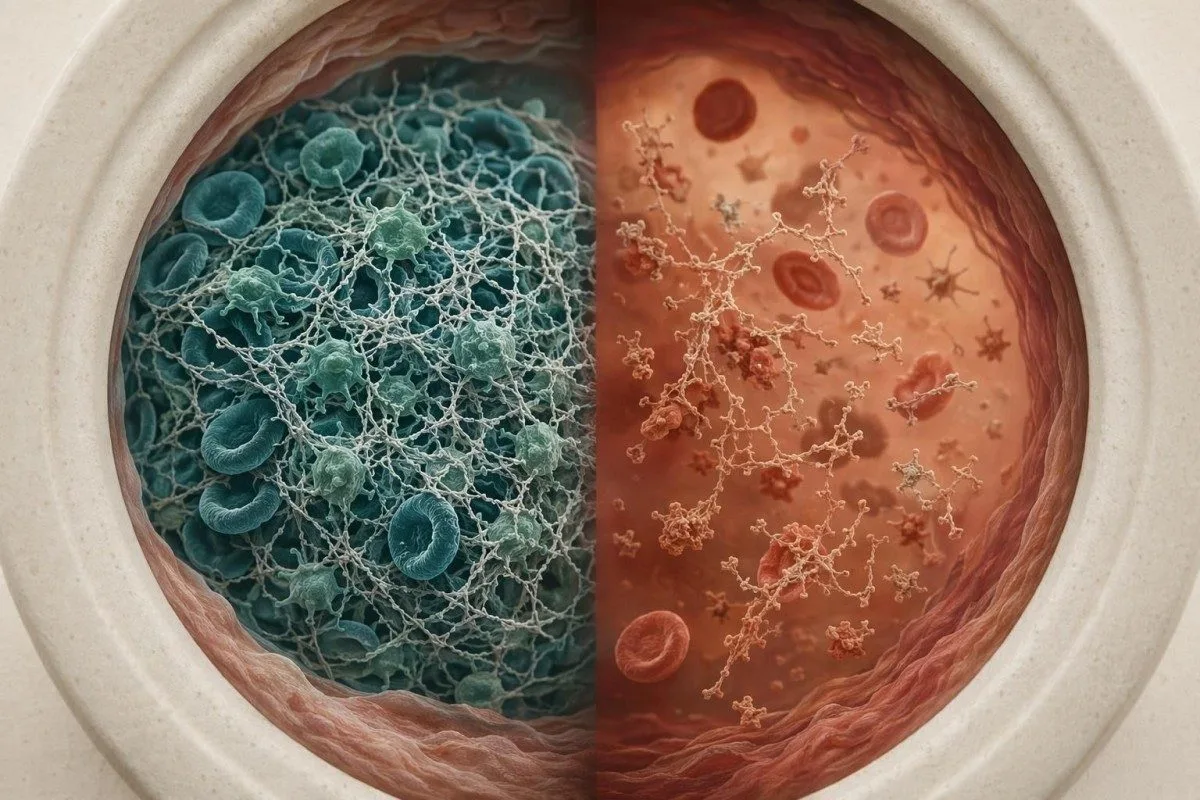
Low fibrinogen matters because fibrinogen is the raw material for fibrin clot formation. A fibrinogen below 150 mg/dL can become clinically significant in bleeding, and levels below 100 mg/dL are often treated urgently in the right setting.
D-dimer is a breakdown product of cross-linked fibrin. Many labs report a normal D-dimer as below 500 ng/mL FEU or below 0.5 mg/L FEU, although age-adjusted thresholds are sometimes used for clot evaluation in older adults.
High D-dimer is not a bruising diagnosis. Infection, surgery, pregnancy, trauma, cancer, liver disease, and inflammation can raise it; our D-dimer result guide focuses on avoiding overreaction to a nonspecific marker.
The pattern I worry about is falling platelets, prolonged PT and aPTT, low fibrinogen, and very high D-dimer together. That cluster can suggest consumption of clotting factors, which is a same-day conversation rather than a wellness follow-up.
Liver markers: why bruising can be a synthetic-function clue
Liver testing is often considered for easy bruising because the liver produces most clotting factors and helps process vitamin K. ALT, AST, ALP, GGT, bilirubin, albumin, and PT/INR together are more informative than any single liver enzyme.
ALT and AST may be normal even when clotting-factor production is impaired, especially in advanced chronic liver disease. Albumin below about 3.5 g/dL plus INR above 1.3 is more concerning for synthetic function than a mildly raised ALT alone.
Bilirubin above about 1.2 mg/dL can occur with bile flow problems, liver injury, hemolysis, or benign Gilbert syndrome. Bruising plus jaundice, pale stools, dark urine, or itching changes the urgency and the likely test list.
In our analysis of 2M+ uploaded blood tests, Kantesti AI often sees bruising questions where ALT is only 48 IU/L but albumin and INR tell the real story. Our liver function test guide explains why enzyme elevation and liver function are not the same thing.
Alcohol intake, fatty liver disease, hepatitis, cholestasis, and some medications can all affect clotting through liver pathways. If AST is higher than ALT, GGT is elevated, and platelets are low, clinicians often think about chronic liver stress or portal hypertension rather than a primary platelet disorder.
Kidney, thyroid, inflammation, and nutrition clues
Doctors may add kidney function, thyroid testing, inflammatory markers, and selected nutrition labs when bruising is part of a broader symptom pattern. These tests are not universal bruising screens, but they can explain bleeding tendency when the history points that way.
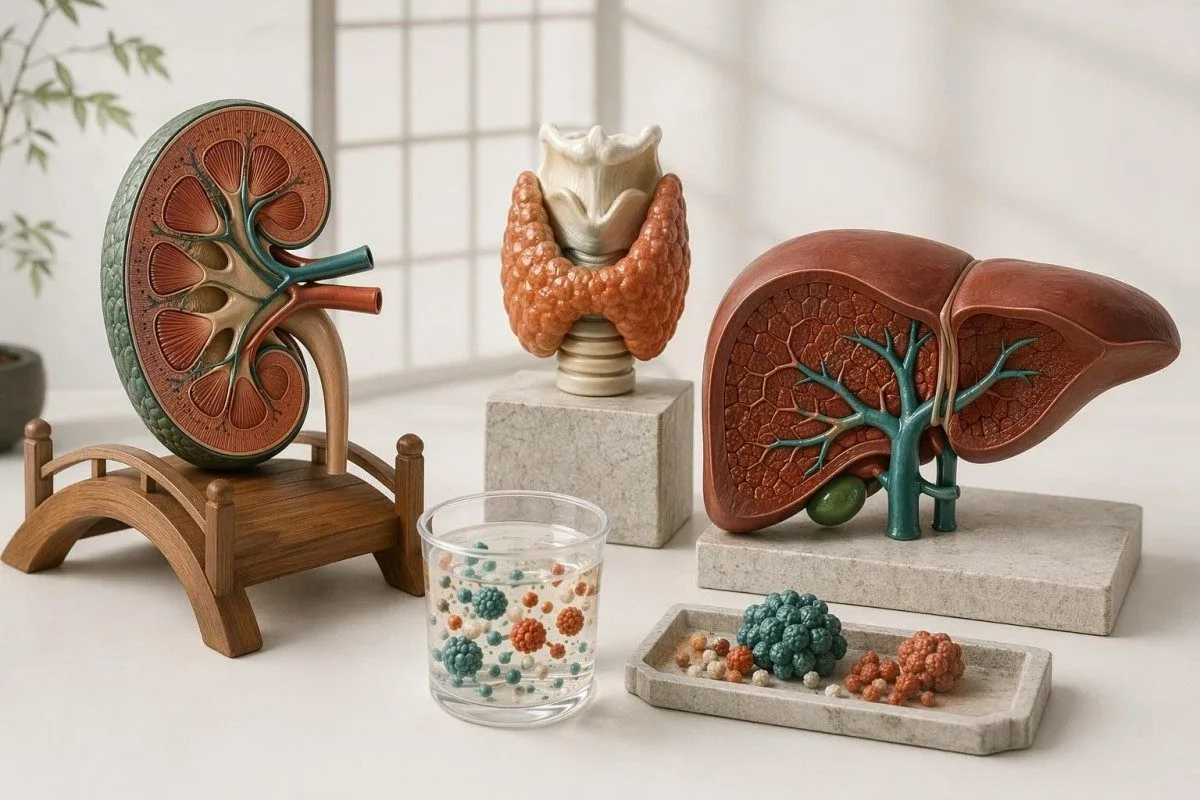
Kidney disease can impair platelet function even when platelet count is normal. Uremic platelet dysfunction is more likely with advanced kidney impairment, often when eGFR is below 30 mL/min/1.73 m², although symptoms vary widely.
Thyroid disease can overlap with menstrual changes, fatigue, and anemia. TSH is commonly about 0.4-4.0 mIU/L in many adult labs, and abnormal thyroid patterns may not cause bruising directly but can explain heavy periods or iron loss; our eGFR age guide helps put kidney values in context.
CRP below 5 mg/L is often considered low in many labs, while higher values can make ferritin harder to interpret. Vitamin C deficiency is uncommon in well-nourished adults, but gum bleeding, corkscrew hairs, poor wound healing, and very restricted diets still make me ask about it.
Kantesti AI links kidney function, TSH, CRP, ferritin, and CBC trends in the same interpretation so a patient does not chase one abnormal value at a time. For thyroid-specific patterns, our thyroid panel guide is more useful than TSH alone.
When von Willebrand testing may be discussed
Von Willebrand testing is often discussed when bruising or mucosal bleeding persists despite normal CBC, PT/INR, and sometimes normal aPTT. The usual panel includes von Willebrand factor antigen, von Willebrand activity, and factor VIII activity.
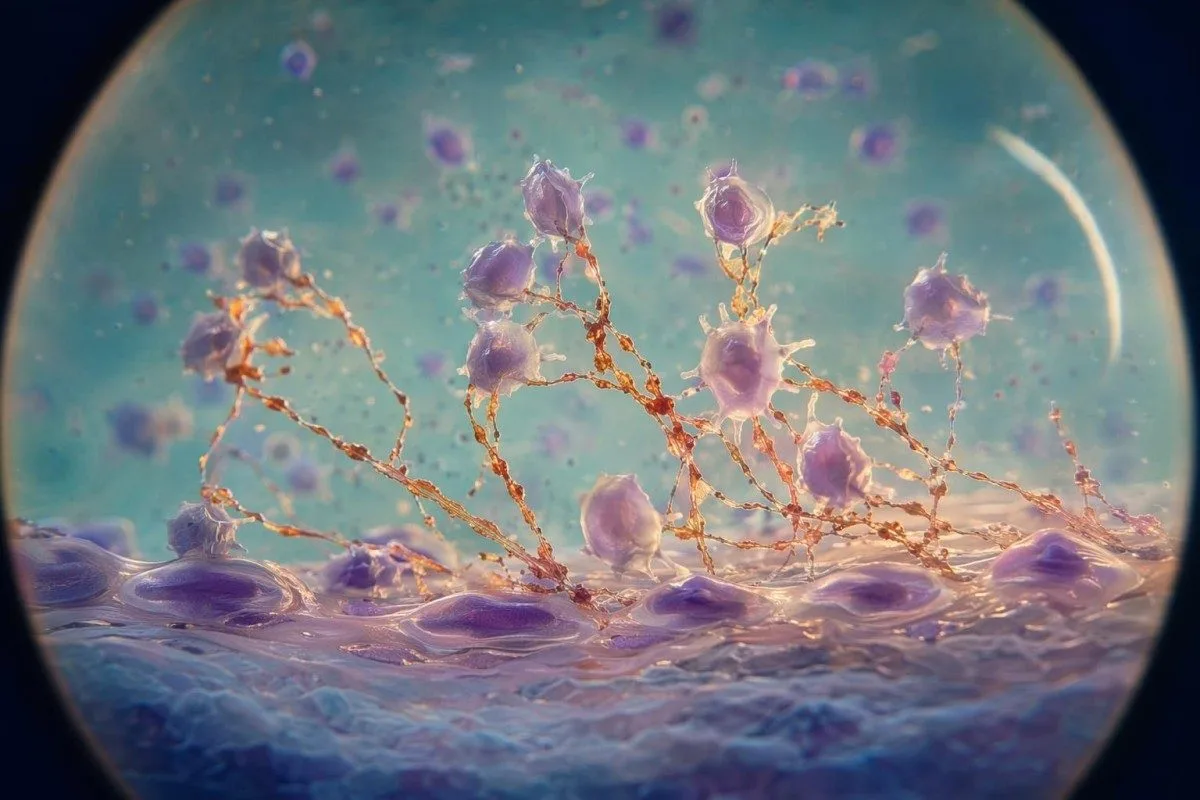
Von Willebrand disease often presents with nosebleeds, easy bruising, gum bleeding, heavy menstrual bleeding, or prolonged bleeding after dental work. The ASH/ISTH/NHF/WFH 2021 guideline recommends using validated bleeding history plus targeted testing rather than relying on PT or aPTT alone (James et al., 2021).
Typical von Willebrand factor antigen and activity reference intervals are often around 50-200 IU/dL, but blood group O can run lower than non-O groups. Values below 30 IU/dL strongly support von Willebrand disease in many diagnostic frameworks, while 30-50 IU/dL may be called low VWF when bleeding history fits.
Testing is tricky. VWF rises with stress, pregnancy, estrogen therapy, inflammation, exercise, and acute illness, so a normal value during a stressful emergency visit may not end the story.
When our doctors review cases through the Medical Advisory Board, we flag symptom-lab mismatch rather than pretending a normal screening panel excludes inherited bleeding. For patients, that means bringing a written bleeding history is often as valuable as bringing the lab report.
Medication and supplement effects that can leave labs normal
Medication-related bruising can occur even when CBC, PT/INR, and aPTT are normal. Aspirin, NSAIDs, SSRIs, steroids, anticoagulants, antiplatelet drugs, alcohol, and some supplements can change platelet function, vessel fragility, or clotting balance.
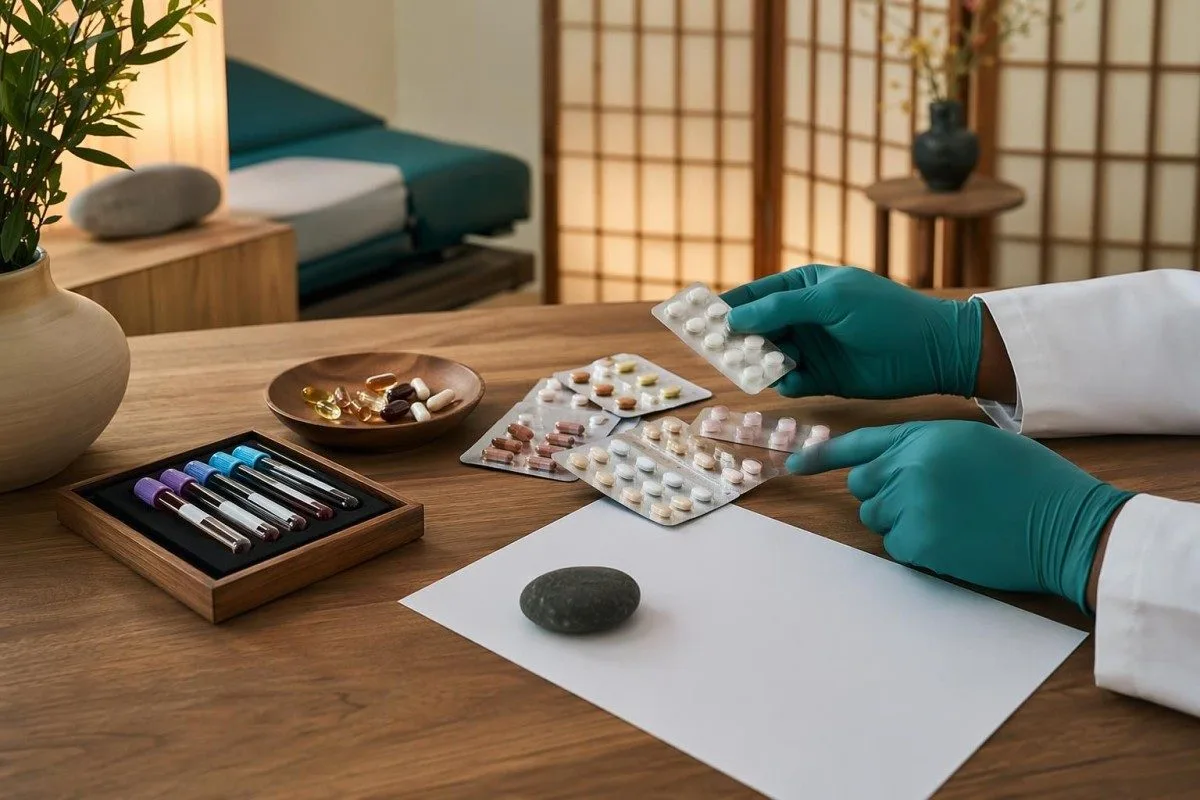
Aspirin irreversibly affects platelet function for about 7-10 days, while ibuprofen and naproxen have shorter reversible effects. Standard platelet count can remain 250 x10^9/L, which is why the story matters more than the count in medication bruising.
SSRIs can slightly increase bleeding risk by reducing platelet serotonin uptake, especially when combined with NSAIDs or anticoagulants. Steroids can thin skin and make forearm bruising common in older adults, often without any clotting-test abnormality.
Fish oil, ginkgo, garlic extracts, turmeric capsules, and high-dose vitamin E are not harmless just because they are sold as supplements. If surgery or dental extraction is planned, clinicians often ask about these alongside prescribed medicines; our pre-surgery blood test guide explains how medication review changes lab planning.
Do not stop anticoagulants or antiplatelet therapy on your own. A bruising workup should balance bleeding risk against stroke, clot, stent, valve, or heart-risk protection.
Annual blood work: what to test if bruising keeps happening
For annual blood work what to test depends on whether bruising is new, recurrent, medication-related, menstrual, liver-patterned, or associated with fatigue. A reasonable annual discussion may include CBC, platelets, CMP or liver panel, ferritin with iron studies, PT/INR, and aPTT if bleeding symptoms are present.
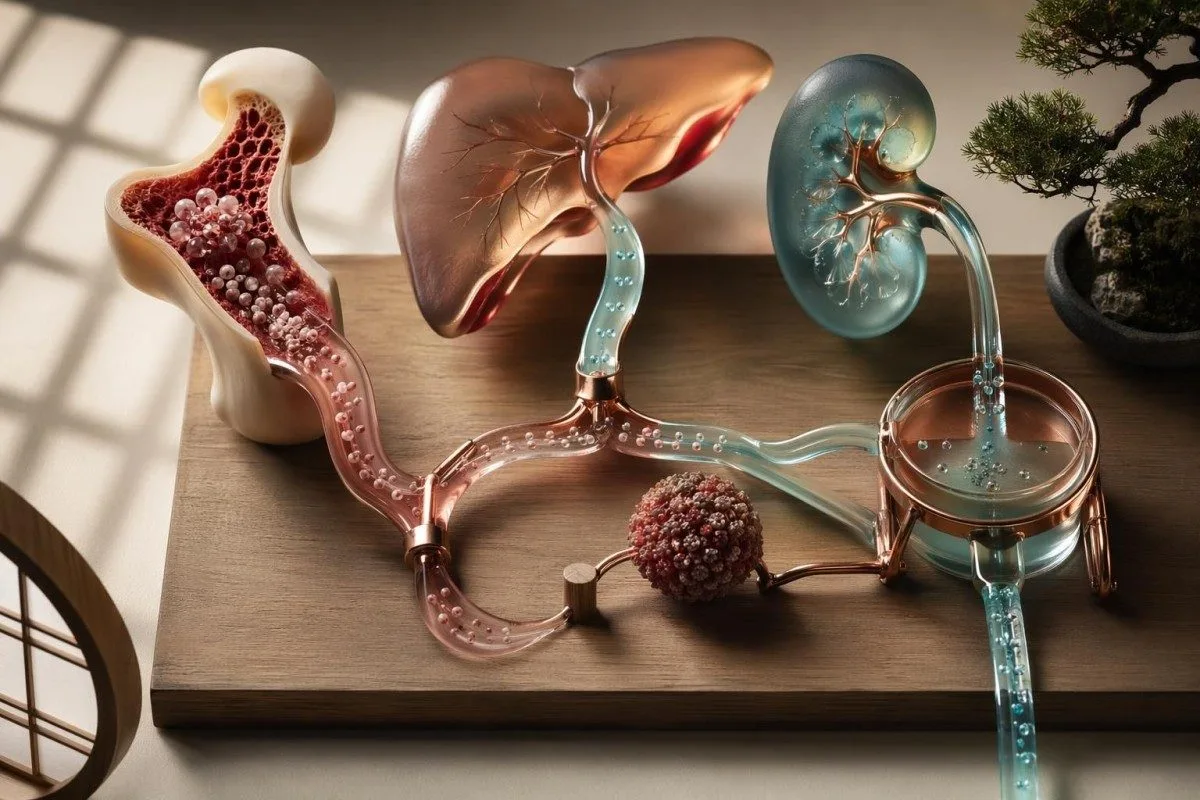
Routine wellness panels often skip PT/INR, aPTT, ferritin, and transferrin saturation. That is why a patient can say their annual labs were normal and still not have had the tests that answer the bruising question.
If bruising is stable and explained by age-related skin fragility or medication, repeating every clotting test each year may add noise. If bruising is new after age 50, accompanied by weight loss, night sweats, fevers, low platelets, or anemia, the workup becomes more deliberate.
For people who want a structured baseline, our annual blood test guide explains which labs change decisions and which are mostly marketing. A standard panel is useful, but bruising often needs add-ons.
I usually ask patients to bring photos dated over 4-8 weeks, a medication list with doses, menstrual bleeding details if relevant, and any dental or surgery bleeding history. That small packet often prevents a scattered, expensive workup.
How to understand lab results without overreacting to flags
How to understand lab results for bruising starts with patterns, not isolated red arrows. A platelet count of 145 x10^9/L, INR 1.2, or ferritin 28 ng/mL can mean very different things depending on age, symptoms, medications, trend, and reference range.
Reference ranges are statistical, not moral judgments. About 5 percent of healthy people will fall outside a typical lab interval simply because reference ranges often capture the central 95 percent of a comparison population.
Trends are often more useful than cutoffs. Platelets falling from 310 to 170 x10^9/L over 3 months may be more interesting than a stable platelet count of 145 x10^9/L for 10 years.
Kantesti AI interprets bruising-related results by comparing CBC, coagulation tests, liver markers, iron studies, units, reference ranges, and previous uploads when available. Our biomarkers guide covers more than 15,000 markers, while our plain-language article on reading blood results helps patients avoid panic-scrolling.
If a result does not fit your body, repeat testing is often safer than guessing. Tube underfilling can affect coagulation tests, hemolysis can distort chemistry values, and recent infection can temporarily move platelets, ferritin, CRP, and liver enzymes.
Using Kantesti safely after you get the tests
Kantesti helps patients organize bruising-related blood tests by interpreting CBC, platelets, PT/INR, aPTT, liver markers, iron studies, and trends in one place. Our AI gives rapid interpretation, but bleeding symptoms still need clinician judgment when results are severe or symptoms are active.

Kantesti AI is used by more than 2M people across 127+ countries and 75+ languages, and our system can read uploaded PDF or photo lab reports in about 60 seconds. You can try the free blood test analysis if you already have a report and want structured questions for your next appointment.
Our clinical standards are described in Medical Validation, and Kantesti LTD is a UK company built around privacy, safety, and traceable lab interpretation. The practical role is simple: make the result understandable, show the pattern, and tell you when not to wait.
Kantesti AI links bruising-related biomarkers to context rather than issuing a diagnosis from a single value. For example, platelets 92 x10^9/L with normal hemoglobin and recent viral illness is a different pattern from platelets 92 x10^9/L with blasts flagged, hemoglobin 8.6 g/dL, and WBC 2.1 x10^9/L.
Thomas Klein, MD, reviews this content with our clinical governance process because bruising and bleeding sit in a higher-risk medical category. If you want to understand your labs before a visit, start with our AI lab analysis tool and bring the output to a qualified clinician rather than using it to delay care.
For research transparency, Kantesti publishes validation work including a 100,000-case benchmark of the 2.78T engine on Figshare at Kantesti AI Engine validation. AI is useful here when it reduces confusion; it is not a substitute for emergency assessment when bleeding is active.
Frequently Asked Questions
What blood tests should I get for easy bruising?
The usual first blood tests for easy bruising are CBC with platelet count, PT/INR, aPTT, liver markers including ALT, AST, bilirubin and albumin, kidney function, and iron studies with ferritin and transferrin saturation. Platelets are typically 150-450 x10^9/L, INR is usually about 0.8-1.1 if you are not anticoagulated, and aPTT is often about 25-35 seconds. If these are normal but nosebleeds, heavy periods, gum bleeding, or family history persists, doctors may discuss von Willebrand factor antigen, von Willebrand activity, and factor VIII.
Can you have a bleeding disorder with normal PT and aPTT?
Yes, some bleeding disorders can occur with normal PT and aPTT, especially mild von Willebrand disease and platelet function problems. Von Willebrand factor antigen and activity may be needed when symptoms include nosebleeds, gum bleeding, heavy menstrual bleeding, or prolonged bleeding after dental work. Aspirin and NSAIDs can also impair platelet function while platelet count, PT, and aPTT remain normal.
What platelet count causes bruising?
Bruising risk often rises as platelet count falls below 100 x10^9/L, but many people do not have major spontaneous bleeding until counts are much lower. Counts below 50 x10^9/L can affect surgery, trauma, and activity decisions, while counts below 10-20 x10^9/L can carry spontaneous bleeding risk. Platelet function, medications, liver disease, and age-related skin fragility can cause bruising even when the count is normal.
Should I ask for von Willebrand testing?
Ask your clinician about von Willebrand testing if you have recurrent nosebleeds, heavy periods, gum bleeding, easy bruising, prolonged bleeding after dental work, postpartum bleeding, or a family history of similar symptoms. The usual tests include von Willebrand factor antigen, von Willebrand activity, and factor VIII activity. Values below 30 IU/dL often support von Willebrand disease, while 30-50 IU/dL may be clinically relevant when the bleeding history fits.
Can iron deficiency mean I am bleeding somewhere?
Iron deficiency can be a clue to chronic blood loss, especially from heavy menstrual bleeding or gastrointestinal bleeding. Ferritin below 30 ng/mL often supports low iron stores in symptomatic adults, and transferrin saturation below 20 percent supports reduced available iron. Iron deficiency does not prove the source of bleeding, but it should prompt a careful history and, in some patients, further evaluation.
Why do I bruise easily if my blood tests are normal?
Normal CBC, PT/INR, and aPTT do not rule out every cause of bruising. Common explanations include aspirin or NSAID use, steroid-related skin thinning, SSRI-related platelet effects, age-related fragile blood vessels, mild von Willebrand disease, or platelet function problems not captured by routine screening. If bruising is new, worsening, unexplained, or linked to bleeding from gums, nose, urine, stool, or heavy periods, it needs clinical review.
What labs should be in annual blood work if I bruise easily?
Annual blood work for someone who bruises easily may include CBC with platelet count, CMP or liver panel, ferritin with iron studies, and kidney function, with PT/INR and aPTT added when bleeding symptoms are present. Routine annual panels often do not include coagulation tests or ferritin unless specifically requested. The right list depends on symptoms, medications, menstrual history, liver risk, family history, and previous lab trends.
Get AI-Powered Blood Test Analysis Today
Join over 2 million users worldwide who trust Kantesti for instant, accurate lab test analysis. Upload your blood test results and receive comprehensive interpretation of 15,000+ biomarkers in seconds.
📚 Referenced Research Publications
Klein, T., Mitchell, S., & Weber, H. (2026). Clinical Validation of the Kantesti AI Engine (2.78T) on 100,000 Anonymised Blood Test Cases Across 127 Countries: A Pre-Registered, Rubric-Based, Population-Scale Benchmark Including Hyperdiagnosis Trap Cases — V11 Second Update. Kantesti AI Medical Research.
Klein, T., Mitchell, S., & Weber, H. (2026). AI Blood Test Analyzer: 2.5M Tests Analyzed | Global Health Report 2026. Kantesti AI Medical Research.
📖 External Medical References
Chee YL et al. (2008). Guidelines on the assessment of bleeding risk prior to surgery or invasive procedures. British Journal of Haematology.
⚕️ Medical Disclaimer
This article is for educational purposes only and does not constitute medical advice. Always consult a qualified healthcare provider for diagnosis and treatment decisions.
E-E-A-T Trust Signals
Experience
Physician-led clinical review of lab interpretation workflows.
Expertise
Laboratory medicine focus on how biomarkers behave in clinical context.
Authoritativeness
Written by Dr. Thomas Klein with review by Dr. Sarah Mitchell and Prof. Dr. Hans Weber.
Trustworthiness
Evidence-based interpretation with clear follow-up pathways to reduce alarm.