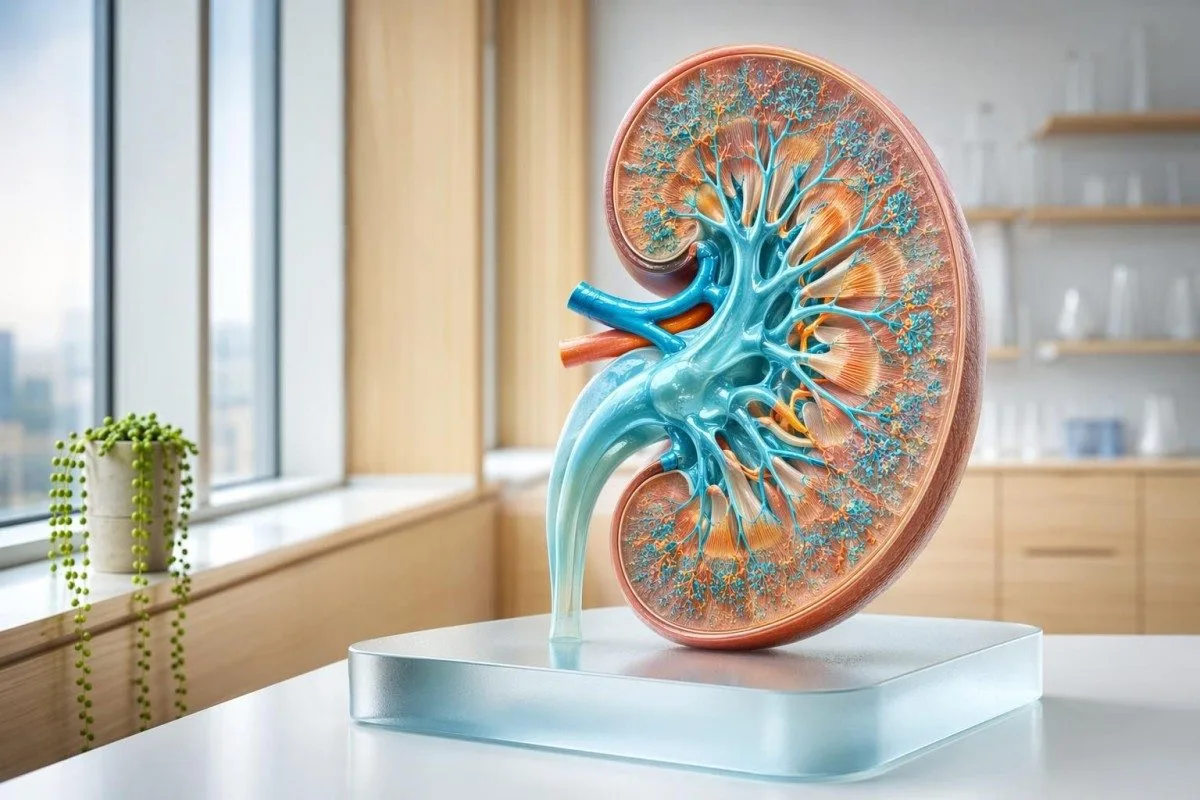
A mildly low eGFR can be normal aging, dehydration, muscle effects, or early kidney disease. The difference usually comes from trend, urine albumin, and whether creatinine is moving.



- eGFR normal range is usually 90–120 mL/min/1.73 m² in younger adults, but values around 60–75 can be seen in healthy adults over 70.
- Low GFR below 60 mL/min/1.73 m² is not called chronic kidney disease unless it persists for at least 3 months or appears with kidney damage markers.
- Urine albumin-to-creatinine ratio below 3 mg/mmol, or below 30 mg/g, is generally normal; higher values change the risk meaning of any eGFR.
- Repeat testing is usually needed within 1–2 weeks if eGFR suddenly drops, creatinine rises, potassium is high, or dehydration is possible.
- Age decline in eGFR averages roughly 0.7–1.0 mL/min/1.73 m² per year after midlife, though the slope varies widely.
- GFR test calculation depends on creatinine, age, sex, and sometimes cystatin C; it is an estimate, not a direct kidney measurement.
- Kidney follow-up is more urgent with eGFR below 30, ACR above 30 mg/mmol with hematuria, or a fall above 5 mL/min/1.73 m² per year.
- Kantesti AI reads eGFR alongside creatinine, BUN/urea, potassium, bicarbonate, albumin, urine markers, medications, and prior trends.
What counts as an eGFR normal range in adults?
An eGFR normal range is usually 90–120 mL/min/1.73 m² in younger adults, but a healthy 75-year-old may sit around 60–75 without urine albumin. Kidney numbers matter when eGFR stays below 60 for 3 months, drops quickly, or appears with albumin, blood in urine, high potassium, swelling, or rising creatinine. At Kantesti AI, we interpret eGFR as a pattern, not a verdict.
Most laboratories flag eGFR below 60 mL/min/1.73 m² because that threshold predicts higher kidney and cardiovascular risk when persistent. The catch is age: a stable eGFR of 58 in an 82-year-old with normal urine albumin is not the same clinical story as 58 in a 32-year-old.
The GFR test reported on routine chemistry panels is usually an estimated value calculated from creatinine, age, and sex. If you want the mechanics behind the calculation, our guide to GFR and eGFR explains why the estimate can mislead in muscular, frail, pregnant, or recently ill patients.
In my review work as Thomas Klein, MD, I see many patients worry after one eGFR of 62 or 68. A single mildly low kidney blood test is often a signal to repeat and check urine, not a reason to assume irreversible kidney disease.
As of April 26, 2026, KDIGO defines chronic kidney disease by kidney structure or function abnormalities lasting at least 3 months, including eGFR below 60 or markers such as albuminuria (KDIGO, 2024). That time requirement prevents overcalling temporary dehydration, medication effects, or lab variation.
Why eGFR falls with age without always meaning disease
eGFR naturally declines with age because kidney blood flow, nephron reserve, and tubular handling gradually change after midlife. A fall of about 0.7–1.0 mL/min/1.73 m² per year is common after the 40s, but the slope is not identical for everyone.
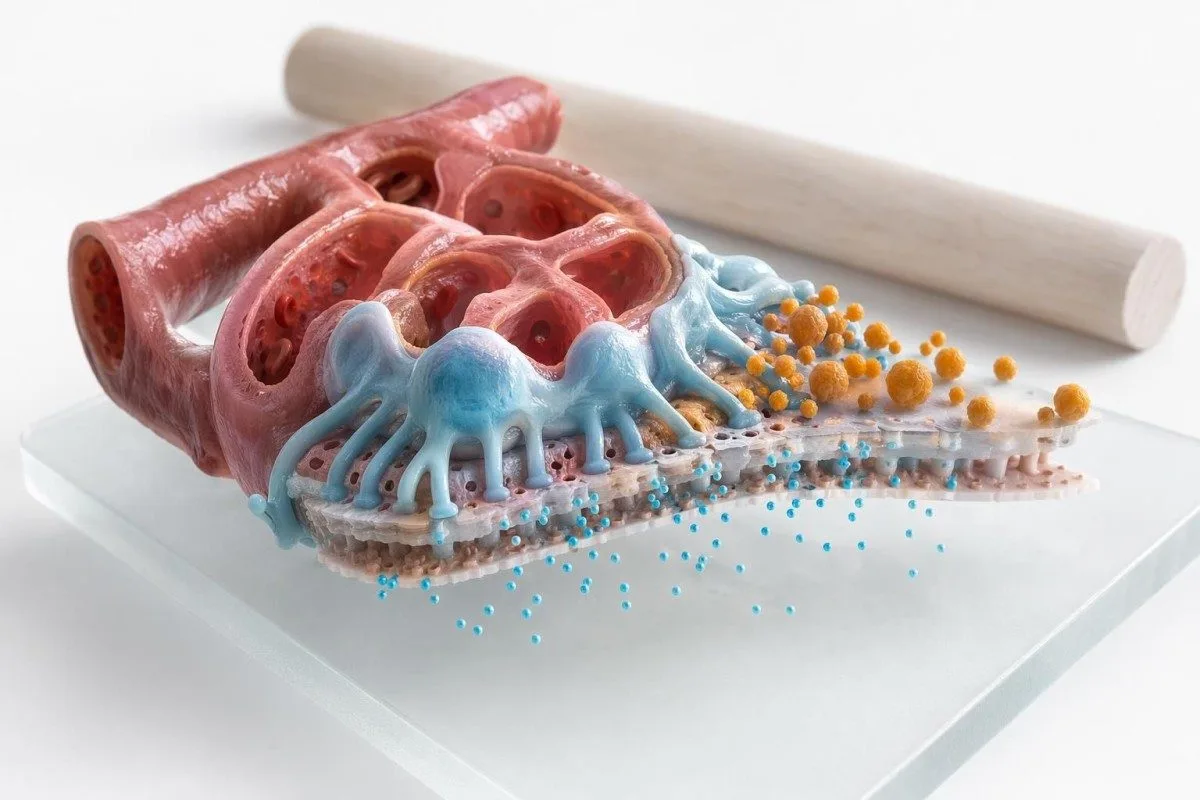
The kidneys are built with reserve capacity. Many people can lose a modest amount of filtration reserve over decades and still have normal potassium, normal acid-base balance, and no measurable urine albumin.
Aging also changes creatinine production. A thin 78-year-old may have a creatinine of 0.95 mg/dL and an eGFR near 58, while a muscular 45-year-old may show creatinine of 1.25 mg/dL with perfectly adequate true filtration.
The practical mistake is treating all eGFR values below 60 as identical. For older adults, our article on routine senior blood tests gives a more realistic frame: kidneys should be judged beside blood pressure, ACR, potassium, hemoglobin, diabetes markers, and medication burden.
In our analysis of 2M+ blood test uploads, we often see stable eGFR values in the low 60s over 4–6 years with no albuminuria. That pattern behaves very differently from a fall from 92 to 61 in 18 months, even though both can land near the same lab flag.
The age issue clinicians still debate
Clinicians disagree on whether the CKD threshold should be age-calibrated. KDIGO keeps the eGFR below 60 threshold because risk rises at a population level, but several nephrologists argue that older adults without albuminuria can be over-labeled if age is ignored.
My practical stance is boring but useful: I do not reassure a low eGFR until I have seen the urine ACR and the trend. Age explains some decline; it does not explain albumin leakage or a fast drop.
How the GFR test is calculated from a kidney blood test
The routine GFR test is usually an estimated GFR calculated from serum creatinine, age, and sex, not a directly measured filtration study. A standard kidney blood test can estimate GFR in seconds, but the estimate can drift when creatinine production is unusual.
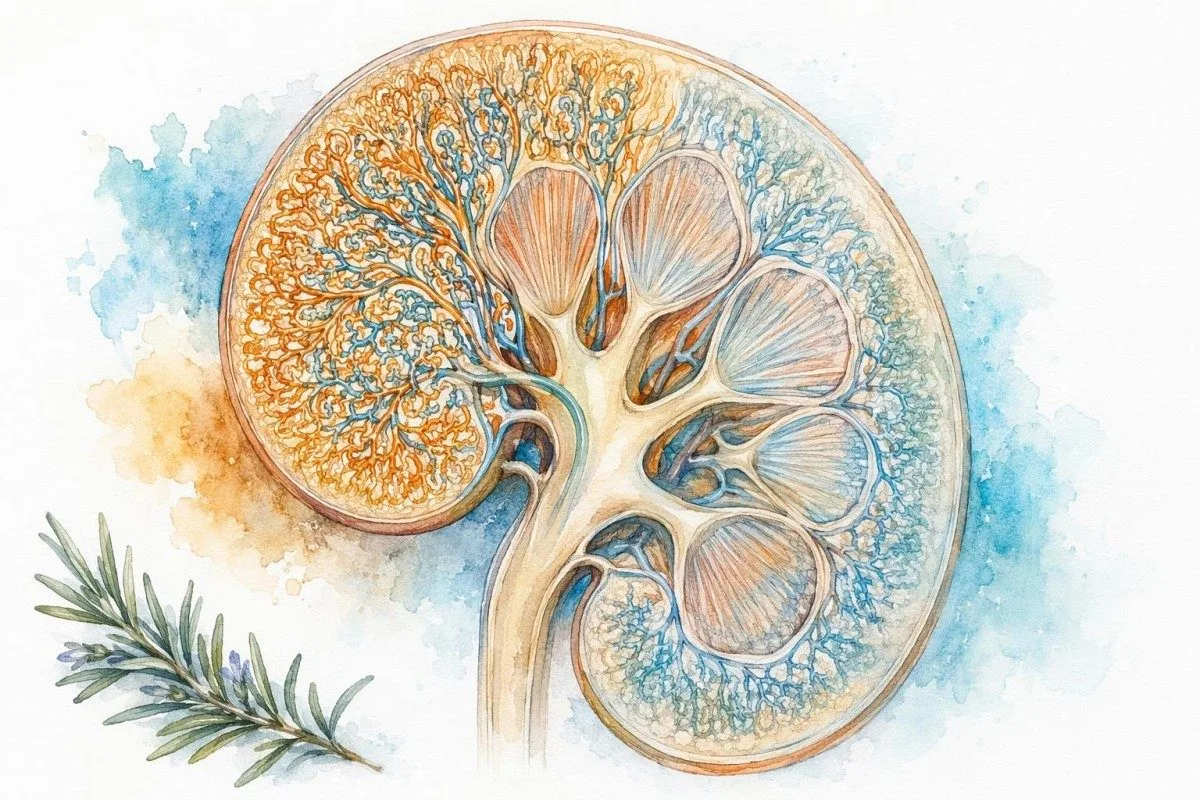
Creatinine is a muscle metabolism by-product that kidneys filter. If creatinine rises from 0.9 to 1.3 mg/dL, eGFR often falls meaningfully, but the interpretation depends on body size, muscle mass, hydration, and recent diet.
The 2021 race-free CKD-EPI equations improved fairness by removing race from eGFR reporting, and Inker et al. published creatinine and cystatin C equations in the New England Journal of Medicine that many health systems now use (Inker et al., 2021). Cystatin C is especially useful when muscle mass makes creatinine-based eGFR look too high or too low.
A direct measured GFR using iohexol, iothalamate, or nuclear medicine clearance is more accurate but rarely needed in routine primary care. It is usually reserved for kidney donation assessment, chemotherapy dosing, unusual body composition, or major disagreement between the lab number and the patient in front of us.
For a deeper look at creatinine itself, our guide to normal creatinine range explains why a result inside the lab range can still represent a meaningful change for a small older adult.
When a mildly low eGFR is expected rather than alarming
A mildly low eGFR between 60 and 89 mL/min/1.73 m² is often not kidney disease unless urine albumin, imaging, or urine sediment is abnormal. In adults over 70, a stable eGFR in the 50s can be low-risk when ACR is normal and no rapid decline is present.
I usually treat eGFR 60–89 as a context zone, not a disease label. If a 66-year-old has eGFR 72, ACR 1.2 mg/mmol, potassium 4.3 mmol/L, and stable creatinine for 5 years, the number is usually reassuring.
Borderline values are more suspicious in younger people. A 29-year-old with eGFR 68 should not be dismissed as normal aging, especially if there is hypertension, diabetes, recurrent urinary findings, or a family history of polycystic kidney disease.
Hydration can move creatinine enough to shift eGFR by 5–15 points in some patients. If your result followed vomiting, hard exercise, diuretic use, or a high-protein meal, our article on dehydration false highs may explain why creatinine looked temporarily worse.
One clinical trick: compare creatinine in absolute units, not only eGFR. An eGFR fall from 82 to 69 may look dramatic on a portal, but if creatinine shifted from 0.92 to 1.02 mg/dL during a hot week, I would often repeat before escalating.
The low-GFR-normal-creatinine pattern
A low eGFR with normal creatinine commonly happens in older adults because age is built into the equation. Our guide to low GFR with normal creatinine covers the scenario that confuses patients most often.
The opposite pattern also occurs: creatinine may still sit inside the lab reference interval while eGFR has fallen meaningfully from a personal baseline. That is why trend history is often more useful than the bold red flag.
When low GFR needs repeat testing
Low GFR needs repeat testing when eGFR is below 60, suddenly falls by more than about 15–20%, or appears with abnormal potassium, bicarbonate, urine findings, or symptoms. A repeat kidney blood test within 1–2 weeks helps separate acute kidney stress from chronic change.
A first eGFR of 52 is not enough to diagnose chronic kidney disease unless it persists for at least 3 months. KDIGO 2024 keeps this duration rule because acute illness, dehydration, medications, and obstruction can all cause temporary drops.
Repeat sooner if creatinine rises quickly, potassium is above 5.5 mmol/L, bicarbonate is below 22 mmol/L, or there is new swelling, breathlessness, low urine output, or severe blood pressure elevation. Those patterns are not watch-and-wait findings.
NICE NG203 advises using repeat testing and ACR to classify CKD and recommends referral when eGFR is below 30, ACR is very high, or decline is accelerated (NICE, 2021). In practical clinic language, a fall above 5 mL/min/1.73 m² in 1 year is not something I shrug off.
If your report includes a basic metabolic panel, our guide to BMP blood tests explains why emergency clinicians look at creatinine, potassium, sodium, chloride, CO2, glucose, calcium, and urea together.
Why urine albumin changes the meaning of eGFR
Urine albumin can make a normal-looking eGFR clinically important. An ACR below 3 mg/mmol, or below 30 mg/g, is usually normal; persistent ACR above that suggests kidney filter stress even when eGFR is above 90.

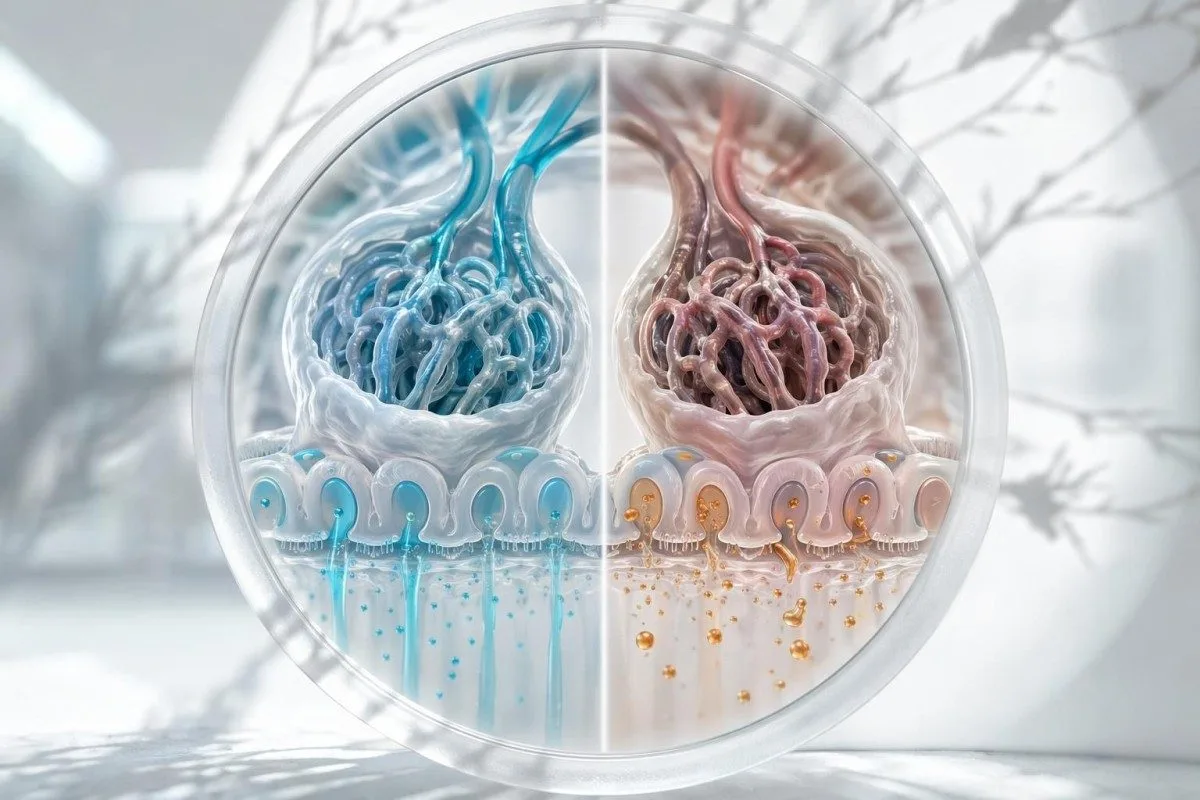
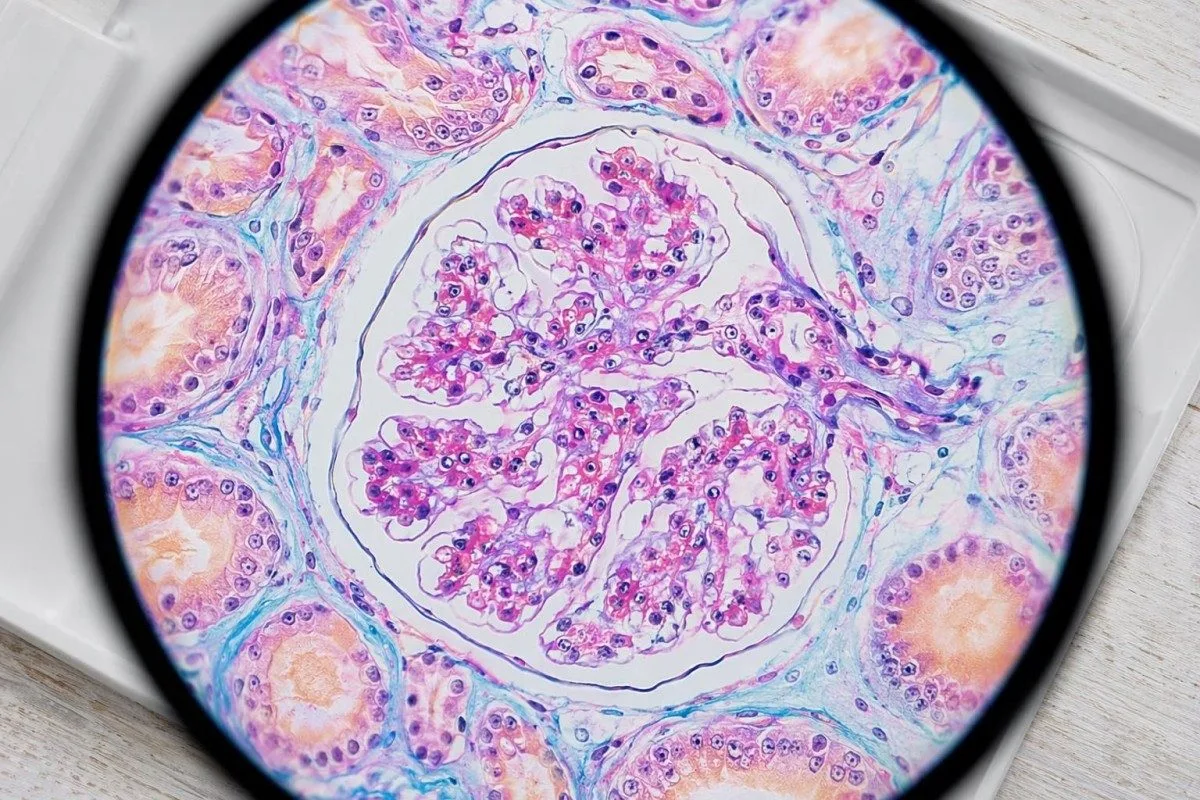
The reason albumin matters is simple: eGFR estimates filtration volume, while ACR detects leakage through the glomerular barrier. A person can have eGFR 96 and ACR 12 mg/mmol, which is not a normal kidney risk pattern.
KDIGO classifies albuminuria as A1 below 30 mg/g, A2 from 30–300 mg/g, and A3 above 300 mg/g; in UK units, those cutoffs are roughly below 3, 3–30, and above 30 mg/mmol. The risk grid combines G category and A category because each predicts outcomes differently.
I often tell patients that eGFR is the drain speed and ACR is the filter leak. A slow drain with no leak may be age-related; a normal drain with a leak deserves diabetes, blood pressure, immune, and medication review.
Urine testing is easy to overlook because many panels stop at creatinine. Our urinalysis guide covers albumin, protein, blood, specific gravity, glucose, ketones, and sediment clues that can change the kidney story.
eGFR trends I do not ignore
The most concerning eGFR result is often not the lowest number; it is the fastest fall. A sustained decline above 5 mL/min/1.73 m² per year, or above 10 over 5 years, usually deserves a structured kidney review.
A patient whose eGFR moves 88, 84, 81, 79 over 6 years often has a different risk profile from someone who moves 88, 74, 59 in 14 months. The second pattern makes me ask about NSAIDs, obstruction, diabetes, blood pressure, autoimmune disease, and recent infections.
Trend interpretation needs the same lab units and, ideally, the same equation. A switch from older CKD-EPI reporting to the 2021 race-free equation can change eGFR by several points without a biological change in filtration.
Kantesti AI tracks prior uploads so a new creatinine of 1.18 mg/dL is compared with your own baseline, not only the lab’s reference interval. Our blood test history feature is useful here because kidney risk often hides in slope, not one red mark.
The awkward bit: many health portals only show whether a value is high or low. For kidney numbers, the direction and speed of change are often more clinically useful than the color of the flag.
What I ask when the slope is steep
I ask about new blood pressure medicines, anti-inflammatory drugs, contrast scans, urinary symptoms, kidney stones, prostate or bladder outlet symptoms, and recent severe exercise. A fall above 20% after starting an ACE inhibitor or ARB may still be acceptable in some cases, but a fall above 30% usually needs prompt review.
The other question is whether albumin rose at the same time. A falling eGFR with rising ACR is a stronger signal than either result alone.
Medication, hydration, and exercise factors that bend eGFR
Many low GFR results are shaped by medicines, fluid status, and recent exercise rather than permanent nephron loss. NSAIDs, diuretics, ACE inhibitors, ARBs, creatine supplements, and heavy training can all change creatinine or kidney perfusion.
NSAIDs such as ibuprofen and naproxen can reduce kidney blood flow, especially in dehydration or when combined with ACE inhibitors and diuretics. The classic risk combination is sometimes called the triple whammy: NSAID plus ACE inhibitor or ARB plus diuretic.
ACE inhibitors and ARBs can cause a small early creatinine rise because they reduce pressure inside the kidney filter. A creatinine increase up to about 30% after starting treatment can be acceptable in selected patients, but it should be checked rather than ignored.
Exercise creates a different problem. I have reviewed marathon runners with creatinine up 15–25% after racing; our guide to athlete blood tests explains why timing matters before judging kidney function.
Protein intake and creatine supplements can also nudge creatinine upward without the same meaning as intrinsic kidney damage. If eGFR looks wrong for the person, cystatin C is often the cleaner tie-breaker.
Diabetes, blood pressure, and heart risk around kidney numbers
eGFR should be interpreted with diabetes, blood pressure, and cardiovascular risk because kidneys and blood vessels fail together more often than patients expect. ACR above 3 mg/mmol or eGFR below 60 changes long-term heart and kidney risk even before symptoms appear.
Diabetes is the commonest context where a normal eGFR can still hide kidney injury. A patient with HbA1c 8.2%, eGFR 102, and ACR 8 mg/mmol already has a kidney risk signal because albumin is leaking.
Blood pressure changes the slope. NICE and KDIGO both use albuminuria and eGFR stage to guide intensity of monitoring and treatment, and many patients with albuminuria are considered for ACE inhibitor or ARB therapy if appropriate.
Kidney results also reframe cholesterol and cardiovascular prevention. Reduced eGFR and albuminuria are independent cardiovascular risk markers, which is why I rarely review kidney numbers without also checking lipids and glycemic markers.
For diabetes context, our guide to HbA1c normal range explains why a borderline glucose marker can matter more when urine albumin is present. If blood pressure is the missing piece, see our blood pressure range guide.
The kidney-heart connection patients underestimate
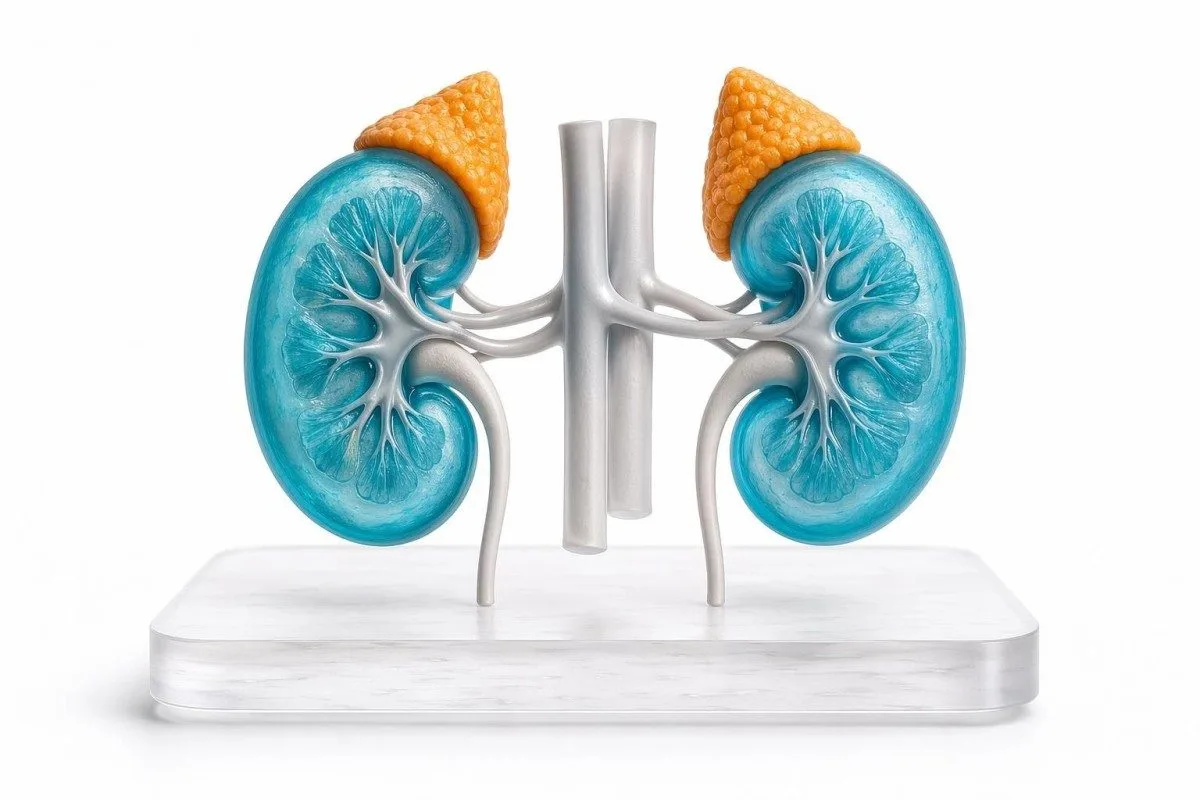
An eGFR of 55 with ACR 35 mg/mmol is not only a kidney issue; it is a vascular risk marker. The kidney filter is lined by tiny blood vessels, so albumin leak often reflects endothelial stress throughout the body.
This is why a kidney follow-up plan may include sodium review, blood pressure targets, statin discussion, diabetes treatment, smoking cessation, and medication reconciliation. It is not just about drinking more water.
What to ask your clinician after a low GFR result
After a low GFR result, ask whether the value is new, persistent, or paired with albuminuria. The most useful next tests are repeat creatinine/eGFR, urine ACR, urinalysis, potassium, bicarbonate, calcium/phosphate when indicated, and sometimes cystatin C.
A good first question is: what was my eGFR last year? If nobody can answer, you are interpreting a moving biomarker without knowing its direction.
A second question is: do I have albumin in my urine? ACR is inexpensive, often more predictive than patients realize, and can turn a bland eGFR result into a genuine risk marker.
A third question is medication safety. Ask specifically about NSAIDs, diuretics, ACE inhibitors, ARBs, SGLT2 inhibitors, metformin thresholds, contrast imaging, and dose adjustments for medicines cleared by the kidney.
Our kidney blood test guide covers early shifts before creatinine rises, and the BUN creatinine ratio guide helps separate dehydration patterns from intrinsic kidney clues.
How Kantesti AI reads eGFR in the full lab pattern
Kantesti AI interprets eGFR by combining the kidney number with creatinine, urea/BUN, electrolytes, albumin, urine markers, age, sex, prior results, and medication context. Our AI does not treat a single eGFR as a diagnosis; it grades urgency and suggests what to verify next.

When you upload a PDF or photo, Kantesti’s neural network reads the reported units, flags the lab method, and compares the value with age-aware patterns. It can usually return an interpretation in about 60 seconds through our AI blood test platform.
The system is designed to catch combinations that patients miss: eGFR 63 plus potassium 5.7 mmol/L, creatinine rising 22%, or ACR above 30 mg/mmol. That is different from simply saying low or normal.
Our medical validation framework prioritizes avoiding false reassurance in urgent patterns and avoiding overdiagnosis traps in borderline ones. I, Thomas Klein, MD, prefer that balance because kidney anxiety is common, but missed acute kidney injury is worse.
You can test your own report with our free blood test analysis. If your result is urgent, symptomatic, or rapidly worsening, use Kantesti as a second explanation layer, not a substitute for same-day medical care.
What our AI still cannot know from a PDF
No AI can feel a bladder, measure fluid status, confirm urine output, hear your full medication history, or see a kidney ultrasound from a chemistry panel alone. That is why our platform gives next-step logic rather than pretending the lab report contains the whole diagnosis.
The best use case is pattern recognition plus preparation for a clinician visit. Uploading past reports improves the signal because kidney interpretation is trend-heavy.
A practical monitoring schedule by eGFR category
Monitoring frequency depends on eGFR stage, urine albumin, and rate of change. A stable eGFR above 60 with normal ACR may only need annual review, while eGFR below 30 or high albuminuria usually needs specialist involvement.
For eGFR 60–89 with ACR below 3 mg/mmol, annual monitoring is often enough if blood pressure, diabetes risk, and medicines are stable. I would shorten that interval if creatinine is rising, the patient is starting a new kidney-active medication, or urine findings change.
For eGFR 45–59, many clinicians repeat in 3 months to confirm chronicity and add ACR if it has not been checked. If ACR is normal and the patient is older, the follow-up may remain primary-care based.
For eGFR 30–44, monitoring commonly moves to every 3–6 months, depending on albuminuria, potassium, bicarbonate, hemoglobin, and blood pressure. The risk is not only kidney failure; anemia, acidosis, bone-mineral changes, and drug accumulation start to matter more.
For a wider view of what a kidney panel includes, our renal function panel guide explains creatinine, urea, electrolytes, calcium, phosphate, albumin, and CO2 in one place.
Research publications and medical review behind this guide
Kantesti’s eGFR guidance is physician-reviewed and aligned with current kidney guidelines, but it remains educational rather than a personal diagnosis. Our medical content is reviewed through the Medical Advisory Board and updated when major laboratory or guideline standards change.
Kantesti LTD is a UK company building AI-powered blood test interpretation for patients, clinicians, and partners across 127+ countries. You can read more about the organization on About Kantesti, including our governance and product direction.
Kantesti LTD. (2026). Clinical Validation of the Kantesti AI Engine (2.78T) on 15 Anonymised Blood Test Cases: A Pre-Registered Rubric-Based Benchmark Including Hyperdiagnosis Trap Cases Across Seven Medical Specialties. Figshare. DOI. ResearchGate: ResearchGate. Academia.edu: Academia.edu.
Kantesti LTD. (2026). AI Blood Test Analyzer: 2.5M Tests Analyzed | Global Health Report 2026. Zenodo. DOI. ResearchGate: ResearchGate profile. Academia.edu: Academia profile.
For technical readers, our public benchmark page explains how Kantesti AI handles trap cases, multi-specialty patterns, and borderline results in a pre-registered scoring framework. See the AI benchmark for details.
Frequently Asked Questions
What is a normal eGFR by age?
A normal eGFR is usually about 90–120 mL/min/1.73 m² in younger adults, about 75–105 in midlife, and often 60–90 after age 60. Some healthy adults over 70 have stable eGFR values around 50–75 without urine albumin. The number is more concerning when it is below 60 for at least 3 months, falls quickly, or appears with albuminuria, blood in urine, high potassium, or rising creatinine.
Is eGFR 60 bad for a 70 year old?
An eGFR around 60 mL/min/1.73 m² in a 70-year-old can be compatible with age-related decline if it is stable and urine ACR is below 3 mg/mmol, or below 30 mg/g. It becomes more concerning if eGFR is falling by more than 5 mL/min/1.73 m² per year, potassium is high, blood pressure is poorly controlled, or albumin is present in urine. Most clinicians would repeat the kidney blood test and add urine albumin before making a firm risk judgment.
Can dehydration cause low eGFR?
Yes, dehydration can temporarily lower eGFR by raising creatinine, especially after vomiting, diarrhea, heavy sweating, diuretic use, or poor fluid intake. The change may be modest, such as 5–15 eGFR points, but larger shifts can occur during acute illness. If dehydration is suspected and the patient is otherwise safe, clinicians often repeat creatinine/eGFR within 1–2 weeks after hydration and medication review.
What eGFR level means chronic kidney disease?
Chronic kidney disease is usually diagnosed when eGFR remains below 60 mL/min/1.73 m² for at least 3 months or when kidney damage markers, such as albuminuria, persist. An eGFR of 45–59 is CKD stage G3a if persistent, while eGFR 30–44 is G3b and eGFR below 30 is higher risk. Urine ACR is needed because eGFR alone does not show whether the kidney filter is leaking albumin.
When should I worry about low GFR?
Low GFR is more worrying when eGFR is below 60 and new, below 30 at any age, falling by more than 5 mL/min/1.73 m² per year, or paired with ACR above 30 mg/mmol, blood in urine, potassium above 5.5 mmol/L, or symptoms such as swelling or low urine output. A single mildly low value after dehydration, heavy exercise, or medication change may be temporary. Repeat testing and urine albumin usually clarify the risk.
What is the difference between creatinine and eGFR?
Creatinine is a waste product measured directly in the blood, while eGFR is a calculated estimate of kidney filtration based mainly on creatinine, age, and sex. A creatinine of 1.1 mg/dL can mean different eGFR values in a 30-year-old, an 80-year-old, a muscular athlete, or a frail adult. Cystatin C can help confirm kidney function when creatinine-based eGFR does not fit the clinical picture.
Should I ask for urine albumin if my eGFR is low?
Yes, urine albumin-to-creatinine ratio is one of the most useful follow-up tests after a low or borderline eGFR. ACR below 3 mg/mmol, or below 30 mg/g, is generally normal, while persistent ACR above that level suggests increased kidney and cardiovascular risk. ACR can be abnormal even when eGFR is above 90, so it adds information that a kidney blood test alone cannot provide.
Does a low eGFR mean I should stop eating fruit and vegetables?
Usually not: a low eGFR alone does not mean you need to restrict potassium-rich foods. Your potassium blood level, medications, and kidney function guide that decision; if restriction is needed, a kidney dietitian can help you keep a varied, balanced diet.
Can a low eGFR affect whether I can have a CT scan with contrast dye?
Sometimes, but a low eGFR does not automatically prevent contrast imaging. Tell the imaging team your latest kidney results; they may check a recent creatinine level, use hydration precautions, adjust medications, or choose a different scan when kidney risk is higher.
Can creatine supplements or a high-protein diet make my eGFR look lower than it really is?
Yes, creatine supplements, heavy meat intake, and intense exercise before testing can raise creatinine and make creatinine-based eGFR look lower. Tell your clinician about supplements and recent workouts; they may repeat the test or add cystatin C.
Do I need to fast before an eGFR blood test?
Fasting is usually not needed for creatinine or eGFR testing. If possible, avoid an unusually large meat meal and very hard exercise in the 24 hours before the test, and drink fluids normally unless your clinician told you otherwise.
Get AI-Powered Blood Test Analysis Today
Join over 2 million users worldwide who trust Kantesti for instant, accurate lab test analysis. Upload your blood test results and receive comprehensive interpretation of 15,000+ biomarkers in seconds.
📚 Referenced Research Publications
Klein, T., Mitchell, S., & Weber, H. (2026). Clinical Validation of the Kantesti AI Engine (2.78T) on 15 Anonymised Blood Test Cases: A Pre-Registered Rubric-Based Benchmark Including Hyperdiagnosis Trap Cases Across Seven Medical Specialties. Kantesti AI Medical Research.
Klein, T., Mitchell, S., & Weber, H. (2026). AI Blood Test Analyzer: 2.5M Tests Analyzed | Global Health Report 2026. Kantesti AI Medical Research.
📖 External Medical References
KDIGO CKD Guideline Work Group (2024). KDIGO 2024 Clinical Practice Guideline for the Evaluation and Management of Chronic Kidney Disease. Kidney International.
National Institute for Health and Care Excellence (2021). Chronic kidney disease: assessment and management. NICE guideline NG203. NICE Guideline.





⚕️ Medical Disclaimer
This article is for educational purposes only and does not constitute medical advice. Always consult a qualified healthcare provider for diagnosis and treatment decisions.
E-E-A-T Trust Signals
Experience
Physician-led clinical review of lab interpretation workflows.
Expertise
Laboratory medicine focus on how biomarkers behave in clinical context.
Authoritativeness
Written by Dr. Thomas Klein with review by Dr. Sarah Mitchell and Prof. Dr. Hans Weber.
Trustworthiness
Evidence-based interpretation with clear follow-up pathways to reduce alarm.