
A manual review is not a lab mistake; it is often the safety net that catches abnormal cell shapes, immature cells, clumps, and machine misclassification.



- Manual review trigger means the analyzer saw a pattern it could not safely classify, such as blasts, nucleated red cells, platelet clumps, or very abnormal neutrophils.
- Automated blood differential counts thousands of cellular events and is usually more precise for mature neutrophils and lymphocytes than a 100-cell manual count.
- Manual smear review is better for cell morphology; it can identify schistocytes, toxic granulation, atypical lymphocytes, giant platelets, parasites, and early precursor cells.
- Absolute counts matter most: an ANC below 0.5 × 10^9/L is severe neutropenia even if the neutrophil percentage looks less alarming.
- Lymphocytosis threshold in adults is usually an absolute lymphocyte count above 4.0 × 10^9/L; persistence beyond 3 months often needs a structured work-up.
- Any blast flag on a CBC should be treated as abnormal until a trained reviewer confirms or rejects it on a cell sample slide.
- Schistocytes at 1% or more can support urgent evaluation for thrombotic microangiopathy when thrombocytopenia, anemia, or kidney injury is present.
- Platelet clumps can cause falsely low platelet counts; many labs repeat the count in citrate or review a smear before calling it true thrombocytopenia.
Why labs switch from automated blood differential to manual review
A lab switches a blood differential from automated to manual review when the analyzer sees something it cannot classify safely: possible blasts, abnormal lymphocytes, immature granulocytes, nucleated red cells, platelet clumps, parasites, or a result that conflicts with the patient’s CBC pattern. In plain English, the machine is asking a trained human to look at the cell sample slide before anyone acts on the numbers.

The practical point is simple: manual review is usually a quality-control step, not bad news by itself. In our analysis of uploaded CBC reports through Kantesti AI, I see this most often when the WBC is very high, very low, or when the analyzer detects an unusual cluster of cells outside its expected neutrophil, lymphocyte, monocyte, eosinophil, and basophil zones.
A typical adult WBC reference interval is about 4.0–11.0 × 10^9/L, but a manual review may happen at normal WBC counts if the instrument flags abnormal morphology. One 38-year-old teacher I reviewed had a WBC of 6.8 × 10^9/L, completely boring at first glance, yet the smear showed atypical lymphocytes after a viral illness; the automated differential alone made the report look cleaner than the patient felt.
A CBC differential is different from the total WBC count because it separates white cells into subtypes. If you want the basic framework before reading deeper, our CBC differential guide explains how neutrophils, lymphocytes, eosinophils, basophils, and monocytes fit together clinically.
As Thomas Klein, MD, I tell patients that the phrase manual differential performed should lower panic, not raise it. The lab is slowing down to answer a better question: are these cells merely numerous, or do they look biologically unusual?
How automated differentials count cells and create flags
An automated differential blood test classifies thousands of cellular events using light scatter, impedance, conductivity, fluorescence, or digital image analysis, depending on the analyzer. It is excellent for routine mature cells, but it creates flags when cell size, granularity, nuclear features, or scatter patterns fall outside validated gates.
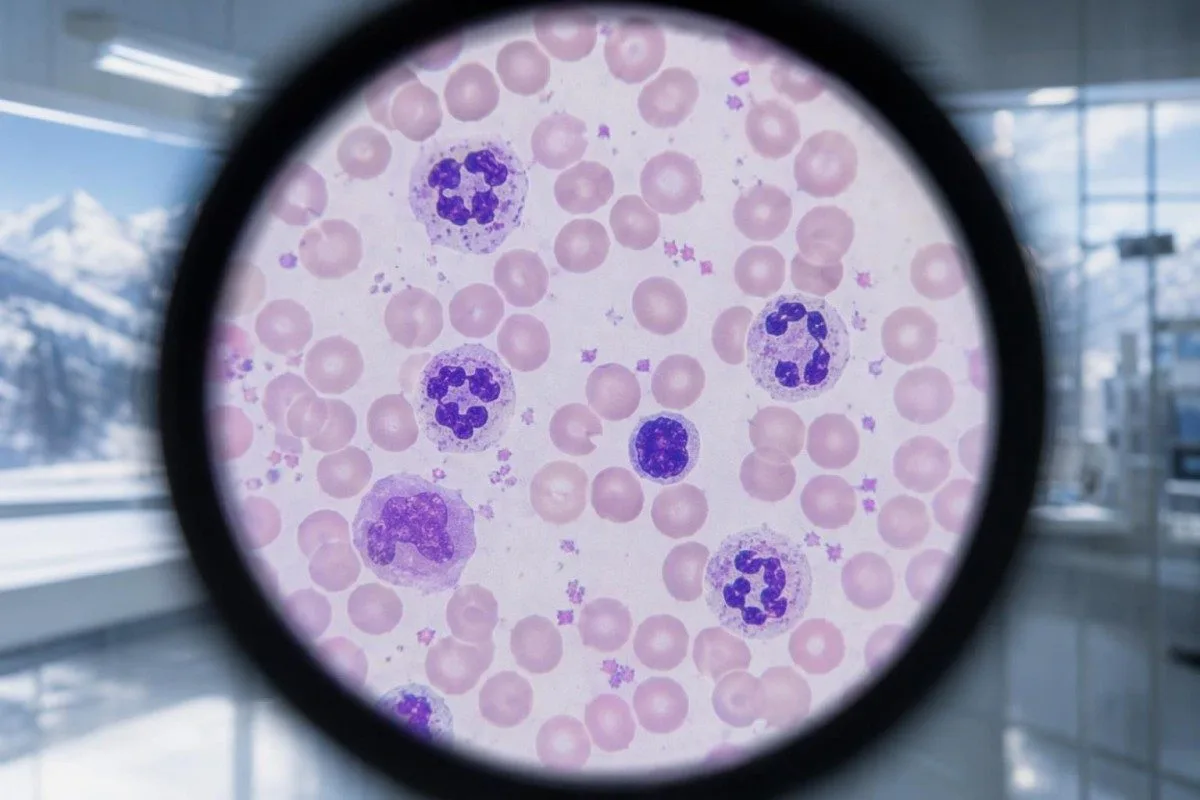
Modern hematology analyzers usually count far more cells than a human can count manually, so the automated neutrophil and lymphocyte percentages are often statistically tighter. A 100-cell manual count that reports lymphocytes at 5% has a rough 95% confidence interval of about 2–11%, which is why tiny manual percentages should not be overinterpreted.
The International Consensus Group for Hematology Review proposed action criteria for when automated CBC and WBC differential results should be reviewed by a human, including suspect flags and delta checks against prior results (Barnes et al., 2005). Those rules vary by lab because pediatric oncology, emergency medicine, and routine primary-care specimens have different risk tolerance.
The instrument is not thinking like a doctor. It is pattern matching. For a deeper look at what lab machines do versus interpretation tools, see our guide to blood test analyzers, and for Kantesti’s clinical governance approach, our medical validation page documents how we treat flagged outputs.
A machine flag is not a diagnosis. In my experience, around the most useful flags are the humble ones: platelet clumps, NRBC present, immature granulocytes, blast flag, and atypical lymphocyte flag. Each changes the next step more than a single mildly high percentage does.
What a manual smear review adds beyond the numbers
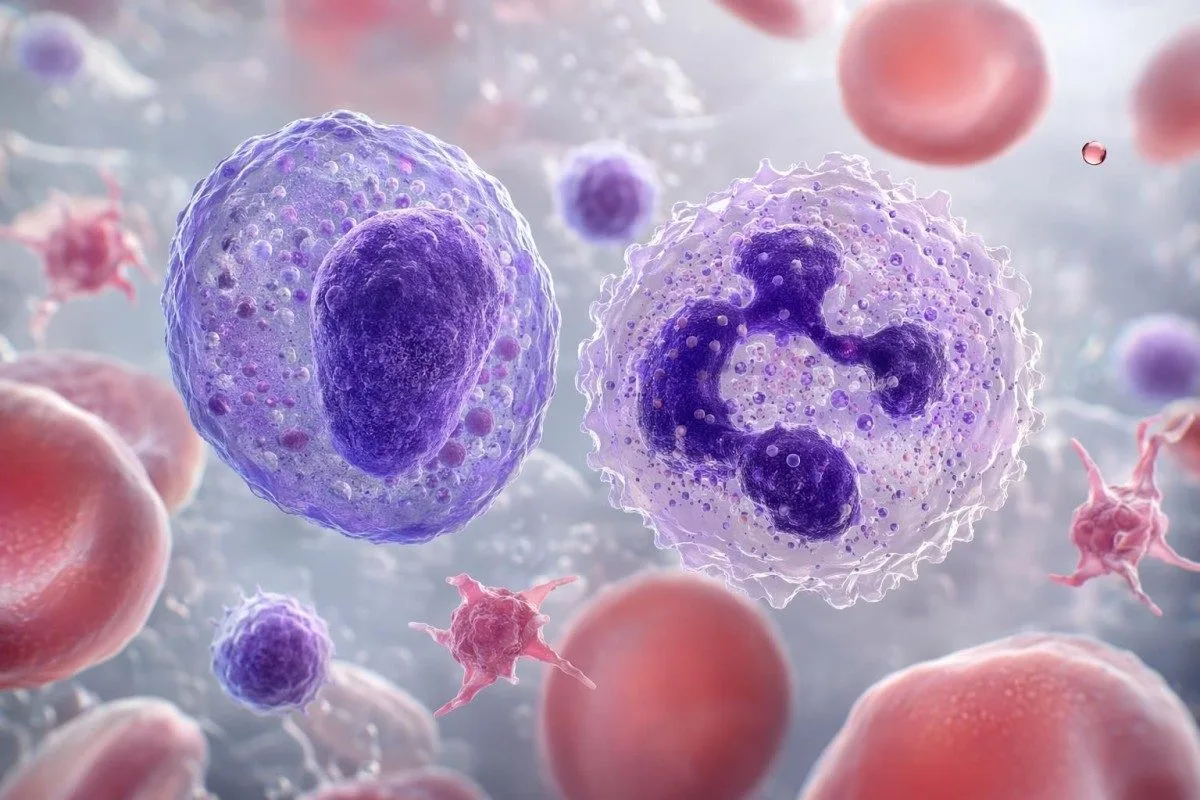
A manual smear review adds morphology: cell shape, maturity, granulation, clumping, inclusions, and the visual relationship between white cells, red cells, and platelets. Automated results answer how many; manual review answers what they look like.
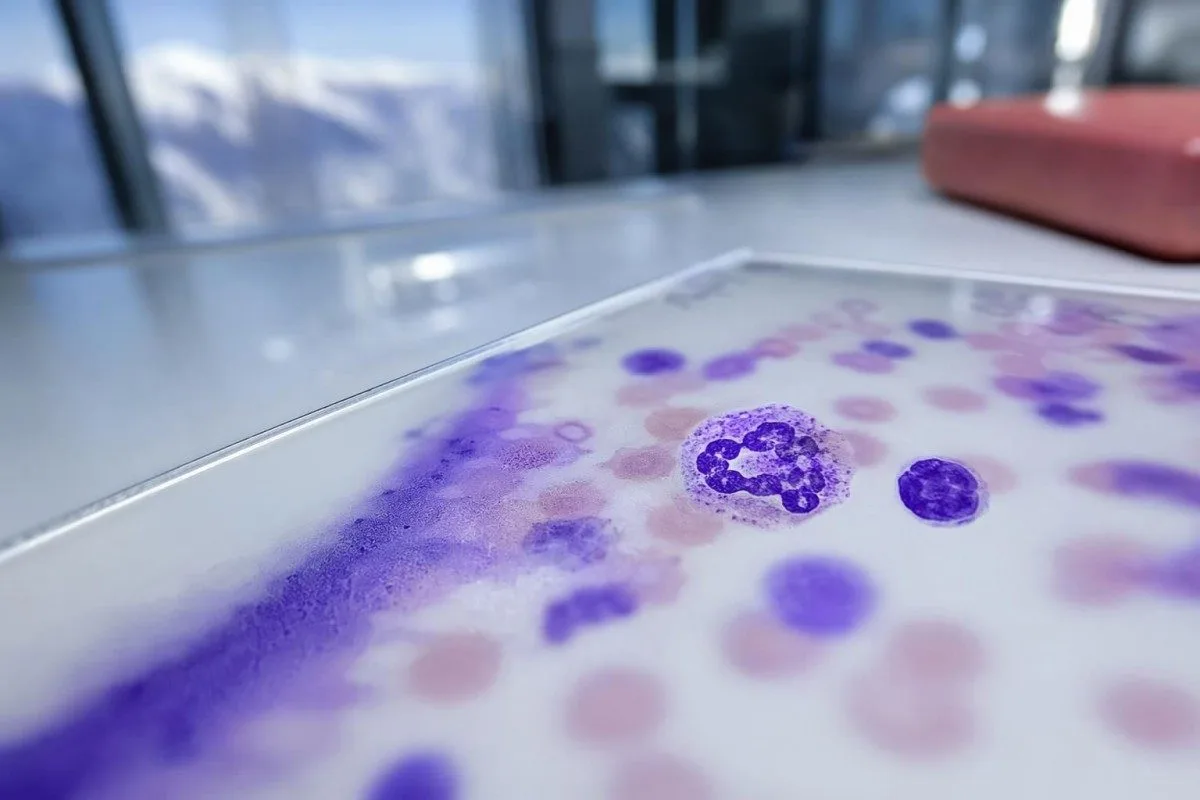
Barbara Bain’s New England Journal of Medicine review on diagnosis from the blood smear remains one of the clearest reminders that morphology can redirect care even when numerical counts seem modest (Bain, 2005). A smear can show toxic granulation in neutrophils, reactive lymphocytes after viral infection, or schistocytes in a hemolysis pattern.
Manual review is not more precise for every percentage. If a technologist counts 100 white cells, each cell equals 1%; if 200 cells are counted, each cell equals 0.5%. That matters when a report lists basophils at 1% or blasts at 1%, because the clinical weight of those findings depends on confirmation and context.
Some reports hide the most useful clue in a small note such as smear reviewed, slide review, manual diff, or pathologist review recommended. Our blood test abbreviations guide explains these report flags because patients often miss them when scanning only high and low arrows.
Here is a small but real-world example. A platelet count of 78 × 10^9/L with a note saying platelet clumping seen may be a collection artifact, while the same platelet count with giant platelets, anemia, and schistocytes is a very different conversation.
Why neutrophil and lymphocyte percentages can disagree
Neutrophils and lymphocytes can disagree between automated and manual differentials because the analyzer classifies cells by signal patterns, while the human reviewer classifies cells by appearance. The absolute count usually carries more clinical meaning than the percentage.
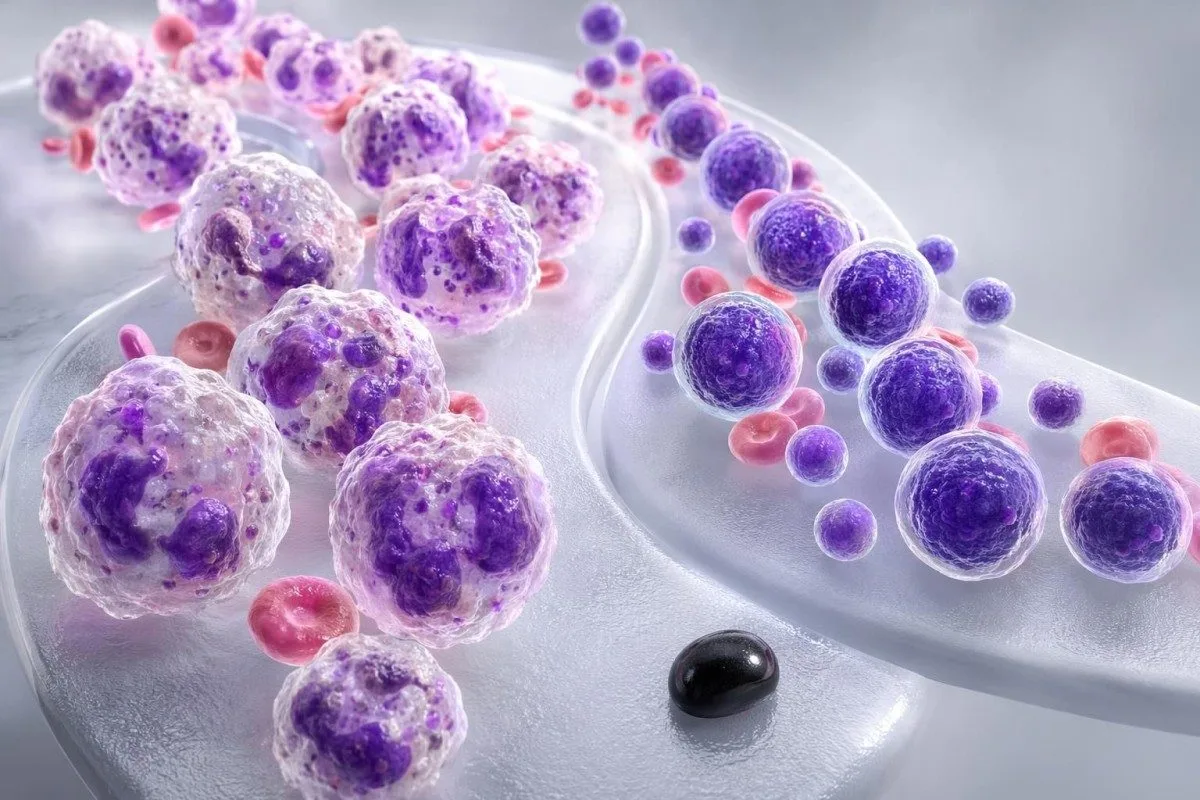
An adult absolute neutrophil count, or ANC, is commonly about 1.5–7.5 × 10^9/L. An ANC below 0.5 × 10^9/L is severe neutropenia and raises infection risk, even if the neutrophil percentage does not look terrifying on the printed report.
An adult absolute lymphocyte count, or ALC, is commonly about 1.0–4.0 × 10^9/L. A lymphocyte percentage of 52% can be normal if the WBC is 4.2 × 10^9/L and the ALC is 2.2 × 10^9/L; this is the pattern we explain in our article on high lymphocyte percent.
The neutrophil-to-lymphocyte ratio is sometimes used as a rough inflammation or stress marker, but it is not diagnostic by itself. Our deeper guide on neutrophils versus lymphocytes explains why a ratio of 8 after surgery can mean something very different from a ratio of 8 with fever and hypotension.
Some European labs use slightly different adult cutoffs for neutropenia, and ethnicity can affect baseline neutrophil counts. I am cautious with a stable ANC of 1.2 × 10^9/L in a well patient with years of similar results; I am not cautious with a new ANC of 0.4 × 10^9/L plus mouth ulcers.
Flagged cells that need follow-up after a blood differential
The flagged cells that most often need follow-up are blasts, promyelocytes, nucleated red cells in adults, schistocytes, atypical lymphocytes, immature granulocytes, plasma cells, platelet clumps, giant platelets, and suspected parasites. The urgency depends on the count pattern and the patient’s symptoms.

Blasts are never a routine finding in adult peripheral blood. Even a 1% blast report should be confirmed by expert review, because the next steps may include repeat CBC, peripheral smear interpretation by a hematopathologist, flow cytometry, and sometimes bone marrow assessment.
Immature granulocytes can appear with bacterial infection, tissue stress, pregnancy, corticosteroid use, marrow recovery, or myeloid disease. Our article on immature granulocytes explains why 0.3% in a recovering infection is not the same as 8% with a WBC of 45 × 10^9/L.
The ICSH recommendations standardized naming and grading of blood cell morphology so that terms like schistocyte, spherocyte, target cell, and toxic granulation mean the same thing across laboratories (Palmer et al., 2015). Schistocytes at or above 1% are especially important when platelets are low or creatinine is rising.
Persistent lymphocytosis can be reactive or clonal. When I review a report showing ALC 7.8 × 10^9/L for 4 months with smudge cells or abnormal lymphocyte morphology, I think about the patterns described in our leukemia CBC guide, while still remembering that many viral illnesses temporarily mimic scary patterns.
False alarms from specimen problems and counting limits
False alarms happen when the sample is clotted, too old, underfilled, poorly mixed, diluted by IV fluid, affected by platelet clumping, or contains fragile cells that break during processing. These issues can distort the automated differential and the platelet count before disease is even considered.
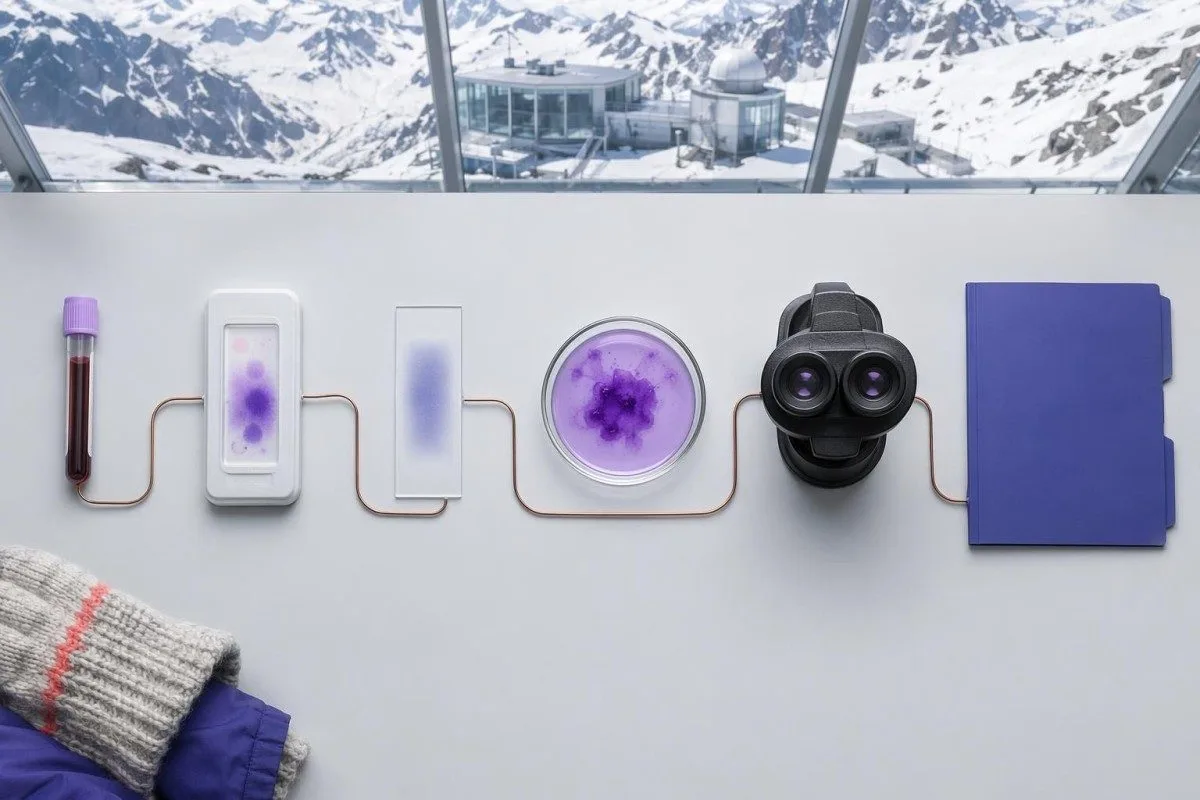
EDTA-dependent platelet clumping is one of the classic traps. A platelet count of 82 × 10^9/L may become 238 × 10^9/L when repeated in a citrate tube, which is why a smear comment can prevent a patient from being mislabeled with thrombocytopenia.
Old samples create another problem. Neutrophils can develop degenerative nuclear changes after prolonged storage, and fragile lymphocytes may produce smudge-like artifacts. If your CBC was processed more than 24 hours after collection, the morphology comment deserves extra caution.
For platelet interpretation, numbers below 150 × 10^9/L are generally called low, but the first question is whether the count is real. Our guide to the normal platelet range explains why clumps, giant platelets, and analyzer limits can all alter the reported number.
The phrase normal range also misleads patients because each lab validates its own intervals. We wrote about this in blood test normal range, and CBC differential interpretation is a perfect example: the same 0.11 × 10^9/L basophil count may be flagged by one lab and ignored by another.
When a differential discrepancy is urgent versus routine
A blood differential discrepancy is urgent when it appears with fever, severe neutropenia, blasts, schistocytes, very high WBC, rapidly falling hemoglobin, low platelets, confusion, chest pain, shortness of breath, or kidney injury. Mild percentage differences without symptoms are often repeat-and-review situations.

Fever with ANC below 0.5 × 10^9/L should be treated as urgent because the body may not mount a strong inflammatory response. This matters after chemotherapy, immune-suppressing drugs, transplant medicines, and some severe viral infections.
A WBC above 50 × 10^9/L is not automatically cancer, but it deserves same-day clinical interpretation if new, unexplained, or paired with immature cells. Infection, steroids, severe inflammation, pregnancy-related stress, and myeloid disorders can all sit in that range; the smear often separates them.
If the clinical question is infection, the CBC differential should be interpreted with CRP, procalcitonin, lactate, cultures, and the actual exam. Our infection blood test article explains why a high neutrophil count alone is less useful than the whole pattern.
For patients reading results at midnight, I suggest checking whether the report contains a true critical value. Our guide to critical blood results lists examples where waiting several days is not sensible.
Children, pregnancy, athletes, and older adults need different context
Children, pregnancy, endurance training, older age, ethnicity, and immune-suppressing medicines change how a blood differential should be read. The same lymphocyte percentage or neutrophil count can be normal in one group and concerning in another.
Young children often run higher lymphocyte percentages than adults. A lymphocyte-predominant differential that would look odd in a 55-year-old may be ordinary in a toddler, which is why pediatric reference intervals must be age-specific.
Pregnancy commonly raises WBC and neutrophil counts, especially in the third trimester and around delivery. Our prenatal blood tests guide covers why pregnancy CBCs are not judged by the same mental checklist used for a non-pregnant adult.
Newborns are their own world. Nucleated red cells can be seen around birth, and WBC ranges shift quickly in the first days of life; our newborn blood tests article gives the timing context that adult lab ranges simply cannot provide.
Older adults deserve trend-based reading. A stable ALC of 4.4 × 10^9/L for 6 years is a different signal from a rise from 1.8 to 5.9 × 10^9/L in 9 months, especially if lymph nodes, night sweats, weight loss, or anemia appear.
How Kantesti AI reads automated and manual differential patterns
Kantesti AI interprets automated and manual differential results by combining absolute counts, percentages, analyzer flags, smear comments, prior trends, age, sex, pregnancy status when provided, medications, and the rest of the CBC. The goal is not to replace the lab; it is to translate the lab’s signal into safer next questions.
As of April 27, 2026, Kantesti has supported users in 127+ countries and 75+ languages, with a 2.78T-parameter Health AI designed for blood test interpretation. When a CBC report includes both automated and manual values, our system does not average them blindly; it asks which result is more clinically trustworthy for that specific question.
Kantesti’s neural network pays close attention to language such as manual diff performed, slide reviewed, pathologist review, left shift, atypical lymphs, NRBC, and platelet clumps. Our biomarkers guide includes thousands of marker definitions, but CBC flags require more than definitions; they require pattern logic.
Our doctors and reviewers, including the clinicians listed on the medical advisory board, push for conservative wording when a result could represent malignancy, severe infection, or artifact. Thomas Klein, MD, reviews examples where overcalling a benign viral smear can harm patients almost as much as missing a serious one.
Kantesti is described in more detail on our About Us page, and you can use our platform to upload a CBC PDF or photo. We still advise urgent care for fever with severe neutropenia, suspected blasts, or schistocyte patterns because no app should slow emergency evaluation.
A practical checklist before acting on mismatched results
Before acting on mismatched automated and manual blood differential results, check the absolute counts, smear comments, collection quality, prior CBC trend, symptoms, medications, and whether the lab recommended pathologist review. That checklist prevents both panic and dangerous delay.

First, convert percentages into absolute counts if your report does not show them. A neutrophil percentage of 80% means very different things at WBC 3.0 × 10^9/L versus WBC 24.0 × 10^9/L.
Second, compare with prior results. A single WBC of 12.2 × 10^9/L after a steroid injection may be less meaningful than a steady rise from 6.0 to 13.5 × 10^9/L over 18 months; our blood test comparison article shows how to spot real trends.
Third, read the comments line by line. If your PDF is hard to parse, our blood test PDF upload guide explains how image quality affects interpretation, especially when flags are printed in tiny footnotes.
If you want a structured read, upload your CBC to free blood test analysis. Most patients find the value is not just seeing what is high or low; it is learning which mismatch can wait for a repeat CBC and which one should be discussed today.
Kantesti research publications and validation notes
Kantesti’s research section documents how our AI blood test interpretation work is evaluated, including clinical benchmarking and cross-country validation. For a blood differential, this matters because the hard cases are not normal CBCs; they are flagged, contradictory, or artifact-prone reports.

Kantesti LTD. (2026). Clinical Validation of the Kantesti AI Engine (2.78T) on 100,000 Anonymised Blood Test Cases Across 127 Countries: A Pre-Registered, Rubric-Based, Population-Scale Benchmark Including Hyperdiagnosis Trap Cases — V11 Second Update. Figshare. https://doi.org/10.6084/m9.figshare.32095435. ResearchGate: https://www.researchgate.net/search/publication?q=Clinical%20Validation%20of%20the%20Kantesti%20AI%20Engine. Academia.edu: https://www.academia.edu/search?q=Clinical%20Validation%20of%20the%20Kantesti%20AI%20Engine.
Kantesti LTD. (2026). Serum Proteins Guide: Globulins, Albumin & A/G Ratio Blood Test. Zenodo. https://doi.org/10.5281/zenodo.18316300. ResearchGate: https://www.researchgate.net/search/publication?q=Serum%20Proteins%20Guide%20Globulins%20Albumin%20A%2FG%20Ratio%20Blood%20Test. Academia.edu: https://www.academia.edu/search?q=Serum%20Proteins%20Guide%20Globulins%20Albumin%20A%2FG%20Ratio%20Blood%20Test.
Our clinical benchmark gives more context on how we test interpretation quality across medical specialties. I care about this for CBC differentials because a safe system must identify both obvious red flags and quieter traps such as pseudothrombocytopenia, relative lymphocytosis, and manual-versus-automated disagreements.
Frequently Asked Questions
Why did my lab change my blood differential to manual review?
A lab changes a blood differential to manual review when the automated analyzer detects a suspect pattern or a result that needs visual confirmation. Common triggers include possible blasts, immature granulocytes, nucleated red cells, atypical lymphocytes, platelet clumps, very high or very low WBC counts, or inconsistent CBC results. Manual review is a quality-control step and does not automatically mean cancer or a dangerous infection.
Is a manual differential more accurate than an automated differential?
A manual differential is better for judging cell appearance, while an automated differential is usually more precise for counting mature cell groups. A human often counts 100 or 200 cells, so a 1% finding may represent only 1 or 2 observed cells, whereas an analyzer may classify thousands of events. The best result is often the combination: automated precision plus manual morphology review.
Which blood differential flags are most concerning?
The most concerning blood differential flags are confirmed blasts, schistocytes at or above 1%, nucleated red cells in adults, suspected parasites, marked immature granulocytes, and platelet clumps with a very low platelet count. These flags need context from hemoglobin, platelets, creatinine, symptoms, and prior CBC results. Fever with ANC below 0.5 × 10^9/L should be treated as urgent.
Why are my neutrophils high but lymphocytes low?
High neutrophils with low lymphocytes often reflects physiologic stress, bacterial infection, corticosteroid exposure, recent surgery, smoking, intense exercise, or acute inflammation. The pattern is best judged by absolute counts: adult neutrophils are commonly about 1.5–7.5 × 10^9/L and lymphocytes about 1.0–4.0 × 10^9/L. A high percentage alone can mislead if the total WBC count is abnormal.
What does atypical lymphocytes mean on a blood differential?
Atypical lymphocytes are lymphocytes that look reactive or unusual under manual review, often after viral infections such as Epstein-Barr virus, cytomegalovirus, or other immune stimulation. A small transient percentage can be benign, but prominent atypical lymphocytes, an absolute lymphocyte count above 4.0 × 10^9/L, or persistence beyond 3 months should be discussed with a clinician. Follow-up may include repeat CBC, smear review, viral testing, or flow cytometry.
Can platelet clumps make my platelet count look falsely low?
Yes, platelet clumps can make an automated platelet count look falsely low, especially with EDTA-dependent clumping. A reported platelet count below 150 × 10^9/L should be interpreted with the smear comment if clumps are present. Many labs repeat the count using a citrate tube or estimate platelets on a manual slide before diagnosing true thrombocytopenia.
Should I repeat a CBC after a manual differential discrepancy?
A repeat CBC is often useful when the discrepancy could reflect sample quality, recent infection, medication exposure, or a borderline abnormality. Many clinicians repeat within days to weeks for mild unexplained findings, but same-day review is safer for blasts, severe neutropenia below 0.5 × 10^9/L, schistocytes, rapidly falling hemoglobin, or very low platelets. Prior trends are crucial because a stable lifelong pattern is less concerning than a rapid new change.
How is flow cytometry different from a manual blood differential?
A manual differential examines cells under a microscope, while flow cytometry uses cell markers to identify specific cell populations. Your clinician may request it when unusual lymphocytes persist or abnormal cells need further identification; a flag alone does not mean cancer.
Can dehydration change my blood differential results?
Dehydration can concentrate the blood and make the total white-cell count, hemoglobin, and hematocrit look higher, but it usually does not cause striking abnormal cell shapes. Maintain normal fluid intake before a nonurgent repeat test and have persistent abnormalities reviewed.
Do I need to fast before repeating a CBC differential?
No. Fasting is usually not needed for a CBC differential, and eating does not meaningfully change the main white cell categories. Follow any instructions if other blood tests are being drawn at the same visit.
Can a recent steroid dose or infection make the automated and manual differential look different?
Yes. Corticosteroids, acute stress, and early infection can temporarily raise neutrophils and lower lymphocyte percentages, sometimes triggering flags. Tell your clinician about medicines taken in the past few days and whether symptoms are improving or worsening.
Get AI-Powered Blood Test Analysis Today
Join over 2 million users worldwide who trust Kantesti for instant, accurate lab test analysis. Upload your blood test results and receive comprehensive interpretation of 15,000+ biomarkers in seconds.
📚 Referenced Research Publications
Klein, T., Mitchell, S., & Weber, H. (2026). Clinical Validation of the Kantesti AI Engine (2.78T) on 100,000 Anonymised Blood Test Cases Across 127 Countries: A Pre-Registered, Rubric-Based, Population-Scale Benchmark Including Hyperdiagnosis Trap Cases — V11 Second Update. Kantesti AI Medical Research.
Klein, T., Mitchell, S., & Weber, H. (2026). Serum Proteins Guide: Globulins, Albumin & A/G Ratio Blood Test. Kantesti AI Medical Research.
📖 External Medical References
Bain BJ (2005). Diagnosis from the blood smear. New England Journal of Medicine.
Barnes PW et al. (2005). The International Consensus Group for Hematology Review: suggested criteria for action following automated CBC and WBC differential analysis. Laboratory Hematology.



⚕️ Medical Disclaimer
This article is for educational purposes only and does not constitute medical advice. Always consult a qualified healthcare provider for diagnosis and treatment decisions.
E-E-A-T Trust Signals
Experience
Physician-led clinical review of lab interpretation workflows.
Expertise
Laboratory medicine focus on how biomarkers behave in clinical context.
Authoritativeness
Written by Dr. Thomas Klein with review by Dr. Sarah Mitchell and Prof. Dr. Hans Weber.
Trustworthiness
Evidence-based interpretation with clear follow-up pathways to reduce alarm.