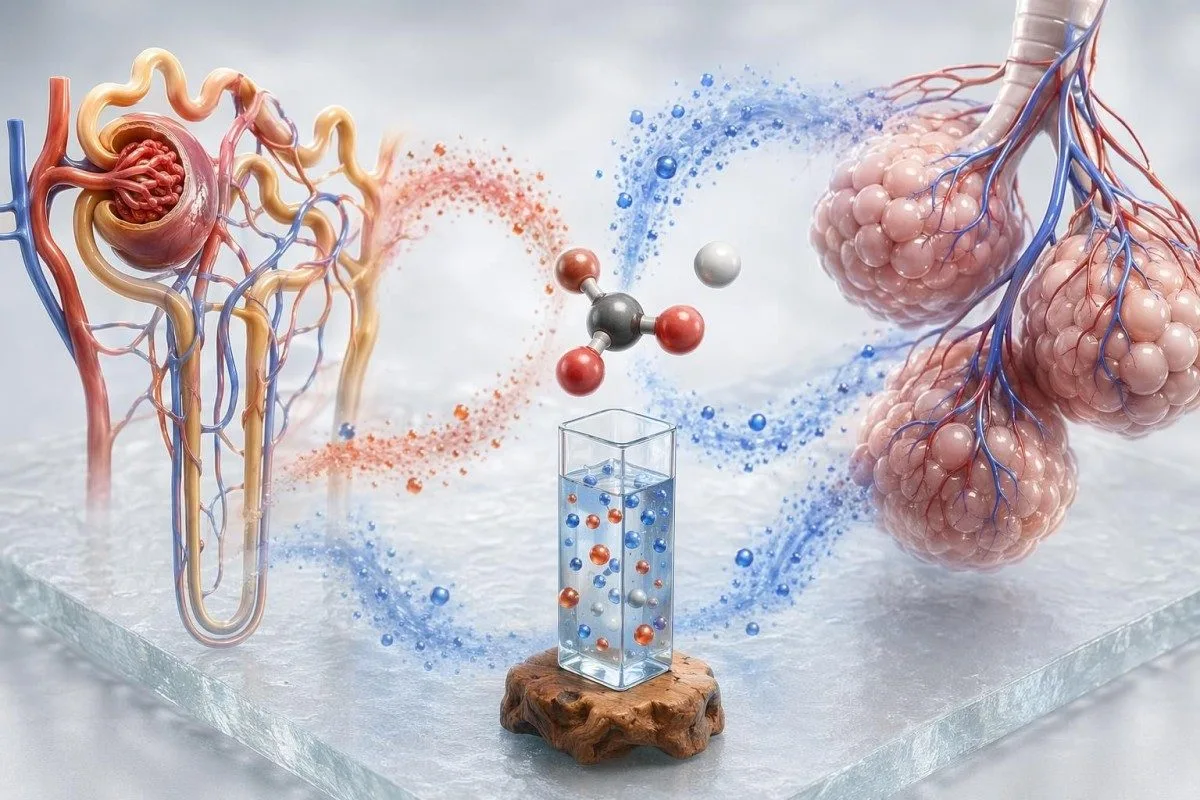
The CO2 line on a BMP blood test is usually your bicarbonate level — a quiet clue about acid-base balance, hydration, lungs, and kidneys.



- CO2 on a basic metabolic panel usually means total CO2, which is mostly bicarbonate; most adult reference ranges are about 22–29 mmol/L.
- Low CO2 under 22 mmol/L can suggest metabolic acidosis, diarrhea-related bicarbonate loss, kidney acid-handling problems, diabetic ketoacidosis, or compensation for over-breathing.
- CO2 under 18 mmol/L deserves prompt clinical review, especially with high glucose, vomiting, fast breathing, confusion, high potassium, or an elevated anion gap.
- High CO2 above 30 mmol/L often points toward metabolic alkalosis from vomiting, diuretics, low chloride, low potassium, or kidney compensation for chronic CO2 retention.
- Anion gap is calculated as sodium minus chloride plus bicarbonate; a typical adult range is about 8–12 mmol/L when potassium is excluded.
- Chloride patterns matter because low CO2 with high chloride suggests non-gap metabolic acidosis, while high CO2 with low chloride often fits vomiting or diuretic alkalosis.
- Kidney links are real: persistent bicarbonate below 22 mmol/L in chronic kidney disease is associated with faster kidney decline in observational data.
- Repeat testing is sensible when CO2 is only 1–2 mmol/L outside range and you feel well, because delayed processing can falsely lower total CO2 by roughly 2–6 mmol/L.
- Urgent follow-up is warranted for CO2 below 12 mmol/L, CO2 above 40 mmol/L, or any abnormal CO2 paired with severe symptoms or potassium below 3.0 or above 6.0 mmol/L.
What CO2 Means on a BMP Blood Test
On a basic metabolic panel, CO2 usually means serum bicarbonate, not oxygen or lung CO2 measured on a breathing test. A normal adult CO2 is typically 22–29 mmol/L. Low CO2 suggests acid buildup or bicarbonate loss; high CO2 suggests alkalosis or kidney compensation for chronic CO2 retention. Values below 18 or above 35 mmol/L need context fast.
The CO2 value on a BMP blood test is reported as total CO2, and about 95% of that number reflects bicarbonate in serum. When I review a metabolic panel, I read CO2 alongside sodium, chloride, potassium, glucose, BUN, creatinine, and the anion gap — never as a lonely number.
A patient once sent us a panel with CO2 19 mmol/L and felt reassured because oxygen saturation was 99%. That was the wrong comparison; pulse oximetry measures oxygen in the arteries, while BMP CO2 estimates the bicarbonate buffer in the blood chemistry tube.
Kantesti AI flags this distinction early because patients often mix up CO2, oxygen saturation, and arterial blood gas results. You can upload a report to Kantesti AI and compare the CO2 value with the rest of the BMP blood test pattern in about 60 seconds.
Normal CO2 Range and When the Number Becomes Actionable
The usual adult CO2 range on a basic metabolic panel is 22–29 mmol/L, although some laboratories use 20–31 mmol/L or 21–32 mmol/L. A CO2 result 1 mmol/L outside range is often less concerning than a result that changes by 5–8 mmol/L from your own baseline.

A CO2 of 21 mmol/L in a well person after a hard workout is not the same clinical problem as CO2 21 mmol/L with glucose 360 mg/dL, ketones, and vomiting. The number has to be placed into the metabolic panel pattern.
Some European labs set the lower limit at 21 mmol/L, while many US labs use 22 mmol/L. That 1-point difference explains a surprising number of “abnormal” flags that disappear when the same specimen is interpreted against another lab’s interval.
At Kantesti, our AI checks the lab’s printed reference range and your prior values if you upload older results. That matters because a personal baseline of 28 falling to 22 mmol/L may be more informative than a single CO2 of 21 in someone who always runs low-normal.
Low CO2: Acid Buildup, Bicarbonate Loss, or Compensation
Low CO2 on a BMP most often means low bicarbonate from metabolic acidosis, bicarbonate loss through the gut, kidney acid-handling problems, or compensation for respiratory alkalosis. A CO2 below 18 mmol/L should be interpreted the same day when it is new or paired with symptoms.

The classic high-risk pattern is CO2 ≤18 mmol/L, glucose often above 250 mg/dL, a high anion gap, and ketones — a combination that raises concern for diabetic ketoacidosis. The 2024 consensus report on hyperglycemic crises describes DKA using hyperglycemia, ketones, and acidosis, with bicarbonate ≤18 mmol/L commonly used for severity staging (Umpierrez et al., 2024).
Low CO2 with diarrhea is different. In that pattern, bicarbonate leaves through stool, chloride often rises above 108 mmol/L, and the anion gap may stay near 8–12 mmol/L; I see this after viral gastroenteritis, laxative overuse, and inflammatory bowel flares.
Kidney-related low CO2 can be subtle before creatinine looks alarming. If CO2 stays below 22 mmol/L on two tests weeks apart, especially with eGFR under 60 mL/min/1.73 m², it is worth reading our kidney blood test guide and discussing acid-base handling with a clinician.
A clinical pattern I do not ignore
A 29-year-old patient once uploaded a BMP showing CO2 14 mmol/L, glucose 318 mg/dL, sodium 132 mmol/L, and anion gap 24 mmol/L. The CO2 alone looked like a small line on the report; the pattern was a same-day urgent care problem.
High CO2: Alkalosis, Vomiting, Diuretics, and Chronic Retention
High CO2 on a BMP usually means high bicarbonate, most often from metabolic alkalosis or kidney compensation for chronic respiratory CO2 retention. CO2 above 30 mmol/L becomes more meaningful when chloride is low, potassium is low, or the patient uses loop or thiazide diuretics.
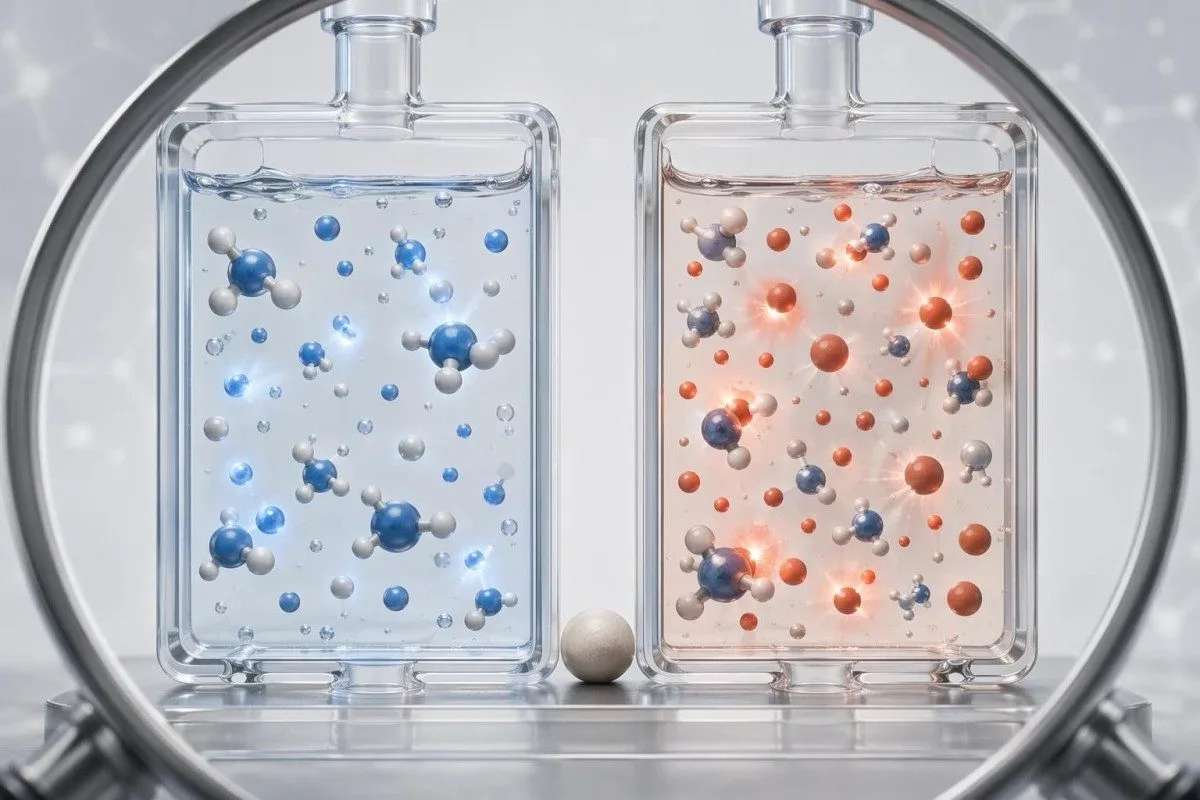
Vomiting can push CO2 to 32–38 mmol/L because stomach acid is lost and the kidneys retain bicarbonate. The clue I look for is low chloride, often below 98 mmol/L, and sometimes potassium below 3.5 mmol/L.
Diuretics create a similar pattern through salt and fluid loss. A 68-year-old on furosemide once showed CO2 35 mmol/L, chloride 88 mmol/L, potassium 3.1 mmol/L, and BUN/creatinine ratio 26; the story was not mysterious once the medication list was checked.
Chronic lung disease can also raise bicarbonate because the kidneys compensate for retained CO2 over days. A BMP cannot prove chronic respiratory acidosis; it can only hint, so persistent CO2 33–36 mmol/L with shortness of breath may need a clinician to consider an arterial or venous blood gas.
Use the Anion Gap and Chloride Before You Panic
The anion gap separates low CO2 into high-gap and normal-gap patterns. A typical anion gap is about 8–12 mmol/L when calculated as sodium minus chloride plus bicarbonate, but albumin and lab methods can shift the expected range.

The formula most BMP reports use is anion gap = sodium − (chloride + bicarbonate). If sodium is 140, chloride 104, and CO2 24, the gap is 12 mmol/L, which is usually normal in adults.
Low albumin can hide a dangerous anion gap. A practical correction is to add about 2.5 mmol/L to the gap for every 1 g/dL albumin below 4.0 g/dL, so a reported gap of 11 with albumin 2.0 may behave more like 16.
Kraut and Madias’ review in Nature Reviews Nephrology remains a useful clinical framework: high-gap acidosis suggests unmeasured acids, while normal-gap acidosis often points to bicarbonate loss or impaired renal acid excretion (Kraut & Madias, 2010). For a deeper walk-through, see our anion gap guide.
Dehydration Patterns: CO2 Rarely Moves Alone
Dehydration can raise or lower CO2 depending on the cause of fluid loss. Vomiting and diuretics often raise CO2, while diarrhea often lowers CO2; the deciding clues are BUN, creatinine, sodium, chloride, and potassium.

A BUN/creatinine ratio above 20:1 can suggest reduced kidney perfusion from volume depletion, although high protein intake and gastrointestinal bleeding can also raise BUN. Our separate guide on BUN meaning explains why that ratio is useful but imperfect.
Diarrhea classically gives low CO2, high-normal chloride, and sometimes low potassium. Vomiting classically gives high CO2, low chloride, and low potassium; the two patterns are opposite even though both patients may say, “I’m dehydrated.”
Sodium helps refine the picture. Hypernatremia above 145 mmol/L suggests free-water deficit, while hyponatremia below 135 mmol/L with high CO2 may occur after vomiting plus excess plain-water intake; our sodium range guide covers those traps.
Kidney Links: CKD and Renal Tubular Acidosis
The kidneys maintain bicarbonate by reclaiming filtered bicarbonate and excreting acid. Persistent CO2 below 22 mmol/L in someone with eGFR below 60 mL/min/1.73 m² deserves follow-up because chronic metabolic acidosis can accompany kidney disease.
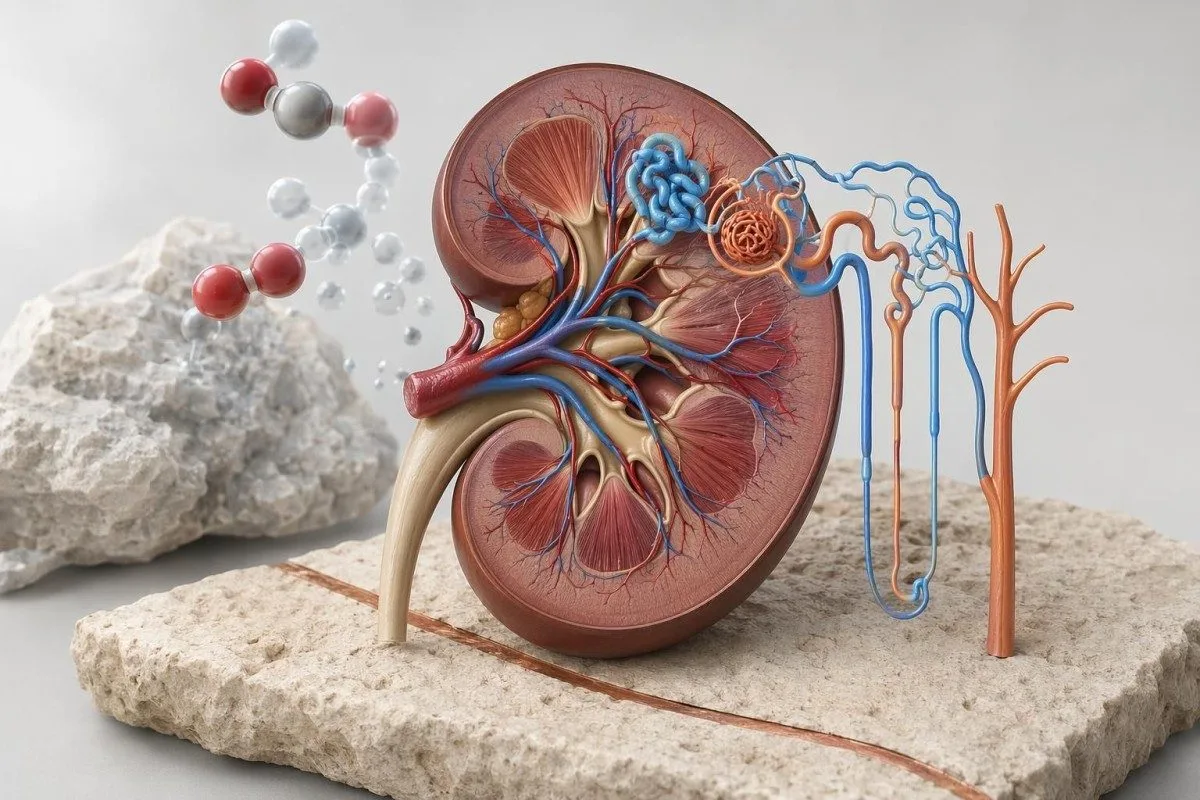
KDIGO’s 2024 CKD guideline discusses metabolic acidosis as a complication of chronic kidney disease, and many nephrologists investigate persistent bicarbonate below 22 mmol/L rather than reacting to a single mild dip (KDIGO CKD Work Group, 2024). The evidence on exactly when to treat is mixed, but repeated low values are not just a lab curiosity.
Renal tubular acidosis can produce low CO2 with relatively preserved creatinine, particularly in younger patients or those with autoimmune disease, certain medicines, or kidney stones. In distal renal tubular acidosis, urine may stay inappropriately alkaline while serum CO2 is low — a detail the BMP alone cannot show.
If your CO2 is low and creatinine is high, compare eGFR by age rather than staring only at the creatinine flag. Our eGFR by age article explains why a creatinine of 1.2 mg/dL can mean different things in a 30-year-old weightlifter and an 82-year-old woman.
Potassium, Glucose, and Calcium Change the CO2 Story
CO2 interpretation becomes urgent when potassium, glucose, or calcium are also abnormal. Potassium below 3.0 mmol/L or above 6.0 mmol/L with an abnormal CO2 can signal an unstable acid-base or kidney pattern that needs rapid clinical review.
High potassium plus low CO2 raises concern for kidney failure, severe acidosis, adrenal problems, or medication effects such as ACE inhibitors, ARBs, spironolactone, or trimethoprim. Our potassium emergency guide gives practical thresholds for when a repeat test is not enough.
Low potassium plus high CO2 points more toward metabolic alkalosis. I pay particular attention when potassium is 2.8–3.2 mmol/L, because muscle weakness and rhythm problems can occur even if the patient says they “just feel tired.”
Glucose changes the urgency. A random glucose above 250 mg/dL with CO2 ≤18 mmol/L and symptoms such as vomiting or deep breathing is a same-day assessment pattern, not a lifestyle-coaching pattern; our diabetes blood test guide explains how glucose, A1c, and acute illness fit together.
When Abnormal CO2 Needs Urgent Follow-Up
Abnormal CO2 needs urgent follow-up when the value is very low, very high, changing quickly, or paired with concerning symptoms. CO2 below 12 mmol/L, CO2 above 40 mmol/L, confusion, chest pain, severe weakness, fast breathing, or major potassium changes should not wait for routine review.
Adrogué and Madias described life-threatening acid-base disorders as problems of both chemistry and physiology, not just abnormal numbers on paper (Adrogué & Madias, 1998). In practice, I worry most when CO2 is abnormal and the patient is breathing fast, confused, fainting, vomiting repeatedly, or unable to keep fluids down.
A venous or arterial blood gas may be needed when symptoms and BMP CO2 do not match. Blood gas testing gives pH and measured PCO2, which a basic metabolic panel does not provide; the BMP only gives the bicarbonate side of the buffer system.
If a lab portal flags CO2 but you feel well, look at the size of the abnormality first. For borderline values such as 21 or 30 mmol/L, a repeat metabolic panel within days to weeks may be reasonable; for critical patterns, use the urgent thresholds in our critical values guide.
False Low CO2, Medicines, and Lab Handling Traps
A mildly abnormal CO2 can be caused by specimen handling, fasting, exercise, or medication effects. Delayed processing or an uncapped tube can falsely lower total CO2 by roughly 2–6 mmol/L, which is enough to turn a normal 23 into a flagged 20.
Total CO2 is less stable than many people assume. If a serum tube sits open to air, CO2 can diffuse out, so I treat a surprise CO2 of 19 mmol/L differently when every prior result was 25–27 and the patient is well.
Medicines can move CO2 in predictable directions. Acetazolamide can lower bicarbonate; loop and thiazide diuretics can raise bicarbonate; sodium bicarbonate tablets can raise CO2, with one common 650 mg tablet providing about 7.7 mEq of bicarbonate.
Fasting can nudge acid-base markers in some people, especially with low-carb diets or prolonged exercise. If your abnormal CO2 appeared after fasting, compare it with our fasting blood test rules and repeat under ordinary conditions if your clinician agrees.
How Kantesti Interprets CO2 in the Whole Metabolic Panel
Kantesti AI interprets CO2 by reading it as part of the full BMP pattern, not as an isolated high or low flag. Our platform checks reference range, trend direction, sodium, chloride, potassium, glucose, kidney markers, anion gap, age, sex, and uploaded prior results.
In our analysis of 2M+ blood tests across 127+ countries, the most common CO2 interpretation error is treating a borderline value as a diagnosis. CO2 21 mmol/L with normal anion gap and no symptoms is a different risk category than CO2 21 with creatinine rising and potassium 5.8 mmol/L.
Kantesti’s neural network reviews over 15,000 biomarkers and cross-checks units, lab ranges, and report layout from uploaded PDFs or photos. Our medical review process is described on Medical Validation, and our physicians are listed on the Medical Advisory Board.
If you want a plain-English read of your BMP blood test, upload it to the free blood test analyzer. Kantesti AI is CE Marked and built for HIPAA, GDPR, and ISO 27001-aligned workflows, but urgent symptoms still belong with emergency or same-day clinical care.
Research Notes, Editorial Review, and DOI Publications
This article was medically reviewed for patient education on October 17, 2026 by the Kantesti clinical team. I am Thomas Klein, MD, Chief Medical Officer at Kantesti LTD, and I wrote it to help patients understand when BMP CO2 is a clue versus when it is a warning.

Kantesti LTD is a UK company, Company No. 17090423, and our clinical content is designed for international readers who may see different reference ranges on the same metabolic panel. Our organization and team background are available on About Us, and broader biomarker coverage is indexed in our biomarker guide.
APA: Kantesti AI Research Group. (2026). Clinical Validation of the Kantesti AI Engine (2.78T) on 100,000 Anonymised Blood Test Cases Across 127 Countries: A Pre-Registered, Rubric-Based, Population-Scale Benchmark Including Hyperdiagnosis Trap Cases — V11 Second Update. Figshare. DOI. ResearchGate. Academia.edu.
APA: Kantesti AI Research Group. (2026). Iron Studies Guide: TIBC, Iron Saturation & Binding Capacity. Zenodo. DOI. ResearchGate. Academia.edu.
Frequently Asked Questions
What does CO2 mean on a basic metabolic panel?
CO2 on a basic metabolic panel usually means total carbon dioxide, which is mostly serum bicarbonate. The typical adult range is about 22–29 mmol/L, although some laboratories use 20–31 or 21–32 mmol/L. Low CO2 suggests metabolic acidosis, bicarbonate loss, or respiratory compensation, while high CO2 suggests metabolic alkalosis or compensation for chronic CO2 retention.
Is low CO2 on a BMP the same as low oxygen?
Low CO2 on a BMP is not the same as low oxygen. Pulse oximetry measures oxygen saturation, while BMP CO2 estimates bicarbonate in the blood chemistry sample. A person can have oxygen saturation of 98–100% and still have CO2 of 16–18 mmol/L from metabolic acidosis.
What CO2 level is dangerous on a BMP blood test?
A CO2 below 12 mmol/L or above 40 mmol/L is potentially dangerous and usually deserves urgent clinical assessment. CO2 below 18 mmol/L also needs prompt review if it is new, worsening, or paired with vomiting, fast breathing, confusion, high glucose, kidney changes, or abnormal potassium. Borderline results such as 21 or 30 mmol/L may need repeat testing rather than emergency care if the person feels well.
Can dehydration cause high CO2 on a metabolic panel?
Dehydration can cause high CO2 when fluid loss comes from vomiting, diuretics, or salt depletion that produces metabolic alkalosis. In that pattern, CO2 may rise above 30 mmol/L while chloride falls below about 98 mmol/L and potassium may drop below 3.5 mmol/L. Diarrhea-related dehydration often does the opposite by lowering CO2 through bicarbonate loss.
Why does chloride matter when CO2 is low or high?
Chloride helps separate acid-base patterns on an electrolyte panel. Low CO2 with high chloride, often above 108 mmol/L, suggests normal-gap metabolic acidosis from diarrhea, renal tubular acidosis, or saline effects. High CO2 with low chloride, often below 98 mmol/L, points more toward vomiting, diuretics, or chloride-depletion alkalosis.
Can kidney disease lower CO2 before creatinine is very high?
Kidney disease can lower CO2 before creatinine looks dramatically abnormal because the kidneys may lose acid-excretion capacity gradually. Persistent bicarbonate below 22 mmol/L is common enough in chronic kidney disease that clinicians often repeat the BMP and check eGFR, urine findings, and medications. An eGFR below 60 mL/min/1.73 m² for at least 3 months supports chronic kidney disease when other clinical criteria fit.
Should I repeat an abnormal CO2 result?
Repeating an abnormal CO2 result is often reasonable when the value is only 1–2 mmol/L outside range and you feel well. Delayed processing or exposure of the serum tube to air can falsely lower total CO2 by roughly 2–6 mmol/L. Do not wait for a routine repeat if CO2 is below 18 mmol/L with symptoms, below 12 mmol/L, above 40 mmol/L, or paired with potassium below 3.0 or above 6.0 mmol/L.
Do I need to fast before a BMP CO2 test?
CO2 testing itself usually does not require fasting, but your clinician may request 8–12 hours without food for glucose or other tests ordered together. Plain water is usually allowed; ask how to handle diabetes medicines before fasting.
Can strenuous exercise temporarily lower my CO2 result on a BMP?
Brief, intense exercise can temporarily increase lactic acid and lower bicarbonate, but a persistent low BMP CO2 should not be blamed on exercise alone. Mention recent hard exertion before the blood draw and consider repeating the test when rested if your clinician recommends it.
Can living at high altitude change my BMP CO2 result?
Yes. After several days at high altitude, faster breathing can make the kidneys lower bicarbonate, so BMP CO2 may run mildly low; tell your clinician if you recently traveled above about 8,000 feet, especially if you feel short of breath or unwell.
Does pregnancy affect CO2 on a BMP?
Yes. Pregnancy commonly lowers bicarbonate/CO2 because breathing increases and the kidneys adjust the blood’s buffering system; values around 18–22 mmol/L may occur. Still, vomiting, dehydration, high glucose, ketones, or feeling very unwell should be checked promptly.
Get AI-Powered Blood Test Analysis Today
Join over 2 million users worldwide who trust Kantesti for instant, accurate lab test analysis. Upload your blood test results and receive comprehensive interpretation of 15,000+ biomarkers in seconds.
📚 Referenced Research Publications
Klein, T., Mitchell, S., & Weber, H. (2026). Clinical Validation of the Kantesti AI Engine (2.78T) on 100,000 Anonymised Blood Test Cases Across 127 Countries: A Pre-Registered, Rubric-Based, Population-Scale Benchmark Including Hyperdiagnosis Trap Cases — V11 Second Update. Kantesti AI Medical Research.
Klein, T., Mitchell, S., & Weber, H. (2026). Iron Studies Guide: TIBC, Iron Saturation & Binding Capacity. Kantesti AI Medical Research.
📖 External Medical References
KDIGO CKD Work Group (2024). KDIGO 2024 Clinical Practice Guideline for the Evaluation and Management of Chronic Kidney Disease. Kidney International.
Umpierrez GE et al. (2024). Hyperglycemic Crises in Adults With Diabetes: A Consensus Report. Diabetes Care.






⚕️ Medical Disclaimer
This article is for educational purposes only and does not constitute medical advice. Always consult a qualified healthcare provider for diagnosis and treatment decisions.
E-E-A-T Trust Signals
Experience
Physician-led clinical review of lab interpretation workflows.
Expertise
Laboratory medicine focus on how biomarkers behave in clinical context.
Authoritativeness
Written by Dr. Thomas Klein with review by Dr. Sarah Mitchell and Prof. Dr. Hans Weber.
Trustworthiness
Evidence-based interpretation with clear follow-up pathways to reduce alarm.