
One household can contain three different medical rulebooks: a toddler, a stressed parent and an 82-year-old grandparent rarely share the same normal ranges. The safest digital record keeps them together without blending them.


- Family medical records app means separate profiles for each person, not one shared folder of PDFs.
- Age-specific reference ranges change most for CBC, alkaline phosphatase, creatinine, eGFR, ferritin, thyroid markers and vitamin D.
- HbA1c below 5.7% is usually normal in adults; 5.7–6.4% suggests prediabetes and 6.5% or higher can diagnose diabetes if confirmed.
- eGFR below 60 mL/min/1.73 m² for at least 3 months meets a chronic kidney disease threshold in adults, but the same formula is not used for young children.
- Ferritin below 15–30 ng/mL often suggests low iron stores, but inflammation can make ferritin look falsely reassuring.
- Potassium above 6.0 mmol/L or below 2.8 mmol/L can be urgent, especially with weakness, palpitations or kidney disease.
- Trend analysis is safer than flag-chasing because many lab results move 5–20% from hydration, timing, exercise or analyzer differences.
- Secure sharing should use per-person consent, caregiver access rules and audit trails so a parent’s results are never filed under a child’s name.
What a family lab record app should actually do
A family medical records app should keep each person’s lab reports in a separate profile, display results on one date-ordered timeline, and compare every value with that person’s age, sex, pregnancy status and lab method. With family medical records app support in Kantesti AI, families can upload PDFs or photos, see blood test interpretations in about 60 seconds, and bring cleaner questions to clinicians without mixing up records.
In my clinical work, mixed records cause more confusion than rare diseases. I have seen a parent worry about a child’s creatinine after accidentally reading a grandparent’s report; 1.2 mg/dL means something very different in a 76-year-old man than in a 7-year-old child.
Kantesti AI interprets more than 15,000 biomarkers by reading the result, unit, reference range and patient context together. That matters because a lab flag alone is not a diagnosis; the pattern across CBC, CMP, thyroid, iron and inflammation markers usually tells the safer story.
As of April 29, 2026, families in 127+ countries use our platform in 75+ languages, which is not just a convenience feature. Multilingual lab reports often change decimal separators, units and abbreviations, so a household record system has to preserve the original report while also making the result readable.
A good household timeline should answer three questions before the appointment: whose result is this, has it changed from their own baseline, and is the change large enough to matter clinically? Our deeper guide to blood test history explains why year-over-year context usually beats a single red or green flag.
Why parent, child and senior reference ranges cannot be shared
Age-specific reference ranges exist because children, adults and older adults have different physiology, body size, hormones and kidney filtration. A child’s alkaline phosphatase can be several times an adult value during growth, while an older adult’s creatinine may look normal despite reduced kidney reserve.

The normal WBC range in many adults is roughly 4.0–11.0 ×10⁹/L, while young children may run higher during normal immune development. A family app that applies adult CBC ranges to a toddler can create false alarms that do not help anyone.
Alkaline phosphatase is the classic trap. Adult ALP is often around 40–130 IU/L, but children and adolescents may have values above 300 IU/L from bone growth rather than liver disease; the same number means different biology.
Kantesti AI checks the uploaded lab’s stated range first, then compares the result with age-aware medical context using our biomarker guide. That approach is safer than assuming a universal normal range across a household.
Reference intervals are not moral judgments. They are statistical boundaries, usually the middle 95% of a selected population, and our article on blood test normal ranges shows why 2.5% of healthy people may sit just outside a range by design.
How separate profiles prevent dangerous record mix-ups
Separate profiles prevent record mix-ups by locking each lab report to one named person, date of birth and clinical context. In multi-patient health management, a shared inbox is not enough; the app must keep parent, child and senior timelines distinct even when reports arrive from the same clinic.

The simplest safety rule is boring but powerful: never upload a household’s blood test for entire family into one generic folder. If four PDFs arrive after a school physical, a cardiac review and a medication check, those files should be assigned before any interpretation appears.
A 52-year-old marathon runner with AST 89 IU/L after a race may need a muscle-context explanation; an 8-year-old with the same AST needs a different history. Kantesti’s blood test PDF upload process is designed to read the report while preserving the source document.
I advise families to keep three identifiers visible during upload: full name, date of birth and sample date. If one identifier is missing, wait; a fast interpretation is not worth attaching a senior’s INR to a teenager’s chart.
The app should also remember pregnancy, dialysis, anticoagulant use, thyroid medication and recent iron infusion because those change interpretation. A profile without these context notes is like a map without scale.
Parent lab tracking: glucose, cholesterol and liver patterns
Parents usually benefit most from tracking glucose, HbA1c, cholesterol, triglycerides, ALT, AST, creatinine, ferritin, TSH and vitamin D over time. These markers catch metabolic drift earlier than symptoms in many adults, especially between ages 35 and 60.

HbA1c below 5.7% is generally normal in adults, 5.7–6.4% suggests prediabetes, and 6.5% or higher can diagnose diabetes when confirmed. The American Diabetes Association’s 2024 Standards of Care uses these thresholds, while also warning that anemia, pregnancy and some hemoglobin variants can distort HbA1c.
LDL cholesterol is interpreted by cardiovascular risk, not by one universal comfort zone. The 2018 AHA/ACC cholesterol guideline, published by Grundy et al. in Circulation in 2019, treats LDL-C ≥190 mg/dL as severe hypercholesterolemia and a strong reason for clinician-led treatment discussion.
In our analysis of 2M+ blood tests, the adult pattern I see repeatedly is mild ALT elevation plus rising triglycerides plus borderline HbA1c. One value alone may look harmless, but together they point toward insulin resistance or fatty liver risk; our guide to HbA1c by age goes deeper on near-cutoff results.
For family records, parents should also keep the lipid method and fasting status. A nonfasting triglyceride of 210 mg/dL after lunch is not the same clinical clue as a fasting value of 210 mg/dL, and our cholesterol range guide explains that difference in plain language.
Children’s lab results need pediatric context, not adult anxiety
Children’s lab results should be interpreted with pediatric reference ranges, growth stage, recent infections, nutrition and vaccination timing. Adult thresholds can mislabel normal childhood patterns as abnormal, especially for WBC count, lymphocytes, alkaline phosphatase, ferritin and TSH.
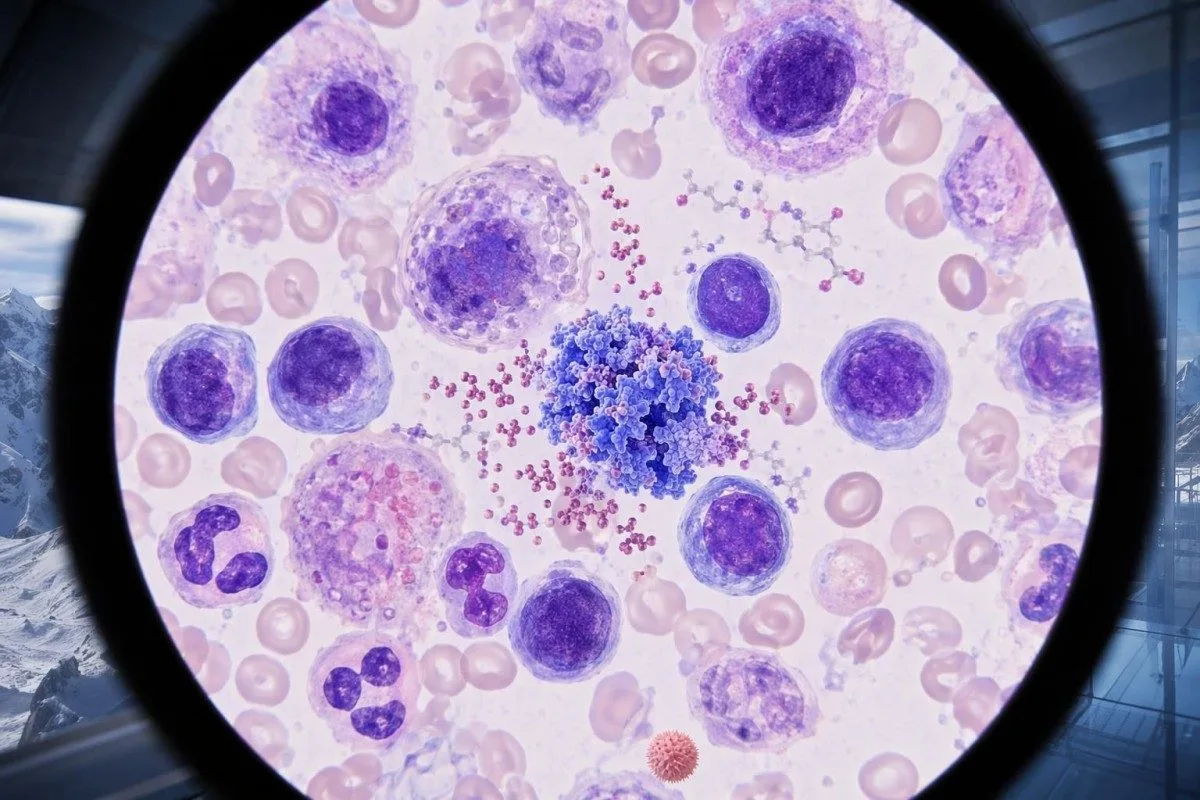
A lymphocyte-predominant CBC can be normal in younger children, while the same pattern in an older adult may prompt a different workup. Many children have WBC values above adult medians after minor viral illnesses, even when they are already running around the house.
Ferritin below 15 ng/mL strongly suggests depleted iron stores in many settings, but I start paying attention to symptoms and diet even when ferritin sits around 20–30 ng/mL. A child who drinks large volumes of milk, avoids meat or has restless sleep deserves a more careful iron history.
TSH ranges also shift in childhood. A school-age child with TSH 5.5 mIU/L and normal free T4 may need repeat testing and antibody context, not immediate panic; our pediatric TSH age chart explains the usual cutoffs.
For families, the app should store height, weight, puberty stage when relevant, and medication notes. Our WBC by age guide is useful when a child’s CBC looks strange compared with a parent’s report.
Senior lab tracking: kidneys, electrolytes and medication clues
Senior lab tracking should prioritize kidney function, sodium, potassium, calcium, albumin, hemoglobin, B12, TSH and medication-related markers. In older adults, a stable-looking result can still matter if it changes after a new diuretic, ACE inhibitor, anticoagulant or diabetes medicine.
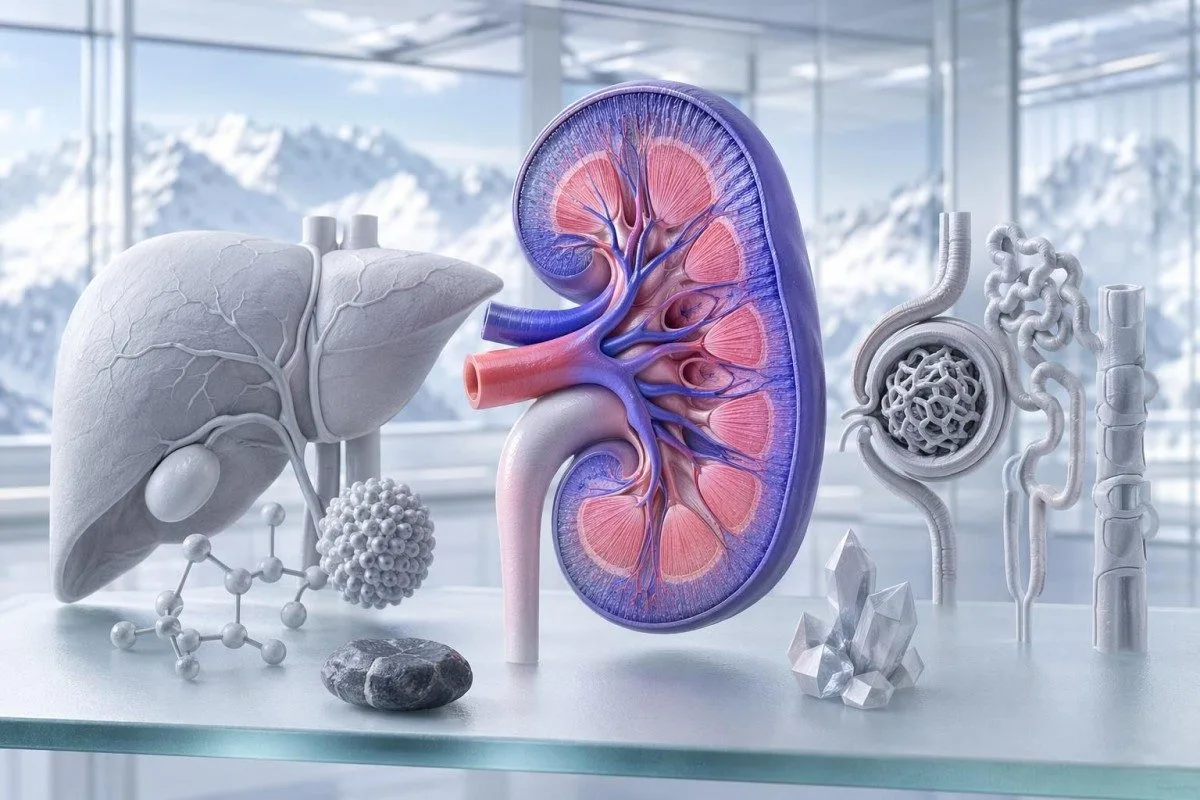
An eGFR below 60 mL/min/1.73 m² for at least 3 months meets a chronic kidney disease threshold in adults, according to KDIGO 2024 guidance. Still, a fit 82-year-old with eGFR 58 and no albuminuria is not the same patient as a 62-year-old with eGFR 58, diabetes and rising urine albumin.
Creatinine can underestimate kidney risk in frail seniors because low muscle mass produces less creatinine. I have seen older patients with creatinine 0.9 mg/dL but clinically meaningful kidney impairment once cystatin C, medication history and eGFR trend were considered.
Sodium below 130 mmol/L deserves prompt review in older adults, particularly with confusion, falls or new antidepressants. Potassium above 5.5 mmol/L becomes more concerning when the person takes spironolactone, an ACE inhibitor or has worsening kidney filtration.
A senior profile should include start dates for medicines, not just lab dates. Our article on routine senior labs and the guide to eGFR by age help families distinguish age-related drift from actionable change.
Why timelines beat single red flags
A lab timeline is safer than a single report because clinically meaningful change depends on baseline, biological variation and test method. A result can be flagged high yet stable for years, or marked normal while moving in the wrong direction.
Hemoglobin dropping from 14.2 to 12.4 g/dL over 8 months may matter even if the second value is still barely inside range for some adults. That pattern asks about bleeding, diet, kidney disease and inflammation; it is not just a number.
Kantesti AI compares repeated results inside each person’s profile and highlights direction, speed and clustering. Our AI lab analysis tool does not replace a physician, but it can catch the practical pattern that a busy family may miss at 10 p.m. after a portal notification.
Analytical validation matters here. Kantesti’s blood test benchmark describes our clinical evaluation approach, and our pre-registered Figshare benchmark on 100,000 anonymised cases is available at https://doi.org/10.6084/m9.figshare.32095435.
The evidence around consumer trend alerts is honestly still maturing, but reference change principles are old laboratory medicine. Our article on blood test comparison explains why a 3% sodium shift is usually less interesting than a 25% ferritin drop.
Units, lab methods and international reports can change the story
Units and lab methods can change interpretation because the same biomarker may be reported in mg/dL, mmol/L, ng/mL, µg/L or IU/L. A family health history tracker should preserve the original unit and convert carefully rather than overwriting the report.
Glucose is reported as mg/dL in many countries and mmol/L in others; 100 mg/dL is about 5.6 mmol/L. If an app treats 5.6 as mg/dL, the result becomes nonsense, which is why original-unit storage is not optional.
Creatinine conversion is another common trap: 1.0 mg/dL is roughly 88.4 µmol/L. A senior’s kidney trend can look falsely dramatic if one lab reports creatinine in µmol/L and another in mg/dL without clean conversion.
Some European labs use lower or different reference ranges for vitamin D, TSH or liver enzymes than US labs. The safest app reads the local range from the PDF, then adds medical context; our article on blood test variability walks through these shifts.
I tell families not to manually retype unusual results unless the PDF is unreadable. Decimal commas, small units and abbreviations are exactly where mistakes happen, especially with multilingual reports.
Lab red flags families should not park in an app
Some blood test results need same-day medical advice rather than routine tracking. Potassium above 6.0 mmol/L, sodium below 125 mmol/L, very low hemoglobin, severe neutropenia or a critical troponin pattern should be handled urgently, not filed away for later.
Potassium above 6.0 mmol/L can trigger dangerous heart rhythm problems, especially in kidney disease or medication-related hyperkalemia. Potassium below 2.8 mmol/L can also be urgent, particularly with weakness, vomiting, diuretics or palpitations.
Hemoglobin below 7–8 g/dL often requires urgent clinical assessment, though the exact action depends on symptoms, pregnancy, heart disease and bleeding risk. A slow fall to 8.9 g/dL in a stable patient is different from a sudden drop after black stools.
Absolute neutrophil count below 0.5 ×10⁹/L is severe neutropenia and raises infection risk, especially with fever. If a child or senior has fever plus severe neutropenia, that is not a watch-and-wait lab pattern.
Kantesti AI can help identify potentially critical values, but emergency symptoms override any app. Families should review our guide to critical blood test values and the urgent context around high potassium.
Questions a clean family timeline helps you ask
A clean family timeline helps you ask specific, answerable clinical questions instead of arriving with a pile of disconnected PDFs. The best questions link one result, one trend and one symptom or medication change.

Ask, Did this value change enough to matter for this person? A ferritin fall from 70 to 28 ng/mL over 12 months is more useful than asking whether 28 is technically still inside one lab’s range.
Ask, Could the result be explained by timing? TSH can shift after missed levothyroxine, biotin supplements or testing at a different time of day; our guide to borderline lab results is built around that sort of practical uncertainty.
When I, Thomas Klein, MD, review a family timeline, I look for clusters: low MCV plus high RDW plus low ferritin; high ALT plus triglycerides; low sodium after a new medicine. One isolated abnormality is often less persuasive than three modest clues pointing the same way.
Kantesti’s medical content is reviewed with physician oversight, and our Medical Advisory Board helps keep patient-facing interpretation clinically grounded. Bring the app’s summary to the clinician, but let the clinician decide diagnosis and treatment.
Privacy and consent matter more when records include the whole family
Family health records need stronger privacy rules than single-person apps because they contain children’s data, adult data and sometimes caregiver-managed senior data. Secure multi-patient health management should use encryption, role-based access and audit trails.

A parent may appropriately manage a 6-year-old’s labs, but a 16-year-old may have legal privacy rights that differ by country and clinical topic. Good software should not assume every family member has the same consent status forever.
For seniors, caregiver access should be explicit. A daughter helping her father track INR and kidney function needs permission boundaries; she may not need access to every unrelated historical result.
Kantesti is built by Kantesti LTD, a UK company, with HIPAA, GDPR and ISO 27001-aligned safeguards. You can read more about Kantesti as an organization and our approach to medical AI governance.
The practical safety test is simple: can you revoke access for one person without deleting the whole family record? If not, the system is too crude for real families.
Uploading PDFs, photos and translated reports without losing meaning
PDF and photo upload should extract results while preserving the original lab report, because the source document contains units, method notes and reference intervals. Translation is helpful only if the medical meaning survives the language change.

A photo of a report is often enough if the lighting is even, the page is flat and the patient identifiers are visible. Cropped corners are not cosmetic; they may remove units, sample dates or lab-specific reference ranges.
Kantesti AI supports PDF and photo upload in the native iOS and Android apps, plus web workflows. Our blood test photo scan guide explains why glare, shadows and tilted pages can change extraction accuracy.
Translation adds another layer. In some languages, the same abbreviation can mean a test name, a unit or a method note, so our translated lab result guide recommends keeping the original report beside the translated interpretation.
For family use, I prefer one upload session per person. It feels slower, but it prevents the classic household mistake: uploading a parent’s lipid panel and a child’s CBC together, then trying to untangle them later.
Family health risk patterns: useful, but not destiny
Family Health Risk features are most useful when they identify repeated patterns across relatives, not when they label someone as doomed. Shared high LDL, early diabetes, low ferritin or autoimmune thyroid disease can guide better questions, but genes are only one part of risk.

If three first-degree relatives have LDL-C above 190 mg/dL, clinicians think differently than if one person has LDL 142 mg/dL after weight gain. Severe familial patterns deserve earlier, more structured cardiovascular risk discussion.
A household pattern of HbA1c creeping from 5.4% to 5.8% over several years may reflect shared meals, sleep, stress and activity more than genetics. That is actually good news, because some of those drivers can be changed.
Kantesti’s Family Health Risk analysis groups patterns by person and time so one relative’s abnormal marker does not become another relative’s diagnosis. Our article on personalized blood tests explains why individual baselines still matter inside family trends.
The evidence is mixed for many wellness-style risk scores, and I would rather be honest about that. A family risk signal should lead to a clinician conversation, not automatic supplements, scans or fear.
Testing the entire family without confusing timing, fasting or supplements
A blood test for entire family planning day should document fasting status, collection time, illness, exercise and supplements for each person. Without those notes, normal biological variation can masquerade as disease.

Fasting mainly matters for triglycerides, fasting glucose, insulin and some specialized panels. Water is usually fine before routine blood tests, but coffee, intense exercise and late-night meals can shift glucose, triglycerides and cortisol-like stress patterns.
Biotin is a sneaky problem. Doses of 5,000–10,000 mcg, common in hair and nail supplements, can interfere with some thyroid and cardiac immunoassays, making TSH or troponin patterns misleading depending on the assay.
A hard workout can raise CK, AST and sometimes ALT for 24–72 hours. I have seen athletes referred for liver worries when the real clue was a heavy session the day before testing.
Before a household testing day, review our fasting rules and supplement timing guide for supplements not to combine. Add those details to each person’s profile; future-you will be grateful.
Research publications, clinical limits and the next safe step
The next safe step is to upload each person’s most recent lab report into a separate profile, review the timeline, and bring the key questions to your clinician. Kantesti AI can interpret results quickly, but medical decisions still belong with qualified healthcare professionals.

You can try a free upload through Try Free AI Blood Test Analysis. If you are starting from a drawer full of old reports, begin with the latest CBC, CMP, lipid panel, HbA1c, thyroid panel and iron studies for each family member.
Kantesti AI is used by more than 2M people across 127+ countries, and our Kantesti AI platform typically returns an interpretation in about 60 seconds. That speed is helpful, but I still tell families to pause before acting on borderline or unexpected results.
Two Kantesti educational DOI resources are listed below because lab interpretation often overlaps across hematology and gastrointestinal symptoms. See Kantesti AI. (2026). B Negative Blood Type, LDH Blood Test & Reticulocyte Count Guide. Figshare. https://doi.org/10.6084/m9.figshare.31333819 and Kantesti AI. (2026). Diarrhea After Fasting, Black Specks in Stool & GI Guide 2026. Figshare. https://doi.org/10.6084/m9.figshare.31438111.
I’m Thomas Klein, MD, and my bottom line is simple: families need one shared view, but not one shared chart. Keep profiles separate, keep source PDFs attached, and use the timeline to ask better questions rather than to self-diagnose.
Frequently Asked Questions
Can one app track blood tests for my whole family?
Yes, one app can track blood tests for the whole family if it uses separate profiles for each person. The safer setup stores each report with the correct name, date of birth, sample date, units and reference range. A family medical records app should compare a child with pediatric ranges, an adult with adult ranges and a senior with age- and medication-aware context.
How do I stop parent and child blood test results getting mixed up?
Use one upload session per person and confirm at least three identifiers: name, date of birth and sample date. Do not upload a parent’s lipid panel and a child’s CBC into the same generic folder. If a report lacks identifiers or has cropped units, wait until you can verify the original because a creatinine of 1.2 mg/dL has very different meaning in a child and an older adult.
Why are children’s blood test normal ranges different?
Children’s blood test ranges differ because growth, immune development and hormones change expected values. A child’s alkaline phosphatase can exceed 300 IU/L during bone growth, while that same result may prompt liver or bone review in an adult. WBC and lymphocyte patterns also vary by age, so adult CBC ranges should not be applied automatically to children.
Which family blood test results are most worth tracking yearly?
Most families benefit from tracking CBC, CMP, HbA1c, lipid panel, TSH, ferritin, vitamin D, B12 and kidney function, though the right list depends on age and medical history. Adults often need HbA1c and cholesterol trend review from midlife onward, while seniors need closer attention to eGFR, sodium, potassium and hemoglobin. Children should not get broad panels without a clinical reason, but CBC, ferritin or thyroid testing may be appropriate when symptoms or growth concerns exist.
Can AI blood test interpretation replace my doctor?
No, AI blood test interpretation should not replace your doctor. Kantesti AI can organize results, detect patterns and explain likely clinical context in about 60 seconds, but diagnosis and treatment require a clinician who knows the patient. Urgent values such as potassium above 6.0 mmol/L, sodium below 125 mmol/L or severe neutropenia with fever need direct medical care.
Is it safe to upload family lab reports to a medical records app?
It can be safe if the app uses encryption, role-based access, audit trails and clear consent controls. Family records are more sensitive than single-person records because they may include children, adolescents and seniors with caregiver access. Look for GDPR, HIPAA and ISO 27001-aligned safeguards, and make sure access can be granted or revoked per person rather than for the whole household at once.
What should I bring to a doctor after tracking family blood tests?
Bring the original lab reports, the timeline summary and 3–5 focused questions about trends that changed. Good questions connect one result with one date or symptom, such as ferritin falling from 70 to 28 ng/mL over 12 months or sodium dropping after a new medication. Clinicians can act faster when the information is sorted by person and date instead of scattered across portal screenshots.
Get AI-Powered Blood Test Analysis Today
Join over 2 million users worldwide who trust Kantesti for instant, accurate lab test analysis. Upload your blood test results and receive comprehensive interpretation of 15,000+ biomarkers in seconds.
📚 Referenced Research Publications
Klein, T., Mitchell, S., & Weber, H. (2026). B Negative Blood Type, LDH Blood Test & Reticulocyte Count Guide. Kantesti AI Medical Research.
Klein, T., Mitchell, S., & Weber, H. (2026). Diarrhea After Fasting, Black Specks in Stool & GI Guide 2026. Kantesti AI Medical Research.
📖 External Medical References
American Diabetes Association Professional Practice Committee (2024). 2. Diagnosis and Classification of Diabetes: Standards of Care in Diabetes—2024. Diabetes Care.
KDIGO Work Group (2024). KDIGO 2024 Clinical Practice Guideline for the Evaluation and Management of Chronic Kidney Disease. Kidney International.




⚕️ Medical Disclaimer
This article is for educational purposes only and does not constitute medical advice. Always consult a qualified healthcare provider for diagnosis and treatment decisions.
E-E-A-T Trust Signals
Experience
Physician-led clinical review of lab interpretation workflows.
Expertise
Laboratory medicine focus on how biomarkers behave in clinical context.
Authoritativeness
Written by Dr. Thomas Klein with review by Dr. Sarah Mitchell and Prof. Dr. Hans Weber.
Trustworthiness
Evidence-based interpretation with clear follow-up pathways to reduce alarm.