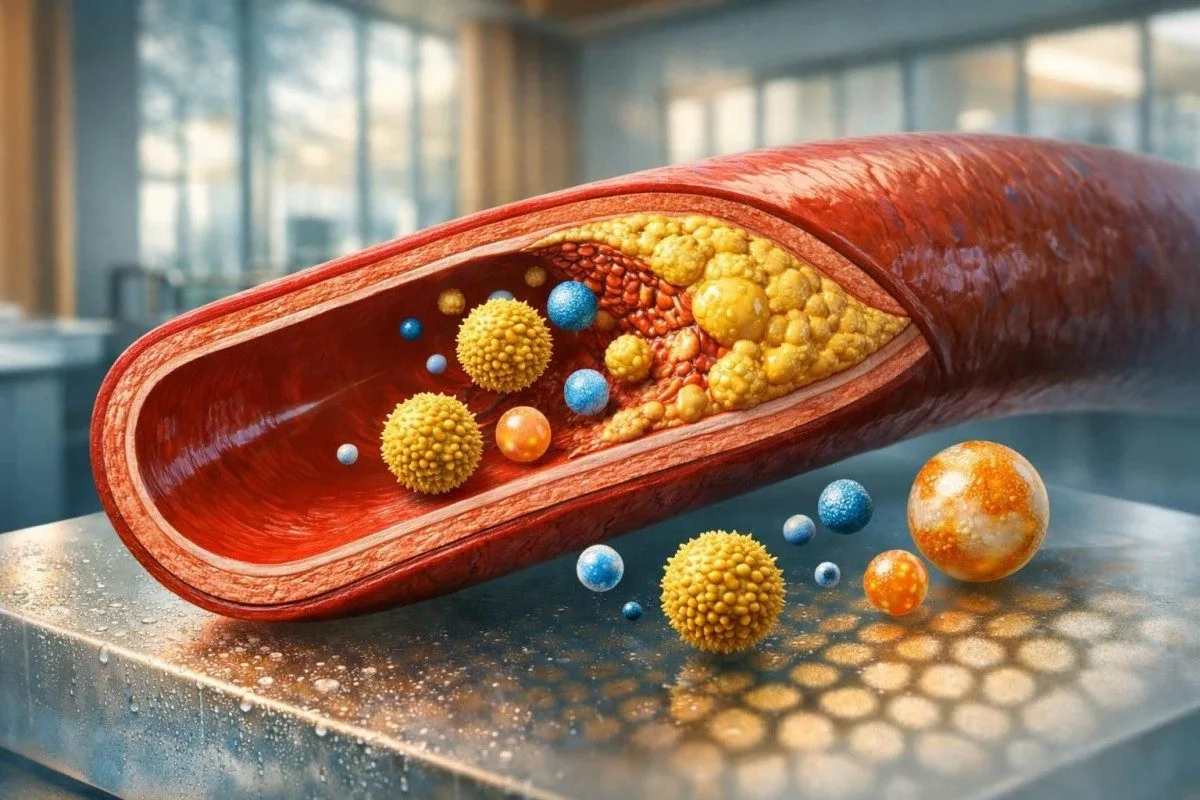
Most adults should aim for total cholesterol below 200 mg/dL, but the real story sits in LDL, HDL, triglycerides, and overall risk. A routine lipid panel can look reassuring on paper and still miss something clinically meaningful.


- Total cholesterol is generally desirable below 200 mg/dL (5.2 mmol/L) in adults.
- LDL cholesterol is optimal below 100 mg/dL, but many high-risk patients need below 70 mg/dL and some need below 55 mg/dL.
- HDL cholesterol is low below 40 mg/dL in men and 50 mg/dL in women; 60 mg/dL or higher is usually favorable.
- Triglycerides are normal below 150 mg/dL; 500 mg/dL or higher raises pancreatitis risk.
- Non-HDL cholesterol equals total cholesterol minus HDL and is often more useful when triglycerides are high.
- ApoB of 130 mg/dL or higher is a risk-enhancing marker, especially when triglycerides are 200 mg/dL or higher.
- Lp(a) is elevated at 50 mg/dL or 125 nmol/L and above and usually deserves a one-time lifetime check.
- Retesting is often done in 4-12 weeks after medication changes, but low-risk adults with normal results may only need testing every 4-6 years.
Normal cholesterol numbers at a glance
For most adults, the normal range for cholesterol means total cholesterol under 200 mg/dL, LDL under 100 mg/dL, HDL at least 40 mg/dL in men or 50 mg/dL in women, and triglycerides under 150 mg/dL. The number I worry about most is LDL, because a normal total cholesterol can still hide risk. If your report lists several lipid numbers, our Kantesti AI blood test analyzer and this lipid panel walkthrough help separate the reassuring patterns from the ones that need action.
Desirable total cholesterol is under 200 mg/dL (under 5.2 mmol/L) in most adult labs. 200-239 mg/dL is borderline high, and 240 mg/dL or higher is high; some European reports display only mmol/L, which is why patients sometimes think the lab used a different standard.
LDL is the number that usually matters most for artery risk. LDL under 100 mg/dL (2.6 mmol/L) is optimal for most adults, 130-159 mg/dL is borderline high, 160-189 mg/dL is high, and 190 mg/dL or above should trigger evaluation for familial hypercholesterolemia or another secondary cause.
HDL works differently. HDL below 40 mg/dL in men and below 50 mg/dL in women is low, while 60 mg/dL or higher is generally favorable; for a deeper cut on that number, see our HDL range explainer.
The thing is, total cholesterol is the least specific part of the panel. I am far more reassured by LDL 89, HDL 58, triglycerides 72 than by a total cholesterol of 190 sitting all by itself on a lab printout.
How total cholesterol differs from LDL, HDL, and triglycerides
Total cholesterol is a summary number, not a diagnosis. It roughly combines LDL, HDL, and cholesterol carried inside triglyceride-rich particles, which is why two people can share the same total cholesterol and have very different cardiovascular risk.
In a standard panel, VLDL cholesterol is often estimated from triglycerides, historically as triglycerides divided by 5 in mg/dL when fasting and triglycerides are not high. Once triglycerides climb above 400 mg/dL, that old shortcut becomes unreliable, which is why many labs or clinicians rely more on a direct LDL or newer equations covered in our LDL cutoff guide.
I see this pattern often in sporty patients. A 44-year-old cyclist may show total cholesterol 228, LDL 118, HDL 92, triglycerides 66; the total looks alarming to the patient, but the actual risk signal is much softer than the headline number suggests.
The opposite pattern worries me more. Someone can have total cholesterol 186, LDL 104, HDL 34, triglycerides 240, and that is a much less friendly panel even though total cholesterol still looks almost normal; our article on LDL high but HDL normal shows this trap, and our piece on why normal ranges can mislead goes wider.
Kantesti AI reads lipid results beside glucose, thyroid, liver, and kidney markers because dyslipidemia is often metabolic rather than isolated. If you like seeing the bigger map, our biomarker guide shows how these pieces fit together.
Quick mental math that actually helps
Non-HDL cholesterol equals total cholesterol minus HDL. If total cholesterol is 210 mg/dL and HDL is 45 mg/dL, non-HDL is 165 mg/dL, which is often more revealing than the total number when triglycerides are elevated.
LDL and HDL normal ranges depend on your risk level
The LDL HDL normal range is not a single universal target. LDL under 100 mg/dL fits most adults, but under 70 mg/dL is a common target after heart attack, stroke, or diabetes with added risk, and some very-high-risk patients are pushed lower.
According to the 2018 AHA/ACC cholesterol guideline, adults with LDL 190 mg/dL or higher usually merit high-intensity statin therapy unless there is a clear contraindication (Grundy et al., 2019). In my clinic, that cutoff is one of the few lipid numbers that changes management quickly, even before a calcium scan enters the conversation.
European guidance goes lower at the top end. The ESC/EAS guideline uses LDL under 55 mg/dL for very-high-risk patients and under 70 mg/dL for high-risk patients (Mach et al., 2020), so patients comparing international reports sometimes think one lab is being overly strict when it is really the guideline background that changed.
Very high HDL is one of those areas where the evidence is honestly mixed. HDL below 40 mg/dL in men and below 50 mg/dL in women is low, but HDL above 80-90 mg/dL is not automatically protective and can travel with alcohol excess, genetic variants, or altered HDL function; our guide on when to test cholesterol helps match the number to the patient in front of us.
Every 1 mmol/L drop in LDL cholesterol, which is about 38.7 mg/dL, lowers major vascular events by roughly 22% in the Cholesterol Treatment Trialists meta-analysis (Baigent et al., 2010). That is why a fall from LDL 161 to 118 mg/dL matters clinically even if the lab still colors the result as above ideal.
Triglycerides, non-HDL cholesterol, and ApoB add context
Triglycerides under 150 mg/dL are normal, 200-499 mg/dL are high, and 500 mg/dL or more raises pancreatitis risk. When triglycerides are elevated, non-HDL cholesterol and ApoB often tell me more than total cholesterol does.
A routine panel reports triglycerides, but patients often underestimate their importance. If you want the full cutoffs, our triglyceride range guide walks through fasting, age, and severity levels in more detail.
Non-HDL cholesterol is simply total cholesterol minus HDL. If your LDL goal is under 100 mg/dL, a practical non-HDL goal is under 130 mg/dL; if your LDL goal is under 70, the matching non-HDL target is often under 100 mg/dL.
ApoB counts the number of atherogenic particles, which is why it clarifies muddy cases. The AHA/ACC guideline treats ApoB 130 mg/dL or higher as a risk-enhancing marker, especially when triglycerides are 200 mg/dL or higher (Grundy et al., 2019), and I see that pattern a lot on Kantesti AI in patients who also score high for insulin resistance on a HOMA-IR review.
Remnant cholesterol is calculated as total cholesterol minus LDL minus HDL. When that number is above about 30 mg/dL, especially with triglycerides above 150 mg/dL, I start thinking about insulin resistance and residual risk even if LDL looks only mildly abnormal.
Do normal cholesterol levels by age really change?
Adult reference ranges stay broadly similar across decades, but treatment thresholds change because cardiovascular risk climbs with age. A 50-year-old with LDL 130 mg/dL and a 25-year-old with LDL 130 mg/dL do not carry the same short-term risk, even though the lab may flag them identically.
Children use tighter cutoffs than adults. In ages 2-19 years, acceptable total cholesterol is under 170 mg/dL, LDL under 110 mg/dL, and non-HDL under 120 mg/dL, which is why a teenager's panel can be flagged even when an adult would be told it is fine.
Young adults get false reassurance all the time. LDL 130 mg/dL is not harmless because you are 28; it simply means the artery wall has had fewer years of exposure, and lifetime LDL burden probably matters more than many quick clinic visits admit.
Women often see a shift around menopause. In our analysis of more than 2 million uploaded blood tests, LDL commonly rises by about 10-20% over the menopausal transition even when body weight barely changes, which is one reason Kantesti AI compares current results with older baselines rather than reading the panel in isolation.
Older adults need more nuance, not less. At 75, I care less about one HDL number and more about overall function, diabetes, kidney status, prior cardiovascular disease, and medication tolerance; our senior lab tracking guide explains that broader frame, and young adults with persistent LDL elevation can use our testing interval guide to avoid waiting too long for the next check.
When a normal total cholesterol still misses cardiovascular risk
A total cholesterol in the normal range can still coexist with high risk if LDL particle number, Lp(a), diabetes, smoking, kidney disease, or inflammation are driving plaque. This is the part many routine lab summaries flatten into a green tick mark when they should not.
Lp(a) above 50 mg/dL or 125 nmol/L is elevated and is largely inherited. I usually check it once in adulthood, especially if a parent or sibling had a heart attack or stroke before 55 in men or 65 in women.
Kidney and thyroid problems can skew a lipid panel before symptoms are obvious. Mild hypothyroidism often raises LDL by 10-30 mg/dL, which is why I look closely at a thyroid panel, and protein-losing kidney disease can push both LDL and triglycerides up, sometimes before creatinine looks dramatic on a kidney blood test.
When patients ask me this in clinic, I, Thomas Klein, MD, look for pattern before I reassure them. A panel reading total 192, LDL 98, HDL 46, triglycerides 239, HbA1c 6.1% worries me more than total 220, LDL 118, HDL 82, triglycerides 65, and our piece on when HbA1c does not fit the picture shows why that metabolic context matters.
Coronary artery calcium can break a tie when lipid numbers alone feel inconclusive. A calcium score of 0 sometimes supports watchful waiting in selected adults, while any clearly positive score pushes me toward more aggressive LDL lowering.
The one-time test families often miss
Lp(a) is usually stable across life, so most people only need it measured once unless a specific treatment or unusual clinical scenario changes the plan. I find this especially useful in families where cholesterol levels look only mildly elevated but early heart disease keeps showing up.
Fasting vs nonfasting cholesterol tests and lab quirks
Most routine cholesterol tests can be done nonfasting, but fasting for 9-12 hours gives cleaner triglycerides and is helpful if the calculated LDL looks odd. If a panel does not match the clinical picture, I usually question timing, formula, and recent physiology before I question the patient.
Nonfasting total cholesterol and HDL barely move after an ordinary meal. Triglycerides can rise by 20-30 mg/dL, sometimes more after a heavy dinner or sugary coffee, which is why patients ask about water and fasting rules so often.
Calculated LDL has blind spots. The classic Friedewald equation becomes unreliable once triglycerides exceed 400 mg/dL, and it can underestimate LDL when triglycerides are 200-399 mg/dL and LDL is already low.
Recent infection, major surgery, pregnancy, and rapid weight loss can temporarily distort lipid values. I often repeat a surprising panel in 2-12 weeks, not because I distrust the lab, but because physiology is messy and lipids are sensitive to context.
If you only have a photo or PDF, our free blood test interpretation demo can read the lipid pattern in about 60 seconds. Kantesti's neural network also checks whether a result was entered as mg/dL or mmol/L, which saves more confusion than you might expect in a service used across 127+ countries.
What commonly causes high cholesterol on a routine blood test
High cholesterol most often reflects genetics, diet quality, weight gain, insulin resistance, menopause, and low thyroid function, but medications and kidney or liver disorders are common secondary causes. A sudden shift matters more than patients realize.
LDL 190 mg/dL or higher in an adult should make you think about familial hypercholesterolemia, not just cheese and eggs. As Thomas Klein, MD, I get especially suspicious when a parent needed bypass surgery or had a heart attack before age 55.
Several medications can change lipids within weeks. Isotretinoin, oral estrogens, corticosteroids, tacrolimus, cyclosporine, thiazide diuretics, some beta-blockers, and atypical antipsychotics are repeat offenders in everyday practice.
Triglycerides often reflect alcohol, refined carbohydrate load, or uncontrolled diabetes more than they reflect classic LDL-type risk. A jump from 140 to 420 mg/dL makes me ask about recent drinking, sugary beverages, steroid use, and glycemic control before I do anything else.
Secondary clues often travel together. If the panel changed abruptly, look at liver enzyme patterns and the rest of the chemistry panel rather than assuming the explanation is purely dietary.
What to do if your cholesterol is borderline or high
Borderline cholesterol usually needs context first, not panic. LDL 130-159 mg/dL or triglycerides 150-199 mg/dL often improve with targeted lifestyle changes, while LDL 190 mg/dL or higher usually warrants a medication discussion alongside lifestyle work.
Dietary specifics matter more than vague advice to eat better. Soluble fiber at 5-10 g/day can lower LDL by about 5%, and plant sterols or stanols at 2 g/day often lower LDL by 7-12% in real clinical use.
Exercise changes triglycerides faster than HDL. 150 minutes/week of moderate activity or 75 minutes/week of vigorous activity, plus a 5-10% weight loss, can reduce triglycerides by roughly 20% in many patients.
Medication thresholds are clearer than most websites make them seem. Adults 40-75 with diabetes, adults with established ASCVD, and adults with LDL 190 mg/dL or higher generally should discuss statins, and high-intensity therapy aims for at least a 50% LDL reduction (Grundy et al., 2019); for the wider risk frame, see our heart-risk cholesterol explainer.
Kantesti AI is especially useful when the numbers are drifting rather than exploding. Our platform compares prior results side by side, which is why I often recommend a trend comparison view instead of reacting to one borderline value.
How fast lifestyle changes can move the panel
LDL can improve within 4-6 weeks of a real nutrition change, especially when saturated fat falls and fiber rises. Triglycerides can improve in 10-14 days after alcohol reduction or better glucose control, so repeat testing too late sometimes hides how quickly the body responded.
When to repeat a lipid panel and when results need faster follow-up
Most low-risk adults with normal results can repeat cholesterol testing every 4-6 years, but abnormal panels often need a recheck in 4-12 weeks. Faster follow-up is sensible when triglycerides are very high, LDL is severely elevated, or a result changed abruptly after a new medication.
Results that deserve quicker follow-up include triglycerides 500 mg/dL or higher, LDL 190 mg/dL or higher, total cholesterol 300 mg/dL or higher, or any abrupt rise after a new medication. Triglycerides above 1000 mg/dL are the range where pancreatitis becomes a real near-term concern.
Some labs report in mmol/L, and the conversions help. Total cholesterol 200 mg/dL equals 5.2 mmol/L, LDL 100 mg/dL equals 2.6 mmol/L, HDL 40 mg/dL equals 1.0 mmol/L, and triglycerides 150 mg/dL equals 1.7 mmol/L.
As of April 22, 2026, the smartest read on a lipid panel is still contextual, not simplistic. Because Kantesti AI is used across 127+ countries, our platform routinely catches mg/dL-versus-mmol/L mix-ups and trend mismatches, and you can review the clinical framework on our medical validation page.
If you want the physicians behind that process, meet our medical advisory board. And if you want the bigger picture of who we are, read about Kantesti; most patients find that a second, calmer look at the whole lipid pattern is what finally makes the report make sense.
Frequently Asked Questions
What is a normal total cholesterol number?
A normal total cholesterol number for most adults is under 200 mg/dL, which equals under 5.2 mmol/L. A result of 200-239 mg/dL is called borderline high, and 240 mg/dL or higher is high. Total cholesterol alone does not define cardiovascular risk, so clinicians still need LDL, HDL, and triglycerides to interpret the result properly.
Is 200 cholesterol normal or high?
A total cholesterol of 200 mg/dL sits right at the border between desirable and borderline high. I usually do not make decisions from that number alone because 200 with HDL 75 and LDL 105 is very different from 200 with HDL 35 and triglycerides 220. The rest of the lipid panel decides whether 200 is mostly reassuring or a sign that more follow-up is needed.
What is the normal LDL HDL normal range?
For most adults, LDL under 100 mg/dL is optimal, while 130-159 mg/dL is borderline high and 160 mg/dL or higher is high. HDL is low below 40 mg/dL in men and below 50 mg/dL in women, while 60 mg/dL or higher is generally favorable. People with heart disease, diabetes plus added risk, or chronic kidney disease often aim for LDL under 70 mg/dL, and some European guidelines use under 55 mg/dL for very-high-risk patients.
Can total cholesterol be high if HDL is high?
Yes, total cholesterol can be high because HDL is high, and that is one of the common reasons patients panic unnecessarily. For example, total cholesterol 225 mg/dL with HDL 90 mg/dL, LDL 110 mg/dL, and triglycerides 70 mg/dL carries a different meaning than the same total cholesterol with low HDL and high triglycerides. Total cholesterol is a sum, so it cannot tell you by itself whether the concerning fraction is actually elevated.
Do cholesterol normal ranges change with age?
Adult lab reference ranges do not change very much with age, but cardiovascular risk rises as LDL exposure accumulates over time. A 30-year-old and a 70-year-old can both have LDL 130 mg/dL, yet the older adult usually has a higher short-term risk because plaque has had longer to develop. Children are different: acceptable total cholesterol is under 170 mg/dL and acceptable LDL is under 110 mg/dL for most pediatric panels.
Do you need to fast for a cholesterol test?
Most routine cholesterol screening can be done without fasting, especially if the main goal is to look at total cholesterol and HDL. Fasting for 9-12 hours becomes more helpful when triglycerides are high, when a calculated LDL looks inconsistent, or when a prior nonfasting sample showed unexpected results. A nonfasting meal can raise triglycerides by 20-30 mg/dL or more, which is usually the main number affected.
What triglyceride level is dangerous?
Triglycerides of 500 mg/dL or higher are the level where I start worrying about pancreatitis risk, not just long-term cardiovascular risk. The risk rises further once triglycerides approach or exceed 1000 mg/dL, especially if alcohol use, uncontrolled diabetes, or certain medications are involved. Mild elevations such as 150-199 mg/dL are common and usually point more toward insulin resistance, excess refined carbohydrates, or weight gain than toward an immediate emergency.
If my cholesterol improves on a statin, can I stop taking it?
Usually, no: cholesterol often rises again after treatment stops because the medicine controls production rather than curing the underlying tendency. Your clinician may adjust treatment if a reversible cause was corrected or side effects occur.
Can my cholesterol be too low?
Very low LDL from treatment is usually not a reason to stop medicine, especially after a heart attack or stroke. If you have unexplained weight loss, digestive symptoms, or new weakness, ask your clinician whether another condition should be checked.
Can stress, illness, or recent weight loss change my cholesterol results?
Yes. Cholesterol and triglycerides can shift after an infection, major stress, pregnancy, weight change, or a new medication, so one unusual result is often repeated before making long-term decisions. Bring any recent health changes to your appointment.
Get AI-Powered Blood Test Analysis Today
Join over 2 million users worldwide who trust Kantesti for instant, accurate lab test analysis. Upload your blood test results and receive comprehensive interpretation of 15,000+ biomarkers in seconds.
📚 Referenced Research Publications
Klein, T., Mitchell, S., & Weber, H. (2026). Iron Studies Guide: TIBC, Iron Saturation & Binding Capacity. Kantesti AI Medical Research.
Klein, T., Mitchell, S., & Weber, H. (2026). aPTT Normal Range: D-Dimer, Protein C Blood Clotting Guide. Kantesti AI Medical Research.
📖 External Medical References
⚕️ Medical Disclaimer
This article is for educational purposes only and does not constitute medical advice. Always consult a qualified healthcare provider for diagnosis and treatment decisions.
E-E-A-T Trust Signals
Experience
Physician-led clinical review of lab interpretation workflows.
Expertise
Laboratory medicine focus on how biomarkers behave in clinical context.
Authoritativeness
Written by Dr. Thomas Klein with review by Dr. Sarah Mitchell and Prof. Dr. Hans Weber.
Trustworthiness
Evidence-based interpretation with clear follow-up pathways to reduce alarm.