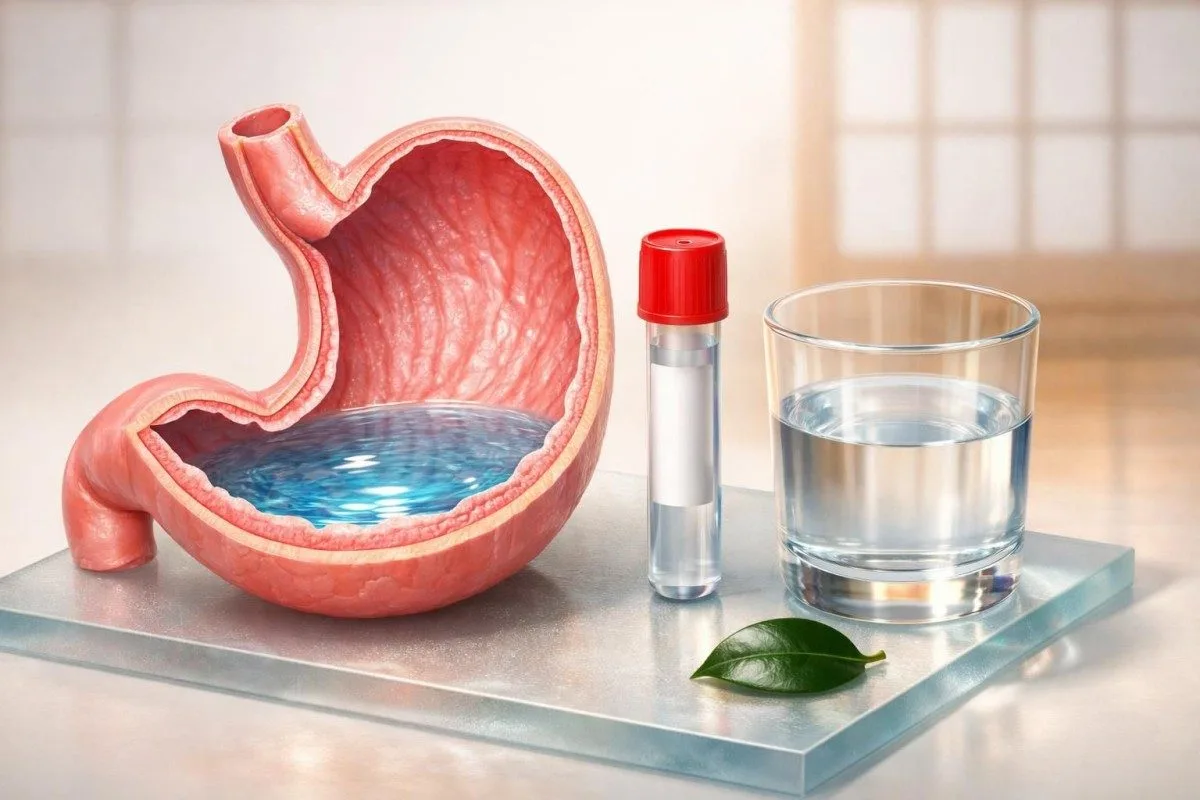
Usually yes—plain water is allowed before most fasting labs and often improves sample quality by preventing dehydration-related concentration. The stricter exceptions are calorie-sensitive tests, timing-sensitive panels, and any draw tied to anesthesia.


- Plain water usually does not break a fast because it has 0 kcal; 250-500 mL before the draw is reasonable for most adults.
- Fasting glucose requires at least 8 hours with no calories; 126 mg/dL or higher is in the diabetes range on qualifying testing.
- Triglycerides are often best checked after 9-12 hours when precision matters; prior nonfasting values above 400 mg/dL often trigger a repeat fasting panel.
- HbA1c does not require fasting and is not improved by skipping water.
- Dehydration pattern can push hematocrit up 1-3 percentage points and albumin above 5.0 g/dL without true disease.
- Coffee and gum can distort strict fasting labs; caffeine may shift glucose by 5-15 mg/dL in sensitive people.
- Pre-op water may be allowed until 2 hours before anesthesia under modern guidance, but surgeon instructions override general lab advice.
- Fluid restriction patients should not force water; heart failure or dialysis plans often cap intake around 1.0-1.5 L/day.
Can you drink plain water before a fasting blood test?
Yes—plain water is allowed before most fasting blood tests, and it often helps. As of April 18, 2026, if you are asking can I drink water before blood test, the usual answer is 1-2 cups of plain water, no calories, no sweeteners, and no lemon. On Kantesti AI, we advise patients to follow the stricter rule only when the lab or surgeon says so. Our separate fasting prep guide covers coffee and the other common mistakes.
Water does not break a fast. A fasting blood test means no calories for 8-12 hours; plain water has 0 kcal, so it does not meaningfully raise glucose, insulin, or triglycerides. Flavored water, electrolyte drinks, juice, collagen water, and anything sweetened are different.
Mild dehydration can distort results upward. In clinic, I see dry morning patients arrive with hemoglobin 0.5-1.0 g/dL above baseline, hematocrit 1-3 percentage points higher, and albumin drifting above 5.0 g/dL simply from under-drinking overnight. That pattern is concentration, not new disease.
The thing is, water helps the phlebotomist too. A modest 250-500 mL taken 1-2 hours before the draw often makes veins easier to access and reduces repeat attempts, especially in older adults and people who stopped eating at 10 pm.
I still tell patients to read the order sheet. Some labs bundle a fasting glucose with nonfasting tests, and some pre-op centers print overly broad rules; if the instructions are vague, our clinical background on About Us explains why physician review matters.
Which blood tests truly require fasting—and how long?
Only a minority of blood tests truly require fasting. If you are wondering how long to fast before blood test, the usual answer is 8 hours for fasting glucose, 8-12 hours for insulin or HOMA-IR, and 9-12 hours when triglycerides need a clean baseline; many CBC, kidney, liver, HbA1c, thyroid, and vitamin D tests do not. If your order includes glucose, start with our fasting sugar guide.
ADA defines fasting plasma glucose as no caloric intake for at least 8 hours. Diabetes is diagnosed at 126 mg/dL or higher on a qualifying fasting sample, while 100-125 mg/dL is the prediabetes range (American Diabetes Association Professional Practice Committee, 2025). Borderline values are exactly where a coffee or late-night snack can matter.
Routine cholesterol screening no longer always requires fasting. The European consensus led by Nordestgaard states that nonfasting lipids are acceptable for many patients, but a true fast is still useful when triglycerides are high or when prior nonfasting triglycerides exceed 400 mg/dL (Nordestgaard et al., 2016). Some European labs flag nonfasting triglycerides above 175 mg/dL rather than the fasting 150 mg/dL cutoff. For the basics, see our lipid panel interpretation.
HbA1c does not require fasting. Neither do most CBC, CMP, CRP, TSH, ferritin, B12, and vitamin D tests, although local labs sometimes ask for a morning sample simply to standardize timing. The most common patient mistake is assuming every morning draw needs starvation-level prep.
Clinicians disagree on a few edge cases. Serum iron and cortisol are less about fasting and more about timing; if you take iron tablets at 7 am and draw at 8 am, the number can look falsely reassuring.
When mixed panels change the rule
If one order combines CBC, TSH, and fasting glucose, the glucose sets the prep. The safest question to ask the lab is not simply whether you need to fast, but which analyte on the order is most prep-sensitive.
Why water can improve accuracy when dehydration distorts labs
Water can improve accuracy because dehydration concentrates the sample. When patients ask can I drink water before blood test, the underappreciated issue is not breaking the fast; it is avoiding hemoconcentration that can make normal labs look mildly abnormal. We explain that pattern in more detail in our dehydration false-highs article.
Albumin, total protein, hemoglobin, hematocrit, calcium, sodium, and urea can all drift upward when you are dry. Albumin is usually 3.5-5.0 g/dL in adults; when I review an isolated albumin of 5.1 g/dL with high total protein and no other red flags, dehydration is often the first explanation, not occult disease. Total protein is usually 6.0-8.3 g/dL, so a value of 8.4 g/dL next to high albumin is often a hydration clue.
A BUN/creatinine ratio above about 20:1 can suggest prerenal dehydration, though it is not specific. The ratio is more persuasive when BUN rises and creatinine stays near baseline, especially after fasting, travel, hot weather, or a hard workout. Our BUN/creatinine ratio guide shows how that pattern differs from intrinsic kidney disease.
Here is a pattern I see a lot: a healthy 52-year-old arrives after avoiding fluids overnight because he thought more fasting was better. Hematocrit comes back 51%, albumin 5.2 g/dL, calcium 10.4 mg/dL, and total protein 8.4 g/dL—then all four normalize after better hydration on repeat.
The evidence on exactly how many points dehydration moves each analyte is honestly mixed, because the effect depends on body size, sweat loss, diuretics, and room temperature. That is why Kantesti's neural network looks at clusters rather than single flags, and why our clinical validation standards matter more than any one isolated number.
Which fasting tests still need stricter prep for accurate results?
Some fasting tests need stricter prep even though plain water is still allowed. Fasting insulin, glucose, HOMA-IR, triglycerides, oral glucose tolerance testing, and a few timing-sensitive endocrine or iron studies are the ones I police most closely. If insulin resistance is the question, review our HOMA-IR explainer.
Fasting insulin and HOMA-IR are easily distorted by small routine choices. I ask for 8-12 hours with no calories, no gum, no nicotine, and no workout that morning; otherwise a difference between glucose 99 mg/dL and 106 mg/dL or insulin 8 µIU/mL and 14 µIU/mL can send the interpretation in a very different direction.
Triglycerides are the classic test where prep still matters. A fatty late dinner or alcohol within 24 hours can push triglycerides up enough to change risk counseling, and some labs still prefer 9-12 hours of fasting when triglycerides are the main target. If that is your biomarker, our triglyceride cutoff guide shows why 150 mg/dL fasting and 175 mg/dL nonfasting are not interchangeable.
Immunoassay tests have a different problem: supplements. Biotin doses of 5-10 mg/day—common in hair and nail products—can produce misleading thyroid and cardiac biomarker results for 24-48 hours in susceptible assays. Our biotin and thyroid test guide is worth reading if you use supplements.
And one quiet trap: serum iron is highly variable across the day. In my practice, a morning draw before the day's iron pill is usually cleaner than a random afternoon sample, even though the lab slip may simply say fasting. Testosterone is usually most reliable between 7 and 10 am in younger men, and cortisol timing is tighter still.
What actually breaks a fast before blood work?
Calories break a fast; plain water does not. Coffee, tea, gum, mints, nicotine, pre-workout powders, and even a harmless-looking morning workout can matter for selected tests, particularly glucose, insulin, cortisol, triglycerides, and muscle enzymes.
Black coffee is not neutral for fasting glucose in everyone. Caffeine can increase catecholamines and sometimes shift glucose by 5-15 mg/dL in sensitive patients, which is enough to move a borderline result across a clinical line. If the goal is a strict fasting sample, skip coffee and tea entirely.
Sugar-free gum and mints are not ideal before fasting labs. They may not add many calories, but they can stimulate digestion, saliva, and stress hormones; that usually will not matter for a CBC, yet it can matter when the result you are chasing lives near a cutoff.
Supplements are a bigger issue than most patients realize. Besides biotin, iron tablets, niacin, creatine, and even high-dose vitamin C can complicate interpretation depending on the panel and assay method. Tell the lab what you took and when.
Exercise can confuse results for 24-48 hours. Hard intervals or a long run may raise CK, AST, ALT, lactate, and sometimes glucose, which is why athletes often need context-specific interpretation. Our athlete blood test guide covers the recovery window better than most routine lab handouts.
How much water is reasonable on the morning of the test?
Most adults do well with 250-500 mL of plain water before a morning draw. That is roughly 1-2 cups, usually taken over the 1-2 hours before arrival, not chugged in the parking lot. On our AI blood test platform, we see fewer confusing dehydration patterns when patients keep it simple and moderate.
More water is not automatically better. Drinking 1.5-2 liters right before the appointment usually just makes you uncomfortable, and in people prone to low sodium or fluid overload it can create a different problem. Small, steady intake works better.
Timing matters more than volume extremes. A glass when you wake up and a few sips on the way to the lab is usually enough; if your urine is dark yellow and you feel headachy, you probably underdid it. Completely clear urine is not the goal either.
Most morning medicines can be swallowed with a small amount of water, but diabetes drugs are the main exception. Insulin, sulfonylureas, and a few other agents may need to be held or adjusted for a fasting draw, and that decision should come from the clinician who ordered the test, not guesswork.
Phlebotomists notice this immediately. The easiest draws are rarely the people who fasted heroically for 14 hours; they are the ones who followed the instructions, slept, and had a sensible glass of water.
Can you drink water before a blood test before surgery?
For a blood test before surgery, water rules depend more on anesthesia than on the lab. The lab itself usually tolerates plain water, but if sedation or general anesthesia follows, the surgical team's instructions win. The ASA modular update states that clear liquids are commonly allowed until 2 hours before anesthesia, while many solids stop 6-8 hours earlier (American Society of Anesthesiologists Task Force, 2023). Our pre-op lab guide breaks down the usual panels.
Nothing after midnight is often older logistics, not always physiology. Many hospitals still use that phrase because operating lists change and delays happen, but modern anesthesia guidance is more nuanced. Patients are often surprised that plain water may be acceptable closer to surgery than a latte taken at 5 am.
Pre-op blood tests themselves rarely need you to be bone-dry. In fact, a modest amount of water can make sample collection easier and can prevent creatinine, urea, hemoglobin, and hematocrit from looking artificially concentrated on the morning of surgery.
Medication instructions before surgery are separate from fasting instructions. Blood pressure tablets are often taken with a sip of water, while SGLT2 inhibitors are usually stopped several days earlier and diabetes regimens may need individualized changes. Some GLP-1 medication advice also varies by anesthetist and procedure risk, which is why generic internet lists are unreliable here.
If your written sheet conflicts with what you were told on the phone, ask before the day arrives. Our clinicians at Contact Us would rather see patients clarify one question early than arrive frightened and under-hydrated.
Why anesthesia instructions override general advice
Aspiration risk is a different problem from lab accuracy. A metabolic panel may tolerate water, but a sedation protocol may not, which is why the pre-op sheet—not general internet advice—has the final word.
Who needs adjusted advice: diabetes, kidney disease, seniors, kids, athletes
Adjusted advice matters for diabetes, kidney disease, frailty, and childhood. Most adults can drink some water before fasting labs, but people on fluid restriction or glucose-lowering drugs need personalized prep. For older adults, our senior testing guide is a good starting point.
People with diabetes are at the highest risk of getting fasting prep wrong. The danger is not the water; the danger is taking insulin or a sulfonylurea and then skipping calories for 8-12 hours. HbA1c does not require fasting, so many patients can avoid an unnecessary low-sugar morning by choosing the right test in the first place.
Kidney disease and heart failure change the hydration advice. If you have been told to restrict fluids to 1.0-1.5 liters per day, do not force extra water just because the internet said hydration is helpful. A few sips may be enough, and dialysis patients should follow their unit's protocol.
Older adults dehydrate faster, and children can feel miserable from prolonged fasting. In my clinic, the patient who gets light-headed in the waiting room is usually the 78-year-old who skipped both breakfast and water for no reason. A small planned drink is often the safer choice.
Athletes are a special subgroup because training changes plasma volume and muscle markers. After a race, hematocrit can look concentrated while AST and CK rise from muscle turnover rather than liver disease. If you are tracking endurance labs, compare with our hematocrit interpretation guide rather than reacting to one post-race sample.
What should you do if you accidentally ate, had coffee, or forgot the rules?
If you drank plain water, most labs can still proceed. If you had coffee, juice, gum, alcohol, or a snack, tell the phlebotomist before the sample is taken; that one sentence can save you a misleading result and a repeat visit.
A prep mistake affects some tests and barely touches others. A cracker or sweetened coffee can invalidate fasting glucose, insulin, or triglycerides, but it usually does not matter for a CBC or a basic thyroid panel. The practical move is disclosure, not embarrassment.
If the sample is already drawn, interpretation depends on the clinical question. I am much more likely to repeat a glucose of 128 mg/dL after an imperfect fast than a vitamin D of 24 ng/mL, because one sits right on a diagnostic threshold and the other does not.
Thomas Klein, MD, speaking clinically rather than academically: the weirdest false alarm I see is not food, it is context. A runner who eats breakfast and trains hard before labs may show AST 89 U/L with a normal bilirubin and panic about the liver, when the better first read is recent muscle load; our AST interpretation guide goes into that distinction.
Trend beats one imperfect datapoint. If a result looks only mildly off and the prep was sloppy, compare it with prior values before you label yourself sick. Our blood test comparison guide explains how clinicians decide when a repeat draw is worth it.
How we interpret borderline results when fasting prep was imperfect
Borderline results are best interpreted as patterns, not isolated flags. At Kantesti, we built our review flow around this exact problem: distinguishing true disease from dehydration, timing effects, supplements, and simple prep errors. The medical team on our Medical Advisory Board reviews the clinical logic behind these calls.
Kantesti AI interprets hydration-sensitive results by analyzing relationships among CBC, CMP, and renal indices rather than reading each flag alone. Albumin 5.2 g/dL, hematocrit 50%, calcium 10.3 mg/dL, and BUN/creatinine ratio 22:1 rising together often point toward concentration. Glucose 129 mg/dL with normal albumin and normal hematocrit, on the other hand, deserves a genuine diabetes follow-up.
Kantesti AI can read the report you already have in about 60 seconds. Upload a PDF or photo through our blood test PDF upload guide and our system maps biomarkers, flags prep-sensitive results, and compares them with earlier trends. That CE-marked workflow now supports more than 2 million users across 127+ countries and 75+ languages under HIPAA, GDPR, and ISO 27001 controls.
We also show what to do next, not just what the number means. In practice, that may mean repeat after better hydration, switch to a nonfasting lipid panel, or ask for HbA1c instead of another punitive fast. If you want to try it with your own report, use our free blood test demo.
So what does all this mean for you? If you are asking can I drink water before blood test, the default answer is yes—plain water is usually allowed and often helpful, while calories, supplements, timing, and anesthesia rules are the real accuracy traps. Thomas Klein, MD, wrote this because I keep seeing patients blamed by the lab when the instructions, honestly, were the messy part.
Frequently Asked Questions
Can I drink water before a fasting blood test?
Yes. Plain water usually does not break a fast because it has 0 calories, and 250-500 mL before the draw often helps prevent dehydration-related hemoconcentration. Avoid flavored water, lemon water, electrolyte drinks, or anything sweetened. If the test is tied to anesthesia or a lab-specific protocol, follow that instruction instead.
How long should I fast before a blood test?
Most fasting glucose tests require at least 8 hours without calories. Insulin or HOMA-IR often use 8-12 hours, and triglycerides are commonly checked after 9-12 hours when precision matters. CBC, HbA1c, many thyroid tests, and most vitamin levels do not usually require fasting. The exact answer depends on the test bundle, not the words blood test alone.
Can I drink water before a cholesterol test?
Usually yes. Many routine cholesterol panels can now be done nonfasting, but if triglycerides are high or a prior nonfasting value exceeded 400 mg/dL, clinicians often prefer a 9-12 hour fast. Plain water is still allowed in most cases because it does not materially raise LDL, HDL, or triglycerides. Alcohol and a heavy late meal are far more likely to distort the result.
Can I drink water before blood test before surgery?
Often yes for the lab, but the anesthesia plan overrides general lab rules. Clear liquids are commonly allowed until 2 hours before anesthesia, while solids often stop 6-8 hours earlier under current ASA guidance. If blood is being drawn the same morning as a procedure, follow the surgeon or anesthetist's written instructions. A single glass of water may be acceptable for pills, but do not improvise.
What if I accidentally drank coffee before fasting labs?
Tell the lab immediately. Black coffee can shift glucose by roughly 5-15 mg/dL in some people, and coffee with milk or sugar definitely breaks an 8-hour fast for glucose, insulin, or triglyceride testing. Many CBC, vitamin D, or thyroid tests can still be interpreted, but strict fasting tests may need to be repeated. The mistake is usually manageable if you disclose it upfront.
Should people with kidney disease or fluid restriction drink water before labs?
Only within their usual medical plan. Patients with heart failure, advanced kidney disease, or dialysis instructions may be limited to about 1.0-1.5 liters per day, and they should not force extra water just for a blood draw. A few sips may be enough to make sample collection easier without worsening fluid overload. When in doubt, follow the nephrology or cardiology plan rather than a generic fasting handout.
Should I have routine fasting blood work if I have a cold or fever?
A mild cold usually does not prevent testing, but fever, vomiting, diarrhea, or a significant infection can temporarily change glucose, white blood cells, inflammatory markers, and hydration-sensitive values. For routine monitoring, ask the ordering clinician whether to wait until you feel well; do not delay urgent or preoperative tests without instruction.
Can I brush my teeth before a fasting blood test?
Yes. Brush your teeth as usual, but do not swallow toothpaste or use sugary mouthwash before the draw. If you accidentally swallow a small amount, tell the lab; most routine fasting tests are still usable.
Can I take my regular medications with water before fasting blood work?
Usually yes, take prescribed medicines with plain water unless your clinician told you to hold them. Diabetes medicines, diuretics, blood thinners, and pre-surgery medications need individualized instructions, so confirm before the test day.
Get AI-Powered Blood Test Analysis Today
Join over 2 million users worldwide who trust Kantesti for instant, accurate lab test analysis. Upload your blood test results and receive comprehensive interpretation of 15,000+ biomarkers in seconds.
📚 Referenced Research Publications
Klein, T., Mitchell, S., & Weber, H. (2026). C3 C4 Complement Blood Test & ANA Titer Guide. Kantesti AI Medical Research.
Klein, T., Mitchell, S., & Weber, H. (2026). Nipah Virus Blood Test: Early Detection & Diagnosis Guide 2026. Kantesti AI Medical Research.
📖 External Medical References
Nordestgaard BG et al. (2016). Fasting is not routinely required for determination of a lipid profile: clinical and laboratory implications including flagging at desirable concentration cut-points—a joint consensus statement from the European Atherosclerosis Society and European Federation of Clinical Chemistry and Laboratory Medicine. European Heart Journal.
American Diabetes Association Professional Practice Committee (2025). 2. Diagnosis and Classification of Diabetes: Standards of Care in Diabetes—2025. Diabetes Care.
American Society of Anesthesiologists Task Force (2023). 2023 American Society of Anesthesiologists Practice Guidelines for Preoperative Fasting: Carbohydrate-Containing Clear Liquids With or Without Protein, Chewing Gum, and Pediatric Fasting Duration—A Modular Update of the 2017 Practice Guidelines. Anesthesiology.
⚕️ Medical Disclaimer
This article is for educational purposes only and does not constitute medical advice. Always consult a qualified healthcare provider for diagnosis and treatment decisions.
E-E-A-T Trust Signals
Experience
Physician-led clinical review of lab interpretation workflows.
Expertise
Laboratory medicine focus on how biomarkers behave in clinical context.
Authoritativeness
Written by Dr. Thomas Klein with review by Dr. Sarah Mitchell and Prof. Dr. Hans Weber.
Trustworthiness
Evidence-based interpretation with clear follow-up pathways to reduce alarm.