
Renin is not just another hormone number. It is a pressure-sensing signal from the kidney that can change the entire interpretation of hypertension, potassium, and aldosterone results.



- Renin blood test results help separate low-renin hypertension from high-renin hypertension before the aldosterone-renin ratio is trusted.
- Low renin is often defined as plasma renin activity below about 0.6 ng/mL/hour, but each lab and posture protocol matters.
- High renin is commonly above 4–5 ng/mL/hour and can reflect diuretics, low salt intake, kidney artery narrowing, dehydration, or severe hypertension.
- Potassium below 3.5 mmol/L can suppress aldosterone release and may make primary aldosteronism look less obvious than it really is.
- Aldosterone-renin ratio above 20–30, when aldosterone is at least 10–15 ng/dL, is a common screening pattern for primary aldosteronism.
- Beta blockers can falsely lower renin and make the aldosterone-renin ratio look high, while ACE inhibitors, ARBs, and diuretics often raise renin.
- Kidney blood-flow signals matter: high renin with high aldosterone may point to renal artery stenosis or reduced effective circulating volume.
- Repeat testing is often safer than overreacting, especially if salt intake, posture, timing, potassium, or medication conditions were not controlled.
What a renin blood test tells your doctor
A renin blood test tells doctors whether the kidney is sensing low blood flow, low salt delivery, or medication pressure on the renin-angiotensin system. Low renin with high blood pressure points toward salt-retaining states such as primary aldosteronism; high renin points more toward kidney blood-flow signals, diuretics, dehydration, or renovascular disease.
Renin is released by juxtaglomerular cells in the kidney when renal perfusion falls, sodium delivery drops, or sympathetic tone rises. In practice, I use renin as a physiologic clue before I trust a single aldosterone-renin ratio, because a value of 0.2 ng/mL/hour means something very different from 8.0 ng/mL/hour.
Kantesti is an AI blood test interpretation platform that reads renin only after checking potassium, creatinine, eGFR, sodium, bicarbonate, and medication context. Our broader biomarkers guide covers more than 15,000 markers, but renin is one of the markers where pre-test conditions can completely change the story.
I’m Thomas Klein, MD, and in clinical review I rarely treat renin as normal or abnormal in isolation. A 58-year-old on hydrochlorothiazide with renin of 7.5 ng/mL/hour is not the same patient as a 34-year-old with untreated stage 2 hypertension, potassium of 3.1 mmol/L, and renin below 0.2 ng/mL/hour.
Low renin hypertension patterns before the ARR
Low renin hypertension means blood pressure is high while renin is suppressed, usually because the body is retaining sodium or acting as if too much mineralocorticoid hormone is present. The key split is high aldosterone versus low aldosterone.
Primary aldosteronism is the classic low-renin, high-aldosterone pattern. The Endocrine Society guideline recommends case detection in patients with resistant hypertension, hypertension plus low potassium, adrenal incidentaloma, sleep apnea, or a family history of early hypertension or stroke (Funder et al., 2016).
Aldosterone above 10–15 ng/dL with renin below 0.6 ng/mL/hour is not diagnostic by itself, but it is enough to take the pattern seriously. Patients who want the companion hormone explained can review our aldosterone test guide before comparing the ratio.
Low renin with low aldosterone points somewhere else: Liddle syndrome, apparent mineralocorticoid excess, heavy licorice intake, certain congenital adrenal enzyme patterns, or simply a very high-salt diet. I have seen patients spend months chasing aldosterone when the real clue was an herbal product containing glycyrrhizin, enough to push potassium to 3.2 mmol/L.
High renin causes that mimic endocrine disease
High renin causes include diuretics, sodium restriction, dehydration, kidney artery narrowing, heart failure physiology, malignant hypertension, and rare renin-secreting tumors. High renin does not automatically mean an adrenal tumor.
A plasma renin activity above 4–5 ng/mL/hour is common after loop or thiazide diuretics because the kidney sees less effective volume. In a person who started a strict low-salt diet 10 days before testing, renin can rise while aldosterone also rises, creating a pattern that mimics secondary hyperaldosteronism.
Renovascular hypertension is the high-renin diagnosis clinicians do not want to miss. When creatinine rises by more than 30% after starting an ACE inhibitor or ARB, I look hard at kidney blood-flow clues and compare the pattern with our kidney blood test guide.
Lifestyle can move renin too. A well-done DASH diet plan lowers blood pressure in many patients, but very abrupt sodium restriction before a renin draw may make the result look more dramatic than the underlying condition.
Potassium changes that change the interpretation
Potassium changes can make renin and aldosterone results misleading, especially when potassium is below 3.5 mmol/L. Low potassium can blunt aldosterone secretion and hide a case of primary aldosteronism.
Normal adult potassium is usually about 3.5–5.0 mmol/L, though some labs report 3.6–5.2 mmol/L. A potassium result below 3.5 mmol/L is hypokalemia, and below 2.5 mmol/L is usually treated as severe because arrhythmia risk rises sharply.
The tricky part is that hypokalemia can suppress aldosterone release even when the adrenal driver is real. That is why a patient with blood pressure of 168/96 mmHg, potassium of 3.0 mmol/L, renin under 0.2 ng/mL/hour, and only borderline aldosterone still deserves a thoughtful repeat after potassium correction.
For patients adjusting diet or medication, our potassium range guide gives practical cutoffs for low, high, and urgent values. I usually want potassium rechecked within 1–2 weeks after a significant diuretic, ACE inhibitor, ARB, or mineralocorticoid antagonist change.
Kidney blood-flow clues behind a high renin result
High renin often means the kidney is receiving a signal that blood flow or sodium delivery is too low. The signal can be real, as in renal artery stenosis, or functional, as in diuretic use or reduced circulating volume.

Renal artery stenosis classically causes high renin, high aldosterone, hypertension, and sometimes a creatinine rise after ACE inhibitor or ARB therapy. A creatinine increase above 30% within days to weeks of starting those medicines is a recognised warning pattern, not a diagnosis by itself.
Kantesti AI flags high-renin patterns more cautiously when eGFR is below 60 mL/min/1.73 m² or when the urine albumin-creatinine ratio is above 30 mg/g. Those kidney markers often matter more than a single renin value, which is why I compare them with a full renal function panel.
A narrow pulse pressure, dizziness on standing, BUN-creatinine ratio above 20:1, and high renin can point toward volume depletion rather than renovascular disease. For the renal chemistry side of that pattern, our detailed BUN creatinine ratio guide explains why urea may rise before creatinine does.
Medication effects that can flip renin results
Medication effects are the most common reason renin results are misread. Beta blockers suppress renin and can falsely raise the aldosterone-renin ratio, while ACE inhibitors, ARBs, diuretics, and mineralocorticoid antagonists often raise renin.
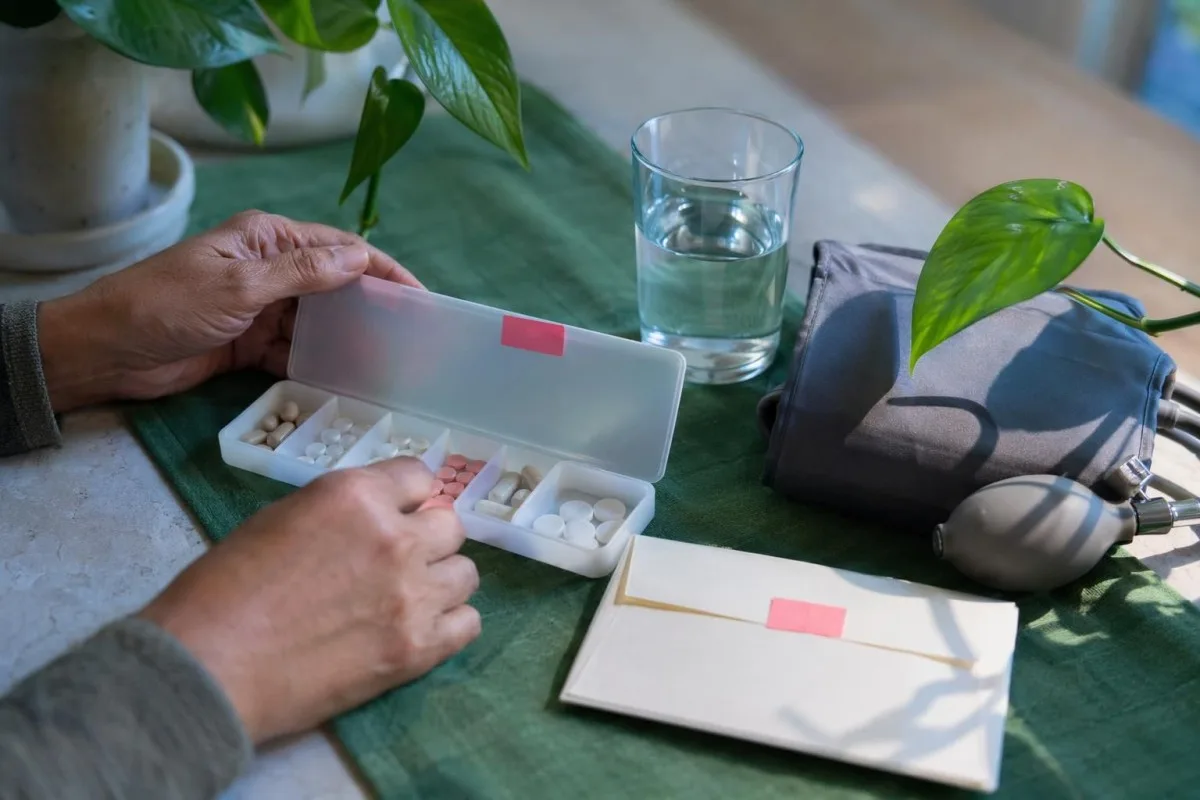
Beta blockers can push renin down within days by blocking sympathetic stimulation of juxtaglomerular cells. A patient on metoprolol with renin of 0.3 ng/mL/hour may look suspicious for primary aldosteronism even when aldosterone is only modestly elevated.
ACE inhibitors and ARBs usually raise renin because angiotensin II feedback is reduced. When potassium rises above 5.0 mmol/L after these medicines, I check timing against our BP medicine potassium guide before assuming a new endocrine disease.
Mineralocorticoid receptor antagonists such as spironolactone 25–50 mg/day and eplerenone 25–50 mg twice daily can make renin much higher, sometimes into double digits. If medication washout is unsafe, the practical answer is not to stop everything; it is to document the drugs and use a safer interpretation pathway, like the one described in our medication monitoring guide.
How posture, salt intake and timing change renin
Posture, salt intake, and collection time can shift renin enough to change the interpretation. A morning seated sample after usual salt intake is not equivalent to an afternoon sample after exercise, sweating, and a low-sodium week.

Many endocrine laboratories prefer collection around 7–10 am after the patient has been awake for at least 2 hours and seated for 5–15 minutes. Supine sampling usually lowers renin compared with upright sampling, which is why reference ranges must match the protocol.
Salt intake is not a minor detail. Very high sodium intake suppresses renin, while sodium restriction below roughly 100 mmol/day can raise renin and aldosterone within days, especially in leaner or physically active patients.
A fasting state is not always required for renin, but dehydration and recent intense exercise can distort the result. If other tests were drawn at the same visit, our fasting test guide and unit conversion guide help patients avoid comparing mismatched conditions.
Renin plus aldosterone: reading the ratio cautiously
The aldosterone-renin ratio is useful only when renin, aldosterone, potassium, salt intake, posture, and medication effects are all considered together. A high ratio is a screening pattern, not a final diagnosis.

A common positive screen is aldosterone-renin ratio above 20–30 when aldosterone is at least 10–15 ng/dL and plasma renin activity is suppressed. The Endocrine Society guideline treats the ARR as a case-detection test, followed by confirmatory testing when appropriate (Funder et al., 2016).
Kantesti AI reads the ratio as a pattern, not a magic number. If aldosterone is 8 ng/dL and renin is 0.1 ng/mL/hour, the ratio looks high mathematically, but the absolute aldosterone may be too low for a clean primary aldosteronism screen.
The unit problem is real. Direct renin concentration in mU/L cannot be dropped into the same ARR cutoff used for plasma renin activity in ng/mL/hour, so I often cross-check endocrine panels with our hormone pattern guide before advising a patient what to ask next.
When low renin and normal aldosterone still matter
Low renin with normal aldosterone can still matter when blood pressure is high, potassium is low, or the patient has early-onset hypertension. Some mineralocorticoid-like conditions suppress both renin and aldosterone.
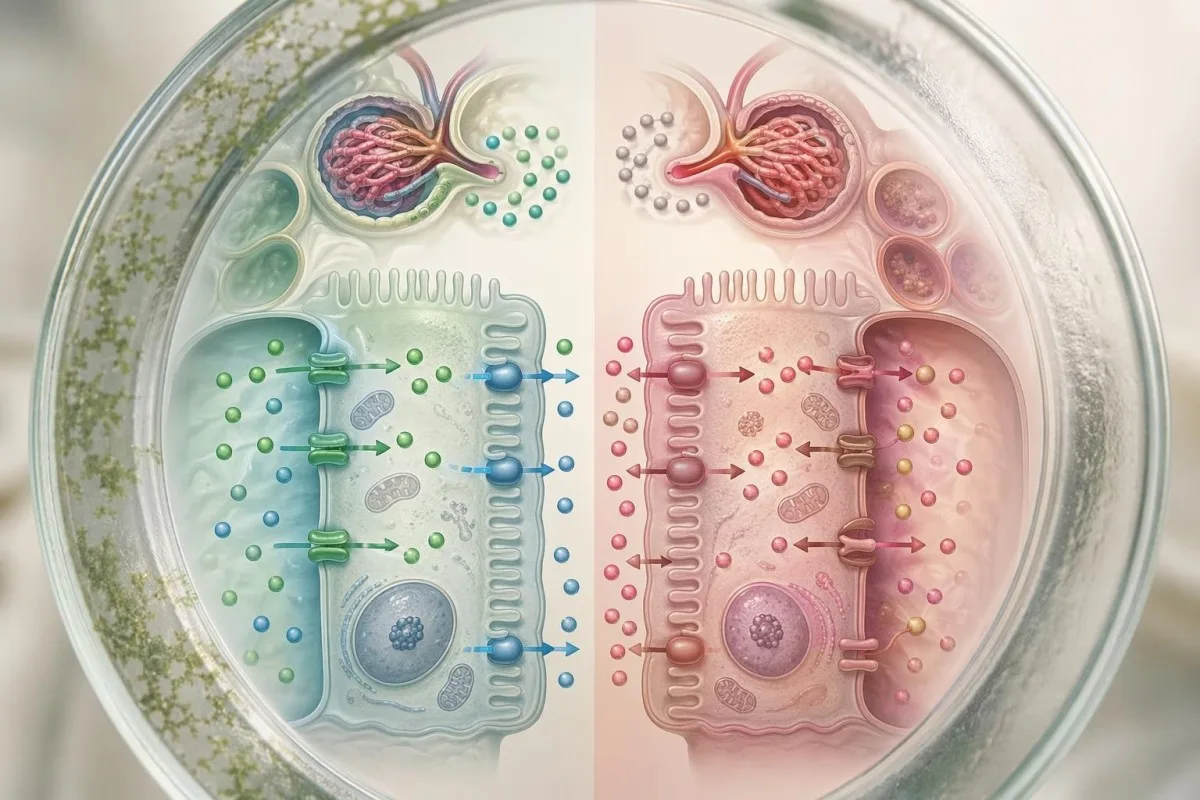
Liddle syndrome is rare, but the biochemical idea is useful: sodium channels behave as if they are overactive, renin is low, aldosterone is low, and potassium may fall. The treatment logic differs, because amiloride targets epithelial sodium channels while spironolactone may not work well.
Apparent mineralocorticoid excess can be genetic or acquired. The acquired version is often easier to miss because licorice, some chewing tobaccos, and concentrated herbal products can inhibit 11-beta-hydroxysteroid dehydrogenase type 2 and make cortisol act like aldosterone at the kidney.
Cushing physiology can also suppress renin through cortisol-related mineralocorticoid activity, though the lab pattern is variable. When bruising, proximal weakness, diabetes, or striae join hypertension, our high cortisol guide gives the next-screening logic without overcalling every stressed patient.
When high renin with low aldosterone points elsewhere
High renin with low aldosterone points away from primary aldosteronism and toward adrenal underproduction, medication effects, or impaired aldosterone synthesis. This pattern becomes more concerning when sodium is low and potassium is high.

Primary adrenal insufficiency can produce high renin, low aldosterone, low sodium, and high potassium. A sodium below 135 mmol/L with potassium above 5.0 mmol/L is not specific, but the combination should not be brushed off in a tired, dizzy patient with weight loss.
Heparin, trimethoprim, calcineurin inhibitors, and some kidney diseases can impair aldosterone production or action. I pay attention when bicarbonate is low, because type 4 renal tubular acidosis often brings potassium above 5.0 mmol/L and CO2 below about 22 mmol/L.
The fastest safety check is often a basic electrolyte panel, not another hormone test. Our electrolyte panel guide explains why sodium, potassium, chloride, and CO2 can change the urgency of high-renin results.
Blood pressure patterns that make renin testing useful
Renin testing is most useful in resistant hypertension, hypertension with low potassium, early-onset hypertension, abrupt worsening blood pressure, or blood pressure that behaves oddly after medication changes. It is less useful as a broad screening test for every mildly elevated reading.

The 2018 ESC/ESH guideline defines hypertension in clinic as at least 140/90 mmHg, while many US frameworks use 130/80 mmHg for diagnosis and risk staging (Williams et al., 2018). Renin is rarely the first test for a single 136/84 mmHg reading, but it becomes relevant when readings stay above goal on 3 medicines.
The American Heart Association scientific statement describes resistant hypertension as blood pressure above goal despite 3 antihypertensive drug classes, ideally including a diuretic, or controlled pressure requiring 4 or more drugs (Carey et al., 2018). That is the patient group where I most often ask for aldosterone, renin, potassium, creatinine, and urine albumin together.
Home blood pressure numbers matter. Before interpreting a renin result, I ask whether the patient has a validated cuff, whether readings were taken after 5 minutes seated rest, and whether our blood pressure range guide matches the clinician’s target.
What to ask before repeating an abnormal renin result
Before repeating an abnormal renin result, ask whether potassium was corrected, salt intake was usual, posture was documented, and interfering medicines were recorded. A repeat under cleaner conditions can prevent a wrong endocrine label.
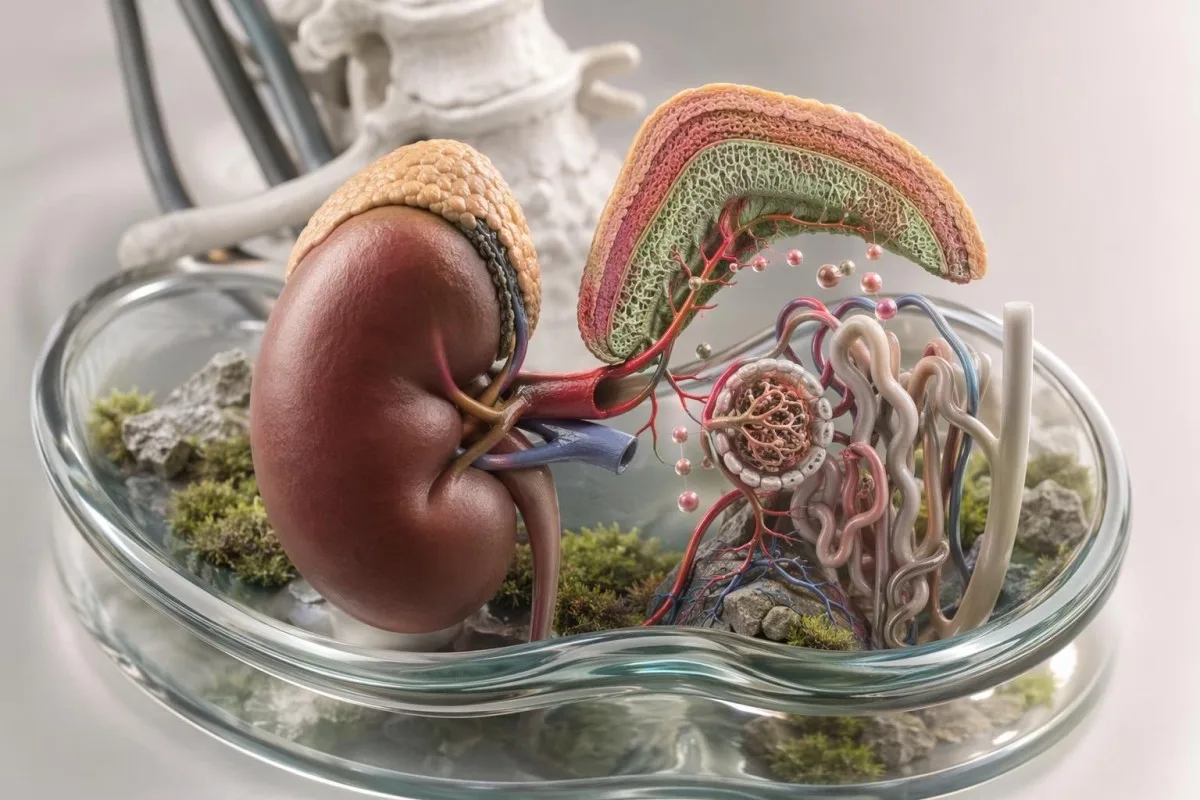
A practical repeat usually means morning collection, usual diet, normal potassium if possible, and a documented seated or upright protocol. If the first renin was drawn during gastroenteritis, heavy sweating, or a new diuretic, I would not anchor on it.
Medication changes must be supervised. Mineralocorticoid receptor antagonists are often stopped for about 4 weeks before ARR testing when safe, and many other interfering drugs for about 2 weeks, but severe hypertension or heart failure can make washout unsafe.
Thomas Klein, MD, rule of thumb: repeat the test if the result will change management and the first conditions were unclear. Our repeat lab guide and second opinion guide are useful when a report gives a flag but no clinical explanation.
How Kantesti AI reads renin in context
Kantesti AI interprets renin by combining the result with aldosterone, potassium, sodium, creatinine, eGFR, bicarbonate, blood pressure context, and medication history. That is closer to clinical reasoning than treating renin as a stand-alone abnormality.

Kantesti is an AI-powered blood test analysis tool used by 2M+ people across 127 countries and 75+ languages. For renin, the algorithm first asks whether the lab used plasma renin activity or direct renin concentration, because the units and ratio cutoffs are not interchangeable.
Kantesti AI does not diagnose primary aldosteronism from one PDF. It flags patterns such as suppressed renin plus aldosterone above 15 ng/dL plus potassium below 3.5 mmol/L, then suggests clinician-led confirmation rather than a shortcut diagnosis.
Kantesti’s neural network is described in our technology guide and is designed to detect unit mismatches, implausible combinations, and follow-up triggers. For broader safety checks, our lab error AI guide explains what automated review can flag and what still needs a human clinician.
Research standards and safe follow-up for renin results
Safe renin interpretation means respecting assay limits, guideline criteria, and the patient’s current clinical state. As of June 13, 2026, the best approach is still pattern recognition plus clinician confirmation, not a diagnosis from one abnormal value.

Kantesti is an AI biomarker interpretation platform with medical oversight, privacy-focused handling, and GDPR-aligned workflows. Our doctors review clinical logic through the Medical Advisory Board, because endocrine patterns can be subtle and sometimes genuinely uncertain.
The Kantesti validation programme includes rubric-based testing on 100,000 synthetic blood-test cases and a published clinical validation framework. Readers who want methodology can review our medical validation page and the AI benchmark rather than relying on marketing claims.
Call urgently if severe weakness, fainting, chest pain, confusion, potassium above 6.0 mmol/L, potassium below 2.8 mmol/L, or blood pressure above 180/120 mmHg occurs with symptoms. Most renin results can wait for planned review, but dangerous potassium and blood pressure patterns cannot.
Frequently Asked Questions
What does a renin blood test show?
A renin blood test shows how strongly the kidney is activating the renin-angiotensin system in response to blood flow, sodium delivery, sympathetic tone, and medication effects. Low renin with high blood pressure suggests salt-retaining or mineralocorticoid-like hypertension, especially if aldosterone is high. High renin can occur with diuretics, low salt intake, dehydration, kidney artery narrowing, or severe hypertension. Typical plasma renin activity reference ranges are roughly 0.6–4.3 ng/mL/hour, but the lab protocol matters.
What is considered low renin?
Low renin is often a plasma renin activity below about 0.6 ng/mL/hour or a direct renin concentration below about 5 mU/L, although ranges vary by laboratory and posture. Suppressed renin below 0.2 ng/mL/hour is more suspicious when blood pressure is high. If aldosterone is also high, primary aldosteronism becomes a major consideration. If aldosterone is low too, doctors consider Liddle syndrome, licorice effect, apparent mineralocorticoid excess, or very high salt intake.
What are common high renin causes?
Common high renin causes include thiazide or loop diuretics, ACE inhibitors, ARBs, sodium restriction, dehydration, renal artery stenosis, heart failure physiology, and malignant hypertension. Plasma renin activity above 4–5 ng/mL/hour is often treated as elevated, but the cutoff depends on the assay and collection conditions. High renin with high aldosterone usually suggests secondary aldosterone activation rather than primary aldosteronism. High renin with low aldosterone may point toward adrenal insufficiency, medication effects, or impaired aldosterone production.
How does potassium affect renin and aldosterone testing?
Potassium strongly affects aldosterone interpretation because potassium below 3.5 mmol/L can suppress aldosterone release. That means primary aldosteronism can look less obvious if the patient is hypokalemic during testing. Potassium above 5.0 mmol/L shifts concern toward kidney disease, medication effects, or adrenal underproduction when aldosterone is low. Many clinicians correct potassium before repeating aldosterone-renin testing if it is safe to do so.
Can blood pressure medicines change renin results?
Yes, blood pressure medicines can change renin results enough to alter the aldosterone-renin ratio. Beta blockers usually suppress renin and can falsely raise the ratio, while ACE inhibitors, ARBs, diuretics, and mineralocorticoid receptor antagonists often raise renin. Spironolactone and eplerenone may require about a 4-week washout before formal testing if the prescribing clinician says it is safe. Patients should not stop blood pressure medicines without medical supervision.
What aldosterone-renin ratio suggests primary aldosteronism?
A commonly used positive aldosterone-renin ratio is above 20–30 when aldosterone is at least 10–15 ng/dL and renin is suppressed. This is a screening pattern, not a final diagnosis. The ratio is less reliable if potassium is low, salt intake was unusual, posture was not documented, or medications interfered. Confirmatory testing and specialist review are often needed before treatment decisions.
When should an abnormal renin test be repeated?
An abnormal renin test should be repeated when the collection conditions were unclear, potassium was abnormal, salt intake changed sharply, or interfering medicines were not documented. Many clinicians prefer a morning sample after usual salt intake, at least 2 hours awake, and 5–15 minutes seated if the lab uses seated reference ranges. Repeat testing is especially reasonable when the result would lead to imaging, specialist referral, or long-term medication changes. Urgent care is different: potassium above 6.0 mmol/L, potassium below 2.8 mmol/L, or symptomatic blood pressure above 180/120 mmHg needs prompt medical attention.
Get AI-Powered Blood Test Analysis Today
Join over 2 million users worldwide who trust Kantesti for instant, accurate lab test analysis. Upload your blood test results and receive comprehensive interpretation of 15,000+ biomarkers in seconds.
📚 Referenced Research Publications
Klein, T., Mitchell, S., & Weber, H. (2026). Klein, T., Mitchell, S., & Kantesti Clinical AI Group. (2026). A Pre-Registered, Rubric-Based Automated Technical Benchmark of the Kantesti Blood-Test Interpretation Engine on 100,000 Synthetic Test Cases. Figshare. https://doi.org/10.6084/m9.figshare.32095435. Kantesti AI Medical Research.
Klein, T., Mitchell, S., & Weber, H. (2026). Klein, T., Mitchell, S., & Kantesti Medical Validation Group. (2026). Clinical Validation Framework v2.0. Zenodo. https://doi.org/10.5281/zenodo.17993721. Kantesti AI Medical Research.
📖 External Medical References





⚕️ Medical Disclaimer
This article is for educational purposes only and does not constitute medical advice. Always consult a qualified healthcare provider for diagnosis and treatment decisions.
E-E-A-T Trust Signals
Experience
Physician-led clinical review of lab interpretation workflows.
Expertise
Laboratory medicine focus on how biomarkers behave in clinical context.
Authoritativeness
Written by Dr. Thomas Klein with review by Dr. Sarah Mitchell and Prof. Dr. Hans Weber.
Trustworthiness
Evidence-based interpretation with clear follow-up pathways to reduce alarm.