A practical physician-led guide to the lab records, baseline trends, medication context and follow-up notes families should keep in one timeline.


- Health history tracker records should include the original report, reference range, units, date, fasting status, medications, diagnosis and follow-up plan.
- Baseline trend means your usual result when well; a creatinine of 1.05 mg/dL may be normal for one adult and a warning for another.
- A1c trend is best judged over 90 days because red cell lifespan makes week-to-week testing misleading.
- Kidney tracking should pair eGFR with urine albumin-creatinine ratio; UACR of 30 mg/g or higher is abnormal if persistent.
- Ferritin context matters because ferritin can rise with inflammation; a CRP result helps separate iron stores from tissue response.
- Medication timelines should record start dates, dose changes and stop dates because TSH, potassium, liver enzymes and creatinine often shift after drugs.
- Children's labs need age-specific ranges; adult reference intervals can misread normal puberty, infancy and growth patterns.
- Overtesting prevention means repeating targeted markers at sensible intervals, such as TSH 6-8 weeks after thyroid dose changes.
What a health history tracker should save first
A health history tracker should save the original lab report, date and time, units, reference range, fasting status, medications, diagnosis being checked and the follow-up decision. For families, the useful version is one timeline across children, adults and older parents, not a pile of disconnected PDFs. Kantesti is an AI blood test interpretation platform that turns uploaded lab PDFs or photos into contextual trend summaries in about 60 seconds, but the output is only as good as the history you keep beside the numbers.
In my clinic, the missing item is rarely the cholesterol number; it is the reason the test was ordered. A ferritin of 18 ng/mL means something different in a 14-year-old with heavy periods, a 42-year-old endurance runner, and a 78-year-old on aspirin after a stomach ulcer.
The original PDF matters because labs change reference intervals, machines and units. A potassium of 5.2 mmol/L may be flagged in one laboratory and not in another, so your tracker should preserve the lab's own range rather than rewriting it into a generic note.
Thomas Klein, MD, my own rule is simple: save anything that would change a doctor's next question. If you want a deeper method for personal baselines, our guide to longitudinal lab trends explains why a stable personal pattern often beats a single normal-or-abnormal flag.
Build one timeline across generations
A multigenerational health tracker should separate each person's records while using the same timeline structure for everyone. That lets a clinician compare inherited risk patterns, medication effects and life-stage changes without mixing up privacy, consent or age-specific interpretation.
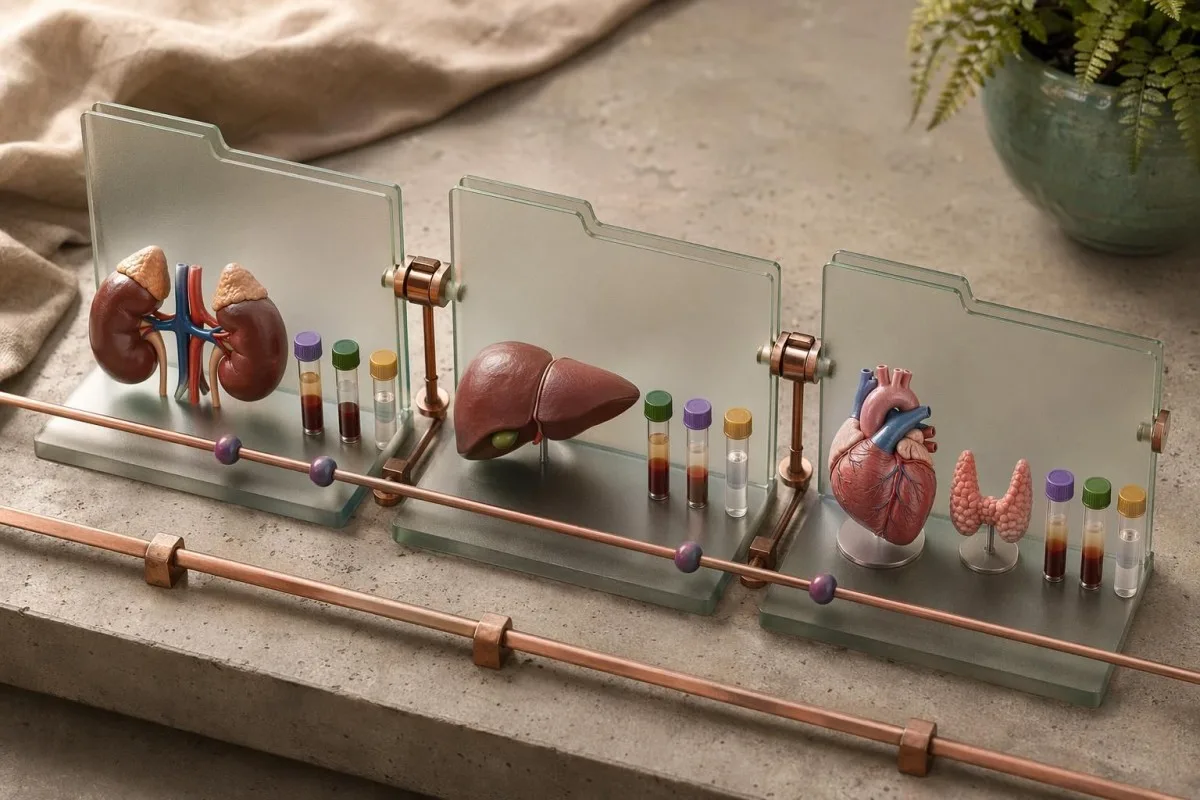
I like one folder per person and one family-level index. The family index should record diagnoses that repeat across generations: premature heart disease before age 55 in men or 65 in women, type 2 diabetes, chronic kidney disease, thyroid disease, autoimmune disease, clotting disorders and unusual medication reactions.
Kantesti LTD is a UK company, and our family features are built around permission rather than assumption. A caregiver may track an aging parent's sodium after a diuretic change, but that is different from giving every relative open access to all reproductive, infectious disease or mental health testing.
The practical template is boring but powerful: name, date of birth, biological sex at birth if clinically relevant, current gender identity if relevant to care, country, usual lab, chronic diagnoses, current medications and emergency contacts. Families who want a ready-made structure can compare their setup with our family records app workflow.
Record the context after every sample collection
Lab context should be recorded within 24 hours because fasting, illness, exercise, menstrual timing, sleep, travel and supplements can move results by clinically meaningful amounts. A bare result without context often leads to a repeat test that could have been avoided.
Creatine kinase can rise above 1,000 IU/L after intense resistance exercise, and AST may rise with it even when the liver is fine. I have seen a worried 52-year-old marathon runner with AST 89 IU/L and normal ALT; the missing note was a long downhill race 36 hours earlier.
Fasting is not all-or-nothing. Triglycerides can rise 20-30 mg/dL after a fatty meal in some people, while glucose may stay normal; recording last meal time and alcohol intake is more useful than writing only yes or no.
The minimum note set after each test is: fasting hours, recent infection or vaccination, hard exercise within 72 hours, new supplements, missed medications, pregnancy or postpartum status, cycle day when relevant and symptoms. Our post-draw context checklist is deliberately short because families will not use a tracker that feels like homework.
Save adult baseline panels even when normal
Adult baseline records worth saving include CBC, comprehensive metabolic panel, lipid panel, HbA1c or fasting glucose, TSH, ferritin with iron studies when indicated, vitamin B12, 25-OH vitamin D and urine albumin-creatinine ratio for risk groups. Normal results are not wasted; they define the person's usual range.
A CBC baseline should include hemoglobin, MCV, RDW, WBC differential and platelets. Adult hemoglobin is often about 12.0-15.5 g/dL in women and 13.5-17.5 g/dL in men, but I care more when a person's hemoglobin falls from 15.0 to 12.7 g/dL over 18 months.
A metabolic panel baseline should preserve creatinine, eGFR, sodium, potassium, bicarbonate, calcium, albumin, ALT, AST, alkaline phosphatase and bilirubin. In Kantesti AI reports, we treat a rising creatinine plus falling albumin differently from an isolated borderline creatinine after dehydration.
A1c of 5.7-6.4% is commonly used for prediabetes, while 6.5% or higher supports diabetes if confirmed; the USPSTF recommends screening adults aged 35-70 with overweight or obesity for prediabetes and type 2 diabetes (USPSTF, 2021). For families building a core marker list, our essential health markers page helps separate useful baselines from expensive noise.
Children's records need age-specific interpretation
A child's lab history should save newborn screening, growth-linked CBC values, ferritin or iron studies when symptomatic, vitamin D when risk factors exist, thyroid tests when growth changes, and any abnormal urine or glucose result. A dependents blood test cannot be interpreted safely with adult ranges.
Infants naturally have different hemoglobin, alkaline phosphatase and lymphocyte patterns than adults. Alkaline phosphatase can be much higher during growth because bone turnover is active, so an adult-style liver panic is a common false alarm.
Ferritin below 15-20 ng/mL often supports iron deficiency in children, but a normal ferritin during infection can mislead because ferritin rises with tissue response. I usually want CRP or recent illness history beside ferritin before deciding whether the iron story is settled.
Teenagers deserve their own timeline because puberty changes lipids, insulin sensitivity, hemoglobin and thyroid interpretation. Parents can cross-check age bands using our pediatric range guide before assuming a starred result is dangerous.
Graph cardiometabolic markers as slopes, not snapshots
Cardiometabolic tracking should graph LDL-C, non-HDL-C, triglycerides, HDL-C, ApoB when available, HbA1c, fasting glucose, blood pressure, weight change and waist trend. The slope over 2-5 years often shows risk before any single value crosses the laboratory cutoff.
The 2018 AHA/ACC cholesterol guideline recommends considering ApoB as a risk-enhancing marker, especially when triglycerides are 200 mg/dL or higher (Grundy et al., 2019). ApoB above 130 mg/dL is commonly treated as a risk-enhancing level, but family history can shift the conversation at lower values.
Kantesti is an AI-powered blood test analysis tool used by 2M+ people across 127 countries, so we see the same trap repeatedly: LDL looks acceptable, but triglycerides and HDL show insulin resistance creeping in. A triglyceride-to-HDL ratio above about 3.0 in mg/dL units is not diagnostic, yet it is a useful prompt to review diet, sleep and waist gain.
A1c should usually be rechecked after roughly 3 months when changing lifestyle or medication, not every 2 weeks. Families tracking inherited heart risk may find our ApoB risk guide useful when LDL-C and family history disagree.
Aging parents need kidney, liver and frailty context
For aging parents, save eGFR, creatinine, urine albumin-creatinine ratio, sodium, potassium, bicarbonate, albumin, hemoglobin, B12, TSH, calcium, vitamin D and liver enzymes in one timeline. These markers often explain falls, confusion, weakness and medication side effects before a dramatic diagnosis appears.
KDIGO defines chronic kidney disease as kidney structure or function abnormalities present for more than 3 months, including eGFR below 60 mL/min/1.73 m² or persistent urine albumin-creatinine ratio of 30 mg/g or higher (KDIGO, 2024). A single low eGFR after dehydration is not the same thing.
Sodium below 130 mmol/L in an older adult can contribute to falls, gait instability and confusion, especially after thiazide diuretics or antidepressant changes. I have seen families chase dementia workups when the timeline clearly showed sodium drifting from 139 to 128 mmol/L after a new pill.
Albumin below 3.5 g/dL is not just a liver marker; it can reflect nutrition, kidney loss, inflammation or frailty. Caregivers can use our guide to tracking parent labs to decide what to bring to the next appointment instead of arriving with 70 pages of portal printouts.
Medication timelines prevent false alarms
A medication timeline should record the drug name, dose, start date, stop date, missed doses, supplement changes and the lab markers expected to move. This prevents families from mislabeling predictable drug effects as new disease.
Levothyroxine changes usually need 6-8 weeks before TSH fully reflects the new dose. Retesting at 10 days often creates noise, and I still see patients frightened by a TSH that was checked before the physiology had time to respond.
ACE inhibitors, ARBs and spironolactone can raise potassium and creatinine soon after starting or increasing the dose. A creatinine rise up to about 30% may be acceptable in some clinical settings, but potassium above 5.5 mmol/L deserves prompt review.
Metformin deserves a B12 note because long-term use is linked with lower B12 in a subset of patients; PPIs can complicate magnesium, B12 and iron interpretation over time. Our medication monitoring timeline shows which labs usually change fast and which change slowly.
Put diagnoses and life events beside the lab line
Diagnoses, procedures and life events should sit next to lab results because pregnancy, menopause, surgery, infection, blood donation, major weight loss and chemotherapy can all change interpretation. A lab value without the event that caused it can look like a mystery.
Blood donation can lower ferritin for months even when hemoglobin has recovered. A ferritin drop from 55 to 18 ng/mL after two donations is not mysterious, but it becomes one if nobody records the donation dates.
Pregnancy changes hemoglobin, platelets, thyroid targets, alkaline phosphatase and kidney filtration. Menopause commonly shifts lipids and iron stores; a rising LDL-C after the final menstrual period is often physiology plus lifestyle, not personal failure.
Surgery and acute infection can raise CRP, platelets and ferritin for weeks. A year-over-year family record is easier to read when events are visible, and our lab history guide gives a practical structure for storing those dates.
Separate normal variation from real drift
A health tracker should flag sustained drift rather than every small swing, because many lab values vary day to day by 5-20%. The clinically useful question is whether the change exceeds expected biological and analytical variation for that person.
Creatinine may move 0.1-0.2 mg/dL with hydration, muscle mass and cooked meat intake, while triglycerides can swing substantially after meals. A one-off triglyceride of 181 mg/dL after dinner deserves a different response than three fasting results rising from 110 to 190 mg/dL.
TSH often varies by time of day and recent illness. A TSH of 4.6 mIU/L with normal free T4 after a viral illness may be watched, while TSH 8.0 mIU/L plus positive TPO antibodies and symptoms deserves a more deliberate thyroid discussion.
This is where I find trend graphs genuinely useful. Our lab variability guide explains why the same absolute change can be trivial for sodium but meaningful for platelets, ferritin or eGFR.
Run a family wellness program without overtesting
A family wellness program should use risk-based intervals, not the same giant panel for everyone every month. Most healthy adults need periodic core markers, while children, pregnant people, athletes and older adults need targeted testing tied to symptoms, medication or risk.
Annual testing is not automatically better. For a stable young adult with normal CBC, metabolic panel, lipids and A1c, repeating every 12-24 months may be enough unless symptoms, pregnancy planning, medication or family history changes the risk.
Some markers have built-in timing. Lipids are often rechecked 4-12 weeks after starting a statin or major diet change; A1c needs about 3 months; ferritin after iron treatment often needs 8-12 weeks; vitamin D usually needs at least 8-12 weeks after a dose change.
Overtesting creates false positives, and false positives create more testing. Families coordinating several people can use our household lab planning guide to align appointments without turning preventive care into a monthly alarm system.
Share records safely with clinicians and caregivers
Family lab records should be shared with explicit consent, limited access and a clear purpose. The safest tracker keeps sensitive results private unless the person chooses to share them with a clinician, caregiver or AI interpretation tool.
Kantesti's neural network can read multilingual lab reports across 75+ languages, but privacy still starts with the family. A teenager's iron panel may be appropriate for a parent to manage; an STI test, pregnancy test or mental health medication monitoring result may not be.
Use role-based sharing when possible. A caregiver might need sodium, potassium, kidney function and medication history for an aging parent, while a sports coach does not need ferritin, hormones or genetic risk results.
GDPR-aligned handling means keeping only what is needed, protecting identifiers and allowing people to withdraw access. For practical consent language and family permissions, see our family sharing guide.
How AI can flag patterns clinicians should verify
AI can help by detecting combinations, slopes, unit changes and missing context that humans may overlook, but it should not replace clinical diagnosis. The best use is triage: identify what deserves attention, what needs confirmation and what can wait.
Kantesti is an AI biomarker interpretation platform that reads lab reports in context rather than treating each marker as an isolated flag. A high ferritin plus high CRP is interpreted differently from high ferritin with high transferrin saturation.
Kantesti AI analyzes uploaded PDFs and photos by matching marker names, units, reference ranges and longitudinal patterns, then highlighting results that fit common clinical pathways. It can flag a possible lab error, such as potassium elevation with hemolysis notes, but a clinician still decides what to do next.
Thomas Klein, MD, I am comfortable using AI for pattern sorting; I am not comfortable using it as a final diagnosis. Readers who want the limitations spelled out should review our AI interpretation guide, and physician oversight is described by our medical advisory board.
Research publications and clinical oversight
Kantesti's clinical oversight combines physician review, technical benchmarking and topic-specific research publications. For a family tracker, that matters because iron studies, coagulation markers and kidney panels are exactly where unit errors and missing context can mislead.
Our iron work focuses on the pattern between serum iron, transferrin saturation, ferritin and TIBC rather than one marker alone. The iron studies guide is especially relevant for families tracking heavy periods, endurance training, vegetarian diets, pregnancy and blood donation.
Coagulation records need even more context because D-dimer rises with age, pregnancy, surgery, infection and many inflammatory states. The coagulation reference guide explains why aPTT, PT/INR, fibrinogen, D-dimer and protein C should not be interpreted as interchangeable clotting screens.
As of June 20, 2026, our benchmark and physician review process is documented on the clinical validation page. That transparency matters because a good tracker should reduce unnecessary testing, not create a new reason to chase every borderline result.
Frequently Asked Questions
What lab records should every family save?
Every family should save the original lab report, reference ranges, units, collection date and time, fasting status, medications, supplements, diagnosis being evaluated and follow-up instructions. Core adult records usually include CBC, metabolic panel, lipid panel, HbA1c or glucose, TSH, ferritin when relevant and kidney markers. For children, save newborn screening and age-specific abnormal results because adult ranges can misread normal growth patterns.
How long should I keep blood test results?
Keep baseline and abnormal blood test results indefinitely, especially CBC, creatinine/eGFR, lipids, HbA1c, ferritin, thyroid tests and urine albumin-creatinine ratio. A result from 8 years ago may reveal that a current value is a true change rather than a lifelong pattern. Routine duplicate normal reports can be summarized, but the original PDF is still useful when units or reference intervals differ.
What is the best way to track lab trends for aging parents?
For aging parents, track eGFR, creatinine, urine albumin-creatinine ratio, sodium, potassium, bicarbonate, albumin, hemoglobin, B12, TSH, calcium, vitamin D and liver enzymes alongside medication changes. Sodium below 130 mmol/L, potassium above 5.5 mmol/L or a rapid creatinine rise should be reviewed promptly. A caregiver timeline should also record falls, confusion, dehydration, hospital visits and new prescriptions.
How often should families repeat routine blood tests?
Testing frequency should depend on age, symptoms, risk and medications rather than a fixed monthly schedule. HbA1c usually needs about 3 months to reflect a meaningful change, TSH needs 6-8 weeks after thyroid dose changes, and lipids are often rechecked 4-12 weeks after starting therapy or a major diet change. Healthy adults with stable results may not need full panels more than every 12-24 months unless risk changes.
Can AI interpret family blood test history safely?
AI can help interpret family blood test history by finding trends, unit changes, missing context and marker combinations that deserve clinician review. It should not diagnose disease on its own, especially in children, pregnancy, cancer care, severe symptoms or critical values. The safest use is to upload original reports, include medication and diagnosis context, and take urgent or persistent abnormalities to a licensed clinician.
What context should I write down after a blood test?
After a blood test, write down fasting hours, last meal timing, recent infection, vaccination, strenuous exercise within 72 hours, alcohol intake, new supplements, missed medicines and current symptoms. For hormone and iron results, also record menstrual cycle day, pregnancy or postpartum status when relevant. These details can explain changes such as triglycerides rising after food, CK rising after exercise or ferritin rising during inflammation.
Should I track home blood pressure or glucose readings alongside laboratory results?
Yes. Home blood pressure, weight, and glucose logs can help explain laboratory changes and give clinicians a fuller picture. Record the device, date and time, and a short series of readings rather than relying on one unusually high or low measurement.
Should I add genetic test results to a family health history tracker?
Keep the original report, testing company or laboratory, date, and any updated variant classification, but do not use a direct-to-consumer result alone to diagnose risk. A clinician or genetics professional can decide whether a medically important finding needs confirmation in a clinical laboratory.
Get AI-Powered Blood Test Analysis Today
Join over 2 million users worldwide who trust Kantesti for instant, accurate lab test analysis. Upload your blood test results and receive comprehensive interpretation of 15,000+ biomarkers in seconds.
📚 Referenced Research Publications
Klein, T., Mitchell, S., & Weber, H. (2026). Iron Studies Guide: TIBC, Iron Saturation & Binding Capacity. Kantesti AI Medical Research.
Klein, T., Mitchell, S., & Weber, H. (2026). aPTT Normal Range: D-Dimer, Protein C Blood Clotting Guide. Kantesti AI Medical Research.
📖 External Medical References
KDIGO CKD Work Group (2024). KDIGO 2024 Clinical Practice Guideline for the Evaluation and Management of Chronic Kidney Disease. Kidney International.
⚕️ Medical Disclaimer
This article is for educational purposes only and does not constitute medical advice. Always consult a qualified healthcare provider for diagnosis and treatment decisions.
E-E-A-T Trust Signals
Experience
Physician-led clinical review of lab interpretation workflows.
Expertise
Laboratory medicine focus on how biomarkers behave in clinical context.
Authoritativeness
Written by Dr. Thomas Klein with review by Dr. Sarah Mitchell and Prof. Dr. Hans Weber.
Trustworthiness
Evidence-based interpretation with clear follow-up pathways to reduce alarm.