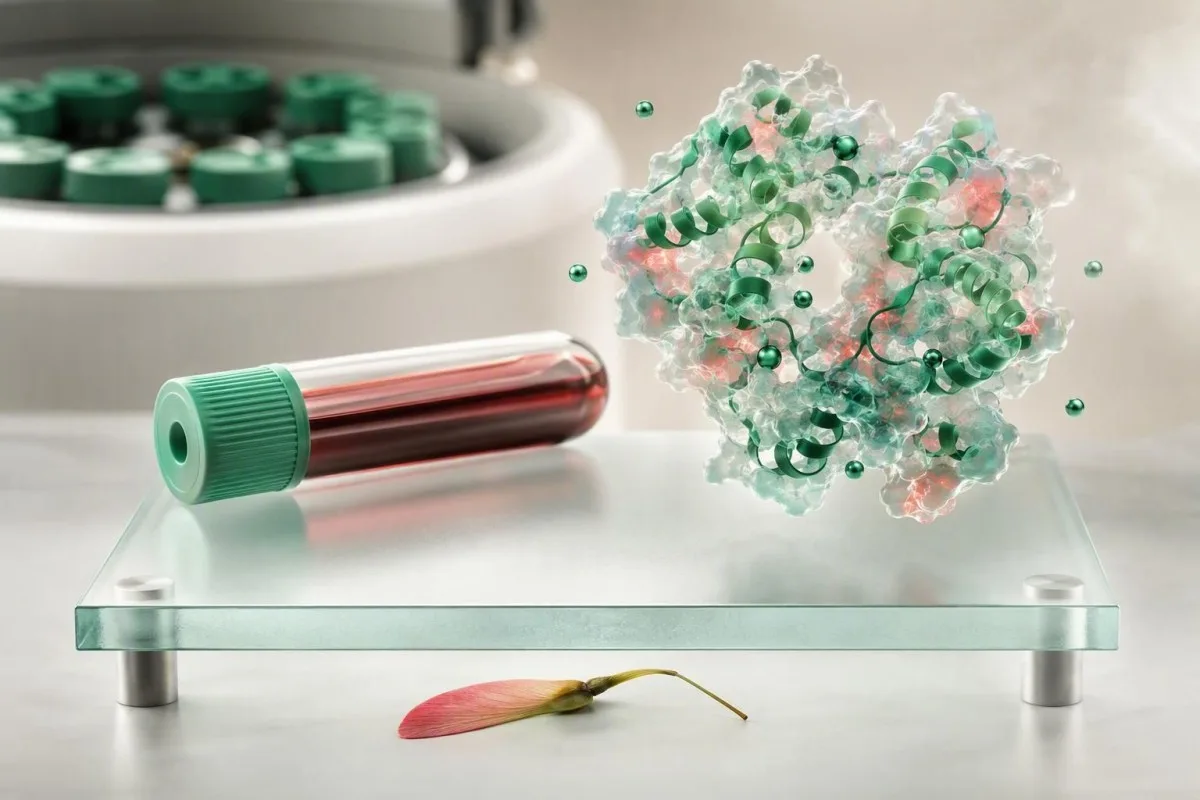
A serum zinc result can shift substantially with a recent meal, afternoon collection, acute illness, low albumin or a poorly handled sample. Here is how I separate a real zinc problem from a pre-analytic artefact before recommending treatment.


- Morning fasting draw is the most comparable zinc blood test condition; aim for 8–12 hours without food unless your clinician says otherwise.
- Serum zinc cutoffs used for population assessment are often below 70 µg/dL (10.7 µmol/L) for fasting morning adult women and below 74 µg/dL (11.3 µmol/L) for adult men.
- Time of day matters because serum zinc commonly falls by 10–20% from morning to afternoon, even without a true change in body zinc.
- CRP elevation can temporarily lower serum zinc during infection, injury or inflammatory disease; a low result during illness should rarely trigger immediate long-term treatment.
- Albumin carries about 60% of circulating zinc, so hypoalbuminaemia can produce a low total serum zinc result without proving depleted tissue stores.
- Hemolysis can falsely raise zinc because cellular elements contain much more zinc than serum; a visibly hemolysed specimen may be unsuitable.
- Trace-element collection tubes and prompt sample separation reduce contamination risk, especially for unexpectedly high zinc results.
- Do not self-treat a borderline result with high-dose zinc; sustained intake above 40 mg/day of elemental zinc can impair copper absorption.
- Repeat testing works best when the same laboratory, morning timing, fasting status and supplement pause are used each time.
What a serum zinc result can—and cannot—tell you
A zinc blood test is most reliable when it is drawn in the morning after 8–12 hours of fasting, interpreted alongside CRP and albumin, and collected in a trace-element-safe tube. A single low serum zinc result does not by itself prove zinc deficiency, because meals, time of day, inflammation and protein status can move the number before any body zinc store has changed.
Most laboratories report serum or plasma zinc, not a direct measurement of total-body zinc. Typical adult reference intervals are roughly 60–120 µg/dL (9.2–18.4 µmol/L), but the interval belongs to that laboratory's method and local population; it is not a universal diagnostic threshold.
For population screening, the International Zinc Nutrition Consultative Group has used fasting morning cutoffs below 70 µg/dL (10.7 µmol/L) for women and below 74 µg/dL (11.3 µmol/L) for men. Those figures are useful context, yet they are less certain for one unwell individual than many result portals imply (Brown et al., 2004).
As of August 5, 2026, my practical rule is simple: do not prescribe a major supplement course from one borderline value obtained after lunch or during a respiratory infection. Kantesti is an AI blood test analyzer that places zinc beside albumin, CRP, copper, CBC indices and the collection context rather than treating one number as a verdict.
Why total serum zinc is an imperfect proxy
Only a tiny fraction of body zinc circulates in serum, while most is held inside cells, bone and muscle. That is why zinc testing is best used as one clue in a pattern that may also include diet, persistent diarrhoea, wound healing, hair changes, taste change and other mineral markers.
Serum, plasma and whole-blood zinc are different tests
Serum zinc, plasma zinc and whole-blood zinc should not be compared as though they were the same assay. Serum and plasma mainly reflect extracellular zinc at that moment, while whole blood contains zinc-rich cellular elements and requires a different reference interval.
Serum is the liquid remaining after a sample clots; plasma is obtained from an anticoagulated sample. Serum zinc can run modestly higher than plasma because clotting and delayed separation may release zinc from platelets, so a trend should ideally use the same specimen type every time.
Whole-blood zinc is sometimes requested in specialist nutrition or exposure work, but it is not a simple upgrade over serum. Cellular zinc dominates that measurement, and delayed processing, a variable haematocrit or partial hemolysis can change it in ways that do not mirror serum zinc.
When I review a report, I first check whether the laboratory says serum, plasma or whole blood before judging a flag. This distinction is especially useful for patients comparing results across countries; our explainer on serum versus plasma shows why the specimen line matters.
Does a zinc test require fasting?
Fasting is not always mandatory for a zinc blood test, but an 8–12-hour overnight fast makes a borderline serum zinc result far easier to interpret and compare. Food intake usually lowers circulating zinc for several hours through post-meal redistribution and dilution, rather than revealing an abrupt nutritional deficit.
Water is generally fine during the fasting window, while tea, coffee, juice, milk, meals and mineral drinks should wait until after collection unless the lab gives different instructions. A fatty breakfast is not uniquely problematic; any meal can alter serum zinc, and the direction and size of change vary between people.
Oral zinc tablets can create a misleading short-lived rise, particularly if taken within a few hours of the draw. I usually ask patients to record the dose and timing, then follow the ordering clinician's instructions on whether to pause non-essential supplements for 24 hours; prescribed medicines should never be stopped casually.
Fasting for 16–20 hours is not necessarily better. Extended fasting can change hydration, bilirubin and other analytes, so use the laboratory's requested preparation rather than trying to optimise the score; see our guide to fasting and supplement effects for practical details.
Why morning timing changes serum zinc
Serum zinc is usually highest in the early morning and lower later in the day, with a diurnal difference commonly around 10–20%. A 2 pm sample of 62 µg/dL may therefore be less concerning than an identical fasting 8 am value, depending on the laboratory's collection-specific interval.
The original NHANES reanalysis by Hotz and colleagues found that sex, fasting status and collection time all affected serum zinc distributions enough to require different assessment cutoffs (Hotz et al., 2003). That is an unusually clear example of a lab value where pre-analytics can rival the biological signal.
Many hospital laboratories still print one broad reference interval without noting the collection time. If the draw was after midday, ask whether the laboratory has a time-specific interval or whether a fasting morning repeat would answer the question more cleanly.
Shift workers are a special case. In my experience, the most defensible approach is to sample after the person's usual overnight sleep and a consistent fasting interval, then document their work schedule rather than forcing an artificial 8 am draw; intermittent fasting can shift other labs too.
Inflammation can lower zinc before zinc stores are low
Acute inflammation can lower serum zinc within hours because cytokine signalling moves zinc from circulation into the liver and immune system. A low zinc result with a raised CRP, fever, recent surgery or active autoimmune flare is therefore a poor standalone basis for diagnosing chronic dietary deficiency.
Serum zinc behaves as a negative acute-phase reactant: it tends to fall when CRP rises. King et al. describe this limitation in the BOND zinc review, which is why inflammation status belongs beside zinc in both clinical care and nutrition surveys (King et al., 2016).
A CRP above 10 mg/L makes a marginal low zinc result substantially harder to interpret, although there is no magic CRP number that converts the test into noise. A patient with zinc of 55 µg/dL during pneumonia may have normal baseline zinc after recovery—or may have both inflammation and true low intake.
I commonly repeat the test about 2–4 weeks after acute illness has resolved, provided the result will change care. Pairing CRP with albumin can prevent a false label of deficiency; our review of the CRP-to-albumin pattern explains what those markers add.
Low albumin can make total zinc look low
About 60% of circulating zinc is bound to albumin, so low albumin can lower measured total serum zinc even when tissue zinc status remains uncertain. Albumin below about 3.5 g/dL (35 g/L) should prompt a broader protein, liver, kidney and inflammatory assessment before supplementation decisions.
Another roughly 30% of circulating zinc binds to alpha-2-macroglobulin, with a smaller fraction attached to amino acids. This protein binding means that serum zinc is partly a measurement of transport capacity, not merely dietary zinc exposure.
A 68-year-old with oedema, albumin of 2.8 g/dL and zinc of 54 µg/dL needs evaluation of the cause of hypoalbuminaemia first. Protein loss in urine, impaired hepatic synthesis, malabsorption and systemic inflammation all change the clinical question; zinc may still need replacement, but the number cannot explain the whole problem.
Do not try to mathematically “correct” zinc for albumin using an internet formula. Those equations are not sufficiently validated for individual prescribing, whereas a serum proteins guide helps identify the accompanying pattern that deserves medical review.
Hemolysis and contamination can falsely raise zinc
Hemolysis and trace-metal contamination are the two pre-analytic errors most likely to create a falsely high zinc value. Cellular elements contain far more zinc than serum, so even modest sample breakdown can push a result upward and obscure a genuine low or normal value.
A hemolysed specimen may look pink to red after centrifugation, although mild hemolysis can be invisible. Laboratories often assign a hemolysis index and may suppress zinc reporting when interference is significant; if the report flags hemolysis, a redraw is usually more informative than debating the number.
Contamination can occur from unsuitable collection tubes, transfer devices, environmental dust or non-trace-element-certified materials. The correct tube cap colour is not universal because manufacturers use different systems, so the safest instruction is to let the laboratory specify its trace-element-free collection device.
Kantesti AI is an AI lab test interpretation service that flags a high zinc result beside copper, MCV, haemoglobin and sample comments, because zinc excess from a real exposure has different implications from a compromised specimen. For a useful parallel, see why hemolysis changes potassium.
How a laboratory protects zinc accuracy
Reliable zinc analysis requires trace-element-clean collection, timely serum separation and a method calibrated for low-concentration metal measurement. Inductively coupled plasma mass spectrometry and atomic absorption methods can both perform well when laboratories control contamination and use appropriate quality materials.
A good trace-element workflow separates serum or plasma from cellular components promptly and avoids unnecessary transfers. Delayed contact with cells raises the risk of zinc leakage, while poor storage conditions can introduce additional variability in small concentrations.
Method differences matter near the lower boundary. A change from 69 to 73 µg/dL across two laboratories may be entirely compatible with analytic variation, especially when the samples were collected on different days, at different times or in different states of health.
Patients rarely receive the phlebotomy details that make or break a trace-metal result. If you are arranging a repeat, ask the lab whether it provides a trace-element protocol and keep a record of tube type, draw time and fasting duration; tube colour conventions are useful background, not a substitute for local instructions.
How to read a low zinc result without overdiagnosing
A low serum zinc result is more persuasive when it recurs on a fasting morning sample after recovery from illness and fits a credible clinical or nutritional pattern. Values below 50–55 µg/dL (7.7–8.4 µmol/L) under standard conditions generally deserve more attention than a one-off reading just below the laboratory limit.
Common contributors include low overall energy or protein intake, restrictive diets without planning, chronic diarrhoea, coeliac disease, inflammatory bowel disease, bariatric surgery and long-term high-output losses. Older adults and people with alcohol-related malnutrition may have several of these risks at once.
Symptoms such as altered taste, hair shedding, poor wound healing, dermatitis and frequent infections are nonspecific. The reason we take them seriously when paired with repeated low zinc is that together they suggest impaired zinc availability, whereas any symptom alone usually does not.
I would also check for iron, folate, B12 and protein deficits when the history suggests malabsorption or restricted intake. Our review of causes of low zinc helps patients prepare a focused discussion rather than buying a high-dose supplement on guesswork.
When a high zinc result may be real
A persistently high zinc result is most often linked to supplements, cold remedies, fortified products or zinc-containing denture adhesive—not a medical emergency. Confirmation with a clean, fasting morning redraw is sensible before searching for rare explanations, particularly if the first sample carried a hemolysis comment.
Adults need only 8 mg/day of zinc for women and 11 mg/day for men in usual dietary allowance terms, while the tolerable upper intake level for adults is 40 mg/day of elemental zinc from all sources in United States guidance. Product labels can be deceptive: “50 mg zinc gluconate” may mean 50 mg of the zinc compound rather than 50 mg elemental zinc, but many products do contain 25–50 mg elemental zinc.
Excess zinc reduces copper absorption in the gut by inducing metallothionein, which traps copper in intestinal cells. Over months, this can contribute to low copper, anaemia, neutropenia and sensory neurological symptoms—one reason an apparently harmless supplement deserves a medication-style review.
A high zinc level with low copper or unexplained cytopenias is a pattern for clinician review, not self-correction with multiple minerals. Read our focused guide to high zinc exposure clues and the separate discussion of high copper results before assuming either number tells the whole story.
What to do with zinc supplements before testing
For a routine zinc measurement, record every zinc-containing product and ask the ordering clinician whether non-essential zinc should be withheld for 24 hours before collection. The safest preparation is not to stop prescribed treatment independently, especially when zinc has been prescribed for documented deficiency or a specific condition.
Zinc hides in more places than patients expect: multivitamins, lozenges, immune blends, acne products, bariatric formulations and denture products. I ask for photographs of labels because “one daily vitamin” can contain 5 mg, 15 mg or 50 mg of elemental zinc, and those are clinically different exposures.
If treatment is being monitored, consistency may matter more than a pause. A clinician may deliberately request a trough-like measurement before the daily dose, but this is a treatment-specific instruction—not a general internet rule.
Dr. Thomas Klein's advice is to bring the actual containers or clear label photos to the appointment, including copper products. Our evidence-based overview of zinc supplement dosing explains why dose, duration and copper follow-up should travel together.
How to repeat a zinc test for a meaningful trend
A meaningful zinc trend uses the same laboratory, the same specimen type, a similar morning collection time and similar fasting and supplement conditions. Without that consistency, a change of 10–15 µg/dL may reflect ordinary biological and analytic variation rather than recovery or decline.
Write down five details after each draw: collection date, clock time, fasting duration, zinc dose within the prior 48 hours and any infection, fever or steroid course. This small record is often more valuable than repeating an expensive micronutrient panel under random conditions.
For uncomplicated suspected dietary deficiency, clinicians often reassess after 8–12 weeks of a targeted nutrition change or prescribed replacement, not after a few days. Red-cell indices and copper may need earlier attention when higher zinc doses are used or baseline nutrition is poor.
Kantesti is an AI biomarker interpretation platform that compares results with the preparation details you save, helping distinguish a plausible trend from a timing artefact. Our guide to real versus apparent lab changes gives a useful framework for any repeated blood marker.
What AI interpretation can flag—and what it cannot verify
AI can identify a zinc result that conflicts with albumin, CRP, copper or previous results, but it cannot prove whether a sample was contaminated or replace clinical assessment. The laboratory's specimen comment, the patient's supplement history and a properly prepared repeat remain decisive evidence.
A useful interpretation system should ask whether the test was serum, plasma or whole blood; whether it was fasting; and whether the sample was drawn during illness. If those fields are absent from a PDF, the output should acknowledge uncertainty rather than manufacture precision.
Kantesti AI reads uploaded reports in roughly 60 seconds and can surface the combination of low zinc, low albumin and raised CRP as a context warning, not a diagnosis. Our AI accuracy checklist shows the source details patients should verify before acting on any automated summary.
Accuracy is not merely matching a laboratory flag. It means recognising when a result should be repeated before treatment, when a clinician needs to investigate malabsorption, and when a high-dose supplement could do harm; our standards are described in clinical validation materials.
When a zinc result needs prompt clinical follow-up
Seek timely clinical advice for a low zinc result accompanied by significant weight loss, persistent diarrhoea, poor wound healing, recurrent infections or signs of malnutrition. A zinc value alone is rarely an emergency, but the illness causing poor intake, malabsorption or protein loss can be.
Prompt review is also warranted when high zinc accompanies numbness, gait difficulty, unexplained anaemia or a low neutrophil count, because chronic zinc excess can create clinically meaningful copper deficiency. Severe weakness, confusion, chest symptoms or rapidly worsening illness should be assessed urgently regardless of the zinc number.
Pregnancy, infancy, inflammatory bowel disease, dialysis, bariatric surgery and long-term parenteral nutrition require individualized interpretation. Reference intervals and supplement needs can differ, and a generic adult target is not adequate for every one of these situations.
I am Dr. Thomas Klein, and the question I want patients to take to their clinician is: “Was this a true fasting morning, inflammation-free, trace-element-safe result, and what would a repeat change?” Our medical advisory team applies that same caution: treat the patient and the pattern, not a lone zinc flag.
Frequently Asked Questions
Do I need to fast for a zinc blood test?
An 8–12-hour overnight fast is preferred for a zinc blood test because a recent meal can lower serum zinc for several hours and make borderline results harder to compare. Water is usually acceptable, but coffee, tea, juice, milk and food should generally wait until after the sample unless your laboratory gives different directions. Record zinc supplements and ask the ordering clinician whether non-essential products should be withheld for 24 hours. Fasting is especially useful when the result will guide treatment or be compared with an earlier value.
What time of day is best for a zinc blood test?
Morning, ideally before about 10 am after an overnight fast, is the best time for a zinc blood test because serum zinc commonly falls by 10–20% later in the day. A 62 µg/dL afternoon result cannot be interpreted identically to a 62 µg/dL fasting 8 am result. If you work nights, use a consistent collection time after your usual main sleep and document the schedule. The same timing should be used for follow-up testing whenever possible.
Can inflammation cause low zinc in blood tests?
Yes. Infection, surgery, trauma and inflammatory disease can lower serum zinc because zinc shifts from circulation into the liver and immune tissues during the acute-phase response. A CRP above 10 mg/L makes a marginal low zinc result less specific for chronic deficiency, although it does not rule true deficiency out. Many clinicians repeat zinc 2–4 weeks after an acute illness resolves if the number will affect treatment. Albumin and the clinical history should be reviewed at the same time.
What is a normal zinc level in a blood test?
Many adult laboratories use a serum zinc reference interval of roughly 60–120 µg/dL, or 9.2–18.4 µmol/L, but the correct interval is the one printed by the reporting laboratory. For fasting morning population assessment, commonly used lower cutoffs are 70 µg/dL for adult women and 74 µg/dL for adult men. These cutoffs change with fasting status and collection time, so they should not be used as a universal self-diagnosis threshold. A result near the lower limit is often best repeated under standardized conditions.
Can hemolysis cause a high zinc result?
Yes. Hemolysis can falsely raise zinc because red cellular elements contain much more zinc than serum, and cellular leakage contaminates the liquid sample. Laboratories may report a hemolysis index or reject a zinc result when interference is substantial, but mild interference is not always visually obvious to patients. An unexpectedly high zinc result should be repeated using the laboratory's trace-element collection protocol before a rare diagnosis is considered. Supplements and zinc-containing denture products should also be reviewed.
Should I take zinc if my serum zinc is low?
Do not automatically start high-dose zinc after one low serum result, particularly if it was drawn after food, in the afternoon, during illness or with albumin below 3.5 g/dL. Confirmed deficiency may be treated with food-based changes or a clinician-guided supplement plan, often with review after 8–12 weeks. Long-term intake above 40 mg/day of elemental zinc can impair copper absorption and contribute to anaemia or low neutrophils. The appropriate dose depends on the cause of the low result, age, pregnancy status and concurrent conditions.
Get AI-Powered Blood Test Analysis Today
Join over 2 million users worldwide who trust Kantesti for instant, accurate lab test analysis. Upload your blood test results and receive comprehensive interpretation of 15,000+ biomarkers in seconds.
📚 Referenced Research Publications
Klein, T., Mitchell, S., & Weber, H. (2026). Multilingual AI Assisted Clinical Decision Support for Early Hantavirus Triage: Design, Engineering Validation, and Real-World Deployment Across 50,000 Interpreted Blood Test Reports. Kantesti AI Medical Research.
Klein, T., Mitchell, S., & Weber, H. (2026). A Pre-Registered, Rubric-Based Automated Technical Benchmark of the Kantesti Blood-Test Interpretation Engine on 100,000 Synthetic Test Cases. Kantesti AI Medical Research.
📖 External Medical References
Brown KH et al. (2004). International Zinc Nutrition Consultative Group (IZiNCG) technical document #1: Assessment of the risk of zinc deficiency in populations and options for its control. Food and Nutrition Bulletin.
⚕️ Medical Disclaimer
This article is for educational purposes only and does not constitute medical advice. Always consult a qualified healthcare provider for diagnosis and treatment decisions.
E-E-A-T Trust Signals
Experience
Physician-led clinical review of lab interpretation workflows.
Expertise
Laboratory medicine focus on how biomarkers behave in clinical context.
Authoritativeness
Written by Dr. Thomas Klein with review by Dr. Sarah Mitchell and Prof. Dr. Hans Weber.
Trustworthiness
Evidence-based interpretation with clear follow-up pathways to reduce alarm.