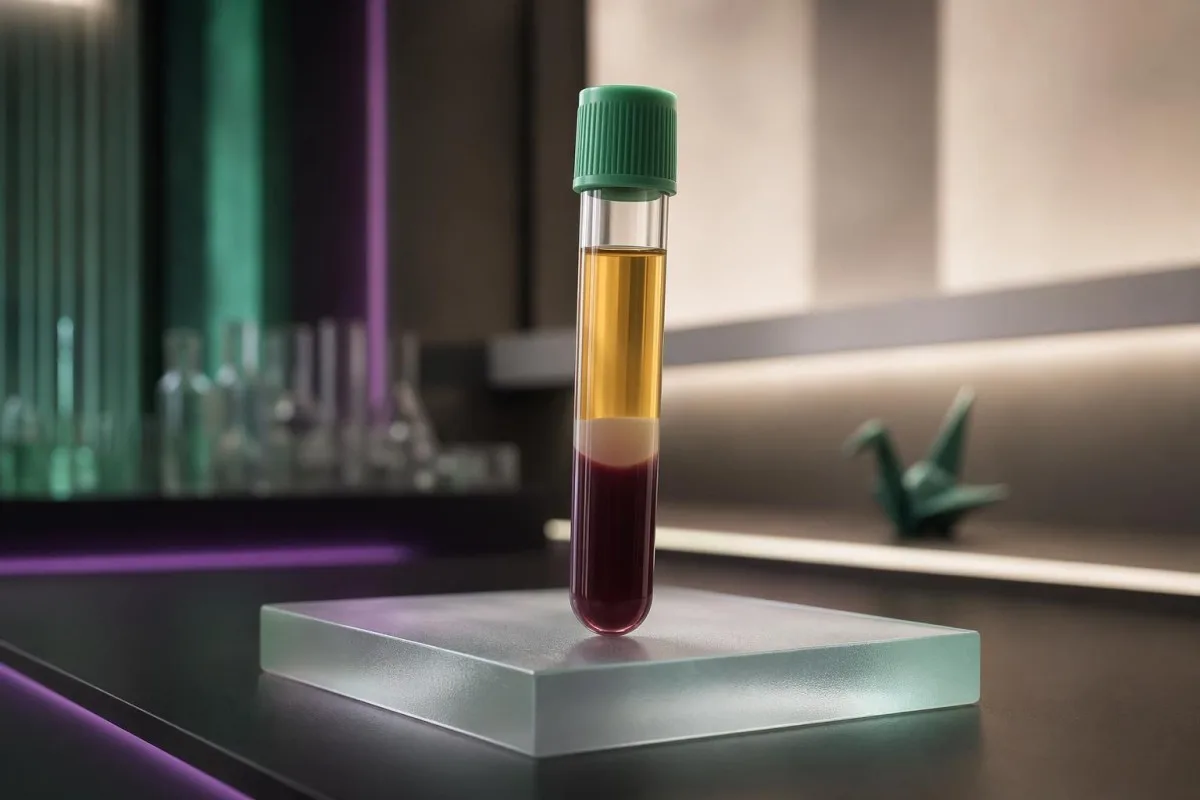
Serum is not a fancy word for blood. It is a processed specimen type, and that small detail can change potassium, glucose, protein, hormone, and clotting-related results.


- Serum is the clear liquid left after a laboratory sample clots and is centrifuged; it contains electrolytes, hormones, enzymes, antibodies, albumin, and many chemistry markers but little to no fibrinogen.
- Plasma is the liquid part of an anticoagulated sample, so it still contains fibrinogen and clotting proteins; this matters for PT, aPTT, fibrinogen, D-dimer, and some chemistry tests.
- Whole blood keeps cellular elements and liquid together, which is why CBC results, HbA1c, blood gases, and many point-of-care glucose tests do not use serum.
- Potassium can be about 0.1–0.4 mmol/L higher in serum than plasma because clotting releases potassium from platelets and cellular elements.
- Glucose can fall by roughly 5–7% per hour at room temperature if the sample is not processed promptly, so collection tube and delay matter.
- Reference ranges are specimen-specific; a serum calcium range should not be applied casually to plasma calcium if the lab validated a different method.
- Qualitative vs quantitative blood test means positive/negative versus a measured number; sample type still matters for both kinds of reporting.
- Recheck strategy should use the same lab, same specimen type, similar fasting status, and similar time of day whenever you are tracking trends.
What serum means on a blood test report
If you are asking what does serum mean in blood test results, serum is the liquid part of a laboratory sample after the sample has clotted and the cells have been spun away. It is used for many chemistry, hormone, vitamin, antibody, and protein tests because it is relatively clean, stable, and easy for analyzers to measure.
I’m Thomas Klein, MD, and in my 15 years of reviewing lab reports, I have seen patients worry about the word serum as if it meant an abnormal result. It usually does not. A result such as “serum sodium 140 mmol/L” simply tells you the lab measured sodium in serum, not in whole blood or plasma; our About Us page explains why Kantesti focuses so heavily on this kind of context.
Kantesti is an AI blood test analyzer that reads the specimen label, unit, reference interval, and surrounding biomarkers before giving an interpretation. That matters because a serum potassium of 5.3 mmol/L after a difficult collection can mean something different from a plasma potassium of 5.3 mmol/L collected cleanly 20 minutes later.
Serum normally looks pale yellow to straw-coloured after processing, although diet, bilirubin, lipids, haemolysis, and some medicines can change the appearance. If you want a broader framework for reading your report, our guide on reading lab results pairs well with this article.
Why many chemistry reports use serum instead of whole blood
Labs use serum for many routine chemistry tests because removing cells reduces interference and gives analyzers a clearer liquid matrix. Serum is common for CMP panels, liver enzymes, kidney markers, thyroid tests, immunoglobulins, antibodies, ferritin, vitamin D, and many reproductive hormones.
The practical reason is simple: cells keep metabolising after collection. Red cells and white cells can consume glucose, leak potassium, release enzymes, or alter pH if the sample sits too long; separating serum reduces those moving parts before measurement.
Most serum samples are collected in a clot activator or serum separator tube, then allowed to clot for about 20–30 minutes before centrifugation. The gel barrier in many tubes physically separates serum from cellular elements, and our tube colour guide explains why the cap colour is more than decoration.
A small detail I teach junior clinicians: a “serum” result is already a processed result. If a patient had vigorous exercise 12 hours earlier, a serum AST of 89 IU/L might reflect muscle release rather than liver injury, but the specimen type still tells me the lab removed the cells before reporting the number.
What does plasma mean in blood test results?
What does plasma mean in blood test language? Plasma is the liquid portion of a sample collected with an anticoagulant, so it has not clotted and it still contains fibrinogen plus other clotting proteins.
Plasma is essential when the test itself depends on clotting biology. PT, INR, aPTT, fibrinogen, anti-Xa, protein C, protein S, D-dimer, and many coagulation studies require correctly anticoagulated plasma, usually citrate plasma, because serum has already used up clotting factors during clot formation.
A citrate tube contains anticoagulant that dilutes the sample in a fixed ratio, commonly 1 part citrate to 9 parts blood by volume. That ratio is why an underfilled coagulation tube can distort clotting times; for a deeper clotting pathway discussion, see our coagulation testing guide.
Plasma is not automatically better than serum. Lithium heparin plasma can speed up urgent chemistry testing because it does not need 30 minutes to clot, but heparin, citrate, EDTA, and fluoride each interact differently with assays.
When whole blood is the right specimen
Whole blood means the sample still contains cellular elements suspended in plasma, so the lab is measuring the sample before separating the liquid from the cells. Whole blood is the correct specimen for tests where cells are the target, not the interference.
A CBC is the classic whole blood test because it counts red cells, white cells, platelets, haemoglobin, haematocrit, and cell indices. You cannot measure an accurate platelet count from serum because the clotting process traps platelets in the clot.
HbA1c is also usually measured from EDTA whole blood because the test reflects glucose attachment to haemoglobin inside red cells over roughly 8–12 weeks. If you are comparing cell-based markers, our CBC guide helps explain which numbers come from cells rather than serum chemistry.
Blood gas testing is another example. Arterial or venous whole blood is analysed quickly because oxygen, carbon dioxide, pH, lactate, and potassium can change within minutes when metabolism continues inside the sample.
Serum vs plasma vs whole blood: the clinically useful comparison
Serum, plasma, and whole blood differ mainly by clotting status and whether cellular elements remain in the specimen. The specimen type can change the measured value even when the patient’s body has not changed at all.
Serum equals liquid after clotting; plasma equals liquid before clotting; whole blood equals cells plus liquid together. That one-sentence distinction explains why a chemistry panel, coagulation panel, and CBC can all come from “blood” but require different tubes and handling.
Potassium is the marker I see confuse patients most. Serum potassium can run about 0.1–0.4 mmol/L higher than plasma potassium because platelets and cellular elements release potassium during clotting, and the gap can be larger when platelet counts exceed 500 × 10⁹/L.
Kantesti’s biomarker guide tracks specimen type across thousands of markers because the same molecule can behave differently in different matrices. A serum magnesium result, for example, tells you extracellular magnesium; it does not prove total body magnesium is normal.
Which results can change because of sample type?
Sample type can change results for potassium, glucose, calcium, magnesium, phosphate, lactate, ammonia, total protein, some hormones, and nearly every clotting test. The largest shifts occur when cells keep metabolising, clotting releases contents, or tube additives bind the analyte.
Glucose is vulnerable because cellular elements continue using it after collection. At room temperature, unprocessed glucose can fall by roughly 5–7% per hour, which is enough to move a fasting glucose from 101 mg/dL to the mid-90s if processing is delayed.
Calcium can shift when EDTA contamination occurs because EDTA binds calcium strongly; the same contaminated sample often shows very low calcium with unexpectedly high potassium. That pattern is a lab clue, not a rare new disease.
For magnesium, serum and red-cell methods answer different questions, and clinicians still disagree about how often red-cell magnesium truly changes management. Our article on serum vs RBC magnesium lays out why a normal serum value does not always end the discussion.
Blood test reference range explained for serum and plasma
A blood test reference range explained properly must include the specimen type, method, units, age, sex, pregnancy status, and sometimes fasting state. A reference range is usually built from the central 95% of a selected comparison population, not from a perfect definition of health.
A serum creatinine reference interval cannot be treated as universal because creatinine depends on muscle mass, assay calibration, and eGFR equation. Some European labs report creatinine in µmol/L while many US reports use mg/dL, so unit conversion alone can make a stable result look unfamiliar.
The phrase “within range” can still hide a trend. A potassium rising from 3.7 to 4.9 mmol/L across 6 months may stay inside many lab intervals, but in a patient taking spironolactone or an ACE inhibitor I would pay attention.
For plain-English flag interpretation, our guide on within normal limits is useful because the star, H, or L beside a value is only the start of interpretation.
Reference intervals are not decision thresholds. A serum troponin threshold, an HbA1c diagnostic cutoff of 6.5%, and an LDL-C treatment target are clinical decision points; they are not created the same way as a routine 95% reference interval.
Qualitative vs quantitative blood test reporting
A qualitative vs quantitative blood test distinction means positive/negative versus a measured numeric concentration. Serum, plasma, or whole blood can be used for either style, but the specimen must match the assay that was validated by the lab.
A qualitative hepatitis, pregnancy, or antibody screen may report “reactive” or “not reactive” rather than a concentration. A quantitative test reports a number such as ferritin 28 ng/mL, TSH 4.8 mIU/L, or vitamin D 22 ng/mL.
The uncertainty is different. A qualitative test near its detection limit may flip from negative to positive on repeat, while a quantitative test may vary by an analytical coefficient of variation such as 3–8% depending on the assay.
Patients often assume quantitative means more accurate, but that is not always fair. A well-validated qualitative HIV screen can be excellent for screening, while a poorly timed quantitative hormone result can mislead; our abbreviation guide helps decode the report language.
Why the same marker can look different in serum and plasma
The same biomarker can differ between serum and plasma because clotting, anticoagulants, separator gel, processing time, and assay calibration change the measurement environment. A lab report is not just a number; it is a number produced by a specific method.
Kantesti is an AI lab test interpretation service that treats serum and plasma as different specimen contexts, not interchangeable labels. In our analysis of more than 2M uploaded reports, apparent “changes” often trace back to units, assay method, or specimen type rather than biology.
Albumin and total protein can be slightly different in plasma because fibrinogen remains present. Plasma total protein may be roughly 0.2–0.4 g/dL higher than serum in some methods, which can matter when a patient is being monitored for borderline low protein.
Units create a second layer of confusion. A sodium of 140 mmol/L and 140 mEq/L are numerically equivalent for sodium, but creatinine 1.0 mg/dL and 88 µmol/L are the same value in different reporting systems; our unit conversion guide prevents many false alarms.
Pre-analytical errors that mimic disease
Pre-analytical errors are problems before analysis, and they can mimic kidney disease, electrolyte disorders, liver injury, anaemia, or clotting problems. Common culprits include haemolysis, delayed centrifugation, wrong tube, underfilling, prolonged tourniquet time, and sample transport temperature.
Lippi et al. reported in Clinical Chemistry and Laboratory Medicine that haemolysis significantly affects routine chemistry tests, especially potassium, LDH, AST, and magnesium (Lippi et al., 2006). A potassium of 6.1 mmol/L with a haemolysis flag and normal kidney function is a very different clinical problem from a clean potassium of 6.1 mmol/L with ECG changes.
Thomas Klein, MD’s practical rule is this: when one dramatic number does not fit the patient, check the specimen note before chasing rare diagnoses. I once saw a healthy 34-year-old with calcium 5.8 mg/dL and potassium 8.2 mmol/L; repeat plasma testing was normal, and EDTA contamination was the likely explanation.
Kantesti AI flags suspicious combinations such as very low calcium plus high potassium, isolated high LDH after a difficult collection, or glucose results that conflict with HbA1c. Our article on lab error checks shows how these patterns are separated from true disease signals.
Timing, fasting, and processing often matter as much as serum
Timing, fasting, and processing can change a result as much as the difference between serum and plasma. Triglycerides, glucose, insulin, cortisol, iron, phosphate, and some hormones are especially sensitive to when and how the sample is collected.
Serum iron is a good example. It can vary by 30–50% across the day and often runs higher in the morning, so a single low afternoon iron does not diagnose iron deficiency without ferritin, transferrin saturation, CRP, and context.
Non-fasting triglycerides are now accepted for many cardiovascular risk assessments, but a post-meal triglyceride of 310 mg/dL still needs different interpretation than a fasting value of 310 mg/dL. The fasting question is not old-fashioned; it is marker-specific.
If you are tracking trends, try to repeat under similar conditions: same lab, same time of day, same fasting state, and no hard workout for 24–48 hours when CK, AST, ALT, or potassium are under review. Our fasting comparison guide lists which tests shift most after food.
Tube additives and lab methods can quietly alter results
Tube additives are chemicals placed in collection tubes to clot, anticoagulate, preserve glucose, or separate cells from liquid. The wrong additive can make a result unusable, and even the correct additive can create small method-specific differences.
Bowen and Remaley reviewed tube-component interference in Biochemia Medica and showed that stoppers, separator gels, surfactants, anticoagulants, and clot activators can interfere with some chemistry and immunoassay methods (Bowen & Remaley, 2014). This is why laboratories validate tests for specific tube types rather than accepting any liquid that looks clear.
Simundic et al. published the EFLM-COLABIOCLI venous sampling recommendation in 2018, emphasizing patient identification, order of draw, tube filling, mixing, and transport because these steps directly affect result reliability (Simundic et al., 2018). In practice, a blue-top citrate tube that is 70% full may be rejected because the anticoagulant ratio is wrong.
Kantesti’s clinical review workflow follows method-aware interpretation principles, and our medical validation page describes how physician oversight is built into our blood test interpretation standards. This is not academic fussiness; it prevents false diagnoses.
How Kantesti AI reads serum context instead of isolated numbers
Kantesti AI reads serum context by combining specimen type, units, reference interval, age, sex, medication clues, and neighbouring biomarkers. A serum result is rarely interpreted safely as a single number without the rest of the panel.
Kantesti is an AI biomarker interpretation platform used by 2M+ people across 127 countries and 75+ languages. When a user uploads a PDF or photo, our neural network looks for words like serum, plasma, whole blood, capillary, EDTA, citrate, heparin, fasting, haemolysed, and lipaemic before generating clinical explanations.
The distinction is especially important in family trend analysis. If a parent’s creatinine is reported in µmol/L in the UK and a child’s report uses mg/dL elsewhere, a human or AI system must normalize units before comparing kidney markers.
Our technology guide explains the pattern-recognition layer behind this process. Kantesti AI does not replace a clinician, but it can catch the kind of specimen and unit mismatch that leads to unnecessary anxiety.
When to repeat a serum, plasma, or whole blood result
Repeat a result when it is clinically surprising, near a treatment threshold, affected by a known collection problem, or inconsistent with related markers. Repeating under controlled conditions is often safer than overreacting to one isolated value.
I usually suggest repeating potassium, calcium, glucose, creatinine, liver enzymes, or thyroid tests when the result would change medication, imaging, or referral. A potassium of 5.4 mmol/L in a well patient may need prompt repeat; a potassium of 6.5 mmol/L with symptoms or ECG changes is urgent.
Use the same specimen type when possible. If the first test was serum potassium and the repeat is plasma potassium, a small drop may reflect the specimen change rather than improvement in kidney handling or medication effect.
A second opinion is most helpful when you bring the original PDF, timing, fasting status, supplements, medicines, exercise history, and any sample comments. Our guide on blood test review gives a practical checklist for that visit.
Bottom line: sample type is part of the diagnosis
Sample type is part of the medical result, not a footnote. Serum, plasma, and whole blood answer different questions, and the safest interpretation uses the specimen type together with symptoms, trends, medications, and related biomarkers.
My closing advice as Thomas Klein, MD: do not panic over the word serum. Panic is rarely useful. Instead, ask whether the marker was measured in the right specimen, processed quickly, compared with the right reference range, and consistent with how you feel.
As of July 1, 2026, the most reliable trend comparisons still come from boring consistency: same lab, same specimen type, similar time, similar fasting state, and similar medication routine. Fancy analytics cannot rescue a badly mismatched series of samples.
Kantesti’s medical team reviews these interpretation rules because blood test education has to be both technically correct and understandable. You can read more about our doctors and clinical governance on the Medical Advisory Board page.
Frequently Asked Questions
What does serum mean in blood test results?
Serum in blood test results means the liquid portion of a sample after the sample has clotted and the cells have been removed by centrifugation. Serum contains many measurable substances, including sodium, potassium, creatinine, liver enzymes, antibodies, hormones, ferritin, albumin, and vitamin D. It usually contains little to no fibrinogen because fibrinogen is consumed during clot formation. A serum label does not mean the result is abnormal; it tells you the specimen type.
What does plasma mean in blood test reports?
Plasma means the liquid part of a sample collected with an anticoagulant, so the sample has not clotted. Plasma still contains fibrinogen and clotting proteins, which is why citrate plasma is used for tests such as PT, INR, aPTT, fibrinogen, D-dimer, and anti-Xa. Plasma is also used for some urgent chemistry testing because it can be centrifuged without waiting 20–30 minutes for clotting. The anticoagulant type matters because EDTA, citrate, heparin, and fluoride affect different assays.
Is serum the same as plasma?
Serum is not the same as plasma. Serum is liquid after clotting, while plasma is liquid from an anticoagulated sample before clotting occurs. Plasma contains fibrinogen and clotting factors; serum largely does not. This difference can shift some results, including potassium by about 0.1–0.4 mmol/L in many routine situations.
Why would my serum potassium be higher than plasma potassium?
Serum potassium can be higher than plasma potassium because clotting releases potassium from platelets and cellular elements. The difference is often around 0.1–0.4 mmol/L, but it can be larger when platelet counts are very high, when the sample is haemolysed, or when processing is delayed. A high potassium result should be interpreted with kidney function, medication history, haemolysis flags, and symptoms. A potassium above about 6.0 mmol/L may need urgent clinical review, especially with weakness, palpitations, or ECG changes.
Can sample type change a blood test reference range?
Yes, sample type can change a blood test reference range because laboratories validate assays using specific specimens, methods, and instruments. A serum reference interval should not automatically be applied to plasma or whole blood unless the lab has validated that comparison. Reference ranges are usually based on the central 95% of a selected population, which means about 5% of healthy people may fall outside by statistics alone. This is why trend, symptoms, and related markers matter.
What is the difference between qualitative and quantitative blood tests?
A qualitative blood test reports a category such as positive, negative, reactive, or not reactive, while a quantitative blood test reports a number with units. Examples of quantitative results include ferritin 28 ng/mL, TSH 4.8 mIU/L, glucose 101 mg/dL, or sodium 140 mmol/L. Both qualitative and quantitative tests require the correct specimen type, such as serum, plasma, or whole blood. Quantitative does not always mean clinically better; timing and assay choice still matter.
When should I repeat a serum blood test?
Repeat a serum blood test when the result is unexpected, near a treatment cutoff, marked as haemolysed, delayed in processing, or inconsistent with related markers. Potassium, calcium, glucose, creatinine, thyroid tests, and liver enzymes are common examples where a repeat can clarify whether the result is real. Try to repeat at the same lab, with the same specimen type, similar fasting status, and similar time of day. Do not delay urgent care for severe abnormalities, such as potassium around 6.5 mmol/L or glucose above 300 mg/dL with symptoms.
Can blood type be determined from a serum sample?
Serum may be used for some antibody checks, but routine ABO and Rh blood typing needs red blood cells, usually collected in an anticoagulated whole-blood tube. Before a transfusion, the hospital may require a fresh sample for safety.
Get AI-Powered Blood Test Analysis Today
Join over 2 million users worldwide who trust Kantesti for instant, accurate lab test analysis. Upload your blood test results and receive comprehensive interpretation of 15,000+ biomarkers in seconds.
📚 Referenced Research Publications
Klein, T., Mitchell, S., & Weber, H. (2026). Women's Health Guide: Ovulation, Menopause & Hormonal Symptoms. Kantesti AI Medical Research.
Klein, T., Mitchell, S., & Weber, H. (2026). Multilingual AI Assisted Clinical Decision Support for Early Hantavirus Triage: Design, Engineering Validation, and Real-World Deployment Across 50,000 Interpreted Blood Test Reports. Kantesti AI Medical Research.
📖 External Medical References
⚕️ Medical Disclaimer
This article is for educational purposes only and does not constitute medical advice. Always consult a qualified healthcare provider for diagnosis and treatment decisions.
E-E-A-T Trust Signals
Experience
Physician-led clinical review of lab interpretation workflows.
Expertise
Laboratory medicine focus on how biomarkers behave in clinical context.
Authoritativeness
Written by Dr. Thomas Klein with review by Dr. Sarah Mitchell and Prof. Dr. Hans Weber.
Trustworthiness
Evidence-based interpretation with clear follow-up pathways to reduce alarm.