
Doctors do not diagnose cortisol problems from one random result. The pattern, timing, medication list and physical signs decide whether high cortisol is a stress response, a steroid effect or possible Cushing’s syndrome.



- High cortisol causes usually fall into 4 groups: temporary stress, steroid medicines, pseudo-Cushing states and true endocrine cortisol excess.
- Morning cortisol is commonly about 5-25 µg/dL, or 138-690 nmol/L, but the lab range depends heavily on assay and collection time.
- Late-night salivary cortisol is useful because healthy cortisol should be low near midnight; persistent loss of this low point raises concern for Cushing’s syndrome.
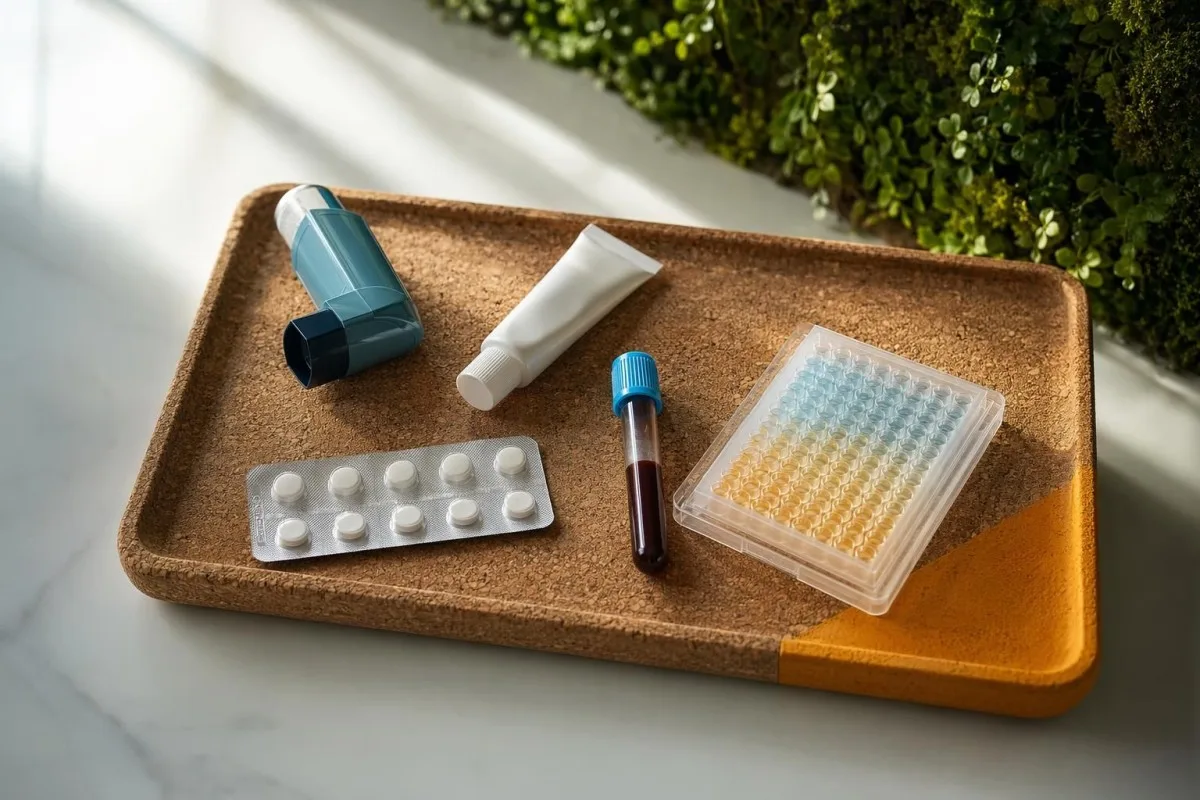
- Steroid exposure includes tablets, injections, inhalers, creams, nasal sprays and joint injections; even non-oral steroids can suppress ACTH and distort cortisol test results.
- Cushing’s syndrome signs that deserve follow-up include wide purple stretch marks, easy bruising, facial fullness, proximal muscle weakness, diabetes, high blood pressure and low potassium.
- Cortisol test results are usually interpreted with at least 2 screening tests, not one random serum cortisol value.
- 1 mg dexamethasone suppression testing often uses a next-morning cortisol cutoff of 1.8 µg/dL, or 50 nmol/L, to help exclude Cushing’s syndrome.
- ACTH testing helps locate the source: ACTH below about 5 pg/mL suggests adrenal or steroid-related suppression, while ACTH above about 20 pg/mL points toward ACTH-dependent cortisol excess.
- Do not stop steroids suddenly before cortisol testing unless your clinician gives a taper plan; adrenal suppression can be dangerous.
- Kantesti AI can organize cortisol-related lab patterns, but suspected Cushing’s syndrome still needs clinician-led endocrine testing.
What high cortisol causes doctors check first
High cortisol causes are usually temporary stress, prescribed or hidden steroid exposure, pseudo-Cushing states such as alcohol use or severe depression, or true endocrine disease such as Cushing’s syndrome. As of June 11, 2026, I would not label a patient with Cushing’s from one high morning cortisol; I look for repeated abnormal timing-based tests plus physical signs.
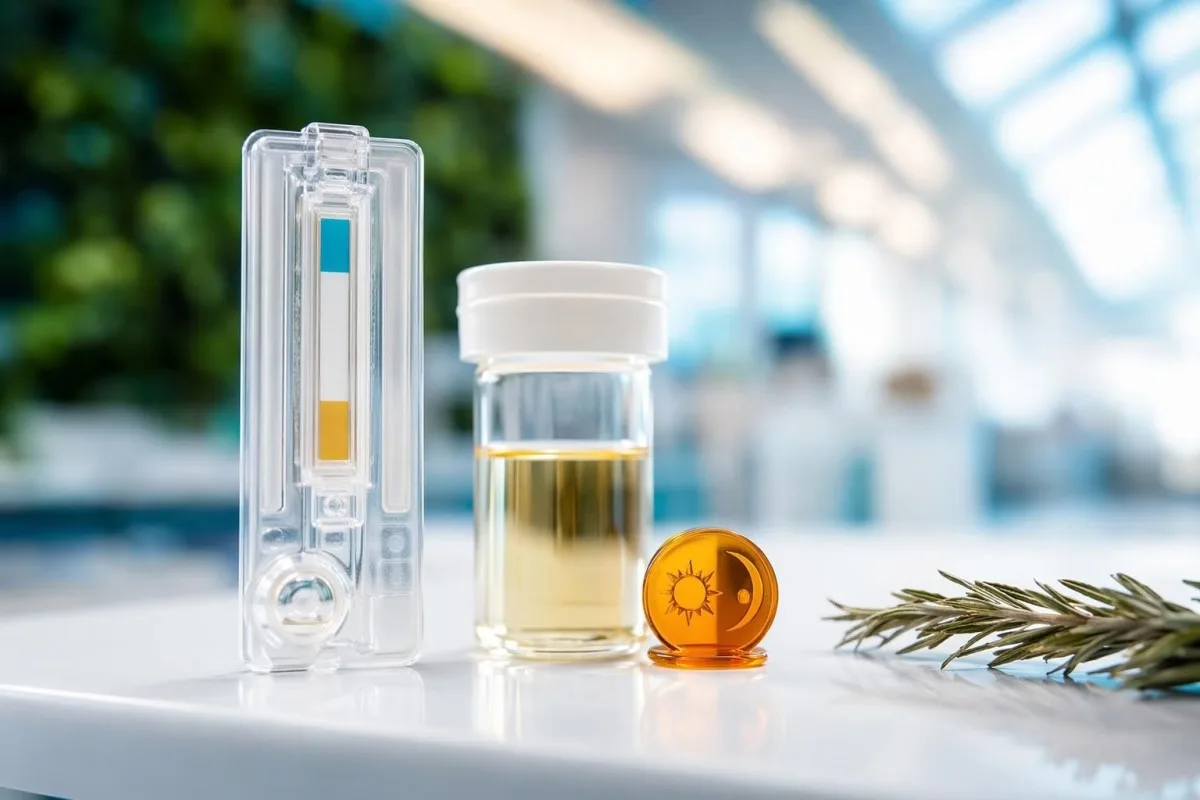
Kantesti is an AI blood test analyzer that helps patients organize cortisol-related labs in context, including glucose, potassium, white cell patterns and medication timing. In my practice as Thomas Klein, MD, the most common mistake is treating a single 8 a.m. cortisol of 26 µg/dL as a diagnosis when the patient had poor sleep, pain or an early clinic commute.
A true work-up starts with the clock. Cortisol normally rises before waking, peaks about 30-45 minutes after getting out of bed and should fall to a low point near midnight; our deeper cortisol pattern guide explains why timing changes the meaning of the same number.
The practical split is simple: temporary spikes usually fade within 24-72 hours, steroid effects track with a dose or injection history, and Cushing’s syndrome keeps producing abnormal results despite calm conditions. Our medical work at Kantesti organization is built around that distinction, because context often prevents unnecessary panic.
Why cortisol timing changes the interpretation
Cortisol is a circadian hormone, so a result is incomplete without the collection time. A morning serum cortisol near 5-25 µg/dL is often physiologic, while the same value late at night would be abnormal in most adults.
Most laboratories report morning serum cortisol in µg/dL or nmol/L; 1 µg/dL equals about 27.6 nmol/L. An 8 a.m. result of 18 µg/dL can be normal, but an 11 p.m. salivary cortisol above the lab’s upper limit is more suspicious because healthy adrenal output should be quiet then.
I ask patients for 3 details before interpreting cortisol test results: wake time, sample time and sleep schedule over the previous 7 days. Shift workers are a separate category; a person sleeping from 8 a.m. to 3 p.m. may have a biological midnight at noon, not at the clock’s midnight.
For a practical breakdown of why morning and evening values disagree, see our cortisol timing guide. The short version is this: random cortisol is a poor screening test for Cushing’s, but a correctly timed late-night or suppression test can be very informative.
How doctors separate stress spikes from cortisol disease
Stress-related cortisol elevation is usually short-lived, biologically appropriate and tied to a trigger such as infection, pain, poor sleep, surgery, panic or intense exercise. Endocrine cortisol disease is more persistent and tends to break the normal night-time low.

Acute illness can push cortisol above 30-40 µg/dL, and that may be a healthy survival response rather than disease. I become more cautious when the patient is well, sleeping normally and still has repeated abnormal late-night salivary cortisol or 24-hour urinary free cortisol.
The blood count sometimes gives a clue. High cortisol and steroid exposure can cause neutrophils to rise, lymphocytes to fall and eosinophils to drop below about 0.05 x 10^9/L, a pattern we also cover in our article on stress and steroid WBC.
One memorable case was a 41-year-old teacher with a high morning cortisol after 3 nights caring for a febrile child. Her late-night salivary cortisol repeated 2 weeks later was normal, and the diagnosis was exhaustion, not Cushing’s; that sort of recheck prevents a lot of unnecessary imaging.
Cushing’s syndrome signs that deserve follow-up
Cushing’s syndrome signs that most strongly prompt testing are wide purple stretch marks, easy bruising, facial plethora, proximal muscle weakness, new diabetes, difficult blood pressure and unexplained osteoporosis. Weight gain alone is common and much less specific.

The classic clue is a cluster, not one symptom. A person with 12 kg central weight gain, new hypertension at 155/95 mmHg, A1c of 7.2%, fragile skin and trouble rising from a chair deserves a different level of concern than someone with stable labs and mild tiredness.
Newell-Price et al. described the diagnostic challenge well in The Lancet: many features of Cushing’s overlap with obesity, depression and diabetes, but easy bruising, facial redness and proximal weakness improve specificity (Newell-Price et al., 2006). When the main complaint is unexplained weight gain, our weight gain lab guide helps separate endocrine from metabolic causes.
Children are different. In paediatrics, weight gain with slowing height velocity is a red flag because simple obesity usually preserves or accelerates linear growth, while cortisol excess can blunt growth over 6-12 months.
High cortisol symptoms often come with lab clusters
High cortisol symptoms often travel with measurable metabolic changes: high glucose, high blood pressure, low potassium, raised white cell count, low eosinophils and sometimes higher triglycerides. These patterns do not diagnose Cushing’s, but they raise or lower the pre-test probability.

Cortisol raises glucose by increasing hepatic glucose production and reducing insulin sensitivity. A fasting glucose of 126 mg/dL or HbA1c of 6.5% still follows diabetes diagnostic rules, but rapid onset diabetes alongside bruising and muscle weakness makes cortisol excess more plausible.
Potassium below 3.5 mmol/L is not typical in mild Cushing’s, but severe ACTH-driven cortisol excess can activate mineralocorticoid receptors and push potassium below 3.0 mmol/L. If high glucose appears without a prior diabetes history, our high glucose guide is a useful companion read.
I also look at the trend. A patient whose WBC moved from 6.2 to 11.8 x 10^9/L after prednisone is very different from someone with chronic neutrophilia, falling potassium and progressive weakness over 9 months.
Which cortisol test results actually screen for Cushing’s
Cortisol test results used for Cushing’s screening are usually late-night salivary cortisol, 24-hour urinary free cortisol and the 1 mg overnight dexamethasone suppression test. A random serum cortisol is rarely enough to rule Cushing’s in or out.
The Endocrine Society guideline by Nieman et al. recommends initial testing with 1 of 3 high-accuracy screening approaches, then confirmation with a second test if abnormal (Nieman et al., 2008). In practice, I usually want 2 abnormal results before calling an endocrinologist urgently unless the patient has severe signs.
A normal 1 mg dexamethasone suppression test often means next-morning serum cortisol is 1.8 µg/dL or lower, equal to about 50 nmol/L. Kantesti is an AI-powered blood test analysis tool used by patients to place cortisol-adjacent results into broader panels, and our biomarker guide is where we map many of those related markers.
Urinary free cortisol is most helpful when it is clearly high, often more than 3 times the upper limit of normal. Borderline elevations can occur with heavy exercise, high fluid intake, poor sleep, depression or alcohol use, so a 1.2-fold elevation is not the same thing as Cushing’s syndrome.
Why cortisol results can look high when they are not
Cortisol results can look high because of binding proteins, assay interference, collection timing, shift work, pregnancy, estrogen therapy or specimen handling. These are not rare edge cases; they are daily endocrine interpretation problems.
Oral estrogen and pregnancy raise cortisol-binding globulin, which can raise total serum cortisol without raising free cortisol in the same proportion. That is why salivary cortisol or urinary free cortisol may be preferred when binding proteins are altered.
Some European labs use different assays and reference intervals, so a value can appear “high” after a patient moves countries. Kantesti is an AI lab test interpretation service that reads units and reference ranges together, and our lab unit guide shows why nmol/L and µg/dL conversions can change the emotional impact of a result.
Night shift is the trap I see most often in office workers and clinicians. If the person worked until 4 a.m., a late-night cortisol sample taken at 11 p.m. may reflect active daytime physiology, not endocrine disease.
How ACTH tells doctors where cortisol is coming from
ACTH separates cortisol excess into ACTH-dependent and ACTH-independent patterns. ACTH below about 5 pg/mL points toward adrenal cortisol production or exogenous steroid suppression, while ACTH above about 20 pg/mL suggests pituitary or ectopic ACTH drive.
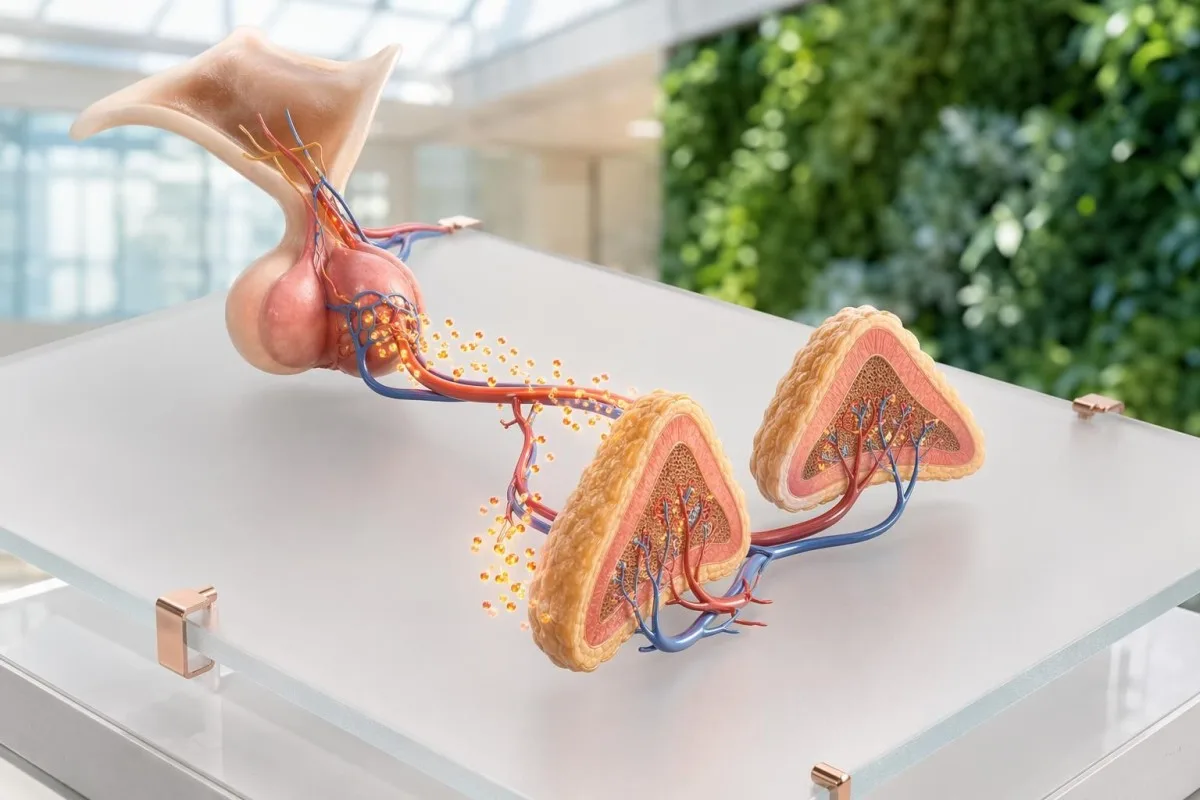
The gray zone is usually 5-20 pg/mL, where repeat testing and assay details matter. I never send a patient straight to adrenal CT or pituitary MRI from one ambiguous ACTH; imaging too early can find harmless incidental nodules and send everyone down the wrong path.
DHEA-S can add context because ACTH stimulates adrenal androgen production. Low DHEA-S with high cortisol and low ACTH supports adrenal autonomy in some cases, while very high DHEA-S raises different concerns covered in our DHEA adrenal guide.
This is one of those areas where clinicians disagree on how quickly to image. My rule is biochemical clarity first: confirm cortisol excess, classify ACTH, then image the likely source.
Pseudo-Cushing states can imitate endocrine disease
Pseudo-Cushing states cause real cortisol activation without an autonomous cortisol-producing tumour. Severe depression, heavy alcohol use, untreated sleep apnoea, poorly controlled diabetes and severe obesity can all produce abnormal screening tests.

The overlap is uncomfortable because pseudo-Cushing is not “fake” to the patient; cortisol physiology is genuinely activated. In heavy alcohol use, I usually want 4-6 weeks of abstinence before repeating borderline urinary or salivary cortisol, if that is safe and clinically realistic.
Untreated sleep apnoea can flatten the cortisol rhythm and worsen glucose, blood pressure and fatigue. If snoring, morning headaches or daytime sleepiness are part of the picture, the lab pattern may fit our sleep apnea lab guide better than classic Cushing’s.
Depression is particularly tricky. Some patients have abnormal dexamethasone suppression during severe episodes, and the result may normalize when mood, sleep and alcohol intake stabilize over 6-12 weeks.
When high cortisol clues need urgent care
High cortisol clues need urgent care when they come with severe weakness, potassium below 3.0 mmol/L, uncontrolled blood pressure, severe hyperglycaemia, infection, confusion or blood clots. These features can indicate aggressive cortisol excess or another serious illness.
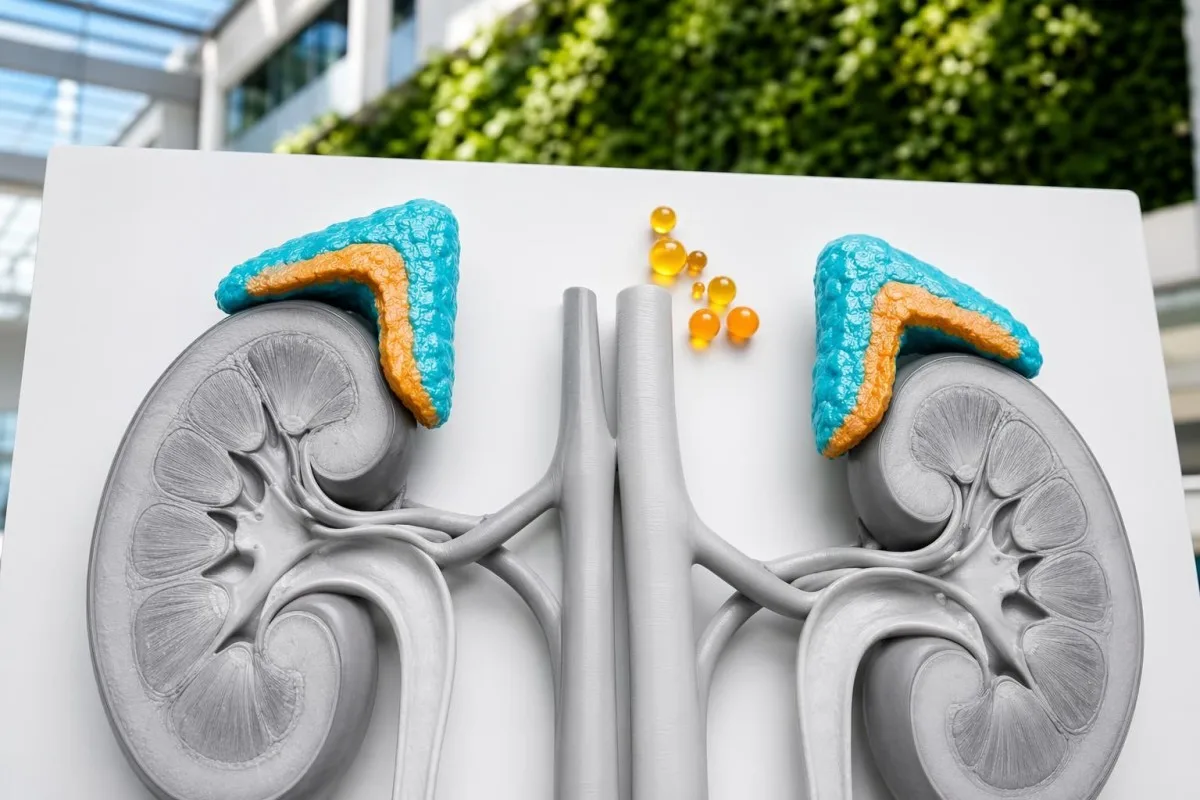
Blood pressure above 180/120 mmHg, glucose above 300 mg/dL or potassium below 3.0 mmol/L should not wait for a routine wellness appointment. Even if cortisol is not the cause, those numbers can injure the heart, brain or kidneys.
Cushing’s syndrome increases clot risk, infection risk and fracture risk, especially when cortisol is markedly elevated for months. For context on when any lab value becomes time-sensitive, our critical result guide gives patient-friendly thresholds.
I have seen severe Cushing’s present as repeated infections and a sudden inability to climb stairs, not as a neat textbook picture. If a patient cannot rise from a chair without pushing with both arms, I take that muscle sign seriously.
What follow-up testing usually looks like
Follow-up testing usually confirms cortisol excess first, classifies ACTH second and images the adrenal or pituitary only after the biochemical pattern is clear. This sequence reduces false diagnoses from incidental imaging findings.
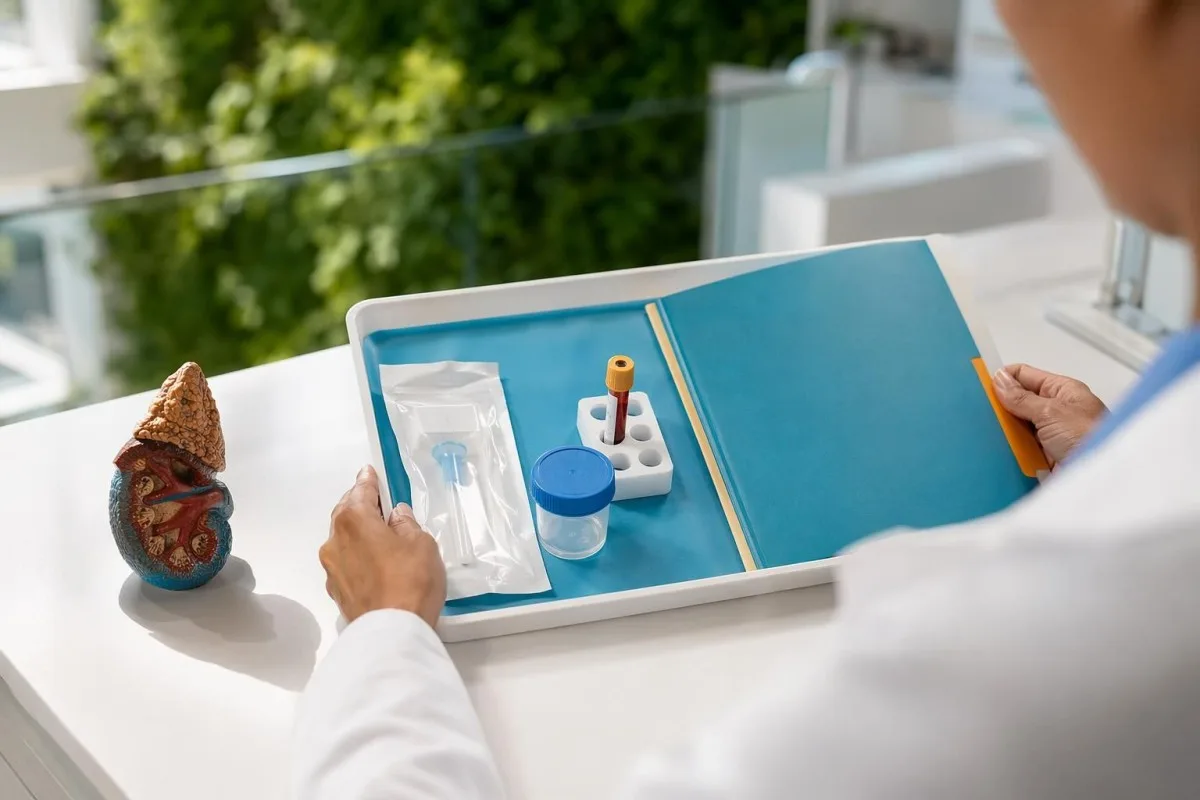
A typical work-up may include 2 late-night salivary cortisol samples, 1 or 2 urinary free cortisol collections, and a 1 mg dexamethasone suppression test. If 2 tests are abnormal, ACTH, DHEA-S, CMP, A1c, CBC and lipids often follow.
Fleseriu et al. emphasize that treatment choices depend on the cause, severity and complications of Cushing’s syndrome, not just the cortisol number (Fleseriu et al., 2015). For patients starting from a broad hormone question, our hormone testing guide explains which first-line labs usually come before specialist tests.
Imaging too early creates harm. Up to about 5-10% of adults may have small adrenal incidentalomas on imaging, and many are unrelated to the patient’s symptoms.
How Kantesti AI adds context without overdiagnosing
Kantesti AI helps by reading cortisol-adjacent lab patterns rather than treating cortisol as a stand-alone number. It can flag combinations such as high glucose, low potassium, neutrophilia, low eosinophils and steroid medication timing for clinician review.

Kantesti is an AI biomarker interpretation platform used by people in 127+ countries, so our workflow has to handle unit differences, language differences and country-specific reference ranges. Our AI technology guide explains how results are structured before interpretation.
Our neural network does not diagnose Cushing’s syndrome from a PDF. It can, however, highlight when an HbA1c of 7.0%, potassium of 3.2 mmol/L and repeated abnormal cortisol testing belong in the same clinical conversation.
Kantesti’s clinical oversight process is documented in our medical validation materials, and it is deliberately conservative for endocrine red flags. A cautious “ask your clinician about repeat endocrine testing” is often better medicine than a confident but premature label.
How to prepare for a cortisol review appointment
The best cortisol appointment starts with a timeline: symptoms, weight change, blood pressure, glucose readings, sleep schedule and every steroid exposure in the past 3 months. Do not stop prescribed steroids suddenly just to make a test look cleaner.

Bring photos if body changes are visible over time; a 2-year change in face shape, bruising or stretch marks can be clinically useful. Also bring the exact collection time for each cortisol test, because “morning” can mean 6 a.m. or 11 a.m., and that difference matters.
Thomas Klein, MD, usually advises patients to list steroid creams, inhalers, injections, tablets, nasal sprays and supplements separately. Many people remember prednisone but forget a high-potency skin cream used daily for 6 weeks.
Kantesti’s doctors and advisors support patient education, but suspected Cushing’s syndrome needs clinician-led testing and sometimes endocrinology referral. Our Medical Advisory Board reviews how we communicate risk without replacing your doctor’s judgement.
Frequently Asked Questions
What are the most common high cortisol causes?
The most common high cortisol causes are temporary stress, poor sleep, acute illness, prescribed or hidden steroid medicines, depression or alcohol-related pseudo-Cushing states, and true Cushing’s syndrome. A single morning cortisol around 5-25 µg/dL can be normal depending on timing and lab method. Doctors usually look for repeated abnormal late-night salivary cortisol, high 24-hour urinary free cortisol or failure to suppress after 1 mg dexamethasone before pursuing Cushing’s.
Can stress alone cause high cortisol test results?
Yes, stress alone can raise cortisol, especially with pain, infection, panic, sleep loss or intense exercise. Acute illness can push cortisol above 30-40 µg/dL as an appropriate survival response. Stress-related results usually normalize when the trigger settles, while Cushing’s syndrome more often causes persistent loss of the normal late-night cortisol low point.
Which high cortisol symptoms suggest Cushing’s syndrome?
High cortisol symptoms that suggest Cushing’s syndrome include wide purple stretch marks, easy bruising, facial redness, central weight gain, proximal muscle weakness, new diabetes, difficult hypertension and unexplained osteoporosis. Weight gain alone is not specific because it is common in obesity, depression, menopause and poor sleep. Doctors become more concerned when several signs appear together over 6-24 months.
Can steroid inhalers or creams affect cortisol results?
Yes, steroid inhalers, nasal sprays, skin creams, joint injections and oral steroid tablets can all affect cortisol results. Long-term prednisone above about 7.5 mg daily raises the risk of Cushing-like features, while some injections can suppress natural cortisol production for 2-8 weeks. Tell your clinician about every steroid exposure before cortisol testing, including eczema creams and asthma medicines.
What cortisol test result is concerning for Cushing’s syndrome?
A concerning cortisol test result depends on the test type. Failure to suppress below 1.8 µg/dL, or 50 nmol/L, after a 1 mg overnight dexamethasone test supports further evaluation. Repeated high late-night salivary cortisol or 24-hour urinary free cortisol more than 3 times the lab’s upper limit is also concerning, but borderline results need careful interpretation.
Does a high morning cortisol mean I have Cushing’s syndrome?
A high morning cortisol does not by itself mean you have Cushing’s syndrome. Cortisol normally peaks in the morning, and values near the upper end of the reference range can occur after poor sleep, anxiety, pain or exercise. Doctors usually use late-night salivary cortisol, 24-hour urinary free cortisol or dexamethasone suppression testing because those tests challenge the cortisol rhythm more directly.
When should high cortisol symptoms be checked urgently?
High cortisol symptoms should be checked urgently if they come with severe weakness, repeated infections, confusion, blood pressure above 180/120 mmHg, glucose above 300 mg/dL or potassium below 3.0 mmol/L. These findings can reflect severe cortisol excess or another dangerous illness. Do not wait for a routine wellness review if these numbers or symptoms are present.
Can supplements interfere with cortisol testing?
Yes. Biotin, often sold for hair and nails, can interfere with certain laboratory immunoassays, and herbal or “adrenal support” products may contain undeclared steroid-like substances. Tell your clinician and laboratory about every supplement and ask whether biotin should be paused before testing.
Can birth control pills affect cortisol testing?
Yes. Estrogen-containing pills can raise cortisol-binding globulin, which may increase total cortisol in blood without increasing the active hormone. Tell the clinician before testing; urine free cortisol or late-night salivary cortisol may be preferred, or the test may be scheduled differently.
Get AI-Powered Blood Test Analysis Today
Join over 2 million users worldwide who trust Kantesti for instant, accurate lab test analysis. Upload your blood test results and receive comprehensive interpretation of 15,000+ biomarkers in seconds.
📚 Referenced Research Publications
Klein, T., Mitchell, S., & Weber, H. (2026). AI Blood Test Analyzer: 2.5M Tests Analyzed | Global Health Report 2026. Kantesti AI Medical Research.
Klein, T., Mitchell, S., & Weber, H. (2026). RDW Blood Test: Complete Guide to RDW-CV, MCV & MCHC. Kantesti AI Medical Research.
📖 External Medical References
Newell-Price J et al. (2006). Cushing's syndrome. The Lancet.






⚕️ Medical Disclaimer
This article is for educational purposes only and does not constitute medical advice. Always consult a qualified healthcare provider for diagnosis and treatment decisions.
E-E-A-T Trust Signals
Experience
Physician-led clinical review of lab interpretation workflows.
Expertise
Laboratory medicine focus on how biomarkers behave in clinical context.
Authoritativeness
Written by Dr. Thomas Klein with review by Dr. Sarah Mitchell and Prof. Dr. Hans Weber.
Trustworthiness
Evidence-based interpretation with clear follow-up pathways to reduce alarm.