
A vaccine antibody blood test can be useful when records are missing, pregnancy changes the decision, or rabies risk is ongoing. For many travelers, however, documented doses—or simply getting vaccinated—are more reliable than chasing a titer.



- Hepatitis B surface antibody of at least 10 mIU/mL, measured 1–2 months after a completed series, documents vaccine response in people who need post-vaccination testing.
- Measles IgG positivity is laboratory evidence of immunity, but written proof of two MMR doses overrides a negative commercial measles titer.
- Rubella IgG is most useful before pregnancy; a positive result generally indicates immunity, while the laboratory cutoff varies by assay.
- Varicella IgG can document past chickenpox immunity, but commercial tests may miss vaccine-induced antibodies after two doses.
- Rabies neutralizing antibody at or above 0.5 IU/mL is the internationally used threshold for people whose ongoing exposure risk requires a titer.
- Hepatitis A IgG or total anti-HAV positivity indicates immunity, but pre-travel testing is usually less efficient than vaccination when departure is near.
- IgM tests do not prove vaccine immunity; they are designed primarily to investigate recent infection and may create false alarms.
- Travel timing matters: arrange a travel consultation 4–6 weeks before departure, although several vaccines still provide worthwhile protection closer to travel.
When a Blood Test for Travelers Helps—and When Vaccination Wins
A blood test for travelers is most useful when it changes a real decision: confirming hepatitis B response for a clinician, checking rubella before pregnancy, documenting immunity for work, or managing sustained rabies exposure. If you are healthy, lack reliable records, and can safely receive the vaccine, vaccination is usually faster, cheaper, and more dependable than a broad antibody panel.

I see a common pre-departure mistake: ordering every antibody available 10 days before a trip and then having no time to act on equivocal results. A positive antibody result can document immunity, but a negative result does not always prove susceptibility, particularly after measles or varicella vaccination. Start with immunization records, destination, length of stay, activities, pregnancy plans, and immune status; our guide to travel fever testing explains why post-travel testing follows a very different logic.
At Kantesti, I encourage readers to treat laboratory data as one part of a travel-medical decision rather than a clearance certificate. Dr. Thomas Klein's rule in clinic is simple: if a result will not alter your vaccine plan, do not delay protection to obtain it. A vaccine can generally be given again when records are uncertain, with the important exceptions of contraindications such as severe allergy or live-vaccine restrictions.
How to Order a Travel Vaccine Antibody Test Correctly
A travel vaccine antibody test should name the antigen and assay, not merely request an “immunity panel.” Ask for hepatitis A total antibody or IgG, hepatitis B surface antibody, measles IgG, rubella IgG, varicella-zoster IgG, or rabies virus neutralizing antibody according to the question being answered.
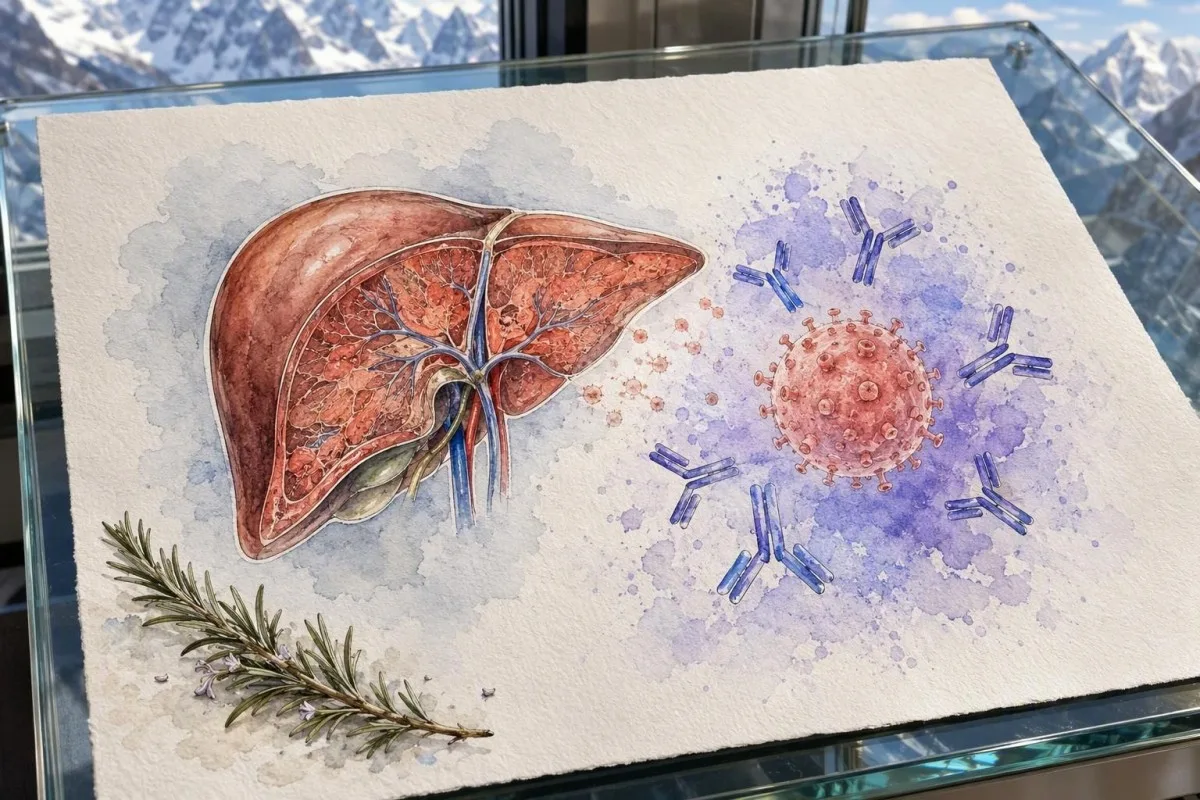
Do not order hepatitis B core antibody as a vaccine-response test. Anti-HBs measures response to hepatitis B surface antigen; anti-HBc signals past or current natural infection and is not produced by vaccination alone. A clinician should interpret HBsAg, total anti-HBc, and anti-HBs together when hepatitis B status is unclear, particularly for someone born in or spending extended time in higher-prevalence regions.
Timing changes meaning. Draw hepatitis B anti-HBs 1–2 months after the final dose when proof of response is required; testing years later can show a low or undetectable number despite durable immune memory. Kantesti is an AI blood test interpretation platform that places assay names, units, reference intervals, and collection dates beside one another, but it cannot replace destination-specific vaccine prescribing. For method and accuracy questions, review our clinical validation standards.
Hepatitis A Antibodies: Useful for Prior Exposure, Rarely Essential Before Travel
Total anti-HAV or hepatitis A IgG positivity indicates immunity from previous infection or vaccination. For most unvaccinated travelers to countries where hepatitis A risk exists, giving vaccine without testing is the practical choice because there is no harm in vaccinating someone who is already immune.
Hepatitis A vaccine is routinely given as two doses at least 6 months apart, although one dose provides meaningful early protection for most healthy travelers. Adults older than 40 years, people with chronic liver disease, and immunocompromised travelers departing in under 2 weeks may need individualized consideration of immune globulin alongside vaccine. The CDC Yellow Book 2026 continues to prioritize prompt vaccination rather than waiting for serology in these situations.
Anti-HAV IgM is not an immunity test. It is used when acute hepatitis A is suspected and may remain detectable for months; ordering it in a well traveler can trigger needless concern. If fatigue, jaundice, dark urine, or abnormal enzymes are part of the story, pair travel history with a liver panel interpretation rather than treating an antibody result in isolation.
Hepatitis B Titer for Travel: The 10 mIU/mL Threshold Explained
A hepatitis B titer for travel is considered protective when anti-HBs is at least 10 mIU/mL, but that threshold is validated when measured 1–2 months after a documented complete vaccine series. It is not a universal rule that every traveler with anti-HBs below 10 mIU/mL needs boosters.
The CDC's ACIP hepatitis B recommendations reserve post-vaccination serology for groups whose management depends on knowing response: healthcare personnel with exposure risk, infants born to HBsAg-positive mothers, dialysis patients, people with HIV or other immunocompromise, and sex partners of HBsAg-positive people (Schillie et al., 2018). Immunocompetent adults with documented vaccination do not need routine anti-HBs testing before ordinary travel.
A 32-year-old emergency clinician I advised had anti-HBs of 4 mIU/mL 12 years after vaccination and worried that she had “lost immunity.” Her occupational service reviewed a historic adequate post-series titer, which mattered far more than the new low number. Kantesti is an AI-powered blood test analysis tool that can flag the three hepatitis B markers as a pattern, while the biomarker reference guide helps users verify exactly which antibody their laboratory measured.
Measles Immunity Blood Test: Why Two MMR Doses Matter More
A measles immunity blood test measures measles IgG, and a positive result is accepted as laboratory evidence of immunity. Yet written documentation of two MMR doses given at least 28 days apart is stronger practical evidence for most vaccinated adults, even if a commercial IgG assay reports negative or equivocal.

Commercial measles IgG assays vary in sensitivity near the low antibody levels produced by vaccination. A negative measles IgG result after two documented MMR doses should not automatically lead to repeated doses or a declaration of susceptibility. ACIP regards two documented doses as presumptive immunity for international travelers, healthcare personnel, and students in post-secondary education (McLean et al., 2013).
Measles remains unusually contagious; one infectious person can spread virus to roughly 12–18 susceptible contacts in a fully susceptible setting. Travelers aged 6–11 months need an early MMR dose for international travel, but that early dose does not count toward the routine two-dose series. For families, keep dose dates with other records in a family health history tracker rather than relying on a remembered childhood injection.
Rubella IgG Before Travel and Pregnancy: What a Positive Result Means
Rubella IgG positivity generally documents immunity, while rubella IgM does not. Testing has special value for travelers who may become pregnant because rubella infection in early pregnancy can cause severe fetal harm, even though the vaccine is not required simply because of travel.

Many laboratories use 10 IU/mL as the positive rubella IgG cutoff, but the report's own assay-specific threshold is the one that governs interpretation. A low-positive result is still usually reported as immune; numerical values above the cutoff do not reliably rank how protected one person is compared with another. This is one of those areas where context matters more than the number.
Live MMR vaccine should be avoided during pregnancy, and people are advised to avoid pregnancy for 28 days after MMR vaccination. If a traveler is nonimmune and not pregnant, vaccinating before conception is far preferable to testing repeatedly. Our practical article on rubella timing before conception addresses the interval in more detail.
Varicella IgG: When Chickenpox Immunity Tests Can Mislead
Varicella-zoster IgG positivity supports immunity to chickenpox, but a negative commercial test may miss vaccine-induced immunity. Two documented varicella vaccine doses are accepted evidence of immunity and should generally outweigh a negative post-vaccine antibody result.
The distinction is clinically useful. Natural chickenpox often produces higher detectable antibody concentrations than vaccination, whereas some routine assays are insufficiently sensitive to reliably identify vaccine responders. Post-vaccination varicella serology is therefore not recommended as a routine check, especially for someone with written proof of two doses.
Adults without evidence of immunity need two varicella doses 4–8 weeks apart; the vaccine is live and is unsuitable in pregnancy and significant immunosuppression. A genuine history of clinician-diagnosed chickenpox can count as evidence in many settings, but a vague family story—“I think I had spots as a child”—is weaker. Read vaccine-related routine lab changes in our post-vaccination blood test guide.
Rabies Antibody Titers: Reserved for Sustained Exposure Risk
Rabies neutralizing antibody at or above 0.5 IU/mL is the accepted minimum threshold when a titer is indicated. Most short-term travelers who complete recommended rabies pre-exposure vaccination do not need a routine titer before departure; their destination, animal contact likelihood, and access to prompt post-exposure care matter more.

Current ACIP guidance places many frequent or sustained-risk travelers in risk category 3. After a two-dose pre-exposure series on days 0 and 7, they can maintain longer-term protection by either a one-time titer from year 1 through year 3 or a booster dose during that interval. The 0.5 IU/mL threshold is based on neutralizing activity, not a standard binding-antibody test.
A titer is particularly sensible for laboratory workers handling rabies virus, bat specialists, animal-control workers, and people repeatedly traveling to places where prompt biologics are difficult to obtain. After a bite or scratch from a potentially rabid mammal, do not wait for a titer: seek urgent local medical assessment. Previously vaccinated people still need post-exposure doses on days 0 and 3, though they do not receive rabies immune globulin (Rupprecht et al., 2010).
Who Needs a More Careful Antibody Strategy Before Travel?
Travelers with HIV, transplant history, B-cell-depleting treatment, dialysis, chemotherapy, or high-dose corticosteroids may need tailored vaccine timing and sometimes post-vaccine serology. A reassuring antibody number can be less predictive when immune function is changing, and live vaccines may be unsafe.
For hepatitis B, dialysis and some immunocompromised patients have specific revaccination and annual-testing pathways because antibody loss has more immediate implications. Anti-HBs below 10 mIU/mL after a properly timed series in these groups warrants clinician-directed follow-up, not self-directed extra doses. The relevant drug, dose, last treatment date, CD4 count where applicable, and trip date all belong in the same discussion.
In my experience, the travel itinerary gets overemphasized while immune-suppressing medication timing gets missed. A traveler receiving rituximab may make few antibodies for months after treatment, so vaccinating just before an expedition may offer less benefit than expected. Use a clinician to interpret immune markers; our overview of immune-system blood tests explains why antibody levels are not the whole immune picture.
How to Read Positive, Negative, and Equivocal Vaccine Titers
Positive, negative, and equivocal antibody labels are assay-specific laboratory classifications, not identical measures of protection. The best interpretation combines the exact test, the laboratory cutoff, vaccine documentation, and whether the result was collected at a clinically meaningful time.

For measles and varicella, documented vaccine doses frequently settle the issue more convincingly than a borderline result. For hepatitis B, an anti-HBs result of 10 mIU/mL or higher only has its clearest meaning 1–2 months after a completed series. For rabies, make sure the laboratory used a validated neutralization method and reports IU/mL rather than a vague “positive.”
Kantesti's AI lab test interpretation service can organize photographed reports and show trends, which is useful when old immunity testing is scattered across several countries and languages. It should never be used to invent missing vaccinations or to interpret a result stripped of its method. If results from two visits disagree, our article on meaningful laboratory variation helps explain why assay changes matter.
Match Antibody Testing to Destination, Activities, and Time Away
Itinerary determines whether a titer has practical value. A week in a city with reliable healthcare, a three-month rural placement, work with animals, and visiting friends and relatives can create very different vaccine priorities even when the destination country is the same.
Hepatitis A and B decisions rise in priority with food and water exposure, extended stays, medical work, tattooing or piercing risk, sexual exposure, and potential healthcare access limitations. Measles deserves attention for virtually all international travel because outbreaks occur in transit hubs as well as destination communities. A titer does not substitute for a travel consultation that also addresses malaria prevention, food safety, and injury planning.
People visiting friends and relatives sometimes perceive themselves as “local” and delay preventive care, yet they may have longer stays and more household food exposure than resort travelers. Pack a copy of records electronically and on paper, especially if you are coordinating family care. The family wellness planning guide offers a sensible way to avoid both missing needs and ordering unnecessary tests.
Antibody Tests Travelers Usually Should Not Order
Do not use vaccine antibody panels as general “immune system strength” tests. IgM panels, total immunoglobulins, and nonspecific viral antibodies rarely tell a healthy traveler whether routine vaccines will protect them and can create costly false positives.

Measles, rubella, varicella, and hepatitis A IgM should not be ordered merely to check protection. IgM can be falsely positive through cross-reactivity or nonspecific immune activation, and public-health investigation may follow a positive measles IgM result. Order IgM only when compatible symptoms and an exposure history make recent infection plausible.
Do not use antibody titers to decide whether you need yellow fever, typhoid, Japanese encephalitis, meningococcal, polio, or tetanus protection unless a travel-medicine clinician identifies a narrow reason. For these vaccines, documented doses and schedule review usually guide care. Before uploading reports, follow our privacy checklist for lab files so passport numbers and unrelated identifiers are removed.
Practical Lab Details: Fasting, Units, Turnaround, and Repeat Testing
Vaccine antibody tests usually do not require fasting, and most use a serum laboratory sample. Turnaround is commonly 1–5 working days for hepatitis and viral IgG assays, while rabies neutralizing tests may take longer because they are often referred to specialist laboratories.

There is no nutritional trick that reliably raises a vaccine titer before collection. Avoiding a heavy workout will not alter measles IgG meaningfully, and fasting is unnecessary unless other ordered tests require it. The main preparation is administrative: bring vaccine dates, prior titers, medications, pregnancy status, and departure date.
Repeat a result only if the test was wrong for the question, was drawn too soon after vaccination, or conflicts with reliable records. Dr. Thomas Klein advises using the same laboratory for serial hepatitis B titers when possible because values near 10 mIU/mL can shift with assay calibration. For a broader explanation of laboratory nomenclature, see serum versus plasma.
A Four-to-Six-Week Pre-Travel Plan That Avoids Delays
Book travel care 4–6 weeks before departure, but act even if your trip is sooner. The first visit should identify vaccines that can be given immediately, tests that would change management, and any multi-dose series that needs an accelerated or follow-up schedule.

At week 6, retrieve records and make the itinerary specific: countries, rural nights, animal contact, occupational work, pregnancy possibility, and medical conditions. At week 4, vaccinate rather than wait on low-value testing. At week 2, chase only results that change a documented requirement or a high-risk decision, such as an occupational hepatitis B response or a planned pregnancy discussion.
Kantesti AI interprets uploaded antibody reports by preserving the reported unit and reference interval, which helps prevent an IU/mL rabies result being confused with an mIU/mL hepatitis B result. Our blood test summary checklist can help you prepare focused questions for a clinician rather than arrive with a stack of unexplained printouts.
What to Save After Your Appointment for Future Trips
Save vaccine product names, dose dates, lot documentation when available, and any clinically indicated antibody result. A well-kept record may prevent repeat testing for decades, especially for MMR, varicella, hepatitis B, and rabies pre-exposure vaccination.
Keep the original laboratory report, not just a screenshot saying “immune.” The assay, collection date, and threshold explain whether a hepatitis B result was a properly timed response test or a late, low titer with limited meaning. As of July 28, 2026, international requirements can change quickly during outbreaks, so check official destination guidance again close to departure.
Kantesti is an AI biomarker interpretation platform designed to help people retain and compare laboratory context across time, while travel-vaccine recommendations must remain clinician-led and location-specific. Our doctors apply medical oversight standards described by the Medical Advisory Board when reviewing health information workflows. If fever, rash, jaundice, confusion, breathing difficulty, or an animal exposure occurs during or after travel, seek urgent in-person care rather than relying on an antibody report.
Frequently Asked Questions
Which vaccine antibodies should I check before international travel?
The vaccine antibodies most often worth checking before travel are hepatitis A IgG or total anti-HAV, hepatitis B surface antibody, measles IgG, rubella IgG, varicella-zoster IgG, and rabies neutralizing antibody in selected high-risk travelers. A positive hepatitis B surface antibody level of at least 10 mIU/mL documents response only when measured 1–2 months after a completed series. Measles and varicella titers are less reliable after vaccination, so two documented doses often provide better evidence than a negative laboratory result. Most healthy travelers do not need all six tests.
What hepatitis B titer is considered immune for travel?
An anti-HBs level of 10 mIU/mL or higher is considered seroprotective when tested 1–2 months after completion of a hepatitis B vaccine series. A lower anti-HBs result many years later does not automatically mean an immunocompetent person has lost protection, because immune memory can persist even after measurable antibodies decline. Post-vaccination testing is mainly recommended for healthcare workers at exposure risk, dialysis patients, selected immunocompromised people, and partners of HBsAg-positive people. A travel clinician should interpret anti-HBs together with vaccine records and, when appropriate, HBsAg and total anti-HBc.
Can a measles immunity blood test be negative after two MMR shots?
Yes, a measles IgG test can be negative or equivocal after two documented MMR doses because some commercial assays miss low-level vaccine-induced antibodies. ACIP accepts two MMR doses given at least 28 days apart as evidence of immunity for international travelers, even when a later IgG test is negative. Measles IgM should not be used to assess immunity because it is intended to evaluate recent infection. Travelers without records should usually receive MMR if they have no contraindication rather than rely on uncertain recollection.
Do I need a rabies titer before a trip?
Most travelers do not need a rabies titer before a single short trip, even after completing a recommended two-dose pre-exposure series on days 0 and 7. Rabies neutralizing antibody testing is mainly used for people with sustained or repeated exposure risk, such as bat researchers, certain laboratory workers, animal-control staff, and frequent travelers to remote areas. When indicated, a value of at least 0.5 IU/mL meets the accepted minimum threshold. After a potential rabies exposure, urgent medical care is needed regardless of prior titer status.
Should I get vaccinated if my varicella titer is negative?
A negative varicella IgG result does not necessarily mean you need another vaccine dose if you already have written documentation of two varicella doses. Commercial varicella assays can fail to detect vaccine-induced immunity, so post-vaccination testing is not routinely recommended. Adults without evidence of immunity generally need two doses given 4–8 weeks apart, provided they are not pregnant or significantly immunocompromised. A travel clinician can decide whether a negative result reflects absent immunity or an assay limitation.
How soon before travel should I get vaccine antibody testing?
Arrange vaccine review and any necessary antibody testing 4–6 weeks before travel because common viral IgG assays may take 1–5 working days and follow-up vaccination may require several weeks. Hepatitis B response testing should be drawn 1–2 months after the final vaccine dose, so it is not useful as a last-minute test of a newly completed series. Rabies neutralizing assays may take longer when sent to a specialist laboratory. If departure is soon, a clinician will usually prioritize vaccines that can be given immediately over testing that cannot change the plan in time.
Get AI-Powered Blood Test Analysis Today
Join over 2 million users worldwide who trust Kantesti for instant, accurate lab test analysis. Upload your blood test results and receive comprehensive interpretation of 15,000+ biomarkers in seconds.
📚 Referenced Research Publications
Klein, T., Mitchell, S., & Weber, H. (2026). Klein, T. (2026). BUN/Creatinine Ratio Explained: Kidney Function Test Guide. Zenodo.. Kantesti AI Medical Research.
Klein, T., Mitchell, S., & Weber, H. (2026). Klein, T. (2026). Urobilinogen in Urine Test: Complete Urinalysis Guide 2026. Zenodo.. Kantesti AI Medical Research.
📖 External Medical References
McLean HQ et al. (2013). Prevention of Measles, Rubella, Congenital Rubella Syndrome, and Mumps, 2013: Summary Recommendations of the Advisory Committee on Immunization Practices. MMWR Recommendations and Reports.



⚕️ Medical Disclaimer
This article is for educational purposes only and does not constitute medical advice. Always consult a qualified healthcare provider for diagnosis and treatment decisions.
E-E-A-T Trust Signals
Experience
Physician-led clinical review of lab interpretation workflows.
Expertise
Laboratory medicine focus on how biomarkers behave in clinical context.
Authoritativeness
Written by Dr. Thomas Klein with review by Dr. Sarah Mitchell and Prof. Dr. Hans Weber.
Trustworthiness
Evidence-based interpretation with clear follow-up pathways to reduce alarm.