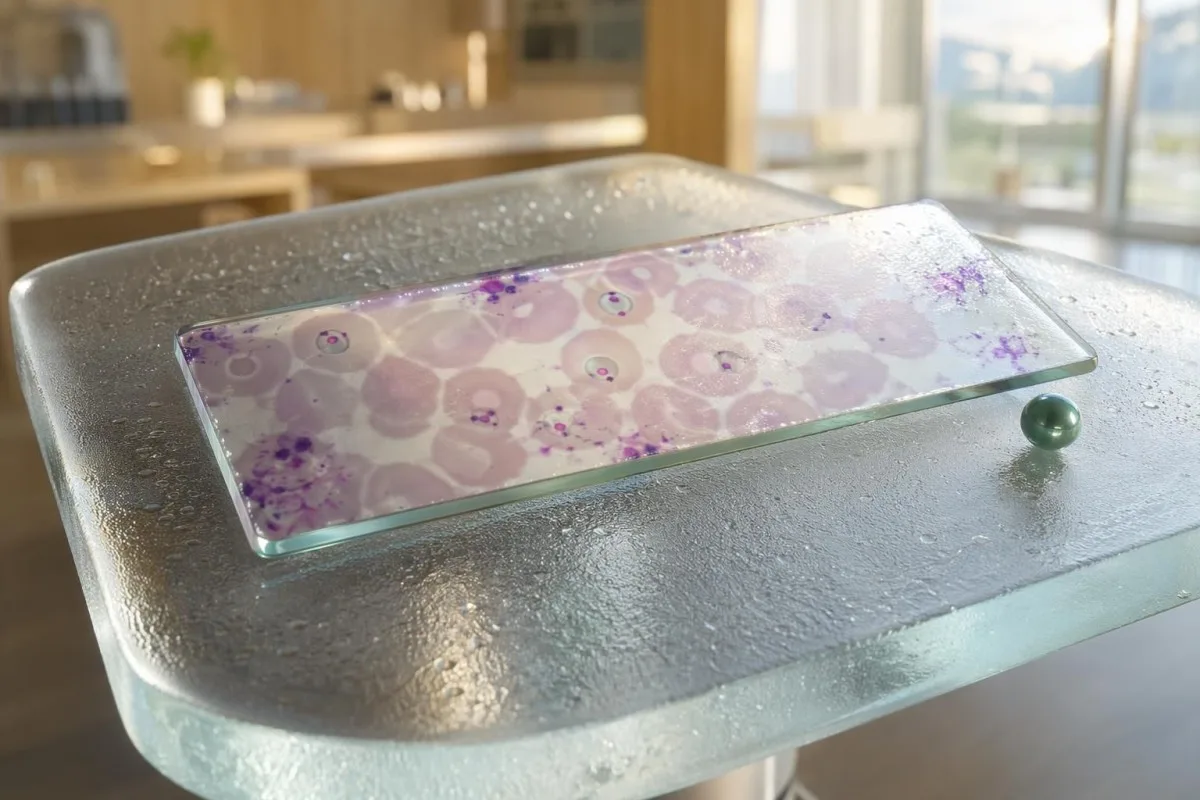
A practical physician guide to fever after travel blood test timing, repeat malaria smears, and the trip details that make triage faster and safer.


- Same-day malaria smear is needed for any fever after travel to a malaria-risk area, especially within 12 months of return.
- Repeat smears are usually checked every 12-24 hours until 3 negative sets are documented when suspicion remains.
- Fever after travel blood test workup should usually include CBC, platelets, liver enzymes, creatinine, electrolytes, bilirubin, glucose, lactate when ill, and blood cultures when septic.
- Malaria blood smear timing is urgent because Plasmodium falciparum can deteriorate within 24-48 hours, even in previously healthy adults.
- One negative test does not reliably exclude malaria when parasite levels are low or fever cycles have not peaked yet.
- Travel itinerary changes triage: country, rural exposure, altitude, season, stopovers, prophylaxis adherence, and freshwater or animal contact all matter.
- Emergency signs include confusion, jaundice, breathlessness, fainting, persistent vomiting, pregnancy, glucose below 70 mg/dL, platelets below 50 x 10^9/L, or creatinine rise.
- Kantesti AI can help interpret completed routine blood panels, but suspected malaria needs urgent clinician-led testing, microscopy, and treatment decisions.
When fever after travel needs an urgent blood test
A blood test for travelers is urgent the same day if fever appears after visiting a malaria-risk area; do not wait for the fever pattern to become “classic.” The first malaria thick and thin smear, or rapid diagnostic test plus smear, should be done immediately, and if negative but suspicion remains, smears are commonly repeated every 12-24 hours for 3 sets.
As of July 10, 2026, my threshold is simple: fever of 38.0°C or higher after travel to sub-Saharan Africa, Oceania, parts of South America, South Asia, or Southeast Asia deserves same-day malaria testing. I would rather see 20 negative smears than miss 1 early Plasmodium falciparum case; the downside of delay can be severe.
Kantesti is an AI blood test interpretation platform that helps travelers understand routine results such as CBC, platelets, bilirubin, creatinine, and CRP, but suspected malaria is not a “wait and upload later” problem. If you have fever after travel, start with urgent medical care; then use tools like travel lab checklist support to organize the rest of the workup.
In my clinical practice, the most dangerous sentence is, “It’s probably just jet lag.” Jet lag does not usually cause rigors, a temperature of 39.4°C, platelets of 72 x 10^9/L, and bilirubin of 34 µmol/L three weeks after returning from Ghana. That pattern is malaria until proven otherwise.
Kantesti LTD is a UK medical AI company, and our editorial stance is deliberately conservative on travel fever; our About Us page explains why we separate interpretation support from emergency diagnosis. The practical rule is blunt: fever after malaria-area travel gets a malaria test today, not after the weekend.
Why the first 24 hours after fever matter
The first 24 hours after fever in a returning traveler matter because severe falciparum malaria can progress quickly, sometimes before a patient looks obviously unwell. The CDC Yellow Book states that malaria must be ruled out in febrile travelers returning from endemic areas (CDC Yellow Book, 2026).
Most travel fever algorithms look tidy on paper, but real patients arrive after a long flight, dehydrated, and slightly confused about dates. A fever beginning 7-30 days after return is particularly concerning for falciparum malaria, although vivax and ovale can appear months later because dormant liver forms may reactivate.
A same-day result changes care. A platelet count below 100 x 10^9/L with fever after travel does not diagnose malaria, but it raises my suspicion sharply when paired with headache, chills, mild jaundice, or an ALT above 80 IU/L. For timing expectations across different laboratories, see our guide to same-day blood results.
The thing is, malaria does not always wait for office hours. If fever is accompanied by fainting, shortness of breath, glucose below 70 mg/dL, or reduced urine output, I send patients to emergency care rather than a routine phlebotomy site. A private lab cannot monitor rapid deterioration.
In one case I reviewed, a 31-year-old traveler from northern Uganda had a first temperature spike at 2 a.m., took paracetamol, and waited until Monday. By then, creatinine had doubled from about 80 to 168 µmol/L. He recovered, but that extra 36 hours made the admission far more complicated.
Malaria blood smear timing: first draw and repeats
Malaria blood smear timing starts immediately at presentation, regardless of whether the fever is currently high. If the first smear is negative and clinical suspicion remains, CDC diagnostic guidance recommends repeating smears every 12-24 hours until 3 negative smears are obtained (CDC, 2024).
The first sample should include a thick smear for sensitivity and a thin smear for species identification and parasite percentage. A rapid diagnostic test can help when microscopy is delayed, but it should not replace the smear because species, density, and treatment monitoring depend on microscopy.
A fever peak is useful but not required. I have seen smears turn positive when the patient was afebrile at 37.2°C, because parasites circulate even between chills. Waiting for a “malaria fever cycle” is an old habit that can be unsafe in modern emergency care.
Manual review still matters. Automated CBC flags may show thrombocytopenia, atypical scatterplots, or abnormal differential patterns, but parasite detection requires trained microscopy or validated molecular testing; our explanation of manual blood differentials helps patients understand why a human smear review can override machine-normal counts.
In hospitals, parasite density is often followed every 12-24 hours after treatment starts until a clear fall is documented. A falciparum parasite load above 5% is commonly treated as severe in many adult protocols, and some clinicians become concerned at lower levels if kidney, brain, lung, or glucose abnormalities are present.
Why one negative malaria test may not be enough
One negative malaria smear may not be enough because early parasite density can sit below the microscope detection threshold. Repeat testing is most valuable when fever, low platelets, travel to a high-risk region, or missed prophylaxis doses keep the pre-test probability high.
A well-prepared thick smear can detect roughly 50-100 parasites/µL in experienced hands, while less experienced settings may miss low-level parasitemia. That difference is not trivial; a traveler with early falciparum malaria can be symptomatic before parasite numbers become easy to see.
Timing also interacts with medication. Partial prophylaxis, self-start antibiotics, and antipyretics can blur the clinical picture without removing risk. If a traveler missed 2 or more weekly prophylaxis doses, I treat the itinerary as higher risk until malaria is carefully excluded.
Repeat testing follows the same logic as repeating any abnormal or high-risk lab: the question is not whether the first result is “normal,” but whether it fits the story. Our article on repeating abnormal labs explains this broader principle well.
The false-negative conversation is uncomfortable because patients want certainty. I usually say: “Your first smear is reassuring, not definitive.” That sentence has prevented more premature discharges than any travel questionnaire I have used.
Core returning traveler fever workup beyond the smear
A returning traveler fever workup should usually include CBC with differential, platelets, creatinine, electrolytes, glucose, bilirubin, ALT, AST, ALP, CRP or procalcitonin when available, urinalysis, and blood cultures when sepsis is possible. The smear answers “malaria?”; the panel answers “how sick is this person?”
Platelets are one of my favorite early clues. A platelet count below 150 x 10^9/L is common in malaria, dengue, and other travel infections, but a count below 50 x 10^9/L raises bleeding and severe infection concerns. CBC context matters more than any single flag.
Kidney and liver results are severity markers. Creatinine above 133 µmol/L or bilirubin above 50 µmol/L in a febrile traveler makes me think harder about severe malaria, leptospirosis, viral hepatitis, sepsis, and dehydration. For pattern reading across multiple markers, our full panel guide is more useful than isolated reference ranges.
Glucose is easy to forget in adults. Severe malaria can cause hypoglycemia, and quinine-based treatments historically made this worse; any glucose below 70 mg/dL or 3.9 mmol/L needs prompt attention. Children and pregnant patients are especially vulnerable.
Kantesti AI interprets routine blood results by comparing biomarker clusters, units, reference ranges, and recent trends, but a malaria smear result itself must be handled by the clinical team performing the test. I say this plainly because a normal-looking CMP does not rule out malaria.
Travel details that change malaria triage
Travel details change triage because malaria risk can vary dramatically within the same country. City-only travel at high altitude is not the same as rural overnight stays near lowland water, and a 48-hour stopover can matter if it occurred in a malaria transmission zone.
I ask for the exact country, region, dates, altitude, rural nights, mosquito exposure, and whether the patient slept under a treated net. A traveler who spent 10 nights in rural Côte d’Ivoire has a very different risk profile from someone who had meetings in central Nairobi only.
Season matters, but it should not overrule testing. Transmission often rises after rains, yet imported malaria still appears in dry seasons because travelers move between ecological zones. If you do not know the local risk, bring the itinerary rather than guessing from memory.
Freshwater exposure adds another diagnostic lane: schistosomiasis, leptospirosis, and rickettsial disease can mimic malaria with fever and abnormal liver enzymes. If diarrhea is part of the picture, our guide to diarrhea blood tests explains dehydration, electrolytes, and infection clues.
Medication history is often incomplete. I ask patients to photograph the box, not just say “malaria tablets.” Atovaquone-proguanil daily, doxycycline daily, and mefloquine weekly have different failure patterns when doses are missed by 1 day versus 1 week.
Other infections a first blood test must not miss
A first fever after travel blood test must not miss dengue, enteric fever, viral hepatitis, leptospirosis, rickettsial disease, acute HIV, COVID-19, and sepsis. Malaria is the emergency rule-out, but the differential widens fast when smear results are negative.
Dengue often presents with fever, headache, muscle pain, leukopenia, and platelets dropping after day 3-5 of illness. A hematocrit rise of 20% from baseline can suggest plasma leakage in dengue, while malaria more often points toward anemia, jaundice, and parasite-positive microscopy.
Enteric fever can look deceptively mild early. Blood cultures are most useful in the first week, and a normal white count does not reassure me if there is sustained fever above 39°C, abdominal symptoms, or travel to areas with resistant Salmonella Typhi.
Hepatitis A, B, C, and E enter the workup when ALT or AST rises above 200 IU/L, especially with dark urine, pale stool, or jaundice. For a patient-facing explanation of early hepatitis patterns, see our hepatitis C labs article, though acute travel hepatitis often involves A or E rather than C.
A negative malaria smear should never end the consultation if the patient looks toxic. Lactate above 2 mmol/L, systolic blood pressure below 90 mmHg, or new confusion pushes the workup toward sepsis protocols while travel-specific tests continue.
How species and parasite density guide urgency
Malaria species and parasite density guide urgency because Plasmodium falciparum causes most rapid severe disease, while vivax and ovale can relapse after delayed liver-stage activation. A thin smear should report species when possible and parasite density as a percentage or parasites per microlitre.
A parasitemia of 0.1% can still make a non-immune traveler feel awful, but 2% in the wrong clinical context worries me much more than the number alone suggests. Non-immune travelers can deteriorate at lower parasite densities than people living in endemic regions.
Plasmodium falciparum needs the fastest action because infected cellular elements can adhere in small vessels, contributing to brain, kidney, lung, and metabolic complications. Lalloo et al. emphasized in the UK malaria treatment guideline that suspected severe malaria requires urgent specialist management and parenteral therapy (Lalloo et al., 2016).
Kantesti is an AI-powered blood test analysis tool used by 2M+ people across 127+ countries, and our models are designed to flag severity patterns in routine panels such as thrombocytopenia plus bilirubin rise. For a plain-language map of the markers our system recognizes, see the biomarkers guide.
Species reporting is not academic. Vivax and ovale often need relapse-prevention planning with G6PD testing before primaquine or tafenoquine, because these medicines can cause hemolysis in G6PD deficiency. That is why the smear report should not stop at “malaria positive.”
Emergency red flags after travel fever
Emergency red flags after travel fever include confusion, seizure, jaundice, breathlessness, fainting, persistent vomiting, pregnancy, very low glucose, falling platelets, kidney injury, or any fever with shock features. These signs warrant emergency care rather than routine outpatient blood testing.
The numbers I treat seriously are glucose below 70 mg/dL, lactate above 2 mmol/L, platelets below 50 x 10^9/L, creatinine rising by 26 µmol/L or more from baseline, or bilirubin above 50 µmol/L with fever. None of these proves malaria, but all raise the cost of delay.
As Thomas Klein, MD, I tell travelers to ignore the myth that malaria always causes perfectly timed fevers every 48 or 72 hours. Early falciparum malaria is often messy: chills at breakfast, sweating at midnight, then a deceptively normal temperature in clinic.
Sepsis markers help decide where testing should happen. Our sepsis marker guide explains why lactate, CBC, blood cultures, and organ markers are interpreted together rather than one at a time.
If a patient says, “I feel too weak to stand,” I do not negotiate with the thermometer. Clinical appearance can outrun lab results, particularly in malaria, dengue shock, typhoid complications, and bacterial sepsis after travel.
Children, pregnancy, and immunosuppression change thresholds
Children, pregnant patients, older adults, and immunosuppressed travelers need lower thresholds for urgent testing because they can deteriorate with less warning. Fever after malaria exposure in pregnancy should be treated as urgent even if symptoms seem mild.
Pregnancy changes malaria risk because anemia, hypoglycemia, severe disease, and fetal complications are more likely. In practice, I do not wait for platelet trends in a pregnant traveler with fever after a risk-area trip; same-day clinician assessment is the safest route.
Children can compensate until they suddenly do not. A child with fever, poor intake, vomiting, or sleepiness after travel needs glucose checked early, because a value below 3.9 mmol/L can worsen quickly. Pediatric normal ranges also differ by age, which complicates interpretation.
For parents trying to understand CBC differences, our pediatric range guide explains why children are not just small adults on lab reports. This matters when hemoglobin, lymphocytes, neutrophils, and platelets are compared with adult reference ranges.
Immunosuppressed travelers, including those taking steroids above 20 mg prednisolone daily or biologic medicines, may show muted fever or CRP responses. A “not very high” CRP does not reassure me when the travel history is strong.
If you took malaria prophylaxis or standby treatment
Taking malaria prophylaxis lowers risk but does not eliminate the need for urgent testing when fever occurs after exposure. Missed doses, vomiting within 1 hour of a dose, counterfeit medicines, and resistant regions can all lead to breakthrough malaria.
I ask exactly when the last dose was taken. Atovaquone-proguanil is usually continued for 7 days after leaving a malaria area, doxycycline and mefloquine for 4 weeks; stopping early creates a window for late presentation.
Standby emergency treatment can confuse the smear. A traveler who takes artemisinin-based therapy before testing may lower parasite density enough to make diagnosis harder while still needing medical supervision. Bring the medicine packaging and timing notes.
Liver enzymes sometimes rise from infection, medication, alcohol during travel, or dehydration. If ALT is above 3 times the lab upper limit, our ALT symptom guide can help frame the result, but travel fever still needs clinician-led triage.
The evidence on breakthrough patterns is honestly mixed because adherence reports are often unreliable. Most patients overestimate their consistency; phone reminders, pharmacy refill dates, and travel companions often reveal missed doses that the patient forgot.
What to bring when you see a clinician
Bring your itinerary, dates, prophylaxis name and doses, vaccine record, insect bites, freshwater exposure, animal contact, sexual exposure, food and water risks, and any prior lab reports. A 10-minute organized history can prevent the wrong tests from being ordered first.
The best note includes departure and return dates, every country visited, rural nights, altitude, and symptom day number. “Fever day 4 after 18 days in rural Cambodia” tells me far more than “Asia trip recently.”
Save the actual PDF or photo of your lab result, not just screenshots of flagged highs and lows. Optical character recognition can misread units, decimal points, and reference intervals; our PDF upload checklist explains the small errors that change interpretation.
Kantesti AI can store and trend completed routine blood results across visits, which is useful if platelets fall from 180 to 92 x 10^9/L over 48 hours or creatinine rises after vomiting. Trend direction often matters more than whether a number is just inside a reference range.
Also bring a medication list with supplements. Doxycycline, antimalarials, NSAIDs, herbal products, and antibiotics can all affect liver, kidney, clotting, or gastrointestinal patterns. I have seen “natural immune boosters” cause more diagnostic noise than the infection itself.
How Kantesti fits after urgent malaria testing
Kantesti helps after urgent malaria testing by interpreting completed routine blood panels, identifying concerning biomarker clusters, and organizing trends for follow-up. It does not replace microscopy, rapid malaria testing, blood cultures, emergency assessment, or prescribed treatment.
Kantesti is an AI lab test interpretation service that reads CBC, chemistry, liver, kidney, inflammation, and nutrient markers in context rather than as isolated “H” and “L” flags. In a travel fever case, that means platelets, hemoglobin, bilirubin, creatinine, glucose, and CRP are interpreted as a pattern.
Our technology guide describes how unit normalization and reference-range mapping work across countries. This matters because creatinine in mg/dL and µmol/L, bilirubin in mg/dL and µmol/L, and platelets in different report formats can look confusing after international care.
Thomas Klein, MD, reviews travel-fever content with the same principle I use clinically: urgency first, interpretation second. If a traveler has fever plus jaundice or confusion, the correct next step is emergency care, not a better-looking summary.
Kantesti's neural network can help flag when a returning traveler's follow-up panel still shows thrombocytopenia, rising ALT, or kidney strain after discharge. For quality governance and clinical oversight, our medical validation page explains how we benchmark blood-test interpretation rather than making acute diagnoses.
Bottom line: test urgently, repeat wisely, document clearly
The bottom line is that fever after travel to a malaria-risk area needs urgent malaria testing today, and a negative first smear may need repeats every 12-24 hours until 3 negatives if suspicion remains. Travel details, severity markers, and trend changes decide whether care stays outpatient or moves to emergency treatment.
I have learned to respect boring details: one missed mefloquine dose, one rural overnight stop, one freshwater swim, one platelet count falling by 40%. Those details can change the diagnosis faster than a long list of vague symptoms.
For medical review standards, Kantesti's Medical Advisory Board supports our clinical safety language, especially where AI interpretation must defer to urgent care. Patients can also read our discussion of emerging travel zoonoses in the Nipah virus guide, which is relevant when fever follows bat, livestock, or outbreak exposure.
Kantesti LTD. (2026). C3 C4 Complement Blood Test & ANA Titer Guide. Zenodo. DOI: 10.5281/zenodo.18353989. ResearchGate: publication search. Academia.edu: publication search.
Kantesti LTD. (2026). Nipah Virus Blood Test: Early Detection & Diagnosis Guide 2026. Zenodo. DOI: 10.5281/zenodo.18487418. ResearchGate: publication search. Academia.edu: publication search.
Frequently Asked Questions
How soon after travel can malaria fever start?
Malaria fever can start as early as 7 days after exposure, and falciparum malaria commonly appears within 1 month of return. Plasmodium vivax and Plasmodium ovale can appear months later because dormant liver forms may reactivate. Any fever after travel to a malaria-risk area within the past 12 months deserves clinician review, especially if chills, headache, jaundice, or low platelets are present.
Can one negative malaria smear rule out malaria?
One negative malaria smear does not reliably rule out malaria when the travel history and symptoms are concerning. Early parasite levels may be too low to detect, so smears are commonly repeated every 12-24 hours until 3 negative smears are documented. A negative rapid test is also not enough to ignore a high-risk exposure if fever continues.
When should a returning traveler with fever go to the emergency department?
A returning traveler with fever should seek emergency care immediately for confusion, fainting, breathlessness, seizure, jaundice, pregnancy, persistent vomiting, very low urine output, or severe weakness. Lab danger signs include glucose below 70 mg/dL, platelets below 50 x 10^9/L, lactate above 2 mmol/L, or rising creatinine. These findings can occur with severe malaria, sepsis, dengue complications, or other serious travel-related infections.
What blood tests are usually ordered for fever after travel?
A fever after travel blood test workup usually includes malaria thick and thin smears, CBC with differential, platelets, creatinine, electrolytes, glucose, liver enzymes, bilirubin, CRP or procalcitonin when available, urinalysis, and blood cultures if sepsis is possible. Dengue testing, hepatitis serology, stool tests, HIV testing, and respiratory testing may be added based on symptoms. The exact panel depends on itinerary, timing, exposures, and severity.
Does malaria prophylaxis mean I do not need testing?
Malaria prophylaxis lowers risk but does not remove the need for testing if fever occurs after exposure. Missed doses, vomiting within 1 hour of a dose, stopping early, drug resistance, or counterfeit medicines can lead to breakthrough malaria. Bring the medicine packaging and dose schedule because atovaquone-proguanil, doxycycline, and mefloquine have different timing rules.
Can Kantesti diagnose malaria from my blood test PDF?
Kantesti can interpret completed routine blood tests such as CBC, platelets, liver enzymes, kidney markers, bilirubin, glucose, and inflammation markers, but it cannot replace urgent malaria microscopy or clinician diagnosis. Suspected malaria requires same-day medical testing, and repeat smears may be needed every 12-24 hours. Kantesti is best used after urgent care is underway, helping organize results, trends, and follow-up questions.
Could fever after a long flight be caused by a blood clot rather than an infection?
Fever alone is more often caused by infection, but a pulmonary embolism can sometimes cause low-grade fever after prolonged immobility. Seek emergency care for new breathlessness, chest pain, coughing blood, fainting, or one-sided leg swelling; these symptoms do not replace malaria testing after relevant travel.
Get AI-Powered Blood Test Analysis Today
Join over 2 million users worldwide who trust Kantesti for instant, accurate lab test analysis. Upload your blood test results and receive comprehensive interpretation of 15,000+ biomarkers in seconds.
📚 Referenced Research Publications
Klein, T., Mitchell, S., & Weber, H. (2026). C3 C4 Complement Blood Test & ANA Titer Guide. Kantesti AI Medical Research.
Klein, T., Mitchell, S., & Weber, H. (2026). Nipah Virus Blood Test: Early Detection & Diagnosis Guide 2026. Kantesti AI Medical Research.
📖 External Medical References
Centers for Disease Control and Prevention (2026). Post-Travel Evaluation of the Ill Traveler. CDC Yellow Book 2026.
Centers for Disease Control and Prevention (2024). Malaria Diagnostic Tests. CDC Malaria Clinical Guidance.
⚕️ Medical Disclaimer
This article is for educational purposes only and does not constitute medical advice. Always consult a qualified healthcare provider for diagnosis and treatment decisions.
E-E-A-T Trust Signals
Experience
Physician-led clinical review of lab interpretation workflows.
Expertise
Laboratory medicine focus on how biomarkers behave in clinical context.
Authoritativeness
Written by Dr. Thomas Klein with review by Dr. Sarah Mitchell and Prof. Dr. Hans Weber.
Trustworthiness
Evidence-based interpretation with clear follow-up pathways to reduce alarm.