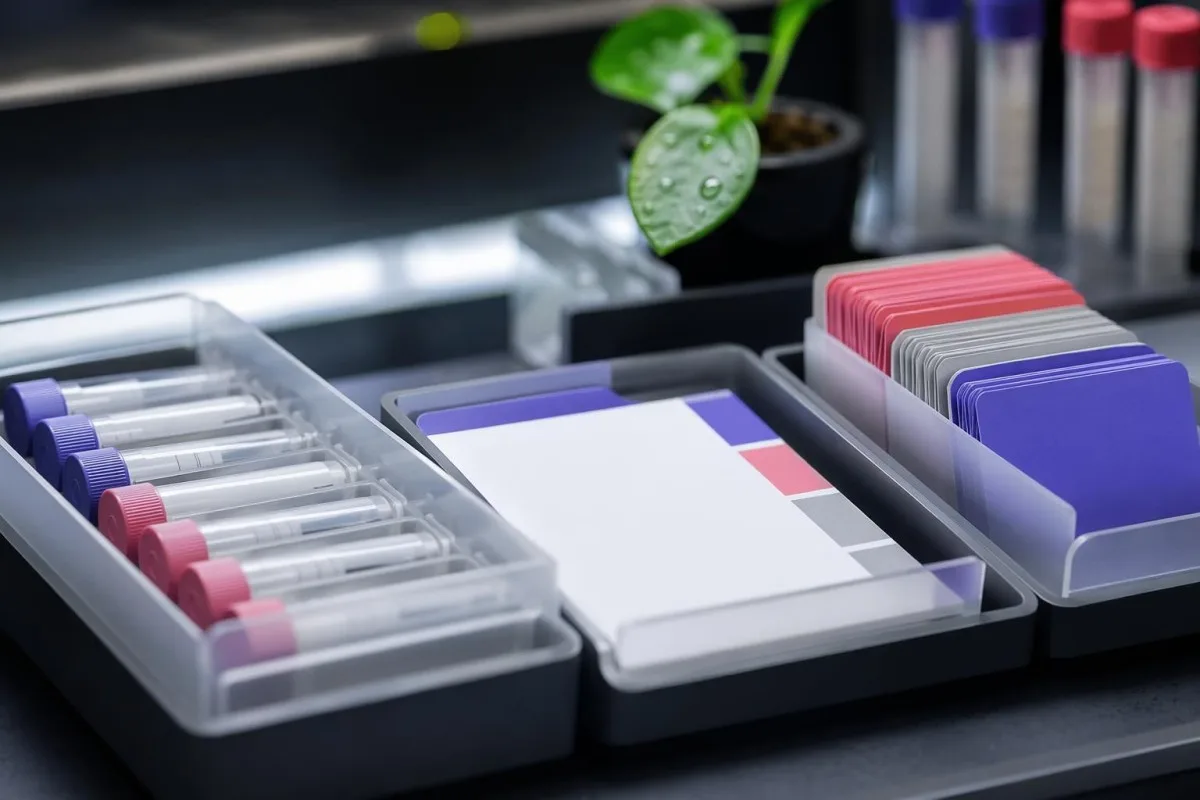
Caregivers often manage three generations of lab results at once. The trick is not more data — it is clean separation, consent-aware access, and a repeatable flag-review routine.


- Separate profiles are the safest way to track a dependents blood test; match every upload to name, date of birth, collection date, and lab accession number.
- Proxy access is different from password sharing; use official portal delegation for children, partners, and adults who have given consent.
- Red flags such as potassium ≥6.0 mmol/L, sodium ≤125 mmol/L, or platelets <50 x10^9/L usually need same-day clinical advice.
- Children’s ranges change by age; LDL-C ≥130 mg/dL is high in most children and adolescents under NHLBI/AAP pediatric lipid guidance.
- Kidney tracking for aging parents should include eGFR and urine ACR; eGFR <60 mL/min/1.73 m² for more than 3 months suggests chronic kidney disease.
- Diabetes markers need context; HbA1c ≥6.5% or fasting glucose ≥126 mg/dL meets diagnostic laboratory criteria when confirmed appropriately.
- Privacy rules mean one shared family login is risky; it can expose adolescent confidential care, partner results, or parent medication changes.
- Trend graphs reduce panic; a ferritin drop from 80 to 25 ng/mL over 9 months often matters more than a single result inside range.
Set up one profile per person before uploading results
A dependents blood test record should be kept in a separate profile for each child, partner, or parent, with consent recorded before sharing. Do not use one family portal login, one shared PDF folder, or one spreadsheet tab with copied values; that is how abnormal flags get missed and private results leak.
I am Thomas Klein, MD, and in clinical practice I have seen a 7-year-old child’s low ferritin pasted into a parent’s chart because both PDFs were named results.pdf. A safe family workflow starts with four identifiers: legal name, date of birth, collection date, and the ordering clinician or laboratory accession number. Our deeper guide to multi-patient lab histories walks through this structure for households with more than one dependent.
Kantesti is an AI blood test interpretation platform that lets caregivers keep results clinically separated rather than blending relatives into one average-looking dashboard. The practical reason is simple: a creatinine of 0.9 mg/dL can be normal for a 45-year-old father, too high for a small child, and deceptively reassuring in an 82-year-old woman with low muscle mass.
Use a naming convention that cannot be misunderstood: surname, first name, birth year, collection date, and lab source. I prefer 2026-07-09 format because it sorts chronologically across countries; it also avoids the UK-US day/month confusion that turns 04/07 into either April 7 or July 4.
Portal access rules for minors, partners and older parents
Portal access for dependents should use proxy access, not shared passwords. Children, spouses, and aging parents each have different consent rules, and those rules can change once a child reaches adolescence or an adult loses decision-making capacity.
For young children, parents usually receive full proxy access, but many portals restrict adolescent records around ages 12 to 16 depending on local law and the type of care. Sexual health, pregnancy-related testing, mental health notes, and substance-use care may be protected even when routine CBC or lipid results remain visible.
Partners are different. A spouse’s consent to discuss cholesterol today does not automatically authorize access to STI testing, fertility labs, or medication monitoring next year. If you plan to share blood tests with family, record what was shared, why it was shared, and when that permission should be reviewed.
For aging parents, ask the clinic about portal proxy forms, lasting power of attorney, healthcare proxy documentation, or local equivalents before a crisis. Password sharing can breach portal terms of use and leaves no audit trail, which becomes awkward when siblings disagree about who saw which abnormal result.
Use an upload workflow that prevents mixed family records
A safe upload workflow checks identity before interpretation, again after upload, and once more before sharing. The most common family tracking error I see is not a wrong laboratory value — it is a right value attached to the wrong person.
Before uploading a PDF or photo, compare the person’s name, date of birth, collection date, and sample time against your own household tracker. If any of those four fields are missing, save the document in a temporary review folder rather than adding it to a permanent profile.
Kantesti AI separates dependent profiles so a parent can compare a child’s ferritin with pediatric ranges while viewing an older parent’s eGFR against kidney-risk thresholds. If you are scanning older paperwork, our PDF upload checklist is useful because OCR mistakes often turn 1.0 into 10 or miss a minus sign in an anion gap.
One little trick from my clinic: keep a 30-second verbal checkpoint. Say aloud, for example, Maria, born 2014, collected July 9, ferritin 18 ng/mL, pediatric profile. It feels slightly silly, but it catches mistakes before an interpretation tool, family doctor blood test app, or clinician receives the wrong data.
Review abnormal flags within 24 hours, not weeks later
Every dependent’s abnormal lab flag should be reviewed within 24 hours, even if the appointment is weeks away. Most flags are not emergencies, but a small group of electrolyte, blood count, kidney, liver, and glucose results should not sit unread in a portal.
I tell families to sort flags into three piles: same-day, soon but not today, and routine discussion. A potassium of 6.2 mmol/L, sodium of 124 mmol/L, or glucose of 420 mg/dL belongs in the same-day pile unless the laboratory has already contacted the clinician and confirmed the plan.
Portal release laws mean patients often see results before the doctor has added notes. That is good for transparency, but it can be scary at 10 p.m.; our article on results before doctor review explains why portals may publish numbers before interpretation is ready.
Abnormal flags vary by lab method, age, sex, pregnancy status, and local reference ranges. A teenage athlete’s CK of 900 IU/L after a race may be expected, while an older parent with CK 900 IU/L plus dark urine, weakness, or a new statin deserves a call.
Know which dependent results need same-day advice
Same-day medical advice is usually needed for severe electrolyte shifts, very low platelets, dangerous glucose levels, or blood counts suggesting serious infection or marrow stress. The number alone is not the whole story, but certain thresholds are too risky to ignore.
A potassium result ≥6.0 mmol/L may represent a sample handling problem, but it can also trigger heart rhythm risk, especially in kidney disease or after ACE inhibitors, ARBs, spironolactone, or trimethoprim. If the report mentions hemolysis, repeat testing is often needed; if symptoms include weakness, palpitations, or chest pain, urgent care is safer.
A platelet count <50 x10^9/L increases bleeding risk, and <20 x10^9/L is often treated as urgent even without bruising. An ANC below 0.5 x10^9/L means severe neutropenia and higher infection risk, particularly if fever reaches 38.0°C or higher.
Flags can be subtle. Many portals mark only H or L, but an asterisk may mean critical, corrected, or simply outside range depending on the lab. For families who find symbols confusing, our flag meaning guide explains the common portal markers.
Use this triage table as a safety net, not as a diagnosis. If the dependent looks unwell, has chest pain, confusion, fainting, severe dehydration, or breathing difficulty, symptoms outrank the portal number.
When I review a family dashboard, I worry most about clusters: high creatinine plus high potassium, low hemoglobin plus high bilirubin, or high glucose plus ketones. One isolated yellow flag often waits; a dangerous pattern should not.
Children’s ranges are not small adult ranges
Children need age-specific blood test ranges because growth, puberty, diet, and immune development shift normal values. A result that is routine in an adult can be abnormal in a toddler, and the reverse also happens.
Hemoglobin, alkaline phosphatase, lymphocyte count, creatinine, and thyroid markers all change across childhood. Alkaline phosphatase can look high during bone growth, while creatinine may look low simply because a child has less muscle mass than an adult.
For lipids, the NHLBI/AAP pediatric guidance classifies LDL-C <110 mg/dL as acceptable, 110-129 mg/dL as borderline, and ≥130 mg/dL as high in most children and adolescents (Expert Panel, 2011). If your child’s cholesterol was checked after a family history of early heart disease, our pediatric range guide gives more context.
Iron is where parents get caught. Ferritin <15 ng/mL strongly supports iron deficiency, but in a child with inflammation, ferritin can appear falsely normal because it rises as an acute-phase reactant. A tired 9-year-old with ferritin 22 ng/mL, low MCV, and high RDW may still need a proper iron discussion.
Do not copy adult supplement doses into a child’s plan. Vitamin D, iron, iodine, zinc, and B12 all have pediatric dosing ceilings; a well-meant family protocol can overshoot quickly in a 20 kg child.
Track aging-parent labs around kidneys, medicines and falls
For aging parents, the highest-yield family lab tracking usually centers on kidney function, electrolytes, anemia, glucose, thyroid status, B12, vitamin D, and medication safety markers. These results often explain falls, confusion, weakness, and appetite changes before a dramatic diagnosis appears.
KDIGO 2024 defines chronic kidney disease by abnormalities in kidney structure or function lasting more than 3 months, including eGFR <60 mL/min/1.73 m² or urine ACR ≥30 mg/g (KDIGO, 2024). In an 84-year-old on diuretics, the difference between eGFR 58 and 42 can change antibiotic doses, diabetes medicine choices, and contrast scan planning.
Kantesti is an AI-powered blood test analysis tool used by families who need to track dependent results across visits without losing context. For older adults, I like to attach symptoms to the lab date: fall, new confusion, poor intake, infection, medication change, or dehydration after a hot week.
Our guide to tracking aging parents covers the caregiver side in more detail, including what to save after discharge. The quiet danger is a normal-looking creatinine in a frail parent; low muscle mass can hide reduced kidney filtration, so eGFR trend and cystatin C sometimes tell a truer story.
Partners can share goals without merging records
Partners can share blood test goals, meal plans, and risk discussions without merging medical records. A couple’s dashboard should show consented comparisons, not one combined health identity.
In my experience, couples often want to compare HbA1c, LDL-C, ferritin, vitamin D, testosterone, or thyroid markers because they are changing diet or exercise together. That is reasonable, but the interpretation still belongs to the individual: an LDL-C of 155 mg/dL means something different in a 31-year-old with no risk factors than in a 58-year-old with hypertension.
A practical couple workflow is to share only the summary, trend, and agreed action items, not the raw PDF by default. Our couples blood test guide explains how partners can set shared goals while keeping fertility, STI, and medication monitoring private unless explicitly shared.
The ADA Standards of Care in Diabetes—2026 uses HbA1c ≥6.5% or fasting plasma glucose ≥126 mg/dL as diagnostic laboratory thresholds when confirmed appropriately (American Diabetes Association, 2026). If one partner crosses that threshold, it is a medical follow-up issue, not a household blame session about dinner.
Build a multigenerational tracker without overcalling genetics
A multigenerational health tracker should record repeated patterns, ages at diagnosis, and confirmed lab abnormalities rather than assuming every shared result is inherited. Families often share diet, sleep, medication habits, stress, and environment as much as genes.
Track family history in a structured way: relation, condition, age at onset, key lab value, and whether the diagnosis was confirmed. Father had heart attack at 47 with LDL-C 210 mg/dL is more useful than heart disease runs in the family.
Our family marker guide lists patterns worth following across generations, including LDL-C, Lp(a), ApoB, HbA1c, ferritin, thyroid antibodies, creatinine/eGFR, and urine ACR. Lp(a) is especially family-driven; if one adult has a high value, first-degree relatives often deserve at least one measurement.
Avoid genetic fatalism. I have seen three generations of high triglycerides improve when the household stopped late-night sweet drinks and retested after 12 weeks; triglycerides can fall 20-50% with weight loss, lower alcohol intake, and lower refined carbohydrate intake in responsive patients.
Use trend analysis so baselines do not get lost
Trend analysis is safer than one-off interpretation because many family risks appear as slow movement before a result crosses the reference range. A personal baseline can be more informative than the lab’s population interval.
Kantesti AI trend analysis looks for direction, speed, and clustering rather than treating every flag as equal. A creatinine rise from 0.8 to 1.1 mg/dL in 6 months may deserve attention even if the lab range still says normal, especially in a smaller older adult.
For families, I like annual trend snapshots: CBC, kidney panel, liver panel, HbA1c or fasting glucose, lipids, ferritin when relevant, and TSH if symptoms or history point that way. Our lab trend graph guide explains why slopes and step-changes matter more than a single dot.
Trend context prevents false reassurance too. A ferritin of 28 ng/mL may be technically in range at some labs, but if it was 90 ng/mL last year and the patient has heavy periods, restless legs, or endurance training, that is not just a harmless normal.
Prevent false alarms from units, countries and methods
Family lab tracking across countries needs unit conversion and method awareness. A result can look dangerously different when one lab reports mg/dL and another reports mmol/L, or when a test changes from calculated to directly measured.
Glucose is the classic example: 100 mg/dL equals about 5.6 mmol/L, not 100 mmol/L. Cholesterol conversion differs by molecule; LDL-C in mmol/L is roughly mg/dL divided by 38.7, while triglycerides are divided by 88.5.
If your parents live in one country and your children are tested in another, save the original PDF rather than only the copied value. Our unit-change guide covers why creatinine, urea, vitamin D, B12, and iron often appear to jump when the unit or assay changes.
Some European labs use lower vitamin D sufficiency labels than private wellness panels, and B12 cutoffs vary widely by assay. I get cautious when a family doctor blood test app hides units; caregivers need both the number and the unit to avoid unsafe comparisons.
Store and share family labs with privacy-by-design habits
Privacy-safe family lab storage means collecting the minimum needed information, separating each person’s record, using consent-based sharing, and deleting copies that no longer serve care. Convenience should not turn into a permanent family surveillance archive.
Under GDPR principles, health data needs a lawful basis, purpose limitation, minimization, and appropriate safeguards. In plain language: do not store every relative’s raw portal export forever just because you can.
Screenshots in family messaging threads are a common privacy leak. A better pattern is to share a brief summary: HbA1c 6.8%, clinician follow-up booked, next test in 3 months. Our guide to safe digital storage gives practical folder, backup, and device-lock steps.
If your household uses software for interpretation, read the data use rules rather than assuming medical apps all behave the same. Kantesti’s software license agreement explains permitted use, while caregiver consent still remains the user’s responsibility.
How AI can help without replacing the family doctor
AI can help caregivers organize dependent lab results by detecting patterns, age mismatches, unit problems, and abnormal clusters, but it should not replace the clinician who knows the patient. The best use is preparation: cleaner records and better questions.
Kantesti is an AI biomarker interpretation platform that reads results in context: age, sex, stated symptoms, reference intervals, units, and prior trends when available. The system is not just checking whether a number is red; it asks whether the pattern makes clinical sense.
For example, a high AST with normal ALT in a 52-year-old marathon runner after a race points differently than the same AST in an older parent with jaundice and high ALP. Our technology guide describes how our AI handles structured lab data, OCR checks, and biomarker relationships.
Kantesti’s neural network is useful for family tracking because it can keep three patients’ baselines separate while still highlighting shared risk patterns. Our technical benchmark work, including the engine benchmark, focuses on safe interpretation behavior rather than dramatic single-number claims.
The honest limitation: no AI sees the person walking into the room. If a dependent has new confusion, chest pain, fainting, severe dehydration, pregnancy symptoms, fever with neutropenia, or a rapidly worsening condition, medical services come before any dashboard.
Research validation and what to ask your doctor
Caregivers should bring organized dependent lab summaries to the doctor, not a pile of mixed screenshots. A clean one-page timeline often changes the appointment from what does this mean to what should we do next.
As of July 9, 2026, I ask families to bring the latest abnormal results, the prior comparable result, medication changes, symptoms, and the exact question they want answered. For example: Dad’s eGFR fell from 63 to 48 after starting a diuretic; should we repeat labs, adjust dose, or check urine ACR?
Our clinical governance is reviewed by physicians and advisors rather than left as a black box. You can see the clinicians behind the work on our Medical Advisory Board, and our medical validation page explains the oversight framework we use for interpretation quality.
The questions I would ask your clinician are practical: Which abnormal result changes care today, which needs retesting, which might be a lab artifact, and which trend should we watch over 3-12 months? Thomas Klein, MD, reviews family dashboards with that sequence because it lowers anxiety and catches the few results that truly should not wait.
If you are coordinating care across siblings, partners, and parents, write down who has permission to receive updates. Kantesti Ltd is described on our About Us page, but no company policy replaces local consent law or the judgement of the treating clinician.
Frequently Asked Questions
What is the safest way to organize a dependents blood test?
The safest way to organize a dependents blood test is to create one separate profile per person and verify name, date of birth, collection date, and lab accession number before upload. A single shared folder or spreadsheet increases the risk of attaching a child’s result to a parent or missing a critical flag. Save the original PDF because it preserves units, reference ranges, collection time, and lab comments. Review abnormal flags within 24 hours, even when the appointment is scheduled later.
Can I use one portal login for my child, spouse and parent?
You should not use one portal login for several family members because shared passwords can breach portal rules and erase the audit trail. Use official proxy access for minor children, documented consent for partners, and healthcare proxy or power-of-attorney routes for aging parents when appropriate. Many portals restrict adolescent records around ages 12-16 for confidential care categories. If access is unclear, call the clinic rather than guessing.
Which abnormal dependent blood test results need urgent attention?
Same-day advice is usually needed for potassium ≥6.0 mmol/L, sodium ≤125 mmol/L, severe glucose elevation such as ≥300 mg/dL with symptoms, platelets <50 x10^9/L, or ANC <0.5 x10^9/L with fever. Symptoms such as chest pain, confusion, fainting, severe dehydration, or breathing difficulty should override any reassuring portal wording. Some high potassium results are caused by hemolysis, but the repeat plan should be clinician-directed. Do not wait weeks for a routine appointment when the dependent appears unwell.
How can I share blood test with family without violating privacy?
You can share blood test with family safely by sharing only the agreed summary, not the full raw report, unless the person has given clear consent. A useful summary includes the abnormal marker, value, unit, collection date, clinician plan, and next test date. Avoid screenshots in group chats because they can expose unrelated results such as STI tests, fertility markers, or medication monitoring. Review consent every 6-12 months or after major health changes.
What should a family doctor blood test app track separately?
A family doctor blood test app should track each person’s demographics, original lab PDF, units, reference intervals, collection date, fasting status, medications, symptoms, and prior comparable results separately. It should not merge partner, child, or parent values into one household average. For children, age-specific ranges are needed because creatinine, alkaline phosphatase, hemoglobin, and lymphocyte counts shift with growth. For older adults, medication changes and kidney function trends are often the most clinically useful fields.
How often should I update a multigenerational health tracker?
A multigenerational health tracker should be updated after every blood test, new diagnosis, medication change, hospital visit, or major family history event. For stable adults, annual updates often capture CBC, metabolic panel, HbA1c or fasting glucose, and lipids; higher-risk patients may need 3-6 month intervals. Children should not be tested on an adult wellness schedule unless a clinician recommends it. The tracker is most useful when it records age at diagnosis and confirmed values, not vague family stories.
Does my child need to fast before every blood test?
Not necessarily. Many routine tests can be drawn without fasting, but lipid, glucose, or certain metabolic tests may need specific preparation; follow the laboratory’s instructions and ask before withholding food, especially for young children or anyone using diabetes medicine.
Get AI-Powered Blood Test Analysis Today
Join over 2 million users worldwide who trust Kantesti for instant, accurate lab test analysis. Upload your blood test results and receive comprehensive interpretation of 15,000+ biomarkers in seconds.
📚 Referenced Research Publications
Klein, T., Mitchell, S., & Weber, H. (2026). Clinical Validation Framework v2.0 (Medical Validation Page). Kantesti AI Medical Research.
Klein, T., Mitchell, S., & Weber, H. (2026). AI Blood Test Analyzer: 2.5M Tests Analyzed | Global Health Report 2026. Kantesti AI Medical Research.
📖 External Medical References
Kidney Disease: Improving Global Outcomes CKD Work Group (2024). KDIGO 2024 Clinical Practice Guideline for the Evaluation and Management of Chronic Kidney Disease. Kidney International.
American Diabetes Association Professional Practice Committee (2026). Standards of Care in Diabetes—2026. Diabetes Care.
⚕️ Medical Disclaimer
This article is for educational purposes only and does not constitute medical advice. Always consult a qualified healthcare provider for diagnosis and treatment decisions.
E-E-A-T Trust Signals
Experience
Physician-led clinical review of lab interpretation workflows.
Expertise
Laboratory medicine focus on how biomarkers behave in clinical context.
Authoritativeness
Written by Dr. Thomas Klein with review by Dr. Sarah Mitchell and Prof. Dr. Hans Weber.
Trustworthiness
Evidence-based interpretation with clear follow-up pathways to reduce alarm.