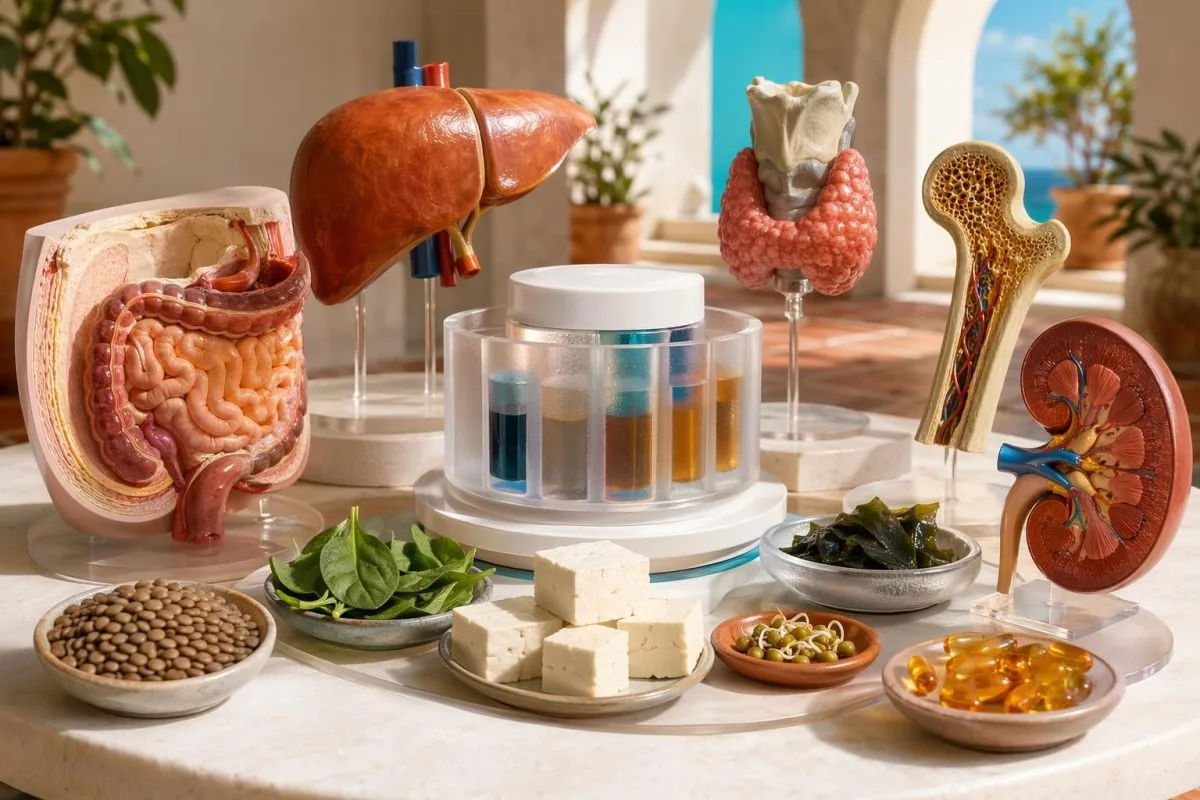
A practical lab-focused guide for people changing their meals, with the nutrient markers that can shift before symptoms become obvious.


- Recheck timing is usually 8–12 weeks after a major plant-based diet switch because B12 metabolites, lipids, glucose, and iron indices often move before symptoms appear.
- Vitamin B12 below 200 pg/mL is usually deficient; 200–350 pg/mL needs MMA or holotranscobalamin if fatigue, tingling, glossitis, or brain fog is present.
- Methylmalonic acid above about 0.40 µmol/L supports functional B12 deficiency, especially when serum B12 looks borderline rather than frankly low.
- Ferritin below 30 ng/mL often means low iron stores even if hemoglobin is still normal; CRP helps separate iron deficiency from inflammation.
- 25-OH vitamin D below 20 ng/mL is deficient in most guidelines, while 30–50 ng/mL is a common practical target range for adults.
- ApoB and non-HDL cholesterol often fall on a high-fiber plant-based diet, but refined starches and coconut-heavy diets can keep triglycerides or LDL high.
- TSH and iodine should be checked when seaweed, iodized salt avoidance, or thyroid symptoms enter the picture; urinary iodine is better for population status than one-person diagnosis.
- A blood test based diet should change meals, supplements, and retest timing from your actual results—not from generic vegan supplement lists.
What a Plant Based Diet Blood Test Should Recheck After 8–12 Weeks
A plant based diet blood test should usually be rechecked 8–12 weeks after a major switch, focusing on B12 status, iron stores, vitamin D, lipids, glucose control, thyroid clues, and protein markers. In clinic, I see the first meaningful shifts in LDL cholesterol and fasting glucose within 6–10 weeks, while ferritin and B12 can lag but still show direction.
Kantesti is an AI blood test analyzer that reads plant based diet labs in context, including previous results, units, age, sex, fasting status, and supplement timing. That context matters because a B12 of 310 pg/mL can be fine in one person and suspicious in another with numb toes and an MMA of 0.52 µmol/L.
The 2016 Academy of Nutrition and Dietetics position paper says appropriately planned vegetarian and vegan diets can be nutritionally adequate, but it specifically calls out vitamin B12 as a nutrient that requires reliable fortified foods or supplementation (Melina et al., 2016). That is the line I repeat most often, because patients hear “plant-based” and assume “automatically complete.” It is not automatically complete.
As of July 8, 2026, my practical retest window is baseline, then 8–12 weeks, then 6–12 months if stable. If you want the broader timing logic, our diet lab timeline explains which markers move in days, weeks, and months; our technology guide explains how our AI separates true change from noise.
Which Baseline Plant Based Diet Labs Are Worth Ordering First
The best baseline plant based diet labs include CBC, ferritin with iron saturation, B12 with MMA if borderline, folate, 25-OH vitamin D, lipid panel, HbA1c, fasting glucose, kidney and liver panel, TSH, and selected minerals. A baseline prevents the classic mistake: blaming the new diet for a deficiency that was already there.
A CBC gives hemoglobin, MCV, RDW, platelets, and white count; it is the cheapest safety net in this whole process. Hemoglobin below about 12.0 g/dL in adult women or 13.0 g/dL in adult men usually meets anemia criteria, but the cause needs iron, B12, folate, kidney, and inflammation context.
Kantesti's neural network maps routine panels against 15,000+ biomarkers and country-specific units, which helps when one lab reports ferritin in µg/L and another in ng/mL. For readers building a first panel, the biomarker guide is useful because it lists common and less common markers without pretending every test is necessary.
I’m Thomas Klein, MD, and the baseline pattern I worry about is not one isolated low-normal number. It is low ferritin at 18 ng/mL, B12 at 240 pg/mL, high-normal TSH at 4.2 mIU/L, and a patient who plans to remove eggs, dairy, and seafood tomorrow; that person needs a plan, not a pep talk. A simple pre-diet lab checklist can stop this from becoming a 6-month fatigue story.
How B12, MMA, and Active B12 Change on a Plant-Based Diet
Vitamin B12 is the nutrient most likely to become unsafe on a strict vegan diet unless fortified foods or supplements are used. Serum B12 below 200 pg/mL usually suggests deficiency, while 200–350 pg/mL is a grey zone where MMA, homocysteine, or holotranscobalamin can change the interpretation.
Methylmalonic acid above about 0.40 µmol/L supports functional B12 deficiency, although kidney disease can falsely raise MMA. Holotranscobalamin below roughly 35 pmol/L suggests low active B12 delivery to cells, and some European laboratories use this test earlier than serum B12 alone.
I remember a 34-year-old software engineer who switched to a “whole-food vegan” diet and came in 9 months later with burning feet. His B12 was 286 pg/mL, not dramatic, but MMA was 0.61 µmol/L and MCV had drifted from 89 to 97 fL; that cluster changed the conversation completely.
Most adults using a plant-based diet do well with either 250–500 µg cyanocobalamin daily or 1,000–2,000 µg once weekly, though dosing should change if deficiency is confirmed. For a deeper look at units and borderline ranges, see our guide to active B12 testing.
What Ferritin and Iron Saturation Reveal After the Diet Switch
Ferritin is the most useful first iron-store marker after switching plant-based, but it is not honest during inflammation. Ferritin below 30 ng/mL often indicates depleted iron stores, while transferrin saturation below 20% supports iron-restricted red cell production.
Kantesti is an AI biomarker interpretation platform that reads ferritin beside CRP, hemoglobin, MCV, RDW, serum iron, TIBC, and menstrual or donation history. Ferritin of 70 ng/mL with CRP 28 mg/L may not mean “great iron”; it may mean iron stores are being hidden by inflammation.
Plant iron is non-heme iron, and absorption varies wildly with the meal. Vitamin C can roughly double or triple non-heme iron absorption in some meal studies, while tea, coffee, calcium supplements, and high-phytate bran can blunt absorption when taken at the same time.
My practical rule is simple: if ferritin is below 30 ng/mL, do not just add spinach and hope. Pair lentils, tofu, beans, pumpkin seeds, or fortified grains with 50–100 mg vitamin C from food or supplement, then retest ferritin and CBC in 8–12 weeks; our iron studies guide explains why serum iron alone is too jumpy to guide care.
Why CBC, Folate, MCV, and Homocysteine Belong Together
CBC indices often reveal nutrient stress before a person feels obviously unwell. MCV above 100 fL suggests macrocytosis, MCV below 80 fL suggests microcytosis, and either pattern can appear on plant-based diets for very different reasons.
Folate usually rises on a legume-and-greens-rich diet, so a high folate result is not automatically a problem. The trap is high folate with low B12, because folate can improve anemia while nerve injury from B12 deficiency continues quietly.
Homocysteine above 15 µmol/L can reflect low B12, low folate, low B6, kidney disease, hypothyroidism, genetics, or medication effects. In my experience, a plant-based patient with homocysteine 18 µmol/L and B12 230 pg/mL deserves an MMA test before anyone blames MTHFR variants.
RDW above about 14.5% means red cell size variation is increasing, and it can rise early in mixed iron and B12 deficiency. If your CBC flags look confusing, our MCV and MCH patterns guide helps separate small-cell, large-cell, and mixed anemia patterns without panic.
When Vitamin D, Calcium, PTH, and ALP Need a Retest
25-OH vitamin D should be rechecked after 8–12 weeks if baseline is low, supplementation starts, or dairy and fortified foods are removed. A 25-OH vitamin D below 20 ng/mL is deficient in most clinical frameworks, while 30–50 ng/mL is a common practical adult target.
Calcium in blood is tightly regulated, so a normal calcium result does not prove adequate calcium intake. Parathyroid hormone above the lab range with low-normal calcium and low vitamin D often means the body is borrowing from bone to keep serum calcium stable.
Alkaline phosphatase between about 35 and 120 IU/L is common in adults, but persistent elevation can come from bone turnover, liver or bile duct disease, growth, pregnancy, or healing fractures. If ALP rises after a diet change, check GGT, vitamin D, calcium, phosphate, and PTH before guessing.
Most deficient adults are rechecked after taking 1,000–2,000 IU vitamin D3 daily, though higher short courses may be prescribed. Food alone rarely fixes a 25-OH D of 12 ng/mL; our vitamin D dose guide gives level-based dosing ranges and safety cautions.
How Lipids, ApoB, and Omega-3 Status Often Shift
LDL cholesterol and non-HDL cholesterol often fall within 8–12 weeks on a high-fiber plant-based diet, but triglycerides may rise if the diet becomes starch-heavy. ApoB is useful because it counts atherogenic particles rather than estimating risk from cholesterol mass alone.
A 2015 meta-analysis in the Journal of the American Heart Association found vegetarian diets lowered total cholesterol, LDL cholesterol, HDL cholesterol, and non-HDL cholesterol compared with omnivorous diets, with the clearest signal for LDL reduction (Wang et al., 2015). Satija et al. later showed that healthful plant-based patterns were linked with lower coronary heart disease risk, while less healthful plant-based patterns were not protective in the same way (Satija et al., 2017).
Kantesti is an AI-powered blood test analysis tool used by 2M+ people across 127 countries, and lipid units are one place where country context matters. LDL of 100 mg/dL equals about 2.6 mmol/L, triglycerides of 150 mg/dL equal about 1.7 mmol/L, and conversion errors can make a perfectly sensible result look alarming.
Omega-3 status is the quieter issue. If seafood disappears, EPA and DHA intake often falls; an omega-3 index below 4% is commonly considered low, while 8% or higher is often cited as a cardioprotective target, though clinicians disagree on using it as a universal screening test. Our omega-3 index article explains why algae-based DHA/EPA can be reasonable for strict vegan diets.
What Glucose, Insulin, and HbA1c Say About Your New Meals
Fasting glucose, fasting insulin, and HbA1c show whether a plant-based diet is improving metabolism or simply replacing saturated fat with refined carbohydrates. HbA1c of 5.7–6.4% indicates prediabetes in ADA criteria, and 6.5% or higher supports diabetes diagnosis when confirmed.
Fasting glucose below 100 mg/dL is usually normal, 100–125 mg/dL suggests impaired fasting glucose, and 126 mg/dL or higher on repeat testing supports diabetes. A patient can improve LDL beautifully and still worsen glucose if breakfast becomes juice, white toast, and sweetened oat drinks.
Fasting insulin has no single universal cutoff, but values above 15 µIU/mL often raise suspicion for insulin resistance when paired with high triglycerides, low HDL, fatty liver markers, or central weight gain. I use insulin as a pattern marker, not a diagnosis by itself.
A1c changes slowly because it reflects roughly 8–12 weeks of red cell glycation, so checking it after only 2 weeks is rarely useful. If your A1c is high-normal or prediabetic, our A1c retest plan gives a 90-day framework for meals, movement, and repeat testing.
Can Protein Markers Look Different After Eating More Plants?
Albumin, total protein, BUN, creatinine, and eGFR can shift after a plant-based transition, but they rarely diagnose protein intake alone. Albumin below 3.5 g/dL is not usually caused by a modestly low-protein diet in a healthy adult; think kidney loss, liver disease, gut loss, inflammation, or severe undernutrition.
BUN is commonly 7–20 mg/dL in adults, while urea is often reported as 2.5–7.1 mmol/L outside the United States. BUN can fall when protein intake drops, but it also changes with hydration, liver function, kidney function, gastrointestinal bleeding, and recent heavy exercise.
Creatinine may fall slightly when someone stops eating meat because dietary creatine intake drops and body mass may change. That can make eGFR look better even when true kidney filtration has not meaningfully changed, which is why cystatin C can be helpful in very muscular, frail, or rapidly changing patients.
I get more concerned when total protein is below 6.0 g/dL, albumin is low, globulin is low, and there is swelling, diarrhea, kidney protein loss, or unintentional weight loss. For meal planning, our protein requirements guide gives age-based intake targets and lab clues that suggest too little.
When Iodine and Thyroid Tests Matter on a Plant-Based Diet
TSH, free T4, and iodine exposure matter when a plant-based diet removes dairy, fish, eggs, or iodized salt—or adds frequent seaweed. TSH is commonly interpreted against a reference interval near 0.4–4.0 mIU/L, though pregnancy, age, thyroid medication, and lab method change the target.
Urinary iodine concentration is best for population assessment, not one-person diagnosis, because one salty meal or seaweed snack can swing the result. A median urinary iodine of 100–199 µg/L is considered adequate for non-pregnant populations, but a single spot result should be read cautiously.
The common plant-based thyroid trap is opposite extremes. One patient removes all iodized salt and fortified foods; another eats kelp daily and pushes iodine intake far above the adult tolerable upper limit of 1,100 µg/day.
If TSH rises from 1.8 to 5.6 mIU/L over 12 weeks, I check free T4, thyroid antibodies, iodine habits, biotin use, illness, and timing before calling it permanent hypothyroidism. Our urinary iodine testing guide explains why spot urine results can mislead when interpreted like a serum nutrient level.
Which Minerals Are Easy to Miss: Zinc, Copper, Selenium, Magnesium
Zinc, copper, selenium, and magnesium testing is most useful when symptoms, restrictive eating, gut disease, or heavy supplementation exists. Serum zinc is commonly about 70–120 µg/dL, but it falls after meals, illness, low albumin, and poor sample handling.
Zinc deficiency symptoms can include poor wound healing, taste changes, hair shedding, frequent infections, dermatitis-like rashes, and low appetite. Yet I rarely diagnose zinc deficiency from one mildly low result; I look at albumin, CRP, diet, diarrhea, copper, and supplement history.
Copper is the counterweight. High-dose zinc above 40 mg/day for months can reduce copper absorption and cause anemia or nerve symptoms; copper is often roughly 70–140 µg/dL in adults, depending on the lab and estrogen status.
Selenium is tied to thyroid enzyme function, but more is not better. Serum selenium often sits around 70–150 µg/L, and chronic excess can cause hair loss, brittle nails, metallic taste, and nerve symptoms; our low zinc causes article shows how diet, gut absorption, and medications distort mineral labs.
Which Nutrient Deficiency Symptoms Should Trigger Earlier Testing
Nutrient deficiencies symptoms that deserve earlier testing include new numbness, burning feet, severe fatigue, pale skin, breathlessness, hair shedding, mouth ulcers, easy bruising, muscle weakness, dizziness, palpitations, and unexplained weight loss. Do not wait 12 weeks if symptoms are neurological, progressive, or affecting daily function.
Neurological symptoms are the one group I treat with the least patience. Tingling, gait changes, memory changes, or electric shock sensations with borderline B12 should prompt B12, MMA, homocysteine, CBC, TSH, glucose, and sometimes copper testing within days to a couple of weeks.
Shortness of breath with exertion, resting palpitations, chest pain, black stools, fainting, or hemoglobin below 8–10 g/dL needs urgent medical review rather than a diet tweak. Plant-based eating is not a shield against bleeding, celiac disease, kidney disease, thyroid disease, or infection.
A blood test based diet plan should respond to symptoms and numbers together. Our guide to nutrient deficiency symptoms lists common symptom clusters and the labs that can confirm or disprove them.
How to Turn Results Into Safer Meal Planning
Lab results should change the plant-based meal plan in specific ways: B12 affects fortified foods or supplements, ferritin affects iron pairing, lipids affect fat quality, and glucose affects starch quality. A generic “eat more plants” prescription is too blunt once your results are available.
If ferritin is 22 ng/mL and CRP is normal, the meal plan should include iron-dense legumes or tofu daily, vitamin C at the same meal, and tea or coffee separated by at least 60–90 minutes. If ferritin is 180 ng/mL with CRP 22 mg/L, the plan should not reflexively add iron; it should ask why inflammation is present.
Kantesti AI interprets repeat results by comparing your current value with your previous baseline, lab unit, reference interval, and biologically plausible rate of change. A one-point potassium shift from 4.2 to 4.7 mmol/L is usually uninteresting; ferritin falling from 54 to 19 ng/mL over 4 months is not.
Our clinicians review medical logic against safety standards described in clinical validation, because trend analysis is only useful when it avoids overcalling noise. For self-tracking, a lab trend graph helps you record supplements, illness, fasting status, exercise, menstrual timing, and diet changes beside each draw.
How Soon to Recheck After Supplements or Food Changes
Most nutrient and metabolic labs should be rechecked 8–12 weeks after a meaningful supplement or diet correction, but timing changes by marker. Potassium can change in days, glucose in days to weeks, lipids in 6–12 weeks, vitamin D in 8–12 weeks, and ferritin often needs 8–16 weeks.
Do not test B12 the day after a high-dose supplement and assume the body is fixed. Serum B12 can rise quickly, while MMA and symptoms may take longer to improve; for confirmed deficiency, many clinicians recheck B12 markers and CBC after about 8–12 weeks.
Iron is slower and fussier. Ferritin may rise by 10–30 ng/mL over several months with good adherence, but ongoing bleeding, heavy training, gut disease, or taking iron with coffee can erase the expected improvement.
For supplement stacking, I ask patients to avoid starting five products at once unless there is a clear medical reason. If zinc, B12, vitamin D, algae omega-3, and iron all begin on Monday, a new rash, constipation, nausea, or abnormal copper result becomes harder to interpret.
Kantesti Research Publications and Medical Oversight Notes
Kantesti publishes structured laboratory interpretation research so readers can see how adjacent biomarkers are handled beyond diet-only claims. This matters for plant-based nutrition because albumin, globulins, complement, inflammation, and autoimmune markers can masquerade as simple nutrient problems.
Kantesti LTD is a UK company focused on privacy-conscious laboratory interpretation, and our clinical content is reviewed against physician oversight described by our medical advisory board. In practice, that means a low albumin result is not treated as “eat more protein” until kidney loss, liver synthesis, gut loss, and inflammation are considered.
Kantesti Research Group. (2026). Serum Proteins Guide: Globulins, Albumin & A/G Ratio Blood Test. Zenodo. https://doi.org/10.5281/zenodo.18316300. Supporting profiles: ResearchGate and Academia.edu. The related serum protein guide is useful when total protein, albumin, or globulin shifts after a diet change.
Kantesti Research Group. (2026). C3 C4 Complement Blood Test & ANA Titer Guide. Zenodo. https://doi.org/10.5281/zenodo.18353989. Supporting profiles: ResearchGate and Academia.edu. I include this here because fatigue, low iron markers, rashes, and joint pain are sometimes autoimmune clues rather than nutrient gaps.
Frequently Asked Questions
What blood tests should I repeat after starting a plant-based diet?
After starting a plant-based diet, most adults should repeat CBC, ferritin with iron saturation, vitamin B12, 25-OH vitamin D, lipid panel, HbA1c or fasting glucose, kidney and liver markers, and TSH after 8–12 weeks. Add MMA or holotranscobalamin if B12 is 200–350 pg/mL or nerve symptoms are present. Add zinc, copper, selenium, magnesium, CRP, or urinary iodine only when diet history, symptoms, or abnormal first-line results justify them.
How soon do plant-based diet labs change?
Some plant-based diet labs change within days, but the most useful retest window is usually 8–12 weeks. Fasting glucose and potassium can move quickly, LDL cholesterol often changes within 6–12 weeks, HbA1c reflects roughly 8–12 weeks, and ferritin may need 8–16 weeks to show whether iron intake is adequate. Vitamin B12 blood levels can rise fast after supplements, but MMA and symptoms may take longer to normalize.
Can a plant-based diet cause low B12 even if I eat healthy foods?
Yes, a strict plant-based diet can cause low B12 because unfortified plant foods do not provide reliable active vitamin B12. Serum B12 below 200 pg/mL usually suggests deficiency, while 200–350 pg/mL should be interpreted with MMA, homocysteine, active B12, and symptoms. Fortified foods or supplements are usually needed, and many adults use 250–500 µg daily or 1,000–2,000 µg weekly, depending on clinical context.
Why did my ferritin drop after going plant-based?
Ferritin can drop after going plant-based when iron intake falls, non-heme iron absorption is reduced, menstrual losses continue, blood donation occurs, or tea and coffee are taken with iron-rich meals. Ferritin below 30 ng/mL often indicates low iron stores, even when hemoglobin is still normal. CRP should be checked when ferritin is normal or high despite symptoms because inflammation can falsely elevate ferritin.
Can a plant-based diet improve cholesterol in 12 weeks?
A high-fiber, minimally processed plant-based diet can improve LDL cholesterol and non-HDL cholesterol within 8–12 weeks in many people. The effect is strongest when the diet emphasizes legumes, oats, nuts, seeds, vegetables, and unsaturated fats rather than refined starches, sugary drinks, or coconut-heavy foods. Triglycerides should stay below 150 mg/dL fasting, and ApoB can help identify hidden particle risk when LDL looks acceptable.
Which symptoms mean I should not wait 12 weeks to test?
Do not wait 12 weeks if you develop numbness, burning feet, walking imbalance, severe fatigue, breathlessness, fainting, chest pain, black stools, rapid weight loss, or progressive weakness. Neurological symptoms with borderline B12 need prompt B12, MMA, homocysteine, CBC, glucose, TSH, and sometimes copper testing. Severe anemia symptoms or hemoglobin below about 8–10 g/dL require urgent clinician review rather than diet adjustment alone.
Should I stop taking my supplements before plant-based diet blood tests?
Usually, continue prescribed supplements unless your clinician or laboratory gives different instructions. Ask specifically about biotin before thyroid testing and about iron before iron studies; documenting the dose and time of your last dose helps your clinician interpret results safely.
Get AI-Powered Blood Test Analysis Today
Join over 2 million users worldwide who trust Kantesti for instant, accurate lab test analysis. Upload your blood test results and receive comprehensive interpretation of 15,000+ biomarkers in seconds.
📚 Referenced Research Publications
Klein, T., Mitchell, S., & Weber, H. (2026). Serum Proteins Guide: Globulins, Albumin & A/G Ratio Blood Test. Kantesti AI Medical Research.
Klein, T., Mitchell, S., & Weber, H. (2026). C3 C4 Complement Blood Test & ANA Titer Guide. Kantesti AI Medical Research.
📖 External Medical References
⚕️ Medical Disclaimer
This article is for educational purposes only and does not constitute medical advice. Always consult a qualified healthcare provider for diagnosis and treatment decisions.
E-E-A-T Trust Signals
Experience
Physician-led clinical review of lab interpretation workflows.
Expertise
Laboratory medicine focus on how biomarkers behave in clinical context.
Authoritativeness
Written by Dr. Thomas Klein with review by Dr. Sarah Mitchell and Prof. Dr. Hans Weber.
Trustworthiness
Evidence-based interpretation with clear follow-up pathways to reduce alarm.