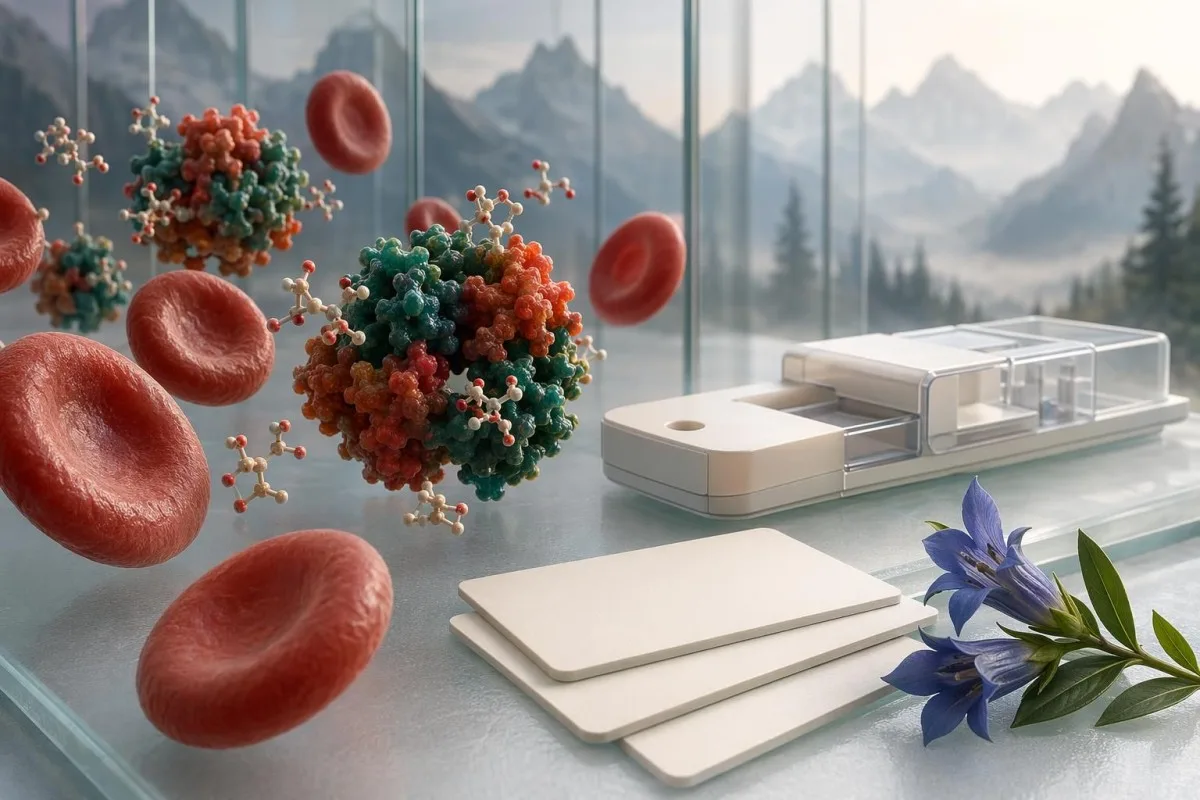
HbA1c is slow, but not immovable. The right 90-day plan targets the glucose patterns that actually feed into your next lab result.


- HbA1c timing reflects roughly 8-12 weeks of glucose exposure because erythrocyte cellular elements live about 120 days.
- Fastest visible change is usually fasting glucose or home meter readings, often within 7-14 days, before HbA1c fully moves.
- Diagnostic bands are normal below 5.7%, prediabetes at 5.7-6.4%, and diabetes at 6.5% or higher when confirmed.
- Retest interval is usually 3 months after treatment changes, while stable patients at goal often test twice yearly.
- Meaningful drop is commonly 0.3-0.5 percentage points over 90 days, especially when starting from 6.0-8.5%.
- Fasting glucose goal for many adults without diabetes is 70-99 mg/dL, while 100-125 mg/dL suggests impaired fasting glucose.
- Lifestyle dose with the strongest trial evidence is about 150 minutes weekly activity plus 5-7% weight loss when excess weight is present.
- Accuracy warning: iron deficiency, recent transfusion, hemolysis, kidney disease, and some hemoglobin variants can make HbA1c misleading.
What can realistically change HbA1c in 90 days?
To improve HbA1c before a 90-day retest, lower the glucose your cells see every day: reduce large after-meal spikes, improve fasting glucose, add 150 minutes of weekly movement, lose 5-7% body weight if appropriate, and take prescribed medicines consistently. HbA1c can fall within 8-12 weeks, but fasting glucose often improves first.
A practical target is a 0.3-0.5% HbA1c drop over 90 days; a larger fall is possible when the starting HbA1c is above 8.0% or when medication begins. If your result is close to a cutoff, compare it with an HbA1c range by age before you panic over a single decimal point.
Kantesti is an AI blood test analyzer that reads HbA1c alongside glucose, kidney markers, lipids, CBC patterns, and previous results, because the same HbA1c can mean different things in a 31-year-old runner and a 72-year-old with anemia. In my clinical reviews, the patient who wins the retest is rarely the one who fasts hardest; it is usually the one who fixes the same 2 or 3 glucose spikes every day.
Here is the uncomfortable bit: a perfect final week rarely rescues 11 weeks of high readings. HbA1c is weighted toward recent weeks, but not enough to erase a month of 220 mg/dL post-meal peaks.
Thomas Klein, MD, usually frames the 90-day plan as a lab-timeline project, not a morality test. You are trying to change the biology that the assay measures, and biology needs enough days to show its work.
Why the HbA1c clock runs on red cell age
HbA1c measures the percentage of hemoglobin that has glucose attached, so it tracks average glucose exposure over the lifespan of circulating erythrocyte cellular elements. A typical erythrocyte lifespan is about 120 days, which is why a 90-day retest is biologically sensible.
A normal HbA1c is below 5.7%, prediabetes is 5.7-6.4%, and diabetes is 6.5% or higher when confirmed by repeat testing or another diagnostic test. The 6.5% diagnostic cutoff was chosen because retinopathy risk rises more clearly around that range, not because 6.4% is harmless.
The last 30 days may contribute roughly half of the HbA1c signal, while older weeks still matter. This is why a patient can drop fasting glucose from 135 mg/dL to 105 mg/dL in 2 weeks and still see only a small HbA1c change at day 30.
Every 1 percentage point of HbA1c corresponds to about 28-29 mg/dL difference in estimated average glucose, although individual variation is real. Two patients with HbA1c 6.8% may have different glucose curves: one has steady 150 mg/dL readings, while the other swings from 70 to 240 mg/dL.
The assay is not a daily report card. It is a weighted biological memory, and it remembers longer than most people expect.
How often to get HbA1c test after a high result
Most adults should repeat HbA1c after about 3 months if the result is above goal or treatment has changed. People at target with stable therapy are often checked every 6 months, according to the American Diabetes Association Professional Practice Committee, 2026.
As of June 16, 2026, the usual answer to how often to get HbA1c test is every 3 months when actively changing treatment, diet, weight, or activity. For broader lab timing by age and medication risk, our blood test timing guide gives a more practical schedule than a fixed annual checklist.
Testing at 4 weeks can be useful for motivation, but it is not the final verdict. I sometimes order an early glucose or fructosamine check when medication changes are urgent, while still planning the formal HbA1c at 12 weeks.
Pregnancy, steroid treatment, chemotherapy, major weight-loss medication, and insulin changes can justify tighter monitoring than the usual 3-month rhythm. In those cases, fasting glucose logs or continuous glucose monitoring often become more useful than waiting for HbA1c alone.
The mistake I see often is retesting at day 21, feeling defeated, then abandoning a plan that was actually working. The lab clock had simply not caught up yet.
Why fasting glucose can improve before HbA1c
Fasting glucose can improve within days because it reflects overnight liver glucose output and recent insulin sensitivity. HbA1c lags because it averages glucose exposure across many weeks of circulating hemoglobin.
A fasting glucose of 70-99 mg/dL is generally normal, 100-125 mg/dL suggests impaired fasting glucose, and 126 mg/dL or higher can diagnose diabetes if confirmed. If your fasting sugar and HbA1c seem mismatched, read our guide on why A1c and fasting sugar disagree.
The liver is the usual reason fasting glucose is stubborn. Overnight hepatic glucose release can remain high even when dinner looks reasonable, especially with poor sleep, late alcohol intake, corticosteroids, or untreated sleep apnea.
A 49-year-old patient I reviewed had fasting glucose drop from 128 to 103 mg/dL after 12 days of walking after dinner and moving starch earlier in the day. His HbA1c barely moved at first, then fell from 6.4% to 5.9% at the 13-week retest.
If you are trying to learn how to lower fasting glucose, measure the same way each morning for 10-14 days. One lonely morning number after a bad night is not a trend.
Week 1-2: find the glucose spikes you can actually fix
The first 2 weeks should identify your repeatable glucose spikes, not chase perfection. Most HbA1c improvement comes from lowering the meals, snacks, drinks, and late-night patterns that repeatedly push glucose above 160-180 mg/dL.
Check fasting glucose and one post-meal reading after your most carbohydrate-heavy meal for 7-10 days. If your 2-hour glucose is often above 180 mg/dL, the meal is probably contributing more to HbA1c than your fasting result suggests.
Low-glycemic meals are not magic, but they reduce the height and duration of glucose exposure. Our low glycemic foods guide focuses on foods that change post-meal curves rather than simply sounding healthy.
Avoid extreme fasting if it leads to rebound overeating, dizziness, or gastrointestinal trouble. We have seen patients worsen glucose variability after aggressive fasting routines; our fasting symptom guide covers warning signs that should not be brushed off.
A useful first swap is boring: keep protein and fibre at breakfast, then move the largest starch portion away from late evening. In clinic, that single change can reduce fasting glucose by 5-15 mg/dL in some insulin-resistant patients.
Week 3-4: lower post-meal glucose without gimmicks
Post-meal glucose usually improves fastest when carbohydrate dose, meal order, and movement are changed together. Many adults with diabetes aim for a 1-2 hour post-meal glucose below 180 mg/dL, though individual targets vary.
Kantesti is an AI blood test interpretation platform that places HbA1c beside triglycerides, ALT, HDL, and fasting glucose because post-meal spikes often travel with fatty liver and insulin resistance patterns. For exact post-meal thresholds, see our post-meal sugar ranges.
Meal order can matter: vegetables and protein before starch often blunt the glucose peak compared with starch first. The effect varies, but in practice I see the biggest benefit in patients whose 2-hour readings sit between 150 and 220 mg/dL.
Ten to 20 minutes of easy walking after dinner is not a wellness cliché; skeletal muscle takes up glucose without needing as much insulin during contraction. For a desk worker with HbA1c 6.2%, this can be more realistic than adding a hard gym session at 6 am.
Do not judge a meal only by the first hour. Some high-fat meals produce a delayed glucose rise at 3-5 hours, which can quietly affect overnight glucose and the next morning's fasting result.
Week 5-6: medication changes that show up by retest
Medication changes can begin lowering daily glucose within days or weeks, but HbA1c still needs the 8-12 week window to show most of the effect. Never start, stop, or double diabetes medication without your prescribing clinician.
Metformin commonly lowers HbA1c by about 1.0-1.5% when tolerated and taken consistently, though the response is smaller when baseline HbA1c is near normal. Our metformin lab follow-up guide covers B12, kidney function, and gastrointestinal side effects that alter adherence.
SGLT2 inhibitors often lower HbA1c by roughly 0.5-1.0%, and GLP-1 receptor agonists may lower HbA1c by about 1.0-2.0% depending on dose, baseline glucose, and weight loss. Those figures are population averages, not promises.
If corticosteroids are driving glucose, the pattern is often afternoon and evening hyperglycemia rather than fasting-only elevation. A patient on prednisolone can have a decent morning reading and still carry a high HbA1c because the daily glucose peak arrives after lunch.
At week 6, the question is not whether HbA1c has fully dropped. The question is whether home glucose, symptoms, side effects, and kidney function suggest the plan is safe enough to continue toward the 90-day retest.
Week 7-8: exercise, sleep and weight loss targets
By weeks 7-8, the biggest HbA1c gains usually come from consistency: 150 minutes weekly activity, resistance training twice weekly, better sleep regularity, and 5-7% weight loss if excess weight is part of the problem.
In the Diabetes Prevention Program, lifestyle intervention targeting 7% weight loss and 150 minutes per week of activity reduced diabetes incidence by 58% over about 3 years (Knowler et al., 2002). People using GLP-1 medicines should also track nutrition, kidney markers, and lean mass risk; our GLP-1 lab tracking guide explains the labs I check.
Resistance training matters because muscle is the largest glucose sink after meals. Two sessions per week can improve insulin sensitivity even when the scale barely changes.
Sleep is the under-rated variable. Sleeping under 6 hours, rotating night shifts, or untreated sleep apnea can raise fasting glucose through cortisol, sympathetic activation, and increased hepatic glucose output.
A 3 kg weight loss may look modest, but in a 90 kg person it is already 3.3% body weight. If fasting glucose drops 10 mg/dL and waist circumference falls 3 cm, the retest often follows later.
Week 11-12: avoid false reassurance and false panic
HbA1c can be misleading when red cell lifespan or hemoglobin structure is abnormal. Iron deficiency, hemolysis, recent transfusion, advanced kidney disease, pregnancy, and some hemoglobin variants can distort the result.
Iron deficiency can falsely raise HbA1c in some patients, while hemolysis or recent transfusion can falsely lower it. If your number does not match fingerstick or sensor readings, review our HbA1c accuracy guide.
Advanced kidney disease adds another layer because anemia, erythropoietin treatment, and uremia may change red cell turnover. In those cases, clinicians may use fructosamine, glycated albumin, or glucose monitoring instead of trusting HbA1c alone.
Stratton et al. reported in UKPDS 35 that each 1% lower updated mean HbA1c was associated with a 21% lower risk of any diabetes-related endpoint (Stratton et al., 2000). That finding is powerful, but only if the HbA1c is biologically reliable in the person being measured.
I tell patients this bluntly: the lab can be precise and still not tell the truth. Precision is not the same as clinical accuracy.
Retest day: labs to order with HbA1c
A useful HbA1c retest often includes fasting glucose, kidney function, urine albumin-creatinine ratio, lipids, ALT, and sometimes fasting insulin or C-peptide. HbA1c alone answers average exposure, not why exposure changed.
At minimum, pair HbA1c with fasting glucose so you can see whether the average and the morning snapshot agree. Our diabetes blood test markers guide separates diagnostic tests from monitoring tests, which patients often mix together.
A urine albumin-creatinine ratio can detect early diabetic kidney stress before creatinine rises. A normal creatinine does not rule out early microvascular injury.
Lipids matter because high HbA1c often clusters with high triglycerides, low HDL, and small dense LDL patterns. If triglycerides fall from 260 to 150 mg/dL while HbA1c drops only 0.2%, I still consider the metabolic direction encouraging.
Ask for the same lab method when possible. Small HbA1c differences of 0.1-0.2% can reflect analytic variation, especially when switching between laboratories.
How to track HbA1c over time without overreacting
To track HbA1c over time, compare results on a 3- to 6-month timeline and annotate medication, weight, illness, steroid use, and major diet changes. A single HbA1c value is less useful than the slope across 2-4 tests.
Kantesti is an AI-powered blood test analysis tool used by people in 127+ countries to compare HbA1c trends with 15,000+ biomarkers across major lab panels. Our biomarker guide helps users understand which markers move quickly and which markers lag.
The phrase track HbA1c over time should mean more than saving PDFs in a folder. Add context: metformin dose started, 4 kg weight loss, Ramadan fasting, night-shift rotation, influenza, steroid injection, or a new GLP-1 dose.
Do not overread a change from 6.1% to 6.0%. A fall from 6.4% to 5.9% across the same lab and similar health conditions is much more convincing.
In our analysis of 2M+ uploaded blood tests, the most useful patient notes are short and dated. Three words such as started steroids May can prevent a completely wrong interpretation in June.
What result change counts as a real win?
A real HbA1c win is usually a drop of at least 0.3-0.5 percentage points, improved fasting or post-meal glucose, and no new safety problem such as hypoglycemia. The best result is lower risk, not just a prettier number.
If HbA1c falls from 7.4% to 6.8%, that is clinically meaningful for many adults. If it falls from 5.8% to 5.6%, the benefit is smaller but still useful if fasting glucose and waist circumference also improve.
Kantesti's neural network is described in our AI technology guide, but my physician view is simple: algorithms should support clinical reasoning, not replace it. Our clinical validation work focuses on pattern recognition, unit handling, and safety flags because HbA1c interpretation is rarely one-dimensional.
A fast HbA1c fall can be unsafe if it comes with recurrent glucose below 70 mg/dL, especially in older adults or those using insulin or sulfonylureas. Hypoglycemia risk can outweigh the cosmetic satisfaction of a lower HbA1c.
The evidence is honestly more nuanced in frail older adults. For some, an HbA1c target near 7.5-8.0% is safer than chasing 6.0% with multiple drugs.
When to call your clinician before waiting 90 days
Do not wait 90 days if glucose is repeatedly very high, symptoms are worsening, ketones are present, or medication side effects are significant. Same-week clinical advice is appropriate for fasting glucose above 250 mg/dL, vomiting, dehydration, confusion, or unexplained weight loss.
Call urgently if random glucose is 300 mg/dL or higher, if ketones are moderate to high, or if thirst and urination are escalating quickly. These patterns can signal insulin deficiency, dehydration, or impending metabolic decompensation.
Pregnancy changes the threshold for action because fetal risk relates to short-term glucose exposure, not just HbA1c. Anyone pregnant or planning pregnancy should get individualized targets rather than following a generic 90-day internet plan.
At Kantesti, medical oversight matters because blood test interpretation crosses into real clinical risk; our medical advisory board reviews safety principles behind high-risk flags. Thomas Klein, MD, prefers a conservative rule: if symptoms and numbers disagree, believe the patient first and investigate the lab second.
The 90-day plan works best when it is safe, boring, and measurable. That is less glamorous than a glucose hack, but it is how most durable HbA1c improvements happen.
Frequently Asked Questions
How long does it take to improve HbA1c?
HbA1c usually needs 8-12 weeks to show most of the effect from diet, exercise, weight loss, or medication changes. Fasting glucose and post-meal readings can improve within 7-14 days because they reflect current glucose handling rather than the full red cell lifespan. A meaningful 90-day HbA1c change is often 0.3-0.5 percentage points, although larger drops can occur from higher starting values.
How often to get HbA1c test after changing treatment?
Most people should repeat HbA1c about every 3 months after a medication, diet, weight-loss, or exercise change because the test reflects roughly 8-12 weeks of glucose exposure. If results are stable and at goal, many adults are tested every 6 months. People using insulin, pregnant patients, or those with symptoms may need glucose monitoring sooner than the next HbA1c.
Why did my fasting glucose improve but HbA1c stay high?
Fasting glucose can improve before HbA1c because fasting glucose is a morning snapshot, while HbA1c averages many weeks of glucose exposure. If your fasting glucose falls from 130 to 105 mg/dL in 2 weeks, older high-glucose weeks still remain in the HbA1c signal. Post-meal spikes above 180 mg/dL can also keep HbA1c elevated even when fasting numbers look better.
Can diet alone lower HbA1c in 90 days?
Diet alone can lower HbA1c in 90 days when it consistently reduces total glucose exposure, especially post-meal spikes. The biggest changes usually come from lowering refined carbohydrate load, adding protein and fibre, avoiding late-night high-carbohydrate meals, and losing 5-7% body weight if excess weight is present. People with HbA1c above 8.0-9.0% often need medication review rather than diet-only attempts.
What is the fastest safe way to lower fasting glucose?
The fastest safe ways to lower fasting glucose are consistent medication use when prescribed, 10-20 minutes of walking after dinner, earlier evening meals, improved sleep, and reducing late-night carbohydrate or alcohol intake. Fasting glucose of 100-125 mg/dL suggests impaired fasting glucose, while 126 mg/dL or higher should be confirmed and clinically reviewed. Do not use prolonged fasting or medication doubling without medical advice.
When is HbA1c unreliable?
HbA1c can be unreliable when red cell lifespan or hemoglobin structure is abnormal. Iron deficiency, hemolysis, recent transfusion, advanced kidney disease, pregnancy, and some hemoglobin variants can make HbA1c falsely high or falsely low. If HbA1c does not match fasting glucose, post-meal readings, or symptoms, clinicians may use fructosamine, glycated albumin, or glucose monitoring.
What HbA1c drop is clinically meaningful?
A drop of 0.3-0.5 percentage points is often clinically meaningful over 90 days, especially when fasting glucose, post-meal readings, weight, or triglycerides improve too. A fall from 7.4% to 6.8% usually matters more than a fall from 5.8% to 5.6%. The safest HbA1c target depends on age, pregnancy status, hypoglycemia risk, medication type, and other medical conditions.
Do I need to fast before an HbA1c blood test?
No, HbA1c testing does not require fasting and can be done at any time of day. If your clinician orders fasting glucose, triglycerides, or other tests at the same visit, ask whether you should fast for those tests.
Get AI-Powered Blood Test Analysis Today
Join over 2 million users worldwide who trust Kantesti for instant, accurate lab test analysis. Upload your blood test results and receive comprehensive interpretation of 15,000+ biomarkers in seconds.
📚 Referenced Research Publications
Klein, T., Mitchell, S., & Weber, H. (2026). Diarrhea After Fasting, Black Specks in Stool & GI Guide 2026. Kantesti AI Medical Research.
Klein, T., Mitchell, S., & Weber, H. (2026). Women's Health Guide: Ovulation, Menopause & Hormonal Symptoms. Kantesti AI Medical Research.
📖 External Medical References
American Diabetes Association Professional Practice Committee (2026). Standards of Care in Diabetes—2026. Diabetes Care.
⚕️ Medical Disclaimer
This article is for educational purposes only and does not constitute medical advice. Always consult a qualified healthcare provider for diagnosis and treatment decisions.
E-E-A-T Trust Signals
Experience
Physician-led clinical review of lab interpretation workflows.
Expertise
Laboratory medicine focus on how biomarkers behave in clinical context.
Authoritativeness
Written by Dr. Thomas Klein with review by Dr. Sarah Mitchell and Prof. Dr. Hans Weber.
Trustworthiness
Evidence-based interpretation with clear follow-up pathways to reduce alarm.