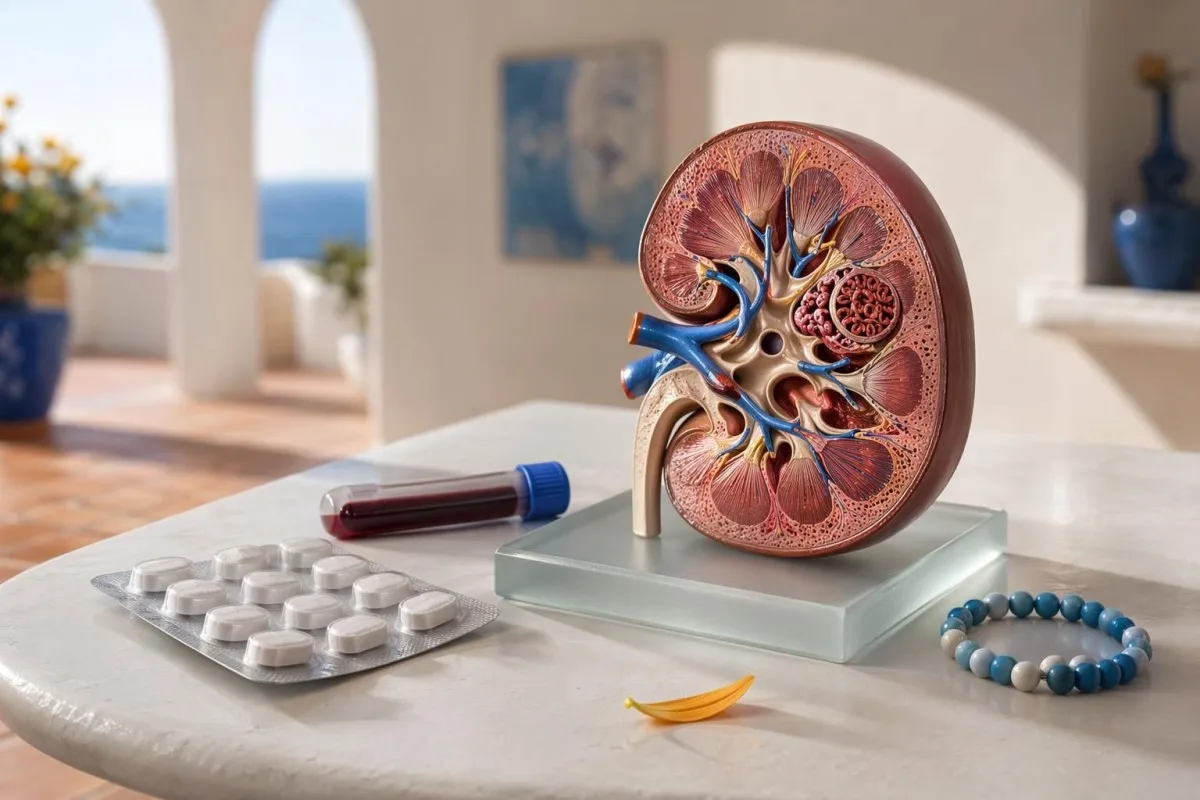
Metformin usually improves glucose markers, but it can change how clinicians read kidney function, vitamin B12 status, and a few safety labs. Here is the practical recheck plan I use with patients.


- eGFR should be checked before metformin and usually at least yearly; eGFR below 30 mL/min/1.73 m² generally means metformin should not be used.
- A1c usually needs 8-12 weeks to show the full effect of metformin because red blood cells turn over slowly.
- Fasting glucose may improve within 1-2 weeks, often before A1c looks better.
- Vitamin B12 can fall with long-term metformin; serum B12 below 200 pg/mL is usually low, while 200-300 pg/mL often needs MMA or holotranscobalamin context.
- Creatinine can look slightly different after illness, dehydration, muscle loss, or contrast imaging; the eGFR trend matters more than one isolated value.
- ALT and AST are not routine metformin toxicity markers, but they help identify fatty liver, alcohol-related injury, viral hepatitis, or advanced liver disease before prescribing.
- Bicarbonate and anion gap are not routine metformin checks, but bicarbonate below 18 mmol/L with high lactate or acute illness needs urgent care.
- Clinician follow-up is warranted for new eGFR under 45, eGFR under 30, unexplained B12 deficiency, rising liver enzymes above 3 times the lab upper limit, or glucose numbers that remain high after 3 months.
Which blood work matters most after starting metformin?
After starting metformin, the blood work to watch is eGFR/creatinine, A1c, fasting glucose, vitamin B12, and liver enzymes used as clinical context. In my practice, I recheck glucose trends at about 8-12 weeks, kidney function sooner if risk is high, and B12 after 6-12 months in people staying on treatment.
I’m Thomas Klein, MD, and the mistake I see most often is patients expecting every lab test to move at the same speed. Fasting glucose can shift in days to weeks, while A1c lags because it reflects roughly 8-12 weeks of glycation exposure.
Kantesti is an AI blood test interpretation platform that reads metformin-related lab results in context, not as isolated green and red flags. If you want the broader clinical background on who we are, our Kantesti clinical mission explains why trend interpretation is central to our work.
A single creatinine value of 1.2 mg/dL means something different in a 92 kg muscular man than in a 47 kg older woman. That is why I ask for the actual eGFR in mL/min/1.73 m², the dose of metformin in mg, and whether there was dehydration, vomiting, contrast imaging, or a recent dose change.
What labs should be checked before or soon after metformin?
Before metformin, clinicians usually want creatinine with eGFR, A1c or fasting glucose, and enough liver context to avoid prescribing during serious systemic illness. Baseline B12 is not mandatory for everyone, but I order it early when numbness, vegan diet, bariatric surgery, anemia, or long-term acid-blocker use is present.
The practical baseline panel is a CMP, A1c, fasting glucose if needed, and sometimes urine albumin-to-creatinine ratio. For patients unsure which test belongs where, our guide to medication monitoring labs lays out timing by drug class.
Metformin does not require a liver enzyme check because it commonly injures the liver; that is not the usual issue. I use ALT, AST, bilirubin, albumin, and sometimes INR to spot advanced liver disease or alcohol-related risk where lactate handling may be less forgiving.
A baseline B12 is useful when the starting MCV is above 95 fL, hemoglobin is low, or neuropathy symptoms are already present. If you start metformin with B12 at 235 pg/mL, a later value of 205 pg/mL is not a surprise; it is a trend asking for confirmation.
How metformin changes the way kidney function is read
Metformin does not usually damage kidneys, but kidney function controls how safely metformin is cleared. An eGFR below 30 mL/min/1.73 m² is the main kidney-related stop sign, while eGFR 30-44 usually triggers dose caution and closer follow-up.
According to the ADA-KDIGO consensus report on diabetes and chronic kidney disease, metformin is recommended for many patients with type 2 diabetes and eGFR at or above 30 mL/min/1.73 m², with dose adjustment and monitoring as kidney function falls (de Boer et al., 2022). The KDIGO 2024 CKD guideline also emphasizes that eGFR and albuminuria should be interpreted together, not as separate problems.
A creatinine rise from 0.8 to 1.1 mg/dL may be trivial in one patient and meaningful in another. If you need a plain-language refresher, our eGFR explanation shows why age, sex, and creatinine production can reshape the same number.
I get more concerned when eGFR drops by more than 25% from baseline after a dehydration episode, new diuretic, infection, or contrast scan. Metformin often becomes risky because the patient is acutely unwell, not because the tablet suddenly became toxic on a normal Tuesday.
Why vitamin B12 deserves its own metformin lab plan
Metformin can lower vitamin B12 over months to years, and the risk rises with higher dose and longer duration. Serum B12 below 200 pg/mL is usually deficient, while 200-300 pg/mL is a gray zone where MMA, homocysteine, or active B12 can change the diagnosis.
The randomized BMJ trial by de Jager et al. found that long-term metformin increased the risk of B12 deficiency over 4.3 years, with absolute deficiency risk rising by about 7.2 percentage points compared with placebo. That matches what I see clinically: the neuropathy complaint often arrives before the CBC looks dramatic.
Kantesti is an AI blood test analyzer that flags B12 risk by reading serum B12 alongside MCV, hemoglobin, RDW, neuropathy clues, and metformin duration. For borderline cases, our guide to active B12 testing explains why holotranscobalamin and MMA can be more revealing than total B12 alone.
A practical threshold: MMA above about 0.40 µmol/L supports functional B12 deficiency in many labs, though kidney impairment can push MMA upward without true deficiency. This is one of those annoying areas where context matters more than the lab flag.
When glucose numbers should start improving
Fasting glucose can improve within 1-2 weeks of metformin, but A1c usually needs 8-12 weeks before the full change appears. A typical A1c reduction with metformin is roughly 1.0-1.5 percentage points when the starting A1c is clearly elevated, though real-world response varies.
The ADA Standards of Care in Diabetes—2026 continue to use A1c, fasting plasma glucose, oral glucose tolerance testing, and random glucose with symptoms for diagnosis and monitoring. An A1c of 6.5% or higher remains a diagnostic diabetes threshold when confirmed in the right clinical setting.
Patients often worry when their A1c is 7.8% four weeks after starting 500 mg nightly. I usually tell them the better question is whether fasting glucose moved from 165 mg/dL toward 120-140 mg/dL; our A1c conversion chart helps translate those changes into estimated average glucose.
Metformin works mostly by reducing hepatic glucose output and improving insulin sensitivity, not by forcing the pancreas to release insulin. That is why hypoglycemia is uncommon when metformin is used alone, but low glucose can occur when it is combined with insulin, sulfonylureas, alcohol intake, missed meals, or prolonged fasting.
How to interpret ALT, AST and liver context on metformin
Mild ALT or AST elevation does not automatically mean metformin is harming the liver. In many patients with insulin resistance and fatty liver, ALT may improve as weight, glucose, and liver fat improve over several months.
A common pattern is ALT 55 IU/L, AST 38 IU/L, GGT mildly high, triglycerides high, and A1c above target. That cluster often points toward metabolic fatty liver rather than drug toxicity, and our liver enzyme guide walks through the pattern logic.
What would make me pause? ALT or AST above 3 times the lab upper limit, bilirubin rising above about 2.0 mg/dL, albumin below 3.5 g/dL, INR elevation, or symptoms such as jaundice and severe right upper abdominal pain. Metformin is usually avoided in unstable or advanced liver disease because lactate handling may be impaired.
A 52-year-old marathon runner with AST 89 IU/L and ALT 42 IU/L taught one of my favorite lessons: muscle can raise AST. If CK is high after a long race or heavy lifting session, repeating the blood work after 5-7 rest days can prevent a false liver scare.
Do you need lactate, bicarbonate or anion gap checked?
Most stable patients on metformin do not need routine lactate testing. Lactate, bicarbonate, and anion gap matter when a patient is acutely ill, severely dehydrated, hypoxic, septic, or has a sudden kidney function decline.
Metformin-associated lactic acidosis is rare, but clinicians take it seriously because lactate above 5 mmol/L with acidosis can be life-threatening. A bicarbonate below 18 mmol/L plus a high anion gap is the pattern that makes me stop scrolling and call the patient.
The anion gap is often calculated from sodium, chloride, and bicarbonate, and many labs flag it above roughly 12 mmol/L depending on the method. If you are trying to understand that calculation, our anion gap guide gives the patient-friendly version.
Here is the plain rule: do not keep taking metformin through severe vomiting, diarrhea, dehydration, sepsis, or major reduction in oral intake unless your clinician has told you exactly how to handle sick days. The tablet is usually safe; the physiology around it is what can change quickly.
CBC clues that can expose hidden B12 problems
A CBC does not measure B12 directly, but it can reveal B12 consequences through MCV, hemoglobin, RDW, and sometimes low white cell or platelet counts. MCV above 100 fL suggests macrocytosis, though alcohol, liver disease, thyroid disease, and medications can cause the same pattern.
The tricky part is that B12-related nerve symptoms can occur with normal hemoglobin and normal MCV. I have seen patients with tingling feet, B12 around 230 pg/mL, MMA elevated, and a CBC that looked boring.
If numbness, burning, balance trouble, or brain fog appears after months or years on metformin, do not accept a normal CBC as the final answer. Our guide to numbness labs explains how glucose injury, B12 deficiency, thyroid disease, and iron patterns can overlap.
A useful clinical split is symmetrical burning feet versus one-sided weakness or sudden speech change. The first can fit neuropathy and deserves lab follow-up; the second is urgent neurological care, not a vitamin discussion.
Can cholesterol, triglycerides or weight labs shift too?
Metformin can modestly improve triglycerides and LDL cholesterol in some patients, mainly through better insulin resistance and weight change. The effect is usually smaller than the glucose effect, so lipid blood test results should not be judged as a metformin success or failure on their own.
I usually look at triglycerides first because they often track hepatic insulin resistance. A triglyceride fall from 240 to 155 mg/dL over 3-6 months, alongside lower fasting glucose, tells a more coherent metabolic story than a tiny LDL change of 6 mg/dL.
For reference, triglycerides below 150 mg/dL are commonly considered desirable, HDL below 40 mg/dL in men or below 50 mg/dL in women is often considered low, and non-HDL cholesterol becomes more useful when triglycerides are high. Our lipid panel walkthrough covers those targets in more detail.
Weight loss from metformin is usually modest, often 2-3 kg in responders, and some people lose none. If A1c improves but weight does not, that can still be a perfectly real treatment response.
When should blood work be repeated after starting metformin?
A reasonable first recheck is 8-12 weeks after starting or increasing metformin because A1c needs that long to reflect the change. Kidney function may be checked earlier, often within 2-6 weeks, if the patient is older, has CKD, uses diuretics, or recently had dehydration.
If the starting eGFR is above 60 and the patient is well, annual kidney blood work is often enough after the early adjustment period. If eGFR is 45-59, many clinicians repeat every 3-6 months, especially after medication changes.
B12 is slower. I typically check it after 6-12 months in higher-risk patients and every 1-2 years in stable long-term users, sooner if neuropathy, anemia, or MCV drift appears.
If one lab result looks odd, repeat timing depends on risk rather than curiosity. Our guide on repeating abnormal labs explains why a potassium of 5.6 mmol/L and a B12 of 280 pg/mL do not deserve the same urgency.
Which lab changes deserve clinician follow-up?
Clinician follow-up is warranted for eGFR below 45, any eGFR below 30, B12 below 200 pg/mL, persistent A1c above target after 3 months, or liver enzymes more than 3 times the lab upper limit. Symptoms matter too; severe vomiting, dehydration, breathlessness, confusion, or marked weakness should not wait for a portal message.
Kantesti AI treats a sudden eGFR drop plus low bicarbonate very differently from a stable borderline B12. The reason is clinical risk: acid-base disturbance can deteriorate in hours, while B12 deficiency usually evolves over months but still needs action.
Blood test results that usually deserve prompt review include potassium above 6.0 mmol/L, bicarbonate below 18 mmol/L, glucose above 300 mg/dL with symptoms, or creatinine rising more than 0.3 mg/dL in 48 hours during acute illness. Our critical values guide gives broader examples of what labs should not be ignored.
Do not stop metformin for a tiny ALT bump or one fasting glucose spike after poor sleep. Do contact your clinician if the abnormality repeats, clusters with other changes, or appears with symptoms.
What else can distort metformin lab results?
Dehydration, contrast imaging, diuretics, ACE inhibitors, NSAIDs, GLP-1 medicines, bariatric surgery, PPIs, and heavy alcohol intake can all change how metformin blood work is interpreted. The lab result may be real, but the cause may not be metformin.
A patient who starts metformin and a GLP-1 medicine in the same month may show lower glucose, lower appetite, lower BUN, and temporary dehydration if nausea reduces fluid intake. Our GLP-1 lab checklist is useful when several metabolic treatments overlap.
Acid-blocking drugs such as PPIs can also contribute to low B12 over time, and bariatric surgery changes absorption more dramatically. If B12 drops after metformin in that setting, blaming only metformin is too tidy.
Contrast imaging deserves a separate note: many clinicians temporarily hold metformin around iodinated contrast when eGFR is reduced or acute kidney injury risk is high. Local policies vary, so follow the radiology and prescribing instructions you were given.
How AI trend analysis can help without replacing your clinician
AI trend analysis can help patients see whether metformin-related lab results are improving, drifting, or clustering into a pattern that needs review. It should not replace a clinician, especially when symptoms, pregnancy, severe CKD, acute illness, or medication changes are involved.
Kantesti is an AI-powered blood test analysis tool used by people across 127 countries to compare blood test results across time, units, and lab reference ranges. The value is not just spotting a red flag; it is noticing that eGFR, bicarbonate, glucose, and B12 are moving in a clinically meaningful direction.
Our neural network reads more than 15,000 biomarkers, but the clinical standard still matters. The methodology behind our quality checks is described in our medical validation documentation, and our wider biomarker guide explains how reference ranges can mislead when used alone.
For research readers, the Kantesti AI engine validation dataset has been described in a population-scale benchmark across anonymised blood test cases (clinical validation study). In everyday patient care, I still tell people the same thing: use AI to organize the question, then use your clinician to make the decision.
A practical checklist before your next metformin lab test
Before your next metformin lab test, bring your dose, start date, recent illnesses, kidney history, B12 symptoms, and home glucose readings if you have them. The best blood work interpretation comes from matching numbers to timing, not from staring at one flagged result.
When I, Thomas Klein, MD, review metformin labs, I ask five quick questions: what dose in mg, what changed in the last 12 weeks, any dehydration, any numbness, and what was the previous eGFR. Those five answers prevent most overreactions.
Ask your clinician whether you need A1c, fasting glucose, creatinine/eGFR, B12, CBC, ALT/AST, urine ACR, or a lipid panel at the next visit. The exact list depends on your age, diabetes type, kidney stage, pregnancy status, diet, and other medicines.
Kantesti’s physician-led review standards are shaped with input from doctors and scientists, including our medical advisory board. Bottom line: metformin monitoring is not about collecting more labs; it is about collecting the right labs at the right time.
Frequently Asked Questions
How soon should I get blood work after starting metformin?
Most patients should recheck A1c about 8-12 weeks after starting or increasing metformin because A1c reflects several weeks of glucose exposure. Kidney function may be checked sooner, often within 2-6 weeks, if you are older, have CKD, take diuretics, or recently had dehydration. Stable patients with eGFR above 60 mL/min/1.73 m² often move to yearly kidney monitoring after the early period.
Can metformin raise creatinine or lower eGFR?
Metformin does not usually injure the kidneys directly, but it depends on kidney clearance for safe use. Creatinine and eGFR may worsen because of dehydration, infection, contrast imaging, NSAIDs, diuretics, or underlying kidney disease rather than metformin itself. An eGFR below 30 mL/min/1.73 m² is generally a reason to avoid or stop metformin, while eGFR 30-44 usually requires clinician-guided dose caution.
How often should vitamin B12 be checked on metformin?
Vitamin B12 is often checked after 6-12 months in higher-risk metformin users and every 1-2 years in many long-term users. Serum B12 below 200 pg/mL is usually considered low, while 200-300 pg/mL is borderline and may need MMA, homocysteine, or active B12 testing. Check sooner if you develop numbness, burning feet, balance changes, anemia, or MCV above 100 fL.
Do liver enzymes need routine monitoring with metformin?
Routine liver enzyme monitoring is not required because metformin commonly damages the liver; that is not the typical concern. ALT, AST, bilirubin, albumin, and INR help clinicians assess fatty liver, alcohol-related injury, viral hepatitis, or advanced liver disease before and during treatment. Follow-up is more urgent if ALT or AST are more than 3 times the lab upper limit, bilirubin rises, or symptoms such as jaundice appear.
What lab results mean I should stop metformin?
Do not stop prescribed metformin without clinician guidance unless you have been given sick-day instructions, but some results need prompt review. eGFR below 30 mL/min/1.73 m², sudden kidney injury, bicarbonate below 18 mmol/L with illness, lactate above 5 mmol/L with acidosis, or severe dehydration are major warning patterns. Many clinicians also temporarily hold metformin during severe vomiting, diarrhea, sepsis, hypoxia, or high-risk contrast imaging.
Why has my A1c not improved after four weeks of metformin?
A1c often does not show the full benefit of metformin after only four weeks because it reflects roughly 8-12 weeks of glucose exposure. Fasting glucose or home glucose readings may improve earlier, sometimes within 1-2 weeks. If A1c remains above target after about 3 months on a tolerated dose, your clinician may review adherence, dose, diet, kidney function, and whether another medication is needed.
Does metformin affect cholesterol blood test results?
Metformin can modestly improve triglycerides and LDL cholesterol in some patients, but the lipid effect is usually smaller than the glucose effect. Triglycerides below 150 mg/dL are commonly considered desirable, and falling triglycerides may reflect better insulin resistance over 3-6 months. Lipid results should be interpreted with weight change, A1c, diet, thyroid status, kidney function, and whether a statin or other lipid medicine was started.
What should I do with metformin if I have vomiting, diarrhea, or cannot drink enough fluids?
If you develop vomiting, diarrhea, fever with poor fluid intake, or cannot keep fluids down, contact your prescribing team promptly; they may advise temporarily holding metformin until you are eating and drinking normally. Seek urgent care for severe weakness, rapid breathing, confusion, or persistent dehydration.
Do I need to fast before blood tests that monitor metformin?
You usually do not need to fast for A1c, creatinine/eGFR, vitamin B12, a CBC, or liver enzymes. Fast only if your clinician orders fasting glucose or a lipid panel, and drink water unless you have been told to limit fluids.
Should I stop metformin before a CT scan with contrast dye?
Do not stop it on your own. Many people with eGFR 30 mL/min/1.73 m² or higher and no acute kidney injury can continue metformin for routine IV contrast, but it is usually held with acute kidney injury or eGFR below 30.
Get AI-Powered Blood Test Analysis Today
Join over 2 million users worldwide who trust Kantesti for instant, accurate lab test analysis. Upload your blood test results and receive comprehensive interpretation of 15,000+ biomarkers in seconds.
📚 Referenced Research Publications
Klein, T., Mitchell, S., & Weber, H. (2026). B Negative Blood Type, LDH Blood Test & Reticulocyte Count Guide. Kantesti AI Medical Research.
Klein, T., Mitchell, S., & Weber, H. (2026). Diarrhea After Fasting, Black Specks in Stool & GI Guide 2026. Kantesti AI Medical Research.
📖 External Medical References
American Diabetes Association Professional Practice Committee (2026). Standards of Care in Diabetes—2026. Diabetes Care.
⚕️ Medical Disclaimer
This article is for educational purposes only and does not constitute medical advice. Always consult a qualified healthcare provider for diagnosis and treatment decisions.
E-E-A-T Trust Signals
Experience
Physician-led clinical review of lab interpretation workflows.
Expertise
Laboratory medicine focus on how biomarkers behave in clinical context.
Authoritativeness
Written by Dr. Thomas Klein with review by Dr. Sarah Mitchell and Prof. Dr. Hans Weber.
Trustworthiness
Evidence-based interpretation with clear follow-up pathways to reduce alarm.