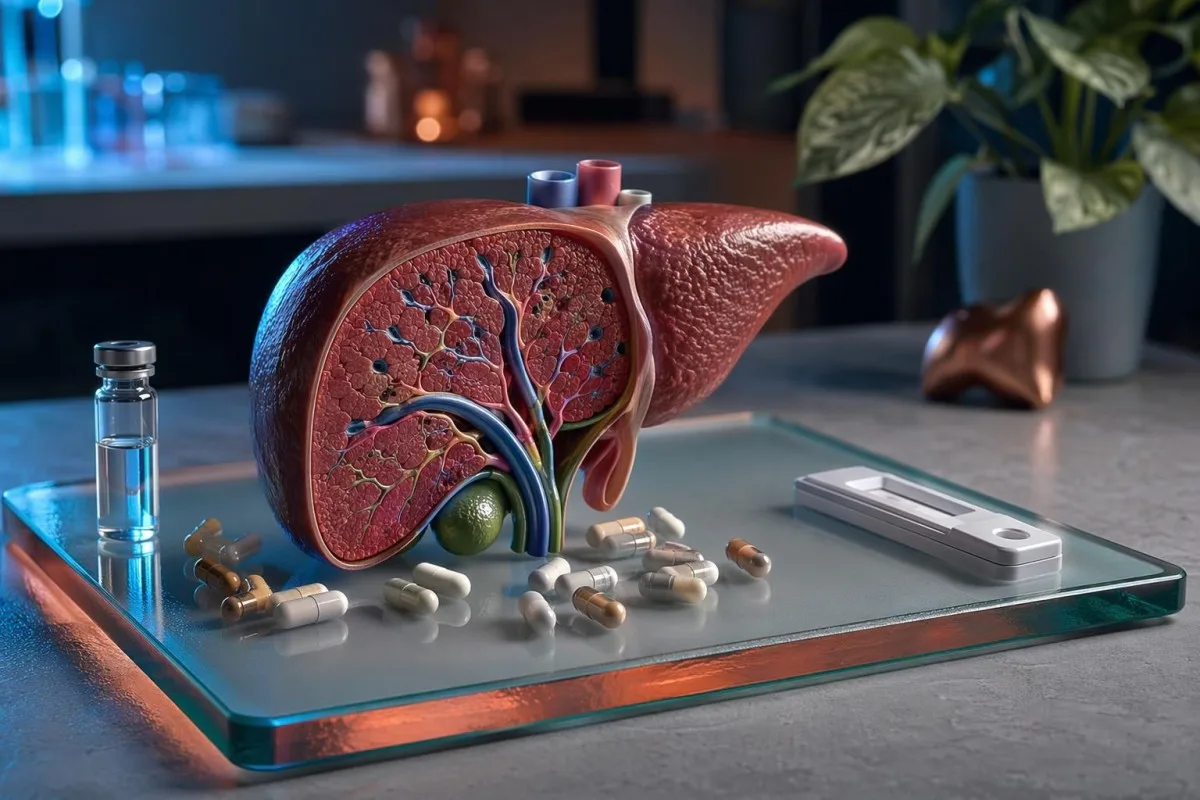
Most liver supplements are not dangerous, but a short list causes most of the trouble. The safer plan is to match the product to your labs, medicines, and actual liver-risk pattern.


- High-risk supplements include green tea extract, kava, high-dose vitamin A, sustained-release niacin, multi-ingredient fat burners, bodybuilding products, and some turmeric or ashwagandha formulas.
- ALT or AST above 3× the lab upper limit with symptoms, or above 5× without symptoms, should prompt stopping the suspected supplement and medical review.
- Green tea extract at or above about 800 mg EGCG per day has been linked with liver enzyme rises, especially when taken fasting.
- Milk thistle for liver health is usually well tolerated, but evidence for reversing fatty liver or hepatitis-related damage is modest and inconsistent.
- NAC for liver support is proven for acetaminophen toxicity under medical protocols; routine wellness dosing is not the same thing as treating liver injury.
- Bilirubin above 2× upper limit together with ALT or AST above 3× upper limit is a serious drug-induced liver injury pattern known as Hy’s law.
- Medication interactions matter most with warfarin, acetaminophen, statins, anti-seizure drugs, immunosuppressants, HIV antivirals, and chemotherapy.
- Baseline labs before a new liver supplement should include ALT, AST, ALP, GGT, bilirubin, albumin, INR if high risk, and sometimes CK to separate muscle from liver signals.
Which supplements for liver health are actually risky?
The risky supplements for liver health are usually not plain vitamins at normal doses; they are concentrated extracts, fat burners, bodybuilding blends, kava, green tea extract, high-dose vitamin A, sustained-release niacin, and some turmeric or ashwagandha products. If your ALT or AST rises above 3× the upper limit of normal with nausea, itching, dark urine, or right-sided abdominal discomfort, stop the product and seek medical review. For context, our liver panel basics explains which markers usually move first.
I’m Thomas Klein, MD, and I see the same pattern often: a patient starts a product labelled liver detox, feels fine for 4 to 8 weeks, then a routine panel shows ALT 96 IU/L when their usual result is 22 IU/L. Kantesti is an AI blood test analyzer that reads liver enzymes in combination, not as isolated red or green flags.
A normal ALT is often reported around 7–35 IU/L for adult women and 10–45 IU/L for adult men, although some European labs use lower cutoffs near 30 IU/L. A result of 70 IU/L may look only mildly abnormal, but it is roughly 2× the upper limit in a lab using a 35 IU/L cutoff.
The best liver supplements are not the ones with the longest ingredient list. In my experience, the lowest-risk plan is a clear indication, one ingredient at a time, a dated start point, and repeat labs 4 to 8 weeks later.
Which products most often raise ALT, AST or bilirubin?
Products most often linked with abnormal liver enzymes include green tea extract, kava, black cohosh, high-dose vitamin A, niacin, anabolic or bodybuilding products, and multi-ingredient weight-loss blends. Navarro et al. described herbal and dietary supplements as a growing share of drug-induced liver injury cases in the U.S. DILI Network, with bodybuilding and weight-loss products standing out (Navarro et al., 2017).
The highest-risk label is usually the vague one: proprietary blend, detox matrix, thermogenic complex, or liver cleanse stack. When I review silent ALT warning signs, I pay extra attention to products containing more than 5 active botanicals because causality becomes nearly impossible to untangle.
Kava has been associated with hepatitis-like injury, cholestatic injury, and rare liver failure reports, especially with concentrated extracts or use alongside alcohol. Black cohosh reports are mixed because product misidentification and contamination can muddy the picture, but I still treat a new ALT rise within 90 days of starting it as suspicious.
Bodybuilding supplements deserve their own category because some contain undeclared anabolic-androgenic steroid compounds. These can cause a cholestatic pattern where bilirubin climbs above 3 mg/dL while ALT is only moderately elevated, and patients often describe intense itching before anyone thinks of supplements.
What blood tests should you check before taking them?
Before starting a liver supplement, check ALT, AST, ALP, GGT, total and direct bilirubin, albumin, and consider INR if you already have liver disease or take anticoagulants. The AASLD practice guidance on drug, herbal, and dietary supplement-induced liver injury recommends pattern-based interpretation rather than judging one enzyme alone (Fontana et al., 2023).
Baseline testing matters because a supplement cannot be blamed fairly if ALT was already 68 IU/L before the first capsule. I usually ask patients to save the product photo, dose, batch number, start date, and symptoms alongside their before-after supplement labs.
ALT and AST are leakage enzymes from injured cells; ALP and GGT point more toward bile-flow stress. Total bilirubin above 1.2 mg/dL may be benign in Gilbert syndrome, but direct bilirubin above 0.3 mg/dL with pale stool or dark urine needs faster attention.
INR is the quiet danger marker. An INR above 1.5 in a person not on warfarin suggests impaired clotting factor production and should not be explained away as a detox reaction.
Kantesti's neural network checks whether AST is rising with CK, whether ALP is paired with GGT, and whether bilirubin is direct or indirect. That pattern is often more useful than asking whether a supplement is good or bad in the abstract.
Is milk thistle for liver health safe or useful?
Milk thistle for liver health is generally one of the safer popular options, but it is not a proven cure for fatty liver, hepatitis, cirrhosis, or alcohol-related liver disease. Typical silymarin study doses are around 140 mg two or three times daily, yet trial results remain mixed and product potency varies widely.
I do not panic when a patient brings in milk thistle. I do ask why they are taking it, because a person with fatty liver often needs weight, insulin, triglycerides, and alcohol-risk work addressed more than another capsule; our fatty liver diet labs guide covers the markers that usually move first.
Milk thistle can cause bloating, loose stool, headache, or allergic symptoms in people sensitive to ragweed-family plants. The interaction signal is weaker than with St John’s wort or kava, but caution is reasonable with diabetes medicines because some studies suggest small glucose-lowering effects.
A practical trial is 8 to 12 weeks, not forever. If ALT, AST, GGT, and metabolic markers do not shift by then, most patients find it easier to stop and redirect effort toward sleep, alcohol reduction, and waist-to-height ratio.
What does NAC for liver support really do?
NAC for liver support is medically proven as an antidote for acetaminophen overdose because it restores glutathione and limits toxic metabolite injury. That does not mean a 600 mg over-the-counter capsule can reverse every high ALT result or protect against unsafe supplement stacks.
Hospital NAC protocols for acetaminophen toxicity use weight-based dosing, often beginning with 150 mg/kg intravenously under monitoring. A wellness dose of 600 mg once or twice daily is a different intervention, and our NAC lab guide separates those use cases in more detail.
The interaction I ask about most is acetaminophen itself. Adults should usually stay below 3,000 to 4,000 mg/day depending on country guidance, age, alcohol use, body size, and liver history; taking NAC does not make higher doses safe.
NAC may cause nausea, reflux, sulfur-like burps, wheeze in sensitive asthmatic patients, and blood-pressure drops when combined with nitroglycerin. If someone has an ALT of 420 IU/L, starting NAC at home instead of being assessed is the wrong move.
Why do green tea extract and fat burners worry doctors?
Green tea extract worries doctors because concentrated EGCG can raise liver enzymes, especially at high doses, fasting use, or in weight-loss blends with stimulants. EFSA safety reviewers have flagged 800 mg/day of EGCG from supplements as a dose associated with increased transaminases in some adults.
Brewed green tea is not the same exposure. A mug may contain roughly 50 to 100 mg catechins, while a fat-burner capsule can deliver several hundred milligrams in a bolus before breakfast.
The EASL drug-induced liver injury guideline emphasizes that herbal products can produce hepatocellular, cholestatic, or mixed injury patterns, and green tea extract is a recurring example in case series (EASL, 2019). If your weight-loss plan also changes glucose, ketones, and hydration, use a weight-loss lab checklist rather than guessing.
A clue I take seriously is a new ALT rise 2 to 12 weeks after starting a thermogenic product, especially with fatigue or nausea. Many patients stop only the green tea extract and continue the rest of the stack; clinically, that makes the next panel harder to interpret.
Can turmeric, curcumin or ashwagandha hurt the liver?
Turmeric, curcumin, and ashwagandha are usually tolerated, but case reports link all three to liver injury in susceptible people. The risk appears higher with high-dose extracts, products containing piperine, and immune-type reactions that begin after several weeks rather than after one dose.
Culinary turmeric in food is not the pattern I worry about. I worry about 500 to 2,000 mg/day curcumin extracts plus black pepper extract, because piperine can substantially increase curcumin exposure; our curcumin safety labs gives a more lab-focused view.
Ashwagandha-related cases often show itching, jaundice, and a cholestatic or mixed pattern, sometimes with bilirubin above 3 mg/dL and ALP or GGT elevation. The evidence is honestly still evolving, but I have seen enough temporally linked cases to ask about it whenever bilirubin rises after a new stress or sleep supplement.
Kantesti is an AI lab test interpretation service that treats a turmeric product started 6 weeks before ALT 180 IU/L differently from a teaspoon of turmeric in dinner. Timing, dose, formulation, and co-medications are not side details; they are the case.
Which vitamins and minerals can stress the liver?
The vitamins and minerals most likely to create liver-related problems are preformed vitamin A, high-dose niacin, iron when not deficient, copper in excess, and selenium above safe limits. Water-soluble does not always mean harmless, and natural does not mean dose-free.
Preformed vitamin A has an adult tolerable upper intake level of 3,000 mcg RAE/day, roughly 10,000 IU/day. Chronic excess can cause dry skin, headache, bone pain, high triglycerides, and liver fibrosis; check vitamin A testing before taking high-dose retinol long term.
Niacin is a common trap because it is sold for cholesterol. Hepatotoxicity is more likely with sustained-release forms and doses above 500 mg/day, while older lipid-lowering regimens used 1,000 to 3,000 mg/day under supervision.
Iron should not be used as a liver supplement unless iron deficiency is documented. Adult supplemental iron above 45 mg/day can cause side effects, and in hemochromatosis the problem is already excess storage, not lack of support.
Which medicines interact badly with liver supplements?
Liver supplements are riskiest with medicines that already require liver metabolism, clotting monitoring, or narrow dosing. The biggest practical concerns are warfarin, acetaminophen, statins, anti-seizure medicines, immunosuppressants, HIV antivirals, chemotherapy, and tuberculosis antibiotics.
Warfarin is the one I never treat casually. Turmeric, high-dose vitamin E, garlic, ginkgo, and many blends may shift bleeding risk or INR; anyone on anticoagulation should use blood thinner safety checks before adding a supplement.
Statins are not the liver villains many patients fear, but stacking a statin with niacin, red yeast rice, alcohol, and a fat burner is asking for confusion. ALT above 3× upper limit on that combination does not tell us which ingredient caused the problem.
Acetaminophen deserves a blunt warning: repeated dosing near 4,000 mg/day plus fasting, alcohol, low body weight, or liver disease raises risk. A supplement advertised as liver protective does not neutralize that risk.
Who should avoid liver supplements unless a clinician approves?
People who are pregnant, breastfeeding, under 18, over 70 with multiple medicines, or living with hepatitis, cirrhosis, fatty liver, kidney disease, autoimmune disease, or cancer treatment should avoid liver supplements unless a clinician reviews them. In these groups, the margin for error is smaller.
Pregnancy is a special case because liver itching, bile acids, blood pressure, platelets, and clotting can all change the safety picture. Our pregnancy supplement dosing guide explains why more is not better when fetal and maternal safety share the same decision.
Patients with hepatitis B or C, autoimmune hepatitis, or cirrhosis should not use a new liver blend to avoid medical therapy. In hepatitis C, for example, direct-acting antiviral treatment can cure infection in most patients, while supplements may delay care and blur lab trends.
Older adults are often harmed by ordinary complexity rather than one dramatic toxin. A 74-year-old taking eight medicines, two teas, magnesium, turmeric, and a sleep blend may develop ALP 210 IU/L from an interaction nobody noticed.
How do doctors tell supplement injury from muscle or bile issues?
Doctors compare ALT, AST, ALP, GGT, bilirubin, CK, and symptoms to decide whether a supplement pattern looks liver-cell, bile-flow, muscle, or mixed. AST alone is not enough because muscle injury, endurance exercise, and rhabdomyolysis can raise AST without primary liver injury.
A 52-year-old marathon runner with AST 89 IU/L and ALT 32 IU/L may have a muscle signal, not a liver supplement injury. I would check CK and recent training history, and the AST muscle pattern guide shows why that distinction prevents unnecessary panic.
A cholestatic pattern looks different: ALP and GGT rise more than ALT, bilirubin may climb, urine can darken, and stool may look pale. ALP 240 IU/L with GGT 180 IU/L after starting a new botanical is more suspicious for bile-flow stress than ALT 55 IU/L by itself.
Hy’s law is the red-flag pattern clinicians do not ignore. ALT or AST above 3× upper limit plus total bilirubin above 2× upper limit, without a strong ALP explanation, predicts higher risk of severe drug-induced liver injury.
What should you do if enzymes rise after a supplement?
If liver enzymes rise after starting a supplement, stop the suspected product, avoid alcohol and acetaminophen until reviewed, document the ingredient list, and repeat labs within 7 to 14 days if the rise is moderate. Seek same-day care for jaundice, confusion, vomiting, severe pain, or INR elevation.
Do not stop prescription medicines without speaking to the prescriber. Do stop non-essential supplements when ALT exceeds 3× upper limit with symptoms or 5× without symptoms, then arrange repeat abnormal labs rather than waiting months.
A clean dechallenge is useful: the enzyme should usually start falling over 1 to 4 weeks after the culprit is removed. If ALT keeps rising from 180 to 460 IU/L after stopping the supplement, the diagnosis is not settled and viral hepatitis, gallstones, autoimmune hepatitis, alcohol, and prescribed drugs need review.
My rule as Thomas Klein, MD, is simple: photograph every bottle before the appointment. Clinicians can miss hidden ingredients like green tea extract, piperine, niacin, or vitamin A if the patient only remembers the front-label marketing name.
The EASL guideline advises structured causality assessment rather than rechallenge, because deliberately restarting a suspected liver-injury product can provoke a worse reaction (EASL, 2019). Rechallenge is rarely worth it for a non-essential wellness product.
How can AI help track liver supplement safety?
AI can help track liver supplement safety by comparing your current panel with prior baselines, medication timing, supplement start dates, and enzyme patterns. Kantesti is an AI-powered blood test analysis tool used by 2M+ people across 127 countries, and our aim is to flag patterns that deserve human follow-up, not to replace clinicians.
Kantesti AI interprets ALT, AST, ALP, GGT, bilirubin, albumin, INR, CK, triglycerides, glucose, and kidney markers together because supplement risk is rarely one-number medicine. Our AI technology guide explains how contextual pattern reading differs from a simple reference-range lookup.
If you upload a PDF or photo, OCR errors can matter; ALT 31 misread as 81 changes the entire conversation. That is why we recommend checking units and flags against the original report, and our blood test upload checks show the most common traps.
Kantesti’s clinical standards are reviewed against validation workflows, not vibes. You can read more about our medical validation approach, including how trend alerts are handled when one lab uses IU/L and another uses U/L.
As of July 7, 2026, I still tell patients the same thing: AI is excellent for organizing a messy timeline, but a yellow-eyed patient with bilirubin 5.0 mg/dL needs urgent clinical care.
What is the safer plan before buying a liver supplement?
The safer plan is to identify the problem first, check baseline labs, choose one low-risk ingredient if there is a reason, avoid multi-ingredient blends, and retest after 4 to 8 weeks. If ALT, AST, bilirubin, INR, or symptoms worsen, stop and get medical review.
Start with the boring causes. Alcohol intake above 14 UK units per week, waist gain, sleep apnea, uncontrolled triglycerides, new medicines, viral hepatitis risk, and resistance training can all move liver markers more than most supplements.
At Kantesti, our doctors and advisors prefer a one-change-at-a-time rule because it protects the patient and the interpretation. Our Medical Advisory Board reviews how we communicate risk bands without turning mild lab variation into fear.
If a product promises detoxification without naming a measurable endpoint, I would not buy it. A useful endpoint might be ALT falling from 74 to 38 IU/L, GGT dropping from 110 to 55 IU/L, or triglycerides improving alongside liver fat risk.
Our broader research archive includes a hematology marker guide and a GI symptom guide because liver complaints often overlap with anemia, stool color, dehydration, and digestive symptoms. For organizational background, the About Us page explains how Kantesti LTD is structured and medically governed.
Frequently Asked Questions
What supplements are hardest on the liver?
The supplements most often associated with liver injury include green tea extract, kava, high-dose vitamin A, sustained-release niacin, bodybuilding products with hidden anabolic compounds, and multi-ingredient weight-loss blends. Risk rises when products contain concentrated extracts, piperine, alcohol-adjacent use, or several botanicals in one formula. ALT or AST above 3× the upper limit of normal with symptoms, or above 5× without symptoms, should prompt stopping the suspected supplement and clinician review.
Can milk thistle lower high liver enzymes?
Milk thistle may modestly affect liver-related oxidative stress markers in some studies, but it has not reliably been shown to reverse fatty liver, hepatitis, cirrhosis, or alcohol-related injury. Common study doses use silymarin around 140 mg two or three times daily, but product quality and absorption vary. If ALT or GGT does not improve after 8 to 12 weeks, most patients should reassess the plan rather than keep taking it indefinitely.
Is NAC safe to take every day for liver support?
NAC is generally tolerated at common supplement doses such as 600 mg once or twice daily, but it can cause nausea, reflux, sulfur-like burps, and wheeze in some people with asthma. NAC is proven in medicine for acetaminophen toxicity using supervised weight-based protocols, not as a universal shield against liver injury. Anyone with ALT above 200 IU/L, jaundice, vomiting, or INR elevation should seek medical care rather than self-treat with NAC.
How soon can a supplement raise liver enzymes?
Supplement-related liver enzyme rises often appear 2 to 12 weeks after starting a product, although the timing can be shorter with direct toxicity and longer with immune-type reactions. A dated start point, dose record, and product photo are clinically useful because they allow a dechallenge after stopping. If enzymes fall by 30% to 50% within a few weeks of stopping, the timing supports but does not prove supplement-related injury.
What liver labs should I check before taking a liver detox supplement?
Before taking a liver detox supplement, check ALT, AST, ALP, GGT, total bilirubin, direct bilirubin, albumin, and sometimes INR if you have liver disease or take anticoagulants. CK is useful when AST is high after exercise because muscle injury can mimic a liver signal. A baseline panel lets you tell whether a later ALT of 85 IU/L is new, chronic, or simply your usual pattern.
When is a high ALT after supplements urgent?
A high ALT after supplements is urgent if it occurs with jaundice, dark urine, pale stool, confusion, severe vomiting, right-sided abdominal pain, or INR above 1.5 when you are not taking warfarin. ALT or AST above 3× upper limit plus bilirubin above 2× upper limit is a serious Hy’s law pattern. Even without symptoms, ALT above 5× the lab upper limit should be reviewed promptly.
Are liver cleanse supplements worth it?
Most liver cleanse supplements are not worth taking because they rarely define a measurable outcome and often combine multiple extracts that make side effects harder to trace. The liver does not need a cleanse product to metabolize normal waste products; it needs lower alcohol exposure, improved insulin resistance, safe medication use, and treatment of real liver disease. If you try any product, use one ingredient, document the dose, and retest liver markers in 4 to 8 weeks.
Can I drink alcohol while trying a liver supplement?
Avoid alcohol while taking a new liver supplement if you have abnormal liver tests, liver disease, or symptoms such as nausea or dark urine. Alcohol can independently irritate the liver and make it harder to tell whether a supplement is responsible for worsening results.
Get AI-Powered Blood Test Analysis Today
Join over 2 million users worldwide who trust Kantesti for instant, accurate lab test analysis. Upload your blood test results and receive comprehensive interpretation of 15,000+ biomarkers in seconds.
📚 Referenced Research Publications
Klein, T., Mitchell, S., & Weber, H. (2026). B Negative Blood Type, LDH Blood Test & Reticulocyte Count Guide. Kantesti AI Medical Research.
Klein, T., Mitchell, S., & Weber, H. (2026). Diarrhea After Fasting, Black Specks in Stool & GI Guide 2026. Kantesti AI Medical Research.
📖 External Medical References
⚕️ Medical Disclaimer
This article is for educational purposes only and does not constitute medical advice. Always consult a qualified healthcare provider for diagnosis and treatment decisions.
E-E-A-T Trust Signals
Experience
Physician-led clinical review of lab interpretation workflows.
Expertise
Laboratory medicine focus on how biomarkers behave in clinical context.
Authoritativeness
Written by Dr. Thomas Klein with review by Dr. Sarah Mitchell and Prof. Dr. Hans Weber.
Trustworthiness
Evidence-based interpretation with clear follow-up pathways to reduce alarm.