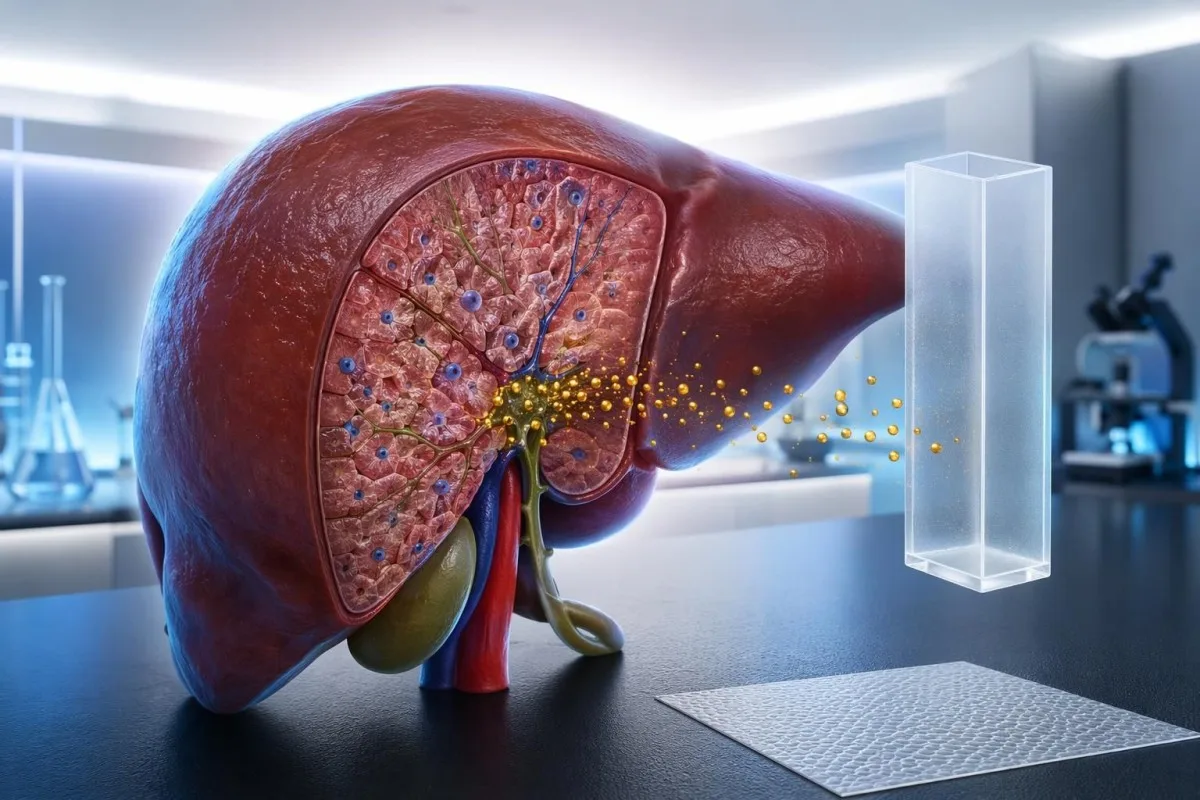
ALT often rises before the liver complains. The useful question is not just how high the number is, but whether bilirubin, ALP, GGT, INR, symptoms, medicines, alcohol, and metabolic markers point in the same direction.


- High ALT symptoms are often absent until liver injury is moderate or advanced; mild elevations under 2 times the upper limit are commonly silent.
- Typical ALT reference ranges are often about 7–56 U/L, but the ACG guideline notes healthier cutoffs near 29–33 U/L for men and 19–25 U/L for women.
- Urgent symptoms include yellow eyes, dark urine, pale stools, confusion, severe right-upper-abdominal pain, fever, repeated vomiting, or unusual bleeding.
- Marked ALT elevation above 1000 U/L most often raises concern for acute viral hepatitis, ischemic liver injury, or acetaminophen toxicity.
- Fatty liver pattern often shows ALT 40–150 U/L, AST lower than ALT early on, and metabolic clues such as high triglycerides or HbA1c.
- Alcohol-related pattern often shows AST higher than ALT, commonly AST:ALT above 2, with GGT or MCV also elevated.
- Bile flow problems usually raise ALP and GGT more than ALT and may cause itching, dark urine, pale stool, or direct bilirubin elevation.
- Medication-related ALT rise is more concerning when ALT exceeds 3 times the upper limit with symptoms or bilirubin rises above 2 times the upper limit.
- Follow-up timing depends on severity: mild isolated ALT can often be rechecked in 2–4 weeks, while ALT with jaundice, high INR, or mental status change needs same-day care.
Why ALT Can Be High Before You Feel Ill
High ALT symptoms are often absent because ALT leaks from irritated liver cells before the liver loses enough function to cause jaundice, swelling, confusion, or bleeding. A person can have ALT 80–200 U/L and feel completely normal. The urgency changes when ALT is paired with bilirubin, INR, ALP, GGT, fever, pain, dark urine, pale stool, or new medicines.
ALT, or alanine aminotransferase, is an enzyme concentrated inside hepatocytes. When those cells are stressed by fat accumulation, alcohol, viral hepatitis, bile obstruction, or medication injury, ALT can rise within hours to days, long before a patient notices anything unusual.
In my clinical practice, I often see the same uneasy moment: a well 42-year-old opens a portal result showing ALT 96 U/L and assumes liver failure. Most of the time, that number means injury signal, not loss of liver function; the harder question is whether the pattern is drifting, resolving, or clustering with other abnormalities.
Kantesti is an AI blood test interpretation platform that reads ALT alongside AST, ALP, GGT, bilirubin, albumin, INR, platelets, glucose, lipids, and prior results rather than treating one red flag as the whole story. Our biomarker guide covers thousands of markers because liver interpretation is usually a pattern exercise, not a single-enzyme exercise.
As Thomas Klein, MD, I tell patients that a quiet liver is not always a healthy liver. The liver has a large reserve, so symptoms may appear late; this is why trend analysis matters, especially when ALT has doubled from a personal baseline even while still near a laboratory cutoff.
ALT Levels That Change the Level of Concern
ALT concern rises with the multiple of the upper reference limit, not just the printed H flag. A result near 60 U/L may be mild in one laboratory but abnormal by stricter sex-specific cutoffs, while ALT above 1000 U/L is a very different clinical problem.
Many laboratories list adult ALT around 7–56 U/L, but some European and hepatology-focused ranges use lower limits. The American College of Gastroenterology guideline notes that healthy normal ALT may be roughly 29–33 U/L in men and 19–25 U/L in women (Kwo et al., 2017).
A mildly high ALT under 2 times the upper limit is commonly caused by fatty liver, recent strenuous exercise, alcohol within the prior week, or a medication effect. ALT above 5 times the upper limit deserves faster evaluation even without symptoms because viral, ischemic, toxic, or autoimmune causes become more likely.
Kwo et al. also recommend confirming abnormal liver chemistries and classifying them as hepatocellular, cholestatic, or mixed before chasing rare diagnoses. If your report uses unfamiliar flags, our guide to blood test numbers explains why a high marker can be clinically mild or genuinely urgent depending on its neighbors.
ALT has an approximate plasma half-life of 47 hours, so a falling ALT after stopping a trigger can still take several days to look reassuring. A single value is a snapshot; two values 1–3 weeks apart often tell the story.
Symptoms That Make High ALT More Urgent
High ALT becomes urgent when symptoms suggest impaired liver function, blocked bile flow, severe acute injury, or systemic illness. Yellow eyes, dark urine, pale stools, confusion, fever with right-upper-quadrant pain, repeated vomiting, or unusual bruising should not wait for a routine appointment.
Jaundice means bilirubin is accumulating in the body, and it changes the risk calculation immediately. A total bilirubin above 3 mg/dL with yellow eyes, tea-colored urine, or pale stool suggests the liver or bile ducts need prompt evaluation.
Confusion, marked sleepiness, personality change, or asterixis can indicate hepatic encephalopathy or acute liver failure. In practical terms, ALT plus INR ≥1.5 and altered mental status is an emergency pattern, even if the patient looked well the day before.
Right-upper-abdominal pain with fever points more toward gallbladder, bile duct, or severe inflammatory causes than simple fatty liver. Our bilirubin pattern guide explains why direct bilirubin, ALP, and GGT often matter more than ALT when urine darkens and stool loses color.
Do not judge urgency by ALT alone. I have seen ALT 700 U/L in a calm outpatient who recovered uneventfully, and ALT 180 U/L in a patient with jaundice and an obstructed bile duct who needed same-day imaging.
Fatty Liver Patterns: Mild ALT, Metabolic Clues
Fatty liver usually causes a mild to moderate ALT rise, often between 40 and 150 U/L, with few or no symptoms. The pattern becomes more convincing when high ALT travels with central weight gain, high triglycerides, insulin resistance, high HbA1c, or ultrasound evidence of steatosis.
In early metabolic dysfunction-associated steatotic liver disease, ALT is often higher than AST. As fibrosis advances, the AST:ALT ratio may flip, and platelets can drift down toward 150 × 10^9/L or lower because portal pressure and spleen effects enter the picture.
The 2024 EASL-EASD-EASO MASLD guideline recommends fibrosis risk stratification rather than reassurance based only on a mild ALT elevation. A practical first pass is FIB-4, which combines age, AST, ALT, and platelets; in many adults, FIB-4 below 1.3 is lower risk, while higher values may need elastography or specialist review.
I see this pattern frequently in people whose ALT is only 65 U/L but triglycerides are 240 mg/dL and HbA1c is 6.1%. That cluster is often more informative than the ALT itself, and our guide to fatty liver food choices focuses on changes that actually move liver enzymes over 8–16 weeks.
Kantesti AI flags this as a metabolic-liver pattern when ALT, AST, triglycerides, HDL, glucose, HbA1c, BMI context, and prior trends line up. The uncertainty is real: some patients with advanced fibrosis have normal ALT, so a normal repeat test does not always erase risk.
Medication and Supplement Effects on ALT
Medication-related ALT elevation is suspected when a rise begins days to months after starting, increasing, or combining drugs or supplements. The risk is higher when ALT exceeds 3 times the upper limit with symptoms, or when ALT rises with bilirubin.
Common triggers include acetaminophen, some antibiotics, antiepileptic medicines, antifungals, methotrexate, isoniazid, amiodarone, and certain bodybuilding or weight-loss supplements. Statins can cause mild ALT rises, but serious liver injury from statins is uncommon; clinicians often continue them if ALT is under 3 times the upper limit and the patient is well.
EASL drug-induced liver injury guidance highlights Hy's law: hepatocellular injury with ALT or AST above 3 times the upper limit plus bilirubin above 2 times the upper limit predicts a higher risk of severe outcome (EASL, 2019). That combination matters far more than an isolated ALT 75 U/L after a new medicine.
The timing can be surprisingly specific. Acetaminophen toxicity may produce symptoms late, while ALT can climb into the thousands; immune-mediated reactions may appear after 1–12 weeks; herbal products can be unpredictable because ingredients and doses are often poorly documented.
Please do not stop prescribed medication without a clinician unless you suspect overdose or a serious reaction. Our medication monitoring guide explains why the safest plan is usually a dated medication list, repeat ALT/AST, bilirubin, INR, and a clear stop-or-continue decision.
Hepatitis Patterns: When ALT Jumps High
Viral or autoimmune hepatitis often produces higher ALT values than fatty liver, sometimes several hundred to several thousand U/L. Symptoms may include fatigue, nausea, dark urine, jaundice, joint aches, fever, or right-upper-abdominal discomfort, but early hepatitis can still be silent.
ALT above 500 U/L pushes hepatitis, ischemic injury, toxin exposure, and autoimmune hepatitis higher on the list. ALT above 1000 U/L is classically associated with acute viral hepatitis, acetaminophen toxicity, or shock-related liver injury, though exceptions happen.
The hepatitis panel must answer different questions: HAV IgM suggests recent hepatitis A, HBsAg and anti-HBc IgM help identify acute hepatitis B, and HCV RNA confirms active hepatitis C. Antibodies alone can mean past exposure, vaccination, or chronic risk depending on the exact marker.
A patient I remember had ALT 620 U/L, felt only a bit tired, and assumed it was gym soreness; the decisive result was hepatitis C RNA, not the symptom history. Our article on hepatitis blood tests walks through the antibody-versus-active-infection distinction that often confuses portal results.
Autoimmune hepatitis is less common, but it is easy to miss if ALT is blamed on weight alone. Clues include high IgG, positive ANA or smooth muscle antibody, other autoimmune disease, and a persistent hepatocellular pattern over weeks rather than a quick fall.
Alcohol-Related Injury: AST, GGT, and MCV Clues
Alcohol-related liver injury often raises AST more than ALT, and an AST:ALT ratio above 2 is a classic clue. ALT may be only modestly high because alcohol-related injury and vitamin B6 effects can blunt ALT production compared with the degree of liver stress.
In alcohol-associated hepatitis, AST is commonly under 300 U/L and ALT is often lower than AST. This is one reason a modest ALT does not guarantee a mild situation; bilirubin, INR, albumin, platelets, and clinical appearance carry more weight.
GGT can rise with alcohol exposure, but it is not specific. Antiseizure medicines, bile flow problems, fatty liver, and metabolic syndrome can also increase GGT, so I avoid using it as a moral test; it is a biochemical clue, not a confession detector.
A larger MCV, often above 100 fL, can support chronic alcohol exposure, folate deficiency, liver disease, or hypothyroidism depending on the rest of the panel. For the muscle-versus-liver side of AST interpretation, see our guide to AST and ALT patterns.
The most useful follow-up pattern is movement after abstinence. In many patients, GGT begins to fall over 2–6 weeks, while AST and ALT may improve faster if there is no advanced scarring or ongoing bile obstruction.
Bile Flow Problems: When ALP and GGT Lead
Bile flow problems usually raise ALP and GGT more prominently than ALT. Symptoms such as itching, dark urine, pale stool, yellow eyes, fever, or right-upper-abdominal pain make a cholestatic pattern more urgent than a quiet isolated ALT elevation.
ALT can rise in gallstone obstruction, but ALP, GGT, and direct bilirubin often tell the sharper story. If ALP is more than 1.5 times the upper limit and GGT is also high, clinicians usually think about liver or bile duct sources before bone sources.
Charcot's triad — fever, right-upper-quadrant pain, and jaundice — raises concern for acute cholangitis, a bile duct infection pattern that needs urgent assessment. I am careful with the word emergency, but this combination is one of the times I use it plainly.
Pale stool happens when bile pigment fails to reach the gut, while dark urine happens when conjugated bilirubin spills into urine. Our discussion of ALP and GGT clues helps separate liver-bile patterns from bone-related ALP elevations.
Ultrasound is often the first imaging test because it can show gallstones, bile duct dilation, fatty infiltration, and some masses without radiation. A normal ultrasound does not exclude every bile duct disease, but it is a reasonable first step when ALP, GGT, and bilirubin point that way.
Exercise, Muscle Injury, and ALT Confusion
Hard exercise can raise AST and sometimes ALT, but creatine kinase usually reveals the muscle source. A marathon, CrossFit session, seizure, fall, or muscle injury within 2–7 days of testing can mimic liver enzyme injury if CK is not checked.
AST is found in muscle, liver, heart, and red cells, while ALT is more liver-enriched but not perfectly liver-specific. After extreme exercise, CK can rise above 1000 U/L, AST can exceed ALT, and the pattern may normalize after rest and hydration.
A 52-year-old marathon runner with AST 89 U/L and ALT 61 U/L is a different patient from someone with the same enzymes plus bilirubin 4 mg/dL. Context is not soft medicine; it is how we avoid unnecessary scans and also avoid missing real injury.
If muscle symptoms, dark cola-colored urine, or severe weakness appear after exertion, rhabdomyolysis becomes the worry, not simple liver irritation. Our creatine kinase guide explains why CK, creatinine, potassium, and urine findings belong in that follow-up.
For a routine ALT recheck, I usually ask patients to avoid unusually hard training for 48–72 hours beforehand. That small preparation step can prevent a misleading repeat result.
When to Repeat ALT and What Trend Matters
Repeat timing depends on the height of ALT, symptoms, and the surrounding liver panel. A well patient with isolated ALT under 2 times the upper limit can often repeat testing in 2–4 weeks, but jaundice, high INR, severe pain, or ALT above 1000 U/L needs same-day care.
For mild isolated ALT elevation, repeating ALT, AST, ALP, GGT, bilirubin, albumin, and sometimes CK is often more useful than ordering every rare test on day one. If the value falls by 30–50% after removing a trigger, the story is already changing.
Persistent ALT elevation beyond 6 months is usually treated as chronic and deserves a structured evaluation. That does not mean disaster; it means the pattern has outgrown the 'maybe it was last weekend' explanation.
Kantesti is an AI-powered blood test analysis tool used by people in more than 127 countries, and our trend view is built for exactly this problem: deciding whether ALT is a blip, a drift, or part of a repeating cluster. Our guide to repeating abnormal labs gives practical retest windows for common situations.
As of June 27, 2026, my advice is still deliberately boring: write down alcohol intake, new medicines, supplements, viral symptoms, heavy exercise, and fasting or crash dieting before the repeat test. Those details often explain a 20–80 U/L swing.
Next Labs That Separate the Major Causes
The next labs after high ALT should classify the pattern as hepatocellular, cholestatic, mixed, synthetic dysfunction, metabolic risk, medication effect, or muscle source. Useful follow-up commonly includes AST, ALP, GGT, total and direct bilirubin, INR, albumin, CBC with platelets, CK, hepatitis markers, ferritin, transferrin saturation, glucose, HbA1c, and lipids.
ALT and AST describe cell injury; bilirubin and ALP describe bile handling; INR and albumin describe liver function. That distinction is not academic — a person with ALT 120 U/L and INR 1.0 is usually in a different risk category from ALT 120 U/L and INR 1.8.
Platelets matter because low or falling counts can hint at portal hypertension or advanced fibrosis. Albumin below 3.5 g/dL, INR above 1.5, and platelets below 150 × 10^9/L are not typical simple fatty liver signals when seen together.
Iron overload belongs on the list when ALT is high with ferritin elevation and transferrin saturation above 45%. For protein and albumin context, our serum protein patterns explain why albumin, globulin, and the A/G ratio can add clues beyond liver enzymes.
I also check thyroid, coeliac screening, and autoimmune markers selectively rather than reflexively. The evidence for blanket panels is honestly mixed; targeted testing based on pattern, age, family history, and symptoms gives fewer false alarms.
Sex, Age, Pregnancy, and Body Size Change ALT Interpretation
ALT interpretation changes with sex, age, pregnancy, body composition, and puberty. A value of 38 U/L may be ignored by one laboratory but clinically meaningful in a young woman, while pregnancy symptoms such as severe headache, right-upper-abdominal pain, itching, or high blood pressure change urgency.
Women tend to have lower ALT reference limits than men, partly because muscle mass and hormonal factors differ. Some hepatology sources use upper limits around 19–25 U/L for women and 29–33 U/L for men, which can make a 'normal' lab flag less reassuring in context.
Pregnancy deserves its own caution. ALT elevation with severe itching can suggest intrahepatic cholestasis of pregnancy, while ALT elevation with high blood pressure, low platelets, or right-upper-abdominal pain raises concern for preeclampsia spectrum or HELLP physiology.
Children and teenagers have age- and sex-specific ALT ranges, and obesity-related fatty liver can appear surprisingly early. If you compare results across family members, our guide to sex-specific ranges explains why the same number may carry different meaning.
Older adults can have serious liver or bile duct disease with muted symptoms. I pay extra attention when a new ALT rise appears with weight loss, anemia, high ALP, or a personal baseline that has been stable for years.
How Kantesti AI Reads ALT in Clinical Context
Kantesti AI interprets ALT by comparing it with related markers, prior trends, units, demographics, and symptom context instead of labeling the number as good or bad in isolation. This is especially useful when ALT is mildly high and the next step depends on the pattern.
Kantesti is an AI blood test analyzer that can process uploaded lab PDFs or photos and organize ALT beside AST, ALP, GGT, bilirubin, albumin, INR, platelets, metabolic markers, and medication context. The goal is not to replace a clinician; it is to make the pattern visible before the appointment.
Kantesti's neural network pays attention to unit differences, lab-specific reference ranges, and trend slope. A rise from ALT 18 to 44 U/L may deserve a different comment than a stable ALT 44 U/L over five years, even though both may look mildly abnormal on paper.
Our technology guide explains how the system structures lab data before interpretation. The clinical safety piece is equally important: our outputs are designed as decision support, not diagnosis, and they intentionally flag red-flag combinations for medical review.
When I review ALT reports at Kantesti, the question I ask is simple: does the panel point to fat, medication, hepatitis, alcohol, bile flow, muscle, or reduced liver function? If it does not, the honest answer is uncertainty plus a sensible follow-up plan.
Bottom Line: What to Do With High ALT Symptoms
High ALT without symptoms is common, but high ALT with jaundice, dark urine, pale stool, confusion, fever, severe abdominal pain, repeated vomiting, or unusual bleeding needs urgent care. If you feel well and ALT is mildly elevated, the safest next step is usually pattern review and a timed repeat rather than panic.
Bring the actual numbers, not just the H flag: ALT, AST, ALP, GGT, bilirubin, albumin, INR, platelets, and previous results. If ALT is above 3 times the upper limit, or any elevation comes with bilirubin or INR abnormalities, the conversation should move faster.
Kantesti's medical content is reviewed with clinician oversight, and our Medical Advisory Board helps keep interpretation grounded in real patient safety rather than wellness theatre. Our clinical validation materials describe how we test technical performance and escalation logic.
Thomas Klein, MD, my practical rule is this: ALT tells me liver cells are irritated, but bilirubin, INR, albumin, platelets, and symptoms tell me whether the liver is struggling. That distinction prevents both underreaction and overreaction.
The Kantesti research library also keeps adjacent lab-interpretation work visible for readers who want methods transparency. Related publications include Kantesti Medical Editorial Team. (2026). RDW Blood Test: Complete Guide to RDW-CV, MCV & MCHC. Zenodo. https://doi.org/10.5281/zenodo.18202598, and Kantesti Medical Editorial Team. (2026). BUN/Creatinine Ratio Explained: Kidney Function Test Guide. Zenodo. https://doi.org/10.5281/zenodo.18207872.
Frequently Asked Questions
Can high ALT cause symptoms?
High ALT itself usually does not cause symptoms; it is a marker that liver cells are irritated or injured. Many people with ALT 60–200 U/L feel completely well, especially with fatty liver, medication effects, or recent exercise. Symptoms appear when the underlying cause affects bile flow, liver function, or the whole body, such as jaundice, dark urine, fever, severe abdominal pain, or confusion.
Is high ALT dangerous if I have no symptoms?
High ALT without symptoms can still matter, but the danger depends on the level, trend, and other lab results. A mild isolated ALT under 2 times the upper limit is often rechecked in 2–4 weeks with AST, ALP, GGT, bilirubin, and medication review. ALT above 5 times the upper limit, ALT above 1000 U/L, or ALT with high bilirubin or INR is more concerning even if you feel well.
What symptoms with high ALT need urgent care?
High ALT needs urgent medical assessment when it occurs with yellow eyes, dark urine, pale stools, confusion, severe right-upper-abdominal pain, fever, repeated vomiting, abdominal swelling, or unusual bruising or bleeding. ALT with INR at or above 1.5 and mental status change is an emergency pattern. Suspected acetaminophen overdose also needs same-day care because symptoms can be delayed while ALT rises rapidly.
What ALT level is considered very high?
ALT above 5 times the laboratory upper limit is generally considered a marked elevation, and ALT above 1000 U/L is very high. Values above 1000 U/L commonly raise concern for acute viral hepatitis, acetaminophen toxicity, ischemic liver injury, or severe autoimmune hepatitis. The exact risk still depends on bilirubin, INR, symptoms, kidney function, and the speed of change.
Can exercise raise ALT?
Yes, unusually hard exercise can raise AST and sometimes ALT for several days, especially after endurance events, heavy resistance training, seizures, or muscle injury. Creatine kinase is the key follow-up marker because CK above 1000 U/L strongly supports muscle injury rather than isolated liver injury. Avoiding extreme workouts for 48–72 hours before a planned repeat liver panel can reduce confusion.
How long does ALT take to return to normal?
ALT can begin falling within days after a temporary trigger stops, but normalization may take weeks depending on the cause. Because ALT has an approximate half-life of 47 hours, a meaningful decline is often visible on repeat testing within 1–3 weeks if the injury has resolved. Fatty liver improvements may take 8–16 weeks or longer because the driver is metabolic rather than a single exposure.
How do doctors separate fatty liver from hepatitis or bile duct problems?
Doctors separate causes by reading ALT with AST, ALP, GGT, bilirubin, INR, albumin, platelets, metabolic markers, hepatitis tests, medication timing, alcohol history, CK, and imaging. Fatty liver often shows mild ALT elevation with triglycerides, HbA1c, or insulin resistance clues, while hepatitis can push ALT into the hundreds or thousands. Bile duct problems usually raise ALP, GGT, and direct bilirubin more than ALT and may cause itching, dark urine, or pale stool.
Can a normal liver ultrasound rule out fatty liver or liver scarring?
No. Ultrasound may miss mild liver fat and does not reliably stage scarring. If ALT remains elevated, clinicians may combine repeat blood tests with a fibrosis score or elastography to assess risk more accurately.
Should I stop my medicines or acetaminophen if my ALT is high?
Do not stop a prescribed medicine solely because of one ALT result; contact the prescriber promptly for individualized advice. If you took more acetaminophen than directed, seek urgent poison-control or emergency guidance even when you feel well.
Get AI-Powered Blood Test Analysis Today
Join over 2 million users worldwide who trust Kantesti for instant, accurate lab test analysis. Upload your blood test results and receive comprehensive interpretation of 15,000+ biomarkers in seconds.
📚 Referenced Research Publications
Klein, T., Mitchell, S., & Weber, H. (2026). RDW Blood Test: Complete Guide to RDW-CV, MCV & MCHC. Kantesti AI Medical Research.
Klein, T., Mitchell, S., & Weber, H. (2026). BUN/Creatinine Ratio Explained: Kidney Function Test Guide. Kantesti AI Medical Research.
📖 External Medical References
European Association for the Study of the Liver et al. (2024). EASL-EASD-EASO Clinical Practice Guidelines on the management of metabolic dysfunction-associated steatotic liver disease. Journal of Hepatology.
⚕️ Medical Disclaimer
This article is for educational purposes only and does not constitute medical advice. Always consult a qualified healthcare provider for diagnosis and treatment decisions.
E-E-A-T Trust Signals
Experience
Physician-led clinical review of lab interpretation workflows.
Expertise
Laboratory medicine focus on how biomarkers behave in clinical context.
Authoritativeness
Written by Dr. Thomas Klein with review by Dr. Sarah Mitchell and Prof. Dr. Hans Weber.
Trustworthiness
Evidence-based interpretation with clear follow-up pathways to reduce alarm.