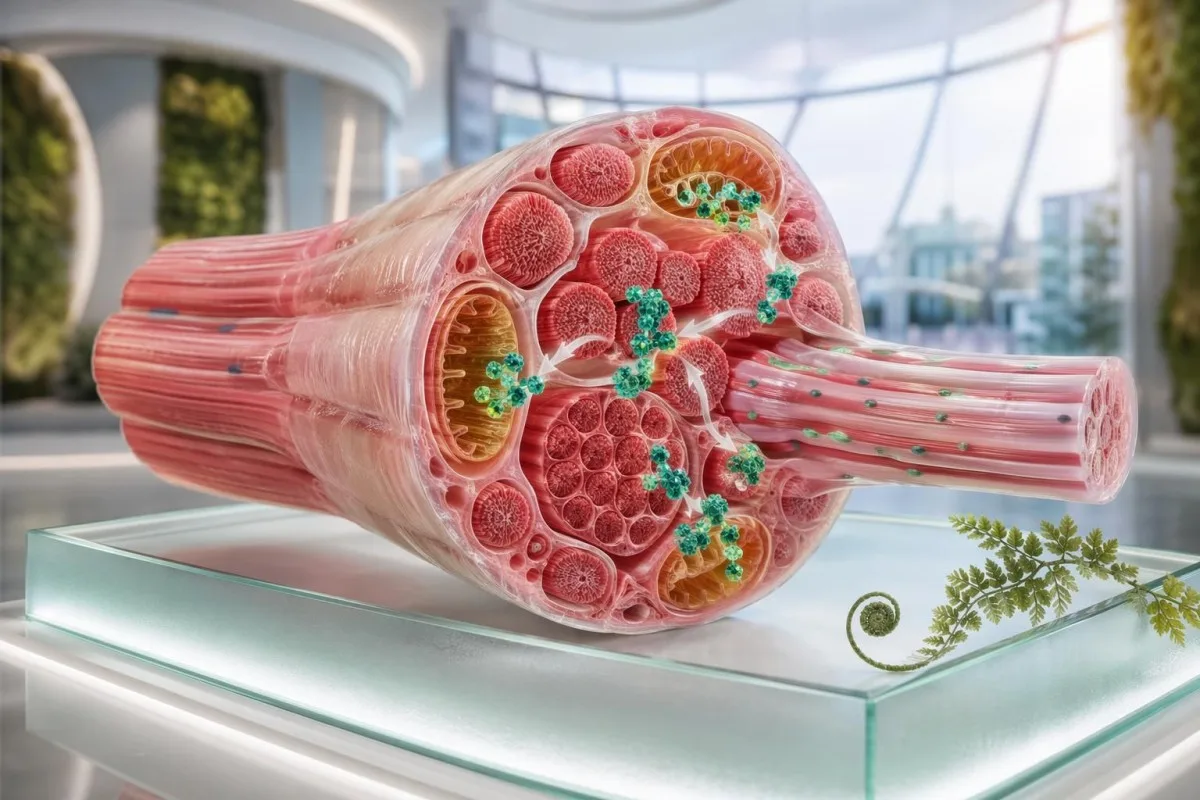
CK is one of those short lab abbreviations that can look alarming when flagged high. The trick is reading creatine kinase with symptoms, recent exercise, medicines, kidney markers, and not mixing it up with CK-MB.


- CK stands for creatine kinase, an enzyme found mainly in skeletal muscle, heart muscle, and brain tissue.
- CK blood test meaning depends on context: a value 2 times the lab limit after heavy training is very different from 20 times the limit with weakness or dark urine.
- Typical adult CK ranges are roughly 30-200 U/L in many women and 40-320 U/L in many men, but labs vary by method, sex, age, ethnicity, and muscle mass.
- High CK lab result commonly follows strenuous exercise, muscle injury, seizures, injections, statins, hypothyroidism, or inflammatory muscle disease.
- Rhabdomyolysis concern rises when CK is above about 5,000 U/L, especially with rising creatinine, high potassium, dehydration, or cola-colored urine.
- CK-MB is not the same as total CK; modern heart attack assessment relies mainly on high-sensitivity troponin trends, ECG findings, and symptoms.
- Exercise timing matters because CK often peaks 24-72 hours after muscle strain and may fall by about 40% per day once injury stops.
- Medication patterns matter: muscle symptoms plus CK above 10 times the upper limit usually means the drug should be stopped and urgent clinical review arranged.
- Low CK is usually less urgent than high CK, but persistently low CK with low creatinine may hint at low muscle mass, frailty, or undernutrition.
What CK stands for on a lab report
CK stands for creatine kinase, an enzyme that helps muscle cells recycle energy. The plain-English CK blood test meaning is this: CK rises when muscle cells leak enzyme into the bloodstream, most often after exercise, injury, medicines, or muscle inflammation. CK is the creatine kinase abbreviation, not a diagnosis and not the same thing as CK-MB.
I’m Thomas Klein, MD, and when I review a CK result, I first ask three boring but decisive questions: did the person exercise hard in the last 72 hours, do they have true muscle weakness, and is kidney function stable? A CK of 650 U/L after hill sprints can be a recovery signal; the same value in a person with progressive thigh weakness and a new rash means something else entirely.
Kantesti is an AI blood test analyzer that reads CK beside AST, ALT, creatinine, potassium, thyroid markers, and medication history rather than treating one red flag as a standalone emergency. If the abbreviation list on your report feels cryptic, our guide to blood test abbreviations explains how flags, units, and lab-specific reference intervals can change the interpretation.
Kantesti LTD is a UK company, and our clinical work is shaped by how real patients upload messy PDFs, phone photos, and multi-language reports from 127+ countries. The company background is public on our About Us page, but the medical point here is simple: CK is useful only when the report is read like a pattern, not a scoreboard.
When doctors order CK, and why it appears on reports
CK appears on lab reports when a clinician is checking for muscle injury, unexplained weakness, medication side effects, severe exercise strain, or sometimes older cardiac enzyme panels. It is not part of every routine blood test, so seeing CK usually means someone had a specific clinical question.
In primary care, I most often see CK ordered for muscle aches after starting a statin, thigh or shoulder weakness, dark urine after a workout, or unexplained AST elevation. In emergency settings, CK may be added when a person had a seizure, prolonged immobilisation, heat illness, crush injury, or stimulant exposure.
Kantesti AI maps CK against more than 15,000 biomarker definitions in our biomarkers guide, because the same CK number can mean different things in an athlete, an older adult with low muscle mass, and a patient taking interacting medicines. A complete panel often includes creatinine, eGFR, potassium, calcium, phosphate, AST, ALT, and urinalysis when rhabdomyolysis is on the table.
Patients sometimes assume CK is a general inflammation marker. It is not. CRP and ESR track inflammatory signalling more directly, while CK is more like a leak detector for muscle-cell membrane stress; that is why a person can have CK of 2,000 U/L with CRP under 5 mg/L after a hard race.
Normal CK ranges and why labs disagree
A typical adult CK reference range is about 30-200 U/L for many women and 40-320 U/L for many men, but every lab sets its own interval. CK ranges differ because muscle mass, sex, ethnicity, training status, assay method, and even recent injections affect the number.
Some European labs use upper limits near 170 U/L for adult women and 190-200 U/L for adult men, while other laboratories report upper limits above 300 U/L in men. I do not call a CK of 245 U/L abnormal in a muscular man until I know the lab’s method and what he did over the previous 3 days.
A high CK lab result should be interpreted in multiples of the upper limit of normal rather than as one universal number. For example, CK 600 U/L is roughly 3 times an upper limit of 200 U/L, but less than 2 times an upper limit of 320 U/L; our article on lab values in units explains why the same report can look different after a lab switch.
CK is measured in U/L or IU/L, and those units are usually interchangeable in patient-facing reports. The practical detail patients miss: a reference range printed beside the result is method-specific, so copying a cutoff from another country can create false alarm or false reassurance.
How doctors grade a high CK lab result
Doctors grade high CK by severity, trend, symptoms, and kidney risk. A CK just above the upper limit is usually less concerning than CK above 5,000 U/L with dehydration, high potassium, or rising creatinine.
A CK of 400-800 U/L is a common mild pattern after resistance training, intramuscular injections, minor falls, or even repeated blood pressure cuff inflation during a difficult procedure. I worry more when CK is climbing across 2 tests, when muscle pain is diffuse rather than local, or when weakness affects stairs, rising from a chair, or lifting arms overhead.
A CK above 1,000 U/L is often used as a practical threshold for possible rhabdomyolysis, although clinicians disagree because exercise alone can exceed it. A CK above 5,000 U/L is where kidney monitoring becomes much more serious; if you are unsure whether a flag is clinically meaningful, our guide to blood test normal ranges gives the broader logic.
The number is not the whole story. A calm patient with CK 2,200 U/L, normal creatinine, potassium 4.4 mmol/L, clear urine, and a brutal leg workout 36 hours ago is different from a feverish patient with CK 900 U/L, confusion, rigidity, and potassium 6.2 mmol/L.
Exercise-related CK patterns doctors recognise
Exercise can raise CK from mildly abnormal to several thousand U/L, especially after eccentric muscle work, downhill running, heavy squats, or a first hard session after a break. CK usually peaks 24-72 hours after strain and then falls if muscle injury stops.
A 52-year-old marathon runner once came in with AST 89 U/L and CK 1,740 U/L 2 days after a race; the liver looked guilty until we asked about the downhill course. The pattern matched exercise muscle leakage, and his creatinine, bilirubin, and GGT were normal.
After long endurance events, CK may rise above 1,000 U/L in well-conditioned athletes and occasionally above 5,000 U/L without kidney injury. That is why I prefer pairing CK with sodium, creatinine, urine findings, and symptoms; our exercise lab guide breaks down CK, AST, and white cell shifts after training.
The under-discussed issue is novelty, not fitness. A trained cyclist who tries high-volume lunges can get a bigger CK rise than after a 100 km ride, because eccentric damage hits fibres differently; if you want a clean baseline CK, avoid hard training for 5-7 days before testing.
CK patterns that raise concern for rhabdomyolysis
Rhabdomyolysis is suspected when CK is markedly elevated with muscle pain, weakness, swelling, dark urine, dehydration, or kidney marker changes. Many clinicians use CK above 1,000 U/L or 5 times the upper limit as an entry point, but kidney risk becomes more concerning above about 5,000 U/L.
Melli et al. described 475 hospitalised rhabdomyolysis cases in Medicine in 2005, and the causes were not just extreme workouts; drugs, immobilisation, trauma, seizures, and infection were prominent. In practice, cola-coloured urine, reduced urination, fever, confusion, or severe swelling should push a person toward urgent care rather than waiting for a repeat CK.
A CrossFit athlete with CK 8,900 U/L and creatinine 1.4 mg/dL after high-rep pull-ups is not the same as an asymptomatic lifter with CK 1,200 U/L and normal urinalysis. We cover workout-specific warning signs in our CrossFit rhabdo guide, including why arm swelling after eccentric pulling can deserve same-day review.
The bedside question is whether muscle contents are stressing the kidneys and electrolytes. If potassium is above 6.0 mmol/L, creatinine is rising, or urine output is falling, the CK number becomes part of an emergency pattern; for weakness-focused workups, see our guide to muscle weakness labs.
Medication-related CK rises, including statins
Medicines can raise CK by irritating muscle, interacting with other drugs, or triggering rare immune muscle disease. Statins are the best-known example, but fibrates, colchicine, daptomycin, antipsychotics, stimulants, alcohol-related toxicity, and some antivirals can also be involved.
Thompson et al. reviewed statin-associated muscle symptoms in the Journal of the American College of Cardiology in 2016, and the practical rule still holds: symptoms plus CK above 10 times the upper limit usually means stop the suspected drug and assess promptly. Symptoms with CK 3-10 times the upper limit need a more nuanced decision, especially in high cardiovascular-risk patients.
Kantesti is an AI blood test interpretation platform that connects CK to medication timelines, thyroid results, renal function, and interacting prescriptions when users upload longitudinal reports. Our broader medication monitoring guide explains why day 14, week 6, and month 3 can tell different stories after a drug change.
Do not forget hypothyroidism. A patient with TSH 38 mIU/L, CK 1,100 U/L, and diffuse aches may be mislabelled as statin-intolerant when the thyroid is the amplifier; before new lipid medicines, many clinicians also check baseline ALT and risk factors, as discussed in our statin lab checklist.
Why CK is not the same as CK-MB
Total CK and CK-MB are different results. Total CK reflects enzyme from several tissues, mainly skeletal muscle, while CK-MB is an isoenzyme fraction historically used for heart muscle injury but now largely replaced by high-sensitivity troponin for heart attack diagnosis.
The Fourth Universal Definition of Myocardial Infarction states that cardiac troponin is the preferred biomarker for myocardial injury, interpreted with a rise or fall pattern and clinical evidence (Thygesen et al., 2018). CK-MB may still appear in older panels or special cases, but a high total CK alone does not diagnose a heart attack.
CK-MB can rise from skeletal muscle injury because skeletal muscle contains small amounts of the MB fraction. This is why a bodybuilder with CK 3,500 U/L may have a mildly abnormal CK-MB but a normal high-sensitivity troponin; our cardiac enzymes guide explains timing differences between troponin, CK-MB, and symptoms.
Chest pain changes the pathway. If there is pressure-like chest pain, breathlessness, sweating, fainting, or ECG changes, doctors do not wait for total CK to settle; they use ECG plus serial troponin, often at 0 and 1-3 hours depending on the protocol.
CK with AST and ALT: muscle can mimic liver trouble
High CK with high AST can come from muscle rather than liver. AST exists in skeletal muscle, so AST may rise after muscle injury while bilirubin, alkaline phosphatase, and GGT stay normal.
One pattern I see repeatedly is AST 120 U/L, ALT 55 U/L, CK 2,400 U/L, normal bilirubin, and normal GGT after a new gym programme. That is not a classic liver-injury pattern; it is muscle talking through a liver-looking enzyme.
The reason AST confuses people is distribution. ALT is more liver-weighted, AST is more widely distributed, and CK points directly toward muscle leakage; our guide to AST with normal ALT walks through this exact clinical trap.
If AST and ALT remain high after CK normalises, the liver deserves a separate workup. If CK falls from 2,400 to 480 U/L over 5 days and AST falls in parallel, muscle is the likely source; if bilirubin rises above 2.0 mg/dL or INR prolongs, that is no longer a simple exercise pattern.
Kidney and electrolyte clues that change CK urgency
CK becomes more urgent when kidney markers or electrolytes shift. Rising creatinine, falling eGFR, potassium above 5.5-6.0 mmol/L, low calcium early in rhabdomyolysis, or reduced urine output can turn a muscle enzyme result into a same-day problem.
Muscle breakdown releases myoglobin and electrolytes, and the kidneys have to clear the load. A CK of 6,500 U/L with creatinine rising from 0.9 to 1.6 mg/dL over 24 hours worries me far more than CK 9,000 U/L in a hydrated athlete whose creatinine and potassium are stable.
Potassium is the fast danger. Levels above 6.0 mmol/L can affect heart rhythm, especially if ECG changes appear, while phosphate may rise and calcium may initially fall; for renal-marker interpretation, our guide to high creatinine levels explains when a shift is clinically meaningful.
Urinalysis can add a clue, but it is imperfect. A dipstick positive for heme with few or no red cells can suggest myoglobin, yet the result depends on timing and urine concentration; if symptoms are severe, a normal dipstick should not override clinical judgment.
Low CK results and muscle mass clues
Low CK is usually not an emergency, but it can reflect low muscle mass, frailty, inactivity, pregnancy-related dilution, or chronic illness. A CK below about 40 U/L may be normal for some people, yet it deserves context when paired with low creatinine, weight loss, or weakness.
Clinicians talk much less about low CK because it rarely demands urgent action. Still, in older adults I pay attention when CK is repeatedly 20-35 U/L, creatinine is low, albumin is drifting down, and hand-grip strength has clearly changed over 6-12 months.
Low creatinine and low CK together can point toward reduced muscle reserve rather than excellent kidney function. Our article on low creatinine levels explains why a reassuring-looking eGFR may be misleading in a very small or sarcopenic person.
A single low CK does not diagnose malnutrition. I look for corroboration: unintentional weight loss above 5% in 6 months, low total protein, low albumin under 3.5 g/dL, recurrent falls, or a change in walking speed.
When to repeat CK and how trends are read
Repeat CK timing depends on severity and symptoms. Mild asymptomatic elevations are often repeated after 5-7 days without hard exercise, while marked elevations, dark urine, weakness, or kidney changes need same-day clinical assessment rather than delayed retesting.
CK has a delayed rhythm. It may continue rising for 24-72 hours after the muscle insult and then decline by roughly 40% per day once the injury stops, so a same-day repeat can be falsely reassuring or unnecessarily alarming depending on timing.
Kantesti AI flags CK trends against prior baselines when users upload serial reports, because a personal baseline of 280 U/L in a strength athlete is not the same as a new jump from 62 to 900 U/L in a sedentary adult. Our trend analysis guide explains why slope, timing, and the lab method matter.
Our clinical standards are reviewed through physician-led processes described on Medical Validation, but interpretation still has uncertainty. If CK remains above 1,000 U/L after a week of rest, or if weakness is objective rather than just soreness, I usually want thyroid testing, medication review, urine testing, and often specialist input.
False highs, macro-CK, and lab artefacts
Some CK results are misleading because of pre-analytical issues, macro-CK, sample handling, or the wrong clinical timing. Macro-CK is an unusual enzyme complex that can cause persistent CK elevation without typical muscle injury.
Macro-CK is one of those lab oddities patients rarely hear about. Type 1 macro-CK can be associated with autoimmune conditions, while type 2 has been described in severe systemic illness; the clue is often a stable CK elevation that does not match symptoms, exercise, or kidney findings.
Sample timing also matters. A person tested 18 hours after a new injectable medication, deep tissue massage, seizure, or long-haul immobilisation may show a transient rise; our guide to lab error checks covers patterns that suggest retesting before labelling someone with disease.
If the story and number disagree, I repeat before I escalate. A repeat CK with no hard exercise for 7 days, no intramuscular injections, and the same laboratory method can prevent unnecessary neurology referrals.
What to do if CK is high on your report
If CK is high, match the result to symptoms first: severe weakness, dark urine, reduced urination, fever, confusion, chest pain, or CK above about 5,000 U/L should prompt urgent medical review. Mild elevations after exercise are often rechecked after rest.
For a mild high CK lab result, write down the last 7 days of workouts, falls, injections, seizures, alcohol binges, new medicines, and supplements. This 2-minute timeline often solves what a bare number cannot.
If symptoms are mild and kidney markers are normal, many doctors repeat CK after 5-7 days of avoiding strenuous exercise. If you need help understanding which abnormal values are urgent versus watchful, our guide on reading lab results gives a practical triage framework.
Do not stop prescribed heart medicines casually because CK is flagged. Call the prescribing clinician, especially if you take a statin for prior heart attack, stroke, diabetes, or high-risk LDL; the risk of stopping can be higher than the muscle risk when CK is only mildly raised.
How Kantesti interprets CK without overcalling it
Kantesti interprets CK by combining the number with symptoms, trend direction, related biomarkers, units, lab reference intervals, and medication context. As of June 9, 2026, our approach is deliberately conservative: flag true red patterns while avoiding panic over exercise-related noise.
Kantesti is an AI biomarker interpretation platform used by 2M+ people across 127+ countries, and CK is a good example of why context beats isolated flag reading. Our system does not treat CK 700 U/L as one universal state; it asks whether AST is parallel, creatinine is stable, potassium is safe, and the report timing fits recent muscle load.
The engineering behind this pattern-based approach is described in our technology guide, and our physician governance is supported by the Medical Advisory Board. Dr. Thomas Klein’s clinical view is that CK interpretation should be humble: the same enzyme can be training adaptation, medicine toxicity, endocrine disease, immune myopathy, or rhabdomyolysis depending on the pattern.
Our published work includes a pre-registered benchmark using anonymised blood test cases and trap scenarios designed to penalise overdiagnosis. That matters for CK because the safest interpretation is often not the loudest one; it is the one that tells you when to rest and recheck, when to call your doctor, and when to seek urgent care.
Frequently Asked Questions
What does CK stand for in a blood test?
CK stands for creatine kinase, an enzyme found mainly in skeletal muscle, heart muscle, and brain tissue. The CK blood test meaning is usually muscle-cell leakage or muscle stress, not a diagnosis by itself. Many adult labs use reference intervals around 30-200 U/L for women and 40-320 U/L for men, but ranges vary. Total CK should not be confused with CK-MB, which is a specific isoenzyme fraction historically used in cardiac testing.
Is a high CK lab result dangerous?
A high CK lab result can be harmless or dangerous depending on the level, symptoms, and kidney markers. Mild elevations up to about 3 times the upper limit often follow exercise, injections, or minor muscle injury. CK above 5,000 U/L, dark urine, severe weakness, reduced urination, rising creatinine, or potassium above 5.5-6.0 mmol/L should be assessed urgently. The trend over 24-72 hours often matters more than one isolated value.
Can exercise raise CK?
Yes, strenuous exercise can raise CK substantially, especially eccentric work such as downhill running, heavy squats, lunges, or high-volume pull-ups. CK usually peaks 24-72 hours after muscle strain and may stay elevated for several days. Endurance races and intense resistance sessions can push CK above 1,000 U/L, and some athletes exceed 5,000 U/L without kidney injury. Symptoms, hydration, creatinine, potassium, and urine colour decide how concerned doctors are.
What is the difference between CK and CK-MB?
Total CK measures creatine kinase from multiple tissues, mainly skeletal muscle, while CK-MB measures one isoenzyme fraction associated more with heart muscle. Modern heart attack diagnosis relies mainly on high-sensitivity troponin trends, ECG findings, and symptoms, not total CK. CK-MB can rise from skeletal muscle injury, so it is not perfectly heart-specific. A high total CK alone does not diagnose a heart attack.
What medications can raise CK?
Statins are the best-known medicines linked with CK elevation, but fibrates, colchicine, daptomycin, some antipsychotics, stimulants, alcohol-related toxicity, and interacting drug combinations can also raise CK. Muscle symptoms plus CK above 10 times the upper limit usually requires stopping the suspected drug and prompt medical review. Mild symptoms with CK below 3 times the upper limit are often managed with monitoring rather than automatic discontinuation. Thyroid disease should also be checked because hypothyroidism can amplify medication-related muscle symptoms.
When should CK be repeated?
Mild CK elevation without red-flag symptoms is often repeated after 5-7 days of avoiding strenuous exercise. CK can peak 24-72 hours after muscle injury, so repeating too soon may miss the peak or exaggerate worry. If CK is above about 5,000 U/L, kidney markers are changing, urine is dark, or weakness is severe, repeat testing should not replace same-day clinical assessment. Persistent CK above 1,000 U/L after rest usually needs a broader medical review.
Can CK be low, and does low CK matter?
Low CK is usually less urgent than high CK and may simply reflect lower muscle mass or individual biology. Persistently low CK below about 40 U/L can be meaningful when it appears with low creatinine, unintentional weight loss, frailty, or reduced strength. In older adults, low CK plus low creatinine may suggest reduced muscle reserve rather than excellent kidney function. A single low result without symptoms usually does not require urgent action.
Can I have muscle disease if my CK is normal?
Yes. CK can remain normal in some neuromuscular conditions and in milder or intermittent muscle disorders. Persistent weakness, trouble climbing stairs, swallowing problems, or a new rash still deserves medical evaluation, even when the CK result is normal.
Do I need to fast before a CK blood test?
Fasting is usually not required for a CK blood test unless other tests ordered with it need fasting. Follow the laboratory's instructions and mention any recent hard exercise, injury, injection, or seizure.
Get AI-Powered Blood Test Analysis Today
Join over 2 million users worldwide who trust Kantesti for instant, accurate lab test analysis. Upload your blood test results and receive comprehensive interpretation of 15,000+ biomarkers in seconds.
📚 Referenced Research Publications
Klein, T., Mitchell, S., & Weber, H. (2026). Clinical Validation of the Kantesti AI Engine (2.78T) on 100,000 Anonymised Blood Test Cases Across 127 Countries: A Pre-Registered, Rubric-Based, Population-Scale Benchmark Including Hyperdiagnosis Trap Cases — V11 Second Update. Kantesti AI Medical Research.
Klein, T., Mitchell, S., & Weber, H. (2026). Multilingual AI Assisted Clinical Decision Support for Early Hantavirus Triage: Design, Engineering Validation, and Real-World Deployment Across 50,000 Interpreted Blood Test Reports. Kantesti AI Medical Research.
📖 External Medical References
⚕️ Medical Disclaimer
This article is for educational purposes only and does not constitute medical advice. Always consult a qualified healthcare provider for diagnosis and treatment decisions.
E-E-A-T Trust Signals
Experience
Physician-led clinical review of lab interpretation workflows.
Expertise
Laboratory medicine focus on how biomarkers behave in clinical context.
Authoritativeness
Written by Dr. Thomas Klein with review by Dr. Sarah Mitchell and Prof. Dr. Hans Weber.
Trustworthiness
Evidence-based interpretation with clear follow-up pathways to reduce alarm.