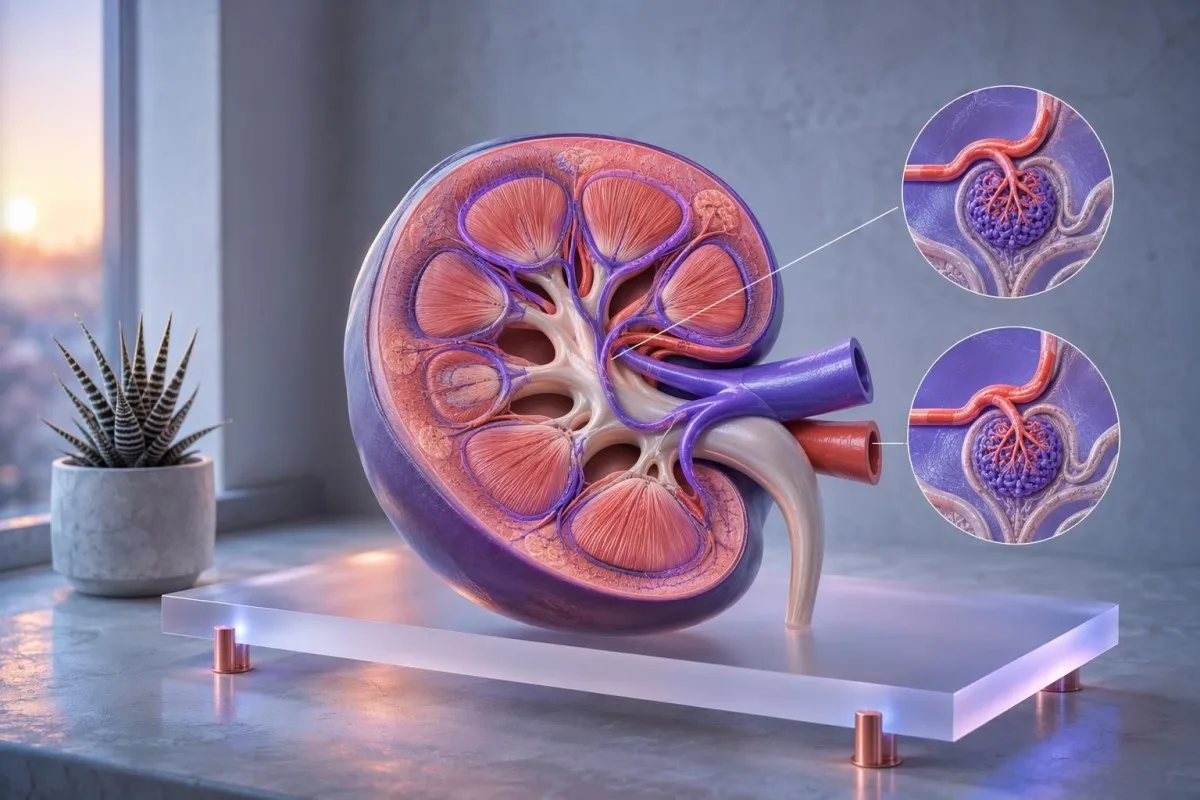
An eGFR fall of roughly 3-5 mL/min/1.73 m², or up to 10-15%, shortly after starting an SGLT2 inhibitor is often an expected haemodynamic effect rather than kidney injury. A drop above 30%, continued decline, dehydration symptoms, or abnormal potassium changes deserves prompt clinical review.


- eGFR meaning: eGFR estimates how much blood the kidneys filter each minute, reported in mL/min/1.73 m².
- Expected eGFR dip: a 3-5 mL/min/1.73 m² decline or 10-15% fall in the first 2-4 weeks is common after SGLT2 treatment begins.
- 30% threshold: an eGFR fall exceeding 30% from the pre-treatment value should trigger a review of hydration, illness, medicines, blood pressure, and obstruction risk.
- Creatinine change: because eGFR is calculated from creatinine, a small creatinine rise can produce a larger-looking eGFR fall when baseline kidney function is reduced.
- Long-term protection: after the initial dip, SGLT2 inhibitors usually slow the chronic eGFR decline in diabetes, chronic kidney disease, and heart failure.
- Sick-day caution: vomiting, diarrhoea, fever, fasting, or poor fluid intake can turn a modest expected dip into acute kidney stress.
- Urgent symptoms: fainting, very low urine output, confusion, persistent vomiting, or rapid breathlessness need same-day medical assessment.
- Do not stop alone: a laboratory result should prompt a prescriber conversation; abrupt self-discontinuation may remove heart and kidney protection.
What does eGFR mean on a kidney blood test?
eGFR means estimated glomerular filtration rate: it estimates the volume of plasma filtered by the kidneys each minute, standardized to 1.73 m² of body surface area. An eGFR of 60 mL/min/1.73 m² is not automatically kidney failure; its meaning depends on age, urine albumin, trend, and the clinical setting.
Most laboratories calculate eGFR from serum creatinine using the 2021 CKD-EPI equation, which does not use race. Creatinine is influenced by muscle mass, recent intense exercise, cooked-meat intake, creatine supplements, and hydration, so eGFR is an estimate rather than a direct measurement.
An eGFR of 90 or above is generally considered normal if urine albumin is not elevated and there are no structural kidney abnormalities. An eGFR persistently below 60 for at least 3 months meets the filtration criterion for chronic kidney disease; our plain-English eGFR guide explains the related report terms.
Kantesti is an AI blood test analyzer that compares creatinine, eGFR, urea, potassium, bicarbonate, and prior values rather than treating one flagged result as a diagnosis. In my clinical practice, I have seen an eGFR of 58 remain stable for years in an older adult, while a fall from 95 to 68 over several weeks deserved far more attention.
A single eGFR result has ordinary biological and laboratory variation of roughly 5-10%. Dr. Thomas Klein advises patients to record the laboratory, collection date, new medicines, fluid intake, and any intercurrent illness before interpreting a small change.
How large is the expected eGFR dip after an SGLT2 inhibitor?
The expected eGFR dip after an SGLT2 inhibitor is usually modest, early, and non-progressive. Many patients lose about 3-5 mL/min/1.73 m², or 10-15% of baseline eGFR, within the first 2-4 weeks and then level off.
SGLT2 inhibitors include dapagliflozin 10 mg, empagliflozin 10 mg, canagliflozin, and ertugliflozin. The early laboratory change is usually more visible in people whose starting eGFR is above 60, simply because there is more filtration to change.
The 2024 KDIGO chronic kidney disease guideline states that a reversible eGFR decrease after starting an SGLT2 inhibitor is generally not a reason to stop treatment. KDIGO recommends SGLT2 therapy for many adults with CKD and eGFR of 20 mL/min/1.73 m² or higher, particularly when albuminuria or heart failure is present (KDIGO, 2024).
The shape of the result matters more than the first number. An eGFR of 74 before treatment, 68 at 2 weeks, and 70 at 8 weeks fits the expected pattern; 74, 62, then 51 does not and needs a clinician to look for another driver.
Patients often assume lower eGFR means the drug is harming the kidneys. Paradoxically, the initial reduction in filtration pressure is one proposed mechanism by which these medicines preserve kidney function over years; see our overview of chronic kidney disease stages for the longer-term context.
Why does an SGLT2 drug lower eGFR at first?
SGLT2 drugs lower eGFR initially by reducing excessive pressure inside the kidney filter, not by directly damaging nephrons. They increase sodium delivery to the macula densa, which signals the afferent arteriole to narrow slightly and reduces intraglomerular pressure.
In diabetes, high filtered glucose and sodium reabsorption can make the kidney misread the amount of fluid reaching the distal tubule. The result is maladaptive hyperfiltration: eGFR may look reassuringly high, yet pressure within glomeruli is excessive and can accelerate albumin leakage.
Dapagliflozin reduced the risk of sustained eGFR decline of at least 50%, end-stage kidney disease, or kidney/cardiovascular death in the DAPA-CKD trial; the median follow-up was 2.4 years (Heerspink et al., 2020). The short-term eGFR dip and long-term flatter eGFR slope are therefore not contradictory findings.
The effect resembles the early filtration adjustment that can occur after an ACE inhibitor or ARB is started, though the mechanisms are not identical. If you use either medicine, understanding urine ACR testing is useful because albuminuria often tells us more about kidney injury than eGFR alone.
A lower eGFR after starting treatment is not proof that the drug is working, either. In my experience, a person can receive substantial cardiac and kidney benefit without a noticeable early dip, so clinicians should never chase a decline as a treatment target.
When does an early eGFR drop become reassuring rather than concerning?
An early eGFR dip is most reassuring when it starts within days to 4 weeks, stays below about 30%, and stabilizes by 4-12 weeks. The creatinine should plateau rather than rise at each repeat test.
A useful clinical pattern is baseline creatinine 1.00 mg/dL, then 1.08 mg/dL at 2 weeks, followed by 1.05 mg/dL at 8 weeks. The equivalent eGFR may shift from 82 to 75 and then 77 mL/min/1.73 m², which can look alarming on a portal but is usually compatible with expected haemodynamics.
Kantesti is an AI blood test interpretation platform that places a new kidney result beside the prior baseline and the date a medicine was introduced. Our creatinine-after-exercise guide is especially relevant when a hard workout, dehydration, or creatine use may distort the comparison.
Empagliflozin lowered chronic eGFR decline from -2.75 to -0.55 mL/min/1.73 m² per year after the initial dip in EMPA-KIDNEY analyses. That long-term slope is clinically meaningful because a difference of 2 mL/min/1.73 m² per year compounds over several years (EMPA-KIDNEY Collaborative Group, 2022).
Some clinicians repeat creatinine, eGFR, potassium, and blood pressure within 1-2 weeks for frail patients, those using high-dose diuretics, or people with eGFR below 45. For younger, stable patients, routine early testing may be less urgent; the prescribing plan should be individualized.
Which eGFR drops after SGLT2 treatment need prompt review?
An eGFR fall greater than 30% from baseline, a rising creatinine on repeat testing, or symptoms of volume depletion warrants prompt clinical review. This threshold is a trigger to investigate, not an automatic instruction to permanently stop the medicine.
For a baseline eGFR of 60, a fall to 42 mL/min/1.73 m² is a 30% decline and should be assessed soon. The clinician will usually check blood pressure, recent diarrhoea or vomiting, anti-inflammatory drug use, diuretic dose, urinalysis, urinary retention symptoms, and sometimes repeat testing within 24-72 hours.
A ratio can help separate reduced kidney perfusion from other patterns: a raised urea-to-creatinine or BUN-to-creatinine ratio may support dehydration, although it is not diagnostic on its own. Our detailed BUN and creatinine ratio guide explains why a high-protein meal, gastrointestinal fluid loss, and steroid treatment can also affect it.
The combination that concerns me most is a large eGFR decline plus low blood pressure, dizziness on standing, weight loss of more than 1 kg in a day, or markedly reduced urine output. A dip in eGFR without these features is often benign; the same dip with them may represent acute kidney injury.
Do not interpret a percentage without confirming the true baseline. A creatinine result obtained after a marathon, heat exposure, or a fasting day is a poor starting point, and a repeat sample under ordinary conditions may change the decision entirely.
Which medicines can make an SGLT2 kidney function change larger?
Diuretics, ACE inhibitors, ARBs, NSAIDs, and several blood-pressure medicines can amplify an early SGLT2 kidney function change when fluid intake or blood pressure is low. The risky combination is usually cumulative volume or perfusion stress, not one drug in isolation.
Loop diuretics such as furosemide and bumetanide can increase urine volume, while SGLT2 drugs add modest osmotic diuresis. A clinician may reduce a diuretic dose if a patient becomes light-headed or loses fluid rapidly, but patients should not make that change independently when heart failure is present.
ACE inhibitors and ARBs remain cornerstone kidney-protective treatment for albuminuric CKD, even though they too can cause an early creatinine rise. The concern is the so-called triple-whammy setting: an ACE inhibitor or ARB, a diuretic, and an NSAID such as ibuprofen during dehydration.
Potassium deserves separate attention. SGLT2 inhibitors do not usually raise potassium and may lower hyperkalaemia risk in some CKD populations, but ACE inhibitors, ARBs, mineralocorticoid antagonists, and declining filtration can still produce potassium above 5.5 mmol/L; review potassium after blood-pressure medicine changes for timing details.
Bring an up-to-date medicine list to the blood-test review, including occasional painkillers, herbal products, and over-the-counter magnesium laxatives. The medicine you take only twice a week can be the missing clue.
How do dehydration and illness change the interpretation?
Vomiting, diarrhoea, fever, poor fluid intake, heat exposure, or prolonged fasting can convert an expected eGFR dip into clinically significant kidney stress. During an acute illness, the practical issue is circulating volume and ketone risk, not simply the eGFR number.
Dark urine, dry mouth, thirst, dizziness when standing, and a resting pulse that is unusually fast can suggest volume depletion, although none is perfectly specific. Urine specific gravity above 1.030 or high urine osmolality can support concentrated urine, but should be interpreted with glucose in the urine from SGLT2 treatment in mind.
Many diabetes and kidney teams advise temporarily withholding an SGLT2 inhibitor during significant vomiting, diarrhoea, inability to maintain fluids, major surgery, or prolonged fasting, then restarting when eating and drinking normally. The exact sick-day plan should come from your prescriber because heart failure, insulin use, and frailty change the balance.
A 72-year-old patient I reviewed had an eGFR fall from 48 to 34 after three days of gastroenteritis while taking dapagliflozin, furosemide, and ibuprofen. The decisive clinical detail was not the SGLT2 medicine alone but the combination of fluid loss and an NSAID; our urine osmolality explainer covers the supportive laboratory clues.
Plain water may not be sufficient for every illness, especially when diarrhoea is substantial or heart failure limits fluid intake. That is why a personalized plan beats a generic instruction to drink as much as possible.
Which urine findings make an eGFR decline more concerning?
New blood, increasing albumin, cellular casts, or marked protein in urine can indicate kidney disease beyond the expected SGLT2 effect. SGLT2 inhibitors often reduce albuminuria over weeks to months, so rising urinary abnormalities deserve explanation.
A urine albumin-creatinine ratio, or ACR, of 30 mg/g or more (about 3 mg/mmol) is moderately increased albuminuria, while 300 mg/g or more is severely increased. One high ACR should be repeated because vigorous exercise, fever, menstruation, urinary infection, and marked hyperglycaemia can temporarily raise it.
Granular casts, red-cell casts, or persistent haematuria are not features we would attribute to a routine haemodynamic dip. They can point toward tubular injury, glomerular disease, or another process and should prompt clinician-led urinalysis; our guide to granular casts in urine explains why microscopy matters.
Foamy urine is an unreliable measure of protein loss because concentrated urine and cleaning products can create bubbles. A quantified ACR is more useful than visual inspection, and a clean-catch specimen reduces contamination.
Urinary obstruction is another under-recognized cause of acute eGFR decline, particularly in people with new difficulty passing urine, pelvic pressure, flank discomfort, or known prostate enlargement. An ultrasound may be more informative than repeating creatinine several times.
Could a laboratory variation explain the eGFR change?
Yes: an isolated eGFR change of 5-10% can reflect normal variation in creatinine, hydration, or sample conditions rather than a medication effect. A meaningful trend requires comparable samples and at least one repeat value when the result conflicts with how the patient feels.
Creatinine can rise after a large cooked-meat meal because dietary creatinine is absorbed, and it may rise after heavy resistance training because muscle breakdown increases production. For planned monitoring, avoid unusually intense exercise for 24-48 hours and keep hydration and meal patterns ordinary unless your clinician gives different instructions.
Kantesti is an AI biomarker interpretation platform that uses date-stamped serial results to distinguish one-off movement from a persistent slope. Our side-by-side lab comparison guide shows why a value should be compared with the same laboratory method whenever possible.
Cystatin C can be helpful when creatinine is likely misleading because of very low muscle mass, amputation, body-building, or rapidly changing diet. It is not perfect: thyroid dysfunction, high-dose glucocorticoids, smoking, and systemic inflammation can influence cystatin C.
A lab flag does not know whether you had a 12-hour flight, a sauna session, or a fasting glucose test that morning. Those mundane details often explain the apparent discrepancy better than a rare kidney diagnosis.
Why can nausea with an SGLT2 drug be more urgent than the eGFR result?
Nausea, vomiting, abdominal pain, deep breathing, or unusual fatigue while taking an SGLT2 inhibitor can signal euglycaemic diabetic ketoacidosis, even when glucose is below 250 mg/dL. This is uncommon but requires urgent assessment because kidney results may worsen secondarily through dehydration and acidosis.
SGLT2 inhibitors increase urinary glucose excretion and can lower glucose enough to mask the usual marked hyperglycaemia of ketoacidosis. Blood beta-hydroxybutyrate of 1.5 mmol/L or higher when unwell merits urgent diabetes-team advice, while 3.0 mmol/L or higher is commonly treated as an emergency threshold.
Risk rises with missed insulin, very-low-carbohydrate dieting, dehydration, heavy alcohol intake, surgery, acute illness, and prolonged fasting. This is why a strict carbohydrate-restricted diet and an SGLT2 inhibitor deserve a specific discussion; our keto diet laboratory guide covers the wider monitoring picture.
An eGFR decline during ketoacidosis is not an expected therapeutic dip. Acidosis, fluid loss, and reduced effective circulation can all lower filtration, and treatment should focus on urgent clinical assessment rather than interpreting the kidney number in isolation.
Urine ketone strips can be useful, but they may lag behind blood beta-hydroxybutyrate and should not overrule severe symptoms. If you are breathless, confused, or unable to keep fluids down, seek emergency care.
Which electrolytes and vital signs should be reviewed with eGFR?
Potassium, bicarbonate, sodium, urea, blood pressure, and body weight give an eGFR drop clinical context. A fall in eGFR with bicarbonate below 18 mmol/L, potassium above 6.0 mmol/L, or symptomatic hypotension is not a watch-and-wait result.
Bicarbonate, often displayed as total CO2, normally sits around 22-29 mmol/L in many adult laboratories. Low bicarbonate can occur in ketoacidosis, diarrhoea, advanced CKD, or certain medications, and it changes the urgency of a creatinine rise.
A home blood pressure lower than 90/60 mmHg with faintness, or a new postural fall of 20 mmHg systolic, supports reduced perfusion rather than a harmless laboratory shift. Conversely, fluid overload and rising blood pressure can worsen kidney function in heart failure even when a patient is not dehydrated.
Low sodium is not a typical direct SGLT2 effect, but sodium below 125 mmol/L can cause confusion, seizure risk, or falls and needs urgent evaluation. Our guide to low sodium symptoms explains why the speed of change matters as much as the number.
Body weight is surprisingly useful: a rapid loss may point to fluid depletion, while a gain of 2 kg over 2-3 days with breathlessness may point to congestion. Record it at the same time each morning if your heart-failure team has advised this.
What monitoring plan is sensible after starting an SGLT2 inhibitor?
A sensible monitoring plan starts with a baseline kidney panel and then targets early repeat testing to people at higher risk of volume depletion or acute kidney injury. Baseline creatinine, eGFR, potassium, bicarbonate, blood pressure, medication list, and urine ACR provide a much better reference than eGFR alone.
Patients with eGFR below 45 mL/min/1.73 m², age over 75, recent hospital admission, high-dose diuretic use, low baseline blood pressure, or prior acute kidney injury often benefit from a repeat panel at about 1-2 weeks. In lower-risk patients, the next planned diabetes, CKD, or heart-failure review may be appropriate unless symptoms arise.
Kantesti AI can organize a laboratory timeline, but it cannot determine whether you are clinically dehydrated, obstructed, or in ketoacidosis. Dr. Thomas Klein recommends bringing a concise result summary and a list of dates, symptoms, and medicine changes to the prescriber; our lab trend analysis guide helps patients prepare that record.
The most useful repeat panel is obtained when you are back to normal eating, drinking, and activity. If a result is unexpectedly low, repeat testing should be directed by a clinician rather than delayed for months on the assumption that every dip is expected.
Keep the original pre-treatment result. Without a true baseline, a value of 46 mL/min/1.73 m² could represent stable CKD, recovery from a prior acute illness, or a new clinically significant fall.
Who needs extra caution with an eGFR drop after SGLT2 treatment?
Older adults, people with advanced CKD, heart failure using strong diuretics, recurrent urinary obstruction, insulin-treated diabetes, and recent acute illness need closer individualized review. SGLT2 treatment is often still beneficial in these groups, but the margin for dehydration or medication interaction is smaller.
For people with heart failure, a small eGFR decrease can occur alongside improved congestion and better long-term outcomes. The clinician must separate true volume depletion from excess fluid, which is why breathlessness, ankle swelling, jugular pressure, weight, and diuretic response all matter.
Kidney-transplant recipients, people with type 1 diabetes, and pregnant patients require specialist-specific decisions because evidence, licensing, and safety considerations differ. SGLT2 inhibitors are generally not used for routine glycaemic management in type 1 diabetes because ketoacidosis risk is substantially higher.
A creatinine rise in a person with a solitary kidney or known renal artery stenosis deserves lower threshold review, although these diagnoses should not be presumed from an eGFR value alone. Imaging, blood pressure history, and urine findings guide the work-up.
For a careful checklist before a new prescription, read our blood tests before new medicines guide. It helps distinguish monitoring that is genuinely useful from indiscriminate testing.
What should you ask a clinician about an eGFR drop?
Ask whether the size and timing of your eGFR change fit an expected haemodynamic dip, whether you are volume depleted, and when to repeat the kidney panel. The best answer includes your exact baseline, percentage change, symptoms, blood pressure, urine findings, and the purpose of the SGLT2 prescription.
Useful questions include: “What was my baseline eGFR?”, “What percentage has it changed?”, “Should my diuretic or NSAID use be reviewed?”, and “What symptoms mean I should call today?” A clinician should also tell you whether to hold the medicine during a specific illness, procedure, or fasting period.
As of July 24, 2026, Kantesti AI supports structured result interpretation and trend recognition, while medication continuation remains a decision for the treating clinician. Our medical validation and clinical oversight describes the boundaries between automated interpretation, quality checks, and medical care.
The reassuring answer is often specific: “Your eGFR fell 9% at 2 weeks, your blood pressure is stable, potassium is 4.6 mmol/L, and we will repeat it in 4 weeks.” Vague reassurance without a plan is less useful when you have CKD or take several medicines.
Kantesti's clinical content is reviewed with physician input; readers who want to understand that governance can meet our Medical Advisory Board. If you have severe weakness, collapse, confusion, inability to drink, chest pain, or very low urine output, do not wait for an online interpretation.
Frequently Asked Questions
Is it normal for eGFR to drop after starting an SGLT2 inhibitor?
Yes, a modest early eGFR decline is common after starting an SGLT2 inhibitor because the medicine lowers pressure inside kidney filters. A typical expected eGFR dip is about 3-5 mL/min/1.73 m², or 10-15% of baseline, in the first 2-4 weeks. The result should usually stabilize by 4-12 weeks rather than continue falling. An eGFR decline above 30%, or any decline with dizziness, vomiting, low urine output, or low blood pressure, needs prompt clinician review.
How much eGFR drop is too much on an SGLT2 drug?
An eGFR fall greater than 30% from the pre-treatment baseline is a widely used threshold for prompt clinical assessment after an SGLT2 inhibitor is started. For example, a fall from 60 to below 42 mL/min/1.73 m² exceeds 30%. The clinician should assess dehydration, diuretics, NSAID exposure, blood pressure, urinary obstruction, acute illness, potassium, and bicarbonate before deciding whether to hold or continue treatment. A 30% fall is an investigation threshold, not an instruction to stop the drug without medical advice.
Should I stop my SGLT2 inhibitor if creatinine rises?
Do not stop an SGLT2 inhibitor solely because creatinine rises slightly unless your prescriber has given you a sick-day or monitoring instruction. A small creatinine increase commonly corresponds to the expected 3-5 mL/min/1.73 m² early eGFR dip and may settle within several weeks. Contact a clinician promptly if creatinine keeps rising, eGFR falls more than 30%, or you have dehydration, fainting, vomiting, severe illness, or reduced urine output. Temporary withholding is often advised during significant vomiting, diarrhoea, prolonged fasting, or surgery, but the restart plan should be individualized.
When should eGFR be rechecked after starting dapagliflozin or empagliflozin?
Higher-risk patients often have creatinine, eGFR, potassium, and bicarbonate rechecked about 1-2 weeks after starting dapagliflozin or empagliflozin. Higher risk includes eGFR below 45 mL/min/1.73 m², age over 75, strong diuretic use, low blood pressure, recent acute kidney injury, or frailty. Stable lower-risk patients may follow their existing diabetes, heart-failure, or CKD monitoring schedule if they have no symptoms. The most interpretable repeat sample is taken when normal food, fluid intake, and activity have resumed.
Can dehydration make an SGLT2 eGFR dip dangerous?
Yes, dehydration can make an expected SGLT2-related eGFR dip clinically significant because it further reduces kidney perfusion. Vomiting, diarrhoea, fever, heat exposure, poor fluid intake, NSAID use, and diuretics are common contributors. Symptoms such as dizziness on standing, fainting, a home blood pressure below 90/60 mmHg, markedly reduced urine, or inability to keep fluids down need same-day clinical advice. During substantial acute illness, many clinicians advise temporarily holding the SGLT2 inhibitor until normal eating and drinking return.
Does a lower eGFR mean the SGLT2 drug is damaging my kidneys?
A modest early eGFR reduction does not usually mean that an SGLT2 drug is damaging the kidneys; it often reflects reduced pressure within glomeruli. In DAPA-CKD and EMPA-KIDNEY, SGLT2 treatment produced an early filtration adjustment but slowed longer-term kidney function loss. A decline that exceeds 30%, continues on repeat testing, or occurs with blood in urine, rising albuminuria, dehydration, acidosis, or obstruction symptoms needs investigation for another cause. Long-term benefit and short-term safety should both be assessed from the full clinical pattern.
Can the early eGFR dip happen again if I restart an SGLT2 inhibitor after a temporary pause?
It can recur mildly after restarting because the medicine again changes pressure within the kidney filters. Your clinician may check kidney function after restart if you have chronic kidney disease, take diuretics, or recently had dehydration or an acute illness.
Get AI-Powered Blood Test Analysis Today
Join over 2 million users worldwide who trust Kantesti for instant, accurate lab test analysis. Upload your blood test results and receive comprehensive interpretation of 15,000+ biomarkers in seconds.
📚 Referenced Research Publications
Klein, T., Mitchell, S., & Weber, H. (2026). aPTT Normal Range: D-Dimer, Protein C Blood Clotting Guide. Kantesti AI Medical Research.
Klein, T., Mitchell, S., & Weber, H. (2026). Serum Proteins Guide: Globulins, Albumin & A/G Ratio Blood Test. Kantesti AI Medical Research.
📖 External Medical References
KDIGO CKD Work Group (2024). KDIGO 2024 Clinical Practice Guideline for the Evaluation and Management of Chronic Kidney Disease. Kidney International.
⚕️ Medical Disclaimer
This article is for educational purposes only and does not constitute medical advice. Always consult a qualified healthcare provider for diagnosis and treatment decisions.
E-E-A-T Trust Signals
Experience
Physician-led clinical review of lab interpretation workflows.
Expertise
Laboratory medicine focus on how biomarkers behave in clinical context.
Authoritativeness
Written by Dr. Thomas Klein with review by Dr. Sarah Mitchell and Prof. Dr. Hans Weber.
Trustworthiness
Evidence-based interpretation with clear follow-up pathways to reduce alarm.