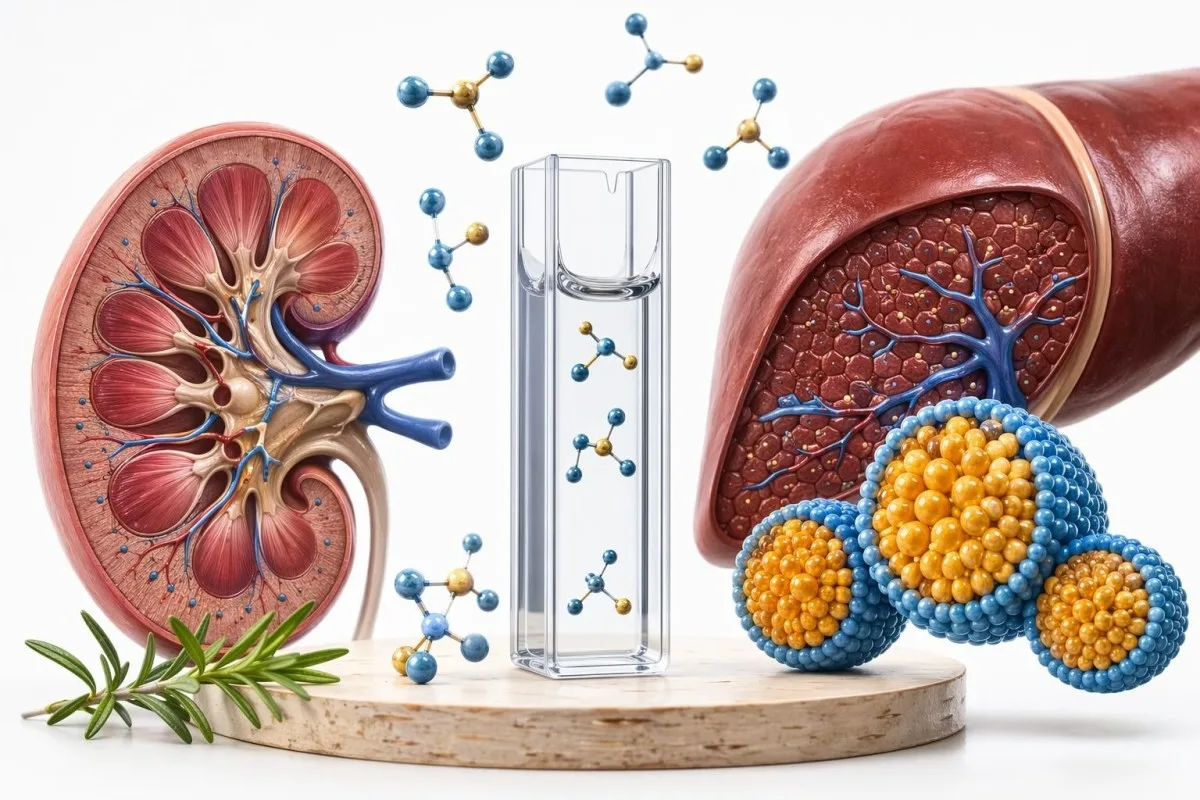
Keto can make some labs look better, some look temporarily odd, and a few look genuinely unsafe. The pattern matters more than any single flagged result.


- Beta-hydroxybutyrate of 0.5-3.0 mmol/L usually fits nutritional ketosis; above 3.0 mmol/L with high glucose or low bicarbonate needs urgent review.
- LDL-C and ApoB can rise on high-saturated-fat keto; ApoB above 130 mg/dL usually signals a high atherogenic particle burden.
- Triglycerides often fall within 8-12 weeks; fasting triglycerides below 150 mg/dL are generally considered normal in adults.
- BUN and creatinine may rise from dehydration, high protein intake, creatine use, or kidney stress; the pattern with eGFR and urine ACR separates these.
- Bicarbonate or CO2 below 18 mmol/L with a high anion gap is not routine keto adaptation and needs same-day medical advice.
- Urine albumin-creatinine ratio below 30 mg/g is normal; 30-300 mg/g suggests early kidney damage even when creatinine looks fine.
- ALT and AST may improve with weight loss, but AST above ALT after hard training can reflect muscle release rather than liver injury.
- Recheck timing is usually 8-12 weeks for lipids, 4-6 weeks for kidney/electrolytes in higher-risk patients, and 3 months for HbA1c.
Which blood test for keto dieters should come first?
A blood test for keto dieters should check beta-hydroxybutyrate, glucose or HbA1c, a lipid panel with ApoB if available, kidney markers, electrolytes, liver enzymes, uric acid, and urine albumin-creatinine ratio. As of May 10, 2026, I usually want a baseline before keto and a repeat at 8-12 weeks, especially if LDL-C rises or the diet is high in butter, cream, coconut oil, or fatty meats. Kantesti AI can read the full pattern, not just the red flags.
Keto blood test markers change because the body shifts from glucose-dominant fuel use toward fatty acid oxidation and ketone production. In our analysis of 2M+ blood test uploads, the most common keto-related surprise is not ketones; it is a new LDL-C or ApoB rise in a person whose triglycerides and glucose improved.
I am Thomas Klein, MD, and when I review a keto panel I first ask three boring questions: was the person fasting 8-12 hours, were they dehydrated, and did they exercise hard in the previous 48 hours? Those details can move glucose, triglycerides, AST, CK, BUN, creatinine, albumin, and hematocrit enough to change the interpretation.
A useful starting panel is close to what we recommend before and after any major diet change: CMP or BMP, lipid panel, ApoB, HbA1c, fasting insulin if insulin resistance is suspected, beta-hydroxybutyrate, uric acid, CBC, TSH, free T4 when symptomatic, and urine ACR. Our article on diet lab timelines explains why a 2-week retest often catches fluid shifts rather than true metabolic adaptation.
How should a ketones blood test read on keto?
A ketones blood test for nutritional ketosis usually shows beta-hydroxybutyrate around 0.5-3.0 mmol/L with normal pH physiology, normal or only mildly low glucose, and bicarbonate generally above 22 mmol/L. Values above 3.0 mmol/L are not automatically dangerous, but they become concerning when paired with vomiting, dehydration, glucose above 250 mg/dL, or low CO2 on a chemistry panel.
Beta-hydroxybutyrate is the main circulating ketone measured in blood, and it tracks nutritional ketosis better than urine strips once someone has adapted for several weeks. Urine acetoacetate often fades after adaptation because kidneys reabsorb and excrete ketones differently.
The danger pattern is ketones plus acidosis, not ketones alone. A bicarbonate or total CO2 below 18 mmol/L with an anion gap above about 12-16 mmol/L suggests high-anion-gap metabolic acidosis; our anion gap guide explains why that combination matters.
A 34-year-old recreational cyclist can show beta-hydroxybutyrate of 1.8 mmol/L after a 16-hour fast and look perfectly well. A 58-year-old taking an SGLT2 inhibitor with beta-hydroxybutyrate of 3.6 mmol/L, nausea, glucose of 170 mg/dL, and CO2 of 15 mmol/L is a very different patient.
What lab pattern suggests dehydration rather than keto progress?
Dehydration on keto often shows a higher BUN, higher albumin, higher hematocrit, concentrated urine, and sometimes mild sodium or chloride changes. This is common in the first 1-3 weeks because lower insulin makes the kidneys excrete more sodium and water.
BUN-creatinine ratio above 20:1 often points toward reduced circulating volume, high protein intake, or gastrointestinal fluid loss rather than intrinsic kidney failure. A BUN of 28 mg/dL with creatinine of 0.9 mg/dL after two days of low salt intake is different from creatinine rising to 1.6 mg/dL with falling eGFR.
The thing is, dehydration can make a person look metabolically worse on paper while they feel proud of weight loss. Albumin above 5.0 g/dL, hematocrit above the person’s baseline, and urine specific gravity above 1.020 all push me toward fluid contraction before I blame the diet itself.
If the panel looks dry, I ask the patient to repeat under ordinary conditions: no sauna, no long run, normal salt intake, and water allowed before the draw. Our article on dehydration false highs gives examples where creatinine, calcium, albumin, and hemoglobin normalize after rehydration.
Why can ketogenic diet cholesterol labs move in opposite directions?
Ketogenic diet cholesterol labs often show lower triglycerides and higher HDL-C, but LDL-C, non-HDL-C, and ApoB may rise in some people. The concerning pattern is LDL-C or ApoB rising substantially while the diet contains high saturated fat and the person has other risk factors such as hypertension, diabetes, smoking, CKD, or high Lp(a).
LDL-C below 100 mg/dL is often considered reasonable for lower-risk adults, but targets tighten as cardiovascular risk rises. The 2018 AHA/ACC cholesterol guideline recommends using risk enhancers and sometimes ApoB to refine decisions, especially when triglycerides are high or risk is uncertain (Grundy et al., 2019).
ApoB is useful on keto because LDL-C can rise when large cholesterol-rich particles increase, while ApoB tells us how many atherogenic particles are present. ApoB below 90 mg/dL is commonly acceptable in lower-risk adults, 90-129 mg/dL is a gray zone, and 130 mg/dL or higher usually warrants a serious dietary and cardiovascular risk conversation.
I see two different keto cholesterol stories. One patient drops triglycerides from 240 to 95 mg/dL and keeps ApoB at 82 mg/dL; another drops triglycerides from 110 to 70 mg/dL but sends LDL-C to 210 mg/dL and ApoB to 155 mg/dL after adding butter coffee every morning.
For a deeper read on particle risk, compare your lipid panel with ApoB interpretation and our guide to LDL cutoffs by risk. A 4-week saturated-fat swap to olive oil, nuts, avocado, fish, and more soluble fiber often clarifies whether the LDL rise is diet-sensitive.
Which metabolic labs often improve on keto?
Keto often improves triglycerides, fasting glucose, fasting insulin, and HbA1c when it produces weight loss and lower refined carbohydrate intake. In the Athinarayanan et al. 2019 type 2 diabetes study, a continuous care intervention using nutritional ketosis improved HbA1c, weight, triglycerides, and medication use over 2 years in many participants.
Fasting triglycerides below 150 mg/dL are considered normal in most adult lab systems, and keto responders often move from 180-300 mg/dL into the normal range within 8-12 weeks. This improvement usually reflects lower hepatic VLDL production and reduced refined carbohydrate exposure.
Fasting insulin is not standardized across all laboratories, but I pay attention when it falls from 18-25 μIU/mL toward single digits alongside waist reduction. If you are calculating insulin resistance, our HOMA-IR guide shows why fasting glucose and insulin must be drawn at the same time.
HbA1c changes slowly because red cell turnover averages about 120 days. A 3-month HbA1c is the first fair checkpoint, while a 2-week glucose change is better captured by fasting glucose, continuous glucose monitoring, or paired pre-meal and 2-hour post-meal checks.
Keto can also make fasting glucose look paradoxically higher in lean, active people through dawn hormone effects and physiologic insulin sparing. Our comparison of A1c and fasting sugar helps separate genuine diabetes risk from a single morning reading.
Which kidney clues matter most in keto blood work?
The kidney markers that matter most on keto are creatinine, eGFR, cystatin C when available, BUN, electrolytes, and urine albumin-creatinine ratio. A normal creatinine does not exclude early kidney stress because urine ACR can become abnormal before eGFR falls.
Urine albumin-creatinine ratio below 30 mg/g is normal, 30-300 mg/g suggests moderately increased albuminuria, and above 300 mg/g suggests severely increased albuminuria. KDIGO 2024 CKD guidance still relies on both eGFR category and albuminuria category because they predict risk better together (KDIGO, 2024).
Creatinine can rise for reasons that are not kidney damage: more cooked meat, creatine supplementation, larger muscle mass, or intense training. Cystatin C is less affected by muscle mass, so I often ask for it when a muscular keto patient has eGFR of 58 mL/min/1.73 m² but no albuminuria and no blood pressure issue.
High-protein keto is a different diet from well-formulated ketogenic eating. If BUN is 34 mg/dL, creatinine is 1.2 mg/dL, urine ACR is normal, and sodium is slightly high, I think hydration and protein load first; if ACR is 180 mg/g, that changes the conversation.
For kidney-specific interpretation, read our renal function panel guide and our practical article on urine ACR testing. Bring at least two results taken 2-12 weeks apart before labeling a chronic kidney pattern.
How do electrolytes and CO2 separate adaptation from danger?
Electrolytes and CO2 separate routine keto adaptation from unsafe acid-base patterns. Sodium, potassium, chloride, bicarbonate or total CO2, magnesium, calcium, and the anion gap should be reviewed together, not as isolated flags.
Serum bicarbonate or total CO2 is typically about 22-29 mmol/L in adults, though lab ranges differ. CO2 below 18 mmol/L with ketones above 3.0 mmol/L suggests a possible acidosis pattern rather than ordinary nutritional ketosis.
Potassium deserves respect because both low and high values can affect heart rhythm. Potassium below 3.5 mmol/L is low, above 5.0-5.5 mmol/L is high in many labs, and either result is more urgent if there are palpitations, weakness, kidney disease, or medication changes.
Sodium can fall when people drink large amounts of water without replacing salt, especially during the first keto week. Our electrolyte panel guide covers why sodium, chloride, and CO2 often move as a set rather than as three separate problems.
Magnesium is not always included, and serum magnesium can look normal despite low body stores. If cramps, twitching, constipation, or palpitations appear after carbohydrate restriction, checking magnesium and reviewing our potassium warning signs is more sensible than guessing with high-dose supplements.
What liver enzyme patterns can shift on keto?
Liver enzymes can improve on keto when weight and insulin resistance improve, but ALT, AST, ALP, GGT, bilirubin, and CK must be interpreted as a pattern. ALT is more liver-leaning, AST can come from muscle, and GGT helps when alcohol, bile duct stress, or fatty liver is in the differential.
ALT above about 40-55 IU/L is flagged by many laboratories, but some European labs use lower reference limits, especially for women. A falling ALT from 86 to 42 IU/L over 12 weeks with weight loss usually suggests improving fatty liver physiology, not worsening liver health.
AST can rise after exercise because skeletal muscle releases AST and CK. A 52-year-old marathon runner with AST of 89 IU/L, ALT of 34 IU/L, and CK of 1,200 IU/L after hill repeats does not look like the same patient as someone with AST, ALT, ALP, and bilirubin all rising together.
GGT is helpful when ALT is only mildly high. GGT above 60 IU/L in many adult male lab ranges, or above the local upper limit in any patient, makes me ask about alcohol, bile flow, medications, and fatty liver risk.
If liver numbers shift after keto, compare the exact pattern with our liver function test and our food-based guide to fatty liver labs. Kantesti's neural network looks at AST, ALT, ALP, bilirubin, GGT, platelets, albumin, and trend speed before producing a risk-weighted interpretation.
Why does uric acid sometimes rise early on keto?
Uric acid can rise during the first keto weeks because ketones and uric acid compete for kidney excretion. This early rise is usually temporary, but people with gout, kidney stones, CKD, or high baseline uric acid need closer monitoring.
Uric acid above 6.8 mg/dL exceeds the approximate saturation point for monosodium urate crystals, though not everyone above that level gets gout. Men often run higher than women before menopause, and lab reference ranges can hide risk by listing upper limits near 7.0-8.0 mg/dL.
The classic keto trap is a patient who loses 4 kg in 3 weeks, feels better, and then gets a first gout flare. Rapid weight loss, dehydration, higher red meat intake, and alcohol can all push uric acid in the same direction.
If uric acid rises, I do not automatically stop carbohydrate restriction. I first correct dehydration, reduce purine-heavy choices, slow the weight-loss rate, and recheck in 4-8 weeks unless symptoms or kidney stone history make it more urgent.
Our uric acid range guide explains why a single high result is less useful than the trend plus symptoms. A keto plan built around eggs, fish, tofu, olive oil, low-carb vegetables, and adequate fluids behaves differently from one built around large daily portions of processed meat.
Can keto change thyroid or hormone results?
Keto can lower free T3 or total T3 in some people, especially during calorie restriction, but TSH and free T4 decide whether this looks like thyroid disease. A lower T3 with normal TSH, normal free T4, weight loss, and no hypothyroid symptoms often reflects energy adaptation rather than primary hypothyroidism.
TSH is commonly interpreted around 0.4-4.0 mIU/L, but the best range depends on age, pregnancy status, medications, and local lab calibration. A TSH of 2.2 mIU/L with low-normal T3 after calorie restriction is a different pattern from TSH of 9.5 mIU/L with low free T4.
Carbohydrate restriction can also shift sex hormone-binding globulin, cortisol rhythm, and menstrual patterns when total energy intake falls too low. In clinic, the diet is often blamed when the real driver is a 900 kcal/day intake, poor sleep, and hard training.
The evidence here is honestly mixed. Some patients feel sharp and steady in ketosis; others develop cold intolerance, insomnia, cycle disruption, or fatigue even with clean-looking labs, so symptoms still count.
If thyroid flags appear, compare your panel with our thyroid panel guide and our article on normal TSH timing. Do not start thyroid medication based on a single low T3 without TSH, free T4, symptoms, and clinical review.
Which CBC and nutrient clues should keto dieters not miss?
CBC and nutrient markers matter on keto because a low-plant or repetitive diet can miss folate, magnesium, potassium, fiber-related iron balance, or B vitamins. CBC, ferritin, B12, folate, vitamin D, albumin, total protein, and sometimes zinc or magnesium add context when fatigue, cramps, hair shedding, or constipation appear.
MCV above about 100 fL suggests macrocytosis in many labs and can point toward B12 or folate deficiency, alcohol effect, liver disease, hypothyroidism, or medication effects. Keto itself does not cause macrocytosis, but restrictive versions of keto can expose an existing borderline nutrient problem.
Ferritin is tricky because it rises with inflammation and falls with iron depletion. A ferritin of 18 ng/mL in a menstruating adult with fatigue deserves different attention than a ferritin of 250 ng/mL with high CRP and normal iron saturation.
Albumin and total protein can look high when a person is dehydrated and low when intake, absorption, liver synthesis, or kidney loss is an issue. This is where urine ACR and liver enzymes prevent over-reading one protein result.
For nutrient-driven fatigue, pair keto labs with our vitamin deficiency marker guide and our article on anemia patterns. I have seen several keto patients fix fatigue by correcting ferritin below 30 ng/mL or B12 below 300 pg/mL, not by adding more caffeine.
When should keto dieters recheck labs after changing diet?
Most keto dieters should recheck lipids, liver enzymes, kidney markers, and electrolytes 8-12 weeks after starting or substantially changing the diet. Higher-risk patients, including those with diabetes medication, CKD, gout, very high LDL-C, or diuretic use, often need a 2-6 week safety check first.
Lipids usually need 8-12 weeks after a fat-quality change before the result is fair. If LDL-C jumps after adding saturated fat, I ask for 4 weeks of lower saturated fat and higher unsaturated fat, then a repeat lipid panel with ApoB around week 8.
Electrolytes can change within days, so symptomatic dizziness, palpitations, vomiting, or weakness should not wait 3 months. A BMP or CMP can be repeated in 1-2 weeks when sodium, potassium, CO2, BUN, or creatinine is clearly off.
HbA1c lags behind behavior because it reflects roughly 2-3 months of glycation. If someone is using keto to reverse prediabetes, I use fasting glucose sooner and HbA1c at 12 weeks, then compare against the baseline rather than the lab range alone.
Our guide to improving results before retest covers realistic timelines for lipids, glucose, liver enzymes, and kidney markers. The fasting versus non-fasting article is useful before a repeat lipid panel because triglycerides and calculated LDL can shift after meals.
Which keto lab results need prompt clinician review?
Keto lab results need prompt review when ketones are high with low CO2, LDL-C is 190 mg/dL or higher, potassium is markedly abnormal, creatinine rises quickly, urine ACR is elevated, or liver enzymes are more than 3 times the upper limit. Symptoms change the urgency more than the diet label.
LDL-C of 190 mg/dL or higher is a major cardiovascular risk threshold in the AHA/ACC framework, even if HDL-C looks excellent. If ApoB is also 130 mg/dL or higher, I do not reassure the patient based on low triglycerides alone.
Diabetes medication changes deserve special caution. SGLT2 inhibitors can cause euglycemic ketoacidosis, where glucose may be below 250 mg/dL but ketones and acidosis are dangerous; nausea, abdominal pain, rapid breathing, or confusion are not normal keto flu.
Kidney red flags include creatinine rising more than 0.3 mg/dL over a short interval, eGFR dropping below 60 mL/min/1.73 m² if persistent, or urine ACR above 30 mg/g on repeat testing. Our repeat abnormal labs guide explains when a quick repeat is safer than watchful waiting.
Dr. Thomas Klein’s practical rule is simple: if the lab pattern could be dehydration, rehydrate and repeat soon; if it could be acidosis, kidney injury, or a high-risk lipid pattern, involve a clinician now. The critical results guide lists common values that should trigger same-day action.
How Kantesti AI interprets keto blood test markers
Kantesti AI interprets keto blood test markers by combining the numeric result, units, lab reference range, age, sex, trend direction, medication clues, and pattern relationships across more than 15,000 biomarkers. A ketone result is never judged alone; our AI looks for the glucose, CO2, anion gap, kidney, and symptom context around it.
Kantesti AI flags a likely dehydration pattern differently from a kidney-damage pattern because BUN, creatinine, eGFR, albumin, hematocrit, sodium, urine concentration, and ACR point in different directions. That is the kind of multi-marker reasoning patients rarely get from a single red or green lab flag.
Our clinical standards are reviewed through medical validation and physician oversight from our medical advisory board. The Kantesti AI Engine has also been benchmarked in a pre-registered population-scale evaluation available through clinical validation research.
The system is fast, but it is not meant to replace emergency care. If CO2 is 14 mmol/L, potassium is 6.2 mmol/L, or symptoms suggest ketoacidosis, our AI lab analysis tool will push toward urgent human assessment rather than a diet tweak.
You can upload a PDF or photo through our blood test PDF upload workflow and compare keto results over time. For broader biomarker context, the biomarkers guide shows how Kantesti handles units, ranges, and trend interpretation.
A practical keto lab checklist to bring your clinician
A practical keto lab checklist should include baseline risk, current medications, diet style, symptoms, and the exact labs being repeated. The checklist is short because good keto monitoring is about selecting the right markers, not ordering every test on the menu.
Before starting keto, ask for CMP or BMP, fasting lipid panel, ApoB if available, HbA1c, fasting glucose, urine ACR, CBC, uric acid, and TSH if symptoms or thyroid history exist. If you have diabetes, CKD, pregnancy, gout, eating disorder history, or take blood pressure medication, do not treat keto as a casual experiment.
Bring a 3-day diet snapshot to the visit: approximate grams of carbohydrate, protein, saturated fat sources, alcohol, supplements, salt intake, and fasting schedule. I can interpret an LDL-C of 178 mg/dL much better when I know whether the person is eating 30 g or 90 g of saturated fat per day.
Use the checklist to avoid common mistakes. Do not compare a non-fasting lipid panel with a fasting panel without noting it, do not test after a heavy workout if AST and CK are being watched, and do not ignore a urine ACR because creatinine is normal.
Kantesti is built by Kantesti Ltd, and our story, governance, and clinical mission are described on About Us. If you want a fast first pass before your appointment, try the free blood test analysis and bring the output to your clinician.
Kantesti research publications and related reading
Kantesti research publications help readers understand how our team approaches laboratory interpretation across urine, iron, kidney, liver, and metabolic patterns. These references are not keto-specific, but they show the same principle used in keto lab review: pattern beats single-marker guessing.
Kantesti Research Group. (2026). Urobilinogen in Urine Test: Complete Urinalysis Guide 2026. Zenodo. https://doi.org/10.5281/zenodo.18226379. ResearchGate: https://www.researchgate.net/search/publication?q=Urobilinogen%20in%20Urine%20Test%20Complete%20Urinalysis%20Guide%202026. Academia.edu: https://www.academia.edu/search?q=Urobilinogen%20in%20Urine%20Test%20Complete%20Urinalysis%20Guide%202026.
Kantesti Research Group. (2026). Iron Studies Guide: TIBC, Iron Saturation & Binding Capacity. Zenodo. https://doi.org/10.5281/zenodo.18248745. ResearchGate: https://www.researchgate.net/search/publication?q=Iron%20Studies%20Guide%20TIBC%20Iron%20Saturation%20Binding%20Capacity. Academia.edu: https://www.academia.edu/search?q=Iron%20Studies%20Guide%20TIBC%20Iron%20Saturation%20Binding%20Capacity.
For patients, the practical point is not to chase a perfect ketone number. Use Kantesti AI to organize the results, then review outliers with a clinician who knows your medications, symptoms, and cardiovascular or kidney risk.
Bottom line: keto can improve glucose and triglycerides, but it can also unmask LDL particle risk, dehydration, uric acid problems, electrolyte issues, or kidney clues. Repeat the right labs at the right time, and do not let a normal ketone result distract from a concerning CO2, ApoB, ACR, potassium, or creatinine pattern.
Frequently Asked Questions
What blood tests should keto dieters get?
Keto dieters should usually check beta-hydroxybutyrate, fasting glucose or HbA1c, lipid panel, ApoB if available, CMP or BMP, electrolytes, liver enzymes, BUN, creatinine, eGFR, uric acid, CBC, and urine albumin-creatinine ratio. A baseline before keto is useful, then most people recheck the main panel at 8-12 weeks. Higher-risk patients with diabetes medication, CKD, gout, or very high LDL-C may need a 2-6 week safety check.
What ketone level is normal on a ketogenic diet?
Blood beta-hydroxybutyrate of 0.5-3.0 mmol/L usually fits nutritional ketosis. A level above 3.0 mmol/L is not automatically dangerous, but it becomes concerning with vomiting, dehydration, glucose above 250 mg/dL, bicarbonate or CO2 below 18 mmol/L, or a high anion gap. People taking SGLT2 inhibitors can develop ketoacidosis even when glucose is not extremely high.
Why did my LDL cholesterol go up on keto?
LDL cholesterol can rise on keto when saturated fat intake increases, weight loss mobilizes fat, thyroid or calorie restriction effects appear, or a person is genetically prone to higher LDL particle production. The more useful follow-up markers are ApoB, non-HDL-C, triglycerides, Lp(a), blood pressure, HbA1c, and family history. LDL-C of 190 mg/dL or higher, or ApoB of 130 mg/dL or higher, deserves clinician review rather than reassurance based on high HDL-C.
Can keto make kidney blood tests look worse?
Keto can make kidney markers look worse through dehydration, high protein intake, creatine supplements, intense exercise, or true kidney stress. BUN may rise first, while creatinine and eGFR need interpretation with muscle mass and hydration context. Urine albumin-creatinine ratio below 30 mg/g is normal, while 30-300 mg/g suggests early kidney or vascular risk even if creatinine is still normal.
When should I recheck labs after starting keto?
Most people should recheck lipids, ApoB, liver enzymes, kidney markers, electrolytes, glucose, and uric acid about 8-12 weeks after starting keto. Electrolytes, CO2, BUN, creatinine, and potassium should be checked sooner, often within 1-2 weeks, if there are symptoms such as palpitations, weakness, vomiting, dizziness, or medication risk. HbA1c is best judged after about 3 months because it reflects longer-term glucose exposure.
Is high BUN on keto always kidney disease?
High BUN on keto is not always kidney disease because dehydration and higher protein intake commonly raise BUN. A BUN-creatinine ratio above 20:1 often suggests reduced circulating volume or protein load, especially when creatinine and urine ACR are normal. Persistent creatinine rise, eGFR below 60 mL/min/1.73 m², or urine ACR above 30 mg/g needs a more careful kidney review.
Can liver enzymes rise on keto?
Liver enzymes can rise or fall on keto depending on weight loss speed, fatty liver improvement, alcohol intake, medications, gallbladder or bile duct stress, and recent exercise. ALT is more liver-leaning, while AST can rise from muscle and should be checked with CK if the person trained hard in the previous 48 hours. ALT or AST more than 3 times the lab upper limit, or any rise with bilirubin or ALP elevation, should be reviewed promptly.
Can alcohol the night before affect my keto blood test results?
Yes. Alcohol can contribute to dehydration and may alter triglycerides, glucose, ketones, and liver enzymes; avoid it for at least 24 hours before a routine fasting test and mention recent drinking to your clinician.
Can coffee, MCT oil, or exogenous ketones before a fasting blood test affect my keto labs?
Black coffee is usually acceptable if your clinician allows it, but MCT oil, cream, butter coffee, and exogenous ketones break the fast. They can change triglycerides, glucose, insulin, and ketone readings, so avoid them during an 8-12 hour fasting window.
Get AI-Powered Blood Test Analysis Today
Join over 2 million users worldwide who trust Kantesti for instant, accurate lab test analysis. Upload your blood test results and receive comprehensive interpretation of 15,000+ biomarkers in seconds.
📚 Referenced Research Publications
Klein, T., Mitchell, S., & Weber, H. (2026). Urobilinogen in Urine Test: Complete Urinalysis Guide 2026. Kantesti AI Medical Research.
Klein, T., Mitchell, S., & Weber, H. (2026). Iron Studies Guide: TIBC, Iron Saturation & Binding Capacity. Kantesti AI Medical Research.
📖 External Medical References
KDIGO CKD Work Group (2024). KDIGO 2024 Clinical Practice Guideline for the Evaluation and Management of Chronic Kidney Disease. Kidney International.
⚕️ Medical Disclaimer
This article is for educational purposes only and does not constitute medical advice. Always consult a qualified healthcare provider for diagnosis and treatment decisions.
E-E-A-T Trust Signals
Experience
Physician-led clinical review of lab interpretation workflows.
Expertise
Laboratory medicine focus on how biomarkers behave in clinical context.
Authoritativeness
Written by Dr. Thomas Klein with review by Dr. Sarah Mitchell and Prof. Dr. Hans Weber.
Trustworthiness
Evidence-based interpretation with clear follow-up pathways to reduce alarm.