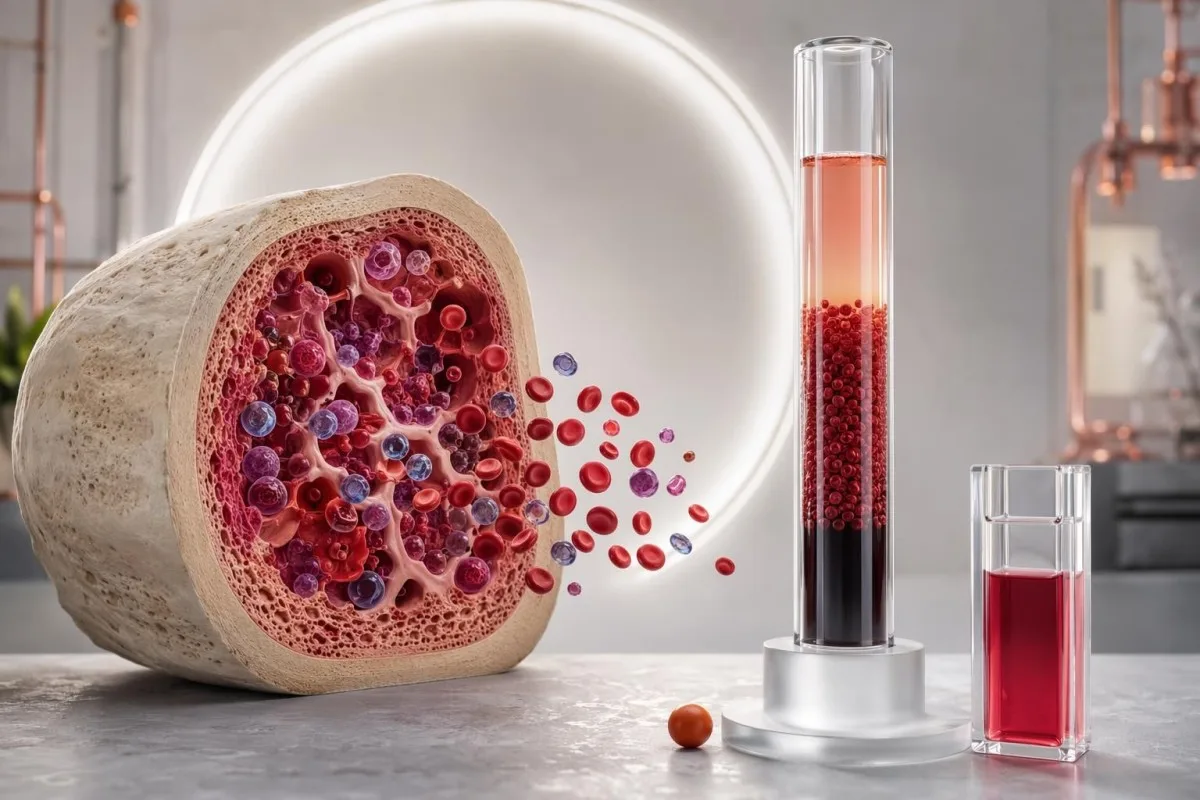
A high sed rate with anemia is not one diagnosis. The useful question is whether the pattern points toward infection, autoimmune inflammation, kidney disease, iron loss, or a slower chronic process.


- High ESR and low hemoglobin usually means inflammation plus anemia, but anemia itself can raise ESR by changing how red cells settle.
- ESR normal range is often 0-15 mm/h for men under 50, 0-20 mm/h for women under 50, and up to 30 mm/h in older women, depending on the lab.
- Low hemoglobin is commonly below 13.5 g/dL in adult men, below 12.0 g/dL in nonpregnant adult women, and below 11.0 g/dL in many pregnancy settings.
- ESR above 100 mm/h is a serious signal in most adults and commonly reflects infection, autoimmune disease, kidney disease, or cancer-related inflammation.
- CRP above 10 mg/L supports active inflammation more strongly than ESR alone because CRP changes within hours rather than weeks.
- Ferritin below 30 ng/mL strongly supports iron deficiency in many adults, but ferritin can look normal or high during inflammation.
- Transferrin saturation below 20% helps identify restricted iron delivery, especially when ferritin is confusing because ESR or CRP is high.
- Kidney clues include eGFR below 60 mL/min/1.73 m² for at least 3 months, urine ACR above 30 mg/g, and a low reticulocyte response.
- Urgent symptoms include chest pain, fainting, black stools, fever with confusion, hemoglobin below 7-8 g/dL, or a rapidly falling hemoglobin.
- Best follow-up panel usually includes CBC with indices, reticulocyte count, ferritin, iron/TIBC/TSAT, CRP, creatinine/eGFR, urine ACR, B12, folate, and targeted autoimmune or infection tests.
What a high ESR and low hemoglobin usually mean
If you are asking what does high ESR mean when hemoglobin is low, the short answer is: your body may be inflamed while also struggling to make, keep, or use red cells normally. This pattern is not automatically cancer or a dangerous infection. In our analysis of 2M+ blood tests at Kantesti AI, the commonest explanations are iron deficiency, anemia of inflammation, chronic kidney disease, autoimmune disease, or a recent infection layered on top of mild anemia.
When I review a panel showing high ESR and low hemoglobin, I first ask whether the hemoglobin is newly low or has been drifting down for months. A fall from 14.2 to 11.8 g/dL over 8 weeks means something different from a stable 11.8 g/dL for 4 years; our low hemoglobin follow-up guide explains why that trend matters.
ESR is an indirect inflammation marker, not a disease label. A high sed rate with anemia can reflect more fibrinogen and immunoglobulins in plasma, but fewer or smaller red cells can also settle faster, so the ESR may exaggerate inflammation in someone with anemia.
A 52-year-old runner I reviewed recently had ESR 48 mm/h and hemoglobin 10.9 g/dL; the answer was not a mystery infection, but heavy menstrual iron loss plus a mildly raised CRP after a respiratory illness. That sort of mixed story is common, and it is exactly why the CBC indices, ferritin, and CRP matter more than the ESR number alone.
Why anemia can push the sed rate higher
Anemia can raise ESR even without severe inflammation because fewer red cells change the physics of settling in the tube. ESR measures how fast red cellular elements fall through plasma over 1 hour, usually reported in mm/h.
The mechanism is surprisingly practical. When hemoglobin is low, the red cell column is less crowded, and red cells form stacks more easily when fibrinogen or immunoglobulins are present; that stack formation is called rouleaux.
A normal ESR does not rule out disease, and a high ESR does not prove disease. Sox and Liang’s Annals of Internal Medicine review described ESR as useful when interpreted with clinical context, but weak as a standalone screening test (Sox and Liang, 1986).
This is why I rarely act on an ESR blood test high result without checking CRP, MCV, RDW, ferritin, transferrin saturation, albumin, and kidney function. For age- and sex-adjusted cutoffs, our ESR normal range guide is a better starting point than the red flag printed beside one result.
ESR and hemoglobin ranges that change the urgency
ESR above 100 mm/h is usually treated as a major abnormality, while hemoglobin below 7-8 g/dL often needs urgent clinical assessment. Mild ESR elevation with mild anemia is usually less urgent, but the trend and symptoms decide the next step.
Adult hemoglobin is commonly considered low below 13.5 g/dL in men and below 12.0 g/dL in nonpregnant women, though some European laboratories use slightly different lower limits. Pregnancy often uses 11.0 g/dL as a practical anemia threshold, especially in the first and third trimesters.
ESR reference ranges widen with age because fibrinogen, immunoglobulins, and background inflammatory burden rise over decades. A 28-year-old man with ESR 42 mm/h deserves a different workup from an 82-year-old woman with ESR 32 mm/h and no symptoms.
Kantesti AI reads the ESR beside the CBC rather than as a lone flag. If the MCV is 72 fL, RDW is 18%, and ferritin is 8 ng/mL, our platform treats iron deficiency as the lead pattern; if MCV is 88 fL, ferritin is 280 ng/mL, CRP is 46 mg/L, and albumin is 3.1 g/dL, inflammation moves up the list.
When the pattern points toward infection
Infection becomes more likely when high ESR and low hemoglobin appear with fever, high CRP, neutrophilia, immature granulocytes, or a rising white cell count. ESR may stay high for weeks after the infection starts improving.
A CRP above 10 mg/L usually reflects active inflammation, and values above 50-100 mg/L are more compatible with bacterial infection, severe tissue response, or major inflammatory disease than with simple iron deficiency. Procalcitonin can help when clinicians are deciding whether bacterial infection is plausible, especially in hospital settings.
The CBC differential adds texture. High neutrophils, band forms, or immature granulocytes suggest a marrow stress response, while low lymphocytes can appear with acute infection, corticosteroids, or physiological stress; our infection blood test guide compares procalcitonin, CRP, and CBC patterns in more detail.
One subtle clue: hemoglobin can dip during infection without true iron loss. Inflammatory cytokines raise hepcidin within about 24 hours, trapping iron in storage sites and reducing iron delivery to marrow, which is the classic early mechanism behind anemia of inflammation.
Autoimmune causes of high sed rate with anemia
Autoimmune disease is more likely when ESR stays high for weeks to months with joint swelling, morning stiffness, rashes, mouth ulcers, abnormal urine, or recurrent fevers. The anemia is often normocytic at first, with ferritin normal or high.
Rheumatoid arthritis, polymyalgia rheumatica, giant cell arteritis, lupus, inflammatory bowel disease, and vasculitis can all produce high sed rate with anemia. In my experience, autoimmune anemia is often missed when clinicians order ferritin alone and do not check transferrin saturation, CRP, albumin, and urine protein.
Anemia of inflammation is usually normocytic, with MCV 80-100 fL, but it can become mildly microcytic over time. Weiss and Goodnough described the central pattern in NEJM: iron is present in the body, but inflammation prevents efficient iron release and marrow use (Weiss and Goodnough, 2005).
Autoimmune screening should be symptom-led, not ordered as a fishing trip. For persistent joint pain, an autoimmune panel may include ANA, rheumatoid factor, anti-CCP, complements C3/C4, urinalysis, and sometimes ESR/CRP trends rather than a single sed rate.
How kidney disease causes this lab combination
Chronic kidney disease can cause low hemoglobin because the kidneys make less erythropoietin, while ESR may rise from inflammation, protein changes, and coexisting anemia. eGFR below 60 mL/min/1.73 m² for 3 months or urine ACR above 30 mg/g changes the interpretation.
Renal anemia is often normocytic with a low or inappropriately normal reticulocyte count. The marrow is capable of working, but the hormonal signal is weak; that is different from iron deficiency, where the marrow lacks raw material.
KDIGO’s anemia guideline recommends evaluating iron status in chronic kidney disease with ferritin and transferrin saturation, not hemoglobin alone, because functional iron restriction is common in CKD (KDIGO Anemia Work Group, 2012). I usually want creatinine, eGFR, potassium, bicarbonate, calcium, phosphate, urine ACR, ferritin, TSAT, and CRP in the same review.
A normal creatinine can still hide early kidney risk in older adults, smaller people, or those with low muscle mass. Our urine ACR kidney test guide explains why albumin leakage often appears before creatinine looks alarming.
Iron deficiency vs anemia of inflammation
Iron deficiency usually shows low ferritin, high TIBC, low transferrin saturation, low MCV, and high RDW. Anemia of inflammation usually shows normal or high ferritin, low iron, low or normal TIBC, low transferrin saturation, and a raised ESR or CRP.
Ferritin below 30 ng/mL strongly supports iron deficiency in many adults. During inflammation, though, ferritin behaves like an acute-phase protein, so a ferritin of 80-150 ng/mL does not always rule out iron deficiency if CRP or ESR is clearly elevated.
Transferrin saturation below 20% means too little circulating iron is available for hemoglobin production. If ferritin is high and TSAT is low, I think about functional iron deficiency, chronic kidney disease, inflammatory bowel disease, autoimmune disease, or recent infection.
Patients often ask whether they should just take iron. I am cautious: iron can help true deficiency, but it can worsen constipation, obscure GI symptoms, and is not the right answer for every high ferritin inflammatory pattern; our iron deficiency anemia labs article shows which markers usually change first.
When to consider cancer or chronic blood loss
Cancer is not the most common cause of high ESR with low hemoglobin, but it must be considered when anemia is unexplained, progressive, or accompanied by weight loss, night sweats, abnormal lymph nodes, black stools, or very high ESR. GI blood loss is a common, fixable explanation in adults.
ESR above 100 mm/h has a higher association with serious underlying disease than mild elevations, but it still does not diagnose cancer. I have seen ESR 112 mm/h from untreated temporal arteritis and ESR 105 mm/h from deep infection; the number opens the door, it does not name the room.
Iron deficiency anemia in adult men and postmenopausal women deserves a GI source check unless another clear cause exists. A ferritin of 6 ng/mL with MCV 69 fL is a different story from ferritin 420 ng/mL with MCV 90 fL and CRP 80 mg/L.
If the CBC shows abnormal white cells, low platelets, high LDH, or persistent swollen nodes, the workup changes. Our lymphoma blood test article explains what CBC and LDH can suggest, and just as importantly, what they cannot prove.
Red flags that need same-day medical advice
High ESR with low hemoglobin needs same-day medical advice if hemoglobin is below 7-8 g/dL, symptoms are severe, or the result is changing quickly. Chest pain, fainting, confusion, black stools, fever with rigors, or new neurological symptoms are not wait-and-see findings.
A hemoglobin drop of 2 g/dL or more over days to weeks is more concerning than a mildly low stable value. Shortness of breath at rest, fast heart rate, dizziness on standing, or chest pressure means the oxygen-carrying issue may be clinically significant.
ESR is slow, so it is not the best emergency marker. CRP, lactate, white count, vital signs, kidney function, and clinical examination often matter more when infection or internal bleeding is possible.
If your online portal flags several abnormalities at once, do not try to rank them by color. Our critical blood test values guide explains which results usually need immediate action versus prompt outpatient follow-up.
Follow-up labs that separate the main causes
The most useful follow-up labs are CBC with indices, reticulocyte count, ferritin, iron, TIBC, transferrin saturation, CRP, creatinine/eGFR, urine ACR, B12, folate, albumin, and targeted tests based on symptoms. Ordering everything blindly is less useful than matching tests to the pattern.
For infection, I look for CRP trend, white count, neutrophils, immature granulocytes, cultures or imaging when clinically indicated, and sometimes procalcitonin. For autoimmune disease, symptoms decide whether ANA, ENA, anti-dsDNA, C3/C4, rheumatoid factor, anti-CCP, urinalysis, or CK belong in the first pass.
For kidney disease, creatinine alone is too blunt. eGFR, cystatin C in selected patients, urine ACR, electrolytes, bicarbonate, calcium, phosphate, PTH, and iron studies give a much better sense of whether renal anemia is plausible.
Kantesti’s neural network maps these combinations against over 15,000 biomarkers in our blood test biomarkers guide. The practical benefit is simple: it stops patients from over-focusing on ESR when the decisive clue is sometimes MCV, TSAT, albumin, or urine protein.
CBC clues doctors read before the sed rate
MCV, MCH, MCHC, RDW, platelets, white cell differential, and reticulocyte count often explain the anemia faster than ESR. A high ESR tells me there may be inflammation; the CBC tells me what the marrow is doing.
Low MCV below 80 fL points toward iron deficiency, thalassemia trait, or long-standing inflammation. High MCV above 100 fL points toward B12 deficiency, folate deficiency, alcohol effect, liver disease, hypothyroidism, some medicines, or marrow disorders.
RDW above about 15% often means red cell sizes vary more than expected, which is common in early iron deficiency or mixed deficiencies. A reticulocyte count below the expected response tells us the marrow is underproducing, while a high reticulocyte count suggests recovery, blood loss, or hemolysis.
A platelet count above 450 x 10⁹/L can accompany iron deficiency or inflammation, and that pairing is easy to overlook. Our anemia pattern guide walks through the CBC combinations I use before jumping to rare diagnoses.
Pregnancy, older age, and chronic conditions change the reading
Pregnancy, older age, obesity, chronic inflammatory disease, and recent surgery can all raise ESR or lower hemoglobin without meaning the same thing. The reference range must match the person, not just the lab’s default adult range.
During pregnancy, ESR often rises because fibrinogen and plasma volume rise, while hemoglobin falls from dilution and iron demand. A hemoglobin near 10.8-11.2 g/dL may be treated very differently in pregnancy than in a nonpregnant man with new fatigue.
In older adults, mild anemia is common but not normal enough to ignore. A hemoglobin of 11.5 g/dL in a 78-year-old can reflect CKD, B12 deficiency, occult GI loss, inflammation, or medication effects; age explains probability, not the diagnosis.
Athletes, vegans, GLP-1 users with low intake, and people after bariatric surgery each have their own blind spots. For life-stage context, our essential blood tests for women checklist and related preventive guides help decide what belongs beside ESR and CBC.
Why trends beat a single abnormal ESR
ESR changes slowly, so a single high result can lag behind the real illness by days to weeks. CRP often rises and falls faster, which makes it better for short-term infection or flare monitoring.
After a respiratory infection, CRP may improve within 3-7 days while ESR remains elevated for 2-6 weeks. That lag is one reason patients panic when they feel better but the sed rate still looks high.
Repeat timing depends on the pattern. For mild anemia and ESR 35 mm/h after a viral illness, a repeat CBC, CRP, ferritin, and ESR in 4-8 weeks is often reasonable; for hemoglobin 8.5 g/dL or ESR 95 mm/h, I would not wait that long without clinician review.
The best trend review uses the same units and, ideally, the same laboratory method. Our repeat abnormal labs article explains when a change is likely biological rather than ordinary lab variability.
How Kantesti AI reads this pattern in a real report
Kantesti AI interprets high ESR with low hemoglobin by reading the full lab pattern: CBC indices, inflammation markers, iron studies, kidney markers, liver proteins, symptoms, age, sex, pregnancy status, and previous results. As of May 12, 2026, our platform supports 75+ languages and users in 127+ countries.
I’m Thomas Klein, MD, Chief Medical Officer at Kantesti, and I still tell patients the same thing: AI should make the pattern clearer, not replace urgent care or a proper examination. Kantesti is CE marked and built under HIPAA, GDPR, and ISO 27001 controls, with medical review standards described on our clinical validation page.
When you upload a PDF or photo, our AI blood test analyzer can usually return a structured interpretation in about 60 seconds. It flags whether the pattern resembles iron deficiency, inflammatory anemia, renal anemia, mixed anemia, infection response, or a result that needs clinician review.
Kantesti’s model also checks for contradictions, such as ferritin that looks reassuring despite high CRP, or a normal creatinine that may not fit a low eGFR in a smaller older adult. You can try a sample upload through our free blood test analysis, and clinicians can review our methods in the AI benchmark.
Questions to ask before accepting a vague answer
The best question is not only what caused the high ESR, but what type of anemia is present. Ask whether the anemia is microcytic, normocytic, or macrocytic; whether iron delivery is low; whether kidney function is contributing; and whether inflammation is active today.
A useful clinician conversation includes 5 concrete questions: Has my hemoglobin changed from baseline? What are my MCV and RDW? Is ferritin low or just high from inflammation? What is my transferrin saturation? Do I have kidney, urine, or autoimmune clues?
If symptoms include headaches, jaw pain when chewing, scalp tenderness, or sudden vision changes in someone over 50, ESR and CRP can be part of a giant cell arteritis assessment, and that situation is time-sensitive. If symptoms are fatigue and restless legs with ferritin 12 ng/mL, the first conversation is usually iron replacement and why iron is low.
Our medical advisory board reviews patient-facing medical standards for Kantesti content, but your treating clinician knows your examination, medicines, and imaging. Bring the full lab report, not a screenshot of only the abnormal values.
Kantesti research publications and the practical bottom line
The practical bottom line is that high ESR with low hemoglobin is a pattern, not a final diagnosis. The safest next step is to classify the anemia, confirm whether inflammation is active, and check kidney and iron markers before assuming the worst.
Thomas Klein, MD and the Kantesti medical team built this article from clinical pattern review, current guideline logic, and our own anonymised lab interpretation work. You can read more about Kantesti as an organization on our About Us page.
Kantesti Medical AI Research Group. (2026). RDW Blood Test: Complete Guide to RDW-CV, MCV & MCHC. Zenodo. https://doi.org/10.5281/zenodo.18202598. ResearchGate: ResearchGate profile. Academia.edu: Academia.edu profile.
Kantesti Medical AI Research Group. (2026). BUN/Creatinine Ratio Explained: Kidney Function Test Guide. Zenodo. https://doi.org/10.5281/zenodo.18207872. ResearchGate: ResearchGate profile. Academia.edu: Academia.edu profile.
If you remember one thing, make it this: ESR tells you inflammation may be present, hemoglobin tells you oxygen-carrying capacity is reduced, and the cause usually sits in the follow-up pattern. Ferritin, TSAT, CRP, reticulocytes, eGFR, urine ACR, and the CBC indices do the real diagnostic work.
Frequently Asked Questions
What does high ESR mean with low hemoglobin?
High ESR with low hemoglobin usually means inflammation is present alongside anemia, but it does not identify one specific disease. Common causes include iron deficiency, anemia of inflammation, chronic kidney disease, autoimmune disease, recent infection, and chronic blood loss. ESR above 100 mm/h or hemoglobin below 7-8 g/dL usually needs urgent clinical review, especially with fever, chest pain, fainting, or black stools.
Can anemia itself cause a high ESR?
Yes, anemia can raise ESR because fewer red cells and altered plasma conditions allow cellular elements to settle faster in the test tube. This means a high sed rate with anemia can overstate the amount of inflammation, particularly when hemoglobin is clearly low. Doctors usually compare ESR with CRP, ferritin, MCV, RDW, and reticulocyte count before deciding what the result means.
What ESR level is concerning when hemoglobin is low?
An ESR above 50 mm/h with low hemoglobin deserves directed follow-up, and ESR above 100 mm/h is generally considered a major abnormality. The hemoglobin level changes urgency: values below 10 g/dL need timely evaluation, while values below 7-8 g/dL may require same-day assessment depending on symptoms. A rapid hemoglobin fall of 2 g/dL or more is often more concerning than the ESR number alone.
Which labs help tell iron deficiency from inflammation?
Ferritin, transferrin saturation, serum iron, TIBC, CRP, and CBC indices help separate iron deficiency from anemia of inflammation. Ferritin below 30 ng/mL strongly supports iron deficiency in many adults, while low serum iron with normal or high ferritin and low or normal TIBC suggests inflammation-related iron restriction. Transferrin saturation below 20% means iron delivery to marrow is low, even when ferritin is confusing.
Does high ESR and low hemoglobin mean cancer?
High ESR and low hemoglobin do not automatically mean cancer, and more common explanations include iron deficiency, inflammatory disease, infection, and kidney disease. Cancer becomes more concerning when anemia is unexplained or progressive, ESR is very high, or symptoms include weight loss, night sweats, persistent swollen lymph nodes, black stools, or abnormal white cells and platelets. Adults with new iron deficiency anemia, especially men and postmenopausal women, often need evaluation for gastrointestinal blood loss.
Should I take iron if ESR is high and hemoglobin is low?
Do not start iron solely because ESR is high and hemoglobin is low; first confirm whether iron deficiency is present. Iron is usually appropriate when ferritin is low, often below 30 ng/mL, or when transferrin saturation is low with a clinician’s guidance. If ferritin is high because of inflammation, the main issue may be blocked iron use rather than low iron stores, and treatment depends on the underlying cause.
How soon should ESR and hemoglobin be repeated?
Repeat timing depends on severity and symptoms, but mild abnormalities after a recent infection are often rechecked in 4-8 weeks. ESR may remain high for 2-6 weeks after symptoms improve, while CRP often falls faster within days. If hemoglobin is below 9-10 g/dL, dropping quickly, or accompanied by breathlessness, chest pain, fainting, fever, or black stools, repeat testing should not replace prompt medical assessment.
Should I stop iron supplements before follow-up iron studies?
Ask the ordering clinician or laboratory whether to skip the morning iron dose, because a recent tablet can temporarily raise serum iron and transferrin saturation. Do not stop prescribed iron treatment for several days or weeks unless your clinician specifically advises it.
Can a recent infection or vaccination temporarily raise ESR when hemoglobin is also low?
Yes, ESR can stay elevated for several weeks after an infection or immune trigger, even after you feel better. Low hemoglobin should still be checked separately, especially with fatigue, shortness of breath, heavy periods, dark stools, or a falling trend.
Get AI-Powered Blood Test Analysis Today
Join over 2 million users worldwide who trust Kantesti for instant, accurate lab test analysis. Upload your blood test results and receive comprehensive interpretation of 15,000+ biomarkers in seconds.
📚 Referenced Research Publications
Klein, T., Mitchell, S., & Weber, H. (2026). RDW Blood Test: Complete Guide to RDW-CV, MCV & MCHC. Kantesti AI Medical Research.
Klein, T., Mitchell, S., & Weber, H. (2026). BUN/Creatinine Ratio Explained: Kidney Function Test Guide. Kantesti AI Medical Research.
📖 External Medical References
KDIGO Anemia Work Group (2012). KDIGO Clinical Practice Guideline for Anemia in Chronic Kidney Disease. Kidney International Supplements.
⚕️ Medical Disclaimer
This article is for educational purposes only and does not constitute medical advice. Always consult a qualified healthcare provider for diagnosis and treatment decisions.
E-E-A-T Trust Signals
Experience
Physician-led clinical review of lab interpretation workflows.
Expertise
Laboratory medicine focus on how biomarkers behave in clinical context.
Authoritativeness
Written by Dr. Thomas Klein with review by Dr. Sarah Mitchell and Prof. Dr. Hans Weber.
Trustworthiness
Evidence-based interpretation with clear follow-up pathways to reduce alarm.