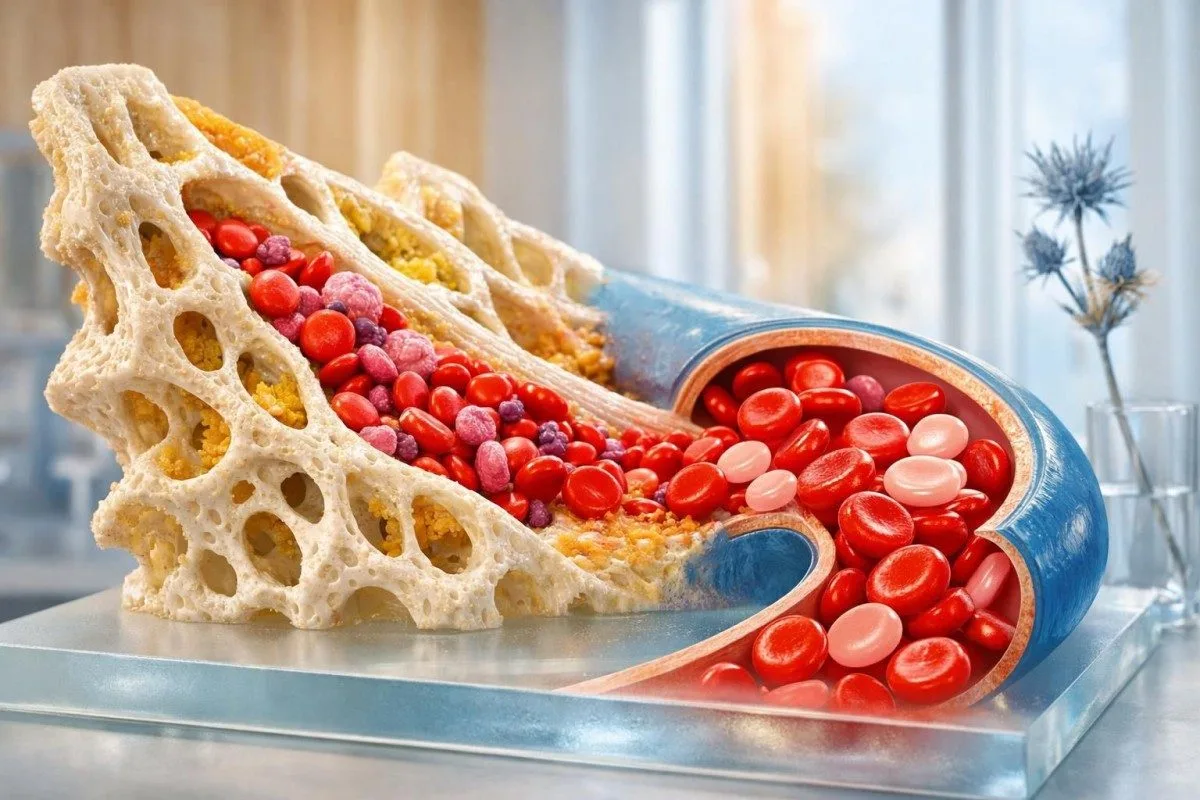
A low hemoglobin flag is not a diagnosis. The useful clues are the neighboring CBC markers, the speed of change, and whether the pattern points toward bleeding, iron loss, kidney disease, deficiency, or something rarer.


- Urgent threshold Hemoglobin below 8 g/dL usually needs prompt clinical follow-up; below 7 g/dL is often emergency territory, especially with chest pain, fainting, or shortness of breath.
- MCV clue MCV <80 fL suggests microcytic anemia, most often iron deficiency or thalassemia trait; MCV >100 fL points toward B12, folate, alcohol, liver, thyroid, or medication effects.
- RDW clue RDW above about 14.5% makes iron deficiency, B12 deficiency, folate deficiency, or mixed anemia more likely than a stable inherited trait.
- Ferritin threshold Ferritin below 30 ng/mL strongly supports iron deficiency in many adults; for GI workup, many clinicians use <45 ng/mL to improve sensitivity.
- RBC count pattern A normal or high red blood cell count with a very low MCV often suggests thalassemia trait more than classic iron deficiency.
- Kidney clue Low hemoglobin with normal MCV and low reticulocytes becomes more common once eGFR falls below 60 mL/min/1.73 m².
- Bleeding clue Black stools, heavier periods, daily NSAID use, or a sudden hemoglobin drop of 1.5-2.0 g/dL deserve a bleeding workup even if you feel only mildly tired.
- Recovery pace After the cause is corrected and iron is absorbed, hemoglobin often rises by about 1 g/dL every 2-3 weeks, though inflammation or ongoing blood loss slows that.
What a low hemoglobin result usually means right now
A low hemoglobin result means your blood is carrying less oxygen than expected. Most follow-up cases come from iron deficiency, menstrual or gastrointestinal blood loss, chronic kidney disease, inflammation, B12 or folate deficiency, alcohol-related macrocytosis, or inherited traits such as thalassemia; the next step is to read the rest of the CBC, not the flag in isolation.
When I, Thomas Klein, MD, review a CBC, I first ask whether the low value is isolated or whether the hematocrit, MCV, red blood cell count, platelets, and white cells moved too. A single mild flag can be clarified quickly, but a broader pattern often needs more than reassurance; if you want a structured first pass, Kantesti AI can organize the CBC the same way we do in clinic, and our critical value guide shows when a number stops being routine.
The pace of change matters as much as the value. As of April 23, 2026, a hemoglobin of 11.8 g/dL that has been stable for 5 years is a different clinical problem from a drop from 14.4 to 11.8 g/dL over 3 months, and in our analysis of more than 2 million uploaded reports, sudden downward trends are far more likely to uncover bleeding, inflammation, kidney disease, or a new deficiency than long-stable mild anemia.
And low hemoglobin does not always mean low iron. If the white blood cell count and platelets are also low, I widen the lens quickly because marrow suppression, medication effects, viral illness, autoimmune disease, or a hematology disorder become more plausible; if those other cell lines are normal, the cause is more often nutritional, renal, inflammatory, or blood loss related.
How low is low, and when does it need faster follow-up?
Low hemoglobin needs faster follow-up when the number is clearly below baseline or the symptoms are out of proportion to the value. In adults, hemoglobin below 8 g/dL usually deserves same-day clinical attention, while below 7 g/dL often crosses into emergency or hospital-level decision making even before the exact cause is known.
The hemoglobin normal range is not a fixed universal number. The World Health Organization defines anemia as hemoglobin below 13.0 g/dL in men, below 12.0 g/dL in non-pregnant women, and below 11.0 g/dL in pregnancy (World Health Organization, 2011), but some European labs use slightly different lower limits and altitude, smoking, age, and pregnancy can shift interpretation by 0.2-0.8 g/dL.
Symptoms can outrank the lab flag. I worry more about 9.1 g/dL in a patient with coronary disease and new breathlessness than 10.7 g/dL in a young person who feels well and has had similar hemoglobin levels for years, while fainting, chest pain, resting shortness of breath, black stools, or a heart rate above 100 push the whole case into a faster lane.
Here is a nuance patients rarely hear: acute bleeding may not show its full hemoglobin drop immediately because plasma re-equilibration takes time, often several hours. Overhydration can also make hemoglobin look 0.5-1.0 g/dL lower than usual, which is one reason Kantesti AI reads severity against symptoms, prior CBCs, and the reporting lab's interval rather than one isolated flag; our methodology is outlined in Medical Validation.
Which CBC markers matter most besides hemoglobin?
The fastest way to narrow the cause of low hemoglobin is to read MCV, RDW, red blood cell count, platelets, and reticulocytes alongside it. Those neighboring markers often tell you whether the problem is small cells, large cells, mixed cell sizes, blood loss, low production, or an inherited pattern within 30 seconds.
MCV tells you cell size, and that is the first branch point. MCV below 80 fL suggests microcytosis, 80-100 fL is normocytic, and above 100 fL is macrocytic; if you need a deeper refresher, our MCV guide walks through what changing cell size usually means.
RDW tells you how mixed the cell sizes are. An RDW above about 14.5% pushes me toward iron deficiency, B12 deficiency, folate deficiency, recent blood loss, or recovery after treatment, whereas a normal RDW with low MCV can fit a long-standing inherited pattern; our RDW explanation covers why that one number is so often missed.
The red blood cell count is especially useful when MCV is low. A low hemoglobin with RBC count above roughly 5.0 x10^12/L and MCV in the 60s or low 70s makes thalassemia trait more likely than straightforward iron deficiency, while a lower RBC count fits underproduction better; our red blood cell count guide goes into that pattern in more detail.
Platelets and reticulocytes add a second layer. Platelets above 450 x10^9/L can accompany iron deficiency or blood loss, while low platelets or low white cells alongside anemia widen the concern toward marrow or systemic disease; on our AI blood test platform, that full pattern is assessed together rather than as disconnected flags.
Low hemoglobin with low MCV: iron loss or something else?
Low hemoglobin with low MCV most often means iron deficiency, but not always. The key alternatives are thalassemia trait, anemia of chronic inflammation, mixed deficiency, sideroblastic processes, and much less commonly lead exposure in adults.
For day-to-day practice, ferritin is the anchor test. Ferritin below 30 ng/mL strongly supports iron deficiency in many adults, but inflammation can artificially raise ferritin and hide depleted stores until values fall below roughly 100 ng/mL; that physiology is well described by Camaschella in the New England Journal of Medicine (Camaschella, 2015), and our iron deficiency anemia lab sequence shows which markers usually change first.
There is another angle here that most search results skip: the AGA uses a ferritin cutoff of 45 ng/mL when evaluating iron deficiency anemia for gastrointestinal causes, because sensitivity matters more when you are deciding whether blood loss is being missed (Ko et al., 2020). That is why a patient with hemoglobin 10.9 g/dL, MCV 74 fL, and ferritin 28 ng/mL is not 'borderline normal' in practical terms; that is the same pattern we discuss in early iron loss with normal hemoglobin, just later in the sequence.
Thalassemia trait has a different feel. I start thinking about it when the MCV is disproportionately low, the anemia is only mild, the RBC count stays normal or high, and the RDW is not very elevated; in that setting, order iron studies before starting supplements, and read TIBC and transferrin saturation rather than serum iron alone with our TIBC and saturation guide.
One practical clue from clinic: very low MCV below 70 fL in an adult rarely comes from anemia of chronic disease by itself. If platelets are high, ferritin is low, periods are heavy, or NSAIDs are in the history, I would chase iron loss first and worry about elegant zebras later.
A quick bedside pattern that helps
The Mentzer index is MCV divided by RBC count. A value below 13 leans toward thalassemia trait and above 13 leans toward iron deficiency, but in my experience it is a clue, not a verdict, especially when iron deficiency and thalassemia coexist.
Low hemoglobin with normal MCV: the pattern many people miss
A normal MCV does not mean the anemia is trivial. Normocytic low hemoglobin often points to chronic kidney disease, inflammation, recent bleeding, hemolysis, early iron deficiency, or mixed deficiencies that average each other out.
Kidney disease is a classic missed cause because the issue is not blood loss but low erythropoietin signaling. Anemia becomes more common once eGFR falls below 60 mL/min/1.73 m², and it is especially common below 30; if that possibility is on your list, review the broader renal pattern with our kidney blood test clues.
Inflammation causes a different kind of underproduction. Ferritin can be normal or high because iron is being sequestered rather than used well, while transferrin saturation under 20% and a low or inappropriately normal reticulocyte response still tell you the marrow is not getting what it needs; I see this after infections, in autoimmune disease, with obesity-related inflammation, and in cancer care.
Recent bleeding and hemolysis can also look normocytic at first. A reticulocyte count above about 2%, rising indirect bilirubin, elevated LDH, darker urine, or new jaundice shifts the story toward destruction or recovery after loss rather than simple iron depletion.
This is one of those areas where context matters more than the number. Mixed iron plus B12 deficiency can produce a deceptively normal MCV, and a patient with hemoglobin 11.2 g/dL, MCV 89 fL, ferritin 14 ng/mL, and B12 220 pg/mL still has a real deficiency story even though the cell size looks ordinary.
Low hemoglobin with high MCV: B12, alcohol, medicines, or marrow?
Low hemoglobin with MCV above 100 fL most commonly comes from vitamin B12 deficiency, folate deficiency, alcohol exposure, liver disease, hypothyroidism, or medication effects. When the MCV climbs above 115 fL or other blood cell lines fall too, marrow disease moves higher on the list.
B12 deficiency is common, under-recognized, and often symptomatic before the anemia looks dramatic. Serum B12 below 200 pg/mL supports deficiency, 200-350 pg/mL is the gray zone where methylmalonic acid or homocysteine help, and our vitamin B12 test guide explains why numb feet, sore tongue, memory fog, and balance change can matter even when hemoglobin is only mildly low.
Alcohol does not need to be severe or daily to raise MCV. I regularly see weekend drinkers with MCV 101-103 fL, hemoglobin in the 11-13 g/dL range, and only subtle enzyme changes, which is why I review the full hepatic pattern rather than chasing folate first; our liver function test patterns help separate that out.
Medications can quietly push MCV up. Hydroxyurea, methotrexate, zidovudine, valproate, and some chemotherapy agents are repeat offenders, and proton pump inhibitors or metformin can indirectly contribute over time by worsening B12 absorption.
If MCV is above 115 fL, the smear is strikingly abnormal, or low hemoglobin comes with low white cells or low platelets, I stop assuming nutrition is the whole story. That pattern is not proof of marrow disease, but it is enough to deserve a faster clinician review and, sometimes, hematology input.
When bleeding is the cause — and when it is hidden
Bleeding is a common cause of low hemoglobin, but it is often occult rather than obvious. The big missed sources are heavy menstrual bleeding, gastrointestinal blood loss from ulcers or colon lesions, NSAID use, anticoagulants, and postpartum loss that never fully corrected.
Heavy periods are frequently under-reported because people normalize them. Bleeding for more than 7 days, soaking a pad or tampon every 1-2 hours, passing clots larger than about 2.5 cm, or needing both pads and tampons is not just 'a rough cycle' when hemoglobin is falling.
Gastrointestinal blood loss is often quieter. Black stools, maroon stools, new reflux medication dependence, daily ibuprofen or naproxen, unexplained weight loss, or age above 50 all raise the odds, and the AGA guideline supports endoscopic evaluation in men and postmenopausal women with iron deficiency anemia rather than repeated guesswork (Ko et al., 2020).
A stool test can help, but I would not over-trust a single negative one. Bleeding can be intermittent, and celiac disease can cause iron deficiency without bleeding at all by impairing absorption, which is why persistent unexplained iron-deficiency patterns often deserve celiac blood test review alongside GI history.
One more subtle point: anticoagulants do not create anemia by magic, but they can turn a small unseen bleed into a larger one. If hemoglobin drifts down while bruising, nosebleeds, black stools, or urinary color change appear, I take the medication list very seriously.
Common non-bleeding causes patients rarely suspect
Not all low hemoglobin comes from bleeding. Hypothyroidism, kidney disease, chronic inflammation, pregnancy-related dilution, endurance training, hemolysis, inherited traits, and alcohol exposure are common non-bleeding explanations that patients often do not connect to a CBC flag.
Hypothyroidism can cause mild normocytic or macrocytic anemia, sometimes before patients realize the thyroid is involved. If fatigue sits next to constipation, hair change, dry skin, or menstrual changes, it is worth reviewing the broader endocrine picture with our thyroid panel guide.
Pregnancy changes plasma volume earlier and more dramatically than many people realize. Hemoglobin can drift down by 1-2 g/dL from baseline because the bloodstream is expanding, but a physiologic shift should not be used to ignore ferritin, especially when nausea, restricted diet, or short intervals between pregnancies are in the history.
Athletes are another group I see misread all the time. Endurance training can create dilutional pseudoanemia from plasma expansion, and repetitive foot-strike or GI irritation can add true iron loss on top; our piece on blood tests athletes should get explains why a runner with hemoglobin 12.8 g/dL and ferritin 18 ng/mL deserves a different conversation from a sedentary patient.
Kantesti AI cross-checks low hemoglobin against kidney, thyroid, inflammation, iron, and training markers rather than pretending one number can explain itself. On our AI blood test platform, that pattern logic is paired with the wider map in our blood test biomarkers guide.
Which follow-up tests usually clarify the next step?
The most useful follow-up tests for low hemoglobin are usually ferritin, iron, TIBC or transferrin saturation, reticulocyte count, creatinine with eGFR, B12, folate, bilirubin, LDH, haptoglobin, CRP, and sometimes TSH or celiac serology. The right order depends on the CBC pattern, not on fatigue alone.
For unexplained anemia, my minimum second pass is usually ferritin, iron saturation, reticulocyte count, and kidney function. A reticulocyte count that is high suggests the marrow is trying to compensate, while a low or inappropriately normal value suggests underproduction; if you are unfamiliar with that marker, our reticulocyte count guide is worth bookmarking.
If reticulocytes are high, I add bilirubin, LDH, haptoglobin, and often a peripheral smear. If reticulocytes are low, I move toward iron deficiency, B12 or folate deficiency, kidney disease, inflammation, thyroid disease, or marrow suppression, and the CBC pattern usually tells me which branch to chase first.
This is also where physician judgment still matters. Thomas Klein, MD, speaking plainly: a ferritin of 48 ng/mL can be iron deficiency in an inflamed patient and can be quite adequate in another, which is why our physician reviewers on the Medical Advisory Board built the workflow around combinations rather than single cutoffs.
Kantesti AI interprets low hemoglobin by weighing CBC structure, chemistry markers, timing, and trends together, and the reasoning engine is outlined in our technology guide. In practice, that helps separate the common patterns from the cases that really do need faster human review.
A lean workup that covers most outpatient cases
If the CBC shows low hemoglobin without an obvious cause, a practical outpatient set is ferritin, transferrin saturation, reticulocyte count, creatinine or eGFR, B12, and CRP. Add TSH if symptoms fit, and add hemolysis markers if the reticulocyte response is brisk or jaundice is present.
When to call your doctor, when to repeat the CBC, and when to go now
Urgent symptoms with low hemoglobin need action the same day. Chest pain, fainting, shortness of breath at rest, black stools, active heavy bleeding, pregnancy with worsening symptoms, or hemoglobin below 8 g/dL are the patterns that should not wait for casual follow-up.
If the low value might be dilutional or lab-related, repeating the CBC within 24-72 hours is reasonable. If iron deficiency is already clear and treatment has started, I usually expect at least some movement within 2-4 weeks, and a rise of roughly 1 g/dL every 2-3 weeks is common once absorption is adequate and blood loss has stopped.
If nothing budges, do not just keep taking supplements indefinitely. Ongoing NSAID use, poor adherence, poor absorption, celiac disease, kidney disease, inflammation, or the wrong diagnosis entirely are the usual reasons hemoglobin stalls, and in my experience that is where people lose months.
Trend matters more than a single pretty graph. Thomas Klein, MD, here is the pattern that gets my attention fastest: a fall from 14.2 to 11.8 g/dL over a few months even if the person feels mostly fine, because the body often adapts before the history catches up; if you want to know who built that logic, see About Us.
If you have a lab PDF or photo, try Try Free AI Blood Test Analysis before your appointment so the CBC, iron studies, and kidney markers are summarized in one place. And if you want a second pass on the full pattern, our AI-powered blood test interpretation can organize the likely causes, urgency, and questions worth bringing to your clinician in about 60 seconds.
Frequently Asked Questions
What hemoglobin level is dangerous enough for the ER?
Hemoglobin below 8 g/dL usually warrants prompt same-day clinical review, and below 7 g/dL is often emergency territory, especially if there is chest pain, fainting, shortness of breath at rest, active heavy bleeding, or black stools. Some stable hospitalized adults are transfused around 7 g/dL, but that is not a safe home rule because symptoms and heart or lung disease change the threshold. A person with 9.0 g/dL and ongoing GI bleeding can be more urgent than a stable person with chronic 8.2 g/dL. If the number is falling quickly, urgency goes up even before it reaches the lowest cutoffs.
Can low hemoglobin happen even if iron seems normal?
Yes. Low hemoglobin can occur with chronic kidney disease, inflammation, B12 deficiency, folate deficiency, hypothyroidism, hemolysis, alcohol-related macrocytosis, marrow disorders, and inherited traits such as thalassemia, even when a single serum iron value looks normal. Serum iron also swings during the day and falls during illness, so it is one of the least reliable iron markers by itself. Ferritin, transferrin saturation, MCV, RDW, reticulocytes, and kidney function usually tell a more honest story. In practice, normal serum iron does not rule out iron deficiency and does not rule out non-iron causes either.
What does low hemoglobin with a normal red blood cell count mean?
Low hemoglobin with a normal red blood cell count often points to cells that are carrying less hemoglobin per cell rather than a simple shortage of cell number. That pattern is common in thalassemia trait, where the RBC count may stay normal or even high while the MCV falls below 80 fL and hemoglobin is only mildly low. It can also happen in early iron deficiency or mixed anemia, so the next tests are usually ferritin, RDW, and sometimes hemoglobin electrophoresis. A normal RBC count does not mean the anemia is harmless; it just narrows the pattern.
Can drinking a lot of water before the test lower hemoglobin?
Yes, extra fluid can lower hemoglobin a little by dilution, usually on the order of about 0.5-1.0 g/dL rather than creating severe anemia out of nowhere. Dehydration does the opposite and can make hemoglobin look falsely higher. This is why a mildly low result should be compared with prior CBCs, symptoms, hematocrit, and the rest of the panel before assuming a disease. Hydration can change the presentation, but it usually does not explain a clear anemia pattern with low MCV, abnormal RDW, or falling trends.
Do I need a colonoscopy if my hemoglobin is low?
Not everyone with low hemoglobin needs colonoscopy, but many adults with iron deficiency anemia do need gastrointestinal evaluation, especially men, postmenopausal women, adults over 50, or anyone with black stools, weight loss, or NSAID use. The American Gastroenterological Association guideline uses ferritin below 45 ng/mL as a practical threshold when evaluating iron deficiency anemia for GI causes. Premenopausal women with clearly heavy menstrual bleeding may start with a different workup, but persistent or unexplained anemia still deserves a careful GI discussion. A normal stool test does not completely exclude intermittent GI blood loss.
How fast should hemoglobin rise after iron treatment?
Once the cause is addressed and iron is actually being absorbed, hemoglobin often rises by about 1 g/dL every 2-3 weeks, although some people recover more slowly. Reticulocytes may increase within about 7-10 days, which is often the first sign that therapy is working. If the CBC is flat after 2-4 weeks, think about ongoing bleeding, poor adherence, malabsorption, celiac disease, inflammation, or the possibility that iron deficiency was not the only cause. Recovery also takes longer if ferritin was very low or the starting hemoglobin was far below baseline.
Can I exercise if my hemoglobin is low?
Gentle activity may be reasonable if you feel well and your clinician has not advised otherwise, but avoid intense exercise until the cause is assessed. Stop and seek prompt care for chest pain, marked breathlessness, dizziness, or fainting.
Can low hemoglobin be related to kidney disease?
Yes. The kidneys help signal the bone marrow to make red blood cells, so chronic kidney disease can cause anemia even without bleeding or low iron. Your doctor may check creatinine, eGFR, urine testing, and iron studies together.
Can low hemoglobin delay a planned surgery or procedure?
Yes, it can, especially for major surgery where blood loss is possible. Tell your surgeon or procedural team as soon as you see the result, because treating iron deficiency or another cause may need several weeks before the procedure.
Get AI-Powered Blood Test Analysis Today
Join over 2 million users worldwide who trust Kantesti for instant, accurate lab test analysis. Upload your blood test results and receive comprehensive interpretation of 15,000+ biomarkers in seconds.
📚 Referenced Research Publications
Klein, T., Mitchell, S., & Weber, H. (2026). BUN/Creatinine Ratio Explained: Kidney Function Test Guide. Kantesti AI Medical Research.
Klein, T., Mitchell, S., & Weber, H. (2026). Urobilinogen in Urine Test: Complete Urinalysis Guide 2026. Kantesti AI Medical Research.
📖 External Medical References
World Health Organization (2011). Haemoglobin concentrations for the diagnosis of anaemia and assessment of severity. World Health Organization.
Ko CW et al. (2020). Gastrointestinal evaluation of iron deficiency anemia. Gastroenterology.
⚕️ Medical Disclaimer
This article is for educational purposes only and does not constitute medical advice. Always consult a qualified healthcare provider for diagnosis and treatment decisions.
E-E-A-T Trust Signals
Experience
Physician-led clinical review of lab interpretation workflows.
Expertise
Laboratory medicine focus on how biomarkers behave in clinical context.
Authoritativeness
Written by Dr. Thomas Klein with review by Dr. Sarah Mitchell and Prof. Dr. Hans Weber.
Trustworthiness
Evidence-based interpretation with clear follow-up pathways to reduce alarm.