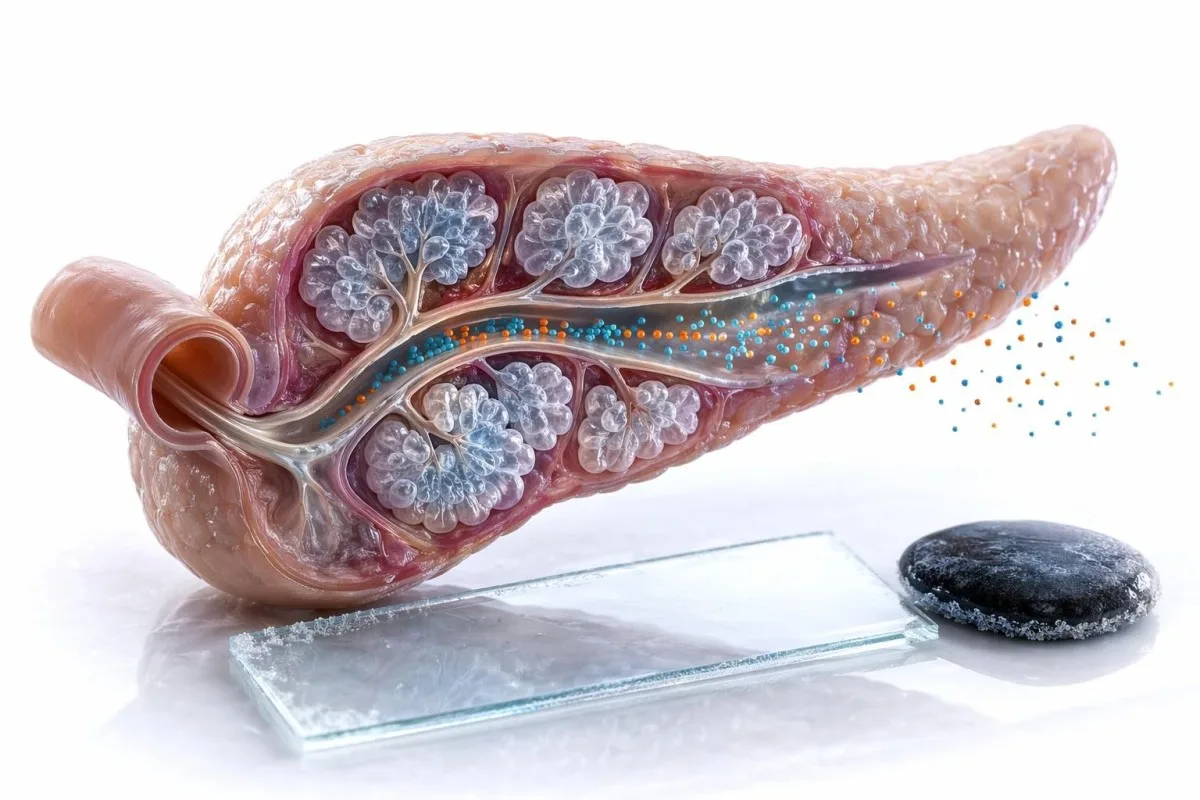
Low amylase and low lipase are not the usual pancreatitis pattern. Persistent low results matter most when they travel with oily stools, weight loss, vitamin deficiencies, diabetes clues, or a history of cystic fibrosis or chronic pancreatic damage.


- Amylase lipase results are usually checked to find high enzyme leakage, but persistently low values can suggest reduced pancreatic enzyme reserve.
- Low lipase blood test results below about 10–13 U/L are most meaningful when repeated and paired with digestive symptoms.
- Low amylase blood test results below roughly 25–30 U/L may reflect low pancreatic output, salivary gland differences, metabolic disease, or a harmless baseline.
- Stool elastase-1 above 200 µg/g is generally normal; 100–200 µg/g is borderline or mild-moderate insufficiency; below 100 µg/g suggests severe exocrine pancreatic insufficiency.
- Chronic pancreatic insufficiency often shows oily floating stools, unexplained weight loss, bloating, low fat-soluble vitamins A, D, E or K, and sometimes low albumin.
- Cystic fibrosis is strongly linked to pancreatic insufficiency, and many affected infants have low digestive enzyme output from early life.
- Diabetes context matters because pancreatic damage can affect both insulin production and digestive enzyme production, especially in type 3c diabetes.
- Repeat testing is reasonable when only one low enzyme is flagged, the report uses unfamiliar units, or the result conflicts with symptoms.
- Urgent care is still needed for severe upper abdominal pain, fever, persistent vomiting, jaundice, or black stools, even if amylase and lipase are low.
What low amylase and lipase usually mean
Low amylase lipase on a pancreatic blood test usually does not mean acute pancreatitis; high results do that far more often. A persistent low pattern can point to reduced pancreatic enzyme production, especially when paired with greasy stools, weight loss, low fat-soluble vitamins, cystic fibrosis, or diabetes clues.
A low lipase blood test below many adult lab ranges, often under 10–13 U/L, is not automatically dangerous. In my practice, the question is whether the pancreas is quiet because it is healthy, or quiet because long-term damage has left fewer enzyme-producing cells.
Amylase is less pancreas-specific than lipase because salivary glands also make it. A low amylase blood test under about 25–30 U/L may be seen with chronic pancreatic loss, metabolic syndrome, cystic fibrosis, or simply a person’s stable baseline.
Kantesti AI reads these results by comparing enzyme values with glucose, A1c, triglycerides, liver markers, albumin, CBC, and prior trends rather than treating one low flag as a diagnosis. If your report also has a high enzyme pattern, our separate guide to pancreatic enzyme highs explains the acute pancreatitis side.
As Thomas Klein, MD, I still get more concerned by the story than the single number. A 61-year-old with lipase of 7 U/L, four months of floating stools, and vitamin D of 12 ng/mL deserves a different work-up than a fit 28-year-old with lipase of 11 U/L and no symptoms using Kantesti AI for a routine check.
Normal ranges and what counts as low
Adult amylase is commonly reported around 30–110 U/L and adult lipase around 13–60 U/L, but ranges vary by analyser and country. A result is low only when it falls below the lower limit printed on your own report.
Some European laboratories set lipase lower limits near 10 U/L, while several US-style chemistry panels use 13 U/L. Amylase may be reported as pancreatic amylase or total amylase, and those are not interchangeable.
The practical cutoff is repetition. A one-off lipase of 9 U/L may be noise; two or three results under 10 U/L over 3–6 months, especially with malabsorption symptoms, carries more weight.
Kantesti maps units and reference intervals before interpreting flags, which matters when reports mix U/L, µkat/L, or age-adjusted paediatric intervals. Our biomarker guide explains why the same number can be flagged in one laboratory and ignored in another.
A low result can also be hidden if the laboratory only flags high results on a pancreatic panel. I advise patients to read the numeric value, not just the red or green highlight.
Why low enzymes are not the same as high enzymes
High amylase or lipase usually means enzyme leakage from irritated or injured pancreatic tissue, while low enzyme results may mean reduced enzyme production. That distinction changes the whole clinical question.
In acute pancreatitis, lipase is often more than 3 times the upper limit of normal, so a lab with an upper limit of 60 U/L may flag serious concern above 180 U/L. Low lipase does not rule out every pancreatic problem, but it does not fit the classic acute enzyme-leak pattern.
Kwon et al. reported that low serum pancreatic enzymes can help identify chronic pancreatitis in selected patients, particularly when both amylase and lipase are low rather than only one marker being slightly below range. The evidence here is useful but not perfect; clinicians disagree on how aggressively to chase a borderline low value.
The thing is, chronic pancreatic damage can leave fewer acinar cells to leak enzymes during a flare. That is why a person with advanced chronic pancreatitis can have severe symptoms without a dramatic enzyme rise.
If your report has shifted units or reference intervals between laboratories, compare it before assuming disease progression. Our article on lab value units covers the conversion traps I see most often.
Clues that low results reflect pancreatic insufficiency
Low pancreatic enzymes become clinically suspicious when they appear with steatorrhea, weight loss, bloating after fatty meals, vitamin deficiencies, or low nutritional proteins. The blood test is a clue; digestion symptoms make it meaningful.
Exocrine pancreatic insufficiency means the pancreas does not deliver enough digestive enzymes into the small intestine. Adults often notice pale, oily, floating stools, urgency after meals, gas, and weight loss despite eating normally.
A clinically useful nutrition pattern is vitamin D below 20 ng/mL plus low-normal vitamin A or vitamin E, especially when albumin is under 3.5 g/dL. That combination suggests malabsorption more strongly than an isolated low enzyme value.
The HaPanEU chronic pancreatitis guideline describes exocrine insufficiency as a common late feature of chronic pancreatitis and supports objective testing when symptoms suggest maldigestion (Löhr et al., 2017). In plain English: a low pancreatic blood test should push the clinician to ask about stool quality, body weight, and nutrient markers.
Patients sometimes buy digestive enzymes after seeing low lipase. Before doing that, I would rather document the pattern and review our digestive enzyme supplement safety guide, because over-the-counter products are not the same as prescribed pancreatic enzyme replacement.
When doctors add stool elastase testing
Doctors add stool elastase-1 when low amylase or lipase is paired with symptoms of fat malabsorption, chronic pancreatitis risk, cystic fibrosis, pancreatic surgery, or unexplained weight loss. Stool elastase measures pancreatic enzyme output more directly than serum enzymes.
A stool elastase-1 result above 200 µg/g is generally considered normal. Results between 100 and 200 µg/g suggest mild to moderate exocrine pancreatic insufficiency, and results below 100 µg/g strongly suggest severe insufficiency.
Watery diarrhoea can falsely lower stool elastase because the sample is diluted. In our reviews, that is one of the easiest errors to miss: a patient with viral gastroenteritis submits a watery specimen, gets 82 µg/g, and is told they have severe pancreatic insufficiency when the test needed repeating on a formed stool.
Löhr et al. note that pancreatic function testing should be interpreted alongside imaging and clinical features, not used alone as a yes-or-no stamp. If your digestive symptoms are broad, our guide to blood tests for gut health explains what blood work can and cannot show.
A 72-hour faecal fat test is more cumbersome but can confirm fat malabsorption; more than 7 g of fat per day on a 100 g fat diet is abnormal. Most clinics start with stool elastase because patients can actually complete it.
Chronic pancreatitis, atrophy, and low enzyme reserve
Chronic pancreatitis can produce low amylase and lipase when scarring and gland atrophy reduce the number of enzyme-secreting acinar cells. The pattern is often subtle until digestion or diabetes clues appear.
The patient I worry about is not the one with lipase of 12 U/L once. It is the 54-year-old with repeated lipase of 6–8 U/L, pancreatic calcifications on imaging, post-meal pain, and an A1c that climbed from 5.7% to 6.8% over two years.
Pancreatic atrophy can follow chronic pancreatitis, pancreatic duct obstruction, pancreatic surgery, radiation exposure, or long-standing cystic fibrosis. CT, MRI, or endoscopic ultrasound may show calcifications, duct irregularity, or reduced gland volume before blood enzymes look dramatic.
A low enzyme result does not tell you whether the cause is alcohol-related pancreatitis, genetic risk, autoimmune pancreatitis, obstructive disease, or post-surgical anatomy. That is why a careful timeline beats a long unordered panel.
When serial results are available, trend matters more than a single red flag. Our blood test comparison guide explains how to separate a real downward drift from normal biological variation.
Cystic fibrosis and inherited pancreatic enzyme clues
Cystic fibrosis can cause pancreatic insufficiency because thick secretions obstruct pancreatic ducts and reduce enzyme delivery to the intestine. Low enzyme clues in infants, children, or adults with recurrent respiratory or digestive symptoms deserve genetic context.
About 85–90% of people with classic cystic fibrosis have pancreatic insufficiency, although the percentage varies by genotype. Some CFTR variants preserve pancreatic function for years, which is why a normal early childhood history does not completely exclude later digestive issues.
Turck et al. recommend structured nutrition care and pancreatic enzyme replacement when cystic fibrosis causes pancreatic insufficiency, with dosing adjusted to meals, snacks, growth, and stool response (Turck et al., 2016). In paediatrics, poor weight gain plus bulky stools often speaks louder than serum amylase.
Other inherited conditions can also reduce pancreatic enzyme output, including Shwachman-Diamond syndrome and rare PRSS1, SPINK1, CTRC or CFTR-related pancreatitis patterns. Families with recurrent pancreatitis, early diabetes, or unexplained malabsorption should discuss a targeted hereditary disease blood test and genetic counselling.
Kantesti does not diagnose cystic fibrosis from amylase and lipase. Our platform can, however, flag when low enzymes, low fat-soluble vitamins, growth concerns, and family history form a pattern that should be reviewed by a clinician.
Diabetes context: when the pancreas has two jobs
Diabetes changes the meaning of low pancreatic enzymes because the pancreas controls both digestion and insulin production. Low amylase or lipase with worsening glucose, falling C-peptide, or unexplained weight loss raises concern for pancreatic rather than purely metabolic diabetes.
Type 2 diabetes can coexist with low amylase without proving pancreatic insufficiency. In our analysis of de-identified user uploads, low amylase often travels with higher BMI, triglycerides above 150 mg/dL, and insulin resistance markers, which is a different pattern from malabsorption.
Type 3c diabetes, also called pancreatogenic diabetes, follows pancreatic disease or surgery. A clue is diabetes plus digestive symptoms, low stool elastase, pancreatic imaging changes, and C-peptide that is lower than expected for the glucose level.
If A1c is 6.5% or higher on a reliable test, diabetes is diagnosed in most adult guidelines, but the cause still matters. Our diabetes blood test guide covers diagnosis, while C-peptide interpretation helps separate low insulin production from insulin resistance.
Kantesti AI connects amylase lipase results with A1c, fasting glucose, insulin, C-peptide, triglycerides, and body-weight trends. For borderline glucose patterns, our insulin resistance test article is often the next practical read.
Nutrition and malabsorption patterns that strengthen the clue
Low pancreatic enzymes become more convincing when nutrition markers show fat malabsorption or protein-calorie undernutrition. Look for low vitamin D, low vitamin A or E, prolonged INR from vitamin K deficiency, low albumin, and falling body weight.
A 25-OH vitamin D below 20 ng/mL is common worldwide, so it is not specific by itself. The pattern becomes sharper when vitamin D is low together with oily stools, low cholesterol despite adequate intake, low albumin under 3.5 g/dL, or unexplained bruising from vitamin K deficiency.
Celiac disease, inflammatory bowel disease, bile acid problems, and bariatric surgery can mimic pancreatic insufficiency. If tTG-IgA is positive or total IgA is low, the diagnostic direction changes; our celiac blood test guide explains that fork in the road.
Low total protein or albumin should not be blamed on the pancreas until kidney loss, liver synthesis, inflammation, and dietary intake have been checked. The pattern-based approach in our low total protein article is useful here.
In clinic, I ask one blunt question: does the toilet bowl look oily after a fatty meal? Patients often apologise for the detail, but that answer can be more diagnostic than another mildly low serum enzyme.
When a low result should simply be repeated
A low amylase or lipase result should be repeated when it is isolated, unexpected, close to the lower limit, or measured by a new laboratory. Repeat testing prevents overdiagnosis from analyser differences and biological variation.
For a stable adult with no symptoms, repeating amylase and lipase in 4–12 weeks is reasonable. If pain, jaundice, fever, vomiting, or weight loss is present, do not wait for a routine retest.
Fasting is not usually required for amylase or lipase, but the rest of the panel may need fasting if triglycerides, glucose, or insulin are being interpreted. Our fasting blood test guide explains which values shift after meals.
Biotin is not a major issue for standard enzymatic amylase and lipase assays, but sample handling, haemodilution from IV fluids, and lab platform changes can matter. The deeper problem is assuming every low flag is biological.
Kantesti’s trend view helps spot whether a lipase of 9 U/L is a new drop or a 5-year personal baseline. For retest timing, I point patients to our repeat abnormal labs guide and our article on blood test variability.
Patterns with liver, kidney, gallbladder, and triglycerides
Low pancreatic enzymes should be interpreted beside liver enzymes, bilirubin, kidney function, and triglycerides because neighbouring organs can mimic or modify pancreatic symptoms. The pancreas rarely acts alone.
High triglycerides above 500 mg/dL can increase pancreatitis risk, and levels above 1,000 mg/dL are a much stronger warning sign. Low lipase does not cancel that risk if the patient has severe abdominal pain.
Kidney impairment often raises lipase by reducing clearance, so a low lipase in someone with eGFR below 60 mL/min/1.73 m² is less typical and deserves context. Our kidney blood test guide explains why creatinine can lag behind early changes.
Gallstones, bile duct obstruction, and fatty liver can produce upper abdominal symptoms without low pancreatic output. If ALT, ALP, GGT, or bilirubin are abnormal, read the pattern with a liver function test rather than focusing only on amylase and lipase.
A triglyceride result over 150 mg/dL also changes the diabetes conversation because it often travels with insulin resistance. Our high triglycerides guide covers the cardiovascular side of that same metabolic pattern.
Children, pregnancy, and older adults need different context
Low amylase or lipase in children, pregnancy, or older adults should be judged against age, growth, nutrition, and laboratory reference ranges. Adult cutoffs can mislead when the patient is not a typical adult.
Children may have different enzyme ranges, and a low value is more concerning when growth percentiles fall or stools become bulky. A child crossing down two major weight percentiles deserves assessment even if the blood enzyme flag looks mild.
In pregnancy, low amylase or lipase alone is rarely the main clue; vomiting, gallstones, triglycerides, and liver markers often matter more. Severe abdominal pain in pregnancy needs urgent evaluation regardless of enzyme direction.
Older adults can develop pancreatic atrophy, pancreatic cancer, or type 3c diabetes, but most low enzyme results in seniors are not cancer. The red flags are persistent weight loss, new diabetes after age 50, jaundice, pale stools, and progressive pain.
For families tracking results across age groups, our family blood test guide is more useful than applying one adult range to everyone. Parents may also find our child blood sugar article helpful when pancreatic concerns overlap with glucose symptoms.
What to ask your doctor after a low result
After a low amylase or lipase result, ask whether the value is truly below range, whether it should be repeated, and whether symptoms justify stool elastase or imaging. A focused question list prevents both panic and dismissal.
Bring the numeric result, the lab’s reference range, prior enzyme values, and a symptom timeline. I like patients to list weight change in kilograms or pounds, stool changes, pain timing, alcohol intake, surgery history, and family history of pancreatitis or cystic fibrosis.
Ask directly: should we repeat amylase and lipase, check stool elastase-1, measure fat-soluble vitamins, review A1c and C-peptide, or order pancreatic imaging? The answer should depend on your symptoms, not just a red downward arrow.
Use urgent care for severe constant upper abdominal pain, repeated vomiting, fever, fainting, jaundice, black stools, or confusion. Those symptoms deserve same-day assessment even when the enzyme numbers are low.
If you want a structured pre-visit summary, upload your report to Try Free AI Blood Test Analysis. Kantesti can organise the pattern in about 60 seconds, but it should not replace a clinician when red flags are present.
How Kantesti reads low pancreatic blood tests safely
Kantesti interprets low pancreatic blood tests by combining the enzyme value with reference intervals, trends, symptoms, and related biomarkers. The safest interpretation is pattern-based, because low enzymes alone are often nonspecific.
Our AI blood test platform checks whether amylase and lipase are low together, whether the report changed units, and whether nutrition markers suggest malabsorption. It also looks for diabetes clues such as A1c, fasting glucose, insulin, C-peptide, and triglycerides.
Kantesti’s neural network is clinically reviewed, and our validation work is described on the Medical Validation page. We also publish benchmark methods, including a pre-registered 2.78T engine analysis across anonymised cases at clinical validation research.
As Thomas Klein, MD, I want the output to say maybe when the evidence is mixed. A low lipase of 8 U/L with normal stool, stable weight, and normal vitamins should not be framed the same way as lipase of 5 U/L with elastase of 62 µg/g.
The platform is designed for interpretation, not emergency triage. If your symptoms are severe, use local urgent care first; if you are stable, our AI blood test platform can help you prepare better questions for your appointment.
Kantesti research publications and medical review
Kantesti’s medical content is reviewed to keep laboratory interpretation cautious, current, and clinically usable. This article reflects the same approach: low amylase and lipase are interpreted as clues, not stand-alone diagnoses.
Klein, T., & Kantesti Medical Research Group. (2026). C3 C4 Complement Blood Test & ANA Titer Guide. Zenodo. https://doi.org/10.5281/zenodo.18353989. Supporting profiles: ResearchGate and Academia.edu.
Klein, T., & Kantesti Medical Research Group. (2026). Nipah Virus Blood Test: Early Detection & Diagnosis Guide 2026. Zenodo. https://doi.org/10.5281/zenodo.18487418. Supporting profiles: ResearchGate and Academia.edu.
Our doctors and scientific reviewers are listed on the Medical Advisory Board. I prefer that readers can see who is accountable for cautious medical wording, especially with YMYL topics like pancreatic insufficiency and diabetes.
Kantesti LTD is a UK company building AI-powered blood test interpretation for patients and clinicians in 127+ countries. You can read more about our organisation on About Us.
Frequently Asked Questions
Is low amylase and low lipase dangerous?
Low amylase and low lipase are not usually dangerous by themselves, especially when the result is only slightly below range and there are no symptoms. Persistent lipase below about 10–13 U/L or amylase below about 25–30 U/L matters more when it appears with oily stools, weight loss, low vitamins, chronic pancreatitis history, cystic fibrosis, or new diabetes. Severe abdominal pain, fever, vomiting, jaundice, or fainting needs urgent care regardless of whether enzymes are low or high.
Can low lipase mean pancreatic insufficiency?
A low lipase blood test can be a clue to pancreatic insufficiency, but it cannot diagnose it alone. Doctors usually look for symptoms such as greasy floating stools, weight loss, bloating after fatty meals, and low fat-soluble vitamins before ordering stool elastase-1. Stool elastase above 200 µg/g is usually normal, 100–200 µg/g is borderline or mild-moderate insufficiency, and below 100 µg/g suggests severe exocrine pancreatic insufficiency if the sample is formed.
Why would amylase be low but lipase normal?
Amylase can be low while lipase is normal because total amylase comes from salivary glands as well as the pancreas. A low amylase blood test below about 25–30 U/L may reflect individual baseline, metabolic disease, salivary gland variation, cystic fibrosis, or chronic pancreatic loss, but it is less pancreas-specific than lipase. Doctors usually repeat the test or compare it with symptoms before pursuing pancreatic imaging.
Should I repeat a low pancreatic blood test?
Repeating a low pancreatic blood test is reasonable when the result is unexpected, isolated, close to the lower limit, or from a new laboratory. Many clinicians repeat amylase and lipase in 4–12 weeks for a stable person without symptoms. If the low result is paired with weight loss, oily stools, jaundice, fever, or persistent abdominal pain, follow-up should happen sooner and may include stool elastase, vitamin levels, diabetes markers, and imaging.
Does cystic fibrosis cause low amylase and lipase?
Cystic fibrosis can cause low pancreatic enzyme output because CFTR-related duct problems reduce enzyme delivery to the intestine. About 85–90% of people with classic cystic fibrosis have pancreatic insufficiency, although milder CFTR variants may preserve pancreatic function for years. In children, poor growth, bulky stools, and low fat-soluble vitamins are often more useful clues than serum amylase or lipase alone.
How does diabetes relate to low pancreatic enzymes?
Diabetes relates to low pancreatic enzymes because the pancreas has both endocrine cells for insulin and exocrine cells for digestion. In type 3c diabetes, pancreatic disease or surgery can cause both impaired insulin production and exocrine pancreatic insufficiency. Clues include diabetes with low C-peptide for the glucose level, low stool elastase, weight loss, oily stools, or pancreatic imaging changes.
Can I take digestive enzymes for low lipase?
Do not start prescription-strength pancreatic enzyme replacement solely because a lipase result is low. Treatment is usually based on symptoms, stool elastase, nutritional deficiencies, body weight, and a clinician’s assessment. Over-the-counter digestive enzyme products vary widely, while prescribed pancreatic enzyme replacement is dosed in lipase units per meal and adjusted to stool response and nutrition.
Do I need to fast before amylase and lipase blood tests?
Usually, no fasting is needed for amylase or lipase testing alone. If triglycerides, glucose, or other tests are ordered at the same time, follow the laboratory’s instructions because fasting requirements may apply to those measurements.
Can pancreatic enzyme replacement change my blood amylase or lipase results?
Usually no. Prescription pancreatic enzymes work inside the gut and are not absorbed in a way that reliably raises blood amylase or lipase, so doctors follow stool quality, weight, symptoms, and vitamin levels instead.
Get AI-Powered Blood Test Analysis Today
Join over 2 million users worldwide who trust Kantesti for instant, accurate lab test analysis. Upload your blood test results and receive comprehensive interpretation of 15,000+ biomarkers in seconds.
📚 Referenced Research Publications
Klein, T., Mitchell, S., & Weber, H. (2026). C3 C4 Complement Blood Test & ANA Titer Guide. Kantesti AI Medical Research.
Klein, T., Mitchell, S., & Weber, H. (2026). Nipah Virus Blood Test: Early Detection & Diagnosis Guide 2026. Kantesti AI Medical Research.
📖 External Medical References
Kwon CI et al. (2016). Can We Detect Chronic Pancreatitis With Low Serum Pancreatic Enzyme Levels?. Pancreas.
⚕️ Medical Disclaimer
This article is for educational purposes only and does not constitute medical advice. Always consult a qualified healthcare provider for diagnosis and treatment decisions.
E-E-A-T Trust Signals
Experience
Physician-led clinical review of lab interpretation workflows.
Expertise
Laboratory medicine focus on how biomarkers behave in clinical context.
Authoritativeness
Written by Dr. Thomas Klein with review by Dr. Sarah Mitchell and Prof. Dr. Hans Weber.
Trustworthiness
Evidence-based interpretation with clear follow-up pathways to reduce alarm.