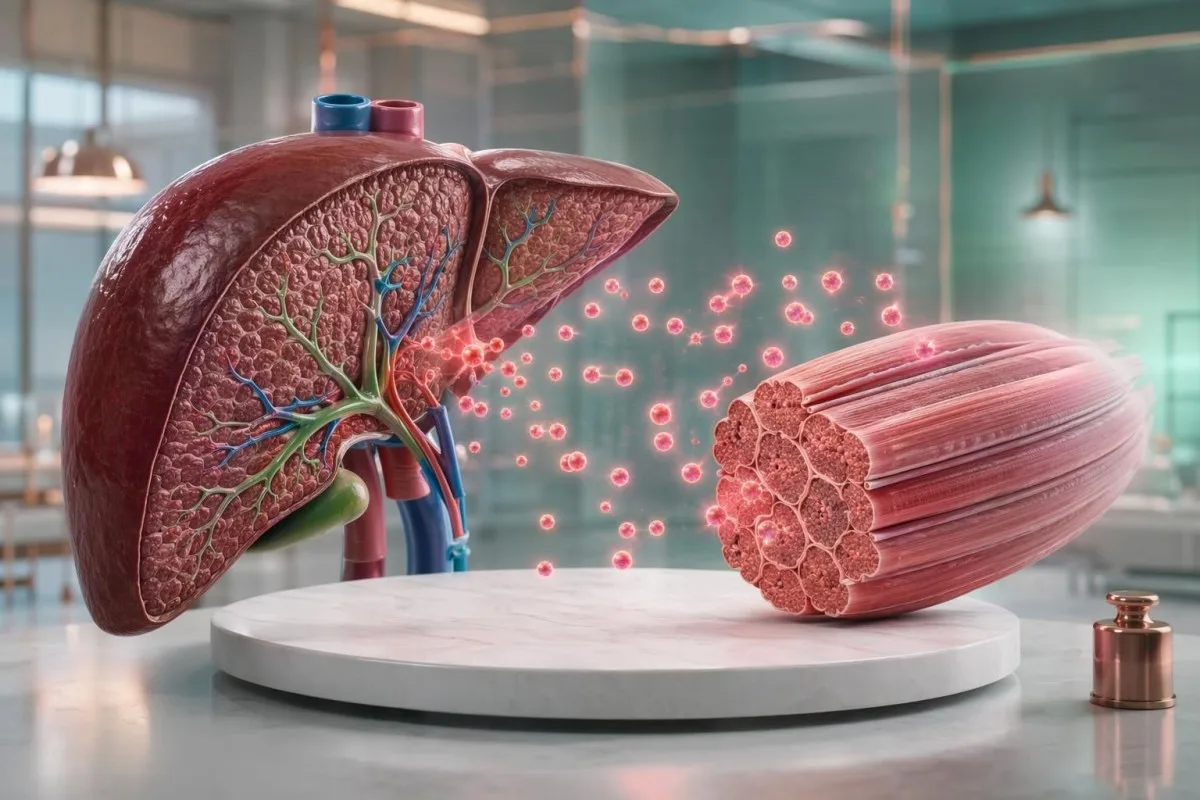
An isolated AST rise often comes from muscle, not liver — but the surrounding labs decide. Here is the practical way I read this pattern in clinic.


- High AST with normal ALT most often points to skeletal muscle, recent hard exercise, hemolysis, or a lab artefact when GGT, bilirubin, ALP and INR are normal.
- AST normal range is usually about 10-40 IU/L in adults, but some European labs use lower upper limits around 30-35 IU/L.
- Exercise-related AST can rise for 3-7 days after heavy lifting, long runs, HIIT, or muscle injury, especially when CK is above 200-500 IU/L.
- Liver-pattern AST becomes more likely when GGT is high, bilirubin is above 1.2 mg/dL, ALP is elevated, INR is prolonged, albumin is low, or platelets are falling.
- CK testing is the fastest way to check a muscle source; CK above 1,000 IU/L is often treated as possible rhabdomyolysis if symptoms fit.
- Macro-AST is a benign cause of persistent isolated AST elevation, usually suspected when AST stays high for months while every other liver and muscle marker stays normal.
- Alcohol-related liver injury can show AST greater than ALT, often with an AST:ALT ratio above 2, but ALT is not always completely normal and GGT is commonly elevated.
- Repeat testing after 7 days without strenuous exercise, alcohol, or nonessential supplements often clarifies whether the AST rise is transient.
- Urgent care is warranted for high AST plus chest pain, severe weakness, dark urine, jaundice, confusion, fever, pregnancy with high blood pressure, or AST above 10 times the lab upper limit.
What high AST with normal ALT usually means
A high AST blood test with a normal ALT blood test is more often muscle-related than liver-related, especially after heavy exercise, muscle soreness, injury, injections, seizures, or sample hemolysis. Liver disease is still possible, but it usually leaves other fingerprints: high GGT, high bilirubin, raised ALP, low albumin, prolonged INR, or a changing platelet count. As of May 8, 2026, I tell patients to check CK and repeat the panel before assuming liver damage.
When I review an isolated AST rise on Kantesti AI, the first question is not, "Is my liver failing?" It is, what tissue released AST this week — liver, skeletal muscle, cardiac muscle, red cell contents, or a benign AST complex in the circulation.
A 52-year-old marathon runner with AST 89 IU/L and ALT 24 IU/L is a different story from a 52-year-old with AST 89 IU/L, GGT 180 IU/L, platelets 118 x 10^9/L and albumin 3.2 g/dL. The number is the same; the biology is not.
In our analysis of 2M+ blood test uploads, this pattern clusters strongly with recent exercise and high CK when bilirubin, ALP and GGT are normal. If you trained hard in the previous 72 hours, our exercise lab guide is often more relevant than a liver panic search.
AST normal range and how abnormal is abnormal
The usual AST normal range for adults is about 10-40 IU/L, though individual labs may report 8-33 IU/L, 5-35 IU/L, or sex-specific ranges. A result under 2 times the upper limit is usually called mild; AST above 5 times the upper limit deserves faster review, even if ALT is normal.
AST is reported in IU/L or U/L, and the units mean the same thing for routine clinical interpretation. AST 45 IU/L may be barely abnormal in one lab and flagged clearly high in another because reference intervals are built from local populations and assay platforms.
Some European laboratories use a lower AST upper limit around 30-35 IU/L, while many US and UK reports still flag above 40 IU/L. That is why I rarely make a judgement from the red flag alone; I compare the value with the lab's own upper limit and with the patient's baseline.
For a deeper range-by-range discussion, see our AST blood test guide. The practical point is simple: AST 48 IU/L after leg day is not interpreted like AST 480 IU/L with jaundice.
Why muscle can raise AST while ALT stays normal
Skeletal muscle contains a lot of AST and much less ALT, so muscle stress can raise AST disproportionately. Recent strength training, endurance racing, cramps, falls, intramuscular injections and inflammatory muscle disease can all produce high AST with normal or near-normal ALT.
AST lives in both the cytosol and mitochondria of muscle cells. ALT is more liver-weighted, so a normal ALT makes serious hepatocyte injury less likely, although not impossible.
I see this in cyclists, CrossFit athletes, new gym starters and people who helped someone move house over the weekend. A CK of 650 IU/L with AST 76 IU/L and ALT 22 IU/L is usually a muscle story until proven otherwise.
The hidden trap is delayed timing: CK often peaks 24-72 hours after muscle injury, while AST may be abnormal during the same window. Athletes tracking performance labs should pair AST with CK, recovery status and training load; our athlete blood test guide explains the broader panel.
When normal ALT does not fully rule out liver disease
A normal ALT lowers the odds of active liver-cell injury, but it does not rule out liver disease. Cirrhosis, alcohol-related injury, congestive hepatopathy, advanced fatty liver, medication injury and some biliary disorders can show modest AST elevation with ALT in range.
Giannini, Testa and Savarino's CMAJ review remains useful because it frames liver enzymes as patterns rather than isolated numbers (Giannini et al., 2005). In clinic, AST plus GGT plus bilirubin tells me far more than AST alone.
Alcohol-related liver injury often shows an AST:ALT ratio above 2, partly because alcohol can reduce ALT activity through pyridoxal phosphate effects. But most alcohol-related panels also show other clues such as high GGT, high MCV, triglyceride changes or low platelets.
If you want the broader pattern language, our liver function test guide and AST/ALT ratio explainer are good next reads. Normal ALT is reassuring; it is not a free pass.
Follow-up tests that separate muscle from liver
The most useful follow-up tests for high AST with normal ALT are CK, LDH, aldolase, GGT, ALP, bilirubin, albumin, INR and a repeat CMP. CK points toward muscle; GGT, bilirubin, ALP, albumin and INR point toward liver or bile-duct involvement.
CK above 200-300 IU/L can support recent muscle stress, and CK above 1,000 IU/L may represent rhabdomyolysis if paired with severe muscle pain, weakness or dark urine. Aldolase can help when inflammatory myopathy is suspected and CK is oddly normal.
GGT above 60 IU/L in many adult labs makes a liver or biliary source more plausible, particularly if ALP or bilirubin is also high. Bilirubin above 1.2 mg/dL, INR above 1.2 without anticoagulants, or albumin below 3.5 g/dL changes the conversation quickly.
Kantesti's interpretation model weighs these combinations against age, sex, symptoms, medications and prior values under our medical validation standards. For a liver-first differential, our elevated liver enzymes guide gives a fuller map.
Exercise timing: how long to wait before repeating AST
If you feel well and the only abnormal result is mild AST elevation, repeat testing after 7 days without strenuous exercise is often reasonable. Heavy resistance training can elevate AST, ALT, CK, LDH and myoglobin for at least a week in healthy adults.
Pettersson and colleagues showed in the British Journal of Clinical Pharmacology that one hour of weightlifting raised AST, ALT, CK, LDH and myoglobin in healthy men, while bilirubin, GGT and ALP stayed normal (Pettersson et al., 2008). That pattern is exactly what I look for when the history includes a new workout.
A practical reset is 7 days with no heavy lifting, long runs, HIIT, sauna-dehydration sessions or creatine loading changes. Hydrate normally, avoid alcohol for the week, and do not add new supplements before the repeat test.
Repeating too soon creates noise. Our abnormal lab repeat guide explains why a 48-hour recheck can be useful for urgent abnormalities but misleading for exercise-related AST.
CK, aldolase and LDH: the muscle-source trio
CK is the best first muscle marker when AST is high and ALT is normal. Aldolase and LDH add context when symptoms suggest inflammatory muscle disease, muscle breakdown, or a mixed tissue source.
CK is concentrated in skeletal muscle, heart muscle and brain, but routine high CK with soreness usually reflects skeletal muscle. Many labs use an upper CK limit around 170 IU/L for women and 200 IU/L for men, though race, muscle mass and training status can shift expected values.
LDH is less specific because it rises with hemolysis, liver injury, lung disease, malignancy and muscle damage. Still, LDH plus high CK plus normal GGT and bilirubin is a very different signal from LDH plus high bilirubin and anemia.
Creatine supplements can raise serum creatinine without harming kidneys, and hard training can raise CK and AST at the same time. If you use creatine, read our creatine and lab guide before overinterpreting one chemistry panel.
GGT, ALP and bilirubin: the liver-direction clues
Normal GGT, ALP and bilirubin make a significant liver or bile-duct source less likely when AST alone is high. High GGT, high ALP, or bilirubin above the lab range shifts the concern toward hepatobiliary disease.
GGT is not perfect; it rises with alcohol, fatty liver, some medications and bile-duct stress. But GGT is not usually elevated from ordinary skeletal muscle injury, which is why it is so useful in an isolated AST puzzle.
ALP becomes more helpful when interpreted with GGT. High ALP plus high GGT suggests liver or bile-duct origin, while high ALP with normal GGT may point toward bone turnover, pregnancy-related placental ALP, healing fracture or vitamin D issues.
Bilirubin adds a severity clue. Our high GGT guide and bilirubin pattern article explain why a bilirubin of 2.0 mg/dL deserves a different follow-up than AST 52 IU/L alone.
Medication, alcohol and supplement patterns that raise AST
Medications, alcohol and supplements can raise AST with normal or mildly changed ALT, especially early in the process. Statins, anticonvulsants, isotretinoin, acetaminophen excess, bodybuilding compounds and multi-ingredient herbal products are common culprits I ask about first.
The 2019 EASL drug-induced liver injury guideline emphasizes timeline, dose, dechallenge and competing causes when evaluating possible medication-related enzyme changes (EASL, 2019). In plain English: when did it start, how much, what else changed, and did AST improve after stopping the trigger under medical advice?
Statins deserve nuance. Mild AST or ALT elevations below 3 times the upper limit usually do not require automatic discontinuation, but muscle symptoms plus high CK change the risk calculation.
Bring the exact doses: acetaminophen mg per day, alcohol units per week, statin dose, workout supplements and herbal products. Our medication monitoring timeline and ALT blood test guide can help you prepare a cleaner medication history.
Hemolysis, macro-AST and lab artefacts doctors check
Hemolysis and macro-AST are two under-recognized reasons AST can be high while ALT stays normal. Hemolysis usually causes a one-off or inconsistent result; macro-AST causes persistent isolated AST elevation for months or years.
Red cellular elements contain AST, so a damaged specimen can falsely raise AST. If potassium and LDH are also unexpectedly high, and the lab comments mention hemolysis, I become cautious about diagnosing disease from that draw.
Macro-AST is AST bound to immunoglobulin or another large protein, which slows clearance from circulation. Patients may have AST 80-300 IU/L for years with normal ALT, CK, GGT, bilirubin and imaging; a polyethylene glycol precipitation test can support the diagnosis.
This is one reason trend data matters more than a single flag. Our blood test variability guide shows how pre-analytical factors, units and specimen handling can create scary-looking but clinically weak changes.
Red flags that should not wait for a routine recheck
High AST with normal ALT needs urgent medical assessment when symptoms suggest heart injury, severe muscle breakdown, liver failure, sepsis, pregnancy complications or toxin exposure. Do not wait a week if AST is very high or you feel acutely unwell.
Go urgently for chest pressure, shortness of breath, fainting, new severe upper abdominal pain, confusion, yellow eyes, fever with low blood pressure, or dark cola-colored urine. AST can rise with heart and muscle injury, but troponin and CK tell that story better.
CK above 5 times the upper limit, often above 1,000 IU/L, is a common threshold for possible rhabdomyolysis. The kidney risk rises when dehydration, heat illness, crush injury, certain drugs or very high CK values are present.
If you are unsure whether a value is critical, compare it with our critical results guide. Chest symptoms belong with emergency care and troponin testing, not a home spreadsheet; our troponin guide explains why timing matters.
Athletes, pregnancy, children and older adults need different context
The same AST value can mean different things in athletes, pregnant patients, children and older adults. Muscle mass, recent training, growth, medications, frailty, pregnancy blood pressure and platelet count all change the interpretation.
Teenagers can show AST changes after sports, viral illness or growth-related muscle strain, but persistent elevations need a pediatric review. In children, inherited muscle disorders can present with transaminases before obvious weakness, which is a classic trap.
Pregnancy is different. AST above the upper limit with high blood pressure, headache, right upper abdominal pain, low platelets or protein in urine can signal preeclampsia or HELLP-spectrum disease, even if ALT is not strikingly high.
Older adults often have more medication interactions and less obvious muscle symptoms. For pregnancy timing and routine panels, our prenatal blood test guide gives trimester-specific context that a generic AST page usually misses.
How Kantesti AI reads an isolated AST rise safely
Kantesti AI interprets an isolated AST rise by checking the enzyme pattern, muscle markers, liver synthetic function, symptoms, medications, age, sex, recent exercise and prior trends. Our platform does not treat AST as a liver-only marker because clinically, that is how mistakes happen.
Kantesti's neural network maps AST against ALT, CK, GGT, ALP, bilirubin, albumin, INR, platelets, creatinine and urinalysis when those values are available. That pattern-based approach is described in our clinical benchmark and our independent validation record, including the 2.78T AI engine study.
As Thomas Klein, MD, I am comfortable saying the hard part is not defining AST; it is deciding what not to overreact to. A one-time AST 54 IU/L after a trail race deserves a calmer answer than AST 154 IU/L with INR 1.5 and falling platelets.
You can upload a PDF or photo through our AI blood test platform and get a structured interpretation in about 60 seconds. If you want to know how the upload process works, see our PDF upload guide.
What to ask your doctor after high AST and normal ALT
Ask your doctor whether the pattern looks muscle-related, liver-related, cardiac, artefactual, or persistent benign macro-AST. The best appointment question is not, "Is AST bad?" It is, "Which tissue source fits my symptoms and the rest of my panel?"
A clean follow-up request is: repeat CMP, CK, GGT, ALP, total and direct bilirubin, LDH, CBC with platelets, creatinine, urinalysis, and INR if liver disease is a concern. Add hepatitis B and C testing, ferritin with transferrin saturation, TSH, aldolase or troponin only when the history points there.
Tell your clinician about exercise in the previous 7 days, muscle soreness, falls, seizures, injections, alcohol, acetaminophen, statins, antibiotics, anticonvulsants, bodybuilding products and herbal supplements. I have seen more useful diagnoses come from this timeline than from ordering 20 extra markers at random.
If you want a plain-language pre-visit summary, try the free blood test analysis and bring it to your clinician. Our guide on new doctor lab questions can also help you avoid forgetting key follow-up tests.
Kantesti research publications and medical review notes
Kantesti publishes selected laboratory-interpretation research materials so readers and clinicians can inspect our reasoning standards. These publications are not a substitute for diagnosis, but they show how our medical team documents biomarker interpretation, reference ranges and clinical safety checks.
Kantesti LTD. (2026). aPTT Normal Range: D-Dimer, Protein C Blood Clotting Guide. Zenodo. https://doi.org/10.5281/zenodo.18262555. ResearchGate and Academia.edu.
Kantesti LTD. (2026). Serum Proteins Guide: Globulins, Albumin & A/G Ratio Blood Test. Zenodo. https://doi.org/10.5281/zenodo.18316300. ResearchGate and Academia.edu.
Every AST interpretation article on Kantesti is medically reviewed against liver enzyme, muscle injury and medication-safety standards by clinicians listed on our Medical Advisory Board. In my experience as Thomas Klein, MD, transparency matters most when a lab result is ambiguous rather than obviously normal or obviously dangerous.
Frequently Asked Questions
Is high AST with normal ALT usually from muscle?
High AST with normal ALT is often muscle-related, especially after heavy exercise, muscle soreness, injury, injections, seizures or high CK. AST is present in skeletal muscle, heart muscle, liver and red cellular elements, while ALT is more liver-weighted. If CK is elevated and GGT, bilirubin, ALP and INR are normal, a muscle source becomes more likely. Persistent or symptomatic results still need clinical review.
How high can AST go after exercise?
AST can rise above 40 IU/L and sometimes above 100 IU/L after heavy resistance training, endurance events or muscle injury. CK may rise much higher, often into the hundreds or thousands of IU/L, and usually peaks 24-72 hours after muscle stress. In healthy adults, exercise-related AST often improves after 7 days without strenuous training. Very high AST, severe weakness or dark urine needs urgent assessment.
What follow-up tests show whether AST is from liver or muscle?
CK is the most useful first follow-up test for a muscle source of high AST with normal ALT. GGT, ALP, bilirubin, albumin, INR and platelet count help assess liver and bile-duct involvement. LDH and aldolase can add muscle or tissue-breakdown context when symptoms fit. A repeat CMP after 7 days of rest often clarifies transient exercise-related AST elevations.
Can alcohol cause high AST with normal ALT?
Alcohol can cause AST to be higher than ALT, and an AST:ALT ratio above 2 is classically associated with alcohol-related liver injury. ALT may be normal or only mildly elevated in some cases, but GGT, MCV, triglycerides, bilirubin or platelet count often provide extra clues. The pattern is more concerning if AST is repeatedly elevated, GGT is high, or albumin and INR suggest impaired liver function. Discuss alcohol intake honestly in units per week because the timeline changes interpretation.
Should I stop my statin if AST is high but ALT is normal?
Do not stop a statin solely because AST is mildly high unless your prescribing clinician advises it. Mild enzyme elevations below 3 times the upper limit are often monitored rather than treated as dangerous, but muscle pain or weakness should prompt CK testing. Statin-associated muscle injury is more plausible when CK is elevated, symptoms are present, and AST rises with normal or modest ALT. Seek urgent care for severe muscle pain, weakness or dark urine.
What is macro-AST and is it dangerous?
Macro-AST is a usually benign condition where AST binds to a larger protein, often an immunoglobulin, and stays in the bloodstream longer than expected. It can cause persistent isolated AST elevations, sometimes around 80-300 IU/L, while ALT, CK, GGT, bilirubin and imaging remain normal. Doctors may suspect macro-AST when the pattern is stable for months and no liver or muscle disease is found. A polyethylene glycol precipitation test can support the diagnosis.
When is a high AST blood test urgent?
A high AST blood test is urgent when it is above 5-10 times the lab upper limit or occurs with chest pain, shortness of breath, fainting, jaundice, confusion, severe abdominal pain, fever, dark urine or severe weakness. CK above 1,000 IU/L with muscle symptoms can suggest rhabdomyolysis, which may threaten kidney function. Pregnancy with high AST plus high blood pressure, headache or low platelets also needs immediate care. If symptoms are acute, do not wait for a routine repeat test.
Could an underactive thyroid cause high AST with normal ALT?
Yes. An underactive thyroid can occasionally cause muscle-related increases in CK and AST while ALT remains normal. If you also have fatigue, constipation, cold intolerance, or persistent muscle aches, ask your clinician whether thyroid testing, usually TSH, would help clarify the cause.
Can a high AST with normal ALT be related to a heart problem?
Sometimes, because AST is also found in heart muscle, but heart-related AST usually comes with symptoms such as chest pressure, shortness of breath, sweating, or abnormal troponin. If those symptoms are present, seek urgent care rather than waiting for repeat liver tests.
Get AI-Powered Blood Test Analysis Today
Join over 2 million users worldwide who trust Kantesti for instant, accurate lab test analysis. Upload your blood test results and receive comprehensive interpretation of 15,000+ biomarkers in seconds.
📚 Referenced Research Publications
Klein, T., Mitchell, S., & Weber, H. (2026). aPTT Normal Range: D-Dimer, Protein C Blood Clotting Guide. Kantesti AI Medical Research.
Klein, T., Mitchell, S., & Weber, H. (2026). Serum Proteins Guide: Globulins, Albumin & A/G Ratio Blood Test. Kantesti AI Medical Research.
📖 External Medical References
⚕️ Medical Disclaimer
This article is for educational purposes only and does not constitute medical advice. Always consult a qualified healthcare provider for diagnosis and treatment decisions.
E-E-A-T Trust Signals
Experience
Physician-led clinical review of lab interpretation workflows.
Expertise
Laboratory medicine focus on how biomarkers behave in clinical context.
Authoritativeness
Written by Dr. Thomas Klein with review by Dr. Sarah Mitchell and Prof. Dr. Hans Weber.
Trustworthiness
Evidence-based interpretation with clear follow-up pathways to reduce alarm.