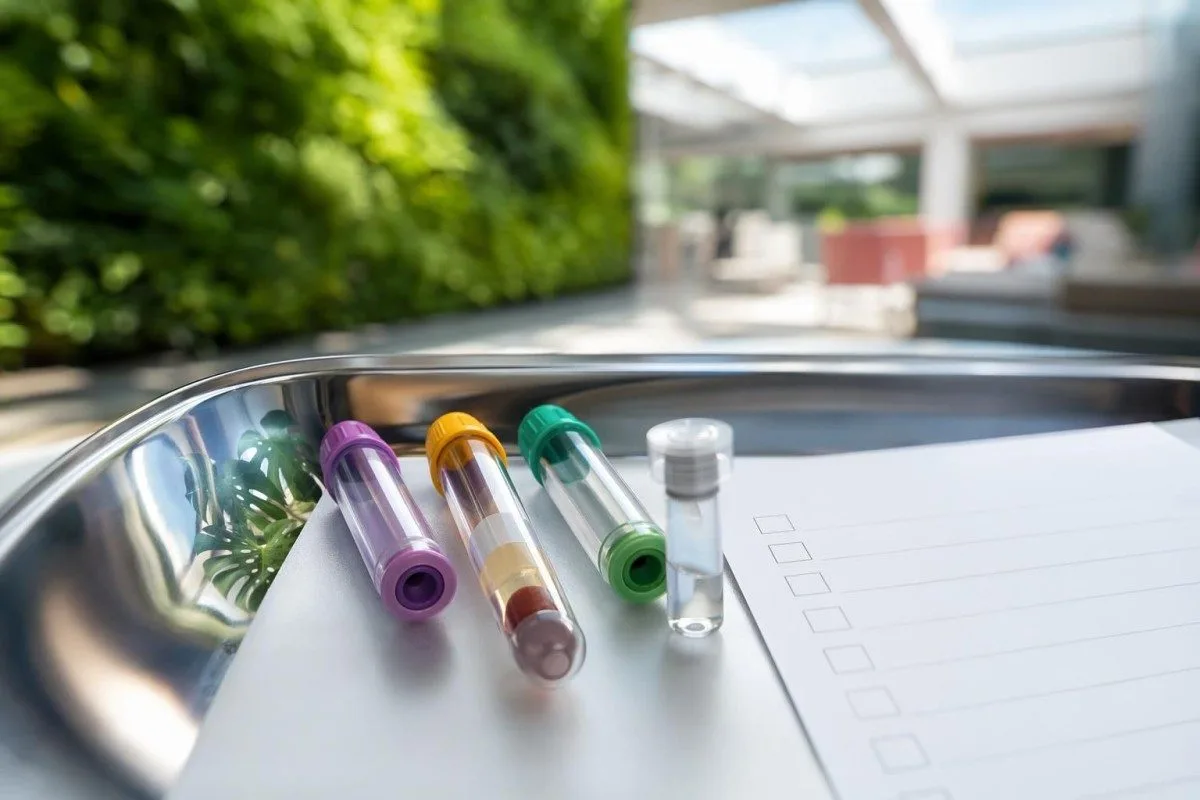
A practical, clinician-written checklist for a first primary care appointment: enough screening to establish a baseline, not so much testing that you chase noise.


- Core first-visit labs are usually CBC, CMP or BMP with eGFR, fasting or non-fasting lipid panel, HbA1c or fasting glucose, and targeted urine testing when kidney risk exists.
- CBC baseline checks hemoglobin, white cells and platelets; adult platelet counts are usually 150-450 x 10^9/L, but trends matter more than one flag.
- Kidney screening should include eGFR and, for diabetes, hypertension or kidney risk, urine albumin-creatinine ratio; ACR under 30 mg/g is generally normal.
- Diabetes screening uses HbA1c under 5.7% as normal, 5.7-6.4% as prediabetes, and 6.5% or higher as diabetes if confirmed.
- Annual blood work what to test depends on age, medicines, pregnancy status, diet, symptoms and family history; a universal 50-marker panel often creates false alarms.
- Thyroid testing usually starts with TSH, commonly 0.4-4.0 mIU/L, with free T4 added when TSH is abnormal or symptoms are strong.
- Iron, B12 and vitamin D are not automatic for everyone, but they are high-yield in fatigue, hair loss, heavy menstrual bleeding, vegan diets, malabsorption or osteoporosis risk.
- How to understand lab results starts with pattern recognition: one borderline value is often less meaningful than two related markers moving in the same direction.
- Do not over-order tumor markers, broad autoimmune panels, random hormone panels or food IgG tests at a first visit unless the history gives a clear reason.
The baseline lab list to discuss first
Ask your new primary care doctor about a CBC, CMP or BMP with eGFR, lipid panel, HbA1c or fasting glucose, and selective tests such as TSH, ferritin, B12, vitamin D, urine albumin-creatinine ratio, HIV and hepatitis C screening when your history fits. That is the practical answer to what blood tests to ask for at a first visit. I would rather see 8 well-chosen results than 45 loosely connected biomarkers that nobody can interpret.
As Thomas Klein, MD, Chief Medical Officer at Kantesti, I usually frame the first appointment as baseline building, not diagnosis shopping. A focused list interpreted through Kantesti AI can help patients prepare better questions before the clinician decides what is medically appropriate.
A CBC catches anemia patterns, platelet problems and white-cell signals; a CMP adds kidney, electrolyte, liver protein and liver enzyme clues. If your doctor orders only a BMP, you get sodium, potassium, CO2, glucose, BUN, creatinine and calcium, but you miss ALT, AST, alkaline phosphatase, bilirubin, albumin and total protein.
The phrase annual blood work what to test sounds simple, but the right answer changes with medication use, blood pressure, BMI, pregnancy plans, family history and symptoms. Our piece on standard first-visit labs explains why a standard panel can still miss ferritin, B12, urine albumin and ApoB.
One practical script works well: “I am new to your clinic, and I would like a baseline that covers anemia, kidney function, liver enzymes, diabetes risk and cholesterol without ordering unnecessary panels.” That sentence saves time and usually gets a better clinical conversation than asking for “everything.”
Bring the right context before asking for labs
The most useful lab order at a new patient visit starts with your story: medicines, supplements, prior results, symptoms, family history and timing. Without those details, a doctor may under-order high-yield tests or over-order low-yield screening.
Bring the last 2-5 years of results if you have them, even if they look “normal.” A creatinine of 1.05 mg/dL may be fine for a muscular 32-year-old man but more concerning if it rose from 0.62 mg/dL in a 68-year-old woman.
Medication context matters more than patients realize. ACE inhibitors, ARBs, spironolactone and trimethoprim can raise potassium; statins can shift ALT mildly; proton pump inhibitors and metformin are linked with lower B12 over time.
Supplements can distort interpretation, not just treatment decisions. Biotin at 5-10 mg daily can interfere with some immunoassays, and high-dose creatine can raise creatinine without true kidney damage in some athletes.
Use a folder or app to keep results together because trend review is often where the diagnosis hides. Our blood test history guide shows how a “normal” value can become abnormal for you if it drifts steadily over 3 annual checks.
If you do not know the names of prior biomarkers, Kantesti’s biomarker guide can help decode abbreviations before the visit. I see far fewer wasted appointments when patients arrive with dates, doses and old numbers rather than vague memories.
CBC: anemia, infection and platelet baseline
A CBC with differential is one of the highest-yield first-visit blood tests because it screens red cells, white cells and platelets in one inexpensive order. It does not diagnose every cause, but it tells your doctor where to look next.
Adult hemoglobin is commonly about 12.0-15.5 g/dL in women and 13.5-17.5 g/dL in men, though reference intervals vary by lab and pregnancy status. A hemoglobin of 11.8 g/dL in a menstruating 24-year-old and the same value in a 72-year-old man are not the same clinical problem.
A white blood cell count of 4.0-11.0 x 10^9/L is a typical adult range, but the differential is where the nuance lives. Neutrophils, lymphocytes, monocytes, eosinophils and basophils point in different directions, which is why our CBC differential guide goes beyond the total WBC number.
Platelets usually run 150-450 x 10^9/L in adults. I get more concerned when a platelet count of 520 x 10^9/L appears with low ferritin and high RDW, because that pattern often reflects iron deficiency rather than a primary marrow disorder.
MCV helps classify anemia before expensive testing begins. An MCV under 80 fL points toward iron deficiency or thalassemia trait, while an MCV over 100 fL raises the possibility of B12 deficiency, folate deficiency, alcohol effect, liver disease or hypothyroidism.
CMP or BMP: kidneys, electrolytes and liver clues
A CMP is usually better than a BMP at a new patient visit when you want one broad baseline, because it includes kidney function, electrolytes, glucose, calcium, liver enzymes, bilirubin and albumin. A BMP is enough when the question is narrow, such as medication safety or electrolyte follow-up.
Sodium is typically 135-145 mmol/L, potassium 3.5-5.1 mmol/L, and CO2 often 22-29 mmol/L. The practical trick is to read them together: low CO2 plus high anion gap suggests a different pathway than isolated low CO2 after a difficult sample transport.
Creatinine is a muscle-influenced waste marker, so eGFR is usually more useful than creatinine alone. KDIGO’s 2024 CKD guideline defines chronic kidney disease by abnormalities such as eGFR below 60 mL/min/1.73 m² for at least 3 months or persistent albuminuria, not by one isolated result (KDIGO CKD Work Group, 2024).
A 52-year-old marathon runner with AST 89 IU/L and ALT 44 IU/L after a race is a classic trap. AST can come from muscle, so I often ask about exercise, creatine kinase and timing before assuming liver disease; our CMP vs BMP guide explains which markers change the interpretation.
Albumin is commonly 3.5-5.0 g/dL, and low albumin can reflect liver synthesis, kidney protein loss, gastrointestinal loss or significant systemic illness. A normal albumin with mildly elevated ALT tells a different story than low albumin plus elevated bilirubin and prolonged INR.
Diabetes screening: A1c, fasting glucose and insulin
HbA1c or fasting glucose is reasonable at a new patient visit for most adults with risk factors, and many clinicians screen broadly from midlife onward. Insulin testing is not a routine first-line screening test, but it can help in selected metabolic cases.
HbA1c below 5.7% is considered normal, 5.7-6.4% is prediabetes, and 6.5% or higher supports diabetes diagnosis when confirmed. The USPSTF recommends screening adults aged 35-70 years with overweight or obesity for prediabetes and type 2 diabetes (US Preventive Services Task Force, 2021).
Fasting plasma glucose below 100 mg/dL is normal, 100-125 mg/dL is impaired fasting glucose, and 126 mg/dL or higher on repeat testing supports diabetes. I still order fasting glucose in some patients because A1c can be misleading in anemia, hemoglobin variants, recent transfusion, pregnancy and advanced kidney disease.
A1c is a 2-3 month exposure estimate, not a live glucose camera. That is why someone can have a normal A1c with sharp post-meal spikes, or a high fasting glucose from dawn hormone effects while the average glucose looks less alarming.
Fasting insulin and HOMA-IR are tempting, especially in weight gain or PCOS discussions, but they are not standardized like A1c. If you want the details, our HbA1c range guide explains why a borderline 5.6% versus 5.8% result may need context rather than panic.
Cholesterol testing without over-ordering particle panels
A lipid panel is the right first cholesterol test for most new adult patients; ApoB and Lp(a) are add-ons for selected risk patterns, not automatic replacements. The goal is to estimate lifetime cardiovascular risk, not simply collect more lipid numbers.
A standard lipid panel reports total cholesterol, LDL-C, HDL-C and triglycerides. Triglycerides below 150 mg/dL are generally desirable, while values above 500 mg/dL raise pancreatitis concern and need faster action.
LDL-C under 100 mg/dL is often considered reasonable for lower-risk adults, but target intensity changes after diabetes, chronic kidney disease, smoking, coronary disease or high calculated risk. The 2018 AHA/ACC cholesterol guideline supports ApoB as a risk-enhancing factor, especially when triglycerides are 200 mg/dL or higher (Grundy et al., 2019).
Non-HDL cholesterol is underused in clinic because it costs nothing extra when you already have total cholesterol and HDL. It captures cholesterol carried in atherogenic particles and often behaves better than calculated LDL when triglycerides are elevated; our lipid panel guide walks through that calculation.
Lp(a) is different because it is mostly inherited and usually measured once, not yearly. A level 50 mg/dL or higher or 125 nmol/L or higher is commonly treated as elevated, though assays and units still frustrate clinicians.
Thyroid tests: start with TSH, add free T4 when indicated
TSH is the usual first thyroid screening test in primary care, with free T4 added when TSH is abnormal or symptoms are convincing. Full thyroid panels are often unnecessary at a first visit unless there is thyroid disease, pregnancy planning, pituitary disease or medication interference.
A common adult TSH reference range is about 0.4-4.0 mIU/L, although some European labs use narrower upper limits near 2.5-3.0 mIU/L in specific contexts. The clinical question is whether free T4 is normal, low or high relative to the TSH.
Free T4 is often around 0.8-1.8 ng/dL, but units vary by country. If TSH is 8.5 mIU/L and free T4 is normal, that suggests subclinical hypothyroidism; if free T4 is low, the conversation changes.
I do not routinely order T3 for every tired patient. T3 fluctuates, drops during acute illness and weight loss, and can distract from the bigger pattern; our TSH normal range guide explains when timing and age shift interpretation.
Biotin deserves a direct question because many hair-and-nail supplements contain 5,000-10,000 mcg. In our AI review workflow, Kantesti flags thyroid patterns that look biochemically discordant so patients can ask about assay interference rather than accepting a misleading result.
Iron, B12 and vitamin D: useful when risk is real
Ferritin, B12 and 25-OH vitamin D are useful first-visit add-ons when symptoms or risk factors fit, but they are not mandatory for every healthy adult. They are most helpful in fatigue, hair loss, restless legs, neuropathy, vegan diets, malabsorption, bariatric surgery, osteoporosis risk and heavy menstrual bleeding.
Ferritin below 30 ng/mL strongly suggests depleted iron stores in many adults, even when hemoglobin is still normal. I often see low ferritin months before classic anemia appears, especially in menstruating patients and endurance athletes.
Vitamin B12 is commonly reported as normal above 200 pg/mL, but symptoms can occur in the 200-350 pg/mL gray zone. Methylmalonic acid is often more informative when the B12 number does not match numbness, burning feet, glossitis or cognitive symptoms.
25-OH vitamin D below 20 ng/mL is usually called deficiency, while 20-30 ng/mL is a contested insufficiency zone. The evidence here is honestly mixed: bone health, falls risk and severe deficiency are clearer than using vitamin D as a vague wellness marker.
Kantesti’s neural network links nutrient results with CBC indices, RDW, MCV, calcium, alkaline phosphatase and kidney function because a single nutrient value can mislead. For more detail, see our vitamin D blood test guide.
Urine and kidney add-ons many patients forget
A first-visit kidney baseline is stronger when eGFR is paired with urine albumin-creatinine ratio in people with diabetes, hypertension, kidney history or cardiovascular risk. Kidney damage can appear in urine before creatinine becomes abnormal.
Urine albumin-creatinine ratio, or ACR, is generally normal below 30 mg/g, moderately increased from 30-300 mg/g, and severely increased above 300 mg/g. A single elevated ACR should usually be repeated because exercise, fever, UTI, menstruation and uncontrolled blood pressure can create temporary albuminuria.
KDIGO risk categories use both eGFR and albuminuria because a person with eGFR 72 and ACR 180 mg/g may have more actionable risk than someone with eGFR 58 and no albuminuria. This is one of those areas where context matters more than the number.
A urinalysis is not a blood test, but it often belongs beside first-visit blood work when urinary symptoms, kidney stones, diabetes or high blood pressure exist. Our kidney blood test article explains why creatinine can stay quiet until substantial kidney reserve is already lost.
Inflammation and autoimmune tests are not screening shortcuts
CRP, ESR and ANA should not be used as broad screening shortcuts at a first visit unless symptoms point toward tissue response or autoimmune disease. These tests are useful when the pre-test probability is real, but they create confusion when ordered casually.
CRP is often normal below 5-10 mg/L depending on the lab, while hs-CRP for cardiovascular risk uses lower zones: under 1 mg/L, 1-3 mg/L, and above 3 mg/L. A CRP of 42 mg/L after a respiratory illness means something different from hs-CRP 3.4 mg/L on a well day.
ESR rises with age, anemia, pregnancy and immunoglobulin changes, so it is slower and less specific than many patients expect. A practical age-adjusted upper estimate is age divided by 2 for men and age plus 10 divided by 2 for women, though clinicians disagree on how much to rely on that shortcut.
ANA is not a wellness screen. Low-titer positive ANA results occur in a meaningful minority of healthy people, and ordering ANA without joint swelling, photosensitive rash, Raynaud’s, mouth ulcers, kidney findings or cytopenias often leads to anxiety rather than diagnosis.
When symptoms do fit, the pattern matters: CBC cytopenias plus urine protein plus ANA is a different signal than isolated fatigue with ANA 1:80. Our inflammation test guide compares CRP, ESR, ferritin and autoimmune markers in practical terms.
Infectious disease screening to confirm once, not yearly forever
New patient visits are a good time to confirm documented HIV, hepatitis C and selected hepatitis B or STI screening, but not every infection test needs repeating yearly. The right frequency depends on risk, exposure timing, pregnancy status and prior documented results.
A fourth-generation HIV test usually detects p24 antigen and antibodies, with many infections detectable by 18-45 days after exposure. If exposure was very recent, a negative result may need repeat testing rather than false reassurance.
Hepatitis C antibody screening is commonly done once for adults unless ongoing risk continues. If the antibody is positive, the next step is HCV RNA because antibody alone cannot distinguish past cleared infection from active infection.
STI testing is anatomy- and exposure-specific, not just a blood panel. Syphilis, HIV and hepatitis use blood tests, while chlamydia and gonorrhea often require urine or site-specific swabs; our STD blood test guide keeps those categories separate.
I ask patients to bring vaccine records when possible because hepatitis B surface antibody can show immunity after vaccination. Testing surface antigen, surface antibody and core antibody together is sometimes needed, but ordering all 3 repeatedly without a reason is rarely helpful.
Sex- and age-specific tests to discuss, not demand
PSA, pregnancy-related labs, testosterone, fertility hormones and menopause-related tests should be discussed based on age, symptoms and goals rather than ordered automatically. A first visit is the right moment to ask whether these tests fit you, not to assume they belong in every baseline panel.
PSA screening is preference-sensitive because it can detect clinically meaningful cancer but also finds slow-growing disease that may never harm the patient. Many clinicians discuss PSA around age 50, earlier around 45 for higher-risk patients, and around 40 when family history is strong.
PSA preparation matters more than most lab menus admit. Ejaculation, cycling, prostatitis, urinary retention and recent instrumentation can raise PSA transiently, so our PSA preparation article explains timing before a repeat test.
Testosterone should usually be checked between 7-10 a.m. and repeated if low, because levels fluctuate. A total testosterone below about 300 ng/dL may support hypogonadism only when symptoms and repeat testing align.
Cycle-based hormone tests need timing. Progesterone is most useful about 7 days before the expected period, while FSH and estradiol are often interpreted early in the cycle; random hormone panels can look “abnormal” simply because the blood was taken on the wrong day.
Tests I usually avoid at a first visit
Broad tumor marker panels, random cortisol, food IgG panels, large autoimmune panels and non-specific hormone bundles are usually poor first-visit screening tests. They can create false positives, incidental findings and follow-up costs without improving diagnosis.
Tumor markers such as CEA, CA-125 and AFP are not general cancer screening tests for healthy people. They can be elevated by benign conditions, and a normal result cannot rule out cancer; our tumor marker guide explains which ones have follow-up roles.
Random cortisol is another common rabbit hole. If adrenal disease is suspected, timing and protocol matter: morning cortisol, ACTH stimulation, dexamethasone suppression or late-night salivary cortisol answer different questions.
Food IgG panels often label normal immune exposure as intolerance. In clinic, I have seen patients remove 20 foods after one commercial panel, lose weight unintentionally, and still have the original bloating because celiac testing, stool patterns and medication review were skipped.
A so-called executive or wellness panel can be useful when curated, but many include low-value markers that require explanation rather than action. Our wellness panel review separates labs that change decisions from labs that mainly decorate a report.
How to understand lab results after they arrive
To understand lab results, read the pattern, the units, the reference range, the fasting status and the trend before reacting to a red flag. One mildly abnormal result is often less useful than three related results pointing in the same direction.
Reference ranges are statistical, not moral judgments. If 100 healthy people are tested, about 5 may fall outside a typical 95% reference interval even when nothing is wrong.
Units can change the story. Glucose 100 mg/dL equals about 5.6 mmol/L, and vitamin D 30 ng/mL equals about 75 nmol/L; our lab unit guide helps prevent false alarm when reports come from different countries.
Repeat timing matters. Potassium of 5.4 mmol/L after a difficult collection may be spurious, ALT of 58 IU/L after a heavy workout may settle, and TSH of 6.2 mIU/L may deserve repeat testing in 6-8 weeks before starting lifelong treatment.
Kantesti AI interprets uploaded PDFs or photos by reading biomarker patterns, units, age, sex and trend context in about 60 seconds. If you want a second read before your follow-up, you can try free analysis and bring the questions back to your clinician.
Our longer guide on reading blood tests covers flags, borderline values and when an abnormality becomes urgent. I tell patients to ask, “Does this result change what we do next?” because that question cuts through a lot of noise.
Use AI interpretation safely and keep a baseline
AI can help organize and explain first-visit lab results, but it should not replace the doctor who knows your symptoms, examination and medical history. The safest use is pattern recognition, trend tracking and question preparation before clinical follow-up.
Kantesti AI is built for blood test interpretation across more than 15,000 biomarkers, 75+ languages and users in 127+ countries. Our AI blood test interpretation guide is blunt about strengths and blind spots because medicine is not just pattern matching.
Our AI looks for combinations that humans also use: low ferritin plus rising RDW, high triglycerides plus low HDL, eGFR drift plus ACR, and TSH-free T4 discordance. In our analysis of more than 2M blood test uploads, the most useful insights often came from cross-marker patterns rather than single red flags.
Medical governance matters. Kantesti’s Medical Validation documentation describes our clinical standards, and our Medical Advisory Board reviews safety-sensitive workflows before they reach patients.
As Thomas Klein, MD, I want patients to use AI as a translator, not a judge. You can learn more about Kantesti as an organization and then use the Kantesti AI blood test analyzer to keep a baseline that is easier to compare next year.
Kantesti AI. (2026). Clinical Validation Framework v2.0. Zenodo. https://doi.org/10.5281/zenodo.17993721. ResearchGate: publication search. Academia.edu: publication search.
Kantesti AI. (2026). AI Blood Test Analyzer: 2.5M Tests Analyzed | Global Health Report 2026. Zenodo. https://doi.org/10.5281/zenodo.18175532. ResearchGate: publication search. Academia.edu: publication search.
Frequently Asked Questions
What blood tests should I get at a new patient visit?
Most adults should discuss a CBC, CMP or BMP with eGFR, lipid panel, HbA1c or fasting glucose, and selective screening for thyroid, iron, B12, vitamin D, HIV, hepatitis C and urine albumin based on risk. A CBC checks anemia, white cells and platelets; a CMP checks kidney, electrolyte and liver chemistry. HbA1c under 5.7% is normal, 5.7-6.4% is prediabetes, and 6.5% or higher needs confirmation for diabetes. The best list depends on symptoms, medications, age, pregnancy status and prior results.
Should I ask for a full blood panel or only routine labs?
A focused routine panel is usually safer than asking for every available blood test at a first visit. Too many low-probability tests increase false positives because a typical 95% reference range will flag about 5 out of 100 healthy results by chance. Start with CBC, CMP or BMP, lipids and diabetes screening, then add targeted tests such as ferritin, TSH or B12 when the history supports them. Broad tumor marker, autoimmune and hormone panels rarely work well as general screening.
Do I need to fast before annual blood work?
Many annual blood tests do not require fasting, including CBC, kidney function, liver enzymes, HbA1c and TSH. Fasting for 8-12 hours may still be useful when your doctor wants a fasting glucose, fasting triglycerides or a cleaner metabolic baseline. Non-fasting triglycerides can run higher after meals, and very high triglycerides may need repeat fasting confirmation. Drinking water is usually allowed and helps reduce dehydration-related false highs.
Which blood tests find hidden diabetes risk?
HbA1c and fasting plasma glucose are the standard first tests for hidden diabetes risk. HbA1c below 5.7% is normal, 5.7-6.4% indicates prediabetes, and 6.5% or higher supports diabetes if confirmed. Fasting glucose below 100 mg/dL is normal, 100-125 mg/dL is impaired fasting glucose, and 126 mg/dL or higher on repeat testing supports diabetes. A1c can be inaccurate in anemia, pregnancy, hemoglobin variants, recent transfusion and advanced kidney disease.
What labs should I ask for if I am tired all the time?
For persistent fatigue, useful first labs often include CBC, CMP, TSH, ferritin, B12, HbA1c or fasting glucose, and sometimes vitamin D depending on risk. Ferritin below 30 ng/mL can suggest iron depletion even before anemia appears. B12 between 200-350 pg/mL may need methylmalonic acid testing if neurologic symptoms exist. Fatigue is non-specific, so lab results should be interpreted with sleep, mood, medications, alcohol intake and infection history.
How often should baseline blood tests be repeated?
Healthy adults often repeat basic labs every 1-3 years, while people with diabetes, kidney disease, hypertension, thyroid disease or medication monitoring needs may need testing every 3-12 months. A new abnormal result is commonly repeated within 2-12 weeks depending on severity and the marker involved. For example, mildly abnormal TSH is often rechecked in 6-8 weeks, while high potassium may require same-day or next-day confirmation. Your personal trend is usually more informative than a single annual snapshot.
How do I understand lab results when one value is flagged?
A flagged lab result means the value falls outside that laboratory’s reference interval, not necessarily that you have disease. Look first at how far the value is from range, whether related markers agree, whether the sample was fasting, and whether the result is new or stable. Potassium of 5.2 mmol/L after a difficult collection is different from repeated potassium above 5.8 mmol/L with kidney disease. When in doubt, ask whether the result changes management or should simply be repeated.
Can I use laboratory results from my previous doctor instead of repeating tests?
Yes—bring copies of results from the past 6 to 12 months, including the laboratory’s reference ranges. Your new clinician can often use stable, recent results as a baseline and repeat only values affected by new symptoms, medications, or a health condition.
Can supplements or medications affect my blood test results?
Yes. Biotin can interfere with some thyroid and hormone tests, while diuretics, ACE inhibitors, NSAIDs, steroids, and supplements may shift kidney, electrolyte, glucose, or liver markers. Bring exact names and doses; your doctor will decide whether any need temporary adjustment. Do not stop prescription medicine on your own.
Get AI-Powered Blood Test Analysis Today
Join over 2 million users worldwide who trust Kantesti for instant, accurate lab test analysis. Upload your blood test results and receive comprehensive interpretation of 15,000+ biomarkers in seconds.
📚 Referenced Research Publications
Klein, T., Mitchell, S., & Weber, H. (2026). Kantesti AI. (2026). Clinical Validation Framework v2.0. Zenodo.. Kantesti AI Medical Research.
Klein, T., Mitchell, S., & Weber, H. (2026). Kantesti AI. (2026). AI Blood Test Analyzer: 2.5M Tests Analyzed | Global Health Report 2026. Zenodo.. Kantesti AI Medical Research.
📖 External Medical References
KDIGO CKD Work Group (2024). KDIGO 2024 Clinical Practice Guideline for the Evaluation and Management of Chronic Kidney Disease. Kidney International.
⚕️ Medical Disclaimer
This article is for educational purposes only and does not constitute medical advice. Always consult a qualified healthcare provider for diagnosis and treatment decisions.
E-E-A-T Trust Signals
Experience
Physician-led clinical review of lab interpretation workflows.
Expertise
Laboratory medicine focus on how biomarkers behave in clinical context.
Authoritativeness
Written by Dr. Thomas Klein with review by Dr. Sarah Mitchell and Prof. Dr. Hans Weber.
Trustworthiness
Evidence-based interpretation with clear follow-up pathways to reduce alarm.