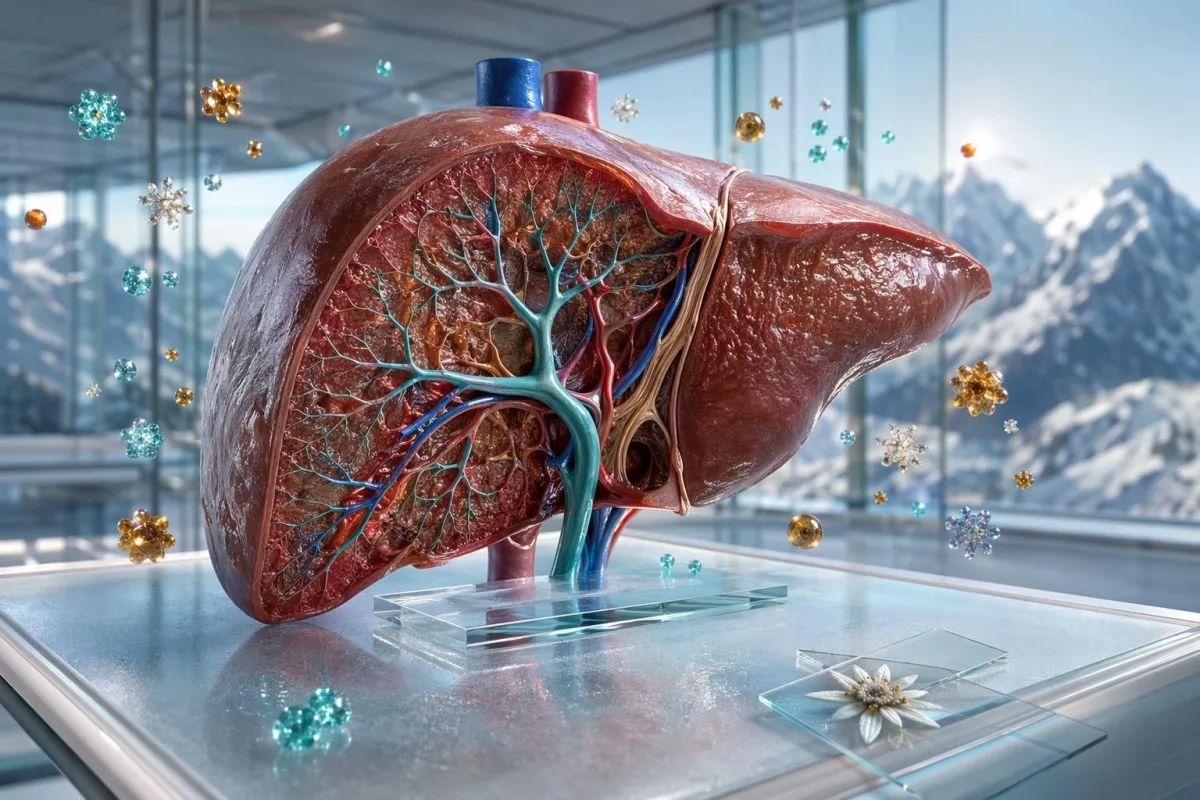
A standard liver panel usually checks ALT, AST, ALP, bilirubin, albumin, and total protein; some labs add GGT, direct bilirubin, globulin, or PT/INR. The tricky part is that these markers show liver irritation, bile flow, and protein production indirectly, so a normal result does not prove the liver or bile ducts are completely normal.


- Standard liver panel usually includes ALT, AST, ALP, total bilirubin, direct bilirubin, albumin, and total protein; GGT and PT/INR are added by some labs.
- ALT and AST are enzyme markers of liver-cell irritation; ALT above about 56 IU/L or AST above about 40 IU/L is commonly flagged, but ranges vary by lab.
- ALP and GGT screen for bile duct strain; ALP above 147 IU/L with GGT above 60 IU/L is more suggestive of a hepatobiliary source than bone alone.
- Bilirubin is usually normal below 1.2 mg/dL, or 21 µmol/L; direct bilirubin above 0.3 mg/dL can point toward bile flow or conjugation problems.
- Albumin normally runs about 3.5–5.0 g/dL; low albumin may reflect chronic liver disease, kidney protein loss, inflammation, or poor intake.
- PT/INR is not always in a liver panel, but INR above 1.2 without anticoagulant use can reveal impaired clotting factor production.
- Normal liver panel results can miss early fatty liver, early fibrosis, intermittent gallstone blockage, small-duct cholangitis, and focal liver growths.
- Pattern matters: ALT/AST-dominant results suggest hepatocellular injury, while ALP/GGT/bilirubin-dominant results suggest cholestasis or bile duct involvement.
- Urgent symptoms include yellow eyes, dark urine, pale stools, confusion, fever with right-upper-abdominal pain, vomiting blood, or a rapidly rising INR.
Which tests are usually included in a liver panel?
A liver panel usually includes ALT, AST, alkaline phosphatase, total bilirubin, direct bilirubin, albumin, and total protein; some laboratories add GGT, globulin, A/G ratio, or PT/INR. That is the direct answer to what is included in a liver panel, but the clinical value comes from reading the pattern, not circling one high number.
The phrase hepatic function panel components is a little misleading because ALT and AST do not measure liver function; they measure leakage of enzymes from irritated cells. True liver function is better reflected by albumin, bilirubin handling, and clotting measures such as PT/INR, which is why a patient can have normal enzymes and still have impaired reserve.
Kantesti is an AI blood test analyzer that reads liver panel tests alongside adjacent markers such as CBC, creatinine, ferritin, lipids, glucose, and inflammatory markers. In our analysis of millions of uploaded reports, the common mistake is treating ALT of 52 IU/L as the whole story while ignoring platelets of 132 x 10^9/L, albumin of 3.4 g/dL, or a prior ALT of 24 IU/L. Our wider biomarkers guide explains why single-marker interpretation is often too thin.
As of June 29, 2026, most UK and US outpatient liver panels still do not include viral hepatitis testing, autoimmune antibodies, ferritin saturation, liver fibrosis scores, or ultrasound. If your symptoms are pale stools, itching, weight loss, persistent right-sided pain, or jaundice, a normal panel should not end the conversation.
What do ALT and AST screen for?
ALT and AST screen for liver-cell irritation, not liver performance. ALT is more liver-specific, while AST can also rise after muscle injury, heavy exercise, haemolysis, or alcohol exposure.
A typical adult ALT reference interval is about 7–56 IU/L, and a typical AST interval is about 10–40 IU/L. Some European labs use lower ALT thresholds, often near 35 IU/L for men and 25 IU/L for women, because metabolic liver disease can exist below older laboratory cutoffs.
I remember a 52-year-old marathon runner with AST of 89 IU/L and ALT of 41 IU/L two days after a hard downhill race. His CK was over 2,000 IU/L, his bilirubin was normal, and the pattern behaved like muscle release rather than hepatitis; that distinction is covered in our guide to AST with normal ALT.
The ACG guideline on abnormal liver chemistries recommends confirming abnormal aminotransferases and assessing viral hepatitis, alcohol exposure, metabolic risk, iron overload, and medication injury when elevations persist (Kwo et al., 2017). In practice, ALT of 80 IU/L for 6 months worries me more than ALT of 140 IU/L after a documented viral illness that falls to 38 IU/L within 4 weeks.
ALT above 5 times the upper reference limit, roughly over 250 IU/L in many labs, usually deserves faster follow-up than a borderline result. ALT or AST above 1,000 IU/L narrows the differential sharply toward acute viral hepatitis, ischemic liver injury, severe drug toxicity, or acute bile duct obstruction.
How do ALP and GGT point toward bile duct problems?
ALP and GGT point toward bile duct or cholestatic problems when they rise together. ALP alone is less specific because bone growth, healing fractures, pregnancy, and some intestinal isoenzymes can raise it.
A common adult ALP reference interval is about 44–147 IU/L, while GGT is often below 60 IU/L in adult men and below 40 IU/L in adult women. ALP above 147 IU/L with GGT above 60 IU/L usually shifts the source toward liver or bile ducts rather than bone.
The reason clinicians pair these markers is practical: ALP is made in bile duct lining and bone, while GGT is concentrated in hepatobiliary tissue and is inducible by alcohol and several medicines. Our deeper article on borderline ALP explains why a result of 151 IU/L may be nothing or the earliest clue, depending on the rest of the panel.
When ALP is high but GGT is normal, I start thinking about bone turnover, vitamin D deficiency, healing fracture, Paget disease, or laboratory variation before blaming the liver. If uncertainty remains, ALP isoenzymes can separate liver-derived from bone-derived ALP, although availability varies by country.
A normal ALP does not fully exclude bile duct disease. Intermittent gallstone obstruction can normalize between attacks, and small-duct primary sclerosing cholangitis can exist with surprisingly modest enzyme changes, especially early on.
What do total and direct bilirubin results mean?
Total bilirubin measures all bilirubin in the blood, while direct bilirubin measures the conjugated fraction processed by the liver. Total bilirubin is often normal from 0.2–1.2 mg/dL, or about 3–21 µmol/L.
Indirect bilirubin rises when production exceeds processing, as in haemolysis or Gilbert syndrome, while direct bilirubin rises when conjugated bilirubin cannot drain properly or leaks back into blood. Direct bilirubin above 0.3 mg/dL, or above roughly 5 µmol/L, is often flagged, but the percentage of direct-to-total bilirubin matters as much as the absolute number.
At Kantesti, we often see bilirubin spikes after fasting, dehydration, illness, or aggressive calorie restriction in people later found to have Gilbert syndrome. A fasting total bilirubin of 1.8 mg/dL with normal ALT, AST, ALP, GGT, and direct bilirubin is a different clinical picture from total bilirubin of 1.8 mg/dL with direct bilirubin of 1.1 mg/dL and pale stools.
Our article on direct versus indirect bilirubin walks through those split patterns in more detail. I usually ask about dark urine, pale stool, itching, fever, right-upper-abdominal pain, recent antibiotics, and family history before deciding whether to repeat labs, add haemolysis testing, or image the bile ducts.
Total bilirubin above 3.0 mg/dL, or about 51 µmol/L, is often visibly jaundiced in fair lighting, though skin tone and lighting change what people notice. Bilirubin with confusion, severe abdominal pain, fever, or INR elevation needs urgent same-day assessment.
Why are albumin and total protein on a liver panel?
Albumin and total protein are included because the liver manufactures major blood proteins. Albumin normally runs about 3.5–5.0 g/dL, and total protein often runs about 6.0–8.3 g/dL.
Low albumin is not automatically liver failure. Albumin of 3.1 g/dL can come from chronic inflammation, kidney protein loss, gut protein loss, poor intake, fluid overload, burns, or advanced liver disease, so I rarely interpret it without urine protein, CRP, kidney function, and body weight trend.
The A/G ratio compares albumin with globulins, and a low ratio can reflect high immune proteins or low albumin. If globulin is high alongside abnormal liver markers, I think about chronic infection, autoimmune liver disease, alcohol-related disease, or plasma-cell disorders; our serum proteins guide is useful when total protein looks odd.
A total protein of 8.7 g/dL with albumin of 4.1 g/dL implies globulin around 4.6 g/dL, which is not the same problem as total protein of 5.5 g/dL with albumin of 2.8 g/dL. Patients with unexplained globulin elevation may also want to read about high globulin patterns, because the liver panel alone cannot separate inflammation from monoclonal protein.
Albumin changes slowly because its half-life is roughly 20 days. That lag means a normal albumin does not exclude acute severe hepatitis, and a low albumin may reflect a problem that began weeks before the liver panel was drawn.
Is PT/INR part of a liver panel?
PT/INR is sometimes added to a liver panel, but many routine hepatic panels omit it. When included, it helps assess liver synthetic function because the liver makes several clotting factors.
A typical PT is about 11–13.5 seconds, and an INR is usually around 0.8–1.1 in adults not taking warfarin. INR above 1.2 without anticoagulant therapy, vitamin K deficiency, or lab error can be an early warning that the liver is not producing clotting factors normally.
The liver panel may look only mildly abnormal while INR is already climbing. In my clinical practice, an ALT of 350 IU/L with INR 1.0 is much less frightening than ALT of 350 IU/L with INR 1.7, vomiting, and drowsiness.
Our guide to high prothrombin time explains why PT can rise from vitamin K deficiency, bile flow problems, liver synthetic failure, anticoagulants, and malabsorption. That distinction matters because vitamin K deficiency may correct quickly, while worsening INR in acute liver injury can deteriorate within hours.
PT/INR should be checked urgently when a person has jaundice plus confusion, easy bruising, black stools, severe weakness, or suspected overdose. It is one of the few liver-related blood results where the direction of travel over 6–24 hours can change the level of care.
What are typical liver panel reference ranges?
Typical liver panel reference ranges vary by laboratory, assay, sex, age, pregnancy status, and units. A result inside the printed range is not always optimal, and a result just outside the range is not always disease.
ALT is often listed as 7–56 IU/L, AST as 10–40 IU/L, ALP as 44–147 IU/L, total bilirubin as 0.2–1.2 mg/dL, albumin as 3.5–5.0 g/dL, and total protein as 6.0–8.3 g/dL. In SI units, total bilirubin of 1.2 mg/dL is about 21 µmol/L, which is why international reports can look more alarming than they are.
A reference range usually contains the central 95% of a selected population, not the range that guarantees health. That is why our article on within normal limits is worth reading before dismissing a result that drifted from ALT 18 to ALT 47 IU/L over 18 months.
Sex-specific ranges can matter. The British Society of Gastroenterology guideline on abnormal liver blood tests argues that abnormal tests should be interpreted in clinical context rather than ignored because they are mild (Newsome et al., 2018).
A result is more meaningful when compared with your own baseline. If your ALP has been 62 IU/L for years and is now 139 IU/L with itching, I pay more attention than I would to a single ALP of 139 IU/L in late pregnancy.
How do doctors read liver panel result patterns?
Doctors read liver panel results by pattern: hepatocellular, cholestatic, mixed, or synthetic dysfunction. ALT/AST-dominant results point toward liver-cell injury, while ALP/GGT/bilirubin-dominant results point toward bile flow or duct involvement.
The R ratio is a useful tool: R equals ALT divided by its upper limit, then divided by ALP divided by its upper limit. An R ratio above 5 suggests a hepatocellular pattern, below 2 suggests cholestatic injury, and 2–5 suggests a mixed pattern.
Kantesti is an AI lab test interpretation service that calculates pattern logic from uploaded reports instead of reading one marker in isolation. This matters because ALT 130 IU/L with ALP 90 IU/L is not the same clinical pathway as ALT 70 IU/L with ALP 340 IU/L and GGT 210 IU/L.
The ACG guideline uses the terms hepatocellular, cholestatic, and mixed to direct next testing, including viral hepatitis tests, autoimmune markers, imaging, and medication review (Kwo et al., 2017). Our guide to abnormal lab clusters shows why platelets, MCV, ferritin, glucose, triglycerides, and creatinine often change the interpretation.
Pattern reading also prevents overreaction. A 25-year-old who lifts heavy weights and has AST 76 IU/L, ALT 38 IU/L, CK 900 IU/L, normal bilirubin, and normal ALP usually needs rest and repeat testing, not a panic search for rare liver disease.
Why can a normal liver panel miss liver or bile duct disease?
A normal liver panel can miss early fatty liver, compensated cirrhosis, early fibrosis, intermittent bile duct blockage, small-duct cholangitis, and focal liver growths. Blood tests sample chemistry, not architecture.
This is the part patients are rarely told. A liver can have substantial fat or fibrosis while ALT, AST, bilirubin, and albumin remain in range, especially when disease develops slowly and the remaining liver tissue compensates.
The 2021 EASL guideline on non-invasive tests emphasizes that fibrosis assessment often requires tools beyond routine liver enzymes, including FIB-4, transient elastography, and other non-invasive markers (EASL, 2021). That is why a normal ALT does not rule out metabolic dysfunction-associated steatotic liver disease in someone with diabetes, waist gain, triglycerides of 240 mg/dL, or sleep apnoea; our fatty liver diet guide covers modifiable drivers.
Intermittent obstruction is another blind spot. A small gallstone may block the duct for 2 hours, trigger severe pain, and pass before the lab draw, leaving bilirubin and ALP nearly normal by the time blood is collected.
Viral hepatitis, iron overload, autoimmune liver disease, and Wilson disease may require targeted tests that are not part of a routine panel. If risk is present, our articles on hepatitis testing and iron overload clues explain why normal enzymes should not stop appropriate screening.
What can temporarily change liver panel results?
Temporary liver panel changes commonly come from alcohol, strenuous exercise, viral illness, dehydration, fasting, medications, and supplements. The timing of the blood draw can change the story more than people expect.
AST can rise after hard training because skeletal muscle contains AST, while ALT may rise modestly after prolonged endurance events. A CK result above 1,000 IU/L after exercise helps explain AST-dominant changes, especially when bilirubin and ALP are normal.
Alcohol can raise GGT for weeks, but GGT is not an alcohol test. Anticonvulsants, rifampicin, some antifungals, anabolic-androgenic steroid exposure, herbal extracts, and high-dose niacin can alter liver enzymes, which is why medication timelines matter as much as the numeric result.
Our article on exercise-related lab shifts gives a practical example: a CrossFit session 24–48 hours before testing can raise AST, CK, LDH, and sometimes potassium. I usually advise avoiding unusually intense exercise for 48–72 hours before a repeat liver panel if the goal is a clean baseline.
Acetaminophen is the medication I ask about very directly. In many countries, 4,000 mg per day is the adult maximum on labels, but risk rises with fasting, alcohol use, low body weight, chronic liver disease, and accidental overlap between cold medicines.
Which follow-up tests are useful after abnormal liver results?
Useful follow-up tests depend on the pattern, but common next steps include repeat liver panel, GGT, CK, hepatitis B and C tests, ferritin with transferrin saturation, autoimmune markers, ultrasound, and fibrosis scoring. One repeat value often prevents both underreaction and overreaction.
If ALT or AST is mildly elevated below 2 times the upper limit, many clinicians repeat testing in 2–12 weeks depending on symptoms, medication exposure, and risk factors. If ALT or AST is above 5 times the upper limit, I usually shorten that window substantially and review drugs, alcohol, viral symptoms, and bilirubin immediately.
Kantesti AI interprets liver panel results by comparing the enzyme pattern with nearby markers, prior reports, and common lab-error clues. For a deeper practical workflow, our guide on repeating abnormal labs explains when a repeat draw is enough and when imaging or specialist referral is more sensible.
For cholestatic patterns, ultrasound is often the first imaging test because it can show duct dilation, gallstones, and liver texture. For hepatocellular patterns, I think about hepatitis serology, ferritin saturation, autoimmune markers such as ANA/SMA/IgG, and metabolic risk assessment.
Before starting potentially hepatotoxic medicines, baseline ALT, AST, ALP, bilirubin, and sometimes albumin or INR are useful. Our article on liver tests before medicines covers statins, isotretinoin, methotrexate, antifungals, and long-term immune therapies.
Do liver panel results differ in pregnancy, children, and athletes?
Yes, liver panel interpretation differs in pregnancy, children, adolescents, athletes, and older adults. The same ALP or AST number can mean very different things depending on physiology and timing.
ALP commonly rises in pregnancy because the placenta produces ALP, and it can also be higher in growing children and teenagers because bone turnover is active. That means ALP of 180 IU/L may be expected in late pregnancy or adolescence but more suspicious in a non-pregnant adult with itching.
Athletes often have higher AST, CK, and LDH after training, while older adults may have deceptively normal ALT because muscle mass and enzyme release can be lower. Our piece on lab values by sex explains why reference intervals are not one-size-fits-all.
Children require age-specific interpretation. A toddler’s ALP can be several times the adult upper limit during growth, and paediatric bilirubin interpretation differs sharply in newborns compared with adults.
In older adults, I take new cholestatic symptoms seriously even if the panel is only mildly abnormal. New pale stools, dark urine, weight loss, or persistent right-upper-abdominal discomfort warrants clinical review because malignancy and obstruction can start subtly.
How does AI interpretation add context to liver panel results?
AI interpretation adds context by linking liver markers to trends, related biomarkers, medication timing, and risk patterns. It cannot diagnose you, but it can reduce the chance that a meaningful pattern is missed in a dense PDF.
Kantesti is an AI biomarker interpretation platform used by people across 127 countries to interpret blood test PDFs and photos in plain language. Our AI reads 15,000+ biomarkers, supports 75+ languages, and usually returns an interpretation in about 60 seconds after upload.
The useful part is not a shiny score; it is context. If ALT fell from 140 to 62 IU/L, platelets stayed at 255 x 10^9/L, bilirubin remained 0.7 mg/dL, and albumin stayed 4.4 g/dL, that trend feels different from ALT 62 IU/L with platelets drifting from 210 to 128 x 10^9/L over 2 years.
Our clinical review process is described on the medical validation page, and the engineering approach is outlined in the technology guide. The pre-registered benchmark of the Kantesti blood-test interpretation engine on 100,000 synthetic cases is also available via technical benchmark, which is helpful for readers who want methodology rather than marketing.
Kantesti AI can flag likely lab-unit mismatches, implausible combinations, and missing follow-up markers, but it does not replace a clinician who can examine your abdomen, review imaging, and understand symptoms. That distinction is central to our lab error checks work.
When should liver panel results be reviewed urgently?
Liver panel results need urgent review when abnormal numbers occur with jaundice, dark urine, pale stools, confusion, fever, severe right-upper-abdominal pain, vomiting blood, black stools, or INR elevation. Symptoms change the risk level more than the lab flag alone.
ALT or AST above 1,000 IU/L, bilirubin above 3.0 mg/dL with symptoms, ALP above 3 times the upper limit with fever or pain, or INR above 1.5 without anticoagulant use should not wait for a routine appointment. In my experience, the dangerous cases often look like a cluster: rising bilirubin, worsening INR, falling albumin, low platelets, and a patient who feels progressively unwell.
Bring dates, doses, and timing. A useful doctor visit checklist includes alcohol intake by week, acetaminophen dose in mg/day, supplements, antibiotics, travel, viral exposures, pregnancy status, weight change, pain timing after meals, stool colour, urine colour, and prior liver panel values.
Thomas Klein, MD, and our clinical team built Kantesti’s review style around this exact principle: labs need symptoms, history, and trend. You can read more about our doctors and oversight through the Medical Advisory Board, and patients preparing for a clinician conversation may also find our second opinion checklist practical.
Bottom line: a liver panel is a screening and monitoring tool, not a full liver diagnosis. If your result is normal but your body is giving bile duct or liver warning signs, ask for a targeted workup rather than accepting the word normal as the end of the story.
Frequently Asked Questions
What is included in a liver panel?
A standard liver panel usually includes ALT, AST, alkaline phosphatase, total bilirubin, direct bilirubin, albumin, and total protein. Some laboratories also include GGT, globulin, A/G ratio, LDH, or PT/INR, but these are not universal. ALT and AST screen for liver-cell irritation, ALP and GGT screen for bile duct strain, bilirubin reflects processing and drainage, and albumin reflects protein production over roughly 20 days.
Is a hepatic function panel the same as a liver panel?
A hepatic function panel and a liver panel usually refer to the same group of tests, although exact components vary by laboratory. Most include ALT, AST, ALP, bilirubin fractions, albumin, and total protein. The term hepatic function panel is imperfect because ALT and AST are enzyme leakage markers rather than true function tests; PT/INR and albumin are closer measures of synthetic function.
Can liver disease exist with normal liver panel results?
Yes, liver disease can exist with normal liver panel results, especially early fatty liver, early fibrosis, compensated cirrhosis, intermittent bile duct obstruction, and some focal liver growths. Routine liver panel tests measure chemistry in the blood, not liver stiffness, scarring, fat content, or duct anatomy. If symptoms such as jaundice, pale stools, itching, unexplained weight loss, or persistent right-upper-abdominal pain are present, imaging or targeted blood tests may still be needed.
What liver panel numbers are considered concerning?
ALT or AST above 5 times the upper limit of normal, often above about 250 IU/L, usually needs prompt review, and values above 1,000 IU/L can indicate acute severe injury. Total bilirubin above 3.0 mg/dL with symptoms, ALP above 3 times the upper limit, or INR above 1.5 without anticoagulant use can also be concerning. The pattern and symptoms matter: mild ALT elevation with normal bilirubin is very different from mild ALT elevation with jaundice and a rising INR.
Does a liver panel show alcohol damage?
A liver panel can suggest alcohol-related liver stress but cannot prove alcohol damage by itself. GGT may rise after alcohol exposure, AST may exceed ALT in some alcohol-related patterns, and MCV or triglycerides may add clues outside the panel. Many non-alcohol causes also raise GGT or AST, so clinicians interpret the result with drinking history, medication use, ultrasound, fibrosis tests, and repeat trends.
Do I need to fast before a liver panel?
Most people do not need to fast before a routine liver panel, because ALT, AST, albumin, and bilirubin are usually interpretable without fasting. Fasting can raise bilirubin in people with Gilbert syndrome, sometimes pushing total bilirubin above 1.2 mg/dL while other markers remain normal. If the same blood draw includes triglycerides, glucose, or insulin, fasting instructions may depend on those tests rather than the liver panel itself.
What follow-up tests are ordered after an abnormal liver panel?
Follow-up after an abnormal liver panel depends on the pattern and may include repeat ALT, AST, ALP, bilirubin, GGT, CK, hepatitis B and C tests, ferritin with transferrin saturation, autoimmune markers, ultrasound, or fibrosis scoring such as FIB-4. Mild enzyme elevations below 2 times the upper limit are often repeated within 2–12 weeks if the person is well. Jaundice, fever, severe pain, confusion, or INR elevation usually requires faster medical review.
Can a home test replace a laboratory liver panel?
Home finger-prick kits may measure only a limited selection of markers and cannot assess all components of a standard liver panel reliably. Use a laboratory blood draw for abnormal results, ongoing monitoring, or symptoms such as jaundice, dark urine, or abdominal pain.
Get AI-Powered Blood Test Analysis Today
Join over 2 million users worldwide who trust Kantesti for instant, accurate lab test analysis. Upload your blood test results and receive comprehensive interpretation of 15,000+ biomarkers in seconds.
📚 Referenced Research Publications
Klein, T., Mitchell, S., & Weber, H. (2026). A Pre-Registered, Rubric-Based Automated Technical Benchmark of the Kantesti Blood-Test Interpretation Engine on 100,000 Synthetic Test Cases. Kantesti AI Medical Research.
Klein, T., Mitchell, S., & Weber, H. (2026). Clinical Validation Framework v2.0 (Medical Validation Page). Kantesti AI Medical Research.
📖 External Medical References
⚕️ Medical Disclaimer
This article is for educational purposes only and does not constitute medical advice. Always consult a qualified healthcare provider for diagnosis and treatment decisions.
E-E-A-T Trust Signals
Experience
Physician-led clinical review of lab interpretation workflows.
Expertise
Laboratory medicine focus on how biomarkers behave in clinical context.
Authoritativeness
Written by Dr. Thomas Klein with review by Dr. Sarah Mitchell and Prof. Dr. Hans Weber.
Trustworthiness
Evidence-based interpretation with clear follow-up pathways to reduce alarm.