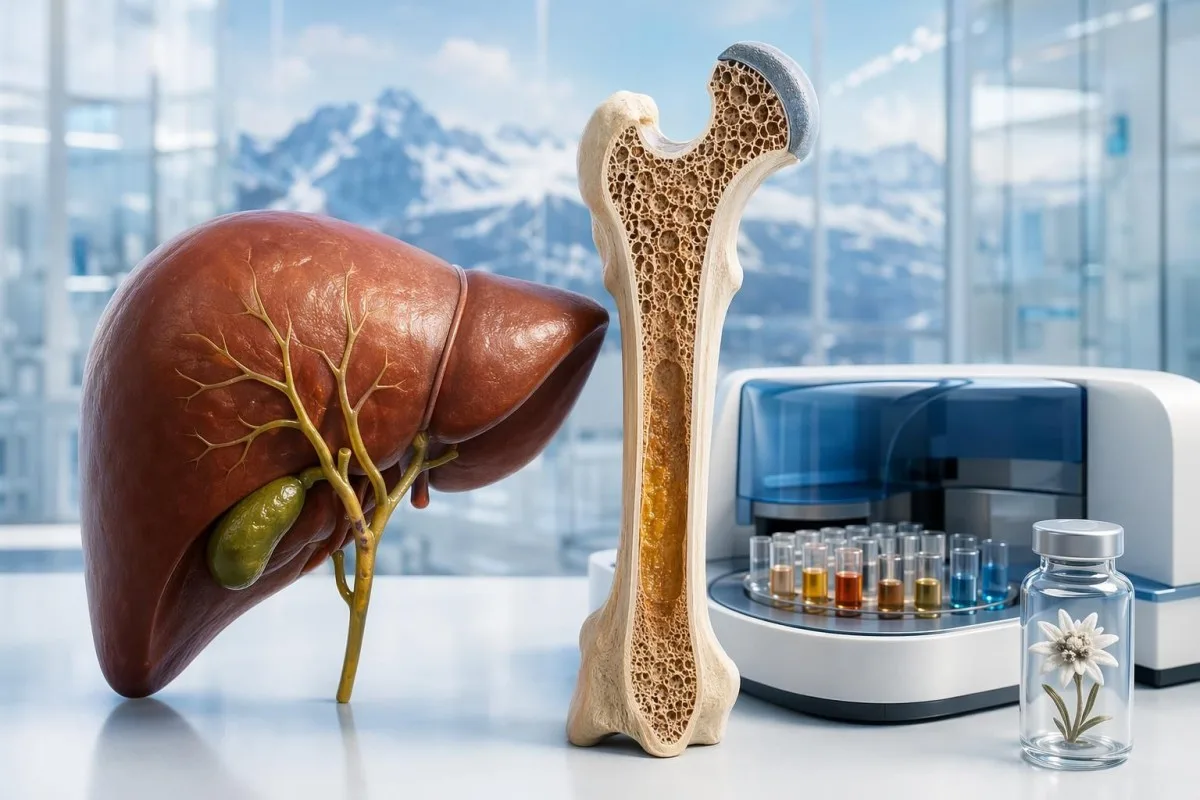
A mildly abnormal ALP is often a clue, not a diagnosis. The same number can mean a fatty meal effect, growing bone, pregnancy, vitamin D deficiency, bile duct irritation, or simply normal lab variation.


- Borderline ALP usually means alkaline phosphatase is just above the lab’s upper limit, often less than 1.5× the upper limit of normal.
- Typical adult ALP range is roughly 40–120 U/L, but some labs use 44–147 U/L and age-specific ranges matter.
- Fasting status can change interpretation because intestinal ALP may rise after a fatty meal, especially in blood group O or B secretors.
- Age and growth matter: teenagers can have ALP values 2–3× adult ranges during rapid bone growth without liver disease.
- Pregnancy can raise ALP to 2–4× the non-pregnant upper limit in the third trimester because the placenta produces ALP.
- Vitamin D deficiency below 20 ng/mL can raise ALP through increased bone turnover, especially with high PTH or low phosphate.
- Liver-source ALP is more likely when GGT, 5′-nucleotidase, bilirubin, or direct bilirubin are also elevated.
- When to worry about alkaline phosphatase depends on persistence, symptoms, and pattern; ALP above 1.5× the upper limit for more than 3 months usually deserves follow-up.
What a borderline ALP result usually means
A borderline alkaline phosphatase result usually means ALP is slightly above the lab’s reference range, often less than 1.5× the upper limit. In plain terms, the borderline alkaline phosphatase meaning is usually “repeat and interpret in context,” not “you have liver disease.” I’m Thomas Klein, MD, and when I review a mild ALP flag, I first ask: was it fasting, how old is the person, pregnant, vitamin D deficient, or are GGT and bilirubin also abnormal?
A typical adult ALP reference interval is about 40–120 U/L, although I regularly see lab ranges from 44–147 U/L. A result of 126 U/L in one laboratory may be flagged high, while the same value is normal in another; this is why borderline lab values need the actual range printed on your report.
Kantesti is an AI blood test analyzer that reads ALP beside age, sex, pregnancy status, GGT, ALT, AST, bilirubin, calcium, phosphate, vitamin D and prior results, rather than treating one flagged number as a stand-alone diagnosis. In our analysis of 2M+ uploaded reports, the benign-looking ALP of 122 U/L is often less useful than the pattern around it.
The slightly elevated alkaline phosphatase meaning changes fast if symptoms are present. ALP of 135 U/L with normal GGT and normal bilirubin is usually handled very differently from ALP of 135 U/L with itching, dark urine, direct bilirubin elevation or unexplained weight loss.
Why ALP ranges vary by lab, age and assay method
ALP ranges vary because laboratories use different instruments, reagents, populations and age partitions. A result near the cutoff can be classified as normal or abnormal depending on whether the lab’s upper limit is 120 U/L, 129 U/L or 147 U/L.
ALP is an enzyme family found mainly in liver bile duct cells, bone-forming osteoblasts, intestine and placenta. The number on a routine chemistry panel is total ALP, not a source-specific value; our biomarker guide explains why one analyte can represent several tissues.
A borderline ALP should be compared with your own past results when possible. A stable ALP of 128 U/L for 5 years is less concerning than a drift from 72 to 128 U/L over 6 months, even if both sit near the same reference limit.
Some European labs use narrower adult ALP intervals than large North American reference labs, partly because population vitamin D status and assay calibration differ. The practical trick is simple: judge the result against the lab’s own range, then against your personal baseline.
How fasting status and fatty meals can nudge ALP up
A non-fasting sample can mildly raise ALP because intestinal ALP may increase after a fatty meal. This effect is usually small, but it can matter when the result is only 5–20 U/L above the upper limit.
The meal effect is most visible in people with blood group O or B who secrete intestinal ALP into the bloodstream after eating. If ALP is 121–145 U/L and every other liver marker is normal, repeating a fasting morning chemistry panel is often cleaner than ordering imaging on day one.
This is one reason I ask patients what they ate before a “routine” panel. A late breakfast with eggs, buttered toast or a high-fat shake can complicate interpretation, much like other tests discussed in our fasting versus non-fasting guide.
Fasting does not explain every mild ALP elevation. If repeat fasting ALP remains above 1.5× ULN, or if GGT, bilirubin or symptoms are abnormal, the explanation has likely moved beyond breakfast.
Age, growth spurts and bone turnover clues
Age is one of the biggest ALP modifiers because growing bone produces ALP. Children and adolescents may have ALP values 2–3× adult ranges during growth spurts without any liver problem.
In teenagers, I do not interpret ALP with a 45-year-old adult range. A 14-year-old with ALP around 350 U/L may be normal during rapid growth, while the same result in a 60-year-old needs a source check; age-specific interpretation is covered in our teen lab ranges article.
Bone healing can raise ALP for 6–12 weeks after a fracture, sometimes longer after major orthopedic surgery. Paget disease of bone more often produces ALP values 2–4× ULN, especially in older adults, but early or limited disease can be milder.
Athletes are a funny group. I have seen marathon runners with borderline ALP plus high CK after heavy training; in that setting, the ALP may reflect bone remodeling or recent tissue stress rather than bile duct disease.
Pregnancy changes ALP more than many people expect
Pregnancy can raise ALP substantially because the placenta produces its own ALP isoenzyme. By the third trimester, ALP may reach 2–4× the non-pregnant upper limit and still be physiologic if other markers and symptoms are reassuring.
The pregnancy pattern usually shows ALP rising gradually after mid-pregnancy, not suddenly spiking with jaundice or severe itching. In our pregnancy blood test guide, I emphasize that trend and symptoms matter more than a single chemistry flag.
An ALP of 220 U/L at 34 weeks can be boringly normal, while ALP of 160 U/L with high bile acids, itching on palms and soles, or elevated bilirubin deserves same-day obstetric advice. Pregnancy makes reference intervals softer, but symptoms still cut through the noise.
After delivery, placental ALP usually falls over several weeks. If ALP remains elevated beyond 6–12 weeks postpartum, I would look again at GGT, bilirubin, vitamin D, calcium, phosphate and bone-specific causes.
Vitamin D, calcium and PTH can turn ALP into a bone clue
Low vitamin D can raise ALP by increasing bone turnover, especially when parathyroid hormone is high. A 25-OH vitamin D below 20 ng/mL is commonly considered deficient and can be part of a mild ALP elevation pattern.
The Endocrine Society guideline by Holick et al. defined vitamin D deficiency as 25-OH vitamin D below 20 ng/mL and insufficiency as 21–29 ng/mL (Holick et al., 2011). The evidence around optimal vitamin D targets is honestly mixed, but ALP plus low vitamin D, low phosphate or high PTH is a real bone signal.
I often see the pattern in winter: ALP 130–170 U/L, 25-OH vitamin D 10–18 ng/mL, calcium normal and PTH mildly high. Our vitamin D levels guide explains why calcium can remain normal because PTH compensates by pulling calcium from bone.
A normal calcium does not rule out vitamin D-related bone turnover. If ALP is borderline and bone pain, muscle weakness, low phosphate or high PTH appears, I would also review our low calcium pattern discussion before assuming the liver is the source.
Liver markers that change the meaning of mild ALP
ALP is more concerning for a liver or bile duct source when GGT, 5′-nucleotidase, bilirubin or direct bilirubin are also elevated. Isolated borderline ALP with normal GGT is usually less liver-specific.
The American College of Gastroenterology guideline recommends confirming hepatic ALP elevation with GGT and evaluating cholestatic patterns when ALP is disproportionately high (Kwo et al., 2017). In practice, ALP 1.5× ULN plus GGT above the lab range is a different problem from ALP 1.1× ULN alone.
If ALT and AST are high, the pattern may be mixed rather than purely cholestatic. Our liver enzyme patterns guide walks through why ALT, AST, ALP and bilirubin are read as a cluster, not four independent alarms.
One useful rule: high ALP with normal GGT often points toward bone, intestinal, pregnancy or lab variation. For a deeper source-by-source breakdown, see our guide to ALP with normal GGT.
Common mild ALP elevation causes I check before panic
The most common mild ALP elevation causes include recent meals, growth, pregnancy, vitamin D deficiency, bone healing, fatty liver with cholestatic features, medication effects and early bile duct disease. Cancer is possible but not the usual explanation for a borderline isolated result.
Medication history matters. Anticonvulsants, some antibiotics, anabolic agents, high-dose vitamin A and occasional herbal products can alter liver or bone chemistry; I usually compare medication start dates with the ALP timeline using the same logic described in our medication monitoring guide.
Alcohol tends to raise GGT more prominently than ALP, although liver disease is rarely that tidy. Fatty liver can produce mild ALP elevation, but ALT and metabolic markers such as triglycerides, A1c and waist circumference often give the earlier clue.
The “worry list” grows if ALP rises progressively from 120 to 180 to 260 U/L, even without symptoms. Static borderline results and moving borderline results are not the same clinical story.
When ALP isoenzymes or 5′-nucleotidase help
ALP isoenzymes help identify whether the elevation is mainly from liver, bone, intestine or placenta. They are most useful when total ALP stays high and routine markers cannot explain the source.
I do not order isoenzymes for every ALP of 123 U/L. I consider them when ALP is persistently above 1.5× ULN, when GGT is normal but symptoms suggest bone disease, or when pregnancy, growth and fasting status do not explain the result.
Bone-specific ALP can be helpful in suspected Paget disease, osteomalacia, healing fracture or high-turnover bone states. Our detailed ALP isoenzyme guide covers why total ALP is sometimes too blunt a tool.
5′-nucleotidase is less affected by bone and can support a hepatic source when ALP is high. If ALP is 160 U/L, GGT is normal and 5′-nucleotidase is normal, I am far less likely to start with bile duct imaging.
When to repeat a borderline ALP and how to prepare
A borderline ALP is often repeated in 2–12 weeks, depending on symptoms and the size of the elevation. If the result is less than 1.5× ULN and the rest of the panel is normal, repeat testing is usually reasonable before extensive work-up.
For an isolated ALP of 125–145 U/L, I usually prefer a fasting morning repeat with GGT, bilirubin, ALT and AST. If the patient recently had a fracture, is pregnant or is a teenager, the repeat plan may be slower and more targeted.
Avoiding hard exercise for 24–48 hours before a repeat test can reduce confusing muscle and bone-related signals. Our guide to repeating abnormal labs gives practical timing rules for mild flags that are not emergencies.
Bring old results. A single repeat is useful, but a 3-point trend over 6–18 months is often what settles the question.
When to worry about alkaline phosphatase
You should worry more about ALP when it is persistent, rising, more than 1.5–2× ULN, or paired with symptoms such as jaundice, itching, pale stools, dark urine, fever, right upper abdominal pain or unexplained weight loss.
An ALP of 130 U/L with no symptoms and normal GGT is usually not an emergency. An ALP of 210 U/L with direct bilirubin elevation, fever and abdominal pain can represent obstruction or cholangitis and needs urgent clinical assessment.
Persistent cholestatic elevation is one reason clinicians test antimitochondrial antibodies for primary biliary cholangitis. AASLD guidance describes PBC diagnosis using cholestatic ALP elevation, compatible antibodies and exclusion of obstruction (Lindor et al., 2019).
If the lab report says “critical” or you feel unwell, do not wait for a routine retest. Our critical lab value guide explains which combinations deserve same-day care.
Why your personal ALP baseline can beat a generic range
Your own ALP baseline can be more informative than a population cutoff. A result inside the reference range can still matter if it has doubled from your usual value over a short period.
I see this most in patients who test yearly. ALP moving from 68 to 96 to 128 U/L may still look only mildly abnormal, but the slope asks a different question than a one-off 128 U/L after a fatty breakfast.
Kantesti is an AI blood test interpretation platform used by people in 127+ countries to compare current and prior lab reports in context. Trend logic is also why our blood test variability article separates noise from repeatable biological drift.
A useful home rule is to compare both percentage and absolute change. A 30 U/L rise can be trivial in a growing teenager but meaningful in a postmenopausal adult whose ALP has been stable for 10 years.
How Kantesti AI reads borderline ALP in context
Kantesti AI interprets borderline ALP by pattern-matching the result with liver markers, bone markers, age, pregnancy status, fasting notes, medications and previous reports. Our aim is not to diagnose from one value; it is to identify what follow-up question the value is asking.
Kantesti is an AI-powered blood test analysis tool used by 2M+ people across 127+ countries, and our neural network treats ALP as a multi-source enzyme rather than a single liver marker. If ALP is 142 U/L with normal GGT, normal bilirubin and low vitamin D, the suggested pathway differs from ALP 142 U/L with high GGT.
The clinical rules behind that logic are reviewed against physician oversight and validation methods, not left as a black box. Readers who want the engineering side can review our technology guide and our clinical validation page.
Kantesti AI can flag patterns, but it cannot examine your abdomen, review an ultrasound or decide whether your itching is cholestasis. That gap is why borderline ALP interpretation should support, not replace, medical review.
What to ask your clinician after a mild ALP flag
After a mild ALP flag, ask whether the likely source is liver, bone, intestine, placenta or lab variation. The next sensible tests often include repeat fasting ALP, GGT, bilirubin, ALT, AST, calcium, phosphate, PTH and 25-OH vitamin D.
A practical script is: “My ALP is 1.2× the upper limit; do we think this is liver or bone, and should we repeat it fasting with GGT?” That question usually gets a better answer than asking whether the number is “bad.”
If you are uploading a PDF or photo of your report, Kantesti’s workflow can organize the abnormal cluster in about 60 seconds before you speak with a clinician. For people who want a structured review, our free test upload is designed for exactly this kind of borderline result.
Second opinions help when the result is persistent, the explanation feels too casual, or symptoms are being dismissed. Our blood test review guide explains when another clinician’s eyes can change the plan.
Research, medical review and publication trail
As of June 10, 2026, borderline ALP interpretation still depends on clinical context more than a single universal cutoff. That is why our medical writing links lab-pattern reasoning to guideline-based review and transparent publication records.
Kantesti, an AI biomarker interpretation platform, is developed with physician oversight; our doctors and advisors review how risk language is framed for patients. You can read more about the clinicians behind this work through our medical advisory board.
Kantesti LTD. (2026). C3 C4 Complement Blood Test & ANA Titer Guide. Zenodo. https://doi.org/10.5281/zenodo.18353989. Related publication page: C3 C4 guide. ResearchGate: ResearchGate search. Academia.edu: Academia search.
Kantesti LTD. (2026). Nipah Virus Blood Test: Early Detection & Diagnosis Guide 2026. Zenodo. https://doi.org/10.5281/zenodo.18487418. Related publication page: Nipah blood test guide. ResearchGate: ResearchGate search. Academia.edu: Academia search. I’m Thomas Klein, MD, and my own editorial rule is simple: borderline labs should reduce uncertainty, not create panic.
Frequently Asked Questions
What does borderline alkaline phosphatase mean?
Borderline alkaline phosphatase usually means ALP is slightly above the lab’s upper limit, often less than 1.5× ULN. If the adult range is 40–120 U/L, a value around 121–180 U/L may be considered mild, depending on the lab. The result can come from liver, bone, intestine, placenta, meals or normal variation, so GGT, bilirubin, age, pregnancy status and vitamin D help define the meaning.
Is slightly elevated alkaline phosphatase serious?
A slightly elevated alkaline phosphatase is not automatically serious, especially when it is isolated and less than 1.5× the upper limit. It becomes more concerning when it persists for more than 3 months, rises over time, exceeds 2× ULN, or appears with jaundice, itching, dark urine, pale stools, fever or weight loss. Normal GGT and bilirubin make a liver or bile duct source less likely.
Can eating before a blood test raise ALP?
Yes, eating before a blood test can mildly raise ALP in some people because intestinal ALP may rise after a fatty meal. The effect is most described in blood group O or B secretors and is usually relevant when ALP is only 5–20 U/L above the cutoff. A fasting morning repeat is often the cleanest way to check whether a meal contributed.
What labs should be checked with a borderline ALP?
A borderline ALP is commonly interpreted with GGT, bilirubin, direct bilirubin, ALT, AST, calcium, phosphate, PTH and 25-OH vitamin D. GGT or 5′-nucleotidase helps confirm whether ALP is likely from liver or bile ducts. Vitamin D below 20 ng/mL, high PTH or low phosphate shifts attention toward bone turnover.
Can vitamin D deficiency cause high alkaline phosphatase?
Vitamin D deficiency can raise alkaline phosphatase by increasing bone turnover, especially when 25-OH vitamin D is below 20 ng/mL. The pattern is stronger when PTH is high, phosphate is low, or there are bone pain and muscle weakness symptoms. Calcium may stay normal because PTH compensates, so normal calcium does not rule out vitamin D-related ALP elevation.
When should ALP be repeated?
An isolated borderline ALP is often repeated in 2–12 weeks, depending on symptoms, pregnancy status, age and how high the result is. If ALP is less than 1.5× ULN and GGT, bilirubin, ALT and AST are normal, a fasting repeat is usually reasonable. Faster follow-up is warranted if ALP is rising, above 2× ULN, or paired with jaundice, fever, abdominal pain or unexplained weight loss.
Can a recent bone fracture raise alkaline phosphatase?
Yes. Healing fractures increase bone-forming activity and can raise ALP for weeks to months, depending on the fracture and recovery. Tell your clinician about any recent injury or orthopedic surgery so the result can be interpreted as a possible bone-related change.
Should I stop a medication if my alkaline phosphatase is slightly high?
Do not stop a prescribed medication on your own. Ask the clinician who prescribed it to review the result alongside your other liver tests, symptoms, dose, and treatment alternatives; many mild elevations can be monitored safely.
Get AI-Powered Blood Test Analysis Today
Join over 2 million users worldwide who trust Kantesti for instant, accurate lab test analysis. Upload your blood test results and receive comprehensive interpretation of 15,000+ biomarkers in seconds.
📚 Referenced Research Publications
Klein, T., Mitchell, S., & Weber, H. (2026). C3 C4 Complement Blood Test & ANA Titer Guide. Kantesti AI Medical Research.
Klein, T., Mitchell, S., & Weber, H. (2026). Nipah Virus Blood Test: Early Detection & Diagnosis Guide 2026. Kantesti AI Medical Research.
📖 External Medical References
⚕️ Medical Disclaimer
This article is for educational purposes only and does not constitute medical advice. Always consult a qualified healthcare provider for diagnosis and treatment decisions.
E-E-A-T Trust Signals
Experience
Physician-led clinical review of lab interpretation workflows.
Expertise
Laboratory medicine focus on how biomarkers behave in clinical context.
Authoritativeness
Written by Dr. Thomas Klein with review by Dr. Sarah Mitchell and Prof. Dr. Hans Weber.
Trustworthiness
Evidence-based interpretation with clear follow-up pathways to reduce alarm.