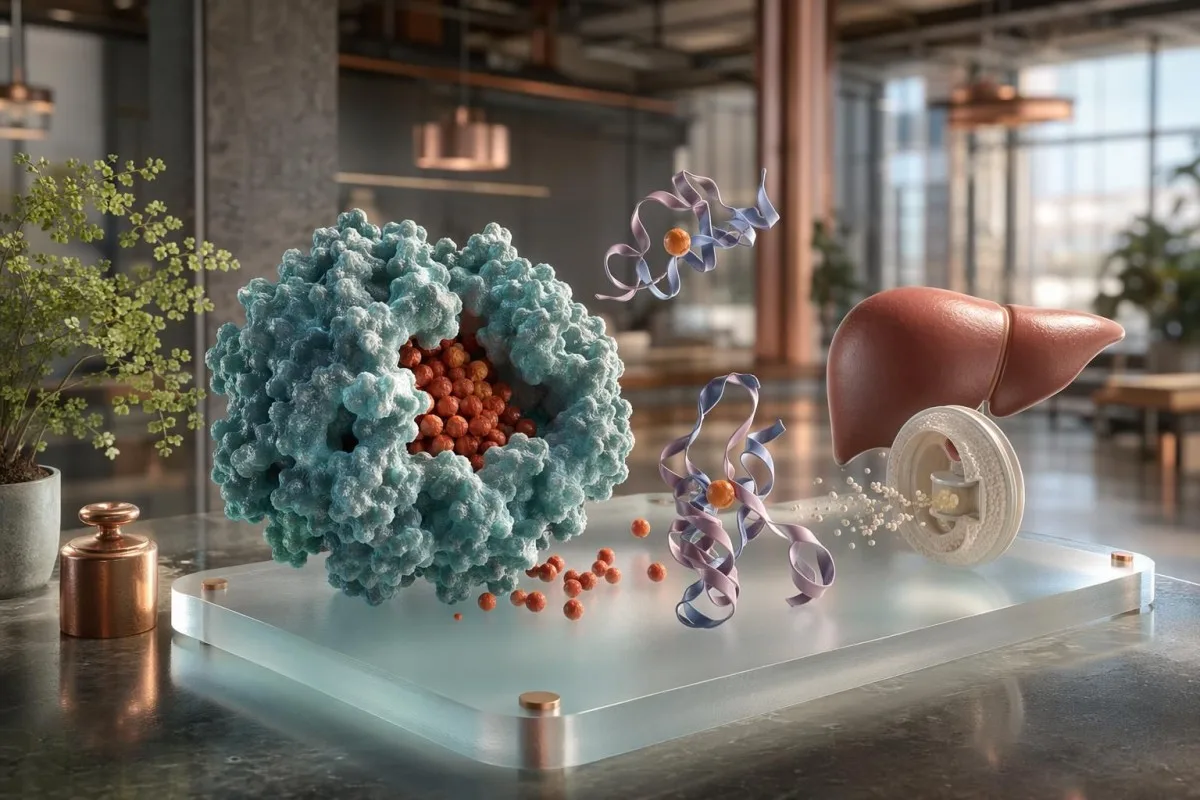
A low serum iron result is often the start of the story, not the diagnosis. The pattern across ferritin, transferrin saturation, TIBC, CRP and the CBC usually tells the truth.


- Serum iron can fall after illness, exercise, poor sleep or an afternoon draw; one low value does not prove iron deficiency.
- Transferrin saturation is usually considered low below 20%, and values below 16% more strongly suggest restricted iron delivery to marrow.
- Ferritin below 15 ng/mL is highly specific for depleted iron stores in adults without inflammation; many clinicians treat values below 30 ng/mL as suspicious.
- Inflammation can raise hepcidin and lower serum iron within hours, while ferritin may look normal or high despite poor iron availability.
- True iron deficiency typically shows low serum iron, low ferritin, high TIBC or transferrin, and low transferrin saturation.
- Anemia of inflammation often shows low serum iron, low transferrin saturation, normal or high ferritin, and low or normal TIBC.
- Low serum iron symptoms are more likely when low iron affects hemoglobin, MCV, RDW or reticulocytes, not when serum iron is isolated.
- Repeat testing is usually best in the morning, well hydrated, and ideally before taking iron that day unless your clinician advised otherwise.
Why one low serum iron result is not a diagnosis
A single low serum iron result can be caused by true iron deficiency, but it can also reflect test timing, a recent infection, inflammation, exercise stress or the normal daily swing of iron in the bloodstream. The pattern matters: low ferritin with high TIBC points toward depleted stores, while low serum iron with normal or high ferritin often points toward inflammation-driven iron trapping.
I am Thomas Klein, MD, and in clinical review I rarely act on serum iron alone. A value of 35 µg/dL may be a real deficiency in one patient and a temporary inflammatory shift in another, which is why our first question is usually: what did ferritin, transferrin saturation, TIBC and CRP do at the same time?
Kantesti is an AI blood test analyzer that reads serum iron beside ferritin, TIBC, transferrin saturation, hemoglobin, MCV and inflammation markers rather than treating one flagged number as a diagnosis. If you want the longer marker-by-marker explanation, our low iron meaning guide walks through the same pattern logic patients ask me about most often.
One detail patients almost never get told: serum iron is a small circulating compartment, not your warehouse. Most body iron sits in hemoglobin and storage proteins, so serum iron can dip for a few hours without proving that the warehouse is empty.
Normal serum iron ranges and what the test actually measures
Serum iron measures circulating iron bound mostly to transferrin at the moment of the draw. Many adult laboratories report a reference range near 60-170 µg/dL, or about 10.7-30.4 µmol/L, but ranges differ by method, sex, age and local calibration.
Transferrin saturation is calculated as serum iron divided by iron-binding capacity, and a typical adult reference range is about 20-45%. A transferrin saturation below 20% means iron delivery is restricted; below 16% is a stronger clue when paired with anemia or microcytosis.
Ferritin is the storage marker, but it is also an acute-phase reactant. The WHO 2020 ferritin guideline treats ferritin below 15 ng/mL as depleted iron stores in apparently healthy adults, while higher cutoffs are often needed when inflammation is present.
Different countries report the same panel differently: TIBC may appear in µg/dL, transferrin in g/L, and serum iron in µmol/L. Our iron studies guide is useful when two lab reports look inconsistent only because the units changed.
Timing, fasting and recent iron tablets can shift results
Serum iron often varies by 30-50% across the day, and morning values tend to run higher than afternoon values in many people. A late-day draw after poor sleep or hard training can look worse than a repeat morning sample from the same patient.
Recent oral iron can also distort interpretation. A 65 mg elemental iron tablet may transiently raise serum iron for several hours, but repeated dosing can increase hepcidin for roughly 24 hours, which may reduce absorption from the next dose.
Fasting is not always required for iron studies, but consistency matters. If your first test was non-fasting at 4 p.m. and your repeat was fasting at 8 a.m., the difference may be timing rather than a biological recovery.
I usually ask patients to record the draw time, last iron dose, recent infection, heavy exercise in the prior 48 hours and menstrual timing if relevant. Our fasting comparison guide explains which common blood markers truly shift after food and which barely move.
How inflammation lowers serum iron without empty stores
Inflammation lowers serum iron by increasing hepcidin, a liver-made hormone that blocks iron release from intestinal cells and macrophages. This can produce low serum iron and low transferrin saturation even when ferritin stores are normal or high.
The mechanism is not theoretical. Ganz and Nemeth described hepcidin as a central switch in iron homeostasis during host defence, with interleukin-6 signalling able to reduce circulating iron rapidly during immune activation (Ganz and Nemeth, 2015).
In our Kantesti reviews, I see this pattern after respiratory infections, autoimmune flares, inflammatory bowel symptoms and sometimes after intense endurance events. A CRP above 5 mg/L makes ferritin harder to trust; a CRP above 10 mg/L makes isolated serum iron even less reliable.
The classic inflammatory pattern is low serum iron, low transferrin saturation, normal or high ferritin, and low or normal TIBC. If that sounds like your panel, compare it with our ferritin and CRP guide before assuming diet is the only cause.
Iron study patterns that point to true iron deficiency
True iron deficiency usually shows low serum iron, low ferritin, low transferrin saturation and high TIBC or high transferrin. The reason TIBC rises is simple: the body produces more transport capacity when it is trying to capture scarce iron.
Ferritin below 15 ng/mL is highly specific for depleted stores in adults without inflammation, but many clinicians act at ferritin below 30 ng/mL when symptoms or falling hemoglobin are present. In restless legs or endurance athletes, some specialists target ferritin above 50 ng/mL, though the evidence is not equally strong for every symptom.
Camaschella's 2015 New England Journal of Medicine review describes iron deficiency as a staged process: stores fall first, transferrin saturation drops next, and hemoglobin may not fall until later. That staging is why a normal hemoglobin does not rule out early deficiency (Camaschella, 2015).
The CBC adds texture. Rising RDW above about 14.5%, falling MCH below 27 pg, or MCV drifting below 80 fL makes a low iron panel more convincing; our anemia pattern guide covers those CBC combinations in more detail.
One caveat: thalassemia trait can also cause low MCV, but it often has a normal or high red cell count and normal ferritin. That is a different pathway, and giving iron indefinitely without confirming deficiency is a common mistake.
Low transferrin saturation causes and symptom clues
Low transferrin saturation causes include iron deficiency, inflammation, chronic kidney disease, recent illness, pregnancy, heavy blood loss and sometimes poor absorption. Symptoms are more likely when saturation stays below 20% and the CBC shows reduced oxygen-carrying capacity.
Low transferrin saturation symptoms can include fatigue, breathlessness on stairs, palpitations, dizziness, headaches, cold intolerance, brittle nails, hair shedding and restless legs. I take symptoms more seriously when transferrin saturation is below 16% and ferritin is below 30 ng/mL, because that combination usually means low available iron plus low reserve.
A low saturation with a normal ferritin is not automatically reassuring. If CRP is elevated, ferritin may be inflated; if transferrin is low from inflammation or protein loss, the calculated saturation can also behave oddly.
When microcytosis is present, the distinction between iron deficiency and inherited small-cell patterns matters. Our MCV and MCH guide explains why MCV below 80 fL and MCH below 27 pg do not always mean the same diagnosis.
Ferritin, CRP and the functional iron deficiency trap
Functional iron deficiency means iron stores may exist, but iron is not available where it is needed, especially in bone marrow. The common lab pattern is low serum iron, low transferrin saturation, ferritin above 100 ng/mL and raised CRP or ESR.
Kantesti is an AI blood test interpretation platform that weighs ferritin against CRP, ESR, albumin, kidney markers and CBC indices before calling a result nutritional deficiency. That distinction matters because taking more iron is not always the answer when hepcidin is high.
Weiss and Goodnough described anemia of chronic disease as an immune-mediated iron restriction state, not simply an iron-poor state (Weiss and Goodnough, 2005). In this setting, ferritin can be 150-500 ng/mL while transferrin saturation sits below 20%.
The tricky band is ferritin 30-100 ng/mL with CRP above 5 mg/L. In my experience, that is where true deficiency and inflammation often overlap; the ESR and hemoglobin pattern can help decide whether the marrow is being starved, suppressed, or both.
Diet and absorption causes patients often miss
Diet can cause low serum iron when intake is low, absorption is blocked, or iron requirements exceed intake for months. The highest-yield diet questions are usually about heme iron intake, vitamin C pairing, tea or coffee timing, calcium timing and long-term acid suppression.
Non-heme iron from beans, lentils, spinach and fortified grains is useful, but absorption may be only 2-10% when phytates, tea polyphenols or calcium are taken at the same meal. Heme iron from fish or meat is absorbed more efficiently, often around 15-35%, though not every patient eats those foods for personal or medical reasons.
Vitamin C can rescue a marginal meal. Adding citrus, berries or peppers can increase non-heme iron absorption, while tea or coffee within 1-2 hours can blunt it; that small timing change is one of the least dramatic but most effective interventions I give.
Long-term proton pump inhibitor use, bariatric surgery, celiac disease and inflammatory bowel disease can all lower iron absorption. For practical meal patterns, the low ferritin diet guide gives food combinations that are safer than simply doubling supplements.
Blood loss, donation, pregnancy and endurance training
Chronic blood loss is one of the most common causes of true iron deficiency, especially when ferritin is low and TIBC is high. Heavy periods, gastrointestinal bleeding, frequent donation, pregnancy and endurance training all increase iron demand or iron loss.
A typical unit donation removes about 200-250 mg of iron, which can take months to replace without supplementation. Some frequent donors keep normal hemoglobin but ferritin falls below 30 ng/mL, creating fatigue long before the donation screen flags anemia.
Menstrual blood loss is easy to underestimate. Soaking through protection, passing clots, or bleeding longer than 7 days can produce a falling ferritin trend even when serum iron bounces between low and normal; our period hemoglobin guide explains the CBC timing traps.
Pregnancy expands plasma volume and fetal iron demand, so transferrin saturation may fall even before hemoglobin becomes abnormal. Athletes add another layer: foot-strike hemolysis, sweat iron loss and gut irritation after long runs are why I read endurance panels differently from office-worker panels.
If there are no heavy periods, no donation history and no obvious diet explanation, gastrointestinal blood loss deserves attention. Our ferritin after donation guide gives useful timing for one common cause, but unexplained adult iron deficiency still needs clinician-led review.
CBC patterns that make low iron clinically meaningful
Low serum iron becomes more clinically meaningful when the CBC shows anemia, microcytosis, hypochromia, high RDW or low reticulocytes. Hemoglobin below 12 g/dL in many non-pregnant adult women or below 13 g/dL in many adult men usually warrants a cause-focused workup.
Low serum iron symptoms are often nonspecific until hemoglobin drops. Fatigue, reduced exercise tolerance and brain fog can happen at ferritin below 30 ng/mL, but chest pain, fainting or marked breathlessness suggest the problem is no longer just a lab curiosity.
RDW is a quiet early clue. A rising RDW can appear before the MCV falls because new iron-limited cells mix with older normal cells, creating size variation that the patient never sees but the analyzer catches.
Reticulocytes tell us whether marrow is responding. Low reticulocytes with low iron markers suggest poor production; high reticulocytes after treatment can show recovery, though hemoglobin may need 2-4 weeks to move meaningfully.
If your report says low hemoglobin as well as low iron, read the pattern rather than one flag. Our low hemoglobin guide separates nutritional deficiency, blood loss, inflammation and marrow underproduction in plain clinical language.
When to repeat iron studies and how to prepare
A borderline or isolated low serum iron result is often worth repeating in 2-8 weeks, depending on symptoms and the rest of the panel. Repeat sooner if hemoglobin is falling, and repeat later if you are waiting to see whether diet or supplements move ferritin.
For a clean repeat, I prefer a morning draw, normal hydration, no strenuous exercise for 24-48 hours, and no iron tablet that morning unless the ordering clinician wants to measure response after dosing. Record any fever, vaccination, infection or inflammatory flare in the prior 2 weeks.
Kantesti's neural network is designed to notice whether the new result is a real directional change or just normal blood test variability. A serum iron shift from 48 to 62 µg/dL may matter less than ferritin falling from 42 to 18 ng/mL across three draws.
Do not repeat endlessly without a plan. If ferritin remains below 30 ng/mL, transferrin saturation stays below 20%, or hemoglobin keeps drifting down, our repeat lab guide explains when a recheck should become a medical appointment.
Red flags that need same-day medical advice
Low serum iron needs same-day advice when it comes with severe breathlessness, chest pain, fainting, black stools, vomiting blood, pregnancy bleeding, rapid heart rate at rest or a rapidly falling hemoglobin. These symptoms can signal acute blood loss or significant anemia rather than a slow nutritional issue.
I do not use a fixed serum iron cutoff for emergency referral because 25 µg/dL can be stable in one patient and dangerous in another if hemoglobin is 6.8 g/dL. The urgent number is usually the hemoglobin, vital signs and bleeding history, not serum iron alone.
Black, tarry stool is a particular warning sign because iron tablets can darken stool too, but true melena has a distinctive sticky texture and odor. If there is doubt and symptoms are present, it is safer to contact urgent care than to wait for another outpatient panel.
Dizziness changes the risk calculation. A patient with low iron markers plus fainting, palpitations or shortness of breath should not treat the problem as a supplement shopping question; our dizziness lab guide explains which other markers clinicians often check at the same visit.
How Kantesti reads iron panels in context
Kantesti interprets iron panels by looking for internally consistent patterns across serum iron, ferritin, TIBC, transferrin saturation, CBC indices, CRP, kidney markers and trend history. That is closer to how a careful physician reads iron studies than how most patients read a single red flag.
Kantesti is an AI-powered blood test analysis tool used by 2M+ people across 127+ countries, and our iron interpretation is built to separate depleted stores from inflammatory iron restriction. As of June 28, 2026, our platform supports multilingual interpretation across 75+ languages with privacy-focused, GDPR-aligned handling.
Our AI does not diagnose gastrointestinal bleeding, celiac disease or autoimmune disease from serum iron. It flags patterns, explains uncertainty, and suggests which questions to take to a clinician; the technical approach is described in our technology guide.
The practical value is trend memory. If your ferritin was 85 ng/mL last year, 44 ng/mL six months ago and 19 ng/mL today, that slope matters even if hemoglobin is still normal; our biomarker guide lists the broader marker families we track.
Medical oversight matters for YMYL content and lab interpretation. Our methodology and physician review standards are described in our clinical validation materials, including how the system handles abnormal clusters rather than isolated out-of-range markers.
Research publications and a practical next step
The safest next step after low serum iron is to classify the pattern before changing treatment. Ask whether the result looks like depleted stores, inflammatory restriction, mixed disease, recent timing noise or blood loss that still needs a source.
If ferritin is below 15-30 ng/mL and transferrin saturation is below 20%, I usually think about iron deficiency first. If ferritin is above 100 ng/mL, CRP is high and TIBC is low or normal, I think about inflammation first, even when serum iron looks dramatically low.
Kantesti research also covers adjacent areas that influence iron interpretation across life stages. Klein, T. (2026). Women's Health Guide: Ovulation, Menopause & Hormonal Symptoms. Figshare. DOI: 10.6084/m9.figshare.31830721. ResearchGate: publication search. Academia.edu: publication search.
Klein, T. (2026). Multilingual AI Assisted Clinical Decision Support for Early Hantavirus Triage: Design, Engineering Validation, and Real-World Deployment Across 50,000 Interpreted Blood Test Reports. Figshare. DOI: 10.6084/m9.figshare.32230290. ResearchGate: publication search. Academia.edu: publication search.
Bottom line: do not let one low serum iron result frighten you or reassure you by itself. If symptoms, ferritin, saturation and CBC all point the same way, act with your clinician; if they disagree, pause and interpret the pattern with help from our Medical Advisory Board standards.
Frequently Asked Questions
What are the most common low serum iron causes?
The most common low serum iron causes are true iron deficiency, recent inflammation or infection, blood loss, low dietary intake, poor absorption, pregnancy, frequent blood donation and test timing. Serum iron can vary by 30-50% across the day, so one low afternoon value is weaker evidence than a repeated pattern. Low ferritin below 15-30 ng/mL plus transferrin saturation below 20% is much more suggestive of true deficiency.
Can inflammation cause low serum iron but normal ferritin?
Yes, inflammation can cause low serum iron with normal or high ferritin because hepcidin traps iron inside storage cells and reduces iron release into circulation. A CRP above 5 mg/L makes ferritin harder to interpret, and CRP above 10 mg/L makes isolated serum iron especially unreliable. The typical inflammation pattern is low serum iron, low transferrin saturation, normal or high ferritin, and low or normal TIBC.
What low transferrin saturation causes should I ask my doctor about?
Low transferrin saturation causes include iron deficiency, inflammation, chronic kidney disease, pregnancy, heavy menstrual bleeding, gastrointestinal blood loss, recent illness and poor absorption from conditions such as celiac disease or bariatric surgery. Transferrin saturation below 20% usually means reduced iron availability, and below 16% is a stronger clue when symptoms or anemia are present. Your doctor will usually compare it with ferritin, TIBC, CRP and the CBC.
What are low serum iron symptoms?
Low serum iron symptoms can include fatigue, reduced exercise tolerance, dizziness, headaches, shortness of breath on exertion, palpitations, cold intolerance, brittle nails, hair shedding and restless legs. Symptoms are more meaningful when ferritin is below 30 ng/mL, transferrin saturation is below 20%, or hemoglobin is low. Severe breathlessness, chest pain, fainting or black stools should be assessed urgently rather than managed with supplements alone.
Can I have low iron with normal hemoglobin?
Yes, you can have low iron stores with normal hemoglobin because iron deficiency often develops in stages. Ferritin may fall below 30 ng/mL before hemoglobin drops below 12 g/dL in many adult women or below 13 g/dL in many adult men. This is why ferritin, transferrin saturation, MCV, MCH and RDW can show early deficiency before the CBC clearly says anemia.
When should serum iron be repeated?
An isolated low serum iron result is often repeated in 2-8 weeks, depending on symptoms and whether hemoglobin is stable. A cleaner repeat is usually done in the morning, with normal hydration, no strenuous exercise for 24-48 hours, and no iron tablet that morning unless your clinician advises otherwise. Repeat sooner if hemoglobin is falling, symptoms are worsening, or there are signs of bleeding.
Does a low serum iron result mean I need iron supplements?
A low serum iron result alone does not prove you need iron supplements because inflammation and timing can lower serum iron temporarily. Supplements are more clearly supported when ferritin is below 15-30 ng/mL, transferrin saturation is below 20%, or the CBC shows iron-limited red cell production. Taking iron unnecessarily can cause side effects and may be unsafe in iron overload conditions, so the full pattern should guide treatment.
When might intravenous iron be considered instead of iron tablets?
Intravenous iron may be considered when confirmed iron deficiency is severe, oral iron is not tolerated or absorbed, or blood loss is ongoing. It is given under medical supervision, and the choice depends on your iron pattern, symptoms, hemoglobin, and underlying cause.
Get AI-Powered Blood Test Analysis Today
Join over 2 million users worldwide who trust Kantesti for instant, accurate lab test analysis. Upload your blood test results and receive comprehensive interpretation of 15,000+ biomarkers in seconds.
📚 Referenced Research Publications
Klein, T., Mitchell, S., & Weber, H. (2026). Women's Health Guide: Ovulation, Menopause & Hormonal Symptoms. Kantesti AI Medical Research.
Klein, T., Mitchell, S., & Weber, H. (2026). Multilingual AI Assisted Clinical Decision Support for Early Hantavirus Triage: Design, Engineering Validation, and Real-World Deployment Across 50,000 Interpreted Blood Test Reports. Kantesti AI Medical Research.
📖 External Medical References
Ganz T, Nemeth E (2015). Iron homeostasis in host defence and inflammation. Nature Reviews Immunology.
⚕️ Medical Disclaimer
This article is for educational purposes only and does not constitute medical advice. Always consult a qualified healthcare provider for diagnosis and treatment decisions.
E-E-A-T Trust Signals
Experience
Physician-led clinical review of lab interpretation workflows.
Expertise
Laboratory medicine focus on how biomarkers behave in clinical context.
Authoritativeness
Written by Dr. Thomas Klein with review by Dr. Sarah Mitchell and Prof. Dr. Hans Weber.
Trustworthiness
Evidence-based interpretation with clear follow-up pathways to reduce alarm.