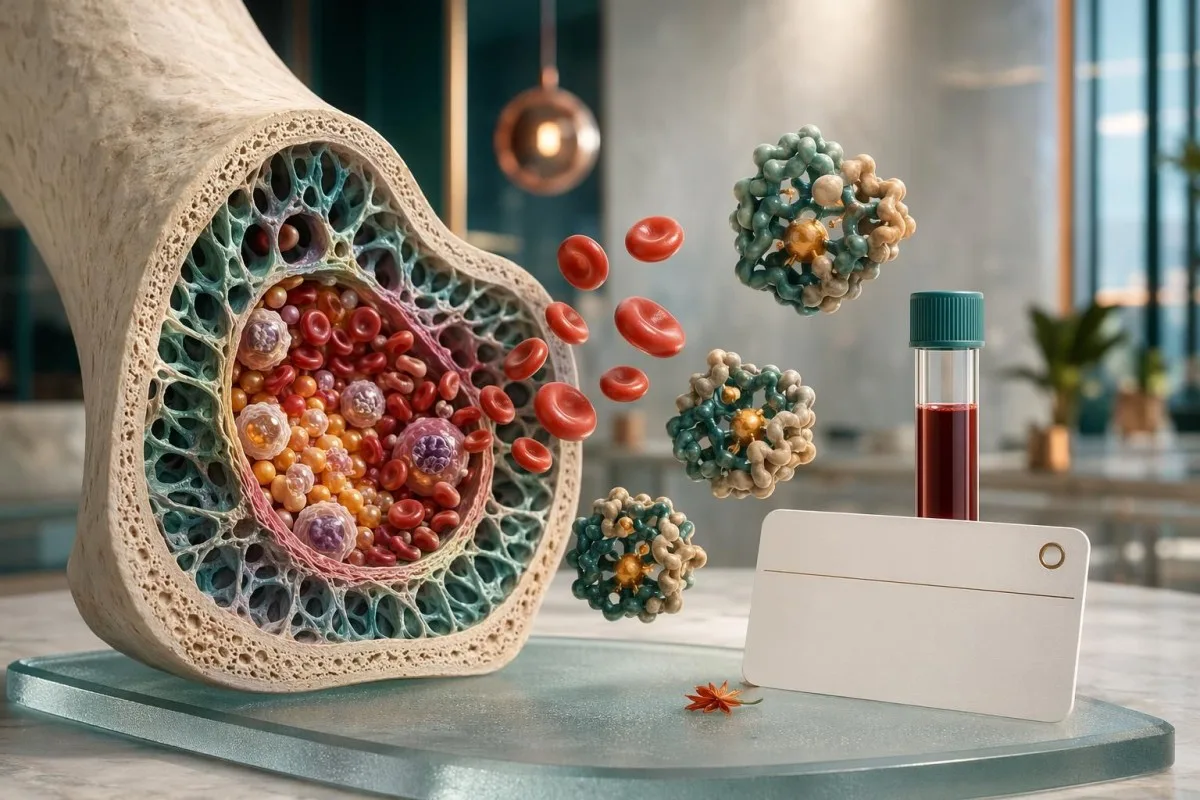
Menstruation can make a CBC look different, but the pattern matters more than one number. Here is how I separate normal cycle variation from early iron-deficiency anemia.


- Hemoglobin levels below 12.0 g/dL in a nonpregnant menstruating adult generally meet the WHO definition of anemia and deserve follow-up.
- Normal period flow usually causes little short-term CBC change; many patients shift less than 0.5 g/dL across a cycle.
- Heavy menstrual bleeding is often defined as more than 80 mL per cycle, bleeding longer than 7 days, or soaking protection hourly.
- Ferritin below 15 ng/mL strongly suggests depleted iron stores; many clinicians treat levels below 30 ng/mL as early deficiency when symptoms fit.
- Transferrin saturation below 20% supports iron-restricted red-cell production, especially when ferritin is borderline or CRP is high.
- MCV and MCH can stay normal for weeks after iron loss, so a normal CBC index does not rule out early iron deficiency.
- Reticulocytes may rise 5-10 days after iron treatment if the marrow has enough building blocks to make new red cells.
- Recheck timing is best 3-7 days after bleeding stops when you want a stable baseline, unless symptoms or very low results need urgent care.
Do hemoglobin levels drop during your period?
Hemoglobin levels can read slightly lower during a period, but a normal cycle rarely causes a dramatic CBC change by itself. In healthy menstruating adults, I usually expect less than a 0.5 g/dL swing; heavy bleeding can gradually push hemoglobin below 12.0 g/dL and ferritin below 30 ng/mL. I’m Thomas Klein, MD, and I treat a low result during menses as a timing clue, not an automatic diagnosis.
Kantesti is an AI blood test interpretation platform that reads hemoglobin levels alongside cycle timing, sex-specific reference ranges, ferritin, CRP, and prior results. A single CBC during menstruation is useful, but the best interpretation asks whether the result is new, persistent, symptomatic, or paired with iron depletion.
The World Health Organization defines anemia in nonpregnant women as hemoglobin below 12.0 g/dL, pregnancy anemia as below 11.0 g/dL, and adult male anemia as below 13.0 g/dL (WHO, 2011). Many labs list adult female reference intervals around 12.0-15.5 g/dL, but ranges vary by analyzer, altitude, smoking status, and androgen exposure; our CBC marker guide explains the rest of the panel.
Here is the clinical trap: a CBC taken on day 2 of a heavy period may look only mildly low, while ferritin has been falling for 6-12 months. For people comparing results across countries or different reference intervals, the biomarker range guide is often more helpful than staring at the red asterisk.
Why a CBC during menstruation may look temporarily lower
A CBC during menstruation can look lower because red-cell mass is being lost and plasma volume may rebalance over the next 24-72 hours. Hemoglobin often does not fall instantly on the first day of bleeding because whole blood and plasma are lost together.
The timing detail patients rarely hear is this: the hemoglobin number may lag behind the actual loss. After heavier flow, the body draws fluid back into the circulation, and that dilution can make hemoglobin and hematocrit look lower a day or two later.
Dehydration can push the number the other way. I have reviewed panels where a patient had a heavy day 1 period, skipped water before a fasting test, and still showed a normal hemoglobin because the blood was relatively concentrated; the blood test variability guide covers why small shifts should not be overread.
Our clinical review process checks whether the change exceeds expected biological variation. The Kantesti medical team audits these patterns against laboratory context and documented methods, and our clinical validation standards describe how we separate plausible physiologic variation from findings that should be escalated.
When period bleeding is heavy enough to affect hemoglobin
Heavy menstrual bleeding is commonly defined as blood loss above 80 mL per cycle, bleeding lasting more than 7 days, or flow that interferes with normal life. This pattern can lower hemoglobin over months, even when a single period does not produce a huge drop.
NICE guideline NG88 recommends a full blood count for people with heavy menstrual bleeding because anemia can be present even before someone uses the word heavy (NICE, 2021). A practical marker is soaking through one pad or tampon every hour for several hours, passing repeated clots larger than about 2.5 cm, or needing double protection at night.
A normal period often loses about 30-40 mL of blood, which contains roughly 15-20 mg of iron. At 80 mL, iron loss is closer to 40 mg per cycle; over 12 cycles that is about 480 mg, which is enough to drain stores in someone whose intake or absorption is marginal.
The pattern I watch is not just low hemoglobin. Low ferritin, high RDW, falling MCH, and reactive platelet elevation together tell a stronger story; our low hemoglobin guide walks through non-menstrual causes that should not be missed.
Reading hemoglobin, hematocrit, and RBC count together
Hemoglobin, hematocrit, and RBC count should move in a biologically sensible pattern after menstrual blood loss. Hematocrit is often roughly three times the hemoglobin value, so hemoglobin 12.0 g/dL often pairs with hematocrit near 36%.
If hemoglobin is low but RBC count is preserved or high, I think beyond simple menstrual iron loss. Thalassemia trait, recent altitude exposure, and analyzer artifacts can create a mismatch that looks like iron deficiency at first glance.
If hemoglobin, hematocrit, and RBC count all drift downward over 2-3 tests, chronic loss becomes more likely. In contrast, a sudden 1.5 g/dL fall after a very heavy period, miscarriage, surgery, or gastrointestinal bleeding needs faster review than a slow 0.2 g/dL change.
This is where pattern reading earns its keep. The RBC and hemoglobin comparison explains why one marker may look reassuring while another is already hinting at iron-restricted red-cell production.
CBC indices that change after iron stores fall
MCV, MCH, MCHC, and RDW usually change later than ferritin after heavy periods. MCV below 80 fL suggests microcytosis, but early iron deficiency can exist with MCV still in the normal 80-100 fL range.
MCH is the average hemoglobin per red cell, commonly about 27-33 pg in adults. When iron is limited, MCH can fall before MCV becomes frankly low, which is why a quiet MCV does not fully clear a patient with fatigue, restless legs, hair shedding, or heavy periods.
RDW often rises when the marrow releases a mixed population of older normal-sized cells and newer smaller cells. Many laboratories quote RDW around 11.5-14.5%, and a rising RDW with normal MCV is one of my favorite early clues; see the MCV and MCH pattern guide for the common combinations.
One nuance: iron tablets can temporarily increase RDW as new cells enter circulation, so RDW may look worse before the patient feels better. For deeper hematology detail, our RDW clinical guide explains how RDW-CV interacts with MCV and MCHC.
Iron markers that separate cycle variation from anemia risk
Ferritin, transferrin saturation, TIBC, and serum iron distinguish normal menstrual CBC variation from true iron deficiency. Ferritin below 15 ng/mL is highly specific for depleted stores, while ferritin below 30 ng/mL is often clinically meaningful in symptomatic menstruating adults.
Kantesti is an AI-powered blood test analysis tool that evaluates iron results as a cluster rather than treating ferritin, serum iron, or TIBC as isolated facts. This matters because serum iron can swing by 30-50% within a day, while ferritin usually reflects longer-term storage.
Camaschella’s New England Journal of Medicine review notes that iron-deficiency anemia is typically characterized by low ferritin, low transferrin saturation, and rising iron-binding capacity (Camaschella, 2015). In everyday practice, transferrin saturation below 20% tells me iron delivery to marrow may already be strained.
If you only order one follow-up after a low hemoglobin during a period, I would usually choose ferritin plus an iron panel rather than repeating CBC alone. Our iron studies guide explains why TIBC, transferrin saturation, and ferritin need to be read together.
Why ferritin and CRP should be checked together
Ferritin can look normal or high during inflammation, so CRP helps interpret iron stores after a low CBC result. A ferritin of 60 ng/mL is reassuring when CRP is normal, but less reassuring when CRP is 20 mg/L and transferrin saturation is 12%.
Ferritin is both an iron-storage protein and an acute-phase reactant. With infection, autoimmune activity, obesity-related inflammation, or recent tissue injury, ferritin can rise even while marrow iron delivery remains poor.
In our analysis of patient-uploaded panels, the misleading combination is normal ferritin with low transferrin saturation and elevated CRP. The ferritin and CRP guide goes deeper into this exact problem, including why ferritin cutoffs can shift toward 100 ng/mL in inflammatory states.
A practical interpretation: ferritin under 30 ng/mL with normal CRP is usually enough to explain early iron loss, while ferritin 30-100 ng/mL with CRP above 5-10 mg/L needs TSAT, TIBC, and clinical context. If TSAT is below 20%, our team does not dismiss iron deficiency just because ferritin is technically in range.
Reticulocytes, platelets, and WBC clues during menstruation
Reticulocytes, platelets, and WBC count add context when hemoglobin is low during a period. Reticulocytes usually run about 0.5-2.5% in adults, and a low reticulocyte response with anemia suggests the marrow lacks iron, B12, folate, or another signal.
After meaningful blood loss, a healthy marrow should increase reticulocyte production within several days if iron supply is adequate. If hemoglobin is 10.8 g/dL and reticulocytes are not rising, I start looking for iron restriction or mixed deficiencies rather than blaming the current period alone.
Platelets can climb in iron deficiency. A count above 450 x 10⁹/L may be reactive, especially when ferritin is low, but persistent or very high platelet counts need broader evaluation.
WBC count should not be assumed to change because of menstruation. If WBC is high, fever is present, or immature granulocytes appear, the question shifts toward infection or inflammation; the reticulocyte recovery guide explains the marrow timeline after treatment starts.
Best time to repeat a CBC after your period
For a stable baseline, repeat a CBC about 3-7 days after menstrual bleeding stops, using the same lab when possible. Do not delay repeat testing if hemoglobin is below 10 g/dL, symptoms are significant, or bleeding is still heavy.
If the question is trend accuracy, I prefer testing at a similar cycle point each time, such as days 7-10 from the start of bleeding. That reduces noise from acute flow, hydration, and short-term plasma shifts.
If the question is safety, timing matters less. A patient with palpitations, breathlessness climbing stairs, or near-fainting should not wait a week just to get a prettier baseline; the repeat abnormal labs guide lays out when retesting should be fast.
For people using wearables or symptom logs, I like pairing the CBC date with cycle day, flow score, iron dose, and recent illness. Three data points over 8-12 weeks tell a more honest story than one CBC during menstruation.
When low hemoglobin with a period needs same-day care
Low hemoglobin with heavy bleeding needs same-day care if there is fainting, chest pain, shortness of breath at rest, pregnancy, very fast heartbeat, or soaking through protection every hour for 2 or more hours. Hemoglobin below 8 g/dL is especially concerning when symptoms are present.
ACOG advises evaluation for bleeding disorders in adolescents with heavy menstrual bleeding, particularly when anemia, flooding, or family history is present (ACOG, 2019). I extend that thinking to adults with lifelong heavy periods, frequent nosebleeds, easy bruising, or excessive bleeding after dental work.
A hemoglobin of 9.8 g/dL in a stable patient with months of heavy periods is different from 9.8 g/dL with active heavy bleeding and dizziness. The second scenario can deteriorate quickly because the CBC may not yet show the full loss.
Ask about coagulation testing if periods are heavy and bruising or nosebleeds are part of the story. Our guide to easy bruising labs covers CBC, PT/INR, aPTT, ferritin, and von Willebrand screening conversations.
Life-stage differences that change the meaning of results
Adolescence, pregnancy, postpartum recovery, perimenopause, endurance training, and restrictive diets all change how menstrual hemoglobin results should be read. The same hemoglobin of 11.6 g/dL can mean different things in a 15-year-old, a postpartum parent, and a 47-year-old with new heavy cycles.
In adolescents, heavy bleeding from the first few periods can reveal von Willebrand disease or platelet function problems. In perimenopause, a new pattern of heavy or irregular bleeding should not be casually blamed on age without clinical review.
Pregnancy uses different hemoglobin thresholds because plasma volume expands substantially. The WHO threshold of 11.0 g/dL is a screening cutoff, but trimester, ferritin, symptoms, and obstetric history matter; our women’s life-stage checklist helps frame which labs fit which stage.
Athletes add another wrinkle. Foot-strike hemolysis, sweat iron loss, low energy availability, and frequent NSAID use can all lower iron stores, so a runner with periods and ferritin of 18 ng/mL may struggle even when hemoglobin is still 12.4 g/dL.
A practical follow-up plan after a low period CBC
A low CBC during a period should usually be followed by ferritin, transferrin saturation, TIBC, CRP, and a repeat CBC in 4-8 weeks. If iron is started, hemoglobin should often rise by about 1 g/dL within 2-4 weeks when absorption and adherence are good.
When I, Thomas Klein, MD, review this pattern, I ask four questions: how low is hemoglobin, how heavy is flow, how low is ferritin, and is there another source of loss. Gastrointestinal symptoms, black stools, blood donation, vegan diet, bariatric surgery, and long-term acid suppression all change the plan.
Many clinicians use 40-65 mg elemental iron once daily or every other day, adjusting for tolerance and local guidance. Constipation and nausea are common, so the best dose is the one the patient can actually take; our iron supplement guide compares dosing and retest timing.
Do not stop the evaluation just because hemoglobin normalizes. Ferritin often takes longer to recover, and many patients need 2-3 additional months of iron after hemoglobin returns to range to rebuild stores safely.
How Kantesti AI reads period timing in CBC interpretation
Kantesti AI reads a period-related CBC by checking whether hemoglobin, ferritin, indices, inflammation markers, and prior trends agree. A menstrual-timing note may explain a borderline result, but it should not hide clear iron deficiency or a dangerous downward trend.
Kantesti AI is an AI biomarker interpretation platform that processes uploaded blood test PDFs or photos in about 60 seconds and checks more than the flagged value. For hemoglobin, Kantesti AI looks at MCV, MCH, RDW, ferritin, CRP, platelets, renal markers, pregnancy context where provided, and longitudinal slope.
The useful output is not a diagnosis; it is a structured interpretation that says what fits, what does not fit, and what to ask next. The AI interpretation guide is frank about blind spots, including missing symptoms, unreported bleeding volume, and photos with unreadable units.
Our platform is GDPR-aligned and built for multilingual use across 75+ languages, but privacy does not replace clinical judgment. The technology guide explains how our neural network handles units, reference intervals, and trend context before a medical reviewer signs off on higher-risk content.
Research publications and review standards
This research section lists Kantesti publications and medical review standards that support our approach to structured lab interpretation. The papers below are not menstruation-specific studies; they document our publication workflow, clinical decision-support engineering, and transparent DOI-based record keeping.
Kantesti LTD is a UK company, and our medical content is reviewed through physician-led governance rather than anonymous automation. Dr. Thomas Klein and the wider clinical team use external guidelines first, then apply pattern-based interpretation; the medical advisory board describes the oversight model.
Kantesti AI. (2026). C3 C4 Complement Blood Test & ANA Titer Guide. Zenodo. https://doi.org/10.5281/zenodo.18353989. ResearchGate: ResearchGate. Academia.edu: Academia.edu. This DOI record is included because reproducible citation practice matters in medical AI content.
Kantesti AI. (2026). Nipah Virus Blood Test: Early Detection & Diagnosis Guide 2026. Zenodo. https://doi.org/10.5281/zenodo.18487418. ResearchGate: ResearchGate. Academia.edu: Academia.edu. We keep these records separate from guideline references so readers can distinguish platform research from external clinical evidence.
Frequently Asked Questions
Can periods cause low hemoglobin?
Periods can contribute to low hemoglobin when bleeding is heavy, prolonged, or repeated over many cycles. A normal period usually causes only a small temporary shift, often less than 0.5 g/dL, but heavy menstrual bleeding above about 80 mL per cycle can gradually deplete iron stores. Hemoglobin below 12.0 g/dL in a nonpregnant menstruating adult generally warrants ferritin and iron studies.
Should I avoid getting a CBC during menstruation?
You do not need to avoid a CBC during menstruation if the test is medically needed or symptoms are present. If the goal is a clean baseline, testing 3-7 days after bleeding stops often reduces short-term variation. A CBC during menstruation should be interpreted with cycle day, flow heaviness, hydration, ferritin, and prior hemoglobin values.
How much can hemoglobin drop during a period?
Most normal periods do not drop hemoglobin dramatically, and many patients change less than 0.5 g/dL across a cycle. A larger fall, such as 1.0 g/dL or more, is more concerning when it repeats, is paired with heavy bleeding, or comes with ferritin below 30 ng/mL. Acute heavy bleeding can also lag on the CBC because plasma volume rebalances over 24-72 hours.
What ferritin level is low if I have heavy periods?
Ferritin below 15 ng/mL strongly suggests depleted iron stores in most adults without inflammation. Ferritin between 15 and 30 ng/mL is often treated as early iron deficiency when heavy periods, fatigue, restless legs, hair shedding, or low MCH are present. If CRP is elevated, ferritin can look falsely normal, so transferrin saturation below 20% becomes especially useful.
Can hemoglobin be normal while ferritin is low?
Yes, hemoglobin can remain normal while ferritin is already low because iron stores fall before red-cell production fails. This pattern is common in menstruating adults, endurance athletes, blood donors, and people with low iron intake. Ferritin below 30 ng/mL with normal hemoglobin can still explain symptoms and may predict future anemia if heavy bleeding continues.
When is heavy period bleeding urgent?
Heavy period bleeding is urgent if you soak through one pad or tampon every hour for 2 or more hours, feel faint, have chest pain, are pregnant, or develop shortness of breath at rest. Hemoglobin below 8 g/dL is concerning, particularly with active bleeding or a fast heartbeat. Adolescents with severe heavy bleeding or a family history of bleeding disorders should be assessed for clotting conditions.
How fast should hemoglobin improve after iron treatment?
When iron deficiency is the main cause and the dose is absorbed, hemoglobin often rises by about 1 g/dL within 2-4 weeks. Reticulocytes may increase within 5-10 days, which shows the marrow is responding. Ferritin usually recovers more slowly, so many patients continue iron for 2-3 months after hemoglobin normalizes under clinician guidance.
Should I donate blood if I have heavy periods or low ferritin?
Avoid donating blood until a clinician confirms that anemia and iron deficiency have resolved. Blood donation removes additional iron, so ask about repeat hemoglobin and ferritin testing first, particularly if your periods remain heavy.
Get AI-Powered Blood Test Analysis Today
Join over 2 million users worldwide who trust Kantesti for instant, accurate lab test analysis. Upload your blood test results and receive comprehensive interpretation of 15,000+ biomarkers in seconds.
📚 Referenced Research Publications
Klein, T., Mitchell, S., & Weber, H. (2026). C3 C4 Complement Blood Test & ANA Titer Guide. Kantesti AI Medical Research.
Klein, T., Mitchell, S., & Weber, H. (2026). Nipah Virus Blood Test: Early Detection & Diagnosis Guide 2026. Kantesti AI Medical Research.
📖 External Medical References
World Health Organization (2011). Haemoglobin concentrations for the diagnosis of anaemia and assessment of severity. World Health Organization.
National Institute for Health and Care Excellence (2021). Heavy menstrual bleeding: assessment and management (NICE guideline NG88). NICE.
American College of Obstetricians and Gynecologists (2019). Screening and management of bleeding disorders in adolescents with heavy menstrual bleeding. Obstetrics & Gynecology.
⚕️ Medical Disclaimer
This article is for educational purposes only and does not constitute medical advice. Always consult a qualified healthcare provider for diagnosis and treatment decisions.
E-E-A-T Trust Signals
Experience
Physician-led clinical review of lab interpretation workflows.
Expertise
Laboratory medicine focus on how biomarkers behave in clinical context.
Authoritativeness
Written by Dr. Thomas Klein with review by Dr. Sarah Mitchell and Prof. Dr. Hans Weber.
Trustworthiness
Evidence-based interpretation with clear follow-up pathways to reduce alarm.