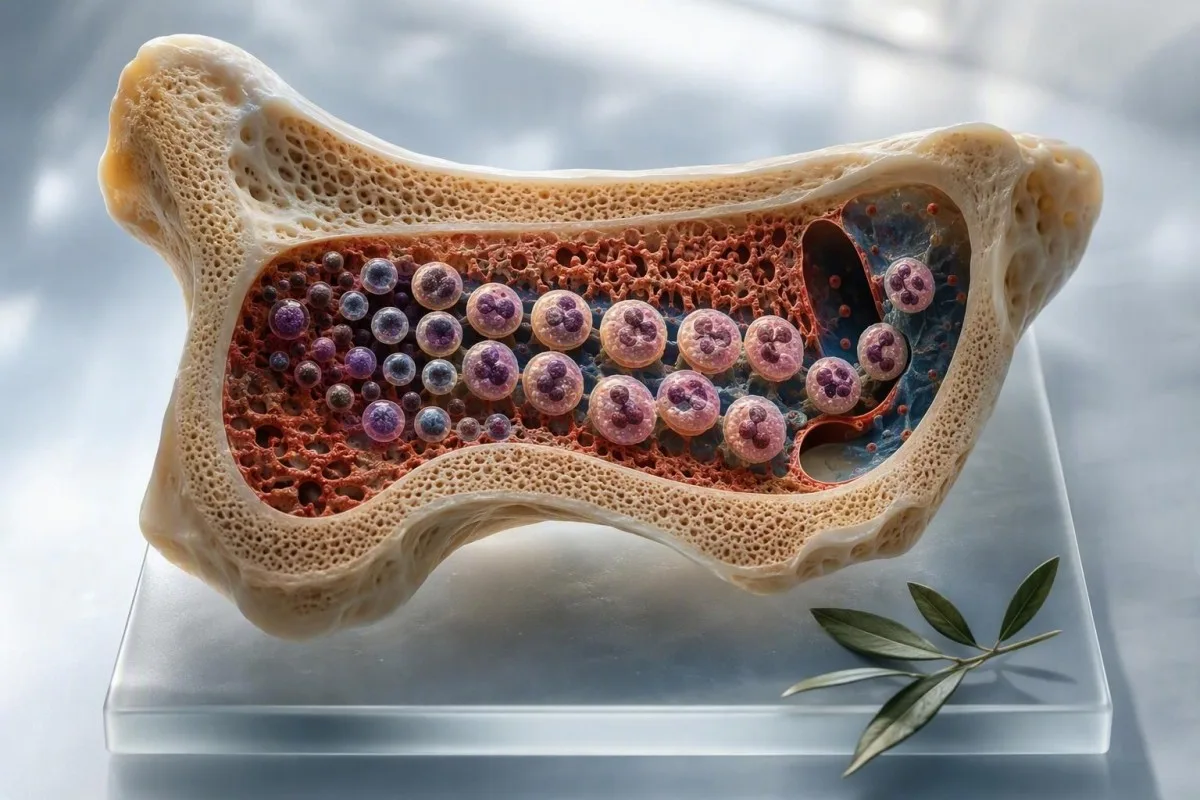
For most non-pregnant adults, an absolute neutrophil count (ANC) of 1.5-7.5 × 10⁹/L is typical, while neutrophils commonly make up 40-70% of white cells. Pregnancy, infancy, medicines, recent illness, and the total white-cell count can all change what a result means.


- Adult ANC is commonly 1.5-7.5 × 10⁹/L (1,500-7,500/µL), but always use the reference interval printed by your laboratory.
- Neutrophil percentage is usually 40-70% in adults and can look high even when the actual neutrophil count is low.
- ANC calculation is total white cells × neutrophil percentage, including bands when bands are reported.
- Mild neutropenia is an ANC of 1.0-1.5 × 10⁹/L; infection risk is usually small when it is isolated and stable.
- Severe neutropenia is an ANC below 0.5 × 10⁹/L; fever at this level needs same-day emergency assessment.
- Pregnancy ANC is often higher, with a practical pregnancy reference interval around 3.7-11.6 × 10⁹/L.
- Newborn results need age-specific ranges because ANC normally peaks during the first day of life and then falls quickly.
- Trend and context matter more than one flagged percentage after exercise, corticosteroids, a viral illness, or surgery.
Read the ANC before the neutrophil percentage
ANC is the number that best estimates available infection-fighting neutrophils; a typical adult ANC is 1.5-7.5 × 10⁹/L, whereas the percentage is commonly 40-70%. A percentage cannot be interpreted safely without the total white-cell count. Kantesti is an AI blood test analyzer that reads the CBC differential as connected numbers rather than treating a single percentage flag as a diagnosis.
A result of 72% neutrophils can be completely ordinary when the white-cell count is 9.0 × 10⁹/L, because the ANC is 6.48 × 10⁹/L. The same 72% with white cells of 1.8 × 10⁹/L gives an ANC of only 1.30 × 10⁹/L, which is mild neutropenia despite the apparently high percentage.
When I review a differential, I first ask whether the report gives an absolute neutrophil value in × 10⁹/L or /µL. If it does not, use the calculation below and compare it with the ANC cutoff guide rather than relying on an H or L beside the percentage.
A low lymphocyte percentage often makes neutrophils look proportionally high without creating a high ANC. This relative shift is common after physical stress, corticosteroids, or early bacterial illness, and it is one reason the absolute-versus-percentage differential is more clinically useful than the pie-chart view of a CBC.
In my practice, the most avoidable anxiety comes from people seeing neutrophils at 74% and assuming infection. A normal ANC, no fever, and no rising total white count usually make that isolated percentage far less concerning.
Adult neutrophil count normal range and unit conversion
The usual neutrophil count normal range for non-pregnant adults is about 1.5-7.5 × 10⁹/L, equal to 1,500-7,500/µL. Some laboratories use an upper limit of 7.0 or 8.0 × 10⁹/L, so the printed local interval takes priority over an internet chart.
As of July 31, 2026, no single international laboratory interval applies to every adult. A result of 1.45 × 10⁹/L may be flagged by one laboratory and fall within another laboratory's lower limit; that small difference should trigger context, not panic.
The conversion is simple: 1.0 × 10⁹/L equals 1,000/µL. UK and European reports usually use × 10⁹/L, while many US reports use cells/µL or K/µL. The CBC components guide explains why white cells, hemoglobin, platelets, and the differential should be read together.
A mildly elevated ANC of 8.0-12.0 × 10⁹/L is often reactive, especially after smoking, pain, a short steroid course, or a recent procedure. An ANC above 20.0 × 10⁹/L is not automatically dangerous, but it deserves a timely clinical explanation, particularly when immature cells, anemia, or low platelets accompany it.
Reference intervals describe the middle 95% of a selected reference population, not a personal target. That distinction matters: 2.0 × 10⁹/L may be normal for one person year after year, while a fall from 6.5 to 2.0 × 10⁹/L during chemotherapy may be clinically meaningful.
How to calculate ANC from a CBC differential
ANC equals total white blood cells multiplied by the fraction of neutrophils, with band neutrophils added if the laboratory reports them separately. For example, a white-cell count of 4.0 × 10⁹/L and neutrophils of 50% gives an ANC of 2.0 × 10⁹/L.
Use this formula: WBC × (neutrophil % + band %) ÷ 100 = ANC. A CBC showing WBC 3.2 × 10⁹/L, neutrophils 38%, and bands 2% has an ANC of 1.28 × 10⁹/L; the raw neutrophil percentage alone misses the point.
Bands are young neutrophils released during increased marrow demand. Many modern analyzers do not report bands separately, and that is fine; use the listed absolute neutrophil count when it is available rather than trying to reconstruct it from incomplete fields.
A reported ANC can differ by a few hundred cells/µL from your calculator because laboratories round percentages and may classify immature granulocytes differently. The practical interpretation does not change between 1.49 and 1.51 × 10⁹/L in a well person, which is why out-of-range flags need a human clinical lens.
I advise patients to save the total WBC, ANC, lymphocyte count, platelets, and hemoglobin from every CBC. That compact set makes it much easier to tell an isolated dip from a broader marrow or illness pattern.
A percentage can be normal while the ANC is low
A neutrophil percentage of 55% is ordinary, but with a WBC of 2.0 × 10⁹/L the ANC is only 1.10 × 10⁹/L. Conversely, 35% neutrophils with a WBC of 14.0 × 10⁹/L produces an ANC of 4.90 × 10⁹/L, which is normal.
Neutrophil ranges by age: newborns, children and teens
Children need age-specific ANC ranges because newborn counts are naturally high, infants often have lower values, and adult-style cutoffs become more useful in later childhood. A stable ANC of 1.1 × 10⁹/L in a healthy toddler can mean something very different from the same value in an adult receiving chemotherapy.
During the first 24 hours after a term birth, ANC commonly rises above 6.0 × 10⁹/L and may briefly exceed 20.0 × 10⁹/L. It then falls sharply over the next several days, so neonatal clinicians use hour-of-life charts rather than one adult lower limit.
For many laboratories, practical pediatric ANC intervals are roughly 1.0-8.5 × 10⁹/L from 1 month to 1 year, 1.5-8.5 × 10⁹/L from 1 to 6 years, and 1.5-7.5 × 10⁹/L after age 6. The pediatric range guide is useful, but the child laboratory's own interval remains the safer comparator.
Viral illnesses can transiently lower a child's ANC to 0.8-1.4 × 10⁹/L for 1-3 weeks while the child otherwise looks well. Persistent low counts, recurrent mouth ulcers, deep skin infections, poor growth, or low platelets warrant pediatric assessment sooner than a single low number does.
Population background also matters. Hsieh et al. reported an ANC below 1.5 × 10⁹/L in 4.5% of Black Americans compared with 0.79% of White Americans in NHANES data (Hsieh et al., 2007); a Duffy-null associated lower baseline may be benign when the history and infection pattern are reassuring.
Pregnancy and postpartum ANC: why higher is usually normal
Pregnancy normally raises neutrophil counts, with a practical ANC reference interval of about 3.7-11.6 × 10⁹/L from early pregnancy onward. A value that looks mildly high on a non-pregnant adult report is therefore often physiologic during an uncomplicated pregnancy.
The rise begins early and is driven largely by neutrophil demargination, marrow output, and changing immune signaling rather than a hidden bacterial illness. Dockree et al. found a pregnancy-specific total white-cell reference interval of 5.7-15.0 × 10⁹/L and a neutrophil interval near 3.7-11.6 × 10⁹/L in a large UK dataset (Dockree et al., 2021).
A neutrophil count of 10.5 × 10⁹/L at 28 weeks without fever, urinary symptoms, or focal pain is commonly normal. In contrast, a rising count combined with temperature of 38.0°C, uterine tenderness, shortness of breath, or abnormal vital signs needs prompt obstetric review; the symptom cluster matters more than a single count.
Labor and the first day after delivery produce a further temporary surge. Postpartum white cells can reach roughly 8.4-23.2 × 10⁹/L on day 1, then usually settle toward pre-pregnancy values over about 21 days, so a high count alone should not be used to diagnose postpartum infection.
Pregnancy CBCs are easiest to read as a package: neutrophils often rise while hemoglobin and hematocrit fall through plasma-volume expansion. If platelets are also falling, compare the pattern with our guide to platelet ranges by trimester and contact the maternity team rather than interpreting one result in isolation.
High neutrophils: common causes and useful patterns
An ANC above the laboratory upper limit is called neutrophilia and most often reflects infection, physical stress, smoking, inflammation, corticosteroids, or recovery after a low count. An isolated ANC of 8.5 × 10⁹/L in an otherwise well adult is usually less worrying than an ANC of 15.0 × 10⁹/L with anemia and immature cells.
Corticosteroids can raise the ANC within hours because they move neutrophils from vessel walls into the measured circulating pool and delay their exit into tissue. Prednisone 20-40 mg daily can produce a noticeable increase without creating a new infection, which catches people out after an urgent-care visit.
Smoking, strenuous exercise, severe pain, seizures, trauma, and major surgery can each cause short-lived neutrophilia. A repeat CBC 1-2 weeks after recovery is often more informative than an extensive work-up on the day of an obvious physiologic stressor.
The combination of high ANC, rising C-reactive protein, fever, and a left shift raises the likelihood of a bacterial process more than any isolated count. A high white-cell count review can help distinguish this from a steroid or stress response, although symptoms and examination remain decisive.
Counts above 20.0 × 10⁹/L that persist without an obvious trigger deserve clinician-led assessment, including review of the cell film and other CBC lines. A high ANC is not a cancer diagnosis, but persistence, splenomegaly, night sweats, weight loss, basophilia, or immature granulocytes change the threshold for hematology input.
Low neutrophils: ANC bands and what they actually predict
Neutropenia is commonly classified as mild at 1.0-1.5 × 10⁹/L, moderate at 0.5-1.0 × 10⁹/L, and severe below 0.5 × 10⁹/L. Infection risk increases substantially below 0.5 × 10⁹/L, especially when the low count lasts for days or follows marrow-suppressing treatment.
An ANC of 1.2 × 10⁹/L in a person with no recurrent infections, normal hemoglobin, and normal platelets is often monitored rather than treated. Newburger and Dale emphasize that host defenses are usually not impaired by isolated counts of 1.0-1.5 × 10⁹/L, though serial testing helps establish whether the finding is persistent (Newburger and Dale, 2013).
Viral illnesses are a very common acquired cause, and the nadir may occur after the fever has already improved. Other possibilities include autoimmune disease, B12, folate, or copper deficiency, alcohol excess, enlarged spleen, and medicine effects; the answer depends on the rest of the CBC and the timeline.
A low ANC together with low hemoglobin or platelets is more concerning than neutropenia alone because it suggests a wider production or consumption issue. The low white-cell guide explains why a clinician may request a reticulocyte count, blood film, nutrient tests, or viral studies in that setting.
Do not try to raise ANC with over-the-counter immune products. Most patients with a borderline low count need a sensible repeat test and medication review, not zinc megadoses or unproven supplements that can obscure a copper deficiency.
When low ANC and fever require emergency care
Fever with an ANC below 0.5 × 10⁹/L is a same-day emergency because serious infection can progress with few local signs. For people receiving chemotherapy, a single oral temperature of 38.3°C or a temperature of 38.0°C lasting an hour is commonly used to trigger urgent assessment.
Neutropenia can blunt redness, pus formation, and a raised total white-cell count, so waiting for familiar infection signs is unsafe at severe levels. Call the oncology or hematology emergency number, attend emergency care, or follow the plan already provided by the treatment team.
High-risk symptoms include shaking chills, new confusion, faintness, breathlessness, severe sore throat, new abdominal pain, painful urination, or a temperature below 36.0°C as well as fever. The sepsis laboratory overview explains why lactate, cultures, kidney markers, and the CBC may be assessed quickly in hospital.
An ANC of 0.8 × 10⁹/L without fever does not automatically mean emergency care, but the advice changes with recent chemotherapy, immune-suppressing medicines, a central line, or a history of rapidly worsening infections. Most cancer centers provide individualized thresholds because the duration of expected neutropenia matters.
Kantesti AI is an AI lab test interpretation service that can flag a low ANC alongside fever-related symptoms or treatment context for urgent human follow-up; it does not replace emergency evaluation. This distinction is particularly important when a result arrives overnight in a patient portal.
CBC patterns that make a neutrophil result more or less concerning
ANC is most informative when read with total WBC, lymphocytes, hemoglobin, platelets, immature granulocytes, and the clinical timeline. Isolated mild neutropenia with otherwise normal counts usually has a different risk profile from neutropenia affecting two or three blood-cell lines.
Low ANC with reactive lymphocytes after fever commonly points toward a recent viral illness, particularly when platelets and hemoglobin remain stable. A manual film can add useful detail, and our guide to reactive lymphocyte findings describes why this pattern is often temporary.
Neutrophilia with toxic granulation or increased immature granulocytes may indicate an intense marrow response, but neither feature proves bacterial infection by itself. Compare symptoms, C-reactive protein, cultures when indicated, and whether the change occurred over 24 hours or months; the toxic granulation explainer covers the cell-film nuance.
Low ANC plus an MCV above 100 fL can point toward B12 or folate deficiency, alcohol exposure, liver disease, hypothyroidism, or certain medicines. Low ANC plus microcytosis is less specific, but a complete nutritional and bleeding history may uncover more than another CBC alone.
I have seen patients reassured incorrectly because their ANC was 1.6 × 10⁹/L, just inside range, despite platelets falling from 240 to 95 × 10⁹/L. The direction and the companion abnormalities are the clinical signal.
Short-term changes: exercise, illness, vaccination and stress
Neutrophil counts can change by 20-50% over hours through stress hormones, exercise, posture, hydration, and recent illness. A single borderline result should therefore be compared with prior CBCs and repeated under stable conditions when clinically appropriate.
Hard interval training, a marathon, or even a difficult commute before phlebotomy can transiently increase circulating neutrophils through adrenaline-mediated demargination. This is not a reason to avoid normal activity forever, but it is worth recording intense exercise within 24 hours of a repeat CBC.
Acute viral infections may lower ANC for days to several weeks, whereas bacterial illness, severe inflammation, and recovery from marrow suppression often raise it. Vaccination can create a brief inflammatory shift, usually modest and self-limited; timing is more useful than speculation.
Hydration changes concentration a little, but they rarely explain a genuinely severe ANC abnormality. If several values conflict, check for a clot warning, delayed processing, or an analyzer flag before assuming the body changed overnight; our delta-check guide explains this laboratory safety step.
For a non-urgent borderline result, I often suggest repeating the CBC in 2-4 weeks after recovery from an acute illness, unless symptoms, treatment plans, or other cell lines call for faster review. Bring the old report; a prior ANC of 1.4 × 10⁹/L changes the conversation considerably.
Medicines, nutrients and exposures that can alter ANC
Corticosteroids commonly raise ANC, while some antithyroid drugs, clozapine, anticonvulsants, antibiotics, chemotherapy, and immune therapies can lower it. Never stop a prescribed medicine because of a CBC flag without speaking to the prescriber who knows the indication and timeline.
Clozapine has a formal ANC-monitoring pathway because rare but severe neutropenia can occur, while carbimazole or methimazole requires urgent advice if fever or sore throat develops. Trimethoprim-sulfamethoxazole, some beta-lactam antibiotics, antiepileptic medicines, and immunosuppressants can also contribute in susceptible people.
Copper deficiency can cause neutropenia, sometimes with anemia and neurologic symptoms, and excessive zinc supplements are a surprisingly common trigger. B12 and folate deficiency may lower neutrophils too, usually alongside macrocytosis; targeted testing is safer than supplementing blindly.
Recent hospital treatment often confounds interpretation because antibiotics, fluid shifts, procedures, steroids, and recovery from infection can move the count in opposite directions. The post-discharge CBC timeline can help you prepare a more useful medication-and-event history.
Medication causality is rarely proven by one number. I look for onset after exposure, the depth of the nadir, prior baseline counts, alternative explanations, and improvement after a clinician-directed change.
What clinicians check after an abnormal neutrophil result
A repeat CBC with differential is the usual first step for an unexpected mild ANC abnormality, while severe neutropenia, fever, or multiple low cell lines warrants faster assessment. The exact work-up depends on whether the change is new, persistent, symptomatic, or treatment-related.
For a well adult with ANC 1.1-1.5 × 10⁹/L, a clinician may repeat the CBC in 2-4 weeks and review medicines, alcohol intake, recent infections, ethnicity-associated baseline variation, and family history. A peripheral film is particularly useful when the analyzer reports atypical or immature cellular elements.
Typical targeted tests may include B12, folate, copper, liver and kidney markers, HIV or hepatitis testing when exposure history supports it, autoimmune testing when symptoms fit, and spleen assessment when examination suggests enlargement. Bone marrow testing is not the default for one mild, stable low ANC.
Referral to hematology is more likely for ANC persistently below 1.0 × 10⁹/L, repeated infections, constitutional symptoms, enlarged lymph nodes or spleen, abnormal film findings, or concurrent anemia or thrombocytopenia. A blood-cancer testing pathway explains why CBC, film, and flow cytometry answer different questions.
For people taking chemotherapy, transplant medicines, or biologic immune therapies, do not wait for a routine repeat schedule. The treating service's protocol overrides general internet thresholds because expected nadirs may occur 7-14 days after a treatment cycle.
Use trends, local ranges and clinical context together
A personal ANC trend is more useful than a single result when values sit near 1.5 × 10⁹/L or 7.5 × 10⁹/L. Comparing like-for-like samples can show whether a flagged value is a temporary swing, a stable baseline, or a meaningful downward trajectory.
Kantesti is an AI biomarker interpretation platform that compares ANC, total white cells, lymphocytes, platelets, hemoglobin, pregnancy status, and prior results instead of simply highlighting a red flag. In our clinical review workflow, a repeatable trend is usually more actionable than a one-off value just outside range.
Upload dates matter. A CBC drawn during influenza, after a steroid injection, 10 days after chemotherapy, or in the third trimester should not be compared as if it were a routine wellness sample; our longitudinal trend guide shows what context to save.
Kantesti AI supports analysis across major laboratory panels in roughly 60 seconds, but it does not diagnose leukemia, sepsis, or a medication reaction from a screenshot. Our approach is reviewed against clinical standards described in the medical validation framework, with urgent patterns directed toward clinician assessment.
Dr. Thomas Klein, our Chief Medical Officer, advises patients to keep the original PDF because units, reference intervals, and analyzer comments are easily lost in manual transcription. A clear copy also lets your own clinician check the laboratory's exact wording.
A practical next-step checklist for your neutrophil result
A normal-range neutrophil result needs no action when you feel well, while fever with ANC below 0.5 × 10⁹/L needs emergency assessment today. Between those points, the right next step depends on symptoms, pregnancy, medicines, prior counts, and whether other CBC lines are abnormal.
First, locate the absolute neutrophil count, its units, the laboratory interval, and the date. Second, note whether you were ill, pregnant, exercising heavily, taking steroids, receiving cancer treatment, or starting a new medicine when the sample was collected.
Arrange routine clinician review for a persistent ANC below 1.5 × 10⁹/L, a persistent ANC above the laboratory limit, or any unexplained change occurring with fatigue, infections, bruising, swollen glands, or weight loss. A single value is a clue, not a verdict, and the CBC summary checklist can help organize the details before an appointment.
Seek urgent care now for fever, chills, severe illness, or a temperature of 38.0°C or above if you know your ANC is below 0.5 × 10⁹/L or you are on chemotherapy. Pregnant patients should also contact maternity triage promptly for fever or feeling acutely unwell, even when a raised ANC may be physiologic.
Dr. Thomas Klein and the Kantesti Medical Advisory Board recommend using AI interpretation as preparation for—not replacement of—a clinician conversation. Kantesti Ltd is a privacy-focused health organization, and readers can learn how we are structured on our About Us page.
Frequently Asked Questions
What is a normal absolute neutrophil count?
For most non-pregnant adults, a normal absolute neutrophil count is approximately 1.5-7.5 × 10⁹/L, or 1,500-7,500 cells/µL. Laboratories set their own reference intervals, so a lower limit may be 1.4, 1.5, or 1.8 × 10⁹/L depending on the analyzer and reference population. An isolated ANC of 1.2-1.5 × 10⁹/L often carries little infection risk in a well person, but persistence and the rest of the CBC determine whether follow-up is needed.
Is 70% neutrophils normal?
A neutrophil percentage of 70% can be normal because adult differentials commonly contain about 40-70% neutrophils. The actual interpretation requires the total white-cell count: 70% of 8.0 × 10⁹/L gives a normal ANC of 5.6 × 10⁹/L, while 70% of 1.8 × 10⁹/L gives a low ANC of 1.26 × 10⁹/L. The ANC, not the percentage alone, estimates the available neutrophil reserve.
What ANC is considered dangerously low?
An ANC below 0.5 × 10⁹/L, or 500/µL, is considered severe neutropenia and carries a substantially higher risk of serious infection. Fever at this level requires same-day emergency assessment, particularly after chemotherapy, transplant treatment, or immune-suppressing medicine. In many oncology protocols, one temperature of 38.3°C or a temperature of 38.0°C sustained for one hour triggers urgent evaluation. An ANC of 0.5-1.0 × 10⁹/L also needs timely individualized medical advice, even without fever.
Why are neutrophils high during pregnancy?
Neutrophils normally rise during pregnancy because hormonal and immune adaptations increase circulating mature neutrophils. A practical pregnancy ANC reference interval is about 3.7-11.6 × 10⁹/L, and total white cells commonly range from 5.7-15.0 × 10⁹/L. Labor and the first postpartum day can raise total white cells to around 23.2 × 10⁹/L without infection. Fever, focal pain, abnormal vital signs, or feeling acutely unwell still need prompt obstetric assessment regardless of the count.
Can stress or exercise raise neutrophils?
Yes, acute physical or emotional stress can temporarily raise the ANC by moving neutrophils into the measured circulating pool. Hard exercise, pain, smoking, seizures, surgery, and corticosteroids can produce increases of 20-50% over hours in some people. A repeat CBC after recovery, often within 1-2 weeks when clinically safe, can show whether the elevation persists. A very high or persistent ANC, especially above 20.0 × 10⁹/L, still needs clinician review.
How long does low ANC last after a viral infection?
A mild low ANC after a viral illness often improves within 1-3 weeks, although recovery can take longer depending on the virus and the person's baseline count. An ANC of 0.8-1.5 × 10⁹/L with normal hemoglobin and platelets in a recovering, well person is commonly rechecked rather than treated immediately. Low counts that persist beyond several weeks, fall below 1.0 × 10⁹/L, cause recurrent infections, or occur with anemia or low platelets need earlier medical assessment. Children and people receiving immune-suppressing treatment should follow individualized advice.
Get AI-Powered Blood Test Analysis Today
Join over 2 million users worldwide who trust Kantesti for instant, accurate lab test analysis. Upload your blood test results and receive comprehensive interpretation of 15,000+ biomarkers in seconds.
📚 Referenced Research Publications
Klein, T., Mitchell, S., & Weber, H. (2026). BUN/Creatinine Ratio Explained: Kidney Function Test Guide. Kantesti AI Medical Research.
Klein, T., Mitchell, S., & Weber, H. (2026). Urobilinogen in Urine Test: Complete Urinalysis Guide 2026. Kantesti AI Medical Research.
📖 External Medical References
Dockree S et al. (2021). White blood cells in pregnancy: reference intervals for before and after delivery. eBioMedicine.
⚕️ Medical Disclaimer
This article is for educational purposes only and does not constitute medical advice. Always consult a qualified healthcare provider for diagnosis and treatment decisions.
E-E-A-T Trust Signals
Experience
Physician-led clinical review of lab interpretation workflows.
Expertise
Laboratory medicine focus on how biomarkers behave in clinical context.
Authoritativeness
Written by Dr. Thomas Klein with review by Dr. Sarah Mitchell and Prof. Dr. Hans Weber.
Trustworthiness
Evidence-based interpretation with clear follow-up pathways to reduce alarm.