
ANC stands for absolute neutrophil count: the number of infection-fighting neutrophils in 1 microliter of blood. The cutoff that changes follow-up is usually below 1,500/µL, with urgent infection-risk action at fever plus ANC below 500/µL.



- ANC stands for absolute neutrophil count, the estimated number of neutrophils per microliter of blood.
- ANC calculation is WBC × (neutrophil % + band %) ÷ 100, then convert K/µL to cells/µL by multiplying by 1,000.
- Normal adult ANC is often about 1,500–7,700/µL, though lab ranges and ancestry-related baselines vary.
- Mild neutropenia is ANC 1,000–1,500/µL and usually has low infection risk if the person is well.
- Moderate neutropenia is ANC 500–1,000/µL and usually needs a clinician-led repeat CBC and medication review.
- Severe neutropenia is ANC below 500/µL; fever at this level is treated as urgent, especially during chemotherapy.
- High ANC is commonly above 7,500–8,000/µL and may reflect infection, inflammation, stress, smoking, pregnancy, or corticosteroids.
- Low ANC meaning changes with context: a stable ANC of 1,200/µL in a healthy adult is very different from 1,200/µL after chemotherapy.
What ANC Means on a CBC Report
ANC stands for absolute neutrophil count, the estimated number of neutrophils in 1 microliter of blood. Neutrophils are the white cell type doctors watch most closely for bacterial and fungal infection risk, so an ANC below 1,500/µL changes follow-up much more than a mildly abnormal percentage alone.
As of June 14, 2026, most adult laboratories report ANC either directly or through a CBC with differential. If your report lists only WBC and neutrophil percentage, the ANC still can be calculated from the CBC components in under 30 seconds.
Kantesti is an AI blood test interpretation platform that reads ANC as part of the whole CBC, not as a lonely number. In my own review workflow, I care whether an ANC of 1,250/µL is paired with fever, mouth ulcers, chemotherapy, a viral illness, or simply a lifelong low baseline.
I’m Dr. Thomas Klein, and the most common mistake I see is patients comparing their neutrophil percentage to someone else’s ANC. A neutrophil percentage of 40% can be safe when the WBC is 6.0 K/µL, but concerning when the WBC is 2.0 K/µL because the absolute count is very different.
How to Calculate ANC From WBC and Differential
ANC is calculated as WBC × (neutrophil percentage + band percentage) ÷ 100. If WBC is reported in K/µL, the answer in K/µL should be multiplied by 1,000 to get cells/µL, which is the unit used for neutropenia cutoffs.
Example: WBC 4.2 K/µL, neutrophils 52%, bands 3%. ANC = 4.2 × 55 ÷ 100 = 2.31 K/µL, or 2,310/µL, which is generally in the normal adult range.
A second example shows why percentages mislead. WBC 2.1 K/µL with neutrophils 70% gives ANC 1,470/µL, while WBC 8.0 K/µL with neutrophils 35% gives ANC 2,800/µL; the lower percentage has the safer absolute count, as explained in our absolute count guide.
Kantesti AI keeps the unit conversion visible because some reports show 2.3 × 10⁹/L, others show 2.3 K/µL, and many US reports show 2,300/µL. These are the same ANC value, and misreading 2.3 as 230 is a surprisingly common panic trigger.
For deeper biomarker context, our biomarkers guide covers how CBC, chemistry, iron, inflammatory, and immune markers interact. ANC is a hematology marker, but its interpretation often changes when CRP, platelets, ferritin, or liver enzymes are abnormal too.
Low ANC Meaning by Infection-Risk Cutoff
Low ANC meaning depends mainly on severity: 1,000–1,500/µL is mild neutropenia, 500–1,000/µL is moderate neutropenia, and below 500/µL is severe neutropenia. Infection risk rises sharply below 500/µL, especially if the drop is new, prolonged, or treatment-related.

The widely used 1,500/µL cutoff is sensitive rather than perfect. Newburger and Dale’s 2013 review in Seminars in Hematology notes that ANC 1,000–1,500/µL usually does not impair host defense, while ANC 500–1,000/µL may increase risk if other immune problems exist (Newburger & Dale, 2013).
In clinic, I treat a stable ANC of 1,300/µL very differently from a falling ANC of 1,300/µL after a new drug. If the prior ANC was 3,800/µL two months ago, the trend is the signal; our low neutrophil guide explains the common causes behind that shift.
Duration matters. An ANC of 800/µL for 24 hours after a viral illness is often less risky than ANC 1,000/µL persisting for 3 months with mouth ulcers, recurrent sinus infections, or unexplained weight loss.
When Low ANC Needs Same-Day Medical Care
Low ANC needs same-day care when it is below 500/µL with fever, rigors, shortness of breath, confusion, severe sore throat, mouth sores, or a rapidly worsening illness. In oncology settings, fever with ANC below 500/µL is treated as febrile neutropenia until proven otherwise.

The IDSA guideline defines febrile neutropenia as a single oral temperature of 38.3°C or higher, or 38.0°C sustained for more than 1 hour, with ANC below 500/µL or expected to fall below 500/µL (Freifeld et al., 2011). That definition is still used widely because early antibiotics reduce preventable complications.
Do not wait for a repeat CBC if the person is on chemotherapy and has fever. A lactate of 2.0 mmol/L, rising heart rate, or low blood pressure adds concern, which is why we pair ANC with sepsis blood markers when the clinical picture looks unstable.
For people not on chemotherapy, urgency still depends on symptoms. ANC 420/µL plus a painful dental infection at 9 p.m. is not a “message the doctor next week” result; ANC 1,420/µL after a cold with no fever is usually a planned repeat rather than emergency care.
If you have ANC below 500/µL, ask your clinician for written fever instructions. Patients often remember the number but forget the action threshold, and the action threshold is the part that keeps people safe.
Why ANC Can Drop Temporarily
ANC commonly drops temporarily after viral infections, new medicines, autoimmune flares, nutritional deficiency, alcohol excess, and some ethnic or genetic baseline patterns. A single ANC of 1,200/µL in an otherwise well adult is often repeated before a large workup is started.
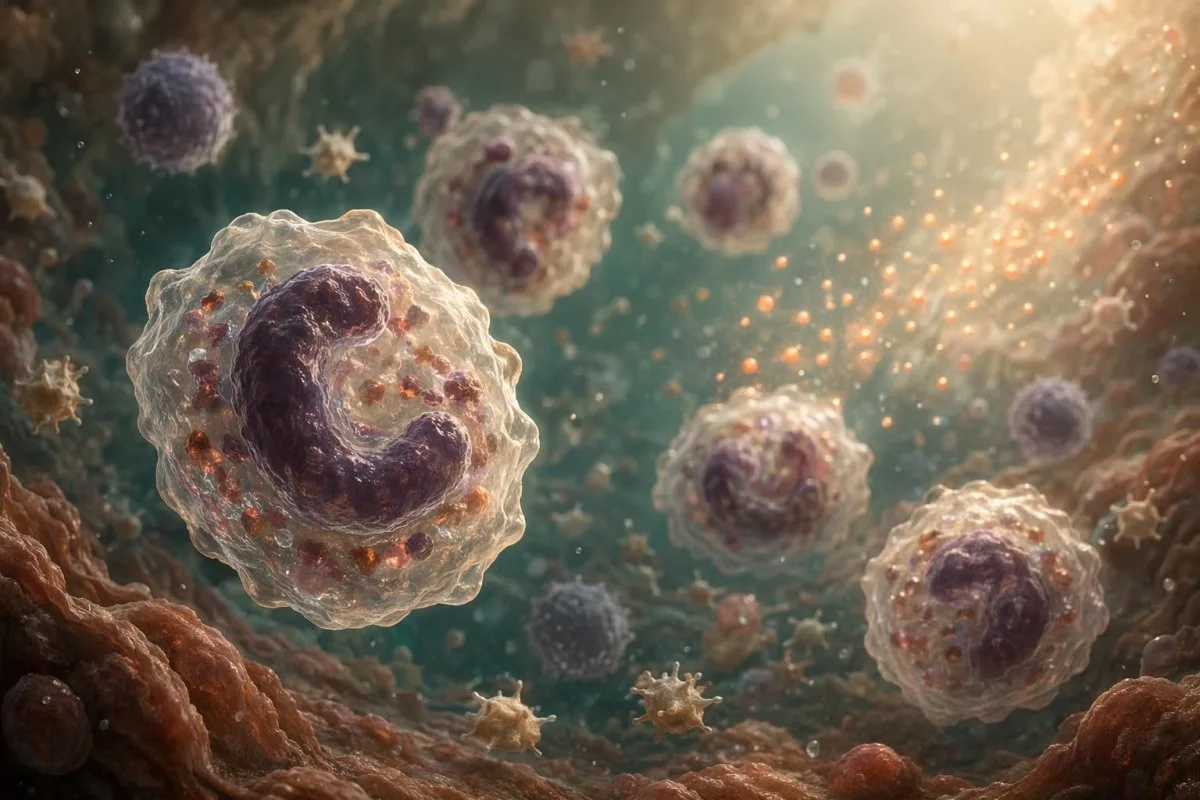
Viral illnesses are the everyday culprit. I often see ANC fall to 900–1,400/µL during the week after influenza, COVID-19, EBV, or a non-specific respiratory virus, then recover toward baseline within 2–6 weeks.
Medication timing is a clue patients rarely mention unless asked. Trimethoprim-sulfamethoxazole, antithyroid drugs, clozapine, some anticonvulsants, chemotherapy, and immune therapies can lower ANC; the low WBC guide has a broader checklist.
The 2023 European neutropenia consensus emphasizes that chronic neutropenia should be interpreted by age, ancestry, clinical infections, and duration, not one universal cutoff (European Hematology Association and EuNet-INNOCHRON, 2023). People with Duffy-null associated neutrophil count can have a stable ANC near 1,000–1,500/µL without the same infection risk as acquired marrow suppression.
B12, folate, copper, and severe protein-calorie deficiency can also lower neutrophils, usually alongside anemia, high MCV, or other CBC clues. If ANC is low plus lymphocytes are low, I widen the lens to immune function rather than blaming one vitamin.
ANC During Chemotherapy and Immune Treatment
During chemotherapy, ANC is followed because infection risk often peaks at the neutrophil nadir, commonly 7–14 days after treatment depending on the regimen. Fever with ANC below 500/µL during this window is treated as urgent even if the person looks fairly well at first.
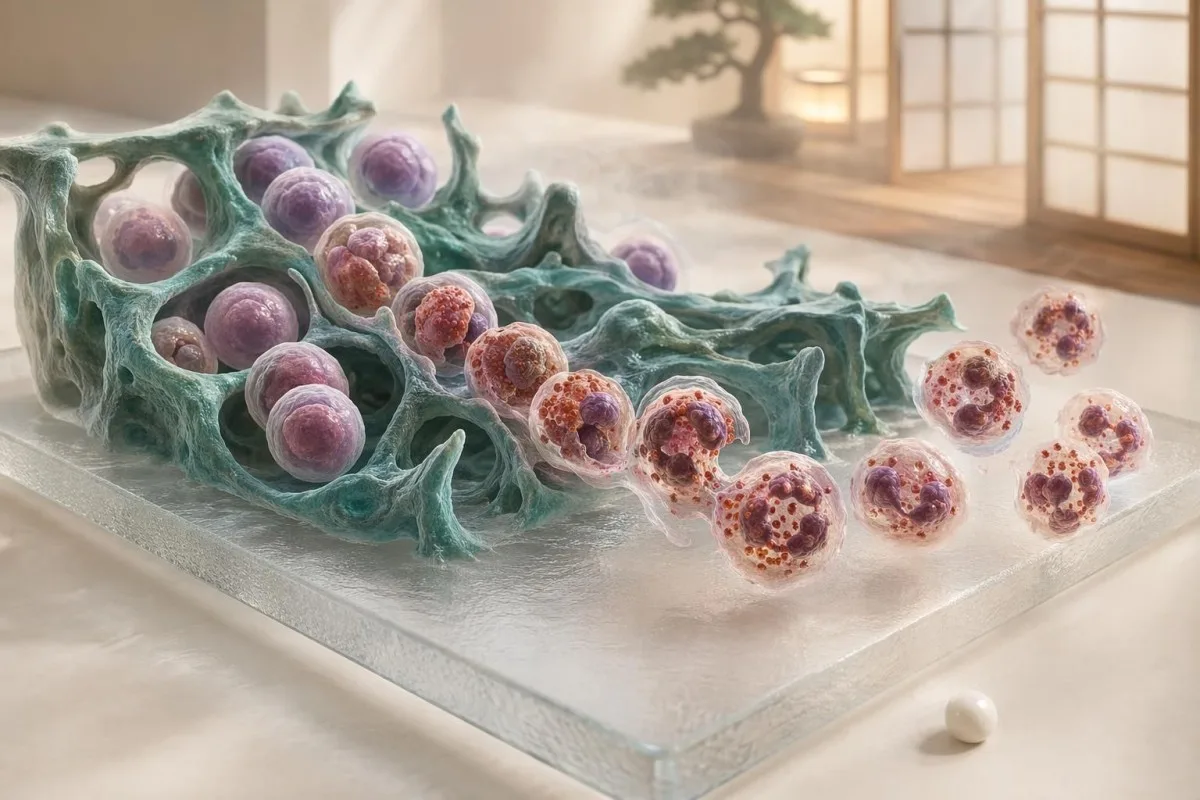
A patient can go from ANC 3,200/µL on treatment day 1 to ANC 280/µL by day 10. That steep fall matters more than the first number, and our guide to chemotherapy blood changes explains why timing changes interpretation.
Oncology teams may delay treatment, reduce dose, or use granulocyte colony-stimulating factor when ANC recovery is slow. The exact threshold varies by cancer type and regimen, but many protocols require ANC above 1,000–1,500/µL before the next cycle.
I tell patients not to “tough out” fever during neutropenia. Even a temperature of 38.1°C for 1 hour can be enough to trigger urgent assessment if the ANC is expected to be below 500/µL, because early signs can be muted when neutrophils are scarce.
Kantesti AI can help patients organize serial CBCs by date, but treatment decisions during chemotherapy belong to the oncology team. In this setting, trend graphs are useful; they are not a substitute for same-day triage instructions.
What a High ANC Usually Means
A high ANC, often called neutrophilia, usually means ANC above about 7,500–8,000/µL in adults. The common causes are bacterial infection, inflammation, corticosteroids, physical stress, smoking, pregnancy, recent exercise, and sometimes bone marrow disorders.
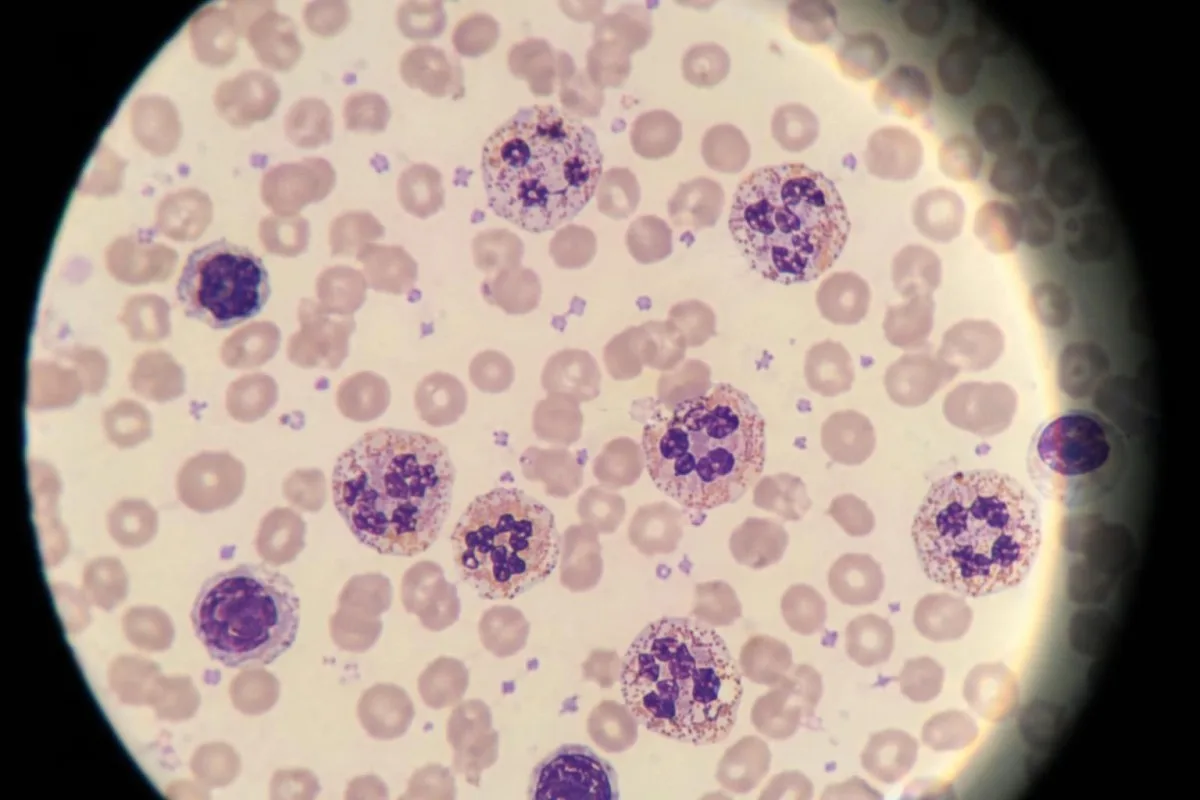
Kantesti is an AI blood test analyzer that separates high ANC patterns into likely reactive, medication-related, and repeat-needed categories. For example, ANC 9,200/µL after prednisone is different from ANC 18,000/µL with fever and left shift.
A high ANC with WBC 12–15 K/µL and normal platelets often follows infection or stress. A high ANC with WBC above 25 K/µL, immature granulocytes, anemia, splenomegaly, or unexplained weight loss deserves a more careful look, as we discuss in our high WBC guide.
Steroids can raise ANC within 4–24 hours by moving neutrophils from vessel walls into circulation. That is why a person taking 40 mg prednisone may show ANC 11,000/µL without a bacterial infection.
High ANC is not automatically “better immunity.” In my experience, patients often feel reassured by a high neutrophil count, but persistent neutrophilia is a signal to find the trigger, not a badge of strength.
Bands and Left Shift: Why the Differential Matters
Bands are immature neutrophils, and many clinicians include band percentage in the ANC formula. A left shift means the marrow is releasing younger neutrophil forms, often because infection, inflammation, or physiological stress is asking for more neutrophils quickly.
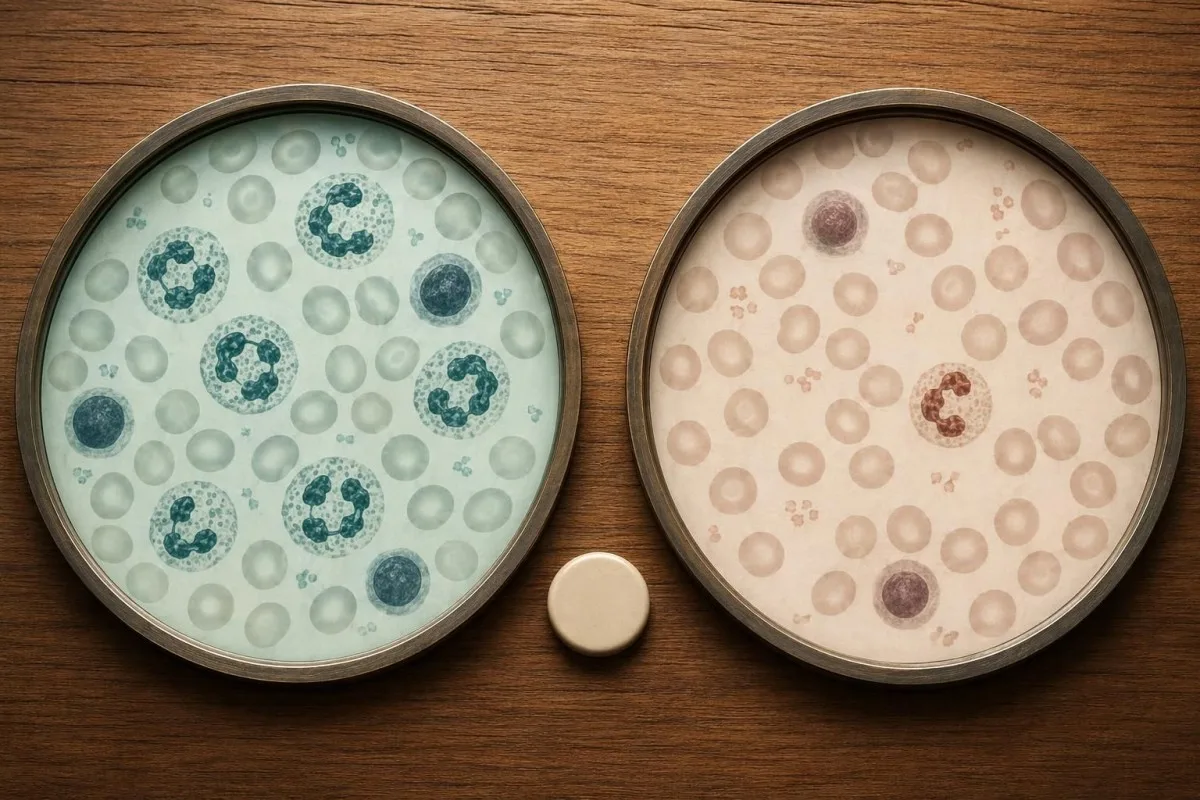
A WBC of 6.0 K/µL with 55% neutrophils and 0% bands gives ANC 3,300/µL. If bands are 15%, the ANC becomes 4,200/µL, but the bigger clinical clue is the left shift, which our band neutrophil guide covers in detail.
Automated analyzers may report immature granulocytes instead of bands. An immature granulocyte percentage above 1–2% can be meaningful when paired with fever, rising CRP, or neutrophilia, but mild isolated flags happen after stress, steroids, or sample timing changes.
Manual differentials still matter when the analyzer flags abnormal cells. If there are blasts, promyelocytes, or unexplained immature forms, the question is no longer just ANC; it becomes whether the marrow picture needs urgent hematology review, as outlined in our immature granulocyte explainer.
ANC Ranges by Age, Pregnancy, and Baseline
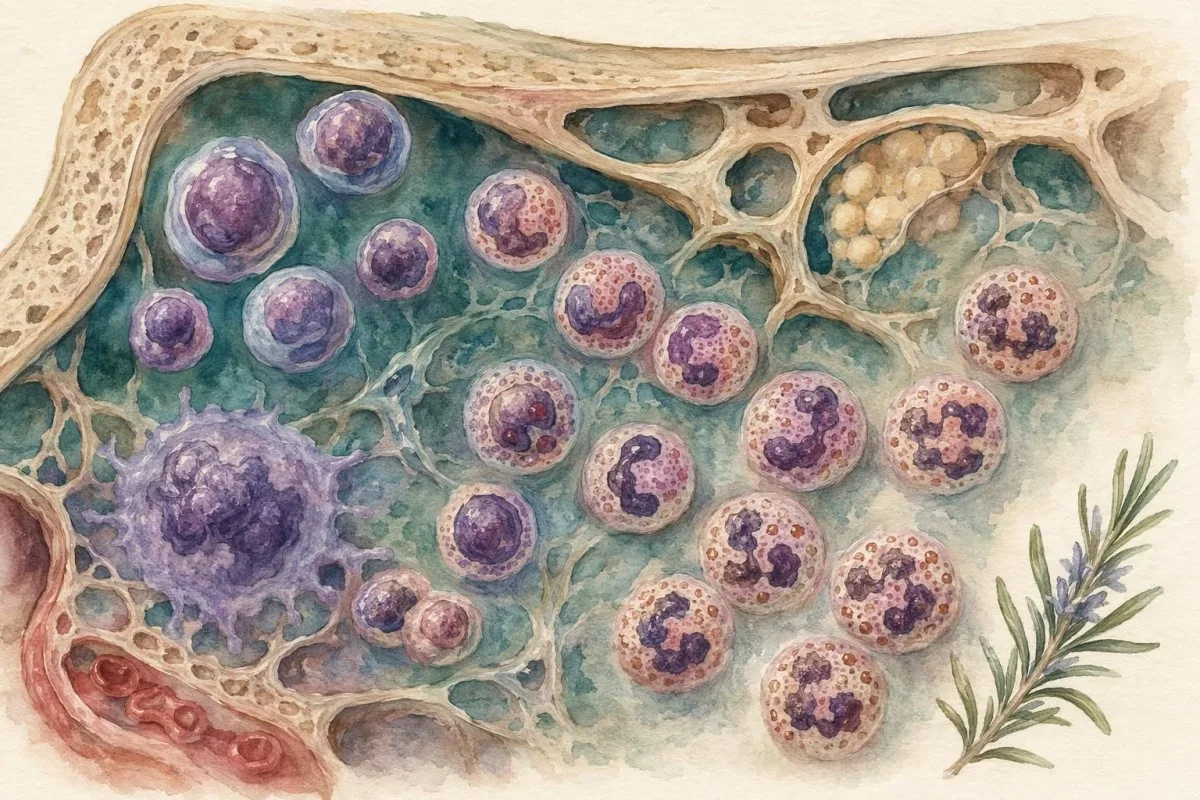
ANC reference ranges change with age, pregnancy, and baseline biology. Newborns often have higher neutrophil counts than adults, pregnancy can raise neutrophils, and some healthy adults have lifelong ANC values near 1,000–1,500/µL without frequent infections.
Neonates can show ANC values above 6,000/µL in the first day of life, then shift rapidly over the first weeks. Pediatric interpretation should use age-based ranges, not adult cutoffs, which is why our pediatric lab ranges separate infants, children, and teenagers.
Pregnancy often raises total WBC and neutrophils, especially in the third trimester and during labor. A pregnant patient with ANC 8,500/µL may have a physiological result, while the same number with fever, uterine tenderness, or high CRP needs clinical assessment.
Some European labs use slightly different lower reference limits, and ancestry-related Duffy-null neutrophil count is still under-recognized in routine portals. If someone has ANC 1,100/µL on 5 prior CBCs over 8 years and no recurrent infections, that pattern is less alarming than a new fall from 4,000/µL.
For broader context on total white count shifts by age and pregnancy, see our WBC range guide. ANC is the sharper tool, but WBC gives the frame around it.
Reading ANC With Lymphocytes, Hemoglobin, and Platelets
ANC should be read with the rest of the CBC because combined abnormalities change the differential diagnosis. Low ANC plus normal hemoglobin and platelets often suggests a different pathway than low ANC plus anemia, low platelets, or abnormal lymphocytes.

ANC 900/µL with hemoglobin 14 g/dL and platelets 240 K/µL is often managed as isolated neutropenia. ANC 900/µL with hemoglobin 8.8 g/dL and platelets 70 K/µL is a marrow or systemic illness pattern until proven otherwise.
The neutrophil-to-lymphocyte ratio can add context during infection and inflammatory stress, but it should not replace the absolute counts. Our neutrophil-lymphocyte guide explains why a high percentage can distract from a normal absolute lymphocyte or neutrophil count.
Kantesti’s neural network checks ANC against hemoglobin, MCV, RDW, platelets, immature granulocytes, and inflammatory markers when they are present. That pattern-based reading is closer to how physicians think at the bedside than a green-or-red flag next to one value.
For readers who want a deeper hematology primer, our hematology marker guide connects reticulocytes, LDH, RBC indices, and cell-line changes. This helps separate marrow production problems from short-lived immune shifts.
Lab Variation, Units, and When to Repeat ANC
ANC can vary from day to day, and mild abnormalities should often be repeated before assuming disease. Exercise, recent infection, corticosteroids, time of day, sample handling, and unit conversion can move ANC by several hundred cells/µL.

A change from ANC 2,100/µL to 1,650/µL may be normal biological variation, not a new immune disorder. I become more interested when the ANC crosses a risk band, such as 1,600/µL to 900/µL, or when the trend persists across 2–3 tests.
Units cause unnecessary scares. ANC 1.8 × 10⁹/L equals 1,800/µL, and WBC 3.5 K/µL equals 3,500/µL; our unit conversion guide walks through the common mismatches.
Clotted samples, analyzer flags, and very abnormal platelet or WBC counts can distort automated interpretation. When the machine flags the sample, a repeat CBC or manual smear is often more useful than trying to over-explain a single suspicious value, as discussed in our lab error checks.
A practical recheck interval for mild isolated neutropenia is often 2–6 weeks, unless symptoms, medications, pregnancy, chemotherapy, or other CBC abnormalities shorten the timeline. Severe or symptomatic neutropenia is not a routine recheck problem.
How Kantesti AI Interprets ANC in Context
Kantesti AI interprets ANC by combining the absolute count, WBC, differential, prior results, age, sex, units, and coexisting biomarkers. The goal is not to diagnose from one number; the goal is to show which patterns deserve monitoring, repeat testing, or clinician follow-up.
Our technology guide describes how uploaded PDFs or photos are parsed, standardized, and checked against clinical logic. For ANC, that means the system distinguishes 0.8 × 10⁹/L from 0.8%, because those values imply completely different risk.
Kantesti AI flags combinations that clinicians actually care about: ANC below 500/µL with fever language, ANC below 1,000/µL plus a new medication, or high ANC with bands and high CRP. In our analysis of large-scale lab patterns, combinations outperform isolated flags for prioritizing follow-up.
Our clinical validation process uses physician-reviewed scenarios and benchmarked lab interpretation standards. I would rather have an AI say “this needs same-day clinician review” for 1 truly risky ANC pattern than generate 10 vague warnings about harmless borderline shifts.
Privacy also matters when people upload hematology reports from family members. Kantesti uses GDPR-aligned handling, multilingual interpretation, and family trend views so a caregiver can track a parent’s ANC without turning one abnormal line into a household panic.
Follow-Up Plan by ANC Band
The safest follow-up plan starts with the ANC band, symptoms, and trend. Mild stable neutropenia may need a planned repeat CBC, moderate neutropenia usually needs clinician review, and severe neutropenia with fever requires urgent care rather than routine messaging.

For ANC 1,000–1,500/µL with no symptoms and normal hemoglobin and platelets, many clinicians repeat the CBC in 2–6 weeks. If the same value has been present for years, the next step may simply be documenting baseline rather than chasing rare diagnoses.
For ANC 500–1,000/µL, I usually want a medication review, viral history, nutritional screen when appropriate, and repeat timing based on symptoms. Our guide on repeating abnormal labs gives a practical framework for deciding whether to repeat in days, weeks, or months.
For ANC below 500/µL, the plan should be explicit: fever threshold, where to go, who to call, and whether neutropenic precautions are needed. If there are mouth ulcers, recurrent infections, swollen lymph nodes, anemia, or low platelets, the threshold for hematology input is lower.
Kantesti is an AI-powered blood test analysis tool used by people in 127+ countries to organize CBC trends, but follow-up for ANC below 500/µL should be clinician-led. If your result feels out of proportion to your symptoms, a second opinion review can help clarify urgency.
What to Do With Your ANC Result Today
If your ANC is normal, read it as part of the CBC pattern; if it is below 1,500/µL, check severity, symptoms, trend, and medications. Fever plus ANC below 500/µL is the clearest same-day danger signal.

Dr. Thomas Klein’s practical rule is simple: do not panic over one mild low ANC, but do not ignore fever with severe neutropenia. The middle ground is where good interpretation matters, because ANC 1,250/µL can mean “repeat after viral illness” or “review this medication today.”
At Kantesti, our clinical standards are shaped by physicians, data scientists, and safety reviewers; you can read about our medical advisory board and how we handle medical oversight. That oversight matters because ANC interpretation can change with one missing detail, such as chemotherapy day 10 or a new antithyroid medication.
Kantesti’s story as an organization is also public on our About Us page, including our work across 75+ languages and 2M+ users. For ANC, our aim is practical: help people understand whether a CBC result is routine, repeat-worthy, or urgent enough to call a clinician now.
Bottom line: ANC is not just another white blood cell abbreviation. It is the CBC number that most directly changes infection-risk follow-up, especially below 1,000/µL and most sharply below 500/µL.
Frequently Asked Questions
What does ANC stand for in a blood test?
ANC stands for absolute neutrophil count, the estimated number of neutrophils in 1 microliter of blood. Neutrophils are white blood cells that help fight bacterial and fungal infections. A typical adult ANC is about 1,500–7,700/µL, though exact lab ranges vary. Doctors focus on ANC because infection risk rises when the count falls below 1,000/µL and especially below 500/µL.
How do I calculate ANC from my CBC?
Calculate ANC by multiplying the WBC count by the neutrophil percentage plus band percentage, then dividing by 100. If WBC is 5.0 K/µL, neutrophils are 60%, and bands are 2%, ANC is 5.0 × 62 ÷ 100 = 3.1 K/µL, or 3,100/µL. If bands are not reported, many calculators use the neutrophil percentage alone. The absolute count is more useful than the neutrophil percentage by itself.
What ANC level is dangerously low?
An ANC below 500/µL is usually considered severe neutropenia and carries the highest infection-risk concern. Fever with ANC below 500/µL, or expected to fall below 500/µL after chemotherapy, needs urgent medical assessment. ANC 500–1,000/µL is moderate neutropenia and usually needs clinician follow-up. ANC 1,000–1,500/µL is mild neutropenia and is often monitored if the person is otherwise well.
Can ANC be low if my total WBC is normal?
Yes, ANC can be low even when total WBC is within the lab range if the neutrophil percentage is low enough. For example, WBC 4.5 K/µL with neutrophils 25% gives ANC 1,125/µL, which is mild neutropenia. The reverse is also true: a low neutrophil percentage can still produce a normal ANC if total WBC is high. That is why absolute counts are safer than percentages for judging infection risk.
What does a high ANC mean?
A high ANC, often above 7,500–8,000/µL in adults, is called neutrophilia. Common causes include bacterial infection, inflammation, corticosteroid use, smoking, physical stress, pregnancy, and recent intense exercise. Very high or persistent ANC, especially above 20,000/µL or paired with immature cells, anemia, or low platelets, needs clinician review. A high ANC is not automatically a sign of stronger immunity.
Should I isolate if my ANC is low?
Isolation is not usually needed for mild neutropenia around 1,000–1,500/µL if you are well and not on chemotherapy. ANC below 500/µL may require stricter infection precautions, especially during cancer treatment or immune suppression. Practical steps include checking fever promptly, avoiding close contact with clearly ill people, and following your clinician’s food and hygiene advice. The right level of precaution depends on symptoms, cause, and duration.
How quickly can ANC change?
ANC can change within hours after corticosteroids, acute stress, strenuous exercise, or a major infection. During chemotherapy, ANC often falls toward its lowest point about 7–14 days after treatment, though this varies by regimen. After a viral illness, mild neutropenia may recover over 2–6 weeks. A single low value should be interpreted against prior CBCs, symptoms, and medication timing.
Get AI-Powered Blood Test Analysis Today
Join over 2 million users worldwide who trust Kantesti for instant, accurate lab test analysis. Upload your blood test results and receive comprehensive interpretation of 15,000+ biomarkers in seconds.
📚 Referenced Research Publications
Klein, T., Mitchell, S., & Weber, H. (2026). Kantesti LTD. (2026). Clinical Validation Framework v2.0 (Medical Validation Page). Zenodo. https://doi.org/10.5281/zenodo.17993721. Kantesti AI Medical Research.
Klein, T., Mitchell, S., & Weber, H. (2026). Kantesti LTD. (2026). AI Blood Test Analyzer: 2.5M Tests Analyzed | Global Health Report 2026. Zenodo. https://doi.org/10.5281/zenodo.18175532. Kantesti AI Medical Research.
📖 External Medical References
European Hematology Association and EuNet-INNOCHRON (2023). The European Guidelines on Diagnosis and Management of Neutropenia in Adults and Children: A Consensus Between the European Hematology Association and the EuNet-INNOCHRON COST Action. HemaSphere.






⚕️ Medical Disclaimer
This article is for educational purposes only and does not constitute medical advice. Always consult a qualified healthcare provider for diagnosis and treatment decisions.
E-E-A-T Trust Signals
Experience
Physician-led clinical review of lab interpretation workflows.
Expertise
Laboratory medicine focus on how biomarkers behave in clinical context.
Authoritativeness
Written by Dr. Thomas Klein with review by Dr. Sarah Mitchell and Prof. Dr. Hans Weber.
Trustworthiness
Evidence-based interpretation with clear follow-up pathways to reduce alarm.