
A high IgM result is not one diagnosis. The useful split is short-term, broad immune activation versus a monoclonal IgM protein that needs protein testing and sometimes hematology follow-up.



- High IgM causes are usually split into polyclonal immune activation and monoclonal IgM; the second pattern is the one that triggers SPEP and immunofixation.
- Adult IgM range is commonly about 40-230 mg/dL, or 0.4-2.3 g/L, but each laboratory range should be used first.
- IgM blood test high after a viral illness often falls within 2-8 weeks, especially when CRP, WBC and liver enzymes normalize.
- Monoclonal IgM appears as a narrow M-protein on SPEP and is confirmed with immunofixation, usually reported as IgM-kappa or IgM-lambda.
- Liver clues such as ALP, GGT, bilirubin and antimitochondrial antibody help separate cholestatic liver disease from a hematology pattern.
- MGUS clue is a stable IgM monoclonal protein below 3 g/dL with no anemia, kidney injury, hypercalcemia, neuropathy or hyperviscosity symptoms.
- Urgent symptoms include new blurred vision, severe headaches, nosebleeds, confusion, chest pain, shortness of breath or rapidly worsening anemia.
- Follow-up timing is often 4-12 weeks for mild polyclonal elevations, while confirmed monoclonal IgM usually needs a hematology plan.
What a high IgM result usually means
High IgM causes fall into two practical buckets: temporary immune activation from infection, inflammation or liver disease, and monoclonal IgM from a single antibody-producing cell clone such as IgM MGUS or Waldenström macroglobulinemia. The first pattern is usually broad and reactive; the second needs SPEP, immunofixation and sometimes hematology review.

When I, Thomas Klein, MD, review a panel with IgM at 310 mg/dL, I first ask whether the person had a recent cold, abnormal liver enzymes, swollen glands, night sweats or an increased globulin fraction. A single IgM blood test high result is a clue, not a diagnosis, and the surrounding pattern usually decides the next test.
IgM is the first major antibody class many people produce during a new immune response, and its serum half-life is roughly 5 days. That short half-life is why a reactive IgM rise can move quickly, whereas a monoclonal IgM band tends to persist across repeat tests separated by 6-12 weeks.
Kantesti AI is an AI blood test interpretation platform that treats high IgM as a pattern problem, not a stand-alone abnormality. Our doctors also look at CBC, albumin, globulin, A/G ratio, CRP, ESR, ALT, ALP and GGT because those markers often explain whether the immune system is reacting broadly; for background, see our guide to immune system labs.
Here is the practical rule I use: a mild IgM rise with fever, lymphocytosis or high CRP usually gets a timed recheck, while a high IgM plus a narrow protein spike gets protein studies. That distinction saves patients from both under-testing and over-panicking.
IgM ranges, units and how high is high
Adult IgM is commonly reported around 40-230 mg/dL, equivalent to 0.4-2.3 g/L, although some European laboratories use upper limits near 2.8 g/L. Values above the local upper limit are high, but the level alone does not identify infection, liver disease or MGUS.

A result of 260 mg/dL may be barely above range in one laboratory and normal in another. A result of 1200 mg/dL is different territory because it is about 5 times a typical upper limit and is more likely to trigger SPEP, immunofixation and quantitative immunoglobulins.
IgM is a large pentameric antibody of about 970 kDa, so very high monoclonal IgM can increase serum viscosity more readily than IgG or IgA. Serum viscosity is usually about 1.4-1.8 centipoise, and symptoms become more likely when viscosity exceeds roughly 4 centipoise.
Kantesti AI checks units before interpretation because 3.2 g/L and 320 mg/dL describe the same IgM concentration. Our biomarker guide covers unit handling across 15,000+ markers, which matters when patients upload results from different countries.
In my experience, the most misleading report is the mildly high IgM without the albumin, globulin or liver panel on the same page. The number looks dramatic in isolation, but the full panel often shows a simple reactive story.
Polyclonal versus monoclonal IgM patterns
Polyclonal high IgM means many immune cell lines are producing antibody, while monoclonal IgM means one clone is producing a single dominant antibody. This difference is more clinically useful than the absolute IgM value.

Polyclonal IgM usually appears with a broad increase in gamma globulins, often alongside high IgG or high IgA. Monoclonal IgM appears as a discrete M-protein, and immunofixation usually names the heavy chain and light chain, such as IgM-kappa.
A broad globulin rise with albumin 3.8 g/dL and total protein 8.4 g/dL often behaves like inflammation or liver disease. A normal total protein does not exclude monoclonal IgM, though, because small M-proteins can be hidden unless SPEP and immunofixation are ordered.
The A/G ratio helps. An A/G ratio below about 1.0 with high globulin raises the odds of a chronic inflammatory or protein-production pattern, and our article on globulin ratio patterns explains how that cluster is read.
The detail that patients rarely hear is that immunofixation can be positive even when SPEP looks almost normal. I have seen IgM-kappa bands found at 0.2 g/dL in people whose total protein was not flagged at all.
Infection and short-term immune activation
Recent infection is one of the commonest benign explanations for mildly high IgM, especially when the rise is polyclonal and temporary. Viral respiratory infections, EBV-like illnesses, hepatitis, urinary infections and some bacterial infections can all push IgM above range for several weeks.

The timing matters more than most people think. IgM can rise early, while CRP may peak within 24-72 hours and then fall; a repeat panel 4-8 weeks after symptoms settle is often more informative than a bigger test list on day 3.
A 29-year-old teacher I reviewed had IgM 360 mg/dL, lymphocytes 4.1 x 10^9/L and CRP 18 mg/L after a two-week sore throat. Six weeks later, IgM was 214 mg/dL and the lymphocytes normalized, which made SPEP unnecessary in that specific case.
Reactive IgM is more convincing when the CBC tells the same story. If neutrophils, lymphocytes or bands are shifting, our infection blood test guide shows why doctors compare CRP, procalcitonin and the differential instead of chasing one antibody value.
One caveat: disease-specific IgM tests are different from total IgM. For example, IgM anti-HAV or IgM anti-HBc can diagnose recent hepatitis exposure, but a high total IgM does not tell you which organism triggered the immune response.
Liver disease clues when IgM is high
Liver disease can cause high IgM, particularly cholestatic autoimmune liver disease such as primary biliary cholangitis. The clue is not IgM alone; it is IgM combined with ALP, GGT, bilirubin, antimitochondrial antibody and sometimes itching or fatigue.

Primary biliary cholangitis often produces a disproportionate IgM elevation compared with IgG. The 2017 EASL Clinical Practice Guideline describes diagnosis using cholestatic enzymes plus antimitochondrial antibodies, with IgM acting as a supportive clue rather than a stand-alone diagnostic test (EASL, 2017).
A cholestatic pattern means ALP and GGT rise more than ALT and AST. If ALP is 210 IU/L, GGT is 145 IU/L and IgM is 520 mg/dL, I think about bile duct and autoimmune liver pathways before I think about MGUS.
Hepatitis patterns are different. ALT or AST above 500 IU/L with jaundice points toward acute hepatocellular injury, and disease-specific serology is more useful than total IgM; our hepatitis antibody guide separates antibody memory from active infection.
Medication and alcohol history still matter, even when IgM is high. Before starting or changing medicines, clinicians often check ALT, AST, ALP, bilirubin and albumin, which we cover in our guide to liver function labs.
When doctors add SPEP and immunofixation
Doctors add SPEP and immunofixation when high IgM is persistent, unexplained, moderately elevated or paired with high globulin, low A/G ratio, anemia, neuropathy, kidney changes or hyperviscosity symptoms. These tests look for a monoclonal protein that a standard IgM test cannot characterize.

SPEP separates serum proteins into albumin, alpha, beta and gamma regions. Immunofixation then identifies whether a suspicious band is IgM-kappa, IgM-lambda or another immunoglobulin type.
My usual threshold for ordering protein studies is lower when the patient is over 50, has IgM above 400-500 mg/dL, or has a globulin fraction above about 3.5 g/dL. Those are not universal rules, but they reflect how often hidden monoclonal bands appear in real clinic panels.
If you are trying to understand whether a protein pattern deserves a second look, our blood test review article gives practical triggers for asking a clinician to re-read the report. Kantesti AI reads SPEP language carefully because phrases like “restricted band” or “faint IgM-kappa” carry more weight than a generic high flag.
A normal SPEP does not always close the case. If symptoms are convincing, immunofixation and serum free light chains can still be appropriate because small monoclonal proteins may sit below the visual threshold of SPEP.
IgM MGUS versus Waldenström macroglobulinemia
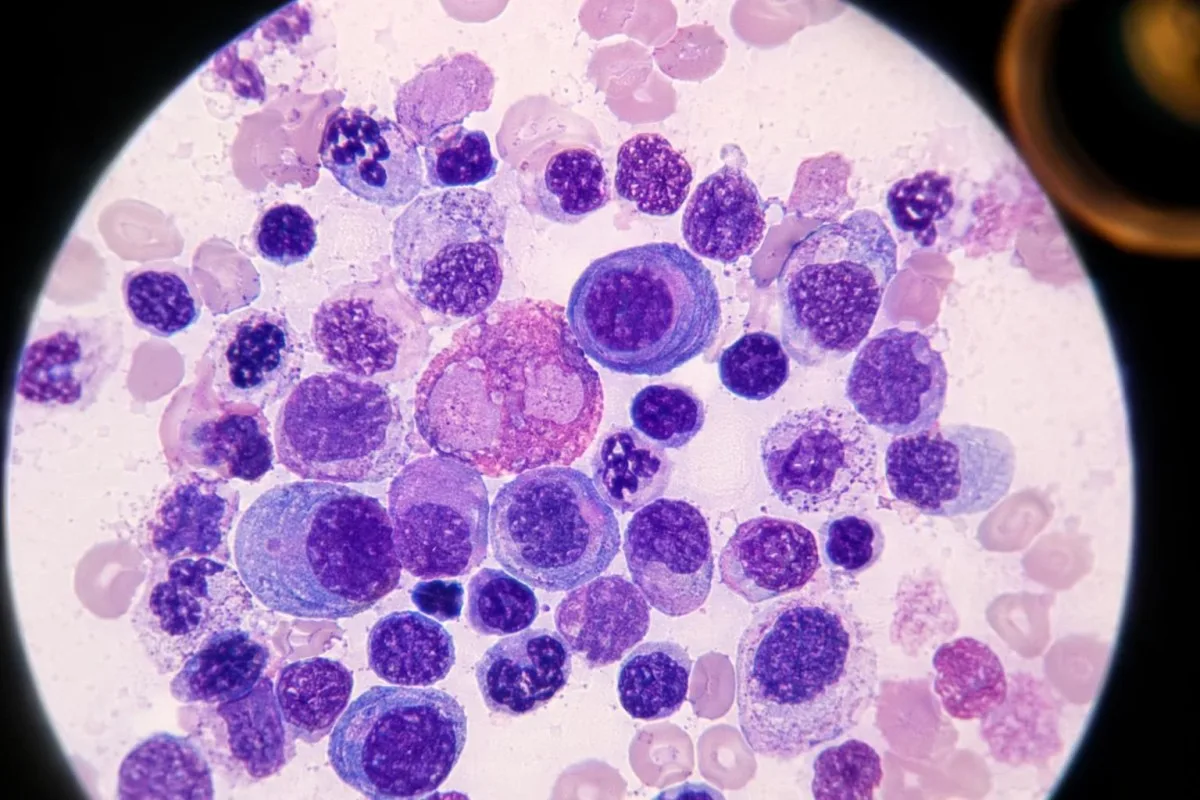
IgM MGUS is a premalignant monoclonal IgM condition, while Waldenström macroglobulinemia is a lymphoplasmacytic lymphoma with marrow involvement and symptoms or organ effects. The difference depends on M-protein size, marrow findings, blood counts, symptoms and end-organ changes.

Classic IgM MGUS is usually defined by an IgM monoclonal protein below 3 g/dL, bone marrow lymphoplasmacytic infiltration below 10%, and no anemia, hyperviscosity, bulky lymph nodes or organ damage attributable to the clone. These cutoffs are imperfect, but they are clinically useful.
Kyle et al. reported in the New England Journal of Medicine that MGUS was present in about 3.2% of people aged 50 years or older, although IgM MGUS is a smaller subset (Kyle et al., 2006). Rajkumar et al. later clarified plasma cell disorder criteria for symptomatic disease, reinforcing that monoclonal protein size alone is not enough to diagnose cancer (Rajkumar et al., 2014).
Waldenström macroglobulinemia becomes more likely when monoclonal IgM is paired with hemoglobin below 10-11 g/dL, platelet decline, enlarged nodes, weight loss, night sweats, neuropathy or serum viscosity symptoms. Beta-2 microglobulin can help risk-stratify lymphoplasmacytic disorders, and we explain its use in beta-2 microglobulin.
My rule as Thomas Klein, MD, is to avoid calling monoclonal IgM “just MGUS” until the CBC, creatinine, calcium, albumin, total protein, light chains and symptom review have all been checked. Most cases are not emergencies, but a few are time-sensitive.
High IgM symptoms and urgent red flags
High IgM itself often causes no symptoms, but very high or monoclonal IgM can cause hyperviscosity, neuropathy, cold-sensitive circulation problems and bleeding symptoms. Urgent review is needed for blurred vision, severe headache, confusion, chest pain, shortness of breath or new significant nosebleeds.

The phrase high IgM symptoms is slightly misleading because many people feel normal at 300-600 mg/dL. Symptoms become more concerning when IgM is in the thousands, serum viscosity rises, or the antibody behaves abnormally at cold temperatures.
Hyperviscosity can cause headaches, visual blurring, dizziness, ringing in the ears, mucosal bleeding or confusion. I take those symptoms seriously even before the exact IgM value returns because plasmapheresis decisions are symptom-driven in severe cases.
Monoclonal IgM can also behave as a cryoglobulin or cold agglutinin. If symptoms worsen with cold exposure, or if there is purplish skin change, neuropathy or kidney findings, our cryoglobulin testing guide explains why sample handling and temperature control matter.
A mild IgM rise with fatigue alone is not specific. Fatigue is more often explained by anemia, thyroid disease, iron deficiency, sleep disruption or inflammation than by IgM itself.
Lab clusters that change the meaning of high IgM
High IgM is interpreted differently when it appears with anemia, high globulin, abnormal liver enzymes, high ESR, low albumin, kidney changes or abnormal calcium. The cluster tells doctors whether to think infection, liver disease, autoimmune disease or monoclonal protein.

Anemia changes the risk calculation. Hemoglobin below 11 g/dL with monoclonal IgM raises more concern than IgM 500 mg/dL with a normal CBC, normal kidney function and no symptoms.
ESR can be strikingly high in monoclonal protein states because serum proteins change red cell settling. ESR above 80-100 mm/hr with high globulin and normal CRP is one of those odd patterns that makes me look harder for paraproteins.
Kantesti AI is an AI biomarker interpretation platform that weighs clusters such as IgM, globulin, A/G ratio, ESR and CBC together. Patients who want to see how abnormal values group across a panel can use our full panel clusters guide as a practical map.
Kidney findings deserve respect. Even a creatinine rise from 0.9 to 1.3 mg/dL can matter if it appears alongside a monoclonal protein, proteinuria or low albumin.
False highs, variability and when to repeat
False or misleading IgM highs happen because of lab variability, unit conversion, recent immune stimulation, sample issues and transient inflammatory states. A repeat test in 4-12 weeks is often reasonable for mild, asymptomatic, polyclonal elevations.
Most quantitative immunoglobulin assays are precise, but small differences around the upper limit are not clinically dramatic. A shift from 232 to 255 mg/dL may reflect normal biological and analytical variation rather than a new disease process.
Vaccination, recent infection and autoimmune flares can all create short-lived IgM movement. I usually avoid repeating too soon unless symptoms are worsening, because a 7-day retest can simply confirm the same immune episode.
Unit confusion is common in cross-border reports. A person comparing 2.7 g/L from one lab with 270 mg/dL from another may think the value changed 10-fold, which is why our lab unit guide is useful before drawing conclusions.
If the result is persistent after 2-3 months, the conversation changes. Persistence makes SPEP, immunofixation, liver markers and autoimmune testing more reasonable, even if the person feels well.
Follow-up tests after a high IgM result
Follow-up tests after high IgM usually include repeat quantitative immunoglobulins, CBC, CMP, liver enzymes, SPEP, immunofixation and serum free light chains. Additional tests depend on symptoms, such as serum viscosity, cryoglobulins, hepatitis serology or autoimmune liver antibodies.

The first follow-up question is simple: is the IgM still high? If IgM drops from 420 to 210 mg/dL after infection recovery, I usually stop escalating unless symptoms remain unexplained.
If monoclonal IgM is confirmed, doctors often add serum free light chains, CBC, creatinine, calcium, albumin, LDH and beta-2 microglobulin. LDH is nonspecific, but a rising LDH with anemia, weight loss or lymph node enlargement changes the tempo of evaluation; our LDH guide covers that nuance.
Serum viscosity is not needed for every high IgM. I reserve it for very high IgM, usually above 3000 mg/dL, or symptoms such as visual changes, severe headache, confusion or mucosal bleeding.
For liver-pattern cases, antimitochondrial antibody, ANA, IgG, IgA, bilirubin fractionation and sometimes ultrasound are more useful than marrow testing. The right next test should follow the pattern, not the anxiety level.
Age, family history and personal risk clues
Age and family history change the interpretation of high IgM because monoclonal gammopathies become more common after age 50. In younger adults, mild high IgM is more often reactive, while older adults deserve a lower threshold for protein studies if the result persists.

A 24-year-old with IgM 290 mg/dL after tonsillitis and normal globulin is usually different from a 72-year-old with IgM 620 mg/dL, globulin 4.2 g/dL and mild anemia. Same marker, different pre-test probability.
Family history is not destiny, but it can change the follow-up threshold. A first-degree relative with Waldenström macroglobulinemia, lymphoma or multiple myeloma makes persistent monoclonal IgM more worth discussing with a clinician.
Trend records help because monoclonal proteins tend to persist or slowly rise, while reactive IgM often drifts down after the trigger resolves. Families tracking recurring patterns can use our family marker guide to keep inherited and shared-environment clues separate.
Children are a separate category. Pediatric immunoglobulin reference ranges differ by age, and a high adult-style flag on a child’s report should not be interpreted without the pediatric interval.
Using AI safely with high IgM results
AI can help organize high IgM results by pattern, but it should not diagnose MGUS or liver disease without clinical confirmation. The safest use is triage: spotting when repeat testing, SPEP, liver workup or hematology review should be discussed.

Kantesti AI is an AI-powered blood test analysis tool used by more than 2M people across 127+ countries, and our IgM logic looks for combinations that change risk. A high IgM with normal CBC and recent infection is handled differently from high IgM with low hemoglobin, high globulin and a faint M-band.
Our AI does not replace a hematologist. It can flag that SPEP language looks monoclonal, but only a clinician can combine symptoms, examination findings, imaging and sometimes marrow results into a diagnosis.
If you want the practical guardrails, our article on AI interpretation limits explains what automated lab review can and cannot infer. For readers interested in model design, the technology guide describes how our system handles ranges, units and cross-panel context.
The most useful upload is the complete PDF, not a cropped screenshot of IgM alone. Missing albumin, total protein, globulin, CBC and liver enzymes removes half the clinical reasoning.
Research, validation and when to ask hematology
Hematology follow-up is sensible when monoclonal IgM is confirmed, IgM is very high, symptoms suggest hyperviscosity or neuropathy, or CBC, kidney or calcium results are abnormal. As of June 14, 2026, persistent unexplained monoclonal IgM should not be managed by reassurance alone.
A practical referral trigger is an IgM monoclonal band on immunofixation, especially with hemoglobin below 11 g/dL, platelet decline, creatinine rise, neuropathy or constitutional symptoms. If the person is well and the M-protein is tiny, hematology may simply monitor every 6-12 months.
Our clinical writing is reviewed with physician oversight, including input from our medical advisory board. The validation standards behind Kantesti’s blood test interpretation work are described on our clinical validation page, because lab interpretation is medical risk work, not lifestyle content.
Kantesti LTD. (2026). Multilingual AI Assisted Clinical Decision Support for Early Hantavirus Triage: Design, Engineering Validation, and Real-World Deployment Across 50,000 Interpreted Blood Test Reports. Figshare. DOI. ResearchGate: ResearchGate. Academia.edu: Academia.edu.
Kantesti LTD. (2026). A Pre-Registered, Rubric-Based Automated Technical Benchmark of the Kantesti Blood-Test Interpretation Engine on 100,000 Synthetic Test Cases. Figshare. DOI. ResearchGate: ResearchGate. Academia.edu: Academia.edu.
Frequently Asked Questions
What are the most common high IgM causes?
The most common high IgM causes are short-term immune activation from infection, chronic inflammatory or autoimmune disease, cholestatic liver disease and monoclonal IgM disorders such as IgM MGUS. Adult IgM is often about 40-230 mg/dL, but laboratory ranges vary. A mild rise, such as 260-350 mg/dL after a viral illness, is often rechecked before advanced testing. Persistent or unexplained high IgM usually deserves SPEP and immunofixation.
Does high IgM mean cancer?
High IgM does not automatically mean cancer. Many mild elevations are polyclonal and reactive, especially after infection or with liver inflammation. Cancer concern rises when IgM is monoclonal, persistent, increasing, or paired with anemia, high globulin, kidney changes, neuropathy or hyperviscosity symptoms. A confirmed IgM monoclonal protein should usually be reviewed by a clinician and often by hematology.
When should SPEP and immunofixation be ordered for high IgM?
SPEP and immunofixation are commonly ordered when high IgM is persistent for 6-12 weeks, above roughly 400-500 mg/dL without a clear infection, or associated with high globulin, low A/G ratio, anemia, neuropathy or kidney abnormalities. SPEP looks for an M-protein pattern, while immunofixation identifies the exact antibody type, such as IgM-kappa or IgM-lambda. A normal SPEP does not fully exclude a small monoclonal protein if symptoms are convincing.
Can liver disease cause high IgM?
Yes, liver disease can cause high IgM, especially cholestatic autoimmune liver disease such as primary biliary cholangitis. The classic clue is high IgM with elevated ALP and GGT, sometimes with itching, fatigue and positive antimitochondrial antibody. ALT and AST patterns help separate hepatocellular injury from cholestatic disease. Total IgM alone cannot diagnose liver disease; it must be read with liver enzymes and antibody tests.
What level of IgM is dangerous?
There is no single dangerous IgM cutoff, but values above 1000 mg/dL are more likely to need structured evaluation, and values above about 3000 mg/dL can raise concern for hyperviscosity if symptoms are present. Serum viscosity symptoms include blurred vision, severe headache, confusion, dizziness and mucosal bleeding. A person with those symptoms should seek urgent medical review even before all confirmatory tests are complete. Mild high IgM without symptoms is usually not an emergency.
What is monoclonal IgM?
Monoclonal IgM is a single type of IgM antibody produced by one immune cell clone, usually reported after SPEP and immunofixation as an IgM-kappa or IgM-lambda band. It can be seen in IgM MGUS, Waldenström macroglobulinemia and some other B-cell disorders. IgM MGUS is generally defined by IgM M-protein below 3 g/dL, marrow involvement below 10% and no related organ damage. The diagnosis needs clinical correlation, not just one laboratory line.
Get AI-Powered Blood Test Analysis Today
Join over 2 million users worldwide who trust Kantesti for instant, accurate lab test analysis. Upload your blood test results and receive comprehensive interpretation of 15,000+ biomarkers in seconds.
📚 Referenced Research Publications
Klein, T., Mitchell, S., & Weber, H. (2026). Multilingual AI Assisted Clinical Decision Support for Early Hantavirus Triage: Design, Engineering Validation, and Real-World Deployment Across 50,000 Interpreted Blood Test Reports. Kantesti AI Medical Research.
Klein, T., Mitchell, S., & Weber, H. (2026). A Pre-Registered, Rubric-Based Automated Technical Benchmark of the Kantesti Blood-Test Interpretation Engine on 100,000 Synthetic Test Cases. Kantesti AI Medical Research.
📖 External Medical References





⚕️ Medical Disclaimer
This article is for educational purposes only and does not constitute medical advice. Always consult a qualified healthcare provider for diagnosis and treatment decisions.
E-E-A-T Trust Signals
Experience
Physician-led clinical review of lab interpretation workflows.
Expertise
Laboratory medicine focus on how biomarkers behave in clinical context.
Authoritativeness
Written by Dr. Thomas Klein with review by Dr. Sarah Mitchell and Prof. Dr. Hans Weber.
Trustworthiness
Evidence-based interpretation with clear follow-up pathways to reduce alarm.